
Africa Watch
How African Nations Are Evacuating Their Nationals Amid the Escalating Middle East Crisis

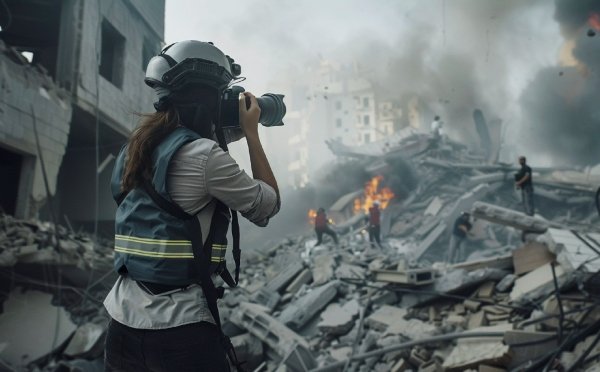
Accra, Ghana – March 1, 2026 – Several African governments, including, Kenya, Nigeria, Sudan, and Uganda, have activated emergency evacuation plans for their citizens caught in the rapidly deteriorating security situation in the Middle East, following joint US-Israeli airstrikes on Iran that killed Supreme Leader Ayatollah Ali Khamenei and triggered widespread Iranian retaliatory missile and drone attacks across the Gulf region.
The strikes, which targeted Iranian military and nuclear facilities early Saturday, prompted Iran to launch barrages against Israel and US military bases in Qatar, Bahrain, the United Arab Emirates, Kuwait, Iraq, Jordan, and Saudi Arabia—countries that host tens of thousands of African nationals working as laborers, students, professionals, and businesspeople.
Overnight follow-up airstrikes by US and Israeli forces have intensified the crisis, with Iranian leadership vowing “crushing retaliation” and civilian areas in multiple cities now smoldering from the exchange of fire.
Ghana has moved swiftly to protect its nationals. The Ministry of Foreign Affairs and Regional Integration announced on Saturday the partial evacuation of non-essential staff from its embassy in Tehran, retaining only essential personnel to provide consular services. A formal advisory urged Ghanaians to avoid all non-essential travel to and from the Middle East, remain indoors, avoid crowds and sensitive sites, keep travel documents ready, and register with the nearest diplomatic mission. Emergency contact lines have been widely circulated.
Nigeria’s Ministry of Foreign Affairs confirmed it has finalized detailed emergency evacuation plans for citizens stranded in Iran and Israel. Sudan announced the immediate evacuation of its nationals from the region. Uganda is airlifting 48 of its students via Turkey, while Kenya is making similar arrangements to relocate its citizens from affected countries.
South Africa’s Department of International Relations and Cooperation (DIRCO) has taken a more cautious approach, urging its nationals in the region to exercise vigilance, register with the nearest diplomatic mission for tracking purposes, and avoid unnecessary movement.
The crisis has severely disrupted commercial aviation. Airspace closures in Iran, Iraq, Qatar, the UAE, and other Gulf states have led to mass flight cancellations and diversions, stranding thousands—including African sports teams, students, and workers. Airlines such as Emirates, Etihad, Qatar Airways, and others have suspended services, with many passengers rerouted or delayed indefinitely.
The evacuations reflect growing concern among African governments over the safety of their diaspora in a region that has become a flashpoint. With no clear de-escalation in sight and the risk of broader regional conflict, foreign ministries across the continent continue to monitor developments closely and prepare for further contingencies.









Africa Watch
Oil, Gas, and the $100 Million Future of the Gulf of Guinea: What’s at Stake in the Ghana-Togo Maritime Dispute

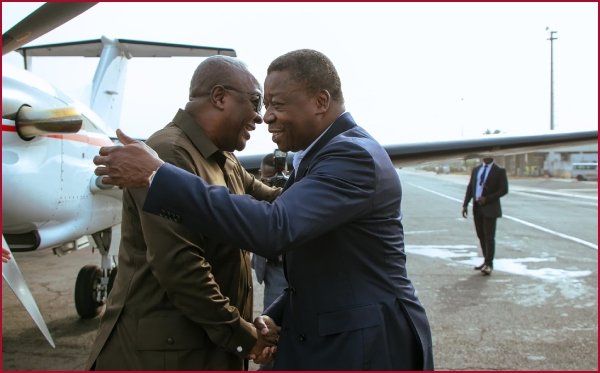
ACCRA/LOMÉ — For nearly a decade, an invisible line beneath the Atlantic Ocean has separated more than just two neighboring countries.
It has separated communities from certainty, investors from opportunity, and two West African nations from the full potential of their shared maritime heritage. Now, with Ghana’s decision to refer the long-standing dispute to international arbitration, that line is about to be drawn—and billions of dollars hang in the balance.
The Ghana-Togo maritime boundary dispute, formally submitted to arbitration under the United Nations Convention on the Law of the Sea (UNCLOS) in February 2026, represents far more than a technical legal disagreement. At its core lies a competition for resources that could transform national economies, reshape regional energy security, and determine the future of the Gulf of Guinea as a hydrocarbon province.
The $100 Million Question
The disputed waters sit within a sedimentary basin believed to hold significant offshore oil and gas reserves—resources that could generate substantial revenues for whichever nation secures sovereignty. Industry experts estimate the potential value of hydrocarbon deposits in the contested zone at sums that could reach into the billions, making the $100 million figure a conservative baseline for what’s ultimately at stake.
“The disputed area lies within a basin known for significant hydrocarbon potential, and both governments see offshore oil and gas as central to economic planning, debt sustainability, and political narratives of development,” notes an analysis from Africa Eye, a regional policy publication.
For Ghana, which has already developed world-class fields like Jubilee and TEN, securing legal certainty over adjacent waters is essential for attracting continued investment in exploration and production. For Togo, which has yet to make a major offshore discovery, the stakes are existential—a favorable ruling could unlock resources that would fundamentally alter the country’s economic trajectory.
The Keta Basin, a sedimentary region extending from southeastern Ghana into the Republic of Togo, has long been identified as a site of untapped hydrocarbon potential. Early geological surveys suggested the presence of oil and gas, but exploration has stalled due to the unresolved boundary and insufficient investment.
A Decade of Failed Negotiations
The dispute’s origins trace to specific flashpoints. In December 2017 and May 2018, Togolese authorities halted two Ghanaian seismic survey vessels conducting deep-sea data acquisition in an area near the border that Ghana considered part of its offshore maritime zone . Togo claimed the vessels were operating in waters within its own claimed area, marking the first significant confrontations in the disagreement.
These incidents occurred shortly after Ghana won its landmark maritime boundary case against Côte d’Ivoire in September 2017 at the International Tribunal for the Law of the Sea (ITLOS)—a ruling that provided binding delimitation on Ghana’s western frontier and demonstrated the effectiveness of international adjudication.
Following the 2017-2018 incidents, both countries established a Joint Maritime Boundary Technical Committee comprising technical experts from both sides. They held multiple rounds of discussions, but fundamental differences persisted over delimitation methodology, baseline coordinates, and interpretation of nautical charts. Togo also raised concerns about the presence of Ghanaian naval vessels in contested waters during negotiations.
In 2021, Ghana proposed a formal demarcation line, but Togo rejected it. After eight years of bilateral negotiations without achieving a settlement, Ghana notified Togo in February 2026 of its decision to pursue international arbitration.
The Legal Framework: UNCLOS as Final Arbiter
The arbitration will proceed under UNCLOS, the international treaty that provides the legal framework for maritime boundaries and dispute settlement mechanisms. Ghana’s decision to invoke Annex VII arbitration follows the same legal pathway that proved successful in the Côte d’Ivoire case.
Key provisions guiding the tribunal include:
- Article 15, concerning delimitation of the territorial sea between states with opposite or adjacent coasts
- Articles 74 and 83, requiring states with overlapping exclusive economic zones (EEZs) and continental shelf claims to achieve an equitable solution through agreement, taking into account relevant circumstances
The core legal question revolves around methodology: Should the boundary follow a simple equidistance line (the median line between the two coasts), or should it account for broader geographical and historical factors? Ghana’s successful 2017 case against Côte d’Ivoire saw the ITLOS Special Chamber adopt the equidistance method, a precedent that likely influences Accra’s confidence in the current proceedings.
Togo, for its part, has responded with measured dignity. In a communiqué following Ghana’s notification, the Togolese government reaffirmed its “commitment to resolving maritime disputes in accordance with the principles of justice and equity” while stating that any resolution must respect the sovereign rights of both nations.
Beyond Hydrocarbons: Fisheries, Communities, and the Blue Economy
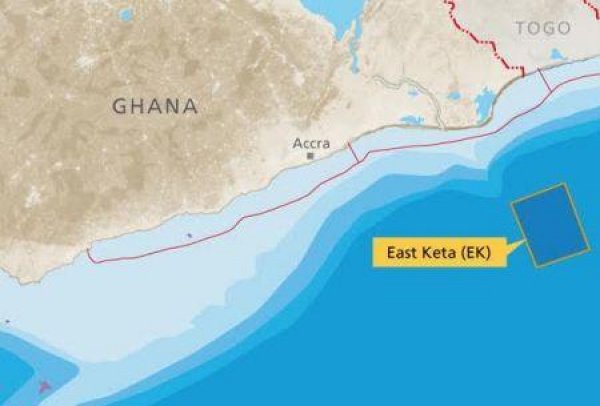
While oil and gas capture headlines, the dispute’s resolution will affect far more than energy companies. The contested waters sustain fishing communities on both sides of the border—communities already pressured by industrial fleets and illegal, unreported, and unregulated fishing.
Coastal communities near the Keta Basin have long histories of fishing, spiritual practices, and artisanal livelihoods linked to the ocean. Exclusion from decision-making not only threatens legitimacy but undermines peace. Any future subsea infrastructure—from pipelines to telecommunications cables—will depend on where the boundary ultimately runs.
The arbitration also aligns with Ghana’s Blue Economy strategy, which emphasizes the sustainable exploitation of ocean resources, including fisheries, hydrocarbons, and shipping lanes. Clear boundary delimitation provides legal certainty for investors, enhances resource management, reduces conflict risk, and supports long-term national development planning.
Regional Implications: A Test for West African Governance
Ghana’s decision to escalate the dispute to arbitration arrives at a delicate moment for regional diplomacy. The Economic Community of West African States (ECOWAS) was designed to help member states manage tensions before they harden into crises, yet institutional strains and political turbulence in recent years have limited its capacity to sustain sensitive negotiations.
In that context, Ghana’s appeal to a global legal mechanism signals a preference for rules-based adjudication over prolonged regional bargaining—a move that may quietly reshape expectations across West Africa, where other coastal states face overlapping maritime claims of their own.
The outcome will matter well beyond Accra and Lomé. A clear, mutually respected decision could strengthen the case for managing offshore competition through law rather than brinkmanship, while a politicized process could unsettle investment and deepen mistrust at sea.
Both nations remain publicly committed to preserving their relationship throughout the legal process. Ghana’s government stated that it took the step “to avoid an escalation of incidents that have created tensions between some of our institutions and to promote an amicable resolution, thereby contributing to the continued good relations between our two countries” .
Togo similarly stated its dedication to the spirit of good neighborliness, asserting that it remains open to a resolution that respects international law while preserving the fraternal relations between the two states.
The Road Ahead
The arbitration process will require both nations to submit extensive legal, technical, and historical evidence, including hydrographic surveys, historical documentation, and expert analyses. The proceedings could take several years before a final award is delivered.
For Ghana, confidence in legal recourse is rooted in experience. The 2017 case against Côte d’Ivoire showed that structured proceedings and provisional measures can prevent technical disagreements from escalating into security incidents, reinforcing the idea that consistent cartography and historical practice can translate into legal advantage.
For Togo, arbitration offers clarity but also uncertainty. Any ruling will redefine exploration rights, revenue expectations, and maritime enforcement responsibilities—outcomes that will shape the country’s economic future for generations.
As the International Tribunal for the Law of the Sea prepares to receive submissions from both nations, one truth remains clear: beneath the waves of the Gulf of Guinea lies not just oil and gas, but the hopes of millions whose lives depend on what happens when two neighbors ask international law to draw a line in the sea.

Zimbabwe has begun rolling out a new long-acting injectable HIV-prevention drug, becoming one of the first countries in the world to introduce the breakthrough treatment in a national program.
Health officials say the launch of Lenacapavir — the first twice-yearly injectable pre-exposure prophylaxis (PrEP) — marks a significant milestone in the country’s fight against HIV/AIDS, particularly for communities facing barriers to daily medication adherence.
A New Tool in HIV Prevention
The rollout began on February 19 in Epworth, a settlement near Harare, with an initial supply of 46,000 doses targeting people at high risk of infection across 24 sites nationwide.
Zimbabwe’s Health and Child Care Minister Douglas Mombeshora described the program as a major step forward.
“Lenacapavir is a long-acting injectable option for HIV prevention and demonstrates our commitment to protecting lives and ending HIV/AIDS as a public health threat,” he said.

Unlike daily oral PrEP pills, Lenacapavir requires only two injections per year, offering a more practical option for individuals who struggle with stigma, access challenges, or medication adherence.
Focus on High-Risk Populations
Health authorities say the first phase will prioritize adolescents, young women, sex workers, pregnant and breastfeeding women, and other populations at heightened risk of HIV exposure.
Officials stressed that the drug complements — rather than replaces — existing prevention strategies such as condom use, oral PrEP, HIV testing, and behavioral interventions.
Owen Mugurungi, director of Zimbabwe’s AIDS and TB Unit, emphasized the importance of a combined prevention approach.
“No magic bullet or single intervention can end HIV,” he said. “We reduce infections by combining biomedical, behavioral, and structural interventions.”
Global Support and Scientific Innovation
The initiative is funded by the U.S. government and the Global Fund and is supported by international health partners including the World Health Organization.
According to U.S. officials, Lenacapavir was developed by American scientists at Gilead Sciences and represents a major innovation in HIV prevention.
Diplomatic representatives said the drug could help move the world closer to an HIV-free generation by simplifying prevention and improving adherence.
Progress and Continuing Challenges
Zimbabwe remains one of the countries most affected by HIV/AIDS, though it has made significant gains in recent years.
The country has achieved global UNAIDS treatment targets, with most people living with HIV aware of their status, receiving treatment, and maintaining suppressed viral loads.
Despite these advances, new infections continue to occur — particularly among young women — highlighting the need for expanded prevention options.
Regional Significance
Sub-Saharan Africa remains the epicenter of the global HIV epidemic, accounting for roughly two-thirds of people living with HIV worldwide.
Public health experts say innovative prevention tools like Lenacapavir could play a crucial role in reducing infections across the region and helping countries meet the global goal of ending AIDS as a public health threat by 2030.
Zimbabwean officials say the rollout represents both a scientific breakthrough and a renewed commitment to expanding prevention choices tailored to real-world challenges.
Africa Watch
United States Intensifies Operation in Nigeria as 3 Military Aircraft Deliver Ammunition and More Troops
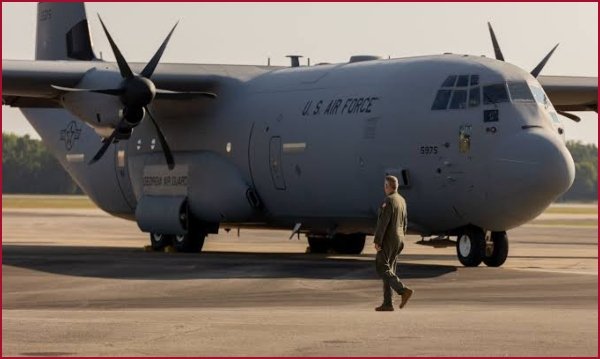
At least three United States military transport aircraft landed at the Bornu Military Airbase (Maiduguri) and other northeastern bases between Thursday and Friday, February 12–13, 2026.
Reports by Nigerian newspaper Punch, the aircraft delivered ammunition, logistics support, and the vanguard of a planned deployment of American personnel, citing multiple defence sources.
The arrivals were first noted by The New York Times, which reported that C-17 Globemaster III cargo planes landed in Maiduguri on Thursday night, with three aircraft visible by Friday evening as equipment was offloaded. Additional flights were expected over the weekend and in the coming weeks.
A US Department of Defense official described the initial landings as “the vanguard of what will be a stream of C-17 transport flights into three main locations across Nigeria.”
Senior Nigerian Defence Headquarters officers, speaking anonymously to Sunday Punch, confirmed the aircraft carried ammunition supplied by the US government as part of ongoing bilateral security cooperation.
“Following Nigeria-US bilateral talks on security, the American government will not only deploy soldiers but also provide necessary logistics, including ammunition, to fight the insurgents.”
Another high-ranking source explained that the deliveries were routine replenishment of ammunition stocks after operations, noting that Nigeria’s military frequently requires resupply of various calibres.
The officers described the support as coordinated under the National Security Adviser and part of a broader partnership to end insecurity.
A separate X post by counter-terrorism tracker @mobilisingniger reported that a US Air Force C-130J-30 cargo aircraft landed at Kaduna International Airport on Friday after departing from Ghana, fuelling speculation that Kaduna could serve as a training hub for US personnel working with the Nigerian military.
The deployment aligns with President Donald Trump’s 2025 declaration that he would send US forces to Nigeria if the government failed to address what he called “genocide against Christians,” followed by Nigeria’s designation as a Country of Particular Concern. The US carried out an airstrike on Islamic State fighters in Sokoto State on Christmas Day 2025, and bilateral engagements have since deepened.
Experts offered mixed but largely pragmatic assessments. Retired Nigerian Army Intelligence officer Chris Andrew clarified that the arrivals involve technical trainers, drone specialists, and intelligence advisers — not combat troops. He noted recent improvements in Nigerian air operations following US training and suggested Nigeria should seize the opportunity to host a drone base (potentially in Sambisa Forest) after the US withdrawal from Niger.
When U.S. launched strikes against terrorists in Sokoto in December 2025, Security analyst and international intelligence expert Kasambata Yaro cautioned that even a legally sanctioned military operation can generate unease across the region.
“Although Nigeria’s explicit consent addresses the fundamental legal question of sovereignty,” Yaro told Ghana News Global, “the broader regional implications remain complex.”
Nigerian security analyst Chidi Omeje has also told Punch that any cooperation must preserve Nigerian sovereignty, with no foreign troops conducting operations without approval.
The US deployment is expected to focus on targeted counter-terrorism support, drone operations, precision air capabilities, and training to protect vulnerable communities, particularly Christians in the northeast.
No official joint statement has been issued by the Nigerian Defence Headquarters or the US Embassy as of February 16, 2026, but the arrivals signal a significant deepening of US–Nigeria security cooperation amid persistent Boko Haram and ISWAP threats.


UK Black Stars Launched to Honor Influential British-Ghanaians as Ghana Turns 69

Ghanaians and Other Africans in UAE Flood Social Media with Videos as Iranian Missile Strikes Hit Dubai

Ghana Maintains Over 5 Weeks of Fuel Stock Amid Middle East Tensions and Other Trending Topics in Ghana (March 2, 2026)
-

 Ghana News1 day ago
Ghanaian’s Terrifying Experience as Missile Explodes Amid Escalating Middle East Tensions and Other Trending Topics in Ghana (March 1, 2026)
-

 Ghana News1 day ago
Ghana’s Black Queens Stranded in UAE as Government Initiates Partial Evacuation from Tehran Embassy Amid Escalating Israel-Iran Conflict
-
 Ghana News6 hours ago
Ghana Maintains Over 5 Weeks of Fuel Stock Amid Middle East Tensions and Other Trending Topics in Ghana (March 2, 2026)
-
 From the Diaspora5 hours ago
Ghanaians and Other Africans in UAE Flood Social Media with Videos as Iranian Missile Strikes Hit Dubai
-
 Ghana News1 day ago
7 Ways the Escalating Middle East Crisis Could Hit Home in Ghana
-

 Ghana News6 hours ago
Newspaper Headlines Today: Monday, March 2, 2026
-
 Ghana News22 hours ago
How African Nations Are Responding to the Iran-Israel Conflict
-

 From the Diaspora1 day ago
Ghanaian-Heritage Scientist AJ Addae Develops Breakthrough Sunscreen That Protects Darker Skin Without White Cast