
Ghana News
Ghana News Live Updates: Catch up on all the Breaking News Today (Feb. 16, 2026)


Welcome to today’s real-time updates of developments in Ghana for Sunday, February 16, 2026. Return often for fresh summaries as stories break.
One Dead as Police Recover Five Assault Rifles After Shootout in Bono Region
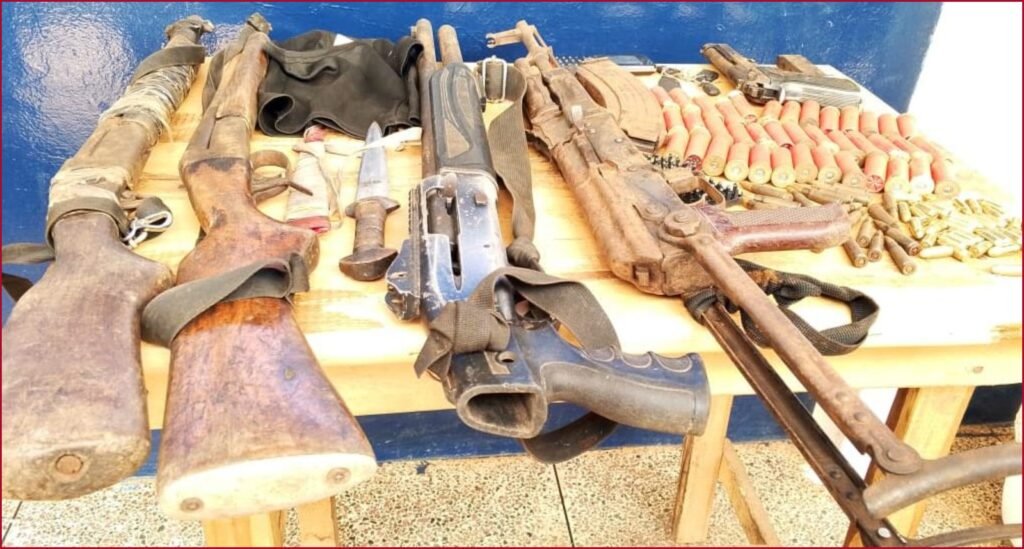
One person has been killed and five assault rifles recovered following a shootout between police and suspected armed robbers in the Bono Region on February 13, 2026. The incident occurred during a police operation targeting criminal elements in the area. The suspects opened fire on officers, prompting a return of fire that resulted in one fatality. Police say the recovered weapons are linked to recent robberies in the region. Investigations are ongoing to identify the deceased and apprehend any fleeing suspects.
Read the full story here.
CHRAJ Clears Mahama Appointee in Asset Declaration Saga
The Commission on Human Rights and Administrative Justice (CHRAJ) has cleared a presidential appointee of President John Dramani Mahama in an asset declaration probe. In a ruling issued February 17, 2026, CHRAJ found no evidence of wilful failure to declare assets as required under Article 286 of the 1992 Constitution. The decision ends speculation surrounding the appointee’s compliance and reaffirms the commission’s role in enforcing transparency among public officials.
Read the full story here.
Cocoa Farmers Welcome COCOBOD Salary Cuts Amid Liquidity Challenges
Cocoa farmers have expressed support for the Ghana Cocoa Board’s (COCOBOD) decision to implement salary cuts for senior management and cost-control measures amid severe liquidity pressures. The move follows an emergency Cabinet directive to stabilise the sector and clear legacy arrears. Farmers described the salary reductions as a “necessary sacrifice” to protect frontline payments and sustain purchasing operations during the current crisis.
Read the full story here.
I’m a Cocoa Farmer Too – Mahama Speaks on Price Cuts and Farmer Pain Amid Crises
President John Dramani Mahama has revealed that he personally owns a cocoa farm and fully understands the pain farmers are enduring due to price adjustments and payment delays. Speaking at the maiden Ghana Tree Crops Investment Summit and Exhibition on Tuesday, February 17, the President stated that he directly understands the economic pressures facing cocoa farmers, particularly amid recent volatility in global cocoa prices and recent developments within the sector.
Read the full story here.
Police Re-Arrest Abdul Aziz Iddrisu, Suspected Killer in Bawku Chieftaincy Violence
The Ghana Police Service has re-arrested Abdul Aziz Iddrisu, a key suspect in the murder of a traditional leader during chieftaincy violence in Bawku. The re-arrest took place on February 13, 2026, after he was initially granted bail but failed to meet court conditions. Police say Iddrisu is linked to the fatal shooting that escalated ethnic and chieftaincy tensions in the Upper East Region. He remains in custody pending further investigations and court proceedings.
Read the full story here.
Association of Banks CEO Hails ‘Unpalatable’ Decision to Save COCOBOD from Collapse
The CEO of the Ghana Association of Banks, John Awuah, has commended the government’s decision to slash the cocoa producer price, calling it a necessary, though “unpalatable,” move to prevent COCOBOD’s insolvency. He praised President Mahama and Finance Minister Dr. Cassiel Ato Forson for prioritizing national survival. Awuah also called for urgent internal reforms at COCOBOD, including tackling overstaffing and procurement inefficiencies. Read the full story here.
‘Not One Warning Issued’ – Prof. Aning Criticises Gov’t Over Failure to Alert Tomato Traders on Burkina Faso Risk
Security expert Professor Kwesi Aning has strongly criticised Ghanaian authorities for failing to issue travel warnings to traders heading to Burkina Faso, following a deadly terrorist attack that killed several Ghanaian tomato traders. Speaking on JoyNews, Prof. Aning stated that no formal advisory was issued by any state institution or trade union, leaving citizens to travel into a conflict zone unaware. He has called for urgent safety protocols for Ghanaians trading in the Sahel region. Read the full story here.
GoldBod Suspends Selected Gold Buying Licence Applications Ahead of Regulatory Reforms

The Ghana Gold Board (GoldBod) has temporarily suspended the processing of new and selected pending applications for gold buying licences as part of ongoing regulatory reforms. The suspension, announced February 14, 2026, aims to allow time for the introduction of stricter compliance requirements, enhanced traceability systems, and anti-smuggling measures. Existing licensed buyers are unaffected and can continue operations. GoldBod reiterated its commitment to formalising the sector, curbing illegal trade, and ensuring fair pricing and accountability throughout the gold value chain.
Read the full story here
Five Arrested Over Tramadol Haul and Attempted GH¢50k Bribe
Five suspects have been arrested by the Narcotics Control Commission (NACOC) for attempting to smuggle a large consignment of tramadol and offering a GH¢50,000 bribe to officers during an operation in Accra on February 13, 2026. The suspects were intercepted with thousands of tramadol tablets concealed in vehicle compartments. NACOC officials confirmed the attempted bribe was rejected and recorded, and all five individuals are in custody assisting with investigations. The case highlights ongoing efforts to combat pharmaceutical drug trafficking and corruption within enforcement operations.
Read the full story here
7 Ghanaian Traders Killed in Titao Terrorist Attack Buried in Burkina Faso
Seven Ghanaian tomato traders killed in a terrorist attack in Titao, Burkina Faso, on February 14, 2026, have been buried in Burkina Faso after coordination between Ghanaian and Burkinabè authorities. The Ministry of the Interior confirmed the deaths following a joint visit to the attack site by Ghana’s embassy officials and local security personnel. The victims were part of a convoy transporting goods across the border when the vehicle was ambushed by suspected jihadist elements in the volatile Sahel region. The government has pledged support to the bereaved families and called for enhanced cross-border security measures.
Read the full story here
Govt Approves Cabinet Directives Following Review of Over 8,000 Land Leases Nationwide
The government has approved a set of cabinet directives following a comprehensive review of more than 8,000 state land leases across Ghana. The measures, announced February 13, 2026, aim to address irregularities, revoke improperly acquired leases, recover encroached or underutilised public lands, and strengthen land administration to prevent future abuse. The review was part of President Mahama’s broader “Reset Ghana” agenda to enhance transparency, protect state assets, and promote equitable access to land for development.
Read the full story here
Alhaji of Radio Univers Dies Aged 63
Alhaji, a veteran broadcaster and longtime presenter on Radio Univers (University of Ghana’s campus station), has passed away at the age of 63. The popular media personality, known for his engaging style and contributions to campus and community broadcasting, died on February 13, 2026. Colleagues, alumni, and listeners have paid tribute to his dedication, humour, and mentorship of young broadcasters over more than three decades on air. Funeral arrangements are being finalised by the family and Radio Univers management.
Read the full story here
7 Ghanaians Reportedly Killed in Burkina Faso Terrorist Attack
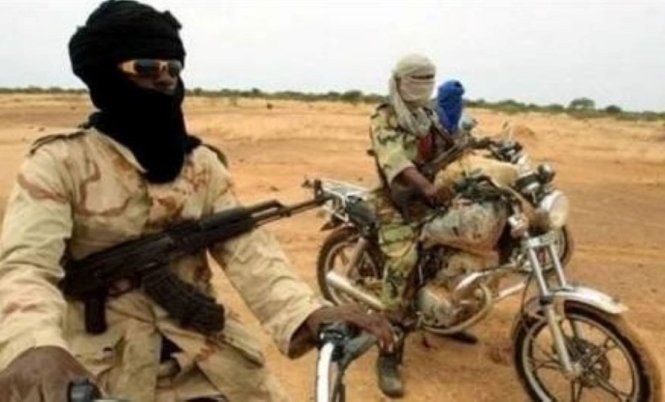
Seven Ghanaian nationals are feared dead after a truck carrying tomato traders from Ghana was attacked by suspected terrorists in Titao, Burkina Faso, on Saturday, February 14, 2026. The Ministry of the Interior confirmed the incident, stating the Ghana Embassy in Ouagadougou is liaising with local authorities to visit the site, confirm identities, and provide support. The attack occurred in a volatile Sahel border region where terrorist groups have intensified cross-border operations.
Read the full story here
No More Excuses – NCA Rolls Out Stricter Mobile Service Standards
The National Communications Authority (NCA) has introduced tougher quality-of-service standards for mobile network operators, effective immediately. The new rules, announced February 13, 2026, set minimum benchmarks for call drop rates, data speeds, network availability, and customer complaint resolution times, with heavy fines for persistent violations. The NCA said the measures aim to end years of public complaints about poor service and force operators to invest in infrastructure upgrades.
Read the full story here
Ex-Sergeant Peter Tasiri, Main Brain Behind June 4 Uprising, Is Dead
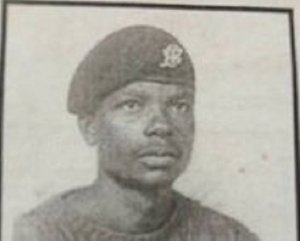
Retired Sergeant Peter Tasiri, widely regarded as one of the key architects and ideologues of the June 4, 1979, Armed Forces Revolutionary Council (AFRC) uprising in Ghana, has died. The former soldier, who played a central role in the revolutionary events that led to the execution of eight senior military officers, passed away on February 13, 2026. Tributes have poured in from veterans, historians, and political figures acknowledging his controversial yet pivotal place in Ghana’s post-independence history.
Read the full story here
Return to Lecture Halls Effective Feb 16 – CETAG Directs Members
The Colleges of Education Teachers Association of Ghana (CETAG) has directed its members to resume in-person lectures starting Monday, February 16, 2026, following the suspension of an earlier strike. The directive, issued February 13, 2026, comes after negotiations with government representatives addressed outstanding concerns over conditions of service and allowances. CETAG urged full compliance to avoid disruptions to the academic calendar.
Read the full story here
Accra Gridlock Costs Ghana GH¢4.5bn a Year – Report
Traffic congestion in the Greater Accra Metropolitan Area costs the Ghanaian economy an estimated GH¢4.5 billion annually in lost productivity, fuel waste, vehicle maintenance, and health impacts, according to a new study released February 13, 2026. The report, commissioned by the Ministry of Roads and Highways, highlights peak-hour delays averaging 2–3 hours daily and calls for urgent investment in mass transit, road expansion, smart traffic systems, and alternative transport corridors.
Read the full story here
NPA Raises Price Floor for Feb 16 Window: Petrol Up to GH¢10.24, Diesel Pegged at GH¢11.34
The National Petroleum Authority (NPA) has adjusted the price floors for the February 16 pricing window, increasing the maximum retail price for petrol to GH¢10.24 per litre and setting diesel at GH¢11.34 per litre. The February 13, 2026, announcement reflects movements in global crude prices, exchange rate fluctuations, and local taxes. The NPA assured consumers that margins remain regulated to prevent excessive profiteering by Oil Marketing Companies.
Read the full story here
AGI Demands Protection for Local Manufacturers Under 24-Hour Economy
The Association of Ghana Industries (AGI) has called for strong safeguards for local manufacturers as government pushes ahead with the 24-hour economy policy. In a February 13, 2026, statement, AGI President Dr. Humphrey Ayim Darku warned that unrestricted foreign competition could undermine domestic industries, job creation, and value addition. The group urged the government to prioritise local content, tax incentives, and import substitution in the policy rollout.
Read the full story here
GTYA Calls for Urgent Road Safety and Infrastructure Reforms After Nsawam Tanker Explosion
The Ghana Tyre and Automotive Association (GTYA) has renewed calls for comprehensive road safety and infrastructure reforms following the fatal fuel tanker explosion on the Nsawam-Accra highway that killed three people on February 14, 2026. GTYA President Dr. Kwame Agyemang highlighted the need for mandatory speed limiters, fire-suppression systems on tankers, better road design, and stricter enforcement to prevent recurrence of such tragedies.
Read the full story here
T-Bills Investors Ignore Low Yields to Tender GH¢22.66 Billion Bids in Appetite Surge
Investors submitted GH¢22.66 billion in bids for Treasury bills in the February 13, 2026, auction, far exceeding the target despite historically low yields. The surge in demand reflects continued strong confidence in government debt instruments amid macroeconomic stabilisation efforts and attractive risk-adjusted returns compared to alternative savings options.
Read the full story here









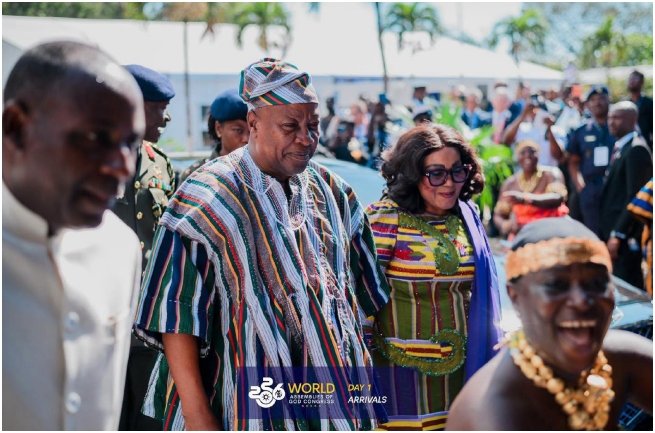
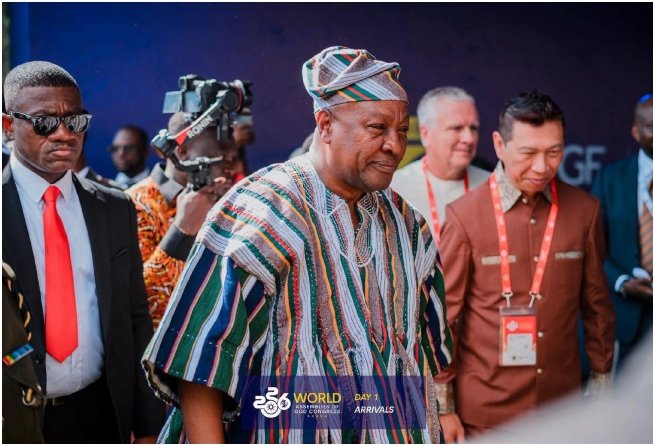
President John Dramani Mahama has challenged thousands of church delegates gathered in Ghana’s capital to measure the success of their global congress not by the eloquence of its sermons, but by the lives they transform after the final prayer is said.
“The lasting story of this conference, this congress, will be written in the lives that we touch after the closing prayer,” Mahama told more than 10,000 participants at the opening ceremony of the 10th Triennial Congress of the World Assemblies of God Fellowship on Wednesday, October 14, 2026.
The president urged delegates to return to their home countries with concrete plans to serve their communities — mentoring young people, supporting schools, strengthening health ministries and standing beside congregations serving under difficult conditions.
Faith Must Be Tangible
Mahama argued that faith becomes real only when it meets human need. He offered a vivid portrait of what practical Christianity looks like: a hungry child receiving a meal, a patient treated with compassion, a young person acquiring a skill, a widow finding companionship, and a struggling family receiving support from its community.
He called on the church to give greater attention to the relationship between preaching the gospel and serving people in practical ways, saying the two must not be separated.
“Spiritual authority entails a duty of care,” the president said, stressing that churches must provide safe environments for children and vulnerable people. He warned that spiritual leadership carries a responsibility to protect the trust placed in it through responsible conduct.
A Warning on Youth and Technology
Turning to youth development, Mahama acknowledged that young people today are growing up in a world of extraordinary opportunity, but also considerable pressure. Technology, he said, connects young people across continents while simultaneously exposing them to constant comparisons, misinformation and competing expectations about who they should become.
He urged churches and families to create environments where young people can ask questions freely, receive guidance, develop their abilities and take on meaningful responsibilities. Delegates, he said, should mentor young people by listening to them, offering opportunities for service and modelling integrity.
The president also called on the church to recognise the contributions of women of faith, saying their wisdom, talents and leadership deserve full recognition.
A Call for Global Solidarity
Addressing the global nature of the fellowship, Mahama expressed hope that members with greater resources would find ways to support those with fewer. The fellowship, he said, would grow stronger when its members shared their gifts and stood with one another through difficult times.
He also spoke directly to the responsibility of public office, saying those entrusted with power had a particular duty to serve with humility, honesty and integrity. Faith, he added, should deepen respect for citizens and concern for those whose voices are least likely to reach the centres of power.
Historic Honour for a Pentecostal President
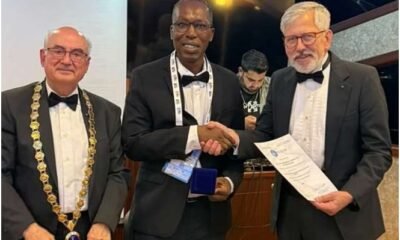
At the ceremony, the World Assemblies of God Fellowship presented Mahama with its maiden Global Leadership Excellence and Trailblazer Award. The citation described him as the first member of the Assemblies of God worldwide to become president of a country — a milestone for the denomination.
Organisers also presented him with a Bible and urged him to allow the Word of God to guide his leadership.
The fellowship honoured First Lady Mrs. Lordina Mahama for her work supporting vulnerable people through her compassion ministry.
Former Malawian President Dr. Lazarus Chakwera also received the Global Leadership Excellence Award. His citation described him as the second member of the denomination — and the first minister of the gospel within the fellowship — to become president of a country.
Prayers for Wisdom and Redistribution
Following the awards, general superintendents and Ghanaian church leaders gathered around Mahama to pray for him. The prayer leader, Reverend Dominic Yeo, the fellowship’s Global Chairman, asked God to grant the president “divine wisdom” and prayed for the continuation of what he described as a reformation agenda.
He also prayed for “a redistribution of wealth throughout this nation so that all Ghanaians will be blessed,” a prayer that resonated beyond the sanctuary walls in a country where economic inequality remains a pressing concern.
A Global Gathering in Accra
The 10th Triennial Congress has drawn more than 10,000 participants to Accra, making it one of the largest Pentecostal gatherings on the continent this year. The event brings together delegates from across the global fellowship, reflecting the denomination’s growing presence in Africa and beyond.
For Mahama, however, the congress’s true significance will not be found in its attendance figures or its ceremonies — but in what delegates do once they return home.
“Faith becomes tangible,” he said, “when a hungry child receives a meal, a patient is treated with compassion, a young person acquires a skill, a widow finds companionship and a struggling family receives support from its community.”
The closing prayer, it seems, is only the beginning.
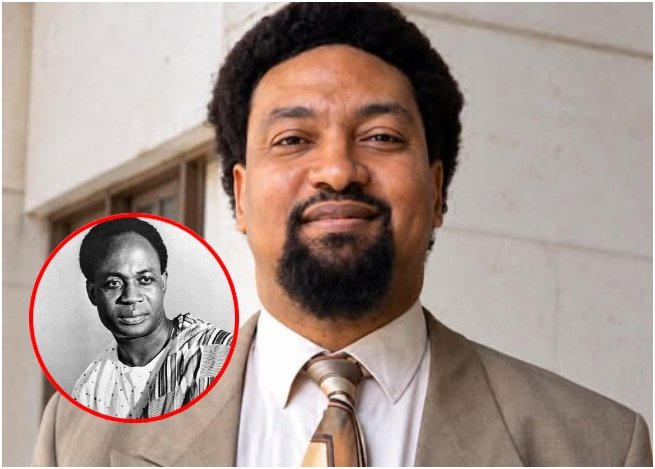
Gamal Gorkeh Nkrumah, the journalist, writer, and intellectual son of Ghana’s founding president, Osagyefo Dr. Kwame Nkrumah, has died in Cairo, Egypt, following a prolonged illness. He was 67.
The Nkrumah family announced his passing in a statement released Tuesday, describing it as “a profound loss not only to our family and loved ones, but also to the wider community of friends, colleagues and readers who valued his insight, humanity and unwavering engagement with the great questions of our time.”
According to the family, Gamal Nkrumah passed away peacefully after receiving care at a rehabilitation centre, where he had been recovering from a stroke.
A Life of Intellectual Engagement
Born in 1958, Gamal Nkrumah carved out a distinct identity as a newspaper journalist and commentator, dedicating his voice and intellect to examining the political, social, and cultural forces shaping Africa and the wider world.
Throughout his life, the family said, he remained “deeply committed to the ideals of justice, human dignity, African unity and international solidarity.”
Described as a man of “profound intellectual curiosity, independence of thought and quiet conviction,” Gamal carried forward the legacy of his father in his own distinctive way, while building a reputation firmly grounded in his own principles and achievements.
His passing marks the loss of a respected voice in African journalism and intellectual life, one whose work spanned continents and engaged deeply with the pressing issues of his time.
A Family in Mourning
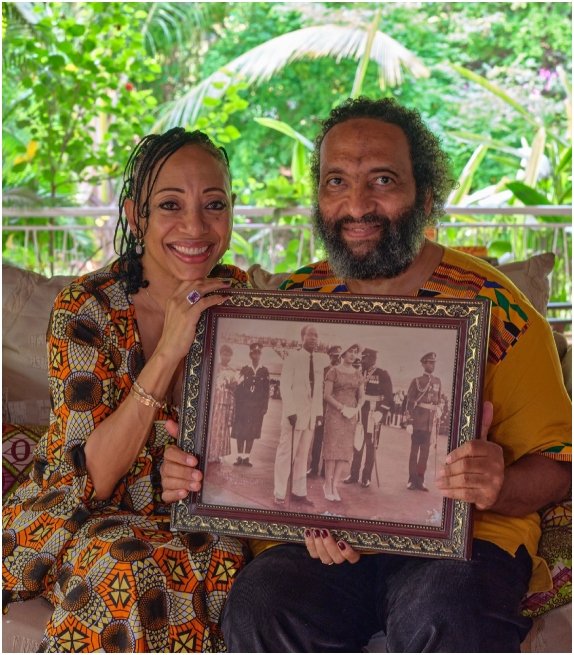
Gamal was one of the acknowledged children of Kwame Nkrumah and Fathia Nkrumah. He is survived by his siblings: Samia Nkrumah (born 1960), a politician and former leader of the Convention People’s Party (CPP); Dr. Francis Nkrumah (born 1962), a paediatrician; and Sekou Nkrumah (born 1964), a politician and photographer.
The Nkrumah family remembered Gamal “with immense love, gratitude and pride,” stating that “his wisdom, kindness and devotion to the values he held dear will remain an enduring source of inspiration.”
Gratitude and Requests for Privacy
In their statement, the family expressed heartfelt appreciation to all those who stood with Gamal throughout his illness, particularly the medical professionals and caregivers in Cairo who provided him with care and dignity.
They also extended “deepest thanks” to the governments and people of his two countries, Egypt and Ghana, for their generous support.
The family has kindly requested privacy as it mourns this deeply personal loss. Details concerning memorial arrangements and opportunities to pay tribute to his life and legacy will be communicated in due course.
“May he rest in eternal peace,” the statement concluded.
Ghana News
Ohio Court Orders Ghanaian Care Worker to Repay $53,278 After Workers’ Compensation Fraud Conviction

Betty Boateng, 50, of Columbus, pleaded guilty to a fifth-degree felony after investigators found she collected disability benefits while working for two in-home care employers
A US-based Ghanaian woman has been ordered to repay more than $53,000 to the state of Ohio after admitting she collected workers’ compensation disability benefits while simultaneously holding paid jobs, authorities announced.
Betty Boateng, 50, of Columbus, pleaded guilty to one count of Workers’ Compensation Fraud, a fifth-degree felony, following an investigation by the Ohio Bureau of Workers’ Compensation (BWC) Special Investigations Department, the agency said in a news release dated October 9, 2026.
Investigators found that Boateng “knowingly and with fraudulent intent returned to work for two different employers during periods when she was receiving BWC disability benefits to which she was not entitled.”
Evidence gathered during the probe showed she earned wages while continuing to accept disability checks, resulting in improper payments totaling $53,278.40.
Sentencing in Franklin County
On September 23, 2026, a judge in the Franklin County Court of Common Pleas accepted Boateng’s guilty plea and proceeded directly to sentencing, ordering:
- A 12-month suspended sentence
- 60 months of community control
- Mandatory reporting requirements
- Restitution of $53,278.40 to the Ohio BWC
- Waiver of fines, with court costs imposed
The case centered on Boateng’s work providing non-medical in-home care services for multiple employers, work she performed while receiving disability benefits she was not entitled to.
“Fraud Hurts Honest Workers”
BWC Administrator Stephanie McCloud said the agency remains committed to protecting the state’s workers’ compensation fund.
“Fraud against the workers’ compensation system hurts honest Ohio workers and employers,” McCloud said. “We are committed to holding accountable those who abuse the system and ensuring that funds remain available for individuals truly in need.”
The BWC urged anyone who knows of or suspects workers’ compensation fraud to contact its Special Investigations Department at 1-800-OHIO-BWC.
A Cautionary Tale for the Diaspora
The conviction adds to a growing list of cases involving Ghanaian nationals abroad facing fraud-related charges in the United States. Ghanaian communities in the US — particularly in cities such as Columbus, which has a sizable Ghanaian population — have increasingly been urged to understand the strict compliance rules attached to public benefit programs.
Workers’ compensation fraud in Ohio can be prosecuted as a felony depending on the amount involved, and convictions typically require full restitution in addition to any criminal penalties.


-
 Ghana News2 days ago
OBITUARY: Gamal Gorkeh Nkrumah, Son of Ghana’s Founding President, Dies in Cairo
-

 Festivals & Events2 days ago
MaddFest 2027: Welcome the New Year with a Night of Celebration in Accra
-
 Global Update2 days ago
Wave of Student Killings at Mexico Universities Raises Safety Concerns
-
 Ghana News2 days ago
Mahama to Churches: The Real Sermon Is Written After the Closing Prayer
-

 Reels & Social Media Highlights2 days ago
Ghana’s Timeline Erupts: Showboy’s Crude Plea, Asantewaa’s Silence, and a Nation Divided
-
 Festivals & Events1 day ago
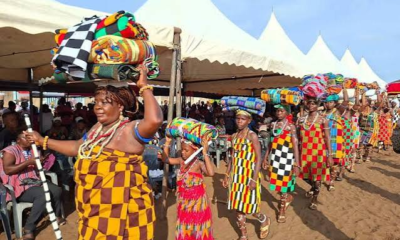
Velukusi Festival: Re-enacting the Ewe Escape to Freedom in Ve-Deme
-

 Taste GH1 day ago
Simple, Nourishing and Rooted in Tradition: Discover Ghana’s Kapala
-

 Health & Wellness2 days ago
The Scale Can Lie: Why Lifting Weights May Help You Lose More Fat