
Ghana News
Ghana Heads to International Arbitration Over Maritime Boundary Dispute With Togo

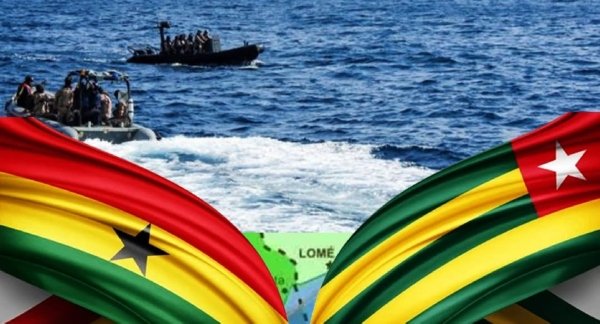
The government of Ghana has formally initiated steps to refer its long-running maritime boundary dispute with neighboring Togo to international arbitration.
The move marks a major escalation after years of unsuccessful negotiations.
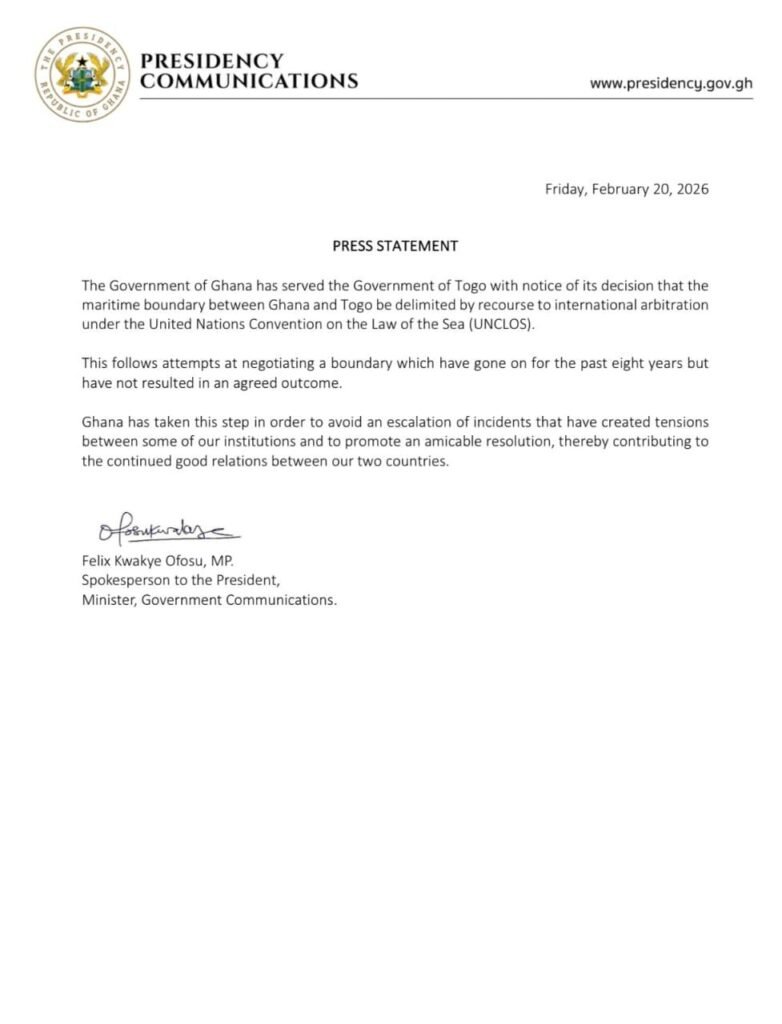
In a statement issued Friday, February 20, Minister for Government Communications Felix Kwakye Ofosu confirmed that Accra has officially notified Lomé of its decision to pursue arbitration under the United Nations Convention on the Law of the Sea (UNCLOS), the global legal framework governing maritime rights and ocean boundaries.
Eight Years of Talks Fail to Yield Agreement
According to the government, the decision follows nearly eight years of bilateral negotiations that failed to produce a mutually acceptable settlement.
Officials say repeated diplomatic engagements were unable to resolve disagreements over the precise delimitation of offshore maritime boundaries between the two West African nations.
“This follows attempts at negotiating a boundary which have gone on for the past eight years but have not resulted in an agreed outcome,” the statement noted.
The government stated that seeking arbitration is aimed at preventing further tensions and ensuring a peaceful, rules-based solution.
Authorities also stressed that the move is not intended to harm relations between the two countries, which share longstanding diplomatic, economic, and cultural ties.
Rising Tensions Prompt Legal Action
The dispute has reportedly generated periodic tensions between state institutions in both countries, particularly around offshore activities and maritime jurisdiction issues.
By invoking arbitration under UNCLOS, Ghana is seeking a binding legal determination that would permanently define the maritime boundary while preserving stability in the Gulf of Guinea.
Legal experts note that arbitration offers a structured process that reduces the risk of political escalation and ensures clarity for resource exploration, especially in areas believed to hold hydrocarbon potential.
Not Ghana’s First Maritime Arbitration
This marks the second time within a decade that Ghana has turned to international adjudication to resolve a maritime boundary dispute.
In 2014, Ghana initiated arbitration proceedings against Côte d’Ivoire over disagreements linked to offshore oil exploration in the Gulf of Guinea.
The case was heard by a special chamber of the International Tribunal for the Law of the Sea (ITLOS), which operates under UNCLOS.
In September 2017, the tribunal delivered a binding ruling that largely upheld Ghana’s claims and formally established the maritime boundary based on an equidistance line.
Implications for Regional Stability
Analysts say the current dispute underscores the growing importance of maritime boundaries in West Africa, where offshore oil and gas resources play a critical role in national economies.
They also note that Ghana’s decision to pursue arbitration reflects a broader commitment to international law and peaceful dispute resolution mechanisms.
Observers expect the arbitration process to take several years before a final ruling is issued.


Ghana News
Game-Changing Move: Ghana Sets Up New Fiscal Council to Scrutinize Government Spending and Win Back Investors
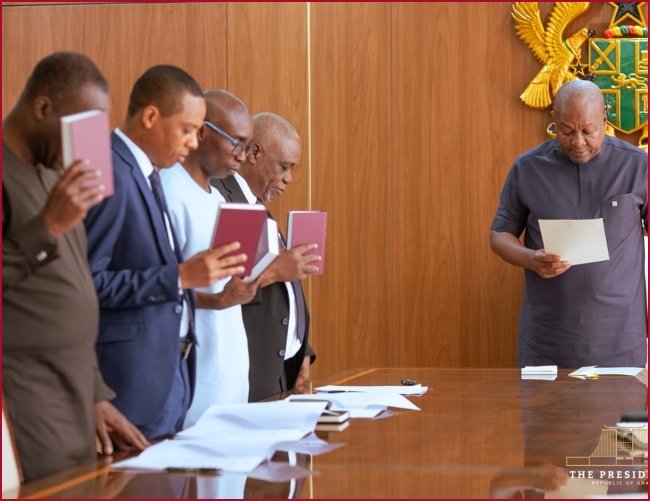
Ghana has launched a major, game-changing economic initiative by inaugurating a new, independent Fiscal Council designed to keep a strict watch on how the government spends taxpayer money.
The bold move is aimed directly at restoring international confidence and winning back global investors who have been wary of the country’s financial management.
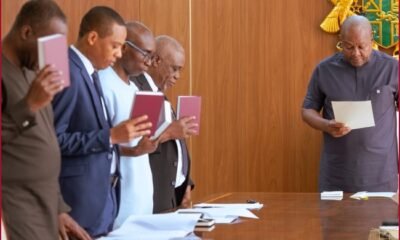
President John Dramani Mahama swore in the five-member council at the Presidency on Tuesday, establishing it under the Public Financial Management (Amendment) Act, 2025 (Act 1136).
The council is tasked with providing independent, credible, and objective oversight of Ghana’s fiscal policies, with a specific mandate to promote spending discipline, ensure long-term debt sustainability, and bring transparency to the use of public funds.
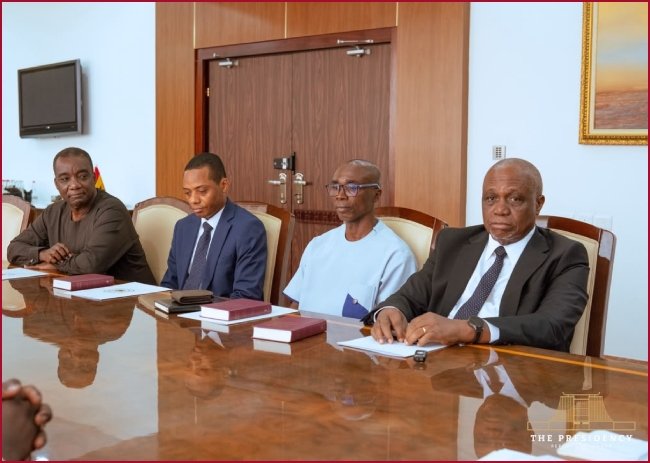
By creating this independent body, Ghana is sending a powerful message to international finance markets, the IMF, and the World Bank that it is serious about ending reckless spending. The council will act as a watchdog, scrutinizing the government’s budget decisions and assessing whether they comply with established financial rules.
President Mahama emphasized that the council assumes its role at a crucial time when investors and development partners are demanding greater prudence and accountability. Crucially, to make the move credible to foreign markets, the President made a firm pledge to respect the Council’s independence and assured members of full institutional support to execute their mandate without political interference.
“Your responsibility is to scrutinise the Government’s fiscal decisions, assess compliance with established rules, and provide sound recommendations in the national interest,” President Mahama told the council. “Your work must be guided by evidence and the national interest, without fear, favour, or political consideration.”
He warned that fiscal discipline is not just a legal requirement, but a moral obligation. “Fiscal responsibility must not be regarded merely as a statutory requirement. It is a moral obligation to present and future generations,” he stated.
The “game-changing” nature of the move is further amplified by the heavyweight composition of the council. It is chaired by Dr. Emmanuel Oteng Kumah, an international economic consultant and former Board Chairman of Standard Chartered Bank Ghana. He is joined by Dr. Henry Akpenamawu Kofi Wampah, a former Governor of the Bank of Ghana; Professor Patrick Opoku Asuming of the University of Ghana Business School; Mr. Leslie Dwight Mensah, a think tank representative; and Mr. J. Kweku Bedu-Addo, a former public policy expert at the Ministry of Finance.
For international investors, having a former Central Bank Governor and a former Standard Chartered executive guarding the public purse signals that the oversight will be both rigorous and professionally independent.
The ceremony was attended by key figures including Chief of Staff Dr. Julius Debrah, Finance Minister Dr. Cassiel Ato Forson, and Presidential Adviser on the Economy, Mr. Seth Terkper.
With this new council now in place, Ghana aims to prove to the world that its economic reforms are built on solid foundations, paving the way for renewed investment and sustainable growth.
Ghana News
Ghana’s Persistence Pays Off: AU Formally Commits to Tabling Xenophobia Petition in January 2027
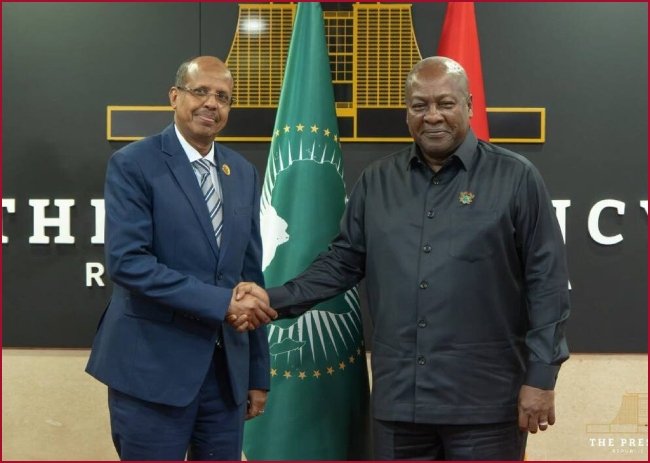
Ghana’s persistent diplomatic efforts have yielded a formal breakthrough, as the African Union (AU) Commission has issued a written assurance to the government that its petition against xenophobic attacks in South Africa will be tabled for deliberation at the next AU Summit in January 2027.
The Minister for Foreign Affairs, Samuel Okudzeto Ablakwa, made the announcement during a press conference at the Ministry of Foreign Affairs in Accra, where he provided an update on the petition originally filed on May 6, 2026.
“I can therefore confirm that the African Union Commission has formally written to the Government of Ghana in response to our petition and has clearly indicated that the matter will be tabled for deliberations at the AU Summit, expected to convene in January 2027,” Ablakwa stated.
The petition, addressed to the Chairperson of the AU Commission, highlighted the loss of lives, attacks on African migrants, destruction of businesses and investments, and the broader threats to African unity, free movement, and continental integration.
Ghana’s position has been clear: the best way to address the crisis is not to look away, but to bring it into the open for an honest, good-faith discussion on its root causes.
“Ghana believes that the best way to address this matter is not to look away and pretend nothing serious has happened, but to bring it into the open and have an honest, good-faith discussion on this concern and how best to address it,” Ablakwa added.
The announcement comes as a significant victory for Ghana’s diplomatic tactics. The petition was initially expected to be considered at the AU’s Eighth Mid-Year Coordination Meeting.
However, following the postponement of that meeting, Ghana did not relent. Instead, Accra secured the unanimous endorsement of the ECOWAS Authority of Heads of State and Government to continue pursuing the matter at the continental level.
The issue was further escalated by President John Dramani Mahama during bilateral talks with the AU Commission Chairperson, Mahmoud Ali Youssouf, on the sidelines of the AU Extraordinary Summit held in Accra in July. During those talks, President Mahama reiterated the call for the issue to be formally placed on the AU agenda, arguing that ignoring the crisis would not address its underlying causes.
President Mahama stressed that Ghana harbors no ill will towards South Africa but remains deeply concerned about the attacks and the significant losses suffered by foreign nationals forced to abandon their investments and return to their home countries. He noted that placing the matter on the agenda would provide South Africa with a formal, constructive platform to present its perspective while allowing African leaders to collectively work towards a lasting solution.
Chairperson Youssouf has acknowledged the need for continental discussion, noting that nationals of several African countries have been affected. He also disclosed that he had raised the matter directly with South African authorities during a recent visit to the country. While he commended the South African government for publicly condemning the violence, he expressed deep concern about the apparent impunity of some perpetrators.
The formal commitment from the AU comes after a difficult period for many Ghanaians. Between May 27 and September 4, 2026, Ghana evacuated 1,964 nationals from South Africa following renewed xenophobic violence and significant threats to the safety of its citizens.
With the AU Summit now confirmed as the stage for this critical dialogue in January 2027, Ghana is poised to shift the conversation from bilateral grievances to a broad, continental strategy to protect African citizens and preserve the spirit of Pan-African integration.
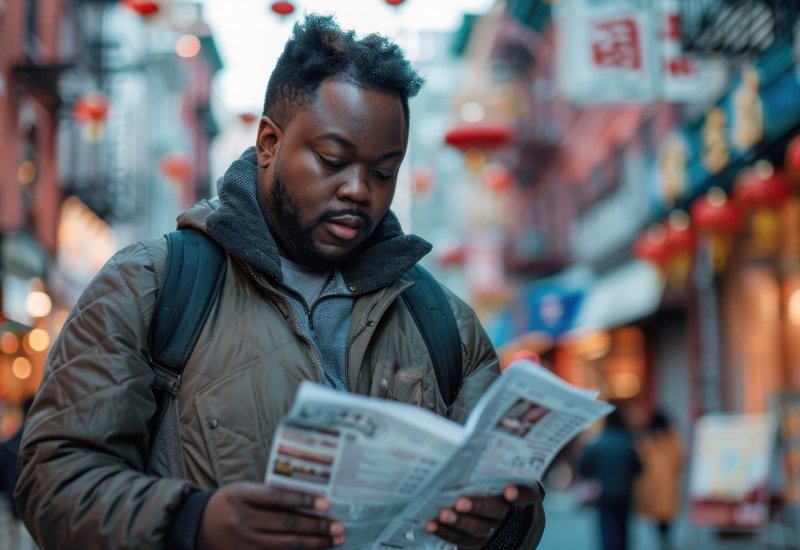
Here are the top headlines from Ghanaian newspapers published on Wednesday, September 9, 2026.
The Informer
- Main: Public Angry @ Security Personnel …For Breach of Road Traffic Rules; IGP Called To Act
- Also: Make NDPC’s Work Binding On Govts – IEA; ‘WhatsApp English’, Poor Reading Culture Responsible For 2026 WASSCE English Decline – WAEC; Bawumia Attributes Political Journey To Allah’s Will
The NewsCentra
- Main: Telecel Ghana investment rises to $1.4bn
- Also: Galamsey Liabilities Eroding Economy’s Future – IMF warns; Vacant ex-CJ seat on Council of State: Buabeng sues Mahama; Give 54,985 candidates actual SHS placements – NPP
The Ghanaian Times
- Main: Aayalolo set for revamp – Govt eyes dedicated lanes, police escort
- Also: GRA hails B5 Plus for GH¢400m tax payment; Ghana must prepare for electric vehicle future – Lands Minister; Long queues hit CSSPS resolution centres
Daily Graphic
- Main: SHS placement blues: Parents, JHS graduates chase schools (Resolution centre addresses concerns)
- Also: Govt to launch Diaspora Consular Fund for Ghanaians in distress – Foreign Minister; Police storm robbery dens – Grab suspects, seize ammunition
B&FT (Business & Financial Times)
- Main: Minerals law overhaul faces test of investment certainty, value capture
- Also: Indo-Ghana’s locally made liquid oxygen enters hospitals; Economy targets greater value addition as non-traditional exports hit US$5bn; Ports Authority turns in GH¢2.8bn profits
The Daily Statesman
- Main: MINORITY DEMANDS ANSWERS Over GH¢49.7m South Africa Evacuation Bill
- Also: Agyarko eyes stronger NPP performance in Accra; NPP demands real school places for 54,985 BECE candidates; Galamsey will worsen without the right intelligence architecture
The Custodian
- Main: Ablakwa Blows Over GH¢49m On SA Evacuees > Minority Demands Item By Item Bill
- Also: NPP Gives Govt 30 Days To Disclose Rural Telephony Status; Government Secures GH¢3.15bn From 4-Year Bond Bids; Middle East Conflict Affects Ghana’s Gold Exports
Daily Guide
- Main: Place Over 200k Stranded Students In Schools – NPP To Govt
- Also: Wontumi Endorses John Boadu For National Chairman; B5 Plus Group Pays GH¢400m Tax To GRA; 27,385 New Cancer Cases, 17,944 Deaths Recorded
The New Publisher
- Main: 238,000 Students Abandoned (NPP Corners Mahama: Rescue Them Today, Not on Camera Tomorrow)
- Also: Campaign From Prison: Wontumi Backs John Boadu; Barosky Back Home: Govt Sponsors Repatriation from UK
The Ghanaian Publisher
- Main: Ghana’s Cancer Crisis: 27,385 New Cases, 17,944 Deaths
- Also: SHS Placement Fiasco: 54,985 Need Classrooms, Not Portals …NPP Tells Govt; GH¢49.7m Evacuation: Minority Demands Breakdown
Supreme Newspaper
- Main: Minority Demands Answers Over South Africa Evacuation Bill
- Also: ‘Backward’ SHS Selection Policy Caused Placement Crisis – Abuakwa South MP; B5 Plus Presents Gh¢400M Tax Cheque To GRA; Adopt Zijin Mining Model *Armah Kofi-Buah
The Campaigner
- Main: GHANA EYES EV SKILLS CENTRE > As China’s Electric Truck Revolution Grows in Africa
- Also: Redesign CSSPS to accommodate 55K unplaced BECE candidates – Adutwum; Mahama Appoints Acting Director-General of Value for Money Office; AFRAMISCO Offers Free Admission, Tuition for 2026/27
The New Crusading Guide
- Main: OLIVER BARKER-VORMAWOR RACES TO COURT FOR APPEAL …Seeks Stay, Extension, Blames Former Lawyers
- Also: Michael Bartlett-Vanderpuye’s Meteoric Rise; B5 Plus Pays GH¢400m In Taxes; Dr. Sylvester Nyamekye Wins 2025 Best Paper Award
The Canary
- Main: Make Ghana A Hub Of Your Activities > Lands Minister To Global Mining Giant
- Also: Forex Gains Accounted For More Than 50% Of SOE Profit Margins – Kpessa-Whyte; New Economy Agenda Will Take Ghana Beyond Stabilisation *Dr Ato Forson; TOR MD Highlights Expansion Opportunities
The Accra Times
- Main: DEDICATE PEAK-HOUR LANES For Ayalolo Buses
- Also: This Is My New Job, Guide Me To Succeed – Ayariga Tells National Chief Imam; Ghana Not Insulated From Terror Threat – James Agalga Warns; North Dayi MP Calls For Global Action


The Guns Turned Inward: Niger’s Mutiny and Russia’s Fragile Bargain in the Sahel | By Joseph McCarthy

Game-Changing Move: Ghana Sets Up New Fiscal Council to Scrutinize Government Spending and Win Back Investors

Ghana’s Persistence Pays Off: AU Formally Commits to Tabling Xenophobia Petition in January 2027
-

 Ghana News2 days ago
Top Headlines From Ghanaian Newspapers: Tuesday, Sept. 8, 2026
-

 Ghana News1 day ago
How Ghana’s Government Pressured MTN, Telecel, and AirtelTigo to Cut Data Prices
-
 Arts and GH Heritage2 days ago
The Stories We Live With: Inside Nubuke Foundation’s Weight of the Ordinary
-
 Ghana News1 day ago
Buckingham Palace Responds to Jamaica’s $10 Billion Reparations Demand, But the UK Government’s Wallet Remains Shut
-
 Ghana News13 hours ago
Ghana’s Persistence Pays Off: AU Formally Commits to Tabling Xenophobia Petition in January 2027
-

 Africa Watch2 days ago
British-Nigerian Influencer Dies After Penis Enlargement Procedure in Thailand
-
 Ghana News14 hours ago
Top Headlines From Ghanaian Newspapers: Wednesday, Sept. 9, 2026
-
 Ghana News13 hours ago
Game-Changing Move: Ghana Sets Up New Fiscal Council to Scrutinize Government Spending and Win Back Investors