
Ghana News
Rolling News Update: Key Developments in Ghana (Feb. 24, 2026)


Welcome to our rolling news update from Ghana, delivering timely insights and developments for a global audience. Return often as we continue to add the latest stories.
High Court Sentences Footballer to Life Imprisonment for 2021 Gruesome Killing of Abesim Teenagers
A High Court in Ghana has handed down a life imprisonment sentence to a footballer convicted in the brutal 2021 murder of teenagers in Abesim. The case involved a gruesome killing that shocked the community, with the court delivering the maximum penalty following trial proceedings. Details on accomplices or exact circumstances remain limited in initial reports, but the ruling underscores ongoing efforts to address violent crime.
Read the full story here
ECG Empowers Meter Readers to Disconnect Power for Unpaid Bills
The Electricity Company of Ghana (ECG) has authorized its franchise officers (previously known as meter readers) to disconnect electricity supply to consumers with outstanding bills. Officers will verify meters, present bills on-site, and demand payment, with all transactions required to be cashless via the ECG app or *226# short code. Officials warn against handing cash directly to officers and carry proper IDs and authorization letters. The move aims to curb defaults and boost revenue collection, potentially leading to widespread disconnections for non-payers. (Announcement February 24, 2026)
Read the full story here
Police Arrest 6 Aggrey Memorial SHS Students Over Brutal Attack on Adisadel College Student
Six students from Aggrey Memorial Senior High School have been arrested following a vicious assault on Rexford Owusu-Ansah, a final-year student of Adisadel College (ADISCO), on February 20, 2026, after an inter-schools sports festival in Cape Coast. The attackers reportedly confirmed the victim’s school identity before beating him, stealing his iPhone 17 Pro Max, GH¢1,400, and shoes; he suffered a fractured bone near his right eye and required hospital treatment. The suspects, handed over by school authorities, are in custody at Kotokuraba Police Station, with investigations ongoing and due process promised.
Read the full story here
Three Swedru School of Business Students to Face Court Over Assault on Obrachire SHS Pupil
Three students from Swedru School of Business—Joseph Amoh (20), Benedict Appiah (18), and Bilal Mamud (18)—are set to be arraigned after their arrest on February 23, 2026, for assaulting an Obrachire Senior High Technical School pupil during the District Schools Athletics Games in Agona Swedru on February 19. The video-recorded attack caused facial injuries and a broken tooth to the victim, who has demanded justice and denied provocation. The Central Regional Police, following a 24-hour ultimatum, condemned the violence amid the Ghana Education Service’s indefinite suspension of inter-school sports events for safety reviews.
Read the full story here
EPA Estimates $35 Million Needed to Fully Restore Polluted Birim River
The Environmental Protection Agency (EPA) has stated that approximately $35 million is required to completely rehabilitate the heavily polluted Birim River, calculating $200,000 per kilometre for its roughly 175 km length. The degradation stems primarily from illegal mining (galamsey), severely impacting water quality, aquatic life, and community access to safe water. A pilot project using ionic nano copper technology has shown improvements in treated sections, but full restoration demands substantial funding and sustained national efforts to combat pollution and protect water resources.
Read the full story here
Ahafo Police Arrest Three with Firearms, Ammunition, and Drone in Foiled Robbery Bid
Police in Ghana’s Ahafo Region arrested three suspects—Johnson Mawutor (26), Kelvin Ofori (22), and Mawuli Dogba—on February 22, 2026, along the Ayomso–Goaso road after they fled a patrol. Seized items included an AK-47 rifle with ammunition, pistols, additional rounds, a drone, machete, knives, handsets, and an unregistered motorbike. Further weapons were recovered from one suspect’s home. The group is suspected of planning a robbery, with weapons allegedly sourced from Techiman; one accomplice remains at large. The suspects are in custody and expected in court on February 24, with authorities urging public vigilance.
Read the full story here
Acute Water Shortage Grips Parts of Kumasi as Power Outages Disrupt Treatment Plants
Severe water shortages have affected large areas of Greater Kumasi for three consecutive days, leaving residents reliant on alternative sources like wells. Ghana Water Company Limited attributes the crisis to unstable power supply causing low voltage at the Barekese and Owabi treatment plants, hampering pumping and distribution. ECG links outages to cable faults, transformer issues, and third-party interference (e.g., a blast in Ejisu), with some repairs completed but supply still intermittent. Communities like Atonsu report ongoing hardship for basic needs like cooking and bathing. (Reported February 24, 2026)
Read the full story here
Kotoka International Airport Officially Renamed Accra International Airport
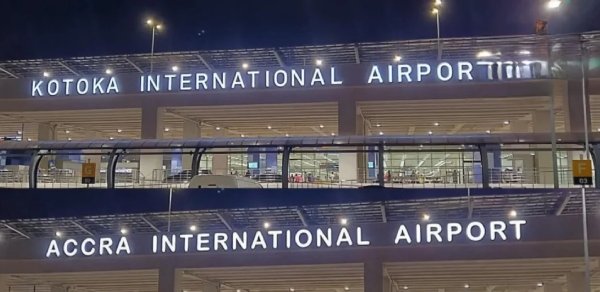
The Government of Ghana has restored the original name of the country’s main gateway, officially renaming Kotoka International Airport to Accra International Airport. Announced by the Ministry of Transport on February 23, 2026, the change reverts to the pre-renaming designation for better international recognition. Authorities assured that the switch will not disrupt operations, safety protocols, or travel arrangements, with the ICAO code remaining “ACC.” Updates to signage, documents, digital platforms, and aviation records are underway, and the government has called for public and stakeholder cooperation during the transition.
Read the full story here
Atlantic Lithium Ends Takeover Discussions as Ewoyaa Mining Lease Awaits Parliamentary Nod
Australian-listed Atlantic Lithium Limited has terminated exclusivity arrangements and ended talks on a conditional takeover offer for its shares, citing that the proposal undervalued the long-term potential of its flagship Ewoyaa Lithium Project in Ghana. In a February 23, 2026, update to the Ghana Stock Exchange, the company noted improved market conditions and the pending parliamentary approval of the Ewoyaa Mining Lease as key factors. If granted, the lease would clear a major regulatory hurdle toward establishing Ghana’s first lithium mine, enhancing its role in the global EV battery supply chain. Exploration has been scaled back to conserve cash, with trading resuming on the ASX after a brief halt.
Read the full story here
Korle Bu Teaching Hospital Interdicts Two Doctors and Two Nurses Over Alleged Denial of Emergency Care in Fatal Hit-and-Run
Korle Bu Teaching Hospital has interdicted two doctors and two nurses pending investigation into claims they refused emergency treatment to a 29-year-old hit-and-run victim, Charles Amissah, who later died. The incident occurred on February 6, 2026, after the patient was turned away from Police Hospital, Ridge Hospital, and Korle Bu due to alleged bed shortages; he suffered cardiac arrest at Korle Bu despite attempted CPR. A hospital committee is probing whether protocols were breached amid public outcry, with staff relieved of duties during the inquiry. The hospital reaffirmed its commitment to accountability and promised further updates.
Read the full story here
Obrachire SHS Student Calls for Justice Following Brutal Assault at District Athletics Meet
A student from Obrachire Senior High Technical School has demanded the arrest and prosecution of perpetrators after a violent attack during a district inter-schools athletics competition in Agona Swedru, Central Region. Victim Fiadzigbe sustained facial injuries and a broken tooth when allegedly pelted with stones and assaulted by students from Swedru School of Business (SWESBUS) in a viral video incident. He insisted he did nothing to provoke the attack. Police have arrested three suspects, while the Ghana Education Service and Ministry of Education condemned the violence, suspending all regional school sports events pending enhanced security reviews.
Read the full story here
127 of 318 Ambulances Grounded Due to Ageing Fleet, National Ambulance Service Reveals
Nearly 40% of Ghana’s ambulance fleet—127 out of 318 vehicles—are currently non-operational, primarily because of their age exceeding the typical five-year lifespan, leading to high maintenance demands and breakdowns. Clinical Auditor for the Southern Zone Martin Ewuah Amoah disclosed this on February 23, 2026, in a Channel One TV interview, noting the impact on emergency response times. The revelation ties into broader concerns highlighted by the recent death of a hit-and-run victim who struggled to access hospital care despite initial stabilization.
Read the full story here
Government Surpasses Treasury Bill Target, Raises GH¢11.4 Billion in Latest Auction
Ghana’s government exceeded its Treasury Bill auction target in Tender 1995 on February 20, 2026, raising GH¢11.41 billion against a GH¢9.32 billion goal amid strong investor demand totaling GH¢25.2 billion in bids. Acceptances included GH¢3.19 billion (91-day), GH¢2.45 billion (182-day), and GH¢5.78 billion (364-day) bills, with weighted average interest rates of 6.45%, 8.18%, and 10.21% respectively. The robust subscription signals continued market confidence, with the next auction (Tender 1996) targeting GH¢5.81 billion.
Read the full story here








Ghana’s 2027 Budget, presented by Finance Minister Cassiel Ato Forson under the theme “The New Economy, New Ghana, Jobs and Prosperity,” sets out an ambitious program to move the country beyond economic stabilization towards industrialization, domestic value addition and job creation.
At the center of the plan is a proposed $10 billion investment program over four years, supported by initiatives in agriculture, energy, critical minerals, tourism, manufacturing and technology. Here are 10 major takeaways from the budget and what they could mean for Ghana and its international partners.
1. A $10 Billion Program Will Drive the New Economic Agenda
The headline announcement is the government’s proposed $10 billion New Economy Program, which will run from 2027 to 2030. The initiative is designed to transform Ghana’s economic structure by expanding domestic production, strengthening industrial capacity, creating jobs and reducing dependence on raw commodity exports.
The program will be built around eight pillars: macroeconomic stability and affordable finance; commercial agriculture; energy infrastructure; critical minerals value addition; tourism, culture and creative arts; textiles and garments; pharmaceuticals and biomanufacturing; and the technology economy.
For 2027, the government has earmarked GH¢30 billion for the program, equivalent to 1.5 per cent of GDP. The private sector is expected to play the principal role in investment, innovation, production and sustainable employment.
2. Government Says the Program Will Be Funded Without New Borrowing
The financing of the $10 billion program is a major part of the government’s economic strategy. Finance Minister Cassiel Ato Forson said the initiative would be financed through domestic fiscal resources rather than new loans.
The proposed funding structure draws on the government’s primary surplus and improved revenue mobilization. The plan is to retain 0.5 per cent of GDP as a primary surplus for debt management, allocate another 1 per cent to the New Economy Program, and use additional revenue gains from stronger tax administration to support the financing arrangement.
If successfully implemented, the approach could allow Ghana to invest in productive sectors while limiting additional pressure on public debt. Its effectiveness will depend on the government’s ability to sustain revenue improvements and maintain fiscal discipline.
3. Agriculture Gets a $3 Billion Push, With Food Self-Sufficiency in Focus
Commercial agriculture is one of the largest investment areas, with a proposed $3 billion allocation. The government intends to strengthen domestic production across priority value chains, including rice, sugar, poultry, maize and soya feed, aquaculture, oil palm, vegetables and cocoa.
The strategy is intended to reduce Ghana’s dependence on imported food, strengthen agro-processing and create opportunities across farming, storage, transportation and manufacturing.
A particularly significant target concerns cocoa. The government wants at least 50 per cent of Ghana’s cocoa to be processed locally by 2028 and 100 per cent by 2030, moving the country towards retaining more of the value generated from one of its most important export commodities.
The Pwalugu Multipurpose Dam is also part of the wider agricultural infrastructure agenda, with planned irrigation, hydropower and aquaculture facilities intended to support production.
4. Ghana Plans Major Energy Investments to Lower Electricity Costs
The budget places energy infrastructure at the center of the country’s industrialization ambitions. The government recognizes that reliable and affordable electricity is essential for factories, businesses, commercial farms and a stronger 24-hour economy.
The energy program includes investments in power generation, transmission and distribution, alongside plans to expand renewable energy and strengthen the electricity network.
Among the major proposals are a state-owned 1,450-megawatt thermal power plant, a 600-megawatt solar facility supported by battery storage, and investment in modernizing transmission infrastructure. The government also intends to phase out dependence on emergency power plants by 2030.
The budget’s clean-energy measures include exemptions from import duties and VAT for solar panels and batteries, a move intended to make renewable-energy equipment more affordable and encourage investment in the sector.
5. Gold, Cocoa, Bauxite and Manganese Will Face Pressure for Local Processing
One of the most consequential policy shifts is the government’s determination to move Ghana away from exporting raw materials and towards processing more of its natural resources domestically.
Under the critical minerals value-addition program, the government aims to have 70 per cent of artisanal and small-scale gold refined locally by December 2027, rising to 100 per cent by December 2028. It also intends to increase local processing of manganese and bauxite, with the longer-term objective of ending raw exports from these sectors.
The policy is intended to retain more revenue within Ghana, stimulate local industries and create skilled employment in refining, manufacturing and related services.
For international investors, the direction of policy is significant: opportunities may increasingly lie not only in extracting Ghana’s mineral resources, but also in building the facilities, technology and supply chains needed to process them locally.
6. Tourism, Heritage and Medical Services Are Being Positioned as Growth Industries
The government is proposing a $1 billion investment in tourism, culture and the creative arts, with the ambition of building a year-round visitor economy rather than relying primarily on seasonal tourism.
The strategy includes promoting Ghana’s cultural heritage, strengthening historical tourism, expanding conference and hospitality infrastructure, and positioning Accra as an international conference destination, with Kumasi playing a complementary role.
The budget also identifies medical tourism as an opportunity. The proposed development of a medical tourism hub is intended to attract international patients and encourage investment in specialist healthcare facilities and related services.
For Ghana, the ambition is to turn its cultural identity, heritage sites, creative industries and healthcare capacity into sources of employment, business opportunities and foreign exchange.
7. Textiles, Pharmaceuticals and Technology Are Part of the Industrialization Plan
The New Economy Program also seeks to strengthen industries that can create jobs, reduce imports and expand Ghana’s participation in international markets.
Textiles and garments are expected to receive attention as the government seeks to expand local manufacturing and connect Ghanaian producers to global fashion markets.
Pharmaceuticals and biomanufacturing are another priority. The intention is to increase domestic production of medicines and vaccines, strengthen health security and create opportunities to supply markets beyond Ghana.
The technology economy completes this part of the industrialization agenda. The budget recognizes technology as a potential source of employment, innovation and foreign exchange, while highlighting the importance of rural connectivity so that people outside major urban centers can participate in the emerging economy.
8. Government Is Targeting Economic Growth While Protecting Fiscal Stability
The budget seeks to balance higher economic activity with continued fiscal discipline. The government is targeting real GDP growth of 5.2 per cent in 2027, with non-oil growth projected at 5.7 per cent.
It is also aiming to maintain single-digit inflation, strengthen foreign-exchange reserves and keep public debt on a sustainable path. The budget sets an end-year inflation target of 8 per cent and a primary surplus target of 0.5 per cent of GDP on a commitment basis.
These targets matter to households, businesses and international investors because economic growth alone does not guarantee stability. Inflation, borrowing costs, currency performance and the government’s ability to meet its financial obligations will remain important measures of the country’s economic health.
The central test will be whether the government can translate improved macroeconomic conditions into stronger private investment, higher productivity and better living standards.
9. Ghana Wants to Strengthen Debt Management and Maintain Investor Confidence
The government has also signaled its intention to manage debt obligations proactively. The Finance Minister announced plans to settle upcoming domestic and Eurobond obligations ahead of their scheduled dates.
The budget statement reported that approximately $480 million had accumulated in the US dollar Sinking Fund as of November 11, 2026, with the government aiming to increase the amount to about $600 million by December.
The planned repayments are intended to demonstrate the government’s commitment to meeting its obligations and managing debt-service pressures.
For international investors and Ghana’s development partners, the ability to make timely payments, maintain credible fiscal management and avoid another debt crisis will be important to restoring confidence in the country’s economy.
10. The Biggest Question Is Whether the Promises Will Produce Jobs and Higher Incomes
Although the budget contains major investment announcements, its ultimate success will be judged by what changes for ordinary Ghanaians and businesses.
The government has presented the New Economy Program as a job-creation and productivity strategy, with the private sector expected to lead much of the investment and production. Social interventions, including support for vulnerable households and the Women’s Development Bank, also form part of the broader policy agenda.
However, ambitious targets do not automatically translate into completed infrastructure, functioning factories, higher agricultural output or secure employment.
The government will need to demonstrate that projects are properly financed, implemented on schedule and supported by reliable infrastructure and transparent institutions. It must also ensure that local businesses, farmers, workers and entrepreneurs can participate in the opportunities being created.
Ultimately, Ghana’s 2027 Budget is a statement of economic direction: less dependence on exporting raw materials, more domestic production, greater value addition and a stronger role for private enterprise. Whether this becomes a lasting transformation will depend not on the scale of the announcements, but on the quality and consistency of implementation.
Ghana News
Ghana Targets Industrialization in 2027 as $10 Billion Economic Transformation Plan Unveiled in 2027 Budget
Ghana has unveiled an ambitious four-year, $10 billion economic transformation program aimed at reducing its dependence on raw commodity exports, expanding domestic manufacturing and creating jobs, as Finance Minister Cassiel Ato Forson presented the government’s 2027 Budget Statement and Economic Policy to Parliament on Thursday, November 12, 2026.
The budget, titled The New Economy, New Ghana, Jobs and Prosperity, sets out a shift from the fiscal consolidation and economic stabilization measures of the previous two years towards productive investment, industrialization and greater domestic value addition.
For international investors, trading partners and development institutions, the proposals signal Ghana’s intention to reposition itself as a more diversified production and processing hub in West Africa, particularly in minerals, agriculture, energy, tourism, pharmaceuticals and technology.
The government says the program will require $10 billion in investment between 2027 and 2030, organized around eight connected pillars. These include macroeconomic stability and affordable finance; commercial agriculture; energy infrastructure; critical minerals processing; tourism and creative industries; textiles and garments; pharmaceuticals and biomanufacturing; and the technology economy.
Economic recovery and the targets for 2027
The budget is presented against a backdrop of improving economic indicators following Ghana’s severe economic crisis in 2022, when inflation reached 54.1 per cent by the end of the year and the country experienced debt distress, currency depreciation and restricted access to international capital markets.
According to the Finance Ministry’s assessment, Ghana has since made progress in restoring fiscal discipline, reducing inflation, rebuilding foreign-exchange reserves and improving its sovereign credit standing.
The government reports that public debt stood at 47.5 per cent of gross domestic product at the end of October 2026, while annual average inflation was 4.6 per cent. Gross external reserves covered 4.5 months of imports as of September 2026.
Ghana’s sovereign credit ratings also improved during 2026. Fitch Ratings upgraded the country to B with a positive outlook in May, S&P Global Ratings affirmed its B-/B ratings with a stable outlook in September, and Moody’s upgraded Ghana from Caa1 to B3 in October.
Building on these developments, the government is targeting real GDP growth of at least 5.2 per cent in 2027, with non-oil growth expected to reach 5.7 per cent. End-year inflation is projected at 8 per cent, while the primary balance is expected to record a surplus of 0.5 per cent of GDP on a commitment basis.
The government also aims to raise gross international reserves to at least six months of import cover, strengthening the country’s capacity to withstand external shocks and support the cedi.
These are policy targets rather than guaranteed outcomes. Their achievement will depend on domestic implementation, commodity-market conditions, financing availability and developments in the global economy.
A $10 billion program to change what Ghana produces and exports
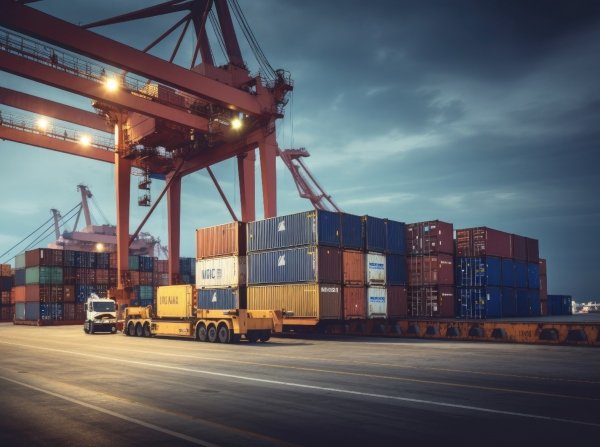
The central feature of the budget is the New Economy Program, a four-year initiative beginning in 2027.
The program responds to a longstanding weakness in Ghana’s economic structure: the country exports substantial quantities of gold, cocoa, bauxite, manganese and other raw materials but captures a more limited share of the higher-value processing, manufacturing and industrial activity associated with those resources.
The government argues that this pattern leaves the economy vulnerable to international commodity-price fluctuations while limiting the number of skilled jobs and industrial opportunities created locally.
The proposed $10 billion program is intended to address that imbalance by linking agricultural production, energy supply, mineral processing, manufacturing, tourism and technology into a broader domestic production system.
The eight pillars are designed to reinforce one another. Reliable electricity, for example, is expected to support mineral-processing facilities and factories, while transport infrastructure will connect production areas to industrial centers and export markets.
Agriculture and cocoa processing
Commercial agriculture is one of the program’s largest components, with a planned investment of $3 billion.
A major project is the proposed $1 billion Pwalugu Multipurpose Dam, which is expected to support irrigation across more than 25,000 hectares of land, expand vegetable production and provide 70 megawatts of hydropower.
The reservoir is also expected to accommodate 1,000 fish cages for aquaculture. The government says the project will improve water security, support flood protection and supply electricity to agro-processing facilities, irrigation systems and cold-storage infrastructure.
The first phase is expected to be ready by early 2029, with full completion targeted for December 2030.
Cocoa processing is another major priority. Ghana aims to process at least 50 per cent of its cocoa domestically by 2028 and 100 per cent by 2030, moving towards a prohibition on raw cocoa exports.
The proposed expansion goes beyond primary grinding to include cocoa liquor, butter, cake, powder, chocolate, cosmetics and other finished products.
For international cocoa buyers, processors and manufacturers, the policy could reshape the way Ghana participates in the global cocoa value chain. It also presents opportunities for investment in processing technology, industrial facilities, packaging and finished consumer products.
Energy infrastructure and industrial power
The second major infrastructure-related priority is a $2 billion energy investment program.
The government acknowledges that high electricity tariffs, distribution losses, weak revenue collection, fuel-supply risks and outstanding obligations to independent power producers and fuel suppliers continue to place pressure on businesses and public finances.
It says Ghana recorded an energy-sector shortfall of approximately $1.4 billion in 2025, alongside arrears of about $1.7 billion to independent power producers and fuel suppliers.
The proposed investment is intended to strengthen generation, transmission and distribution, improve the reliability and affordability of electricity, and support the country’s industrial ambitions.
The government is also pursuing the development of nuclear power as a potential source of baseload electricity.
A further measure with direct implications for households and businesses is the proposed exemption of solar panels and batteries from import duties and Value Added Tax (VAT). The government expects the exemptions to lower the cost of adopting solar energy and encourage investment in renewable power systems.
For international energy companies, equipment suppliers and investors, the combination of grid infrastructure, solar incentives and planned industrial power demand could create opportunities in Ghana’s energy market.
Critical minerals: a push for domestic refining
Ghana is allocating $1.5 billion to develop an industrial minerals economy centered on gold, manganese, bauxite and lithium.
The government wants more of the value generated by these resources to remain in the country through local refining, processing and manufacturing.
Under the proposed targets, at least 70 per cent of artisanal and small-scale gold is to be refined locally by December 2027. Local refining is expected to reach 100 per cent by December 2028, when exports of raw artisanal and small-scale gold would be prohibited.
At least half of Ghana’s manganese and bauxite is to be processed locally by the end of 2028. By the end of 2030, the government intends to process all manganese and bauxite domestically and prohibit exports of the raw minerals.
The strategy also envisages developing bauxite into alumina and aluminum, while lithium processing is expected to progress from local refining towards battery-grade chemicals, components and cells.
A 24-hour critical-minerals processing enclave is planned for the Western Region.
To support the industrial corridor, construction of a railway line from Takoradi to Nyinahin is scheduled to begin in 2027, using domestic resources. The line is expected to pass through mineral-producing areas including Nsuta and Awaso, transporting manganese and bauxite to the proposed processing enclave.
The government also plans to develop Takoradi Port as a maritime gateway to the Sahel. From 2030, the railway is expected to extend northwards from Nyinahin to Hamile, where an inland port would serve Burkina Faso, Mali, Niger and the wider Sahel region.
The proposals could have implications for international mining companies, mineral traders, logistics operators, equipment manufacturers and investors in refining and battery-material supply chains. However, the transition will require substantial technical capacity, capital, infrastructure and environmental safeguards.
Tourism, heritage and creative industries
The government has earmarked $1 billion for tourism, culture and creative arts, with the ambition of building a year-round visitor economy that generates foreign exchange and supports businesses across the country.
The program seeks to expand beyond the seasonal concentration of visitors around December and develop heritage tourism, ancestry services, family reunions, educational programs and creative arts as attractions throughout the year.
The Black Star Experience is expected to operate across all 12 months, supported by a national events calendar and efforts to attract international conferences and business gatherings.
Ghana also plans to strengthen the conservation and presentation of historic sites, including forts and castles associated with the transatlantic slave trade. The budget proposes improved museums and archives, multilingual interpretation, professional training for guides and conservators, and stronger connections between heritage sites and local businesses.
The government intends to position Accra as the country’s principal international conference hub, with Kumasi developed as a complementary destination.
The Social Security and National Insurance Trust (SSNIT) is expected to build and operate an international convention center at the La Trade Fair Centre. A professional convention bureau is also planned to pursue recurring African and international conferences.
Additional proposals include new hotels in Accra, Kumasi, the Cape Coast and Elmina heritage corridor, the Volta Region and Northern Ghana. The government also plans to establish a medical tourism hub linking specialist hospitals, diagnostic services, rehabilitation facilities, hotels, laboratories and pharmacies.
These initiatives could open opportunities for international hotel operators, conference organizers, travel companies, cultural institutions, healthcare providers and investors in hospitality infrastructure.
Textiles, pharmaceuticals and technology
The New Economy Program also includes $1 billion for textiles and garments, with the objective of expanding local manufacturing and connecting Ghanaian producers to international fashion markets.
The government wants to use the investment to strengthen domestic production, create employment and increase the country’s participation in global textile and garment supply chains.
Pharmaceuticals and biomanufacturing are another priority. The proposed compact is intended to expand domestic production of medicines and vaccines, strengthen health security and position Ghanaian manufacturers to supply markets across Africa.
The technology economy completes the program’s eight pillars. The government intends to widen opportunities for technology-related employment and foreign-exchange earnings, with rural connectivity expected to help people outside major urban centers participate in the digital economy.
Taken together, these sectors represent an effort to diversify Ghana’s export base beyond its traditional reliance on minerals, cocoa and crude oil.
Fiscal discipline, public debt and international investors
Despite the scale of its investment ambitions, the government says it will maintain fiscal discipline and avoid returning to the borrowing and expenditure practices that contributed to the country’s recent debt crisis.
The 2027 budget projects total revenue and grants of GH¢323.1 billion, compared with GH¢274 billion in 2026. Total expenditure on a commitment basis is programmed at GH¢375 billion, equivalent to 20.8 per cent of GDP.
The overall fiscal deficit is projected at 2.9 per cent of GDP on a commitment basis and 3.6 per cent on a cash basis. The primary balance is expected to record a surplus of 0.5 per cent of GDP on a commitment basis.
The distinction between the commitment and cash figures is important: the two measures account for government spending and financing at different stages, and should not be treated as interchangeable.
The budget also outlines a medium-term strategy to reduce reliance on short-term domestic debt instruments by increasing the issuance of medium- and long-term bonds. The government intends to strengthen the Sinking Fund through regular transfers to build resources for future debt repayments.
In a significant signal to international bondholders, Forson said Ghana intended to settle both the January 2 Eurobond repayment and a February domestic bond by December 31, 2026. He reported that approximately $480 million had accumulated in the US dollar Sinking Fund as of November 11, with the government aiming to raise the balance to about $600 million by December.
The Finance Minister also reaffirmed the government’s commitment to paying Eurobond holders their principal and coupon obligations in full and on time.
These commitments will be closely watched by investors assessing Ghana’s debt sustainability, repayment capacity and access to international capital markets.
Tax reforms and the investment environment
The budget places considerable emphasis on improving revenue collection through administration and digital systems rather than relying primarily on additional tax burdens.
The government plans to continue modernizing the tax framework, including implementation of the VAT Act, Customs Act and Excise Act, alongside further reform of the Income Tax Act.
Digital tools will play a growing role in enforcement. These include the expansion of Fiscal Electronic Devices for VAT compliance, the use of data analytics to identify non-resident taxpayers, and the upgrading of the Publican AI customs system to detect undervaluation, misclassification and discrepancies in revenue payments.
The government also intends to review concessionary import-duty arrangements under Chapter 98 of the Customs Tariff Schedule. The review is intended to improve transparency and ensure that concessions on selected machinery, raw materials and industrial inputs benefit genuine manufacturing and investment activities.
For businesses operating across borders, the budget proposes an assessment and possible renegotiation of existing double-taxation agreements to address treaty abuse, improve tax certainty and align Ghana’s arrangements with international standards on base erosion and profit shifting.
The proposed solar-panel and battery import exemptions are among the clearest new tax incentives in the statement, aimed at encouraging renewable-energy adoption.
The Finance Minister also announced that the government would present bills covering stamp duty, public financial management amendments, automatic exchange of financial account information, and fees and charges for consideration.
For international companies and investors, the combination of tax administration reforms, proposed treaty reviews and targeted industrial incentives will be important in assessing Ghana’s regulatory and investment environment.
Social protection and the employment challenge
The budget’s economic transformation agenda is also linked to the government’s commitment to improving livelihoods and expanding employment.
The government plans to sustain the Livelihood Empowerment Against Poverty program and the Ghana School Feeding Program, while strengthening the delivery of social protection services to vulnerable households.
It also intends to operationalize the Women’s Development Bank, which has been capitalized with GH¢400 million, to expand access to finance for women entrepreneurs and underserved groups.
The wider employment challenge remains substantial. The budget cites unemployment of approximately 12.8 per cent in 2025, despite decades of economic growth. The government argues that growth must translate into productive employment and higher household incomes rather than remain concentrated in sectors that generate relatively few jobs.
The success of the New Economy Program will therefore be measured not only by investment figures and GDP growth, but also by whether its projects create sustainable jobs, strengthen local businesses and raise the value of Ghanaian exports.
Global risks and the test of implementation
Ghana’s economic plans are being developed amid an uncertain international environment. The budget identifies geopolitical tensions, disruptions to energy supplies and shipping routes, trade-policy uncertainty and tighter global financing conditions as risks to economic performance.
The government also acknowledges the country’s exposure to commodity-price movements. Gold, cocoa and crude oil accounted for 90.4 per cent of Ghana’s export receipts as of September 2026, with gold alone contributing 69.9 per cent.
That concentration leaves the country vulnerable to changes in global demand and prices, even as favorable commodity markets can strengthen export earnings and foreign-exchange reserves.
The budget therefore places emphasis on building reserves, diversifying exports and processing more commodities domestically. The government is targeting at least six months of import cover in international reserves in 2027.
For Ghana’s development partners, international financial institutions and private investors, the key question will be whether the country can translate its ambitious investment program into bankable projects while maintaining fiscal discipline.
The proposed $10 billion program is substantial, and its success will depend on financing arrangements, project preparation, private-sector participation, institutional capacity and consistent policy implementation.
Ghana’s 2027 budget thus sets out more than a spending plan. It is an attempt to redefine the country’s place in global production and trade: moving from a supplier of raw commodities towards a country that processes more of its resources, manufactures more goods, develops its services economy and retains a greater share of the value created within its borders.
Whether that ambition becomes a durable economic transformation will depend on what happens after the budget announcement.

Ghana has introduced upgraded banknotes under a new currency design initiative known as the Ghana Heritage Series, placing some of the country’s most influential historical, cultural, educational and political figures at the center of its national currency while strengthening measures against counterfeiting.
The new banknotes, unveiled by the Bank of Ghana, feature prominent personalities including the country’s founding president, Dr Kwame Nkrumah; former United Nations Secretary-General Kofi Annan; pioneering judge Justice Annie Jiagge; flag designer Theodosia Okoh; and renowned composer Dr Ephraim Amu.
Other figures honored include Agnes Oforiwa Tagoe-Quarcoopome, a celebrated market woman who supported Ghana’s independence movement; Cardinal Peter Porekuu Dery, a prominent Catholic leader; and Dr James Emman Kwegyir Aggrey, the pioneering educator and Pan-Africanist.
Beyond the portraits, the redesigned currency incorporates historic buildings, important national sites, market scenes and Adinkra symbols, bringing aspects of Ghana’s history and cultural identity into everyday financial transactions.
The Bank of Ghana says the upgraded notes are intended to improve security, increase durability and make the currency more convenient to handle, while reinforcing public confidence and national pride in the cedi.
Bank of Ghana explains the purpose of the new currency

Speaking at the launch, Bank of Ghana Governor Dr Johnson Pandit Asiama said a national currency represented much more than a means of payment.
He described it as an expression of a country’s ability to manage its monetary affairs through its own institutions and as a foundation for economic activity.
“This launch is more than the introduction of upgraded notes. It is an opportunity for us to reaffirm our responsibility to protect the cedi, to celebrate the heritage that defines us and prepare our currency for the demands of a changing world,” he said.
Dr Asiama stated that the credibility of a currency depended on sound economic policies, effective institutions and the confidence of the people who used it.
He said the Ghana Heritage Series formed part of the central bank’s continuing efforts to modernize currency management and preserve confidence in the country’s national currency.
The redesign also addresses practical concerns associated with the use of physical money. The notes have been made smaller to improve portability and handling, while their construction is intended to withstand Ghana’s climatic conditions and the frequent handling associated with everyday cash transactions.
Enhanced security features have also been incorporated to make genuine banknotes easier to identify and more difficult to counterfeit. The Bank of Ghana says the improvements are expected to extend the notes’ useful lifespan.
The stories behind the new Ghana cedi denominations
One of the most distinctive aspects of the Ghana Heritage Series is the selection of personalities whose contributions represent different dimensions of the country’s development.
Rather than focusing exclusively on political leaders, the new designs recognize people associated with commerce, religion, education, the judiciary, music, diplomacy and the struggle for independence.
The denominations and their featured personalities include:
GH¢1 — Agnes Oforiwa Tagoe-Quarcoopome: Celebrating Ghana’s market women
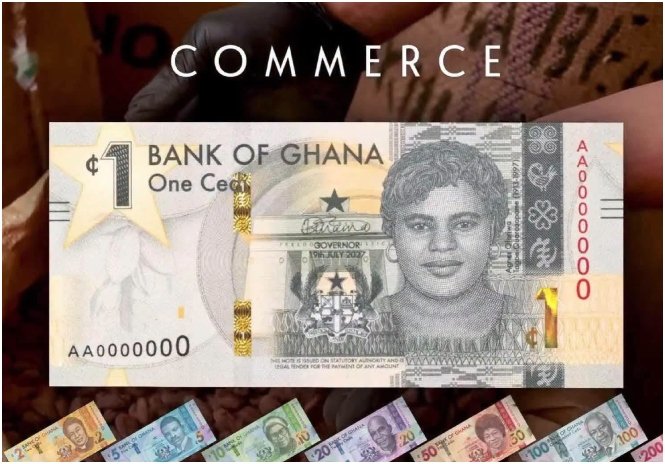
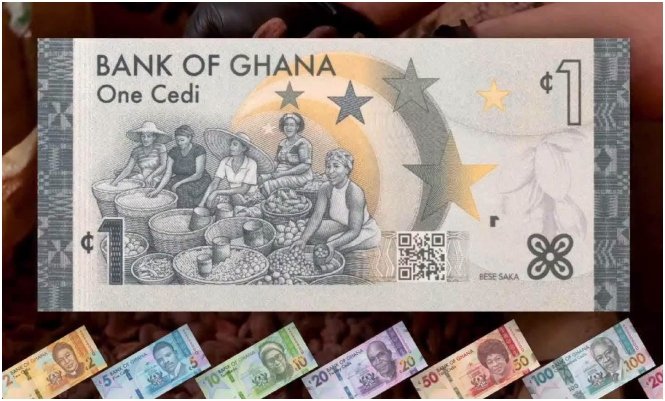
The GH¢1 note features Agnes Oforiwa Tagoe-Quarcoopome (1913–1997), affectionately known as Auntie Oforiwa, a prominent market woman and textile trader remembered for supporting Ghana’s independence struggle.
She began trading between 1921 and 1929 and had become one of the country’s respected businesswomen by the 1940s, operating shops at Makola and Okaishie markets in Accra.
She is credited with being the first woman at Makola Market to open a bank account with Standard Bank of West Africa, now Standard Chartered Bank Ghana, at a time when many traders kept their savings at home.
Her example reportedly encouraged other market women to develop confidence in formal banking.
Beyond her commercial activities, she mobilized women traders at Makola to provide financial and other support for the campaign for independence.
The reverse of the GH¢1 note features Makola Market, reflecting the importance of women’s trading networks and traditional markets in Ghana’s economic and social history.
GH¢2 — Cardinal Peter Porekuu Dery: Recognizing religious and cultural leadership
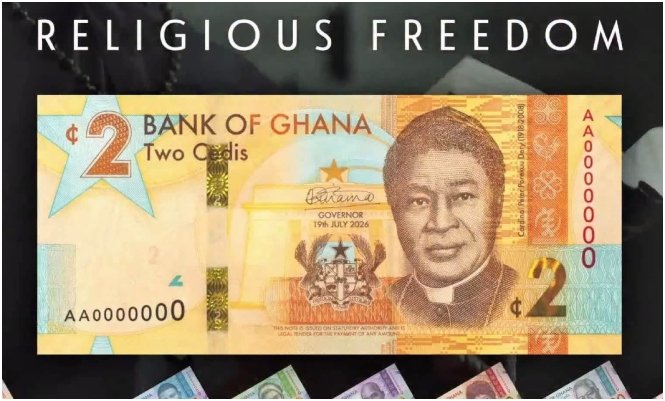

The GH¢2 note honors Cardinal Peter Porekuu Dery (1918–2008), a prominent Ghanaian Catholic prelate who served as Archbishop of Tamale from 1974 to 1994.
Elevated to the rank of cardinal by Pope Benedict XVI in 2006, Dery was widely recognized for promoting the incorporation of Ghanaian languages and cultural expressions into Catholic worship.
His contribution to the relationship between Christianity and local cultural identity is an important part of his legacy.
He holds the title Servant of God as his cause for sainthood progresses.
The reverse of the note features the Larabanga Mosque in the Savannah Region, one of Ghana’s most historically significant religious structures. Widely regarded as the country’s oldest mosque, it is an important center of Islamic heritage and pilgrimage.
GH¢5 — Dr James Emman Kwegyir Aggrey: Honoring education and intellectual development
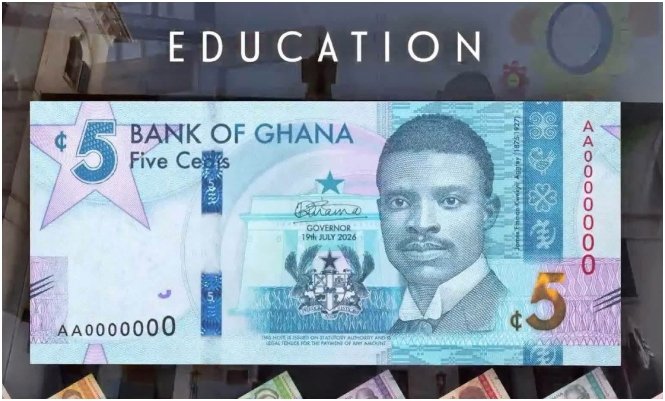
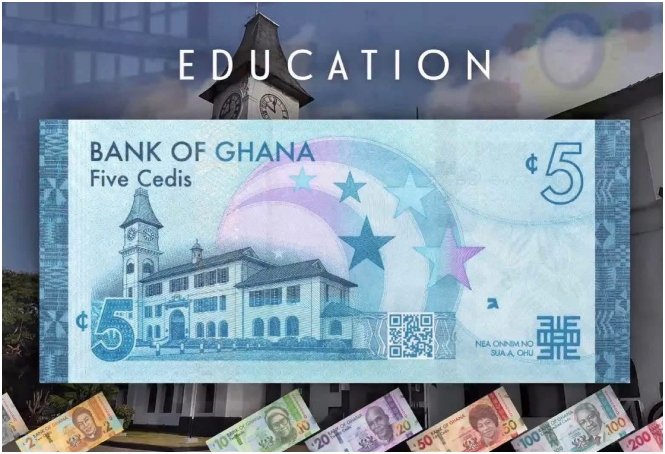
The GH¢5 note features Dr James Emman Kwegyir Aggrey (1875–1927), a pioneering Ghanaian intellectual, educator, missionary and Pan-Africanist widely known as the Father of African Education.
Aggrey advocated education as an essential instrument for individual advancement and the development of African societies.
His inclusion highlights the importance of education in Ghana’s national development and the contribution of early African intellectuals to debates about equality, opportunity and self-determination.
The reverse of the note features Achimota School, an institution associated with the country’s educational history, alongside a symbol representing education, innovation and creativity.
GH¢10 — Justice Annie Jiagge: Recognizing women’s contribution to the judiciary
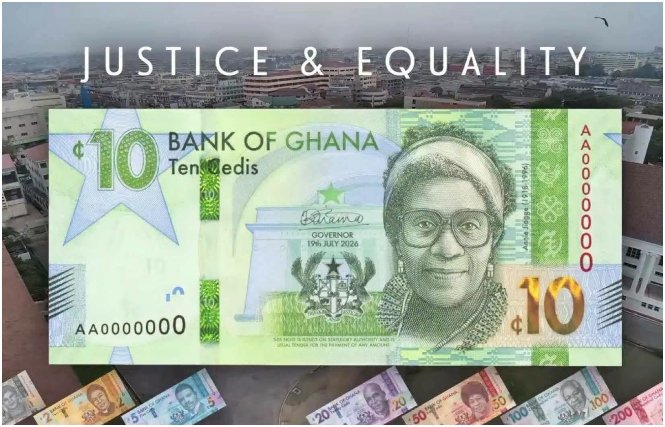
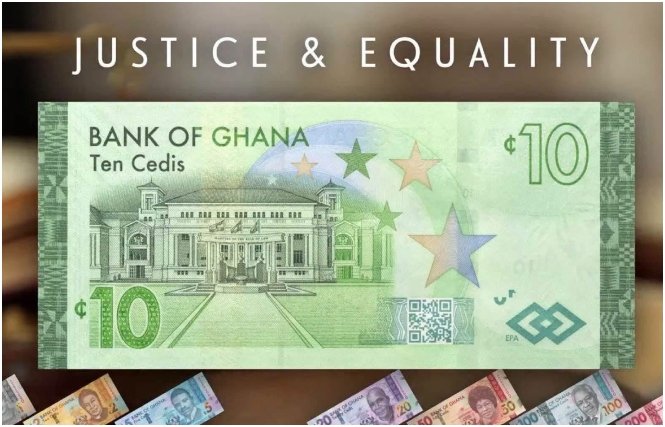
The GH¢10 note celebrates Justice Annie Jiagge (1918–1996), one of the most influential women in Ghana’s legal history.
She broke significant gender barriers, becoming Ghana’s first female judge and the second woman in the British Commonwealth to hold a judicial position.
Her career included serving as President of Ghana’s Court of Appeal from 1980 to 1983.
She also became the first African President of the World YWCA, serving from 1975 to 1983, and was involved in international efforts to advance women’s rights and social development.
Her appearance on the new banknote recognizes the contribution of women to Ghana’s legal institutions and public life.
GH¢20 — Dr Ephraim Amu: Celebrating Ghanaian music and cultural identity
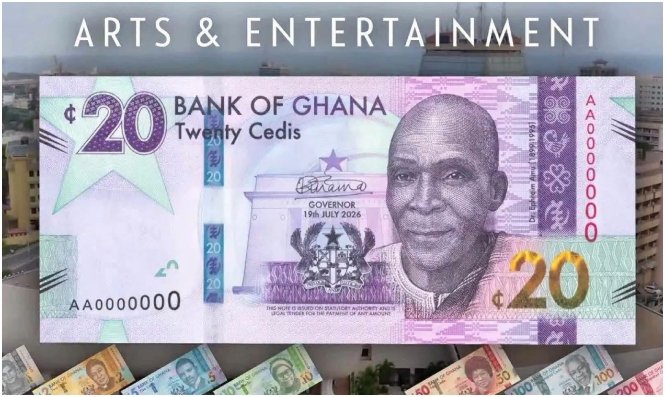
The GH¢20 note features Dr Ephraim Amu (1899–1995), the celebrated composer, musicologist and educator best known for writing the patriotic song Yɛn Ara Asaase Ni.
The song, whose title translates as “This Is Our Own Land”, has become an enduring expression of Ghanaian national identity and patriotism.
Amu’s work helped shape Ghanaian choral music by incorporating African musical traditions and cultural elements into formal musical compositions.
His appearance on the new GH¢20 also marks a return to the country’s currency after he previously featured on the old ¢20,000 banknote between 2002 and 2007.
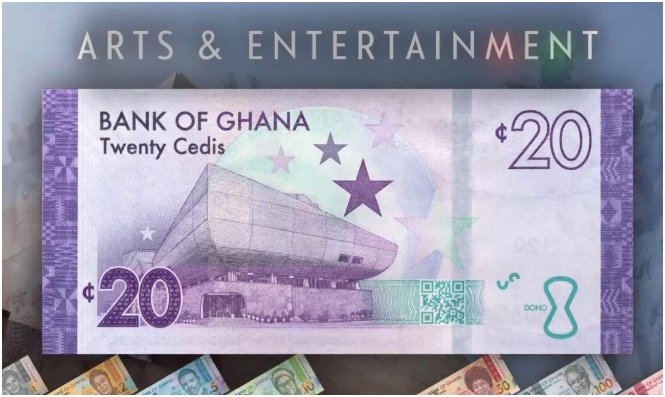
The reverse of the new note features the National Theatre building in Accra, another prominent symbol of Ghana’s cultural and artistic life.
GH¢50 — Theodosia Okoh: Honoring the designer of Ghana’s national flag
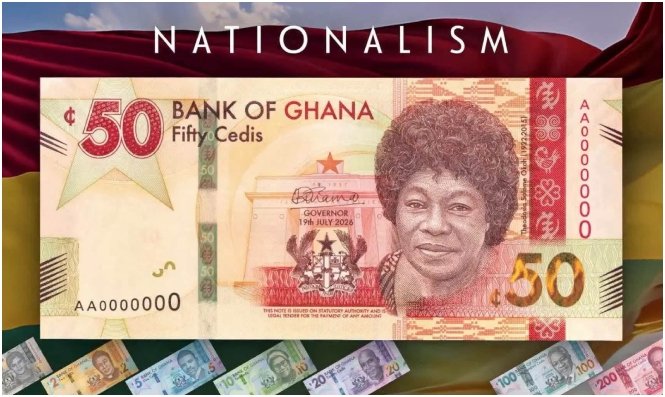
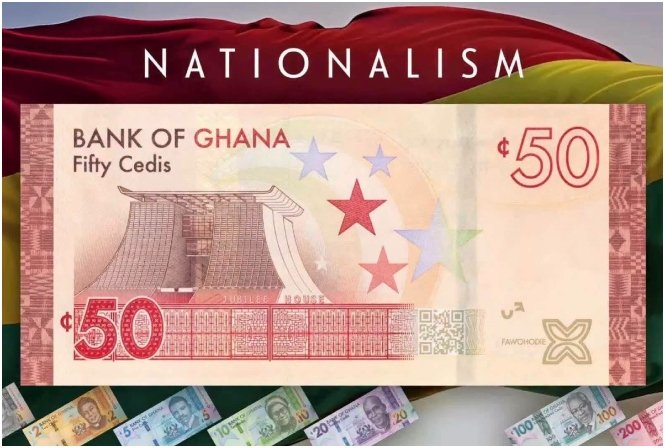
The GH¢50 note features Theodosia Salome Okoh (1922–2015), the Ghanaian artist and designer who created the country’s national flag.
Her design, adopted at independence in 1957, incorporated the red, gold and green colors associated with Ghana’s national identity, alongside the black star.
The red represents the blood shed in the struggle for independence, gold reflects the country’s mineral wealth, green symbolizes its natural resources and vegetation, and the black star represents African freedom and unity.
Her inclusion on the banknote recognizes the role of art and national symbolism in shaping Ghana’s identity.
GH¢100 — Kofi Annan: Celebrating Ghana’s contribution to global diplomacy
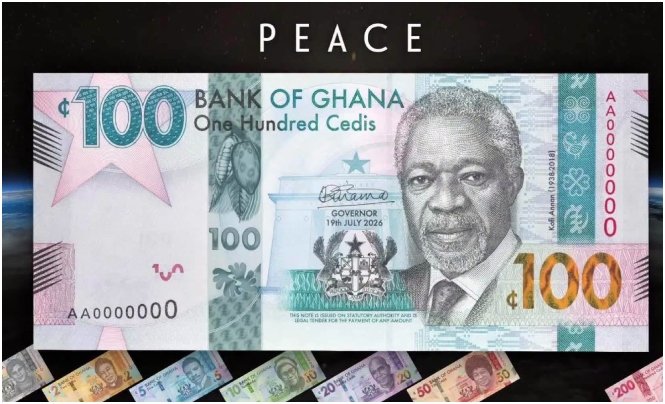

The GH¢100 note honors Kofi Atta Annan (1938–2018), the Ghanaian diplomat who served as the seventh Secretary-General of the United Nations from 1997 to 2006.
Annan made history as the first Black African to lead the United Nations and the first career UN staff member to rise through the organization’s ranks to become Secretary-General.
During his tenure, he became a prominent international voice on peace, security, development, human rights and multilateral cooperation.
His appearance on the new currency highlights Ghana’s contribution to international diplomacy and the country’s representation in global institutions.
GH¢200 — Dr Kwame Nkrumah: Honoring the leader of Ghana’s independence
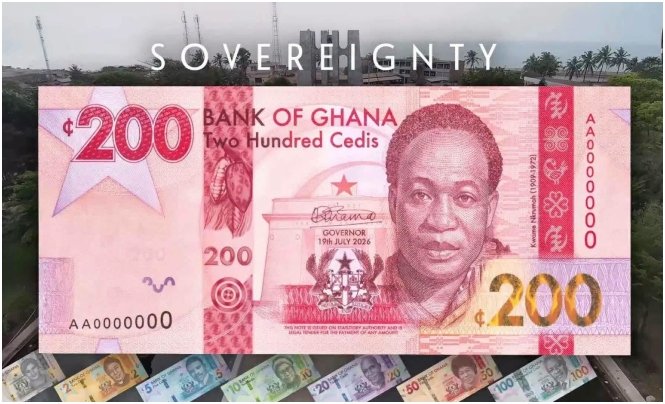
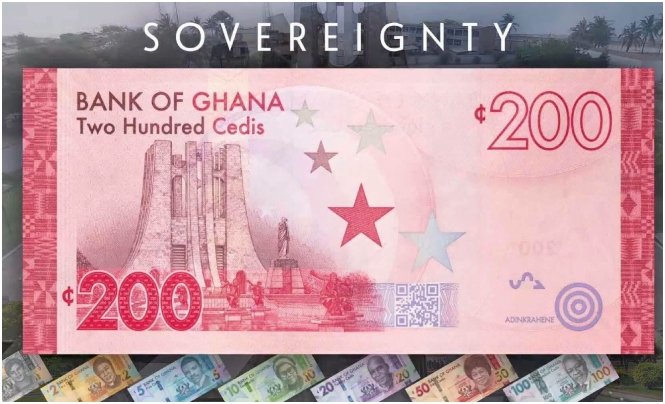
The GH¢200 note features Dr Kwame Nkrumah (1909–1972), Ghana’s founding leader and one of the most influential figures in the history of African independence movements.
Nkrumah led the Gold Coast to independence from British colonial rule on March 6, 1957, making Ghana the first country in sub-Saharan Africa to gain independence from colonial rule.
He became the country’s first Prime Minister and subsequently its first President.
A leading advocate of Pan-Africanism, Nkrumah promoted African political unity and sought to position Ghana as an influential voice in the continent’s struggle for self-determination.
His appearance on the highest denomination in the new series gives prominence to the political struggle that established modern Ghana.
A currency design that tells Ghana’s story
The Ghana Heritage Series represents an attempt to use the national currency as more than a practical instrument for exchanging goods and services.
The selection of personalities across the denominations creates a visual account of the country’s development, from the independence movement and the growth of commerce to education, religion, cultural expression, the judiciary and international diplomacy.
The inclusion of Agnes Oforiwa Tagoe-Quarcoopome is particularly significant because it brings the contributions of women in informal commerce and the independence struggle into a space traditionally dominated by prominent political and institutional figures.
Similarly, the recognition of Justice Annie Jiagge and Theodosia Okoh highlights women’s contributions to public institutions, law and national identity.
The designs also connect different periods of Ghanaian history through images of places such as Makola Market, Larabanga Mosque, Achimota School and the National Theatre.
The incorporation of Adinkra symbols for the first time further strengthens the cultural dimension of the redesigned notes, bringing traditional Ghanaian visual expressions into the country’s modern monetary system.
Security, durability and confidence in the cedi
While the heritage features have attracted attention, the Bank of Ghana has explained that the redesign also serves important monetary and practical purposes.
Counterfeit currency remains a concern for monetary authorities worldwide, making the incorporation of improved security features an important part of maintaining confidence in physical money.
The upgraded notes are designed to make it easier for the public to distinguish genuine currency from counterfeits.
Their improved durability is also intended to reduce the frequency with which damaged banknotes need to be replaced, while their smaller dimensions are expected to make cash transactions more convenient.
The Bank’s emphasis on durability is particularly relevant in Ghana, where physical cash remains an important part of everyday commerce, including transactions in markets, shops, transport services and other informal economic activities.
However, confidence in a currency cannot be secured through banknote design alone. As Governor Asiama indicated, it also depends on the strength of monetary policy, the credibility of institutions and public trust in the economy.
The Heritage Series therefore combines a practical currency modernization exercise with a broader effort to strengthen the symbolic relationship between Ghanaians and their national money.


Managing Diabetes Starts with Self-Compassion, Not Self-Criticism

Sunshine and Vitamin D: Why Your Body Needs More Than Just a Little Daylight

Europe Faces Wave of Hoax Bomb Threats Amid Growing Fears of Hybrid Warfare
-

 Global Update2 days ago
A New COVID-19 Variant is Raising Interest as Cases Increase in Parts of the World
-
 Ghana News2 days ago
Ghana Unveils New Cedi Notes Featuring Nkrumah, Kofi Annan and Trailblazing Women
-
 Ghana News2 days ago
Ghanaian Regulators Test Local Innovator’s Plastic-Derived Fuel, Finds Petrol and Diesel Fall Short of Required Standards
-
 Ghana News2 days ago
Ghana Coconut Shipment Used to Conceal 2.6 Tons of Cocaine Bound for Europe
-

 Health & Wellness2 days ago
Flu Prevention Starts at Home: Five Everyday Habits That Protect Your Family
-

 Ghana News2 days ago
Javits Frimpong’s Murder: One Suspect Arrested, Two Still Wanted as Bullying Questions Remain Unanswered
-

 Reels & Social Media Highlights2 days ago
Heritage Notes and Heartbreak: Ghana’s Social Media Mood on November 12
-

 Ghana News21 hours ago
Ghana Targets Industrialization in 2027 as $10 Billion Economic Transformation Plan Unveiled in 2027 Budget