
Africa Watch
Oil, Gas, and the $100 Million Future of the Gulf of Guinea: What’s at Stake in the Ghana-Togo Maritime Dispute

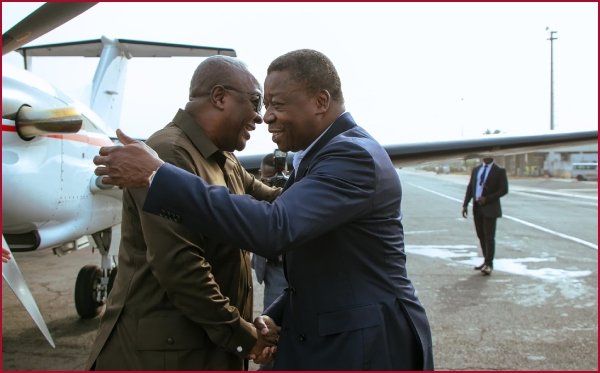
ACCRA/LOMÉ — For nearly a decade, an invisible line beneath the Atlantic Ocean has separated more than just two neighboring countries.
It has separated communities from certainty, investors from opportunity, and two West African nations from the full potential of their shared maritime heritage. Now, with Ghana’s decision to refer the long-standing dispute to international arbitration, that line is about to be drawn—and billions of dollars hang in the balance.
The Ghana-Togo maritime boundary dispute, formally submitted to arbitration under the United Nations Convention on the Law of the Sea (UNCLOS) in February 2026, represents far more than a technical legal disagreement. At its core lies a competition for resources that could transform national economies, reshape regional energy security, and determine the future of the Gulf of Guinea as a hydrocarbon province.
The $100 Million Question
The disputed waters sit within a sedimentary basin believed to hold significant offshore oil and gas reserves—resources that could generate substantial revenues for whichever nation secures sovereignty. Industry experts estimate the potential value of hydrocarbon deposits in the contested zone at sums that could reach into the billions, making the $100 million figure a conservative baseline for what’s ultimately at stake.
“The disputed area lies within a basin known for significant hydrocarbon potential, and both governments see offshore oil and gas as central to economic planning, debt sustainability, and political narratives of development,” notes an analysis from Africa Eye, a regional policy publication.
For Ghana, which has already developed world-class fields like Jubilee and TEN, securing legal certainty over adjacent waters is essential for attracting continued investment in exploration and production. For Togo, which has yet to make a major offshore discovery, the stakes are existential—a favorable ruling could unlock resources that would fundamentally alter the country’s economic trajectory.
The Keta Basin, a sedimentary region extending from southeastern Ghana into the Republic of Togo, has long been identified as a site of untapped hydrocarbon potential. Early geological surveys suggested the presence of oil and gas, but exploration has stalled due to the unresolved boundary and insufficient investment.
A Decade of Failed Negotiations
The dispute’s origins trace to specific flashpoints. In December 2017 and May 2018, Togolese authorities halted two Ghanaian seismic survey vessels conducting deep-sea data acquisition in an area near the border that Ghana considered part of its offshore maritime zone . Togo claimed the vessels were operating in waters within its own claimed area, marking the first significant confrontations in the disagreement.
These incidents occurred shortly after Ghana won its landmark maritime boundary case against Côte d’Ivoire in September 2017 at the International Tribunal for the Law of the Sea (ITLOS)—a ruling that provided binding delimitation on Ghana’s western frontier and demonstrated the effectiveness of international adjudication.
Following the 2017-2018 incidents, both countries established a Joint Maritime Boundary Technical Committee comprising technical experts from both sides. They held multiple rounds of discussions, but fundamental differences persisted over delimitation methodology, baseline coordinates, and interpretation of nautical charts. Togo also raised concerns about the presence of Ghanaian naval vessels in contested waters during negotiations.
In 2021, Ghana proposed a formal demarcation line, but Togo rejected it. After eight years of bilateral negotiations without achieving a settlement, Ghana notified Togo in February 2026 of its decision to pursue international arbitration.
The Legal Framework: UNCLOS as Final Arbiter
The arbitration will proceed under UNCLOS, the international treaty that provides the legal framework for maritime boundaries and dispute settlement mechanisms. Ghana’s decision to invoke Annex VII arbitration follows the same legal pathway that proved successful in the Côte d’Ivoire case.
Key provisions guiding the tribunal include:
- Article 15, concerning delimitation of the territorial sea between states with opposite or adjacent coasts
- Articles 74 and 83, requiring states with overlapping exclusive economic zones (EEZs) and continental shelf claims to achieve an equitable solution through agreement, taking into account relevant circumstances
The core legal question revolves around methodology: Should the boundary follow a simple equidistance line (the median line between the two coasts), or should it account for broader geographical and historical factors? Ghana’s successful 2017 case against Côte d’Ivoire saw the ITLOS Special Chamber adopt the equidistance method, a precedent that likely influences Accra’s confidence in the current proceedings.
Togo, for its part, has responded with measured dignity. In a communiqué following Ghana’s notification, the Togolese government reaffirmed its “commitment to resolving maritime disputes in accordance with the principles of justice and equity” while stating that any resolution must respect the sovereign rights of both nations.
Beyond Hydrocarbons: Fisheries, Communities, and the Blue Economy
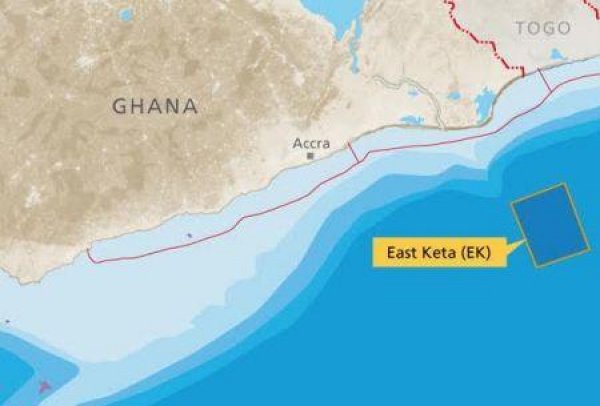
While oil and gas capture headlines, the dispute’s resolution will affect far more than energy companies. The contested waters sustain fishing communities on both sides of the border—communities already pressured by industrial fleets and illegal, unreported, and unregulated fishing.
Coastal communities near the Keta Basin have long histories of fishing, spiritual practices, and artisanal livelihoods linked to the ocean. Exclusion from decision-making not only threatens legitimacy but undermines peace. Any future subsea infrastructure—from pipelines to telecommunications cables—will depend on where the boundary ultimately runs.
The arbitration also aligns with Ghana’s Blue Economy strategy, which emphasizes the sustainable exploitation of ocean resources, including fisheries, hydrocarbons, and shipping lanes. Clear boundary delimitation provides legal certainty for investors, enhances resource management, reduces conflict risk, and supports long-term national development planning.
Regional Implications: A Test for West African Governance
Ghana’s decision to escalate the dispute to arbitration arrives at a delicate moment for regional diplomacy. The Economic Community of West African States (ECOWAS) was designed to help member states manage tensions before they harden into crises, yet institutional strains and political turbulence in recent years have limited its capacity to sustain sensitive negotiations.
In that context, Ghana’s appeal to a global legal mechanism signals a preference for rules-based adjudication over prolonged regional bargaining—a move that may quietly reshape expectations across West Africa, where other coastal states face overlapping maritime claims of their own.
The outcome will matter well beyond Accra and Lomé. A clear, mutually respected decision could strengthen the case for managing offshore competition through law rather than brinkmanship, while a politicized process could unsettle investment and deepen mistrust at sea.
Both nations remain publicly committed to preserving their relationship throughout the legal process. Ghana’s government stated that it took the step “to avoid an escalation of incidents that have created tensions between some of our institutions and to promote an amicable resolution, thereby contributing to the continued good relations between our two countries” .
Togo similarly stated its dedication to the spirit of good neighborliness, asserting that it remains open to a resolution that respects international law while preserving the fraternal relations between the two states.
The Road Ahead
The arbitration process will require both nations to submit extensive legal, technical, and historical evidence, including hydrographic surveys, historical documentation, and expert analyses. The proceedings could take several years before a final award is delivered.
For Ghana, confidence in legal recourse is rooted in experience. The 2017 case against Côte d’Ivoire showed that structured proceedings and provisional measures can prevent technical disagreements from escalating into security incidents, reinforcing the idea that consistent cartography and historical practice can translate into legal advantage.
For Togo, arbitration offers clarity but also uncertainty. Any ruling will redefine exploration rights, revenue expectations, and maritime enforcement responsibilities—outcomes that will shape the country’s economic future for generations.
As the International Tribunal for the Law of the Sea prepares to receive submissions from both nations, one truth remains clear: beneath the waves of the Gulf of Guinea lies not just oil and gas, but the hopes of millions whose lives depend on what happens when two neighbors ask international law to draw a line in the sea.











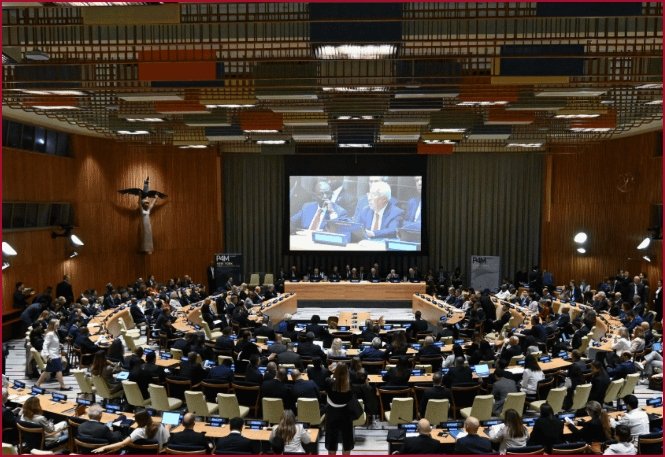
Africa has made its boldest demand yet for reform of the United Nations Security Council: at least two permanent seats with veto powers, and five non-permanent seats for the continent.
Vice-President Kashim Shettima of Nigeria delivered the demand while presenting President Bola Tinubu’s national statement at the 81st UN General Assembly in New York, positioning Africa’s case as both a moral imperative and a necessary correction to a global governance structure built for a bygone era.
“The world of 2026 cannot remain captive to the distribution of power in 1945,” Shettima declared, drawing a sharp contrast between the Security Council’s post-World War II origins and today’s geopolitical realities.
A Longstanding Demand
Nigeria’s position is consistent with the Ezulwini Consensus and Sirte Declaration, adopted as the Common African Position. Under this framework, Africa seeks at least two permanent seats with all existing privileges, including veto power for as long as the privilege exists, alongside five non-permanent seats on the Council.
The African Union reaffirmed the demand in May, stating that Africa’s exclusion from permanent representation constituted a historical imbalance requiring correction.
Shettima argued that institutions claiming authority to act for humanity must adequately reflect the people on whose behalf decisions are taken. Africa, he noted, is home to 1.5 billion people and constitutes the largest regional voting bloc in the General Assembly—yet remains without a single permanent seat.
The 1945 Problem
The Security Council has five permanent members: China, France, Russia, the United Kingdom, and the United States, each possessing veto power. This configuration has remained unchanged since the UN’s founding in 1945, apart from a single expansion of non-permanent membership from six to ten in 1965.
Africa currently has no permanent representative on the Council.
Shettima said Africa could no longer remain outside permanent membership while issues concerning the continent continued to occupy substantial attention of the Council. He linked Security Council reform to efforts to restore confidence in multilateralism amid widening geopolitical divisions.
“Differences among nations must not obscure their common humanity or responsibility to preserve peace for future generations,” he said.
Nigeria’s Peacekeeping Record
Shettima recalled Nigeria’s contributions to international and regional peace operations in Liberia, Sierra Leone, Darfur, Mali, and The Gambia. He said Nigeria also continues to work through ECOWAS, the African Union, and Gulf of Guinea mechanisms, covering mediation, counter-terrorism, democratic governance, and maritime security.
According to him, these efforts demonstrate Nigeria’s commitment to international peace and security—and its readiness to assume greater responsibility on the global stage.
A Warning Against Propaganda
The Vice-President also warned against a global environment where propaganda blurred distinctions between victims and aggressors and complicated accountability. He maintained that an inclusive and effective UN remained indispensable to global peace and sustainable development.
Shettima reaffirmed Nigeria’s commitment to the UN Charter and international cooperation, saying Nigeria supported an international system where diplomacy takes precedence over coercion and international law guides relations among states.
He identified the conflict in Sudan and other theatres as requiring urgent diplomacy because of their humanitarian, economic, and geopolitical consequences.
The Road Ahead
Nigeria’s demand comes amid renewed calls by African leaders for reforms to an institution whose permanent membership remains unchanged since its creation. The African Union’s preferred reform model provides for at least two permanent African seats, including veto privileges while existing members retain them, and five non-permanent seats.
Whether the five permanent members, particularly China, Russia, and the United States, will support a reform that dilutes their power remains uncertain. Previous reform efforts have stalled for decades.
But Shettima made clear that Africa’s patience is wearing thin. The continent, he said, remains committed to a multilateral order capable of responding more credibly to 21st-century realities.
“The world of 2026 cannot remain captive to the distribution of power in 1945,” he repeated, leaving little doubt that Africa intends to keep pressing until its voice is heard, and its seat secured.


The fictional kingdom of Wakanda may be thousands of miles away from Lagos, Accra, and Johannesburg, but its soundscape remains deeply tied to the rhythms of the African continent.
Reports circulating across social media and film databases suggest that Nigerian megastar Burna Boy could be making a high-profile return to the Black Panther franchise.
According to credit listings briefly spotted on IMDb, the Grammy-winning “African Giant” is featured among the music contributors for Marvel Studios’ anticipated next chapter in the Wakandan saga.
The listed lineup also features Nigerian singer CKay, South African pop phenom Tyla, and American hip-hop icon Kendrick Lamar, who curated the record-breaking original Black Panther album in 2018.
For fans across the continent, the news has sparked immediate celebration. The Black Panther franchise has consistently served as a global megaphone for modern African culture.
When Wakanda Forever debuted, Burna Boy’s haunting track “Alone” stood out as one of the emotional pillars of the film’s soundtrack.
Rejoining the lineup alongside hitmakers like CKay and Tyla signals a continued commitment by film directors and music supervisors to keep contemporary African sounds at the heart of Hollywood’s biggest blockbuster universe.
However, music enthusiasts and industry insiders know that online database entries carry a major caveat.
IMDb listings are frequently crowdsourced or updated ahead of formal production stages, meaning unconfirmed cast and crew additions can circulate long before studio executives step in. Marvel Studios has maintained its trademark secrecy, offering no official tracklist or artist confirmations.
Whether the current roster proves accurate or undergoes shifts before release, the mere prospect highlights Afrobeats’ firmly established footprint in global pop culture.
Until Marvel officially drops the needle, fans will be keeping a close watch—and hoping the African Giant lands back in Wakanda.

A British-Nigerian businessman and social media influencer died from a pulmonary embolism after undergoing a penis enlargement procedure in Thailand, a UK coroner’s inquest has heard.
Igho “Tiny” Ubiribo, also known as “Ego”, was 43 when he died in Bangkok following complications from the cosmetic procedure during a trip to Thailand with his wife.
Evidence presented at the inquest said Ubiribo had 40ml of hyaluronic acid and lidocaine injected into his penis at an unnamed clinic in March.
Shortly after the procedure, he developed chest pain and collapsed twice at his hotel.
He was taken to Sukhumvit Hospital, where doctors suspected a pulmonary embolism — a potentially fatal blockage of a blood vessel supplying the lungs.
His condition deteriorated despite emergency treatment, with medical staff reportedly performing CPR for more than 100 minutes.
Ubiribo died in the early hours of March 6.
His body was subsequently repatriated to the UK for further examination. A post-mortem reportedly detected cellular filler material in his lungs consistent with hyaluronic acid, the substance used during the cosmetic procedure.
Evidence presented to the inquest indicated that the material found in his lungs matched the filler administered during the treatment.
The coroner concluded that the cosmetic procedure had caused the fatal pulmonary embolism.
The case highlights the potentially serious complications associated with injectable cosmetic procedures, particularly when performed outside a patient’s home country. Pulmonary embolisms can occur when material enters the bloodstream and travels to the lungs, where it can obstruct blood flow and become life-threatening.
Ubiribo’s death has also drawn attention to the risks surrounding cosmetic procedures undertaken abroad, where patients may face unfamiliar medical standards, follow-up arrangements and emergency care systems.
The circumstances of his death were examined during the UK inquest as authorities sought to establish how the procedure ultimately led to the fatal complication.


Funding Fears Loom For Ghana’s Life-Saving Malaria Vaccine Five Years After Roll Out

‘There was a Coordinated Disclosure Plan’: AI-Discovered Flaw in PHP Triggers Global Internet Chaos as Cybercriminals Race to Exploit It

Yandex Strikes: Can Moscow Host Africa Under Drone Threat?
-
 Ghana News9 hours ago
Major Sexual Abuse Scandal Rocks Ghana High School: Obuasi School Headmaster Sues Journalist for GH¢2 Million as Investigation Into Alleged Misconduct Widens
-

 Reels & Social Media Highlights1 day ago
Ghana’s Digital Heartbeat: Outrage, Satire, and the Fight for Accountability
-

 Festivals & Events14 hours ago
Compozers Fest Ghana Edition: Welcoming 2027 with Music in Accra
-
 Taste GH13 hours ago
Airport Residential Area: Where Accra’s Dining Scene Meets Global Flavours
-

 Health & Wellness2 days ago
Beyond Bigger Muscles: Why Strength Training Matters for Healthy Ageing
-

 Health & Wellness1 day ago
Four Everyday Lifestyle Habits That Can Make Weight Loss Easier
-

 Fashion & Style2 days ago
Wyclef Jean Gives Ghanaian Kaftan a Global Spotlight After ‘Chineke’ Fashion Inspiration
-

 Health & Wellness13 hours ago
Why Keeping Weight Off Can Be Harder Than Losing It