
Tourism
Ghana Debuts Bold ‘Accra By Night’ in Push for a 24-Hour Tourism Economy

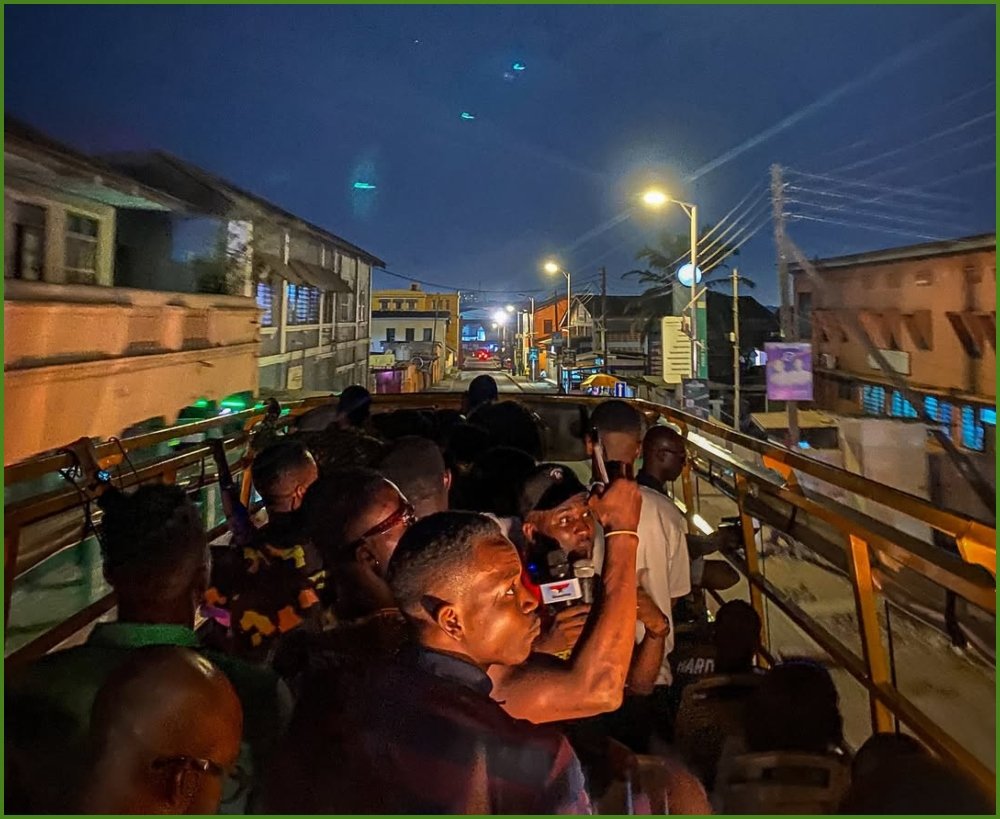
Ghana has officially stepped into the night-time tourism arena with the launch of “Accra By Night,” a new initiative designed to showcase the capital’s cultural landmarks, bustling street life and emerging late-night economy.
The program, led by the Ghana Tourism Development Company (GTDC) in partnership with the Ministry of Tourism and the Ghana Tourism Authority, aims to reposition Accra as a global night-time destination.
The inaugural tour—conducted aboard a double-decker bus—took participants on a sweeping route through some of the city’s most historic and vibrant areas. Beginning at the Ghana Tourism Information Centre, the nighttime journey wound through Independence Avenue and the Ministries enclave before making key stops at Jamestown Lighthouse, the Kwame Nkrumah Memorial Park, Nationalism Park, and the lively Osu Night Market, where guests sampled street food and browsed artisanal goods. The experience ended in Osu’s nightlife district with stops at local favorites such as the Republic Bar and Purple Pub, stretching into the early hours of the morning.
Security escorts were stationed along the route to ensure a safe and comfortable experience—an important gesture as the country promotes growth in its after-dark economy.
Tourism Minister Abla Dzifa Gomashie hailed the launch as “a significant milestone in Ghana’s tourism evolution,” calling it both a cultural celebration and a strategic economic opportunity. She explained that the initiative aligns with President John Dramani Mahama’s 24-hour economy vision, which calls for industries—including tourism—to expand beyond daytime operations.
“Accra by Night is more than a tour,” Gomashie said. “It’s a platform to highlight our creative economy and open new opportunities for visitors, artists and service providers.”
GTDC CEO Professor Kobi Mensah added that the initiative also challenges long-held stigma surrounding the night economy.
“As tourism leaders, we must find ways to plug into the 24-hour vision. This night tour is one of the most practical ways to start shifting public perception and expanding the sector,” he said.
With its blend of history, food, music, and community energy, Accra By Night positions the Ghanaian capital among world cities actively cultivating vibrant and safe after-hours tourism.
Global travel analysts say such initiatives not only increase visitor spending but strengthen cultural visibility—offering Ghana a promising foothold in the expanding global night-time economy.














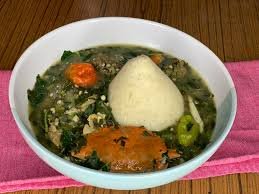
There is a moment, just before the first bite of okro stew meets a pinch of banku, when the wise eater pauses.
You brace yourself for the slide. That slick, almost stubborn glossiness that coats each piece of okro—it’s not a texture to fear, but one to surrender to. And for the uninitiated, that surrender is the first step into something real.
In Ghana, we don’t shy away from the slimy comments. We lean in. Because okro stew, particularly when it catches that light sheen of palm oil, isn’t trying to be polite. It’s deep, savory, and unapologetically rich.
The oil isn’t grease for grease’s sake—it carries the smoked fish, the scotch bonnet heat, the crushed tomatoes down into every corner of the stew. It’s the vehicle for flavor, the thing that makes you reach for another hunk of banku before you’ve even swallowed.
@sweetohemaa1st Oil less Okro soup Banku with Okro soup, Natural food
♬ original sound – SWEET OHEMAA
And then there’s the banku itself. Fermented just enough to get that gentle sourness, smooth and cool against the warmth of the stew.
You pinch it, roll it, drag it through the oil. This isn’t dainty food, and thank goodness for that. It’s the kind of meal that demands your hands, your focus, your full presence at the table.
For the global reader scrolling from a world of convenience meals, let this be the dish that wakes you up.
Okro and banku aren’t just sustenance—it’s a conversation between texture and taste, a lesson in trusting the cook who knew exactly when to stop stirring. If you ever find yourself on this side of the Atlantic, skip the fork. Let the oil run down your wrist a little. That’s the memory you came for.

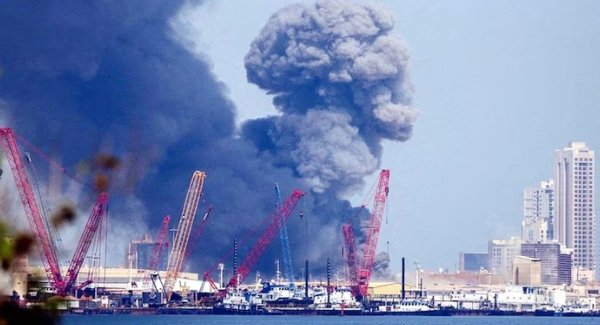
Accra, Ghana – March 1, 2026 – The escalating conflict between Israel, the United States, and Iran has plunged Middle East air travel into severe disruption, with airspace closures, mass flight cancellations, and direct hits on transport infrastructure forcing airlines and governments worldwide—including Ghana—to issue urgent advisories and activate contingency plans.
The crisis intensified after joint US-Israeli airstrikes targeted Iranian military and nuclear sites, reportedly killing Supreme Leader Ayatollah Ali Khamenei. Iran responded with missile and drone barrages across the Gulf, striking US bases, ports in Dubai and Oman, Bahrain’s navy base and airport, and residential areas in Qatar and the UAE.
Debris from intercepted projectiles damaged Dubai’s iconic Burj Al Arab hotel and injured four people at Dubai International Airport, while a fire broke out at the Fairmont the Palm after it was hit.
Aviation analytics firm Cirium reported nearly 1,600 flight cancellations to Middle East destinations by Sunday afternoon Dubai time—40% of total scheduled services. Major carriers including Emirates, Etihad, Qatar Airways, British Airways, Virgin Atlantic, and Wizz Air suspended or rerouted flights:
- Emirates halted all services to/from Dubai until 3 p.m. UAE time on March 2.
- Qatar Airways suspended Doha operations due to Qatari airspace closure, planning resumption at 7 p.m. local time Sunday.
- British Airways cancelled flights to Tel Aviv, Bahrain, and Amman until March 4, and appealed to passengers not to contact call centres unless travelling within 48 hours.
- Virgin Atlantic rerouted flights to avoid Iraqi airspace and suspended Heathrow-Riyadh services.
- Wizz Air halted services to Israel, Dubai, Abu Dhabi, and Amman until next weekend.
Cruise operations were also hit, with MSC Cruises cancelling sailings on MSC Euribia. Dubai Airports (DXB and Al Maktoum) and Abu Dhabi’s Zayed International Airport suspended all movements, advising passengers not to travel to the airport and to contact airlines directly.
Hamad International Airport in Doha confirmed the same due to Qatari airspace closure.
The UK Foreign, Commonwealth & Development Office (FCDO) hardened its advice late Saturday, urging against all but essential travel to the UAE, Qatar, Kuwait, and Bahrain, and against all travel to Israel and Palestine. British nationals were told to shelter in place in Bahrain, Qatar, Kuwait, and the UAE and register their presence.
Ghana’s Ministry of Foreign Affairs has echoed similar warnings, advising nationals against non-essential travel to and from the Middle East and urging those already in the region to remain indoors, avoid crowds and sensitive sites, and register with diplomatic missions. The ministry is monitoring the situation closely for possible evacuations.
Travel agents and tour operators reported working around the clock to rebook affected passengers, with flexible policies offered by airlines to allow changes or refunds. Industry leaders stress passenger safety as the top priority and urged travelers to check airline websites and official advisories before heading to airports.
The disruption threatens to strand thousands, disrupt business and tourism flows, and raise costs for rerouting via longer paths (e.g., around the Cape of Good Hope). For Ghanaian travelers, students, athletes, and diaspora communities in the Gulf, the situation underscores the risks of geopolitical flashpoints on international mobility.
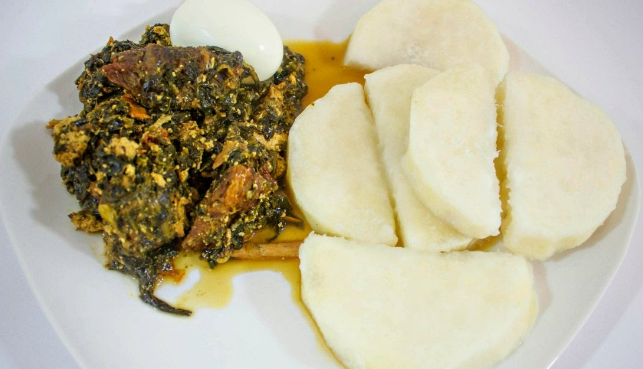
There is a certain quiet magic in simplicity. In Ghana, we wrap it in leaves, fry it golden, or steam it into fluffy balls. But sometimes, the deepest comfort comes from a plate that looks like it took no effort at all. That plate is Ampesi.
Walk into any Ghanaian home on a Sunday afternoon, and you might find it. A generous cut of boiled yam, soft and white, lying next to a pool of vibrant green kontomire stew. The yam is not mashed or pounded. It is simply boiled. The stew is not ground with onions and ginger. The leaves are chopped, wilted with palm oil, tomatoes, and onions, and sometimes enriched with boiled eggs or salted fish.
@foodstoriesgh Yam & Kontomire Stew with groceries from @adwoaagbogbloshie My first twi voiceover 😂 #foodstoriesgh #ghanacuisine #ghanafood #palavasauce #kontomirestew #Ampesi #yam #foodtok #foodie #twivoiceoverchallenge #fyp #recipesoftiktok #learnwithme #learnwithkhabylame #viral ♬ love nwantinti (ah ah ah) – CKay
On paper, it is the most basic meal. But put it in your mouth, and you understand why grown men and women crave it.
The yam, when boiled properly, retains its structure while offering a gentle bite. It is earthy. It is filling. The kontomire stew—made from cocoyam leaves—brings a slight bitterness that is quickly tamed by the richness of the red palm oil. Together, they create a balance that no amount of spice can replicate.
Read Also: Gari and Beans: The One Ghanaian Dish That Brings Everyone Together
For the visitor to Ghana, ampesi is a quiet education. It tells you that before the jollof wars and the fancy rice dishes, there was the land. There was the yam. And there was the leaf. It is the food of grandmothers. It is the meal you ask for when you are tired of eating out.
Do not let the simplicity fool you. Ampesi is not plain. It is peaceful.


“We Are Watching the Geopolitical Events with Alarm”: Mahama Worried About Middle East Tensions

Ghana Gears Up for Vibrant 69th Independence Day Celebrations: Parades, Plays, Poetry, and Heritage in Focus

Agradaa Released, Ghana Prepares for Independence Day Celebration and Other Trending Topics in Ghana (March 3, 2026)
-

 Ghana News2 days ago
Ghana’s Black Queens Stranded in UAE as Government Initiates Partial Evacuation from Tehran Embassy Amid Escalating Israel-Iran Conflict
-

 Ghana News1 day ago
Court Slaps Barker-Vormawor with GH₵5m for Defaming Kan Dapaah and Other Trending Topics in Ghana (March 2, 2026)
-

 From the Diaspora1 day ago
Ghanaians and Other Africans in UAE Flood Social Media with Videos as Iranian Missile Strikes Hit Dubai
-

 Ghana News1 day ago
Newspaper Headlines Today: Monday, March 2, 2026
-

 Africa Watch2 days ago
How African Nations Are Evacuating Their Nationals Amid the Escalating Middle East Crisis
-

 Ghana News2 days ago
How African Nations Are Responding to the Iran-Israel Conflict
-

 From the Diaspora2 days ago
Ghanaian-Heritage Scientist AJ Addae Develops Breakthrough Sunscreen That Protects Darker Skin Without White Cast
-
 Perspectives2 days ago
Hormuz Strait’s Closure Could Trigger Collapse of Fiat Money – Expert