
Perspectives
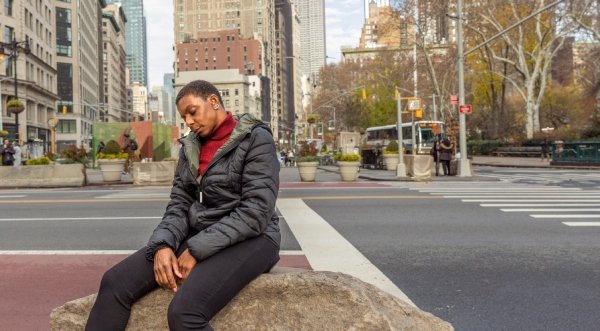
‘A soul mission’: The African Americans moving to Ghana


This article by Menenaba was first published by Aljazeera
Accra, Ghana – Ashley Haruna never intended to stay in Ghana. But everything changed for the 28-year-old health coach when she stood facing a dark cell inside the stone walls of Cape Coast Castle. As the tour guide explained that many of the enslaved people who’d once been held there had ended up in Haiti, Haruna says she “felt something”.
Having grown up in the United States to Haitian parents, she realised “my ancestors could’ve passed through here. This place. This ground.
“I wasn’t looking for that,” she reflects. “But it found me.”
The feeling it stirred within her only grew when she returned home to Ohio. After a few months, with her family’s reluctant approval, she returned to Ghana – for good.
That was in December 2021, and Haruna was following in the footsteps of many other African Americans who had sought to reconnect with the country that may once have been home to their ancestors.
In the 1950s, Ghana’s first prime minister and president, Kwame Nkrumah, championed the diaspora’s return as part of his Pan-African dream and nation-building efforts. During the US civil rights movement, he invited Black American activists, including W E B Du Bois, Marcus Garvey, and Julian Bond, to relocate to Ghana. In the 1960s, Du Bois moved there, as did writer Maya Angelou.
Ghanaian leaders continue to encourage the African diaspora to reconnect and relocate. In 2019, the “Year of Return”, marking 400 years since the first enslaved Africans arrived in Virginia, more than 200 people from the US and the Caribbean received Ghanaian citizenship. In 2024, as part of the government’s “Beyond the Return” initiative – the same programme that encouraged Haruna to move to Ghana – 524 African diasporans were granted citizenship.
But, as Haruna discovered, building a new life in Ghana comes with challenges.
Villa Diaspora
Her first apartment was located two hours north of Accra, in the mountainous Eastern Region, and while Haruna had imagined herself integrating into a local community, she instead found isolation. With no grocery stores nearby and no one to help answer her questions – like how to operate a gas stove or what to do when the water stops running – she found herself feeling alone and frustrated.
She recalled a YouTube video she’d seen while still in the US about a place called Villa Diaspora – a co-living space where the owner, herself a “returnee”, as African Americans relocating to Ghana refer to themselves, helps others navigate their new lives in the country. Haruna dug through her browser history until she found the video. A week later, she moved into the villa in an upscale suburb of Accra.
In the warm communal living area and kitchen she shared with two other African-American tenants, she learned how to navigate the practical and cultural challenges of figuring out her new home – from getting an identification card to learning to say “please” before every sentence.
When Haruna was injured in a car accident, it was the villa’s owner, Michelle Konadu, 37, and the community of former tenants who helped her. The villa became her lifeline. Like the other tenants – who tend to stay for between three and nine months – Haruna moved out of the villa after a while, but it is still Konadu she calls when she needs help.
‘They want healing’
Konadu knows the feeling of being caught between worlds. Born and raised in New York City to Ghanaian parents, her family apartment was a landing place for visiting relatives, distant cousins and friends of friends. “We were always housing someone,” she says.
It wasn’t until she visited Ghana for a funeral in 2015 that she first contemplated leaving the fast pace of New York for the slow flow of Ghana. At first, she thought it would feel like home, but she says she often felt like an outsider. “Too American to be in Ghanaian spaces. But too Ghanaian for America,” she explains.
A cousin named Alfred softened her landing by teaching her how to navigate markets, hail a trotro (a local minibus taxi), and understand the unspoken etiquette of greeting elders and never using the left hand to make gestures towards anybody.
Without his guidance, she says, she might have left and never returned.
Recognising that not every returnee has their own Alfred, Konadu decided to help. In 2017, she opened Villa Diaspora, a three-bedroom co-living compound alongside her larger family home in Kwabenya. She invites the tenants she hosts into the everyday life of her neighbourhood and introduces them to middle-income Accra. Beyond providing accommodation, she helps returnees find schools, consults on land purchases, and connects them with social groups and sports clubs.
Her goal is simple: to help people belong by providing “an already-made community”.
“Most of them come here with a soul mission,” Konadu explains. “They want healing. Or reconnection. Or just a fresh start. For many, coming to Africa has been a lifelong dream. But the people they meet might not understand that.”
Her family struggled to understand why she moved back when their dream had been to leave. But now other families are relieved to know that their loved ones will spend their first months in Ghana surrounded by people on a similar journey. After 10 years in Ghana, Konadu believes that if people can live with her, they can live among the wider community.
She points to the Brazilian “Tabom” community in Jamestown, Accra, which she sees as a perfect example of a well-integrated returned diaspora group. As descendants of formerly enslaved Africans who returned from Brazil in the 19th century, they settled among the Ga people, intermarried, learned the language, and built lives that blended their Afro-Brazilian heritage within the Ga social structure. Over the generations, their names – De Souza, Silva, Nelson – have become part of the Jamestown story. Konadu expects the same will happen with the newer returnees and that the African-American culture will remain strong but exist within the structure of the larger Ghanaian society.
Haruna understands that integration takes time, and she acknowledges that returnees like her have privileges that others in Ghana don’t. Lighter skin and an American accent often open doors in ways that never happened back in the US, giving her preferential treatment such as faster service in restaurants, locals ready to offer help, and generally being able to make things happen faster, like meetings with authorities.
“It is uncomfortable as a self-aware person to notice that I have privilege, something that is the total opposite of what is happening in the United States. I am still wrapping my head around all of it,” she says.
“I’m Ghanaian. I’m also a returnee,” Konadu says. “We’ve always been connected: Ghana and its diasporans. This isn’t new, but the ‘Year of Return’ made things more visible.”
This increased visibility – and the clustering of returnees in specific settlements, along with rising costs – has caused some friction.
‘The Ghana they won’t see’
Anthony Amponsah Faith runs a business renting out cars and driving clients around Ghana, including returnees navigating the country for the first time. He credits them with allowing him to visit places he had never been to before, such as the Nzulezu stilt village and the middle-belt waterfalls.
“Before, I never got to go anywhere. Now, I’ve seen the whole of Ghana,” says the 32-year-old.
On these trips, Amponsah has witnessed his African-American clients’ emotional visits to coastal slave castles and memorials, but he has also seen friction up close. While wealthier neighbourhoods, where returnees often settle, enjoy continuous electricity, paved roads, and access to supermarkets and cafes, in others, water comes in cycles and basic services require improvisation. Returnees complain about power cuts or heavy traffic, while locals shrug them off as part of daily life. He recalls a client insisting he was being overcharged because “Ghana should be cheap”.
Earlier this year, Amponsah awoke one night to find his mattress floating in a room flooded with water.
“That’s the Ghana they won’t see,” he says. “It doesn’t flood in the areas where returnees stay.”
He is frustrated by the rising cost of housing, which he attributes to returnees’ willingness to pay more. “To them, it’s not expensive,” he says. “They come from places where they earn more. But I blame the government. Why aren’t we getting those same opportunities?”
In 2019, he paid 120 cedis ($10-12) a month for a small studio; he now pays 450 cedis ($42-44).
“The cost of living is rising by the second. It makes finding a place scary,” says Amponsah. He would prefer to be closer to his customers, many of whom live at least an hour away, but he can’t afford to move.
‘A town from scratch’
Many new arrivals feel guilty about their economic and social privileges, but some Ghanaians carry an often unspoken burden tied to their ancestors’ role in the transatlantic slave trade, leading some chiefs to offer land to returnees as atonement.
Across Ghana, at least two diaspora settlements, Fihankra and Pan African Village emerged that way, while other returnee-focused residential projects, including gated communities, are under construction.
Dawn Dickson, an entrepreneur and investor, is building a house for herself in the African-American settlement known as Pan African Village. She moved to Ghana in 2022, after envisaging a life outside the US in a place where she wasn’t “the minority”.
The 46-year-old says she didn’t intend to seek out a diaspora-only community. Dickson, who traces her ancestry to the Akan people in Ghana and Ivory Coast, was struck by the sense of familiarity, warmth and energy among the Ghanaians she met. But when she started looking to buy land, she discovered that other returnees were buying around Asebu town in the coastal Central Region, where a traditional leader had carved out some 20,000 plots for diasporans.
“For me, it was the excitement that I got to be part of building a town from scratch,” Dickson explains.
She bought land and then founded a company that helps other African Americans buy and build homes. Dickson is employing sustainable rammed earth technology to construct houses for 35 returnees as well as roads, a school, a church and boreholes, and is training locals to master this building technique.
The community, however, has not been without controversy.
In 2023, a family challenged the decision to allocate land they claimed was their ancestral property as part of the village. Development has continued despite a high court injunction ordering that construction be halted, and some 150 farmers who relied on this land say they have lost their livelihoods.
Dickson says the land she has helped purchase is not contested, and if farmers are using it, she negotiates shared-crop agreements or payment.
Elsewhere, new diaspora projects are under way and have come under scrutiny.
Sanbra City (“Return City”) is a 300-acre private real estate development outside Accra. The planned eco-friendly gated community caused a backlash over initial reports that the government was behind an exclusive returnee enclave with houses starting at $180,000, which is out of reach for most Ghanaians. Sanbra City founders have said the project is a collaboration between African-American and Ghanaian developers, not a government initiative, and Ghanaians would be welcomed.
In other instances, Dickson says she has seen African Americans scamming their own, advertising houses hours away from Accra as if they’re “15 minutes from the airport,” or charging impossible prices.
A Pan-African refuge and a community hub
The very first planned diaspora community in the country was Fihankra, on the outskirts of Akwamufie town in Ghana’s southeastern Eastern Region.
In 1994, the chief in the Akwamu Traditional Area offered land as a gift to diasporans willing to resettle in Ghana. Fihankra is a Twi phrase that loosely translates as, “When you left this place, no goodbyes were bid.” It symbolises diasporans’ painful separation from their ancestral home.
Once promoted as a Pan-African refuge, Fihankra is now largely deserted and marked by scandal.
Harriet Kaufman, 69, a retired nurse and an Afro-Caribbean from New York, first heard about Fihankra when she and her husband were living in London in the late 1990s.
By the time they arrived in Ghana in 1998, rumours were swirling that Fihankra turned away Jamaicans and Nigerians, reserving land solely for African-American investors and charged inflated prices and rents. So the couple found land on their own, and slowly built a home 15 minutes away from Fihankra.
Over time, some diasporans at Fihankra started calling themselves the royal family, prompting the minister in charge of chieftaincy to take legal action against them for impersonation. Then, in 2015, two female African-American residents were murdered in an attempted robbery. Soon after, the small community was largely abandoned.
Today, only two people live in Fihankra, says Kaufman.
The Kaufmans’ home, meanwhile, named Black Star African Lion and situated on hills overlooking the Volta River, has grown into a local community hub with a small children’s library, cafe, bar, music studio, guesthouse and prenatal care business.
‘I am fortunate’
The community took years to develop, and Kaufman is struck by how easily returnees seem to arrive today. When she first came to Ghana, she and her husband rented from a family in Accra and it took them several years to find land and build the first building. There were no smartphones, and no electricity in the area. There was no Instagram to glamourise the journey or real estate agents curating “Africa” from afar. In her opinion, social media has made return look easy, even luxurious.
“I guess it was a different time than now. When we came, my husband and I sat outside and stared at the stars at night for entertainment,” she says. “Today, all these influencers are posting about Ghana on Instagram, and people think it is just easy and nice villas by the river.”
Kaufman believes this contributes to perceptions that returnees are privileged.
After all these years, when she occasionally sells bananas from her garden in the local market, she is offered prices below what suppliers would typically accept. She says she is still seen as someone who already has more than enough and shouldn’t be seeking profit. Kaufman says she gets it, and considers herself privileged to live as she does in Ghana.
As more recent arrivals build new lives in local communities or choose to be surrounded by other diasporans, many returnees face integration challenges.
“I know that most of my ancestors dreamed of returning to Africa, and I am fortunate enough to have that chance,” Haruna says, admitting she still feels like an outsider. “[But] I will always say I moved here, not that I am from here.”








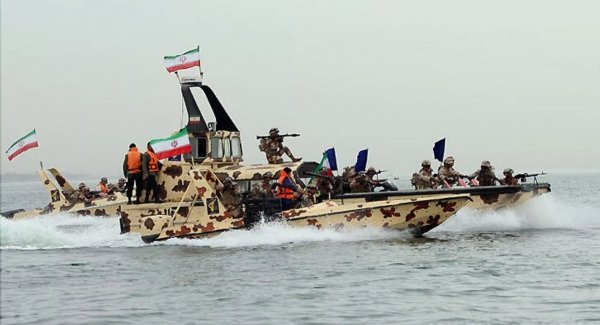
The US and Israel’s unprovoked attack on Iran and Iran’s retaliatory closure of the narrow chokepoint exit from the Persian Gulf may have “cascading consequences for the global economy,” culminating in severe blows to the US dollar and other fiat currencies, says energy economist Dr. Kazi Sohag.
“Approximately 17-20 million barrels of oil – representing over 20% of the world’s daily consumption – pass through this narrow waterway every day. These shipments originate primarily from Saudi Arabia, Iraq, the UAE, Kuwait, Iran, and Qatar, and flow toward major importers including China, India, Japan, South Korea, and the European Union,” Sohag explained.
“But the ripple effects would not stop there. The Bab el-Mandeb Strait and the Suez Canal—already volatile due to Houthi activity in the Red Sea—could also face further disruptions. Currently, 8.8 to 9.2 million barrels of oil and 4.1 billion cubic feet of liquefied natural gas transit those routes daily. A synchronized blockade across these chokepoints would magnify the supply shock exponentially.”
If sustained, the “immediate consequence” of the supply disruption will be “a sharp spike in energy prices,” not only via physical shortages of crude, but thanks to amplification by financial market speculators, hedge funds, banks and algorithmic traders trading futures, Sohag explained.
More broadly, the energy crunch may cause global stock markets to plunge and inflation to surge, “not just in fuel, but across transport, manufacturing and food production, rendering basic goods and services unaffordable for many.”
Worse yet, “as the gap between monetary supply and real economic output widens, confidence in fiat currencies could erode, potentially triggering a crisis in the global monetary system,” Sohag stressed.
“Oil-exporting countries such as Russia, Nigeria, Angola, Malaysia, and even the United States could see short-term gains from rising prices. But for the US, the benefits would be mixed. While energy producers might profit, a collapse in global trade and a reduction in dollar-denominated transactions could weaken the dollar’s international standing.”
“The world must now brace for a cascade of economic, financial, and geopolitical consequences that could redefine the contours of international stability for years to come,” the economist summed up.
In this revealing commentary, Stephen Armah Quaye dismantles the popular myth that migration to Canada guarantees automatic success and prosperity for Ghanaians. Drawing attention to the stark contrast between social media portrayals and lived reality, Quaye outlines the multifaceted challenges facing Ghanaian immigrants: brutal winter conditions that test physical and mental endurance, professional downgrading where credentials go unrecognized, a punishing housing crisis that forces overcrowded living arrangements, and the relentless pressure of high living costs that necessitates multiple jobs just for survival. Beyond the economic hardships, he explores the emotional toll of family separation, social isolation, and the often-unspoken burden of expectations from relatives back home who assume wealth is instantaneous upon arrival.
Harsh realities facing Ghanaians in Canada
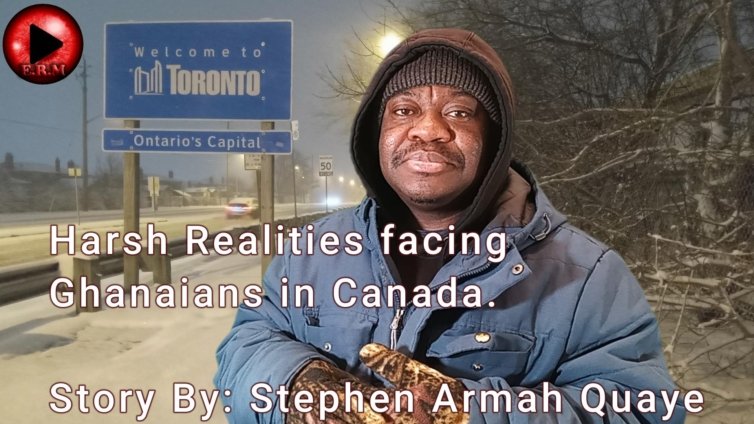
By Stephen Armah Quaye
Everyone wants to travel to Canada or the United States of America.
Everyone believes life there is easy. But what if I told you that for thousands of Ghanaians abroad, survival, not success, is the daily struggle? There is a side of migration nobody posts on social media. No filters. No airport photos. No smiling selfies in winter jackets. Just hard truths.
Before you pack your bags and say goodbye to Ghana, here is what you need to know.
The Other Side of the Dream
For many young Ghanaians, Canada represents opportunity, stability, and prosperity. It is seen as a land where hard work automatically produces success. Families gather at airports with tears of joy, believing their relative is stepping into an instant transformation. But migration is not magic. It is a transition, often a difficult one.
The Weather Shock
One of the first harsh realities facing Ghanaians in Canada is the weather.
Coming from a tropical country where sunshine dominates most of the year, winter in Canada can be physically and emotionally overwhelming. Temperatures drop far below zero. Snow blankets roads and sidewalks. The wind can pierce through layers of clothing. Winter is not just cold; it is exhausting.
Many immigrants wake up as early as 4:00 a.m., stepping into darkness and freezing temperatures to catch buses to work. Public transport delays during snowstorms are common. Walking even short distances becomes physically demanding.
Seasonal depression is real. Long months without adequate sunlight affect mood, energy, and mental health. For someone unprepared, winter alone can become a serious emotional test.
Employment and Credential Barriers
Another harsh reality is employment, specifically underemployment.
Many Ghanaians arrive with degrees and professional experience. Engineers, teachers, accountants, nurses, and other skilled workers often discover that their credentials are not immediately recognised in Canada. Licensing requirements, additional certifications, and “Canadian experience” become barriers.
As a result, many find themselves taking survival jobs such as factory work, warehouse labour, cleaning services, security shifts, or restaurant jobs. There is dignity in all honest work, but it can be emotionally draining when years of education do not translate into professional recognition. Some immigrants send money home and project success, but internally they struggle with frustration and identity loss. The reality is simple: being educated does not guarantee immediate success in Canada.
The Housing Crisis
Housing is another significant challenge. Rent in major Canadian cities is extremely expensive. In some cases, a single room can consume more than half of a person’s monthly income. Apartments require credit checks, proof of employment, and deposits. As a result, many newcomers share accommodation. Two or three people may occupy one bedroom. Some live-in basements with limited ventilation. Others rely on temporary stays with friends until they stabilise financially.
Meanwhile, families back home may assume their relative abroad owns a spacious apartment or house. The truth is different. Many immigrants are simply trying to secure safe and affordable shelter.
High Cost of Living
The cost of living in Canada is significantly higher than many expect.
Groceries are expensive. Transportation costs add up quickly. Winter clothing is costly but necessary. Phone bills, internet services, and insurance payments are ongoing financial commitments.
Healthcare in Canada is publicly funded, but not everything is covered. Dental care, prescription medication, and some specialist services often require private insurance or out-of-pocket payment.
For many immigrants, income disappears quickly once bills are paid. Savings take time. Financial stability does not happen overnight. This financial pressure pushes some individuals to work two or even three jobs, often with little rest. The goal is not luxury. The goal is survival.
Utility Bills and Winter Expenses
Winter brings additional financial strain.
Heating costs rise significantly during cold months. Electricity and gas bills can increase unexpectedly. Missing payments can lead to service disruptions and penalties.
Life can become a cycle: work, pay bills, repeat. The image of comfort and ease often portrayed abroad does not reflect this ongoing pressure.
Social Isolation and Emotional Strain
Beyond economics, there is emotional hardship. Migration separates families. Parents miss milestones in their children’s lives. Spouses endure long-distance marriages. Friendships change.
Loneliness is common, especially during the early years. Community networks help, but the adjustment period can be mentally challenging. Cultural differences, accent barriers, and subtle discrimination can also make integration difficult.
Pressure from Home
Perhaps one of the most overlooked realities is pressure from back home. Families often expect financial support. Some assume that anyone living in Canada is wealthy. When money does not flow as expected, disappointment may arise.
In some cases, funds sent home for projects such as building houses are mismanaged. This adds emotional and financial stress to an already difficult situation. Expectations can weigh heavily on immigrants who are still struggling to establish themselves.
A Call for Informed Migration
This article is not meant to discourage migration. Canada offers opportunities, safety, quality education, and structured systems. Many Ghanaians have succeeded and built fulfilling lives there.
However, success requires preparation so, if you are considering migration, research your profession and licensing requirements, save sufficient funds before travelling, prepare mentally for weather and cultural adjustment, develop adaptable skills, and build realistic expectations.
Migration is not an escape from hardship; it is often a different kind of hardship. The dream is possible, but it is earned through resilience, patience, sacrifice, and strategic planning.
Before you migrate, know the full story, not just the glamorous parts. Because sometimes, survival itself is an achievement.
Opinion
Resetting Sovereignty: Mahama’s Foreign Policy and the Constitutional Revival of NKRUMAHISM 60 years after the 1966 Coup

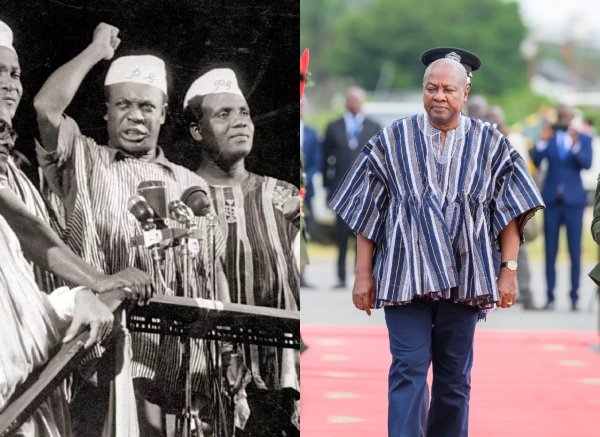
This opinion piece by Victoria Hamah (PhD) argues that President John Dramani Mahama’s foreign-policy direction reflects a renewed commitment to Kwame Nkrumah’s ideas of sovereignty, non-alignment, and economic independence. It points to symbolic actions—such as renaming Kotoka International Airport back to Accra International Airport—as part of a broader effort to correct historical narratives, strengthen national autonomy, and revive a modern, constitutional form of Nkrumahism 60 years after the 1966 coup.
Resetting Sovereignty: Mahama’s Foreign Policy and the Constitutional Revival of NKRUMAHISM 60 years after the 1966 Coup
After 60 years, the most shameful blot on the page of national dignity has finally been erased. The Kotoka International Airport has been reverted to its rightful name, Accra International Airport.
This decision by President John Mahama represents more than just an administrative rebranding. It signals an effort to interrogate the historical foundations upon which the postcolonial Ghanaian state was constructed.
The airport was named after Lieutenant General Emmanuel Kwasi Kotoka, a central figure in the 1966 coup which overthrew Kwame Nkrumah. That coup marked a decisive interruption of Ghana’s early post-independence developmental trajectory and inaugurated a period of political instability, throwing Ghana, then the lodestar of Africa, into the decadence of neocolonial subjugation.
Recently declassified records from the Central Intelligence Agency have confirmed that the United States, Britain and France were actively involved in the planning of the coup. While debates persist regarding the precise degree of foreign involvement, the broader historical consensus recognises that the overthrow of Nkrumah occurred within a broader context of Western imperialist efforts to derail the independent developmental model in particular and the pan-African vision in general.
Within this frame, the renaming of the airport functions as an act of narrative correction. It does not merely revisit the legacy of one military officer who was nothing more than a soldier of fortune; it symbolically re-centres Ghana’s identity around civilian constitutional sovereignty rather than military intervention.
In doing so, it aligns with the broader philosophical thrust of President Mahama: that political and economic independence must be reclaimed not only through fiscal and industrial policy, but through the stories nations tell about their own past.
This symbolic gesture addresses an earlier rupture in Ghana’s sovereign development. Together, they articulate a consistent thesis: that independence is neither a completed event nor a ceremonial inheritance, but an ongoing political project requiring institutional, economic, and historical recalibration.
The symbolic timing is equally significant. Sixty years after the infamous 24th February 1966 coup d’état, the renaming signals more than historical reconsideration; it suggests an ideological repositioning.
It indicates an aspiration by the National Democratic Congress (NDC) government toward a consciously pro-Nkrumahist orientation, one grounded in non-alignment, strategic autonomy, and policy independence amid an increasingly turbulent global order.
For John Dramani Mahama’s administration, this does not imply a retreat into isolationism nor a rejection of global engagement. Rather, it reflects a recalibration of Ghana’s external posture: cooperation without subordination, partnership without policy capture.
In a period marked by intensifying geopolitical rivalry and assertive economic diplomacy from powerful states in the Global North, particularly Western nations. The gesture evokes the earlier doctrine of Kwame Nkrumah, who situated Ghana within the Non-Aligned Movement as a sovereign actor rather than a peripheral client.
Read in this light, the act is not revisionist symbolism for its own sake. It articulates a continuity between the Accra Reset and Ghana’s unfinished post-independence project. The 1966 coup interrupted an ambitious experiment in autonomous development and continental leadership.
To revisit that rupture six decades later is to suggest that the questions posed in the 1960s -abhorrent alignment, dependency, and the boundaries of sovereignty – should define the character of political debate.
Economic Sovereignty as a Foreign Policy: The Reset in Practice:
President John Dramani Mahama’s unprecedented post-Rawlings era electoral victory carries significance beyond partisan transition. It represents, symbolically, a renaissance of Nkrumahism within Ghana’s contemporary democratic framework.
For the first time since the revolutionary and post-revolutionary dominance of Jerry Rawlings, a renewed mandate has been secured on a platform explicitly invoking structural transformation, strategic autonomy, and continental alignment rather than mere macroeconomic stabilisation.
This moment also clarifies an older historical debate. Prior to the 24 February 1966 coup that overthrew Kwame Nkrumah, there were persistent allegations, advanced by Nkrumah himself, that Western powers, uneasy with Ghana’s non-aligned posture and pan-African activism, exerted economic pressure by manipulating global cocoa markets.
As cocoa was Ghana’s principal export and foreign exchange earner, its price volatility had profound fiscal implications. Some historical interpretations further suggest tacit alignment by neighbouring Côte d’Ivoire, which is also a major cocoa producer within broader Western-aligned commodity structures, thereby compounding Ghana’s vulnerability and creating the mood for violent regime change.
Whether interpreted as deliberate sabotage or structural dependency within a commodity-based global economy, the episode reinforced a central Nkrumahist lesson: political sovereignty without economic autonomy is fragile.
Mahama’s present mandate appears framed as an effort to transcend that vulnerability without repudiating constitutional democracy or global engagement.
A key example is the decision to move away from syndicated external financing arrangements in the cocoa sector and to prioritise domestic value addition by processing up to half of Ghana’s cocoa output locally. This signals a deliberate shift from dependence on raw commodities toward industrial upgrading.
If implemented effectively, this approach aligns closely with classical Nkrumahist economic thought: retaining greater value within the domestic economy, reducing exposure to external price shocks, and building industrial capacity anchored in existing comparative advantage. It is not autarky but strategic repositioning within global markets.
Describing this moment as a renaissance of Nkrumahism, therefore, does not imply a return to one-party statism or Cold War binaries. Rather, it signals the re-emergence of core principles of economic self-determination, continental integration, and calibrated non-alignment within a competitive multiparty order.
Taken together, the symbolic reconsideration of colonial-era commemorations, the Nkrumahist articulation of foreign policy by Samuel Okudzeto Ablakwa, reforms within the cocoa financing architecture, and Mahama’s renewed electoral mandate, the moment can be read as deliberate ideological consolidation. It suggests that the questions suspended in 1966 have re-entered Ghana’s political centre, not as nostalgia, but as a strategy: a constitutionalised revival of the unfinished project of autonomous development.
Thus, the Reset Agenda operates on three registers simultaneously: economic restructuring, institutional reform, and historical re-anchoring. Together, they imply that sovereignty is not merely territorial integrity nor formal democratic procedure, but the sustained capacity to determine national priorities without external veto.
If the coup marked the suspension of that ambition, the present moment is framed as its cautious revival.


“We Are Watching the Geopolitical Events with Alarm”: Mahama Worried About Middle East Tensions

Ghana Gears Up for Vibrant 69th Independence Day Celebrations: Parades, Plays, Poetry, and Heritage in Focus

Agradaa Released, Ghana Prepares for Independence Day Celebration and Other Trending Topics in Ghana (March 3, 2026)
-

 Ghana News2 days ago
Ghana’s Black Queens Stranded in UAE as Government Initiates Partial Evacuation from Tehran Embassy Amid Escalating Israel-Iran Conflict
-
 Ghana News1 day ago
Court Slaps Barker-Vormawor with GH₵5m for Defaming Kan Dapaah and Other Trending Topics in Ghana (March 2, 2026)
-
 From the Diaspora1 day ago
Ghanaians and Other Africans in UAE Flood Social Media with Videos as Iranian Missile Strikes Hit Dubai
-

 Ghana News1 day ago
Newspaper Headlines Today: Monday, March 2, 2026
-
 Africa Watch2 days ago
How African Nations Are Evacuating Their Nationals Amid the Escalating Middle East Crisis
-
 Ghana News2 days ago
How African Nations Are Responding to the Iran-Israel Conflict
-

 From the Diaspora2 days ago
Ghanaian-Heritage Scientist AJ Addae Develops Breakthrough Sunscreen That Protects Darker Skin Without White Cast
-
 Perspectives2 days ago
Hormuz Strait’s Closure Could Trigger Collapse of Fiat Money – Expert