
Arts and GH Heritage
W.E.B. Du Bois’ Ghana Exile: Why America’s Reject Became Africa’s Historian

The house at No. 22 First Circular Road in Cantonments is quiet now. Bougainvillea spills over the perimeter wall. The grounds, as visitors often note, possess a “tranquil beauty” that seems deliberately removed from the clamor of Accra’s traffic-choked arteries.
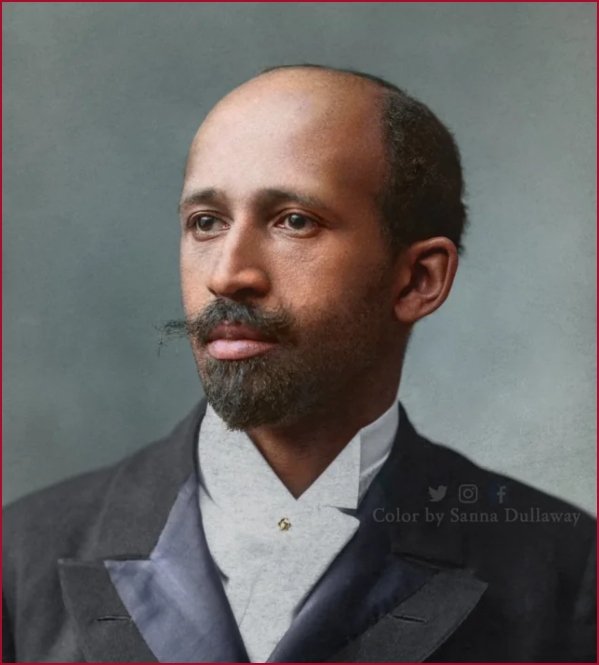
It is here, in this unassuming bungalow, that William Edward Burghardt Du Bois spent the final two years of his life. It is here that he died, on August 27, 1963, at the age of 95. And it is here, in a marble mausoleum behind the house, that he and his wife, Shirley Graham Du Bois, are interred.
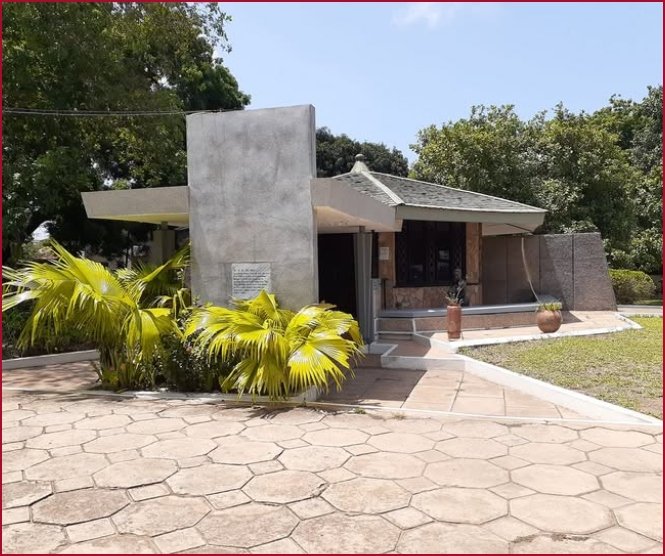
But for the thousands of African American tourists who have made pilgrimage to this site since Ghana’s 2019 Year of Return campaign, the Du Bois Centre represents something far more complex than a grave. It is the physical manifestation of a question that haunts the Black American encounter with Ghana: What does it mean to be embraced by a country that your own rejected?
“We didn’t really get to know him,” one Black American traveler, visiting the Centre with a heritage tour group, recently remarked. “He was a hero to Black America, but not necessarily to white America. And while you’re going through that museum, you get to see why.”
The observation, captured in a travel vlog from a retired military couple’s first trip to Ghana, cuts to the heart of Du Bois’ American erasure—and Ghanaian reclamation.
The Scholar and the Stateless
By the time Du Bois arrived in Accra in 1961, he had already lived several lifetimes. He was the first Black American to earn a Ph.D. from Harvard. He was a founder of the NAACP and the editor of The Crisis for a quarter-century. He had published 21 books, organized five Pan-African Congresses, and established himself as the preeminent Black intellectual of the 20th century.
He was also, at 93, a man without a country.
The United States government, in the throes of Cold War anti-communist hysteria, had refused to renew his passport. Du Bois had been indicted in 1951 as an unregistered foreign agent for his peace activism; though acquitted, he remained under FBI surveillance and was effectively barred from international travel.
“Hounded by the U.S. government and marginalized by the academic and policy establishments that once welcomed him,” writes historian Zachariah Mampilly, “Du Bois was fleeing his homeland. It was a figurative exile that turned literal when the U.S. State Department refused to renew his passport, rendering him functionally stateless.”
Enter Kwame Nkrumah.
Ghana’s first president, then three years into his experiment in independent African governance, extended an invitation: Come to Accra. Direct the Encyclopedia Africana. Help us document, for the first time, the history and civilization of the African people.
Du Bois accepted. He did not renounce his American citizenship, but he became a citizen of Ghana—a symbolic act of repatriation that Nkrumah understood as both political and profoundly personal.
The Project That Remains Unfinished

The Encyclopedia Africana was Du Bois’ final intellectual obsession. Conceived as a corrective to centuries of European scholarship that denied Africa its own history, the project aimed to produce a comprehensive, multi-volume record of African life and achievement “from the standpoint of Africa and peoples of African descent”.
Du Bois drafted the proposal in Brooklyn in October 1960, outlining the terms for Ghanaian government involvement and support. He arrived in Accra the following year, set up his library in the Cantonments bungalow, and began recruiting contributors.
But the work moved slowly. Du Bois was frail. The resources were modest. And the vision was staggering in its ambition.
He died 23 months after arriving, his great project incomplete.
“He spent the next two years in Ghana, where local and international activists and thinkers embraced him warmly, but he made little progress,” Mampilly notes . The Encyclopedia Africana would not be published until 1999—and then only in a partial, pilot edition.
Yet the failure to complete the encyclopedia may be less significant than the fact that Ghana invited him to attempt it at all.
From Neglect to Reclamation
For decades after Du Bois’ death, the Cantonments bungalow existed in a state of suspended animation. Opened as a public memorial in 1985 under President Jerry John Rawlings, the Centre housed his personal library, his papers, and his grave. But funding was erratic. Maintenance was deferred. By the 2010s, visitors reported books “slowly decomposing in the heat” and a general atmosphere of benign neglect.
“It’s hard to argue that Du Bois is underrecognized,” Mampilly writes. “Despite the acclaim, however, Du Bois remains underappreciated”.
The Year of Return changed that calculus.
In 2019, President Nana Addo Dankwa Akufo-Addo visited New York and announced a historic partnership with the W.E.B. Du Bois Museum Foundation. The goal: transform the neglected memorial into a “state-of-the-art museum complex and world-class destination for scholars and heritage tourists”.
Designed by Sir David Adjaye—the celebrated Ghanaian-British architect behind the Smithsonian National Museum of African American History and Culture in Washington—the new complex will feature a library, reading room, event hall, outdoor auditorium, amphitheater, lecture space, and a guest house for visiting scholars. The refurbished bungalow will remain, preserved as it was when Du Bois lived and worked there.
The projected cost: between $50 million and $70 million.
“This agreement will build on the government’s ‘Year of Return’ and ‘Beyond the Return’ campaigns that encourage the return of the African diaspora from around the world,” Akufo-Addo said at the 2021 signing ceremony. He urged African Americans to “follow in the footsteps of W.E.B. Du Bois by making Africa their home and contributing to the development of the continent.”
Pilgrimage and Pedagogy
For Black American visitors, the Du Bois Centre now functions as both shrine and classroom.
Japhet Aryiku, executive director of the W.E.B. Du Bois Museum Foundation, was himself inspired at a young age by Du Bois’ writings. A Ghanaian-American with more than four decades in corporate America, Aryiku describes the redevelopment project as a form of ancestral repatriation—not of bodies, but of legacy.
“All the money that we are going to invest in here, there is no money going back anywhere,” Aryiku said at the Centre’s 40th anniversary celebration in 2025. “It is not a loan. It is a grant.”
That same year, the African American Association of Ghana marked Juneteenth with a parade from the Du Bois Centre to the Accra Tourist Information Centre—a deliberate routing that positioned Du Bois’ grave as the symbolic starting point for Black America’s emancipation commemoration.
Maurice Cheetham, vice-president of the association, emphasized the educational imperative. The goal, he said, was “to educate Ghanaians about the history and significance of Juneteenth, which is not widely known in the country.” But implicit in the event was a parallel education for African American participants: the lesson that Ghana had embraced a man America had cast out.
The Irony of Return
There is a profound irony embedded in the Du Bois pilgrimage, one that many visitors only fully grasp when they stand before his grave.
Du Bois came to Ghana because he was not welcome in the United States. He was denied a passport, surveilled by his own government, and effectively exiled from the country of his birth. He did not choose repatriation as a leisure pursuit; he chose it as a survival strategy.
Yet today, the very infrastructure of diaspora tourism—the flights, the hotels, the heritage itineraries, the naming ceremonies—depends on framing Ghana as a site of voluntary return.
“Welcome home,” the airport greeters say. “You have come back to your ancestral land.”
Du Bois never heard those words at Kotoka International Airport. When he arrived in 1961, there was no Year of Return, no Beyond the Return, no state-sponsored campaign to lure the diaspora home. There was only Nkrumah’s invitation and the quiet desperation of a 93-year-old man who had outlived his country’s tolerance.
That his final residence has now become the central pilgrimage site for the very tourism industry his exile helped inspire is not lost on those who visit.
“This trip is more than just travel,” the retired military veteran reflected in her vlog. “It was for us. It was a reconnection with our roots.”
Her husband, standing beside her at the Du Bois Centre, added:
“We didn’t know anything about him. But it’s a beautiful museum, and we got the chance to see what you’re thinking about when you’re doing those things.”
The Future of the Legacy
The new Du Bois Museum Complex is expected to open within the next three to five years, transforming what was once a neglected memorial into what the government promises will be “a premier global institution and heritage site.”
Jeffrey Du Bois Peck, the great-grandson of W.E.B. and Shirley Graham Du Bois, has pledged his commitment to preserving his ancestors’ legacy. At the 40th anniversary celebration, he stood alongside Ghanaian officials and foundation executives, a living link between the scholar who arrived in 1961 and the diaspora tourists who now arrive by the thousands.
Whether the new complex can resolve the tensions inherent in Du Bois’ story—between exile and return, between American rejection and Ghanaian embrace, between unfinished scholarship and completed pilgrimage—remains an open question.
But perhaps that is not the measure of success.
The Centre’s current condition, as described by one visitor, includes “numerous original photographs” of Du Bois alongside images of Paul Robeson, Malcolm X, Nkrumah, and Martin Luther King Jr. There are photos of his friendship with Mao Tse-Tung and his visits to China. His subterranean bath, built so the 93-year-old could enter it without difficulty, remains intact.
These are the artifacts of a life lived across continents, across movements, across the shifting boundaries of belonging and exile. They do not resolve into a single narrative. They accumulate, like the bougainvillea on the perimeter wall, covering the hard edges with persistent, flowering life.
And every Saturday, behind the house where Du Bois died, a farmers’ market operates. Vendors sell fresh local foods, products, clothes, jewelry. Tourists wander through, posing for selfies.
It is not the Encyclopedia Africana that Du Bois envisioned. But it is, perhaps, something he would have recognized: the ordinary, enduring commerce of a people reclaiming their own story.






Arts and GH Heritage
Inside Togo’s Abandoned Colonial Building, African Artists Reclaim Cultural Memory

A shared bowl of palm wine, a handful of kola nuts or a lively exchange between market traders can tell a story that words alone cannot capture.
In Atakpamé, Togo, artists Kojo Biney and Ray Agbo are exploring these everyday encounters as powerful expressions of African identity, using art to reconnect cultural memory with a complicated colonial past.
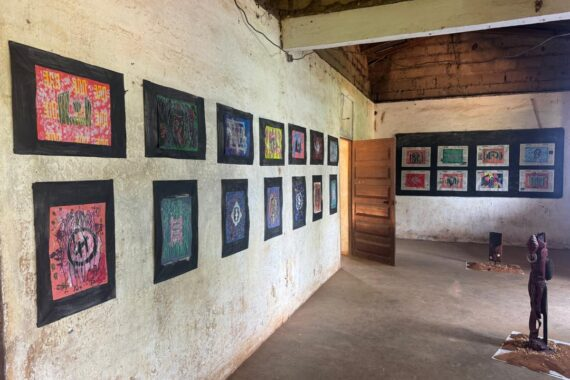
Their exhibition, Conversations: Symbolism and Lifestyle, forms part of the Karp Kamina Artists and Researchers Residency 2026.
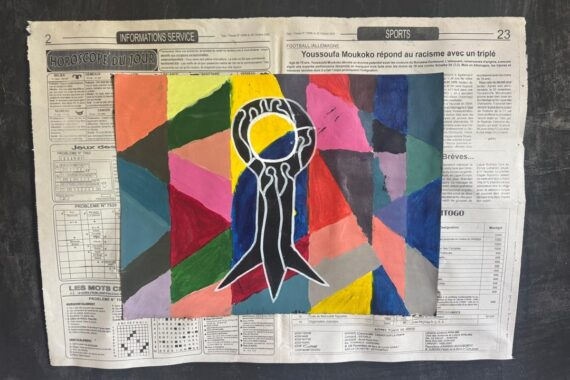
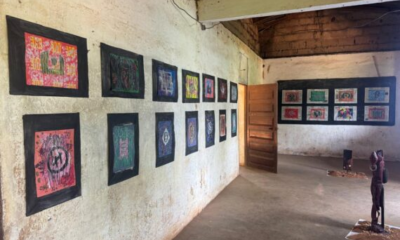
Presented inside an abandoned German colonial building, the exhibition brings paintings and sculptures into dialogue with newspaper pages, creating an unusual encounter between personal memory, public history and contemporary African expression.
Reading the Symbols of Everyday Life
Atakpamé, known as the “city of seven hills”, sits within a cultural landscape shaped by Ana and Ewe-speaking communities. Here, social relationships are often expressed through gestures, shared rituals and objects whose significance extends beyond their practical use.
Biney and Agbo draw attention to these familiar practices, inviting audiences to recognise the cultural knowledge embedded in ordinary interactions.
Their work suggests that traditions survive not only through formal ceremonies or written records, but also through repeated acts of hospitality, negotiation and togetherness.
A Colonial Space, Reclaimed Through Art
The exhibition’s setting adds another dimension. A building associated with German colonial rule becomes a place where contemporary African artists examine the identities and relationships that history cannot fully contain.
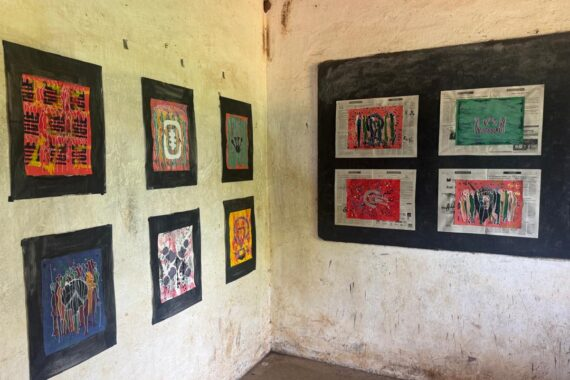
The newspapers displayed alongside the artworks further complicate the encounter, prompting questions about whose stories are recorded and how collective memory is preserved.
Closing on October 16, 2026, the exhibition offers a timely reminder that heritage is not simply inherited; it is continually interpreted.
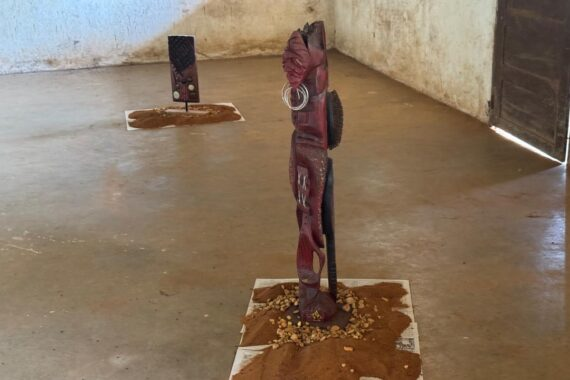
By transforming an abandoned building into a space for artistic exchange, Biney and Agbo invite visitors to see cultural memory as something communities can actively question, share and renew.
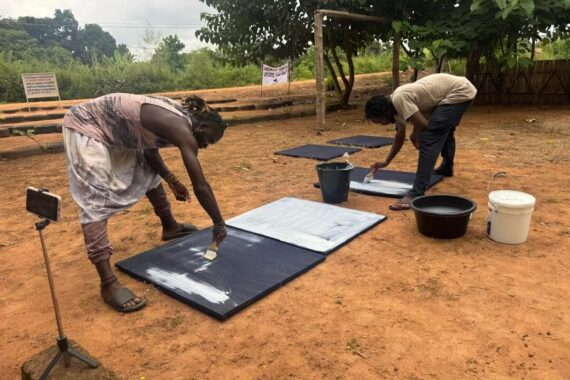
An international residency in Togo is bringing history into conversation with contemporary art, inviting a new generation to rethink how cultural heritage is preserved and experienced.
The ruins of an old radio station might appear to belong to another time. At Karp Kamina in Togo, however, the past is finding new expression through music, dance, research and artistic experimentation.
On October 5, 2026, the Karp Artists and Researchers Residency opened with traditional music and dance, welcoming participants from Togo, Ghana, Benin, Norway and beyond for two weeks of creative exchange.
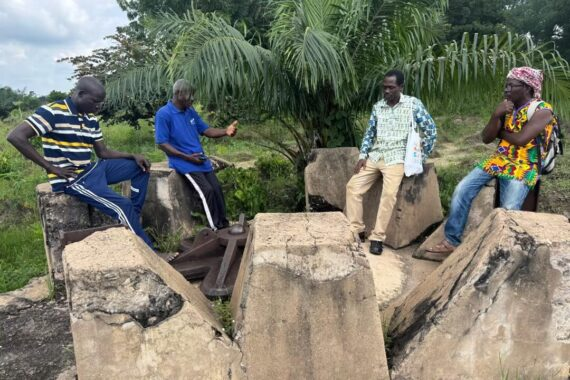
Their mission reaches beyond documenting history: it is about finding new ways to make that history matter today.
When History Becomes Creative Material
At the centre of the residency is Radio Kamina, whose history has shaped the site’s significance. Between 2016 and 2022, the programme concentrated on exploring more than a century of the station’s past.
The current initiative expands that work, inviting artists, academics, dancers, musicians and culinary practitioners to interpret the site through different creative disciplines.
The 2026 edition, themed Cultural Revitalization II: Reclaim • Reimagine • Revive, treats heritage as something that can evolve rather than remain confined to archives and physical remains.
Visits to historical and tourist sites around Karp Kamina provide further inspiration, connecting participants’ work to the surrounding cultural landscape and community.
A Shared Responsibility for Heritage
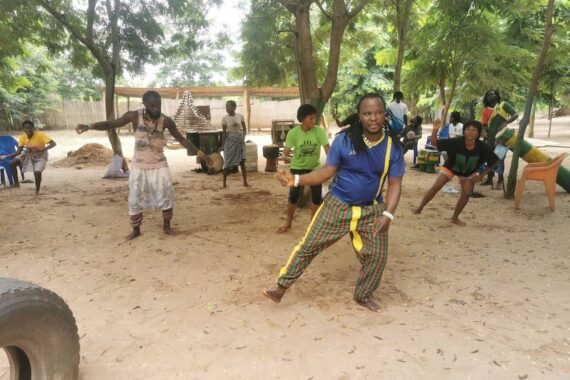
The residency also raises a question relevant across West Africa: who should shape the future of historic places?
Preservation requires more than artistic vision. Local residents, traditional leaders, public institutions and investors all have roles to play in ensuring that heritage initiatives benefit the communities connected to them.
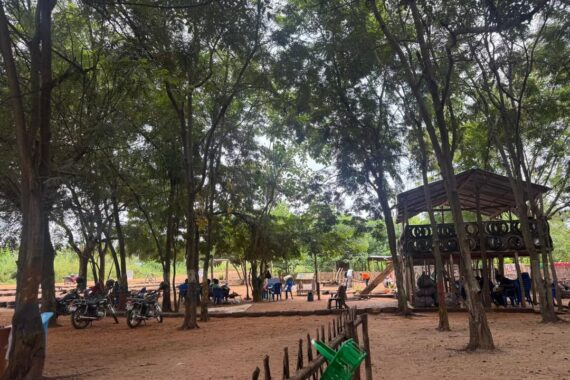
With support from local authorities and other sponsors, the project hopes to strengthen Kamina’s artistic life and attract wider cultural and research interest.
For Ghanaian audiences familiar with ongoing efforts to preserve historic forts, palaces and traditional arts, the initiative offers a related lesson: history becomes more meaningful when communities can engage with it creatively.
At Karp Kamina, the past is not simply being remembered. It is being given room to speak again.
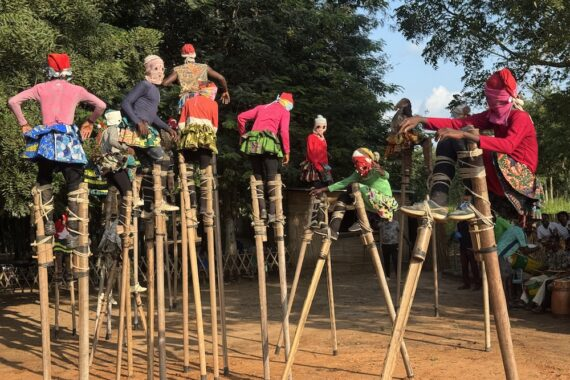
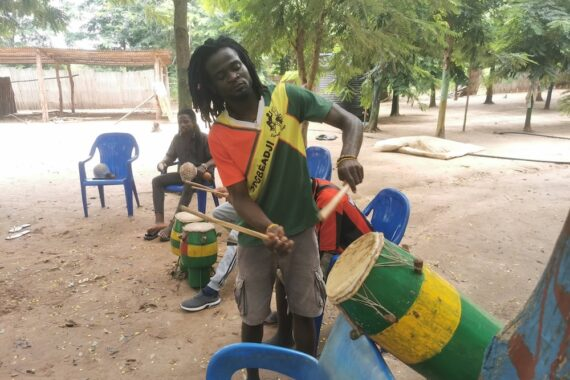
The 2026 edition of the Karp Kamina Artists and Researchers Residency began on a high note as the Zogbéadji Band, officially known as the Association Culturelle et Artistique Zogbéadji d’Atakpamé (ACAZOT), delivered a magnetic opening performance that transformed the gathering into a vibrant celebration of traditional music, dance, and cultural memory.
From the moment the drums began to speak, the atmosphere shifted. Drawing on years of discipline and experience, the performers unleashed a powerful blend of energetic dance and frenzied percussion that immediately captivated residents and participants.
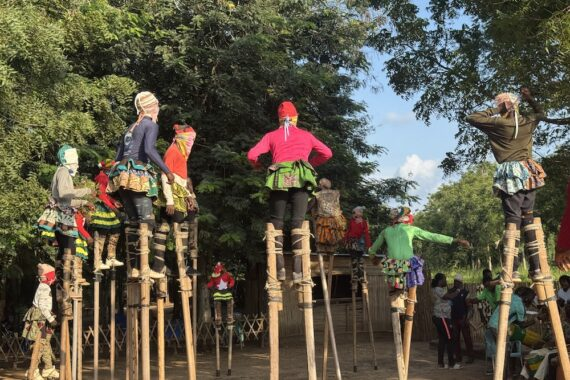
Their performance was not merely entertainment; it felt like an encounter with a living cultural tradition, expressed through rhythm, movement, costume, and ritual.
At the heart of the presentation was the spectacular Tchébé dance, one of the most visually stunning traditional dance forms in the repertoire.
Perched on towering wooden stilts that can reach as high as six meters, the dancers performed daring acrobatics with extraordinary confidence and balance.
Their movements were at once graceful and ferocious, creating moments of genuine suspense as they seemed to defy both gravity and physical limits.
The soundscape was equally commanding. Led by Tsèviska Le Baobab, the ensemble generated an intense, ground-shaking pulse that seemed to travel through the audience’s bodies.
Among the instruments was the sacred Aran-Lakou, or grand talking tom-tom, whose deep, resonant voice holds significance in the local Ifè language and tradition. In the hands of experienced percussionists, the drum became more than an instrument; it became a vehicle for communication, ceremony, and collective memory.
Visually, the performers reinforced the music’s power with vibrant traditional costumes and fierce body paint, creating a striking spectacle that complemented the relentless rhythm of the drums.
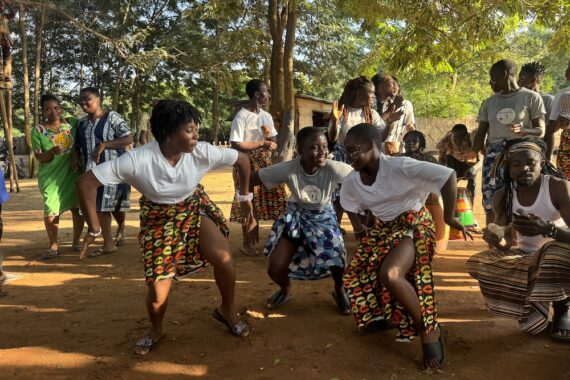
A gentler counterpoint came from young kora player Marie Jo Atikpolater, whose soft, flowing melodies brought a moment of calm amid the intensity. Her playing showcased the evening’s remarkable range, moving seamlessly from explosive percussion to the kora’s delicate resonance.
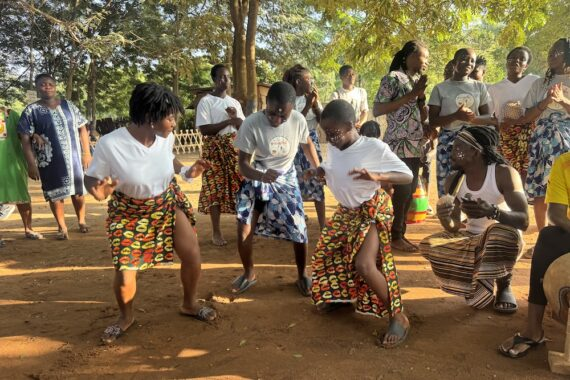
As an opening statement for the Karp Kamina residency, the Zogbeadji Band offered more than a performance. It presented tradition as dynamic, physical, and enduring—capable of thrilling contemporary audiences while carrying a people’s memory and identity into the future.



-
 Ghana News1 day ago
OBITUARY: Gamal Gorkeh Nkrumah, Son of Ghana’s Founding President, Dies in Cairo
-

 Sights and Sounds2 days ago
EPP BookShop at Legon: A Destination for Students, Families and Book Lovers
-

 Health & Wellness1 day ago
Walking Is More Than Exercise: Small Steps That Can Transform Your Health
-

 Festivals & Events1 day ago
MaddFest 2027: Welcome the New Year with a Night of Celebration in Accra
-
 Homes & Real Estate2 days ago
Building Smarter in Ghana: Could Plastic Rebar Clips Improve Construction Efficiency?
-
 Arts and GH Heritage1 day ago
Inside Togo’s Abandoned Colonial Building, African Artists Reclaim Cultural Memory
-

 Global Update1 day ago
Wave of Student Killings at Mexico Universities Raises Safety Concerns
-
 Ghana News1 day ago
Mahama to Churches: The Real Sermon Is Written After the Closing Prayer