
Perspectives
‘A soul mission’: The African Americans moving to Ghana


This article by Menenaba was first published by Aljazeera
Accra, Ghana – Ashley Haruna never intended to stay in Ghana. But everything changed for the 28-year-old health coach when she stood facing a dark cell inside the stone walls of Cape Coast Castle. As the tour guide explained that many of the enslaved people who’d once been held there had ended up in Haiti, Haruna says she “felt something”.
Having grown up in the United States to Haitian parents, she realised “my ancestors could’ve passed through here. This place. This ground.
“I wasn’t looking for that,” she reflects. “But it found me.”
The feeling it stirred within her only grew when she returned home to Ohio. After a few months, with her family’s reluctant approval, she returned to Ghana – for good.
That was in December 2021, and Haruna was following in the footsteps of many other African Americans who had sought to reconnect with the country that may once have been home to their ancestors.
In the 1950s, Ghana’s first prime minister and president, Kwame Nkrumah, championed the diaspora’s return as part of his Pan-African dream and nation-building efforts. During the US civil rights movement, he invited Black American activists, including W E B Du Bois, Marcus Garvey, and Julian Bond, to relocate to Ghana. In the 1960s, Du Bois moved there, as did writer Maya Angelou.
Ghanaian leaders continue to encourage the African diaspora to reconnect and relocate. In 2019, the “Year of Return”, marking 400 years since the first enslaved Africans arrived in Virginia, more than 200 people from the US and the Caribbean received Ghanaian citizenship. In 2024, as part of the government’s “Beyond the Return” initiative – the same programme that encouraged Haruna to move to Ghana – 524 African diasporans were granted citizenship.
But, as Haruna discovered, building a new life in Ghana comes with challenges.
Villa Diaspora
Her first apartment was located two hours north of Accra, in the mountainous Eastern Region, and while Haruna had imagined herself integrating into a local community, she instead found isolation. With no grocery stores nearby and no one to help answer her questions – like how to operate a gas stove or what to do when the water stops running – she found herself feeling alone and frustrated.
She recalled a YouTube video she’d seen while still in the US about a place called Villa Diaspora – a co-living space where the owner, herself a “returnee”, as African Americans relocating to Ghana refer to themselves, helps others navigate their new lives in the country. Haruna dug through her browser history until she found the video. A week later, she moved into the villa in an upscale suburb of Accra.
In the warm communal living area and kitchen she shared with two other African-American tenants, she learned how to navigate the practical and cultural challenges of figuring out her new home – from getting an identification card to learning to say “please” before every sentence.
When Haruna was injured in a car accident, it was the villa’s owner, Michelle Konadu, 37, and the community of former tenants who helped her. The villa became her lifeline. Like the other tenants – who tend to stay for between three and nine months – Haruna moved out of the villa after a while, but it is still Konadu she calls when she needs help.
‘They want healing’
Konadu knows the feeling of being caught between worlds. Born and raised in New York City to Ghanaian parents, her family apartment was a landing place for visiting relatives, distant cousins and friends of friends. “We were always housing someone,” she says.
It wasn’t until she visited Ghana for a funeral in 2015 that she first contemplated leaving the fast pace of New York for the slow flow of Ghana. At first, she thought it would feel like home, but she says she often felt like an outsider. “Too American to be in Ghanaian spaces. But too Ghanaian for America,” she explains.
A cousin named Alfred softened her landing by teaching her how to navigate markets, hail a trotro (a local minibus taxi), and understand the unspoken etiquette of greeting elders and never using the left hand to make gestures towards anybody.
Without his guidance, she says, she might have left and never returned.
Recognising that not every returnee has their own Alfred, Konadu decided to help. In 2017, she opened Villa Diaspora, a three-bedroom co-living compound alongside her larger family home in Kwabenya. She invites the tenants she hosts into the everyday life of her neighbourhood and introduces them to middle-income Accra. Beyond providing accommodation, she helps returnees find schools, consults on land purchases, and connects them with social groups and sports clubs.
Her goal is simple: to help people belong by providing “an already-made community”.
“Most of them come here with a soul mission,” Konadu explains. “They want healing. Or reconnection. Or just a fresh start. For many, coming to Africa has been a lifelong dream. But the people they meet might not understand that.”
Her family struggled to understand why she moved back when their dream had been to leave. But now other families are relieved to know that their loved ones will spend their first months in Ghana surrounded by people on a similar journey. After 10 years in Ghana, Konadu believes that if people can live with her, they can live among the wider community.
She points to the Brazilian “Tabom” community in Jamestown, Accra, which she sees as a perfect example of a well-integrated returned diaspora group. As descendants of formerly enslaved Africans who returned from Brazil in the 19th century, they settled among the Ga people, intermarried, learned the language, and built lives that blended their Afro-Brazilian heritage within the Ga social structure. Over the generations, their names – De Souza, Silva, Nelson – have become part of the Jamestown story. Konadu expects the same will happen with the newer returnees and that the African-American culture will remain strong but exist within the structure of the larger Ghanaian society.
Haruna understands that integration takes time, and she acknowledges that returnees like her have privileges that others in Ghana don’t. Lighter skin and an American accent often open doors in ways that never happened back in the US, giving her preferential treatment such as faster service in restaurants, locals ready to offer help, and generally being able to make things happen faster, like meetings with authorities.
“It is uncomfortable as a self-aware person to notice that I have privilege, something that is the total opposite of what is happening in the United States. I am still wrapping my head around all of it,” she says.
“I’m Ghanaian. I’m also a returnee,” Konadu says. “We’ve always been connected: Ghana and its diasporans. This isn’t new, but the ‘Year of Return’ made things more visible.”
This increased visibility – and the clustering of returnees in specific settlements, along with rising costs – has caused some friction.
‘The Ghana they won’t see’
Anthony Amponsah Faith runs a business renting out cars and driving clients around Ghana, including returnees navigating the country for the first time. He credits them with allowing him to visit places he had never been to before, such as the Nzulezu stilt village and the middle-belt waterfalls.
“Before, I never got to go anywhere. Now, I’ve seen the whole of Ghana,” says the 32-year-old.
On these trips, Amponsah has witnessed his African-American clients’ emotional visits to coastal slave castles and memorials, but he has also seen friction up close. While wealthier neighbourhoods, where returnees often settle, enjoy continuous electricity, paved roads, and access to supermarkets and cafes, in others, water comes in cycles and basic services require improvisation. Returnees complain about power cuts or heavy traffic, while locals shrug them off as part of daily life. He recalls a client insisting he was being overcharged because “Ghana should be cheap”.
Earlier this year, Amponsah awoke one night to find his mattress floating in a room flooded with water.
“That’s the Ghana they won’t see,” he says. “It doesn’t flood in the areas where returnees stay.”
He is frustrated by the rising cost of housing, which he attributes to returnees’ willingness to pay more. “To them, it’s not expensive,” he says. “They come from places where they earn more. But I blame the government. Why aren’t we getting those same opportunities?”
In 2019, he paid 120 cedis ($10-12) a month for a small studio; he now pays 450 cedis ($42-44).
“The cost of living is rising by the second. It makes finding a place scary,” says Amponsah. He would prefer to be closer to his customers, many of whom live at least an hour away, but he can’t afford to move.
‘A town from scratch’
Many new arrivals feel guilty about their economic and social privileges, but some Ghanaians carry an often unspoken burden tied to their ancestors’ role in the transatlantic slave trade, leading some chiefs to offer land to returnees as atonement.
Across Ghana, at least two diaspora settlements, Fihankra and Pan African Village emerged that way, while other returnee-focused residential projects, including gated communities, are under construction.
Dawn Dickson, an entrepreneur and investor, is building a house for herself in the African-American settlement known as Pan African Village. She moved to Ghana in 2022, after envisaging a life outside the US in a place where she wasn’t “the minority”.
The 46-year-old says she didn’t intend to seek out a diaspora-only community. Dickson, who traces her ancestry to the Akan people in Ghana and Ivory Coast, was struck by the sense of familiarity, warmth and energy among the Ghanaians she met. But when she started looking to buy land, she discovered that other returnees were buying around Asebu town in the coastal Central Region, where a traditional leader had carved out some 20,000 plots for diasporans.
“For me, it was the excitement that I got to be part of building a town from scratch,” Dickson explains.
She bought land and then founded a company that helps other African Americans buy and build homes. Dickson is employing sustainable rammed earth technology to construct houses for 35 returnees as well as roads, a school, a church and boreholes, and is training locals to master this building technique.
The community, however, has not been without controversy.
In 2023, a family challenged the decision to allocate land they claimed was their ancestral property as part of the village. Development has continued despite a high court injunction ordering that construction be halted, and some 150 farmers who relied on this land say they have lost their livelihoods.
Dickson says the land she has helped purchase is not contested, and if farmers are using it, she negotiates shared-crop agreements or payment.
Elsewhere, new diaspora projects are under way and have come under scrutiny.
Sanbra City (“Return City”) is a 300-acre private real estate development outside Accra. The planned eco-friendly gated community caused a backlash over initial reports that the government was behind an exclusive returnee enclave with houses starting at $180,000, which is out of reach for most Ghanaians. Sanbra City founders have said the project is a collaboration between African-American and Ghanaian developers, not a government initiative, and Ghanaians would be welcomed.
In other instances, Dickson says she has seen African Americans scamming their own, advertising houses hours away from Accra as if they’re “15 minutes from the airport,” or charging impossible prices.
A Pan-African refuge and a community hub
The very first planned diaspora community in the country was Fihankra, on the outskirts of Akwamufie town in Ghana’s southeastern Eastern Region.
In 1994, the chief in the Akwamu Traditional Area offered land as a gift to diasporans willing to resettle in Ghana. Fihankra is a Twi phrase that loosely translates as, “When you left this place, no goodbyes were bid.” It symbolises diasporans’ painful separation from their ancestral home.
Once promoted as a Pan-African refuge, Fihankra is now largely deserted and marked by scandal.
Harriet Kaufman, 69, a retired nurse and an Afro-Caribbean from New York, first heard about Fihankra when she and her husband were living in London in the late 1990s.
By the time they arrived in Ghana in 1998, rumours were swirling that Fihankra turned away Jamaicans and Nigerians, reserving land solely for African-American investors and charged inflated prices and rents. So the couple found land on their own, and slowly built a home 15 minutes away from Fihankra.
Over time, some diasporans at Fihankra started calling themselves the royal family, prompting the minister in charge of chieftaincy to take legal action against them for impersonation. Then, in 2015, two female African-American residents were murdered in an attempted robbery. Soon after, the small community was largely abandoned.
Today, only two people live in Fihankra, says Kaufman.
The Kaufmans’ home, meanwhile, named Black Star African Lion and situated on hills overlooking the Volta River, has grown into a local community hub with a small children’s library, cafe, bar, music studio, guesthouse and prenatal care business.
‘I am fortunate’
The community took years to develop, and Kaufman is struck by how easily returnees seem to arrive today. When she first came to Ghana, she and her husband rented from a family in Accra and it took them several years to find land and build the first building. There were no smartphones, and no electricity in the area. There was no Instagram to glamourise the journey or real estate agents curating “Africa” from afar. In her opinion, social media has made return look easy, even luxurious.
“I guess it was a different time than now. When we came, my husband and I sat outside and stared at the stars at night for entertainment,” she says. “Today, all these influencers are posting about Ghana on Instagram, and people think it is just easy and nice villas by the river.”
Kaufman believes this contributes to perceptions that returnees are privileged.
After all these years, when she occasionally sells bananas from her garden in the local market, she is offered prices below what suppliers would typically accept. She says she is still seen as someone who already has more than enough and shouldn’t be seeking profit. Kaufman says she gets it, and considers herself privileged to live as she does in Ghana.
As more recent arrivals build new lives in local communities or choose to be surrounded by other diasporans, many returnees face integration challenges.
“I know that most of my ancestors dreamed of returning to Africa, and I am fortunate enough to have that chance,” Haruna says, admitting she still feels like an outsider. “[But] I will always say I moved here, not that I am from here.”








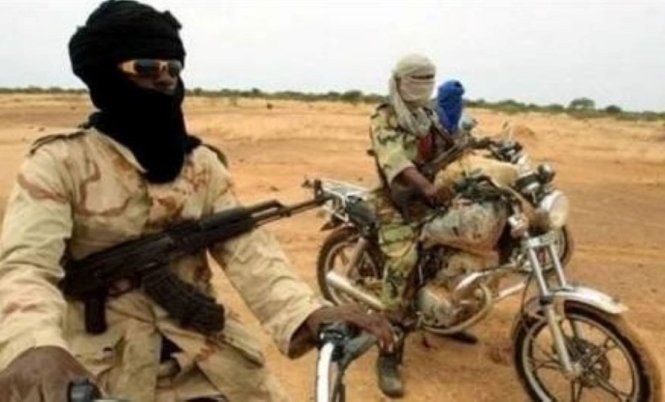
JNIM now strikes at capitals and governs territory, and the bet that Mali, Burkina Faso, and Niger placed on Russia as their sole security guarantor has failed. Analyst and researcher Joseph McCarthy writes that the fire will not stop at the Sahel’s borders, and Ghana stands directly in its path.
The Sahel is Burning, and West Africa Cannot Look Away
By Joseph McCarthy
At dawn on 18 June 2026, fighters stormed Diori Hamani International Airport in Niamey, the most heavily guarded site in Niger’s capital. It is not merely an airport. The complex houses the air force, most of the country’s drones, the headquarters of the Alliance of Sahel States’ joint force, the Russian personnel meant to help crush the insurgency, and even uranium stocks the state hopes to sell. JNIM claimed the assault, which killed eleven soldiers and two civilians. It was the second strike on that complex this year; the Islamic State’s Sahel Province claimed a January raid. Both of the region’s jihadist franchises have now breached the defences of a capital. This was not just another attack. It was a strategic signal.
It was also no act of opportunism. Hitting a fortified installation in a capital demands months of surveillance, intelligence on shift changes, the logistics to move fighters and weapons over long distances, and the ability to slip past layered security. It implies networks operating close to, or inside, the capital itself. As the Armed Conflict Location and Event Data project noted, the Sahel’s insurgents have moved from localised rural fighting to coordinated strikes on vital national infrastructure. The pattern is everywhere. In Mali, JNIM has throttled Bamako with a fuel blockade since September 2025, destroying hundreds of tankers; in April, it overran the garrison town of Kati and killed the defence minister in his own home; it has since placed a bounty of two million euros on the head of Mali’s junta leader, Assimi Goïta.
More troubling than the firepower is the governance. A Reuters investigation found that JNIM now arbitrates land disputes, collects taxes, enforces rules and imposes a rough order in territories the state has vacated. Forged from the merger of four groups, it increasingly presents itself not as a militia but as an alternative authority, building legitimacy among populations long neglected by distant governments. History is unkind here: from Afghanistan to Somalia, insurgencies that learn to govern outlast those that only fight. The contest is no longer simply about defeating armed men. It is about whether the state, rather than an armed movement, remains the most credible source of authority, justice and security.
Against all this, the juntas made a bet. Mali, Burkina Faso and Niger expelled Western forces, walked out of ECOWAS, and rebuilt their security around a single guarantor: Russia, first through the Wagner Group, then the Africa Corps. On 26 June, Burkina Faso severed diplomatic relations with France entirely, accusing Paris of backing the very terrorists it claims to fight, an allegation offered without evidence and flatly rejected. Niger’s government, for its part, blamed the Niamey attack on mercenaries funded by President Macron, again without proof. The promise was straightforward: sovereignty restored, foreign influence reduced, terrorism defeated. Judged by the junta’s own promise, the bet has failed. The violence has not receded. It has spread.
This should not be read as a uniquely Russian failure. It exposes the limits of any strategy built around a single external guarantor. No partner, whether Russia, France or the United States, can resolve a conflict rooted in governance failure, economic exclusion, local grievance and hollow institutions. Force can kill fighters. It cannot rebuild public trust, settle a quarrel between communities, open a clinic or create a job for an idle young man, and those are the very conditions the insurgents harvest for recruits. Russia carries constraints of its own: bogged down in Ukraine, its resources finite, it was outfought alongside Malian troops at Kidal even after reportedly receiving a warning of the assault. A security architecture resting on a single distracted partner does not reduce risk; it concentrates it, and when that partner underdelivers, there is no second line. The 2026 Global Terrorism Index now names the Sahel the global epicentre of terrorism, the source of more than half the world’s terrorism deaths and one in five of its attacks.
None of this stays in the Sahel. Ghana shares roughly 550 kilometres of frontier with Burkina Faso, much of it porous and threaded with informal crossings used daily by traders and herders. Southward expansion rarely begins with a spectacular attack. It begins quietly: a recruiter, a supply route, a financing cell, fighters embedding in border communities long before a shot is fired. That is precisely how the contagion crossed from Mali into Burkina Faso and Niger, and how it has already reached Benin and Togo, with Côte d’Ivoire and northern Ghana plainly exposed. Alongside the fighters’ travels, something almost as corrosive: a flood of assault rifles, explosives and military hardware that does not stop at extremist hands but arms robbers, traffickers and illegal mining syndicates, hollowing out a country’s security long before any jihadist banner appears.
The wider world has its own reasons to watch. Niger holds some of the planet’s richest uranium. A jihadist proto-state straddling West Africa would command migration routes toward the coast and the Mediterranean, strain fragile coastal economies, disrupt trade corridors and rattle investor confidence. At the same time, every successful strike on a capital broadcasts a template to armed groups from Nigeria to Mozambique. What looks today like a regional security crisis could become an international one. A region generating one in five of the world’s militant attacks is not a distant problem. It is a lit fuse.
Africa has paid before for believing that outside powers can guarantee its security. They cannot. Partners can offer intelligence, training and equipment; they cannot substitute for legitimate governance and functioning institutions. This crisis will be settled not only on the battlefield but in courtrooms, classrooms, local councils and marketplaces, where citizens decide whether the state or an armed movement better delivers justice and opportunity. For Ghana, the task is preventive, not reactive: intelligence cooperation, stronger borders, regional collaboration, community resilience and investment in local governance, all of it far cheaper than containment once the violence has taken root. And for the Sahel’s rulers, there is a harder truth.
Sovereignty that trades several partners for total dependence on one distant and overstretched power is not sovereignty; it is a fresh vulnerability dressed in the language of liberation. The question is no longer whether the crisis will spread beyond Mali, Burkina Faso and Niger. It already has. The only question left is whether West Africa acts before the Sahel becomes the world’s next strategic emergency.
Joseph McCarthy is an analyst and researcher specialising in governance, security, and political transitions in the Sahel. He writes on geopolitics, development, and African diplomacy. Email: joecarthy30@gmail.com
Perspectives
From Crossroads to Counter‑Offensive | Colonel Festus Aboagye (Retired) Discusses Ghana’s Anti-Narcotics Posture

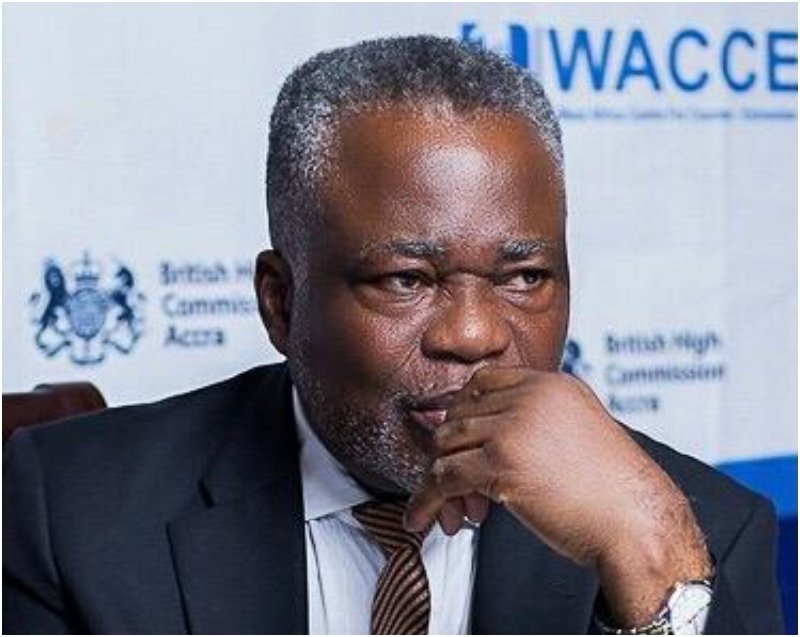
Ghana’s 2026 World Drug Day commemoration marks a decisive turning point in the nation’s long struggle against narcotics trafficking, signaling a shift from reactive interdiction to an assertive, intelligence‑led posture that is already yielding tangible results. Yet, as a new policy brief by Colonel Festus Aboagye (Retired) makes clear, the strategic contest over governance integrity remains unresolved.
Twelve months after the Crossroads Republic paper rated Ghana’s narco‑state risk at 2.7 out of 5 — moderate but escalating — the country has made measurable progress. The Narcotics Control Commission (NACOC) has expanded from fewer than 10 district commands to 77 across all 16 regions; arrests, prosecutions and seizures are up sharply; and a special narcotics court and enhanced prosecutorial powers — both recommendations from 2025 — are now in place. But the threat has evolved in parallel: methamphetamine concealed in charcoal shipments, synthetic and new psychoactive substances, cyber‑enabled trafficking, a 7% drug‑test failure rate among security‑service applicants, and localised consumption hotspots (73.5% lifetime use in Madina) all point to a challenge that is far from contained.
The reform most central to averting state capture — political‑party‑campaign‑finance transparency — has gone unaddressed. Though Ghana may be winning tactical battles, the strategic contest over the integrity of governance remains open.
Read the full 20‑page policy brief, “From Crossroads to Counter‑Offensive”, by Colonel Festus Aboagye (Retired):
Share, discuss, and join the conversation on sustaining Ghana’s resilience against the evolving narcotics threat.
#WorldDrugDay #PolicyBrief #Governance #Resilience #Ghana #NarcoTrafficking #StateCapture
Commentary
Reflections on Ghana And the Future it Deserves | By Simone Giger, Swiss Ambassador to Ghana
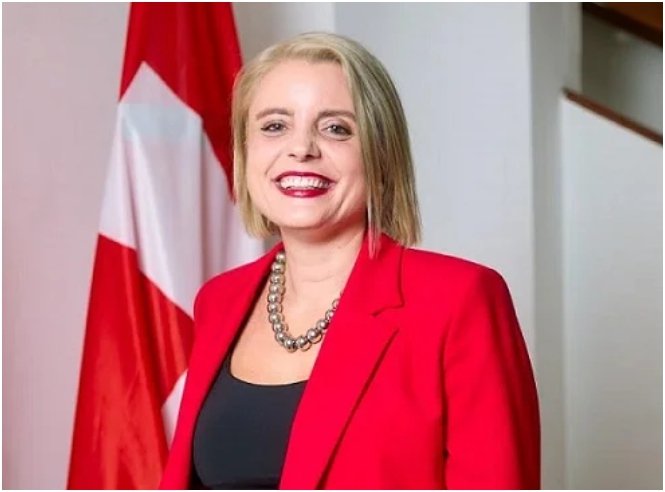
As her diplomatic tenure in West Africa draws to a close, Swiss Ambassador Simone Giger pens a reflective and heartfelt tribute to Ghana’s enduring national character. Having traveled extensively across the country—from Paga to Keta and Wa to Goaso—she offers an intimate, human-centered assessment of a nation defined by its resilient democratic culture, youthful ambition, and an infectious “vibe” that fosters cohesion. In this candid farewell, Ambassador Giger explores the complex challenges threatening Ghana’s ecological treasures and argues that sustained institutional reform, rather than outside invention, is the key to unlocking the prosperous future the country so clearly deserves.
Travelling through northern Ghana, this author once stopped in a small community after a long journey. Despite the day’s heat and the demands of daily life, residents welcomed visitors with warm smiles, easy laughter and an eagerness to share stories about their hopes for the future.
It was a simple encounter, yet it captured something profoundly Ghanaian: an enduring optimism that persists even in difficult circumstances.
In diplomacy, countries are often assessed through official meetings, economic indicators and policy documents. Yet to truly understand a nation, one must travel through it, listen to its people, appreciate its strengths, observe its contradictions and understand the aspirations that shape everyday life.
As the end of a diplomatic assignment in Ghana approaches, this author finds reason to reflect deeply on a country that has left a lasting impression, not only professionally but personally.
Over the past four years, extensive travels across Ghana—from Paga to Keta, Damongo to Donkokrom, and Wa to Goaso—have revealed a country of extraordinary diversity, complexity, creativity and resilience.
Every journey has unveiled a different dimension of Ghana. Yet one common thread consistently emerges: a nation brimming with potential.
There is something profoundly remarkable about Ghana and its national character, what many Ghanaians simply describe as the country’s “vibe”.
It is evident in the warmth extended to strangers, the humour with which difficulties are confronted and the optimism that endures even during periods of uncertainty.
Even in challenging moments, there is often a joke, a proverb or a story that helps place events in perspective.
In this author’s view, that national character has become one of the essential ingredients behind Ghana’s democratic success.
At a time when democratic systems around the world are facing increasing pressure, polarisation and distrust, Ghana continues to distinguish itself through its commitment to dialogue, constitutional order and peaceful coexistence.
Democracy here is not perfect. No democracy truly is, including Switzerland’s.
What matters is that it remains alive, active and deeply valued by citizens.
Over the years, Ghana has established itself as an important democratic reference point in West Africa.
The country has repeatedly demonstrated that political competition can coexist with stability, that transfers of power can occur peacefully and that national debates can take place within institutional frameworks rather than outside them.
Such achievements should never be taken for granted.
Democracy is not sustained by elections alone.
It requires strong institutions, active citizens, credible public discourse and a continuous willingness to negotiate consensus across political, ethnic, religious and generational lines.
One can observe that Ghana’s diversity presents both opportunities and challenges. Yet this author has often admired the manner in which the country continues to navigate these varied interests while preserving national cohesion.
In many respects, this is where Ghana’s democratic future becomes particularly important.
The country possesses extraordinary human capital.
Wherever this author travelled, young people displayed ambition, intelligence, creativity and determination.
Ghana’s greatest resource is not found beneath the ground.
It resides in its people, their ideas and their aspirations.
Ideas and aspirations, however, require systems that function effectively if they are to translate into meaningful and productive outcomes.
When institutions are transparent, responsive, accountable and trusted, they unlock innovation, investment and opportunity.
When they are weak or inconsistent, they risk frustrating the very energy capable of propelling a nation forward.
This is why governance reforms remain so important to Ghana’s long-term trajectory.
One development that particularly impressed this author during the diplomatic assignment has been Ghana’s constitutional review process.
What stands out is not only the process itself, but also the spirit behind it – a willingness to reflect critically on how democratic governance can evolve to meet contemporary realities and future expectations.
This demonstrates political maturity.
Constitutions should never be viewed as static documents frozen in time.
Strong democracies periodically examine whether their systems remain responsive, inclusive and effective.
Ghana’s consultative approach reflects a country seeking not merely to preserve democracy, but to improve it.
Switzerland is proud to support these home-grown efforts and remains committed to supporting the constitutional reform process until its hoped-for successful conclusion.
History demonstrates that democratic stability does not emerge automatically.
It requires deliberate investment in participation, inclusion and dialogue.
Swiss democracy itself evolved gradually through compromise, negotiation and the understanding that national cohesion is strengthened when citizens feel ownership over public decisions.
One can observe important similarities between Ghana and Switzerland.
Both countries are diverse societies that have chosen coexistence over division.
Both understand that stability is strongest when different voices are heard and accommodated.
Both appreciate the importance of consensus-building in national life.
This shared philosophy has shaped bilateral cooperation over many decades.
Today, the partnership continues to evolve in both breadth and depth.
Switzerland currently supports initiatives focused on democratic governance, parliamentary cooperation, decentralisation, peace and security, cultural exchange, environmental integrity, climate adaptation and economic development.
Switzerland and Ghana may differ in geography, history and scale, yet both countries share a belief in dialogue and cooperation as foundations for national progress.
Despite Ghana’s bright prospects, one cannot ignore the challenges confronting the country.
No nation can fully realise its potential without confronting difficult issues directly.
During the years spent in Ghana, citizens from various walks of life spoke openly about concerns surrounding institutional effectiveness, economic opportunity, environmental degradation and governance accountability.
Such conversations reflected not pessimism, but a desire to see the country fulfil its promise.
Particularly concerning is the destruction caused by illegal mining activities.
Ghana’s rivers, forests and landscapes are among its greatest treasures.
Environmental degradation is not merely an ecological issue.
It is fundamentally a matter of intergenerational responsibility.
Future prosperity depends on preserving the natural foundation upon which communities, livelihoods and national identity are built.
Yet despite these challenges, this author remains deeply optimistic about Ghana’s future.
That optimism stems not from idealism but from observation.
The future of democracy globally will not be shaped only by geopolitical actors or large states.
Medium-sized countries such as Switzerland and Ghana also have important roles to play.
They can demonstrate that democratic resilience, peaceful coexistence and institutional reform remain both possible and necessary.
As this diplomatic assignment draws to a close, there is profound gratitude for the opportunity to have lived and worked in Ghana.
Over the years, this author has come to admire the country not only for its democratic achievements, but also for its humanity – its warmth, creativity, humour and enduring sense of possibility.
The task ahead is not to invent Ghana’s future.
Rather, it is to create the institutional conditions necessary for that future to emerge fully.
From all that has been observed across the country, there is every reason to believe that Ghana can achieve precisely that.
The author, Simone Giger, is the Swiss Ambassador to Ghana, Togo and Benin


How One Father’s Decision Helped Ama Ata Aidoo Become a Global Literary Icon

Meet the Two Ghanaians Who Have Hauled South Africa to the ICC Over Xenophobic Violence

From London to Vancouver to Toronto: The Growing Trend of Asylum Claims at Global Sporting Events
-
 Ghana News18 hours ago
In Photos: Ghana’s Military-led Flood Mitigation Task Force Clears Waterways Building by Building
-
 Ghana News17 hours ago
Meet the Two Ghanaians Who Have Hauled South Africa to the ICC Over Xenophobic Violence
-
 Africa Watch2 days ago
Shame on Him! Ramaphosa Attempts a Guilt-Ridden Diplomatic Offensive as he Seeks to Mend Strained Ghana Ties After Xenophobic Attacks
-

 Ghana News2 days ago
Top 10 Headlines from Ghanaian Newspapers: Friday, July 24, 2026
-
 Ghana News2 days ago
Waiting in Long Queues: Mahama Recalls Pandemic Trauma as He Pushes for Vaccine Self-Sufficiency Across Africa
-

 Health & Wellness2 days ago
Why That Lower Belly Isn’t a Problem Most Women Need to Fix
-
 News1 day ago
British Woman Jailed Six Years After Hong Kong Court Rejects Rape Allegation
-
 Festivals & Events1 day ago
Where History Walks Again: Inside Saltpond’s Colourful Odambea Festival