
Business
Ghana Ushers in New Era of Round-the-Clock Economic Transformation After Mahama Assents to 24-Hour Economy Authority Bill

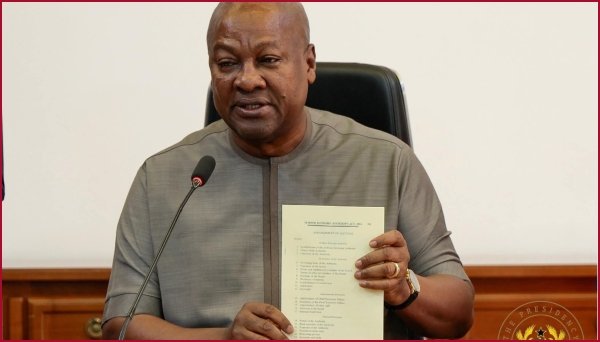
Ghana has officially entered a new phase of economic restructuring following President John Dramani Mahama’s assent to the landmark 24-Hour Economy Authority Bill.
The bill is the Mahama administration’s flagship initiative that is poised to reshape the nation’s commercial and industrial landscape. Now a law, it establishes a dedicated authority tasked with implementing and coordinating policies that will transition key sectors of the Ghanaian economy toward continuous, round-the-clock operations.
The development marks a significant milestone in the government’s ambitious agenda to accelerate job creation, maximize industrial capacity utilization, and position Ghana as a competitive investment destination.
Transformative Economic Implications
The passage of the 24-Hour Economy Authority Bill carries profound implications for Ghana’s economic architecture. By creating an enabling environment for businesses to operate beyond traditional daylight hours, the legislation aims to unlock dormant productive capacity across manufacturing, logistics, healthcare, hospitality, and essential services.
Economists project that the shift toward a 24-hour operational model could generate hundreds of thousands of new jobs, particularly for young Ghanaians seeking employment. The night-time economy, often underutilized in West Africa, presents opportunities for shift-based employment that could absorb significant portions of the workforce while easing pressure on daytime infrastructure.
For manufacturers, extended operating hours mean increased output without proportional increases in capital expenditure. Factories that currently idle overnight can now maximize machinery utilization, improving profitability and competitiveness. Export-oriented industries stand to benefit particularly, with enhanced ability to meet international deadlines and time-sensitive orders.
Investment and Infrastructure Development
The new authority is expected to catalyze investment in supporting infrastructure essential for nighttime operations. Reliable and affordable electricity, already a priority for the administration, becomes even more critical under the 24-hour framework. Security services will require strategic reorientation to ensure worker safety during late hours, while transportation networks must adapt to accommodate night shifts.
Real estate and commercial property sectors may see renewed activity as businesses reconfigure premises for extended operations. Hospitality and entertainment industries are positioned for expansion, with night-time cultural and recreational offerings potentially becoming new attractions for both domestic consumers and international visitors.
Social and Workforce Considerations
The legislation’s implementation raises important questions about workforce welfare and social adaptation. Labour advocates emphasize the need for robust protections for night-shift workers, including appropriate remuneration, health considerations, and transportation support. The authority’s mandate will likely include developing frameworks that balance economic ambitions with worker wellbeing.
For families and communities, the normalization of night-time work represents a significant social shift. Support systems, childcare arrangements, and community services may need to evolve alongside the changing employment landscape. The authority’s success will depend partly on its ability to manage these social dimensions while pursuing economic objectives.
Global Competitiveness and Diaspora Engagement
For Ghana’s global audience and international investors, the 24-Hour Economy Authority signals a clear message: Ghana is open for business on the world’s schedule. Multinational corporations considering West African operations may view the policy as removing barriers to efficiency and global integration.
The diaspora community, often accustomed to round-the-clock service economies abroad, may find Ghana increasingly accessible for investment, remote work, and entrepreneurial activities that transcend time zones. Financial services, customer support, and technology-enabled industries could particularly benefit from alignment with international operating hours.
Implementation Roadmap
With presidential assent secured, attention now turns to operationalizing the authority. Key appointments, institutional structuring, and stakeholder consultations will shape the early phases of implementation. Pilot programs in selected sectors or regions may precede full national rollout, allowing for learning and adjustment.
The authority’s leadership faces the complex task of coordinating across multiple government ministries, private sector associations, labour unions, and civil society organizations. Success will require not only legislative authority but also effective collaboration and responsive policy design.
President Mahama’s assent to the 24-Hour Economy Authority Bill represents more than routine legislative procedure—it embodies a deliberate choice about Ghana’s economic future. By embracing continuous economic activity, the nation signals confidence in its productive capacity and ambition to compete on a global stage.
As the authority begins its work, Ghanaians at home and abroad will watch closely, hopeful that round-the-clock operations will translate into round-the-clock opportunities.
The implications stretch far beyond extended shop hours or late-night restaurants—they reach into fundamental questions about how Ghana works, who benefits, and what kind of economy the nation chooses to build for generations to come.











London / Accra – March 1, 2026 – OPEC+ has agreed to increase oil production by 206,000 barrels per day starting in April, a modest move aimed at calming volatile global oil markets following the dramatic escalation of the Israel-Iran conflict, including joint US-Israeli air strikes that killed Iran’s Supreme Leader Ayatollah Ali Khamenei and triggered widespread retaliatory missile barrages across the Gulf.
In its latest dispatch, the Financial Times reports that the decision—slightly above market expectations but far below levels needed to offset potential supply disruptions—was made amid fears that Iran’s threats to close the Strait of Hormuz could choke off 20% of the world’s seaborne oil trade.
With Khamenei confirmed dead by Iranian state television, the power vacuum in Tehran has intensified uncertainty, with no successor yet named and President Masoud Pezeshkian vowing “vengeance and revenge.”
The strikes and counter-strikes have already caused significant disruptions: shipping through the Strait of Hormuz has slowed to a near standstill as insurers warned of policy cancellations and premium surges; a Saudi Aramco-chartered tanker (MKD Vyom) suffered an explosion and flooding off Iran’s coast; and another vessel (Skylight) was hit, injuring four crew.
Major Japanese shipping lines halted Gulf passages, while CMA CGM suspended Suez Canal transits, diverting vessels around Africa’s Cape of Good Hope—adding weeks and millions in costs to global trade routes.
Oil prices have spiked amid the chaos, with analysts warning that even OPEC+’s additional barrels “serve little purpose if there are no serviceable sea lanes,” as noted by Helima Croft of RBC Capital Markets and Jorge Leon of Rystad Energy. Middle East stock markets plunged—Saudi Arabia’s TASI fell nearly 5% before partial recovery, Egypt’s EGX 30 dropped nearly 6%—while European gas contracts are expected to rise 25%+ due to LNG supply risks from Qatar and the UAE.
The conflict has extended beyond Iran and Israel: US bases in Iraq and the Gulf were targeted; ports in Dubai and Oman sustained damage; Bahrain’s navy base and airport were hit; and GPS jamming affected over 1,100 vessels, raising sanctions compliance concerns for banks and insurers.
For emerging markets like those in Africa—including Ghana—the fallout could be severe.
Higher oil and LNG prices would inflate import bills, push up fuel and electricity costs, fuel inflation, and pressure currencies already strained by global volatility. Shipping diversions via the Cape of Good Hope could raise freight rates for African exports and imports, while broader energy market instability risks derailing post-pandemic recovery in oil-importing nations.
OPEC+’s output increase is seen as symbolic rather than substantive in the face of geopolitical risk. As one Barclays strategist put it, investors may be “underpricing a scenario where containment fails.”
Business
Ibrahim Mahama’s Engineers & Planners Secures Largest Financings For An Indigenous Contractor From Stanbic

ACCRA — In one of the largest structured financings ever arranged for an indigenous mining contractor in Ghana, Stanbic Bank Ghana has led a syndicate of lenders to secure a $205 million senior secured facility for Engineers & Planners Company Limited, a wholly Ghanaian-owned mining services firm.
The five-year facility, structured as a combination of term loan and revolving credit, strengthens the company’s capital base at a critical moment when scale, operational depth, and balance sheet strength are defining competitiveness in Ghana’s mining services sector, according to a statement from Africa Reporters Network.
Multi-Bank Syndicate Structure
The transaction was arranged together with Standard Bank of South Africa, with Ecobank Ghana PLC and Absa Bank Ghana LTD participating as lending partners. The syndicated approach reflects a sophisticated risk-sharing model that combines local market knowledge with cross-border balance sheet strength.
This structure allows participating banks to underwrite a facility of significant size while leveraging the respective strengths of each institution—Stanbic’s deep local relationships, Standard Bank’s regional expertise, and the combined commercial banking power of Ecobank and Absa in the Ghanaian market.
Backing Indigenous Mining Capacity
Engineers & Planners is widely regarded as Ghana’s largest indigenous mining contractor. The scale of the facility signals strong lender confidence in the company’s operational track record, asset base, and revenue visibility within Ghana’s gold ecosystem.
The financing will support Engineers & Planners’ long-term mining operations with Gold Fields Ghana Limited, reinforcing domestic participation in one of Ghana’s most strategic export sectors. Mining remains central to foreign exchange generation and fiscal stability, contributing significantly to government revenues and economic activity.
For an indigenous firm to secure financing of this magnitude alongside partnerships with multinational mining operators represents a significant milestone in the evolution of local participation in Ghana’s extractives industry.
Signal to Ghana’s Banking Sector
Beyond the headline figure, the deal demonstrates increasing capacity within Ghana’s banking system to underwrite large industrial facilities tied to established offtake and performance contracts. It also reflects deeper confidence in structured finance instruments within capital-intensive sectors.
The transaction suggests that Ghanaian banks are developing the technical expertise and risk appetite necessary to finance large-scale industrial operations—capabilities that were historically the preserve of international lenders and development finance institutions.
This growing sophistication within the domestic banking sector has implications beyond mining. It signals that Ghanaian financial institutions are increasingly capable of supporting the country’s broader industrialization agenda.
A Broader Industrial Implication
The $205 million facility raises a larger strategic question for Ghana’s economy. As indigenous contractors gain access to larger pools of structured capital, the potential grows for stronger local value retention and reduced dependence on foreign-dominated service providers in extractives.
Historically, the capital-intensive nature of mining services has favored well-capitalized international firms with access to cheaper and larger financing. By enabling local firms to compete on a more level playing field, facilities like this one support the development of domestic industrial capacity that can retain more value within the Ghanaian economy.
This aligns with broader policy objectives around local content and local participation in the extractives sector—goals that have been articulated across successive governments but have often struggled with implementation challenges.
Engineers & Planners: A Homegrown Success Story
Engineers & Planners has established itself over decades as a reliable partner to major mining operators in Ghana. The company’s track record of performance, safety, and operational excellence has earned it the trust of both international mining companies and the domestic financial community.
The firm’s ability to secure financing of this scale reflects not only its own institutional strength but also the maturation of Ghana’s mining services sector. Indigenous firms are no longer confined to peripheral roles but are increasingly capable of competing for and executing core mining contracts alongside international operators.
Implications for the Mining Sector
Gold remains Ghana’s most valuable mineral export, contributing billions of dollars annually to foreign exchange earnings and supporting hundreds of thousands of direct and indirect jobs. The sector’s importance to macroeconomic stability cannot be overstated.
By strengthening the capital base of a key indigenous contractor, this facility supports the operational resilience of the broader mining ecosystem. Well-capitalized local contractors can invest in better equipment, more training, and stronger safety systems—benefits that ultimately accrue to the entire sector.
For Gold Fields Ghana Limited, the partnership with a financially robust Engineers & Planners provides confidence in the continuity and quality of mining services at their operations.
Looking Forward
The successful arrangement of this facility may serve as a template for future financings in Ghana’s extractives sector. If local banks can consistently underwrite large-scale industrial facilities, the pathway to greater local participation in mining, oil, and gas becomes clearer.
It also sends a signal to international observers about the maturation of Ghana’s financial markets. The ability to structure and execute complex, multi-bank syndications demonstrates institutional capacity that enhances the country’s attractiveness to foreign investors across sectors.
For Engineers & Planners, the transaction provides the financial firepower to pursue growth, invest in new equipment, and potentially expand into additional mining operations. For the lending syndicate, it represents a calculated bet on the continued strength of Ghana’s gold sector and the capability of indigenous firms to deliver at scale.
As Ghana seeks to transform its resource wealth into broader industrial development, transactions like this one offer a glimpse of what’s possible when local capital, local expertise, and local enterprise align.

Accra, Ghana – February 26, 2026 – Ghana’s emerging medicinal and industrial cannabis sector—legalized for low-THC (≤0.3%) cultivation, processing, and use since the 2020 Narcotics Control Commission Act amendments and further enabled by the 2023 Amendment Act and L.I. 2475—has moved into active licensing mode.
With the Narcotics Control Commission (NACOC) now issuing permits and investor interest surging, the industry holds potential to generate at least $1 billion annually in revenue, rival traditional exports like cocoa and gold, and create jobs in agriculture, processing, and export.
However, strict regulations prioritize security, public safety, traceability, and anti-diversion measures over rapid revenue. Here are seven essential points every potential investor, farmer, or entrepreneur should understand before entering the market.
- Licensing Is Multi-Layered and Activity-Specific
There is no single “cannabis licence.” Applicants must secure up to 11 separate, non-transferable licences for distinct activities—cultivation, processing, transportation, import/export, storage, and more. Minister of the Interior Muntaka Mohammed-Mubarak emphasized: “You cannot cultivate and assume you can transport. You need another licence for that.” Each licence is valid for three years and subject to renewal. - Proof of a Ready Market (Off-Taker) Is Mandatory
No licence will be issued without a confirmed buyer or off-taker. Authorities require evidence of a ready market before approving any application. “We won’t give you the licence if you don’t show us who you are going to sell it to,” the Minister warned. This rule protects against speculative entry and ensures commercial viability from day one. - Eligibility Favours Ghanaians and Majority-Ghanaian Ownership
Individual applicants must be Ghanaian citizens or permanent residents aged 18+. Corporate entities require at least 50% Ghanaian ownership and a majority of Ghanaian directors. NACOC has clarified that any qualified Ghanaian with documented land access can apply directly—no intermediaries or connections needed. - Strict Security, Traceability, and Compliance Requirements
Licencees face rigorous standards: robust security protocols, GPS tracking, drone surveillance, unannounced inspections, and full product traceability to prevent diversion to illegal markets. The government’s priority is clear: “Our emphasis is more on security and public safety than on money.” Failure risks blacklisting Ghana internationally. - Seeds Must Be Imported—Ghana Does Not Produce Them
Only specialised low-THC varieties (≤0.3%) are permitted. Ghana does not produce these seeds, so all planting material must be imported under a separate import licence. “Government is not positioning itself to provide the seeds. It is a business,” Minister Muntaka stated. - High Barriers for Small-Scale Operators
The need for an off-taker, multiple licences, advanced security infrastructure, and traceability systems creates significant entry barriers for smallholder farmers or startups. Larger, well-capitalized players with established international buyers are better positioned to meet the requirements. - Significant Revenue and Export Potential—If Done Right
Experts project the sector could generate $1 billion+ annually once fully operational, driven by global demand for medicinal cannabinoids, industrial hemp fibre, cosmetics, pharmaceuticals, and food products. Ghana aims to become a centre of excellence in West Africa, leveraging AfCFTA access and competitive land/climate advantages. However, success depends on strict compliance to avoid international sanctions or blacklisting.
The sector offers real economic upside—job creation, export diversification, and foreign exchange—but only for those prepared to navigate a highly controlled, security-first environment.
Interested parties should apply directly through NACOC offices or its online platform, ensuring all documentation (including proof of market/off-taker) is in place before submission.



-

 Ghana News1 day ago
Ghanaian’s Terrifying Experience as Missile Explodes Amid Escalating Middle East Tensions and Other Trending Topics in Ghana (March 1, 2026)
-

 Ghana News1 day ago
Ghana’s Black Queens Stranded in UAE as Government Initiates Partial Evacuation from Tehran Embassy Amid Escalating Israel-Iran Conflict
-

 Ghana News13 hours ago
Court Slaps Barker-Vormawor with GH₵5m for Defaming Kan Dapaah and Other Trending Topics in Ghana (March 2, 2026)
-

 From the Diaspora12 hours ago
Ghanaians and Other Africans in UAE Flood Social Media with Videos as Iranian Missile Strikes Hit Dubai
-

 Ghana News1 day ago
7 Ways the Escalating Middle East Crisis Could Hit Home in Ghana
-

 Ghana News13 hours ago
Newspaper Headlines Today: Monday, March 2, 2026
-
 Ghana News1 day ago
How African Nations Are Responding to the Iran-Israel Conflict
-

 Africa Watch1 day ago
How African Nations Are Evacuating Their Nationals Amid the Escalating Middle East Crisis