
Arts and GH Heritage
Ghana Ranked 9th Globally in Cultural and Creative Services — New Global Innovation Index Shows


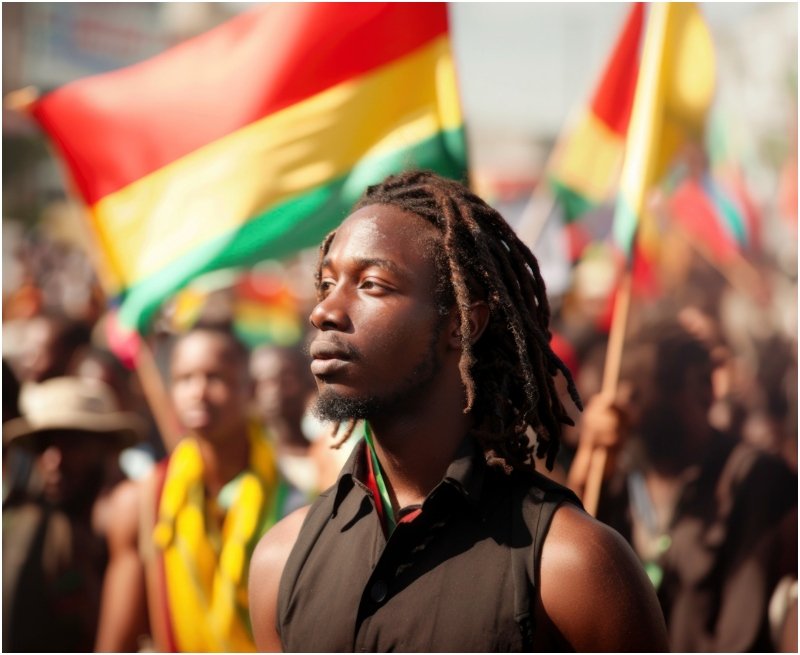
Ghana’s cultural and creative industries have earned global recognition, with the country placing 9th in the world for Cultural and Creative Services Exports in the newly released Global Innovation Index 2025.
The recognition is a remarkable achievement that highlights the expanding influence of Ghanaian culture, music, fashion, film, and art on the international stage.
While Ghana’s overall Global Innovation Index (GII) ranking stands at 101 out of 139 economies, the standout performance in the creative sector shows a growing strength in innovation outputs where culture meets commerce.
Ghana’s Global Creative Impact
The Cultural and Creative Services Exports metric tracks how countries sell creative outputs — such as music, film, design, and digital content — across borders. Ghana’s top-10 placement reflects not just the popularity of its cultural exports but also the economic potential of its creative ecosystem.
This rise comes amid broader growth in the global creative economy, which is estimated to generate more than $2 trillion annually, accounting for approximately 3.1 percent of global GDP. Africa alone is estimated to employ millions in cultural and creative roles, driving job creation and economic diversification.
Ghana’s creative rise includes achievements in several key areas:
- Music and Entertainment: Ghanaian artists such as Sarkodie, Stonebwoy, Black Sherif and Amaarae continue to build global audiences through streaming platforms, collaborations, and international tours — amplifying the country’s cultural footprint.
- Fashion and Design: Ghanaian fashion designers are gaining global visibility, merging Afrocentric aesthetics with contemporary design, attracting attention from international markets and fashion weeks.
- Film and Visual Arts: Ghanaian cinema and visual artists are increasingly featured on global platforms, contributing to cultural storytelling that resonates with diaspora and international audiences alike.
- Digital and Creative Media: Content creators leveraging platforms such as YouTube, TikTok and Instagram are building global followings, expanding both cultural influence and export value.
Why This Matters for Ghana
Experts and industry stakeholders see Ghana’s top-10 ranking in creative exports as a sign of structural transition — from cultural production being primarily local consumption to becoming a major economic driver with global reach.
“Ghana’s creative industry is fast becoming a vibrant engine of culture and commerce,” noted a recent Business & Financial Times analysis that highlighted the need for deeper investment to fully scale the sector’s potential.
Initiatives like the Fidelity Cultural and Creative Fund are being introduced to help bridge financing gaps and support long-term growth in creative sectors.
This recognition also complements broader innovation and digital transformation efforts in the country — including strategic investment in tech and creative clusters — designed to position Ghana as an innovation hub across Africa.
Challenges and Forward Momentum
Despite the spotlight on creative exports, Ghana’s overall innovation performance suggests room for improvement in areas such as research and development, technological innovation, and infrastructure investment — key drivers that can further strengthen the ecosystem supporting cultural exports.
Yet, experts argue that the cultural sector’s momentum offers a blueprint for sustainable, export-oriented growth that combines creative expression with economic impact.
A Global Audience, A Growing Market
As Ghana celebrates its top-10 ranking in cultural and creative exports, the message is clear: the country is not just a consumer of global trends, but a generator of cultural value with global resonance.
With sustained investment, supportive policy frameworks, and continued grassroots innovation, Ghana’s creative economy is poised to play an even greater role in the global economic and cultural landscape.



Arts and GH Heritage
100 Influential British-Ghanaians to be Celebrated on March 6 for Diaspora Excellence

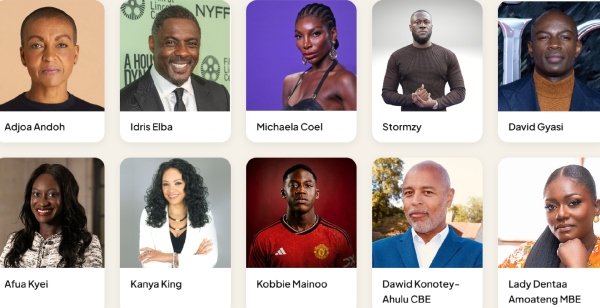
A new initiative is shining a spotlight on the remarkable achievements of Ghanaian heritage in the United Kingdom with the launch of UK Black Stars 2026 — a list honouring 100 influential British-Ghanaians making major contributions across fields such as arts, finance, politics, entertainment and business.
The program, created to recognize outstanding British-Ghanaians in the UK, highlights individuals whose leadership, innovation and impact reflect both British society’s diversity and Ghana’s cultural influence abroad.
Parliamentary Celebration in London
On March 6, 2026, Ghana’s Independence Day, the All-Party Parliamentary Group on Ghana will host a special reception at the Houses of Parliament in London to celebrate honourees, including:
Actor and advocate, Adjoa Andoh
Journalist and author, Afua Hirsch
Music star, Stormzy
Footballer, Kobbie Mainoo
And a wide range of cultural figures, professionals, and creative leaders from across the diaspora.
The event, hosted by MP Bell Ribeiro‑Addy, aims to honor Ghanaian influence in Britain and foster connections between the diaspora and heritage communities.
A Platform for Representation
UK Black Stars emphasises the breadth of Ghanaian heritage influence in the UK, celebrating both established icons and emerging leaders. The list includes cultural innovators like Michaela Coel and creatives such as Fuse ODG, as well as professionals in finance, law, media and academia.
One notable name on the list is Afua Kyei, whose recognition as one of the UK’s most influential Black figures — including topping last year’s Powerlist 2026 — reflects the depth of Ghanaian impact across British public life.
Strengthening Diaspora Pride
The UK Black Stars platform also invites public nominations for future honourees, extending an opportunity for community members to elevate local leaders and unsung heroes.
As the event draws near, supporters hope the initiative will deepen appreciation for Ghanaian heritage and spotlight the significant roles British-Ghanaians play on the global stage — from culture and creativity to policy and public service.

The first time I truly understood what it meant to be Ghanaian, I was seven years old, sitting on a wooden stool in my grandmother’s courtyard, watching her kill a chicken.
Not for drama. For dinner. And for the ancestors.
She spoke to the chicken before she killed it. Whispered words in Twi that I pretended to understand. Then she poured its blood at the base of a dried plantain tree and called it mpata—appeasement. I asked her why. She looked at me like I’d asked why the sky exists.
“The chicken knows,” she said. “The ancestors know. One day, you will know too.”
I’m thirty-two now. I still don’t fully know. And that terrifies me.
The Thing About Preservation
Ghana is doing a lot of talking about cultural preservation lately. Committees meet. Reports are written. Festivals are announced with press releases. The Ministry of Tourism, Arts and Culture releases statements about “leveraging our heritage for economic growth.”
But here’s what those statements don’t capture:
My cousin in London just named her daughter “Ama” because it sounded cute on Instagram. She doesn’t know that Ama means “born on Saturday.” She doesn’t know the naming ceremony involves water, gin, and prayers she’s never heard. She just liked the way it looked in her daughter’s birth announcement.
That’s the problem with preservation. We’re so busy building museums for our culture that we forgot culture actually lives in how we name our children, greet our elders, and pour libation before we open that expensive bottle of champagne.
The Funeral That Shifted Something
Last December, my great-aunt died. She was ninety-four. Maybe ninety-seven. Nobody kept exact records because, as she always said, “The ancestors know my age. Why do you people need papers?”
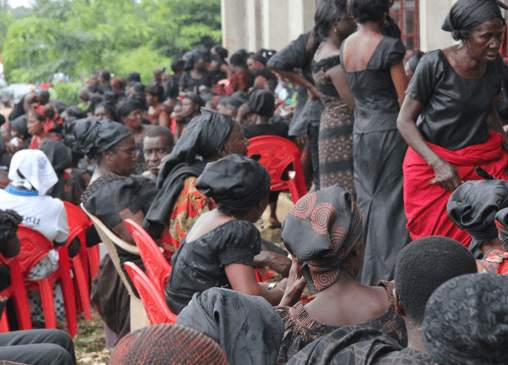
Her funeral became the event of the season. Three days. Two villages. One cow. And somewhere between the firing of muskets and the distribution of aseda—thank-you money—I watched my London cousins struggle.
They didn’t know when to remove their sandals. They didn’t know why the widow had to sit on a mat. They didn’t understand that the wailing wasn’t just grief—it was a performance, a required ritual, a language the dead understand.
One of them whispered to me: “Why didn’t anyone teach us this?”
I didn’t have an answer.
The Kente Weaver’s Empty Loom
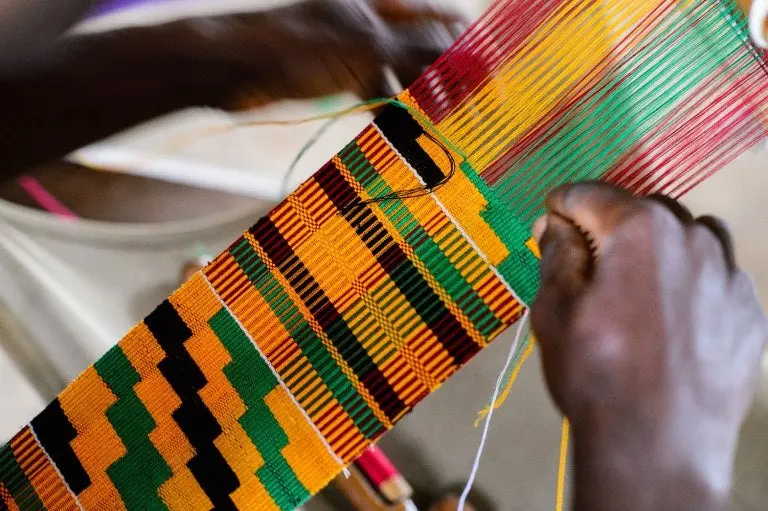
Two weeks ago, I visited a kente weaving village in the Volta Region. The master weaver—seventy-three years old, hands that move like water—showed me his loom. Beautiful. Intricate. Ancient.
“Nobody wants to learn,” he said. “The young people say it takes too long. They want to make money fast. They go to Accra. They sell phone credit.”
I asked him what happens when he’s gone.
He laughed. Not a happy laugh.
“The loom will wait,” he said. “For who? I don’t know. Maybe a ghost.”
His grandson was there, glued to TikTok. Wearing a Manchester United jersey. Speaking English with an accent he learned from American YouTubers. When I asked him in Twi what his favourite kente pattern meant, he shrugged.
“I don’t speak Twi well,” he said. In perfect English.
The Language Problem Nobody Wants to Address
Here’s the uncomfortable truth Ghanaians don’t say out loud:
We’re embarrassed.
We send our children to international schools and feel proud when they struggle with Twi. We correct each other’s English in mixed company but never correct someone who butchers our own language. We’ve decided, collectively and silently, that speaking our mother tongues fluently is somehow less sophisticated.
A friend told me recently, “I speak English to my kids because I want them to succeed globally.”
Global success, it seems, requires local amnesia.
But here’s what I’ve noticed: the most successful Ghanaians abroad aren’t the ones who assimilated completely. They’re the ones who brought something with them. The ones who could explain sankofa to their American coworkers. The ones who wore batik to the office potluck and told the story behind it.
The Ancestors Are Not on Wi-Fi
There’s a moment in every traditional ceremony—whether it’s a wedding, a funeral, or a puberty rite—where the elder pauses. Looks up. And speaks to those who came before.
“Grandfathers,” they say. “Grandmothers. We have not forgotten you.”
The first time I witnessed this, I was embarrassed. Who are they talking to? The air? The ceiling?
Now I understand. They’re talking to continuity. To the thread that connects a chicken killed in 1994 to a chicken killed in 1820. To the idea that we are not alone, not the first, not the last.
My grandmother died ten years ago. Sometimes, when I’m cooking her groundnut soup recipe—the one she never wrote down, the one I had to watch and memorise—I find myself talking to her.
“Too much pepper?” I ask.
And somehow, I know the answer.
That’s culture. Not the festivals. Not the museum exhibits. Not the tourism board campaigns. That quiet knowing. That sense that you’re not starting from zero.
The Good News Nobody’s Reporting
Not everything is dying.
Walk through Nima Market on a Friday afternoon. Young women buying waakye from women who’ve sold it for forty years. Young men arguing about politics in Hausa and Twi mixed together. Children running between legs, speaking whatever language gets them the best response.
Visit any funeral in any village. Watch the teenagers. They’re rolling their eyes, yes. They’re on their phones, yes. But they’re also watching. They’re also learning. They know more than they admit.
And there’s this: the same globalisation that threatens our culture is also preserving it. YouTube videos of adowa dancing. TikTok tutorials on tying kente. Instagram pages dedicated to Ghanaian proverbs with English translations.
A girl in New York can learn her grandmother’s funeral songs from a phone. A boy in London can watch his uncle pour libation and understand why.
It’s not the same as sitting in the courtyard. But it’s something.
What I’m Actually Trying to Say
Ghana’s culture isn’t fragile. It survived colonialism. It survived the transatlantic slave trade. It survived missionaries telling our ancestors their gods were false. It survived independence, structural adjustment, and now, globalisation.
What I’m worried about isn’t survival.
I’m worried about meaning.
We can preserve the forms—the dances, the drums, the cloth—while losing what they actually mean. We can have festivals without understanding why we’re celebrating. We can wear kente without knowing which pattern belongs to which clan. We can call ourselves Ghanaian without knowing what that actually requires.
My grandmother didn’t worry about cultural preservation. She just lived. She greeted properly. She poured libation. She named her children on the day they were born. She didn’t need a committee to tell her what mattered.
We do now. Because we’ve forgotten.
The Challenge
If you’re reading this and you’re Ghanaian, here’s my challenge:
Learn one thing this year.
Not everything. Just one thing.
Learn the story behind your surname. Learn why your family eats that weird thing at Christmas. Learn to cook one dish your grandmother made. Learn what the symbols on your funeral cloth actually mean. Learn to greet an elder properly—not just the words, but the bend, the pause, the eye contact.
And if you’re not Ghanaian, if you’re reading this from somewhere else:
Pay attention to what you’re losing too. Because I promise you, something is slipping. Something your grandchildren will wish you’d held onto.
The ancestors are watching. They’re patient. But even patience runs out eventually.
Arts and GH Heritage
Guinness World Record Holder Sharon Dede Padi Launches Foundation to Project Ghanaian Heritage Globally
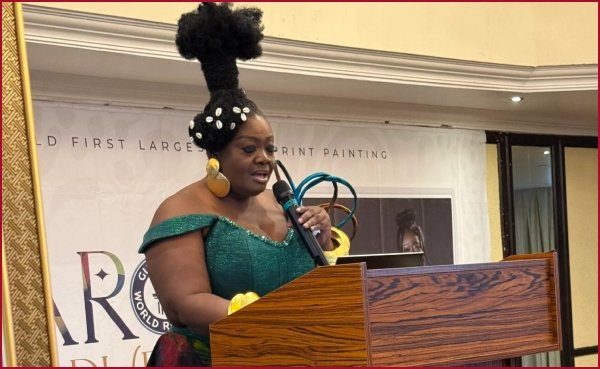
Sharon Dede Padi, the renowned Ghanaian artist and Guinness World Record holder for the largest leaf-print painting, has launched a new foundation dedicated to promoting arts education and positioning Ghanaian cultural heritage on the international stage.
The Padiki Golden Stool Arts Foundation was officially inaugurated on February 19 in Accra, marking a significant milestone in Padi’s ongoing mission to nurture artistic talent and preserve Ghana’s rich cultural expressions.
A Vision for Legacy
Speaking at the launch ceremony, Padi, who recently etched her name in history with a record-breaking leaf-print painting measuring 54.33 square metres, outlined her ambitious vision for the foundation.
“Let us continue together to build a lasting legacy for our nation,” she said, extending gratitude to the Ministry of Education, Ministry of Foreign Affairs, Ministry of Tourism, Arts and Culture, and UNESCO for their support throughout her artistic journey.
Bridging Local Talent and Global Audiences
The Padiki Golden Stool Arts Foundation will serve as a platform for both local and international exhibitions, showcasing diverse art forms and cultural expressions that highlight the depth and vibrancy of Ghanaian heritage.
“I will undertake both local and international exhibitions showcasing different arts and other cultural expressions, positioning Ghanaian heritage prominently on the global stage,” Padi stated.
The foundation aims to strengthen arts education initiatives across Ghana, providing emerging artists with the tools, exposure, and mentorship needed to develop their craft and pursue excellence.
From Record-Breaking Artist to Cultural Ambassador
As the founder and CEO of Padiki Art Gallery, Padi has long been a champion of African art, cultural heritage, and women’s empowerment. Her Guinness World Record achievement not only brought international recognition to her work but also placed Ghana firmly on the global art map.
Her success serves as an inspiration to a new generation of Ghanaian artists, demonstrating that creativity, innovation, and dedication can lead to world-class recognition.
A Platform for the Future
The launch of the Padiki Golden Stool Arts Foundation represents a strategic expansion of Padi’s mission. By creating structured pathways for arts education and international exposure, the foundation seeks to ensure that Ghanaian artists are equipped to compete and collaborate on equal footing with their global peers.
The foundation’s name—drawing from the iconic Golden Stool, a symbol of Ghanaian unity and cultural pride—reflects its core purpose: to celebrate and preserve the artistic traditions that define the nation’s identity while fostering innovation for the future.
As the foundation begins its work, Padi’s message to the artistic community and the nation is clear: Ghana’s cultural heritage is not just a treasure to be preserved, but a living, evolving force that can inspire the world.


Foreign Minister Ablakwa Praises UAE Embassy Staff for Supporting Stranded Black Queens

Ghana’s Mega Infrastructure Push: 10 Game-Changing Projects Set to Transform the Country in 2026

FULL LIST: African Countries That Signed Trump’s Controversial Bilateral Health Deals
-
 News8 hours ago
Ghana Gears Up for Vibrant 69th Independence Day Celebrations: Parades, Plays, Poetry, and Heritage in Focus
-

 Ghana News1 day ago
Court Slaps Barker-Vormawor with GH₵5m for Defaming Kan Dapaah and Other Trending Topics in Ghana (March 2, 2026)
-

 Ghana News9 hours ago
Newspaper Headlines Today: Tuesday, March 3, 2026
-

 Tourism6 hours ago
Emirates Resumes Limited Flights from Dubai as Middle East Airspace Slowly Reopens Amid Ongoing Conflict
-

 From the Diaspora1 day ago
Ghanaians and Other Africans in UAE Flood Social Media with Videos as Iranian Missile Strikes Hit Dubai
-

 Ghana News8 hours ago
541 Last-Minute Appointments by Akufo-Addo Revoked, Agradaa Released and Other Trending Topics in Ghana (March 3, 2026)
-

 Commentary5 hours ago
At a glance: US‑Israel attack on Iran
-

 Ghana News1 day ago
Newspaper Headlines Today: Monday, March 2, 2026