
Opinion
What the Exchange Rate Conceals: Ghana’s hidden cost of living crisis

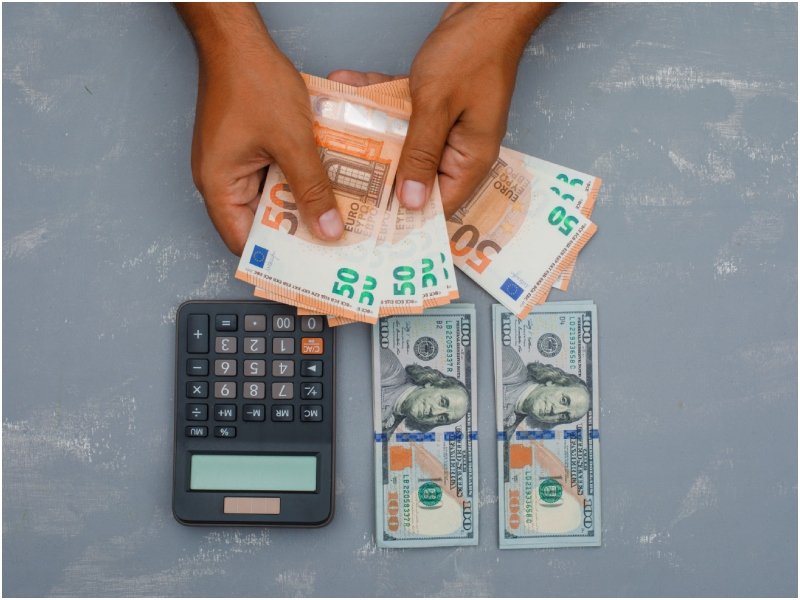
While Ghana’s headline macroeconomic indicators—falling inflation, a sharply appreciating cedi, and IMF programme progress—have earned international praise, a deeper, quieter crisis continues to erode the daily lives of ordinary citizens, writes Dominic Senayah. In this powerful opinion piece, the policy analyst and international relations professional argues that the country’s recent exchange-rate stability masks a structural cost-of-living emergency that no salary can reasonably sustain.
What the Exchange Rate Conceals: Ghana’s hidden cost of living crisis
By Dominic Senayah
There is a quiet arithmetic to suffering. It does not make front pages. It does not generate dramatic headlines that bring in international cameras or set Parliament alight. It happens instead at the market stall, at the landlord’s door, at the end of the month when the salary notification arrives, and the mental calculation begins and fails. It is the arithmetic of a country where the cost of simply existing has outpaced the means by which ordinary people are expected to exist. This is Ghana’s hidden cost of living crisis, and those of us who love the country, who hold its passport, who carry it with us wherever we go in the world, can no longer afford to normalise it.
I write this as a Ghanaian living and working in England. The distance has not made me detached. If anything, the contrast has sharpened my concern. I know what a functioning relationship between wages, housing, and food looks like in practice. And I know that what Ghana has at present falls far short of what it is capable of delivering to its people.
The Rent That No Salary Can Justify
Let us begin where every life begins, with a roof. As of early 2026, a one-bedroom apartment in Accra commands around GH₵2,200 per month, with Cantonments, Airport Residential, and Labone pushing considerably higher. But the monthly rate is only part of the punishment. It is normal in Ghana to pay one or two years of rent upfront, placing an enormous financial demand on a tenant before they have even moved in. The average monthly salary sits at approximately GH₵2,579 — roughly $210 at current exchange rates — with entry-level civil servants earning between GH₵2,200 and GH₵3,200. A mid-level public servant asked to pay two years upfront on a modest Accra flat faces a demand exceeding a full year of gross salary, payable before a single sock has been unpacked.
The comparison with Nigeria is instructive. Lagos — Africa’s most commercially intense city, far larger and more complex than Accra, regularly offers comparable housing at lower dollar-equivalent rates. That a smaller city prices its residents more aggressively is a structural anomaly deserving frank scrutiny. Ghana’s landlord class, hedging against cedi depreciation through dollar-denominated rents, has turned housing into a mechanism of extraction that the wage economy cannot support. The result is a generation of professionals commuting three to five hours daily because they cannot afford to live near where they work.
A Country That Grows Food and Cannot Afford to Feed Itself
Ghana spans multiple agro-ecological zones supporting cocoa, yams, plantains, cassava, tomatoes, pepper, groundnuts, maize, and rice. The ecological potential is profound. And yet the price of tomatoes in an Accra market routinely exceeds what the same produce costs in countries that must import it from thousands of miles away. This is a policy failure, not a natural one. According to the World Food Programme, Ghana loses US$1.9 billion annually to post-harvest waste due to poor road networks, inadequate storage, and the near-total absence of cold chain infrastructure, with losses estimated between 20 and 50 per cent across various crop types. The farmer in Brong-Ahafo who watches tomatoes rot on the roadside because the truck did not come is not a lazy farmer. He is a farmer abandoned by systems never built with sufficient urgency.
At the consumer end, supply is erratic, middlemen extract margins at every link, and what arrives in the city comes bruised and expensive. Ghana, once a significant tomato producer in West Africa, now imports over 7,000 metric tons of tomatoes annually from neighbouring countries. The same logic applies to rice, poultry, and a growing range of processed foods. Ghana has fertile land and an empty value chain, and until the infrastructure connecting the two is treated as a national emergency, this contradiction will persist.
Salaries, Corruption, and the Structural Explanation Nobody Wants to Give
Petty corruption in Ghana is routinely framed as a moral failure. The condemnation is not unwarranted, but it rarely arrives at the structural diagnosis necessary for real solutions. When a port official takes an unofficial payment or a nurse charges informally for a service that should be free, the issue is often not characterised. It is mathematics. If the average salary is GH₵2,579 and a basic one-bedroom flat in Accra costs between GH₵1,500 and GH₵2,800 per month, the gap between income and shelter is insurmountable before a single meal or school fee is considered. People in structurally impossible positions find structural workarounds. Ghana cannot build trustworthy institutions on the foundation of a workforce that cannot survive on its formal income. The enforcement agencies expected to police corruption while living within these same constraints are being asked to do something human societies have always found very difficult to sustain.
The Import Economy’s Double Standard
Walk through any Ghanaian market, and the shelves are full of Chinese electronics with dubious longevity, imported cooking oil, and imported clothing. The quality differential between goods manufactured for African markets and those produced by the same factories for Western consumers is not accidental. It is a calibrated response to weak regulatory environments. Where consumer protection law lacks enforcement, the incentive to produce durably disappears. Ghanaian consumers are being sold shorter lifespans in their goods and longer suffering in their wallets. Capital that could fund agro-processing in the forest belt or cold chain infrastructure in the north instead cycles through import speculation with a six-month horizon, extracting from the population rather than building it up.
Towards Price Regulation: What Is Actually Feasible
This is where most commentary on Ghana’s cost of living crisis falls short, diagnosing the problem without engaging seriously with solutions. Full command-style price fixing is not the answer. Ghana tried broad price controls under the Rawlings era, and the outcome was predictable: market distortions, shortages, and a thriving black market that harmed the very people it was meant to protect. But there is a meaningful space between laissez-faire chaos and discredited command economies, and Ghana has both the institutional architecture and the precedent from comparable economies to occupy it.
The first viable intervention is a national reference pricing system for staple goods. The government already publishes some commodity price data, but inconsistently and with almost no reach into the market itself. A properly resourced weekly publication of government-verified benchmark prices for staple foods displayed at market entrances, bus terminals, and broadcast via radio and SMS to rural communities arms the consumer with information, which is the most powerful and least distorting check on seller greed. Rwanda has implemented this model for agricultural produce with a measurable effect on price gouging at the retail level. It preserves market freedom while eliminating the information asymmetry that predatory pricing depends upon.
The second is a functioning rent tribunal. Ghana’s Rent Act of 1963 technically prohibits excessive advance payment demands, but it is widely ignored because the mechanism for enforcing it is inaccessible to ordinary tenants. A simplified housing tribunal modelled on those that operate effectively in South Africa and the United Kingdom, that allows tenants to challenge dollar-denominated rents and multi-year upfront demands, would be a targeted, enforceable intervention requiring legislative update rather than significant fiscal outlay. The legal framework exists. What is missing is the political will to resource and publicise it.
The third is deeper utilisation of the Ghana Commodity Exchange, launched in 2018 but still dramatically underused. A functioning commodity exchange creates transparent, publicly visible price discovery for agricultural goods, which structurally reduces the power of middlemen to arbitrarily inflate margins between farm gate and urban market. Integrating smallholder farmers and market women through mobile phone access is both technically feasible and commercially attractive given Ghana’s mobile penetration rates. This is not a distant aspiration. It is an operational gap in an existing institution.
The fourth is consumer protection enforcement with genuine deterrent value. Current fines under the Consumer Protection Agency Act are derisory relative to the profits available from price exploitation. Raising penalty thresholds meaningfully and giving the agency a publicised rapid-response function, a hotline that triggers market inspection within 48 hours of a complaint,t would shift the risk calculus for sellers without requiring price fixing of any kind. None of these measures alone resolves the crisis. Together, they constitute a coherent, Ghana-feasible regulatory architecture that addresses greed at its structural root rather than its moral surface.
Where the Government Has Done Well — And What Must Follow
Macroeconomic honesty requires acknowledging what has been achieved. Inflation fell for thirteen consecutive months, from 23.5 per cent in January 2025 to 3.8 per cent in January 2026, single digits for the first time since 2021. The cedi appreciated 40.7 per cent against the dollar in 2025, reversing the prior year’s 19.2 per cent depreciation, earning World Bank recognition as the best-performing currency in Sub-Saharan Africa. The IMF completed its fifth Extended Credit Facility review in December 2025 with positive assessments across growth, reserves, and debt trajectory. Currency stability anchors import prices, reduces the landlord’s dollar-denomination incentive, and creates the predictability businesses need. But stability is the floor of a better economy, not its ceiling. The ceiling requires structural transformation in agriculture, manufacturing, institutional quality, and the wage-to-cost relationship,p which stabilisation enables but cannot itself deliver.
The Reorientation Ghana Needs
Ghana will not become Denmark overnight, and no reasonable person expects that. But the distance between where Ghana is and where it is capable of being is not as vast as learned helplessness suggests. Wealthy Ghanaians must be persistently encouraged, through deliberate policy incentives andcultural expectationsn, to invest in domestic productive capacity rather than import speculation or offshore accumulation. Patient capital that builds agro-processing, cold chain networks, or quality housing is less glamorous than a Shenzhen container but far more durable as national wealth.
Young Ghanaians expressing frustration are not being ungrateful. They are giving accurate feedback to a system that has not yet decided to work for them. Their constrained futures are not the inevitable consequence of poverty but the outcome of choices about investment, infrastructure, and the relationship between wages and the cost of living that can be made differently.
The exchange rate is the number the world watches closely. What it conceals is the daily life Ghanaians actually live. The stability of 2025 has been earned. Now comes the harder, more human work of making it mean something to the nurse in Tamale, the graduate in Kumasi, and the family in Nima who still cannot make the numbers add up.
About the Author

Dominic Senayah is an International Relations professional and policy analyst based in England, specialising in African political economy, humanitarian governance, and migration diplomacy. He holds an MA in International Relations from the UK and writes on trade policy, institutional reform, and Ghana–UK relations for audiences across Africa, the United Kingdom, and the wider Global South.













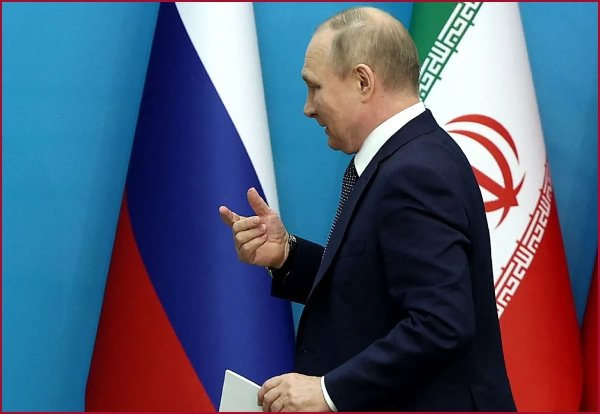
Can Moscow host Africa under drone threat? As Moscow prepares to welcome African leaders to the third Russia-Africa Summit on October 28 to 29, Ukrainian drone strikes have reportedly hit Yandex data centres and targeted the capital region, exposing a delicate contradiction at the heart of the gathering. Russia pitches itself as Africa’s security partner while its own infrastructure proves vulnerable. In this opinion piece, analyst Joseph McCarthy examines the security dilemma facing both Moscow and African governments, arguing that leaders weighing the trip must confront a deeper question: what does it mean to tie your nation’s safety to a partner that is itself under sustained attack? Read the full article below.
Yandex Strikes: Can Moscow Host Africa Under Drone Threat?
Moscow pitches itself as Africa’s security partner while its own infrastructure is exposed
By Joseph McCarthy · Analyst, Sahel governance & security
| 3YANDEX DATA CENTRES REPORTEDLY STRUCK, 8–11 OCT | 650DRONES STRUCK MOSCOW REGION, 6 OCT | 28–29 OctTHIRD RUSSIA-AFRICA SUMMIT, MOSCOW |
Every summit is a performance of strength. The third Russia-Africa Summit, due in Moscow on 28 and 29 October, is meant to show African leaders that Russia remains a confident, well-connected partner despite sanctions, isolation and a costly war. Between 8 and 11 October, Ukrainian drones complicated that script. Three data centres operated by Yandex, the technology giant behind much of Russia’s digital economy, were reportedly struck in the Ryazan, Kaluga and Vladimir regions. For Moscow and for its African guests, the episode poses a security dilemma that no communiqué will resolve.
The first attack, on the night of 7 to 8 October, reportedly set fire to a facility in Sasovo, in Ryazan region, and suspended operations. A second strike hit a site in Kaluga; a third, in Vladimir region, followed on 11 October. Yandex runs payments, email, navigation, ride-hailing, delivery and cloud computing, so the effects spread quickly. Meduza reported disruptions to Yandex Pay, Mail, Disk and Go, while businesses that depend on Yandex Cloud described outages of their own. One user told the outlet: “All my money is on Yandex, so I have no money for food.” The company says customers’ funds are safe, but the episode shows how one point of failure can become hardship for ordinary people within hours.
Recovery may be slow. Reports suggest that replacing specialised equipment could take months, and Russian officials have reportedly acknowledged the difficulty. That matters beyond one company. Moscow has spent years encouraging reliance on domestic platforms as Western technology withdrew. The Yandex strikes show that domestic ownership is not the same as security. Technological sovereignty also means being able to protect, maintain and restore systems under attack.
Moscow will call such strikes aggression against civilian targets. Yet they come after years of Russian missile and drone attacks on Ukrainian cities and energy infrastructure, so the exposure Russia now faces cannot be separated from the war it chose to launch. That context does not make the risk to visitors any smaller; it explains why it is unlikely to disappear before the summit.
Here lies the first half of the dilemma, and it is Moscow’s. Hosting African leaders in the capital is a statement of confidence, but it also puts that confidence on display. Russia must keep airspace open, transport moving and digital systems running while the war reaches ever deeper into its territory. On 20 September, roughly 450 drones were reportedly aimed at the capital; on 6 October, around 650 struck the Moscow region. Every intercept shows that defences work. Every strike that lands, and every airport closure, suggests the opposite. The summit cannot merely proceed; it must avoid becoming a showcase for exposure. Moscow will almost certainly respond with heavy security, restricted airspace and tightly managed movement. That may protect delegates, but it also turns the gathering into a fortress, held in spite of the war rather than in a country at ease with itself.
None of this proves that Russia cannot protect the summit. Vulnerability to long-range drones is not the same as losing the ability to defend territory, and the more widely a country’s civilian and commercial infrastructure is distributed, the harder it is to shield. Delegations may well land, meet and leave without incident. But that is a probability, not a guarantee, and guarantees are precisely what Russia is selling.
That brings us to the second half of the dilemma, which belongs to African governments. The immediate question is personal safety. In early September, Air Tanzania suspended its Dar es Salaam to Moscow route after a risk assessment, then resumed it days later. Further attacks could prompt airspace restrictions, diversions and tighter security that complicate movement between airports, hotels and venues. These are scenarios, not confirmed disruptions, yet every government weighing the trip must price them in, including the level at which it chooses to be represented.
The deeper question is strategic. Security cooperation is the core of Russia’s offer to Africa: Moscow says it has military agreements with more than 40 African states, and Russian security personnel are embedded in countries such as Mali and the Central African Republic. Governments that rely on that protection are tying their own security to a partner that is itself under sustained attack. A security provider at war is also a provider that is stretched, distracted and targeted. The more a government leans on Russia to guarantee its safety, the more it imports the risks of Russia’s war.
“The more a government leans on Russia to guarantee its safety, the more it imports the risks of Russia’s war.”
Call it a dilemma of dependence. The relationship meant to be a source of protection can become a channel for exposure, and the closer the embrace, the harder it is to step back.
What should African governments do? Engage, but with open eyes. They can ask for written security and contingency arrangements for their delegations, diversify their security partnerships so that no single patron’s vulnerability becomes their own, and insist that cooperation strengthens national institutions rather than simply protecting incumbent governments. Strategic autonomy means having choices. It does not mean choosing between Moscow and everyone else, or accepting one patron’s risks as the price of its protection.
The Kremlin wants the summit to show that sanctions have not isolated Russia. The Yandex strikes complicate that message without defeating it. They pose a simple test for any partner who offers security: can it secure itself? The answer will not come from speeches in Moscow. It will come from whether the summit runs smoothly, and from what follows. Until then, African leaders have every reason to listen politely, travel carefully and commit slowly.
■
Joseph McCarthy is an analyst and researcher specialising in governance, security and political transitions in the Sahel. He writes on geopolitics, development and African diplomacy. joecarthy30@gmail.com

In this thought-provoking opinion piece, Associate Professor Theodora Dame Adjin-Tettey examines the alarming deterioration of public discourse in Ghana and beyond, marked by an explosion of hate speech, vitriol, threats, and inciting comments. Drawing on a personal anecdote about a researcher who abandoned a study on media insults in 2010 due to a lack of data, contrasted with today’s overwhelming abundance of such content, she argues that this shift signals a deeply troubling ethical decline in society. Read the full article below.
Hate speech, vitriol, threats, and inciting comments: Can we stop it already?
By Theodora Dame Adjin-Tettey | Associate Professor
A friend of mine recently posted on social media that he had to abandon his 2010 research project on “insults in the media” because he couldn’t find enough data. Every researcher needs data to carry out their study, so when there is a data drought on a subject of empirical investigation, it becomes a huge stumbling block to the researcher, possibly causing them to abandon their study or chart a new parallel path to the original idea. It suffices to say, however, that the lack of data the researcher encountered sixteen years ago on a topic like insults in the media signaled something positive or healthy about the general environment for public discourse at the time. This is despite it posing a serious threat to the attainment of a university degree.
Contrarily, when there is an overabundance of data on a topic like that, 16 years after the initial fruitless attempt, it is indisputable evidence of where society, specifically, public discourse, has shifted to. Significantly, it is also indicative of a deteriorating and possibly ethically deficient society. So, here is my question: must we be concerned about the rather glaringly ethically deficient status quo of our public discourse, or should we write it off as a normal concomitant of a liberal society, aka democracy?
A matter of grave concern
I’m not the first to write about this, and I definitely will not be the last. But I feel I must also make my attempt at a drop in the ocean. Surely, change can be realised when all hands are on deck. Every little effort, every little attempt, every little … helps. It is no wonder the British supermarket chain, Tesco, popularized this phrase. Indeed, small efforts matter and are important in contributing to a bigger goal. The bigger goal, this time, is sanity within our information and media environment.
Over the past weeks, the public sphere has been awash with conversations about how our society’s social fabric is degenerating, and I dare say, at a faster rate than ever, particularly when it comes to decent conversations, be it on politics or on social issues. I say “faster rate” because now the platforms that accelerate public discourse, including who initiates/originates or sets the agenda, and who disseminates it, have been democratized, thanks to advances in digital technologies. With generative technologies being able to imitate human intelligence and our ill tendencies, humans no longer need other humans to perpetrate wrongs against their kind. The technologies have become our faithful and convenient allies, helping us to fabricate wild allegations, perpetrate lies, polish up insults, and execute wicked agendas against our own kind that we sometimes consider “the enemy” or the subject of our dislike and/or hatred. Sad.
When I see, watch, and hear the daily insults, hearsay, hate speech, threats, inciting comments and sharp vitriol accompanying social media posts and commentary, I cannot help but to attempt to contribute to turning the tide; that is, if only the tide has not already washed away our humanity, respect, reverence, and the strength of character and ethical backbone that distinguishes Ghanaians from others without the tiniest crevices to hold on to.
We must fight the temptation at all costs
People always have something to say about someone: their looks, how they talk, what they do, what they do not do, how they wish ill on them, on and on and on. Yes, as right-thinking humans, we may form opinions on issues, but it is not every opinion that must be uttered or shared with the world, even when you are convinced that it is the most persuasive or erudite. There is a reason for the adage that “all truths are not to be told” or “all truth is good, but not all truth is good to say.” Should we all utter what we think of, know of, or how we feel about people or every issue, society would be sent into chaos. Even worse is when made-up falsehoods permeate public discourse. That is why it is important that, in being wise, we must sometimes give our “thoughts no tongue.” as Polonius, the chief counselor to King Claudius, advised his son, Laertes, in William Shakespeare’s Hamlet.
Critical public discourse must be based on factual arguments and not insults and denigration of people’s persona, sometimes to the extent of stripping them of their dignity. As a people who pride ourselves on being civilized, civilization in itself must tame our human nature by redefining our manners, developing our intellect, and, when need be, restraining us. Civilization must advance society and must develop our culture and not erode it. That’s why it becomes a matter of grave concern when we witness some of the vilest insults come from people who are supposed to be an example in society, particularly to the younger generation.
Additionally, our tendency to politicize everything has worsened things. We have become enemies because of political biases. We perceive everything as black or white, forgetting the shades in the spectrum. That is why every other person becomes the enemy, and the only way we seem to know how to deal with the enemy is to “destroy” them so our side of the divide will stand as the better side. Because of politics, we have strangely redefined family, friendship, associate, colleague, etc. Of late, you are likely to see people showing respect only to the people that they share political affiliation with or whom they anticipate obtaining favour from. Once you are of “no use” to them, you are a good candidate for needless castigation and character assassination. It seems to me that the easiest thing to do these days is destroying people’s reputations. I also see that the extent of the harm increases when the act intended to create the destruction is generously bankrolled.
The attention economy as a facilitator of information disorder
The other aspect of the conversation is how social media incentivizes sensationalism and exploits the negativity bias of the human tendency to pay closer attention to content that contains threats, causes anger and outrage. And in the present attention economy built on clicks, shares, comments, and watch time, it is not surprising that those who want to attract the attention that translates into both online and offline monetary returns will do anything to push content that the algorithms are configured to track and promote.
So, next time you react to, comment on, and/or share that vitriol, remember that you are contributing to the ocean of information disorder within the media and information ecology. If you are the one behind that account spewing insults, disrespect, and unnecessary attacks, note that civilization requires that we disagree with one another without losing respect, empathy, and civility for one another. We must also have a sense of responsibility to lift others when they are in their darkest moments rather than verbally battering them to the point of ruin. And rightly so, I find the quote that I recently came across, “to strike an adversary who is down is a betrayal of humanity, not a victory of strength”, incredibly poignant.
The more this goes on, factual information gets buried. And democratic decisions will be taken based on poor judgment. And here is the reason: the algorithms will drown out factual and decent communication when there is a sea of the opposite.
This is not to argue that duty bearers shouldn’t be held accountable. Certainly, we must, but in a decorous manner, while keeping the facts at the centre. Hate speech, threats, and inciting comments do not build a civil society; they quickly tear society apart, leaving us in chaos and dysfunction. So, now my question: must we continue on this tangent, knowing the chaos on social media does not stay just on social media but fast trickles into homes, communities, institutions and society at large?
Until next time, when I meet you and take your responses, this is my drop in the ocean.
The writer is an associate professor of Media and Communication Studies at Durban University of Technology.
Joseph McCarthy, an analyst specializing in Sahel governance and security, examines how a deceptive recruitment pipeline has drawn thousands of African men into Russia’s war in Ukraine. Drawing on investigations by Amnesty International and the INPACT/All Eyes on Wagner collective, which identified 1,417 recruits from 35 countries and 316 confirmed combat deaths, McCarthy argues that unemployment and misleading job offers have turned Africa’s economic vulnerability into a source of foreign military manpower. A war that is not Africa’s, he writes, should not be allowed to consume Africa’s blood.
African Blood for Other People’s War?
By Joseph McCarthy · Analyst, Sahel governance & security
A recruitment pipeline built on unemployment and misleading job offers has quietly drawn thousands of Africans into the front lines of Europe’s bloodiest war since 1945.
| 1,417AFRICAN RECRUITS IDENTIFIED | 35COUNTRIES OF ORIGIN | 316CONFIRMED COMBAT DEATHS |
A job advertisement can look like an escape route. A promised salary, a ticket to Russia and the prospect of a better life can seem like an opportunity to someone struggling with unemployment or economic hardship. For some Africans who travelled to Russia in search of work, the journey reportedly ended not at a construction site, a logistics company or behind a computer, but on the battlefield in Ukraine.
On 10 September, Amnesty International published an investigation documenting how foreign nationals have been recruited into Russia’s armed forces through deceptive, coercive and exploitative practices. The organisation found that people from countries including Sierra Leone, Somalia, South Africa and Egypt were drawn into the Russian military after being promised civilian employment, high salaries or other incentives. In many of the cases it examined, Amnesty concluded that the practices amounted to human trafficking.
The scale of the phenomenon goes far beyond isolated cases. The INPACT/All Eyes on Wagner collective says it has identified 1,417 African nationals from 35 countries who signed contracts with the Russian army between 2023 and 2025, including 316 whose deaths in combat were recorded. The database contains names, nationalities, dates of birth, military registration numbers and contract dates, along with dates of death and military units for those killed. INPACT says the list is not exhaustive, and that further research has identified additional African combat deaths not included in the original database.
Behind these numbers are young men who, in many cases, did not leave Africa intending to become soldiers. Some were promised civilian employment or help obtaining Russian visas and legal status; only once in Russia did they discover that the opportunity was tied to military service. Others were presented with Russian-language contracts they did not understand before being sent into combat.
“The tragedy is not only that Africans are dying in this war. It is that some families do not even know where their relatives went, how they were recruited, or where they died.”
The human cost is stark. Of the recruits in the database, 316 were recorded as killed in action, with an average period of service, for those whose deaths were recorded, of only about six months. Investigations have documented cases in which families spent months searching for missing relatives before discovering their names on lists of foreign soldiers killed in Ukraine. In one case reported by RFI from the INPACT investigation, a young African man who had travelled to Russia after being promised well-paid work was later identified on a list of those killed.
IDENTIFIED RECRUITS AND RECORDED DEATHS BY COUNTRY, INPACT DATABASE, 2023–2025
| COUNTRY | RECRUITS | DEATHS |
| Egypt | 361 | — |
| Cameroon | 335 | 94 |
| Ghana | 234 | 55 |
| The Gambia | 56 | 23 |
| Mali | 51 | — |
These figures turn the story from a handful of recruitment scams into a broader question about how Africa’s economic vulnerabilities are being converted into manpower for a foreign war. A young African searching for employment, education or a route out of hardship can become a target for a recruiter offering an apparently ordinary opportunity abroad. What begins with the promise of a salary or a better future can end with a military contract, a journey to the Ukrainian front and, in the worst cases, a death notice delivered months later to a family thousands of kilometres away.
The figures reveal two interconnected realities: Russia needs soldiers, and many Africans need economic opportunities. The recruitment system appears to operate at the intersection of those two vulnerabilities. INPACT describes this as a deliberate, organised recruitment strategy; Amnesty’s investigation separately documented the deceptive and coercive practices used to draw foreign nationals into Russia’s war effort.
GOVERNMENTS BEGIN TO RESPOND
Some African governments have begun to treat the recruitment of their citizens as more than a series of isolated cases. Kenya has taken the issue directly to Moscow. Following diplomatic discussions in March 2026, Russia agreed to place Kenya on a military recruitment stop list and to facilitate the disengagement of Kenyans already serving who no longer wished to continue. Nairobi has also tightened oversight of private recruitment agencies and pursued the repatriation of affected citizens. By May, Kenya said 291 of its nationals had been recruited, with 53 already repatriated.
Ghana has moved from concern to investigation. In July, its Foreign Affairs Minister said the government was investigating alleged criminal recruitment networks after reports that 272 Ghanaian nationals had been drawn into the war through fraudulent employment schemes. Fifty-five of those cases reportedly involved deaths, and two Ghanaians were being held as prisoners of war. Ghana has also engaged foreign authorities over the welfare of affected citizens and stepped up public education on deceptive overseas job offers.
These responses matter because they shift the issue from individual misfortune to a question of state responsibility. When citizens are recruited through employment advertisements, intermediaries and recruitment agencies, the problem is not simply that individuals made risky decisions. It raises questions about whether governments have adequate systems to regulate overseas recruiters, verify job offers and warn citizens before they leave the country. Kenya’s experience shows that repatriation is only part of the answer; disrupting the recruitment pipeline itself is the harder task.
The responses across the continent remain uneven, however. Recruits have been identified from numerous African countries, but governments differ sharply in their willingness or ability to investigate recruitment networks, negotiate with Moscow and support affected families. The protection an African citizen receives can depend heavily on whether their government is willing and able to intervene, and recruitment networks do not respect borders. The same mix of unemployment, migration pressure and online advertising that has already ensnared thousands could just as easily target young people in countries that have not yet identified a single case.
WHOSE INTERESTS ARE SERVED
There is also a deeper geopolitical dimension. For years, African countries have sought greater agency in their relations with external powers, insisting that partnerships serve African interests rather than reproduce dependency. The recruitment of African nationals into a distant war raises an uncomfortable question about whose interests are truly being served when economic vulnerability becomes a source of foreign military manpower.
The Russia-Ukraine war is fought thousands of kilometres from Africa, but its consequences are not confined to Europe. Behind every statistic is a son, a brother, a husband or a father who left home believing he was pursuing work and a better future. Some have returned alive; others have returned in body bags; and families are still searching for answers about how their loved ones ended up fighting a war they never intended to join. This cannot remain a distant European problem or a collection of unfortunate individual cases. When poverty can be turned into a recruitment weapon and African citizens into expendable soldiers, silence carries a cost. A war that is not Africa’s should not be allowed to consume Africa’s blood.
Joseph McCarthy is an analyst and researcher specialising in governance, security and political transitions in the Sahel. He writes on geopolitics, development and African diplomacy. joecarthy30@gmail.com


Funding Fears Loom For Ghana’s Life-Saving Malaria Vaccine Five Years After Roll Out

‘There was a Coordinated Disclosure Plan’: AI-Discovered Flaw in PHP Triggers Global Internet Chaos as Cybercriminals Race to Exploit It
