
Arts and GH Heritage
Ghana’s Ambitious $1.2 Billion Marine Drive Project Inches Forward

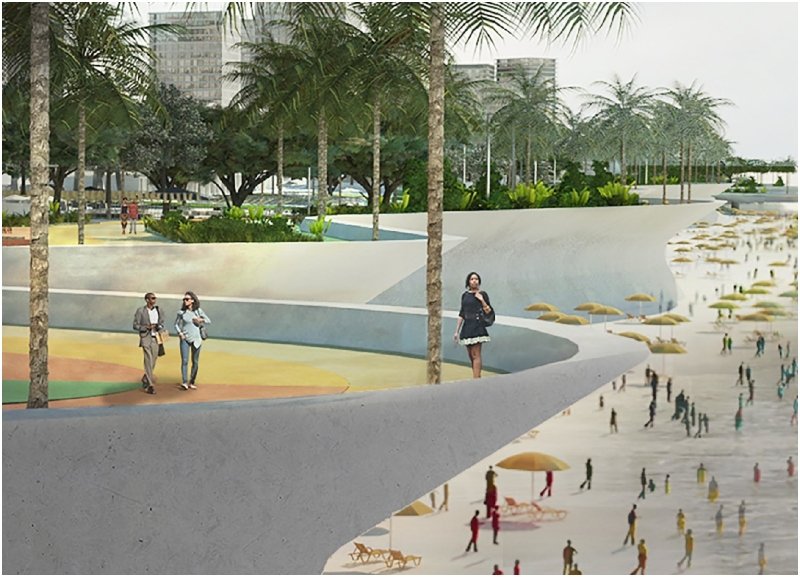
What has been billed as a “world-class tourism enclave” along the capital’s coastline is slowly moving forward after years of delays, funding challenges and community concerns.
The Accra Marine Drive Project, a US $1.2 billion waterfront redevelopment initiative, is intended to transform more than 240 acres of prime beachfront property into a mixed-use commercial, cultural and leisure hub — but progress has been uneven, and uncertainty remains about when full construction will begin.
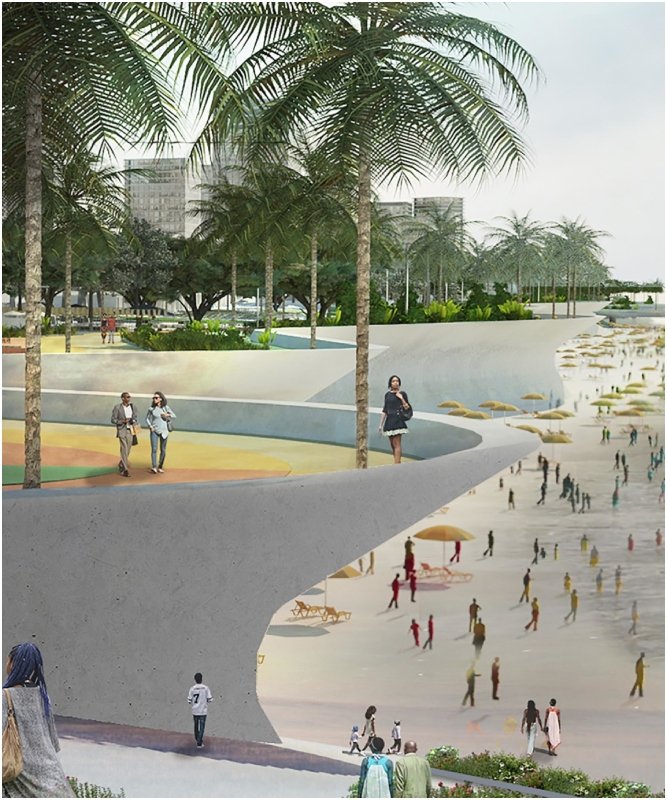
A Vision Years in the Making
Originally conceived decades ago and formally approved by Cabinet in 2016, the Marine Drive Project aims to stretch from Christiansborg Castle in Osu to the Arts Centre in the Ga Mashie enclave, reimagining Accra’s beachfront as a global-standard tourism destination. The masterplan — developed with input from world-renowned architect Sir David Adjaye — envisions a sweeping promenade linking national landmarks, a National Concert Hall, green public spaces, cultural villages, hotels, shopping centres, and other mixed-use developments designed to boost tourism, jobs and foreign direct investment.
Officials have described the scheme as the largest tourism investment project in Ghana since independence, with the potential to create thousands of jobs and elevate the country’s regional and global profile.
Yet despite the ambition, actual construction work has progressed slowly. The project has faced longstanding hurdles — from financing setbacks and land compensation disputes to misapplied funds and changing political priorities — that have stalled momentum. In 2023, the government acknowledged that the project’s accounts were depleted and that work was lagging due to funding gaps, while nearly GH¢386,296 in misused funds still had not been recovered.
Renewed Push for Accountability and Results
In mid-December 2025, Tourism Minister Abla Dzifa Gomashie inaugurated a new Board of Directors tasked with energising project implementation and restoring public confidence. Speaking at the ceremony, Minister Gomashie urged board members to deliver “timely results, accountability and transparency,” warning that the prolonged delays are no longer acceptable for what she described as a “flagship national investment.”
“The public expects results,” Gomashie said, placing the initiative at the heart of Ghana’s economic transformation strategy.
She urged board members to align closely with government priorities, safeguard value for money, and act swiftly to attract private capital and create jobs.
Deputy Tourism Minister Yussif Issaka Jajah, who chairs the new board, welcomed the directive and pledged to review existing proposals, establish a technical committee and begin early-year stakeholder engagements to reposition the project for success.
Hopes, Concerns and Community Impact
While government officials point out the economic benefits, the project has drawn criticism for its potential impact on local livelihoods and cultural heritage. Past reports warned that more than 3,000 artisans and workers at the historic Arts Centre faced displacement as the waterfront enclave was prepared for development, raising questions about how to balance modernization with community preservation.
Urban planners and civil society voices have also questioned whether the pace of work reflects Ghana’s broader needs amid fiscal pressures and competing development priorities, or if the project risks becoming symbolic rather than substantive. Still, proponents argue that the Marine Drive could catalyze broader coastal regeneration and enhance Ghana’s appeal as an international destination.
A Global Ambition with Local Stakes
The Marine Drive is not just a domestic endeavour — it sits at the intersection of urban planning, tourism competitiveness and global investment flows. By linking Accra’s historic core with world-class waterfront amenities, the project’s success could signal Ghana’s readiness to lead in high-value tourism infrastructure in West Africa.
Critically, the renewed focus from the Ministry and the new board’s mandate for accountability reflect broader efforts within government to overcome bureaucratic hurdles and align flagship projects with tangible outcomes for citizens and investors alike.
As 2026 unfolds and with a new board in place, the world will be watching closely to see whether Accra’s Marine Drive can finally match its grand vision with grounded progress — and whether its long-awaited transformation of Ghana’s coastline will at last become reality.









Every memorable art gallery begins with someone who believes a painting deserves more than a wall—it deserves an audience.
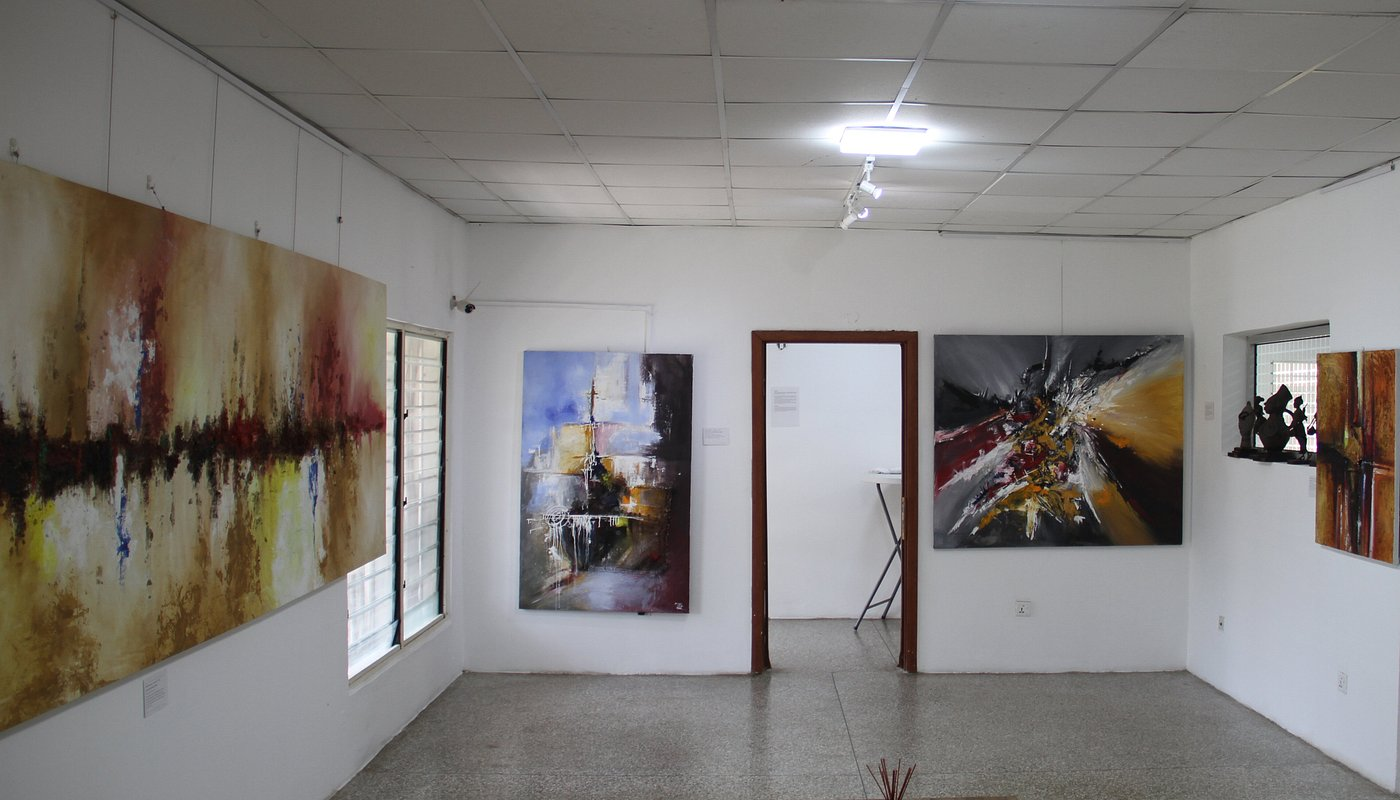
In Accra, that belief has shaped Berj Art Gallery into one of Ghana’s enduring champions of West African art.
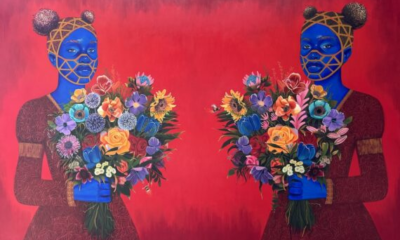
Founded in 1996 by collector Joyce Quarshie, Berj emerged at a time when many Ghanaian artists were still searching for spaces that could connect their work with wider audiences.
More than three decades later, Quarshie’s commitment has grown into a gallery that celebrates both established masters and emerging voices under one roof.
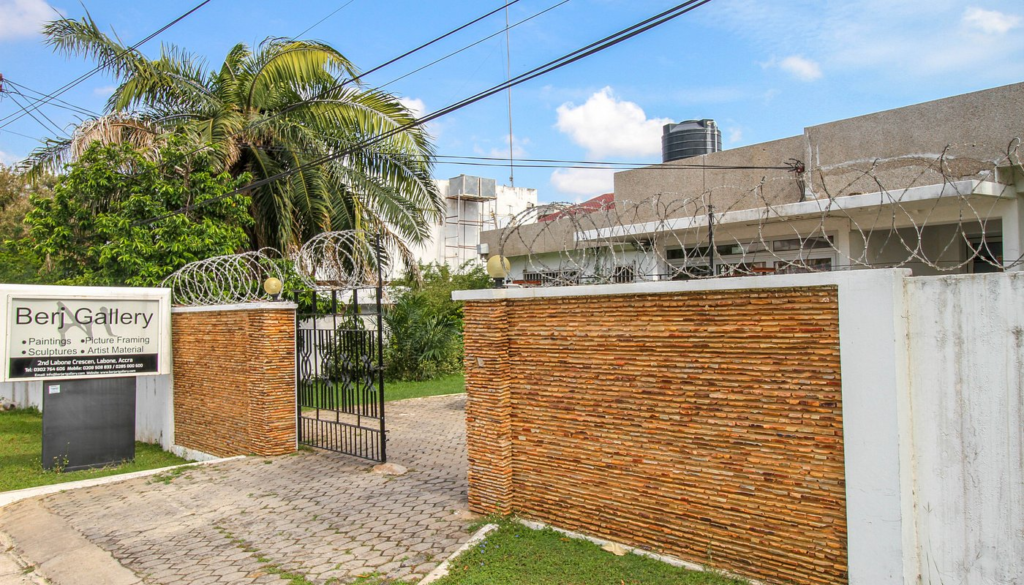
A Living Story of West African Art
Walking through Berj feels less like entering a showroom and more like stepping into a conversation across generations.
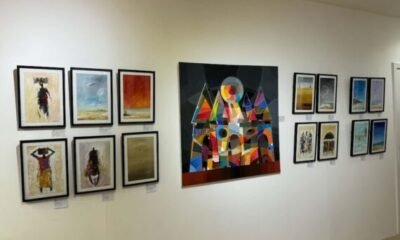
Bold paintings share space with finely carved wooden sculptures, bronze works catch the light from different angles, and photographs add contemporary perspectives to centuries-old artistic traditions.
The gallery’s strength lies in that balance. Acclaimed painters stand alongside rising talents, creating a rare opportunity for visitors to see Ghana’s artistic evolution unfolding in real time.
It is a reminder that culture is not frozen in history; it continues to grow with every new brushstroke and every fresh creative voice.
More Than a Gallery
For international visitors exploring Accra, Berj offers something deeper than a sightseeing stop. It opens a window into Ghana’s creative identity, where craftsmanship, storytelling and heritage intersect.
As the gallery continues hosting exhibitions that bring together local and international artistic influences, it reinforces a simple but powerful truth: preserving culture is not only about protecting the past.
It is about creating spaces where the next generation of artists can imagine—and exhibit—the future.
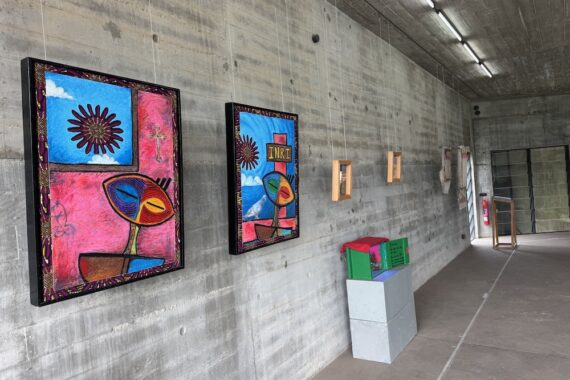
A family photograph resting on a shelf may look like decoration. A half-finished piece of woven cloth may seem incomplete. A living room may simply be a place to sit.
At Nubuke Foundation in Accra, however, these familiar things are being asked to tell deeper stories.
Weight of the Ordinary, a group exhibition featuring Josiah Tsibu Manu, Priscilla Agbeti, Blanche Boni-Mississo, King David Osabutey (Kakalicka) and Sena Burgundy Appau, turns its attention to the overlooked details of daily life—and finds history hiding there.
Manu’s domestic interiors are particularly evocative. Furniture, photographs and household details become unofficial archives, recalling how Ghanaian homes often carry memories that never enter formal histories.
In Agbeti’s unfinished woven works, meanwhile, labour refuses to disappear behind polished craftsmanship.
The incomplete becomes deliberate, leaving viewers to consider the economic and social histories carried by textiles.
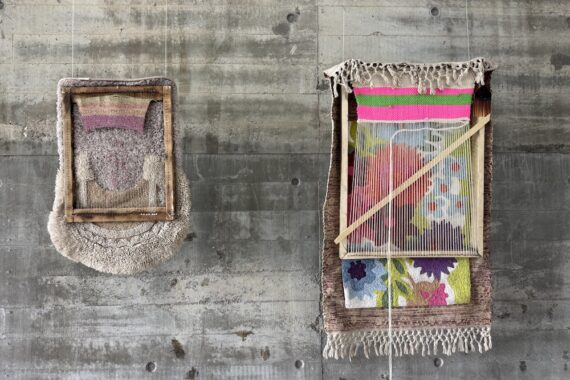
Elsewhere, Boni-Mississo examines how spaces determine who can move freely and who is kept at the margins. Kakalicka draws on Akan cosmology through his Ɔhɔhoɔ, or stranger, connecting questions of displacement and belonging with indigenous ideas.
Appau’s monumental blue figures turn inward, contemplating the uncertainty and possibility of becoming.
Together, the artists suggest that the everyday is not neutral. It is where memory is stored, identities are formed and social boundaries are experienced.
For audiences in Ghana and abroad, the exhibition offers an invitation to look again at what familiarity can conceal. Sometimes, the objects closest to us have the most to say.
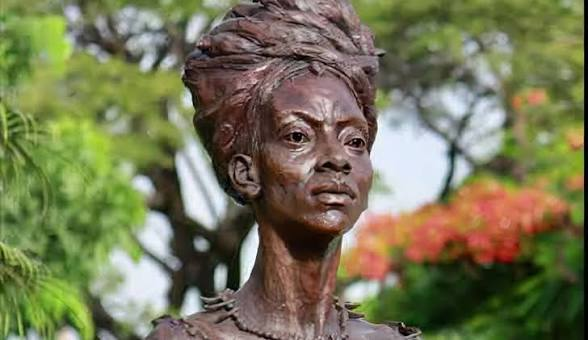
Sometimes history survives not in monuments, but in memory. In Ghana, the beat of the atumpan once carried messages across kingdoms.
In Jamaica’s mist-covered Blue Mountains, that same language of rhythm became a weapon of survival.
Queen Nanny’s story begins in oral tradition, which holds that she was born among the Akan people before being captured during the transatlantic slave trade and forced to Jamaica.
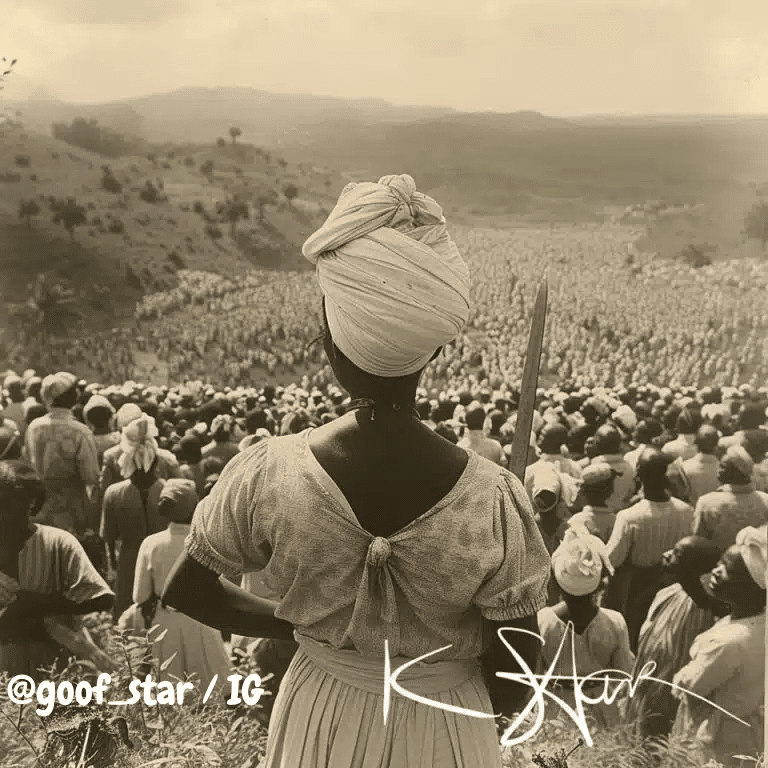
What followed transformed her into one of the Caribbean’s most celebrated freedom fighters.
When the drum became a battlefield language
Leading the Windward Maroons, Nanny turned the rugged mountains into a fortress. British troops struggled against hidden trails, surprise attacks and a commander who understood that knowledge of the landscape could outweigh military strength.
Just as remarkable was her reported use of the atumpan, the Akan talking drum. What colonial forces dismissed as eerie sounds echoing through the hills became a coded communication system that helped coordinate resistance.
Years of failed campaigns eventually forced Britain to negotiate. The 1739 peace agreement with the Maroons remains one of the most striking acknowledgements that enslaved Africans had built a resistance too formidable to erase.
A bridge between Ghana and Jamaica
Today, Queen Nanny is Jamaica’s only female National Hero, and her portrait appears on the Jamaican $500 banknote.
Her legacy also reaches back across the Atlantic, reminding Ghanaians that culture can outlive displacement.
The rhythms that once echoed through Akan communities did not disappear at the coast.
They crossed an ocean, climbed a mountain, and became part of one of history’s most remarkable stories of resistance.



-

 Ghana News1 day ago
Top Headlines From Ghanaian Newspapers: Monday, Sept. 7, 2026
-
 Festivals & Events2 days ago
Dzawuwu: The Volta Festival That Celebrates Agave Bravery
-

 Ghana News7 hours ago
How Ghana’s Government Pressured MTN, Telecel, and AirtelTigo to Cut Data Prices
-
 Sights and Sounds1 day ago
Trade Accra’s Traffic for Treetops at Legon Botanical Gardens
-
 Arts and GH Heritage12 hours ago
The Stories We Live With: Inside Nubuke Foundation’s Weight of the Ordinary
-

 Ghana News8 hours ago
Top Headlines From Ghanaian Newspapers: Tuesday, Sept. 8, 2026
-

 Ghana News7 hours ago
Buckingham Palace Responds to Jamaica’s $10 Billion Reparations Demand, But the UK Government’s Wallet Remains Shut
-

 Health & Wellness1 day ago
Why 500 Sit-Ups a Day Won’t Reveal Your Abs