
Commentary
Violent aftermath of Mexico’s ‘El Mencho’ killing follows pattern of other high-profile cartel hits

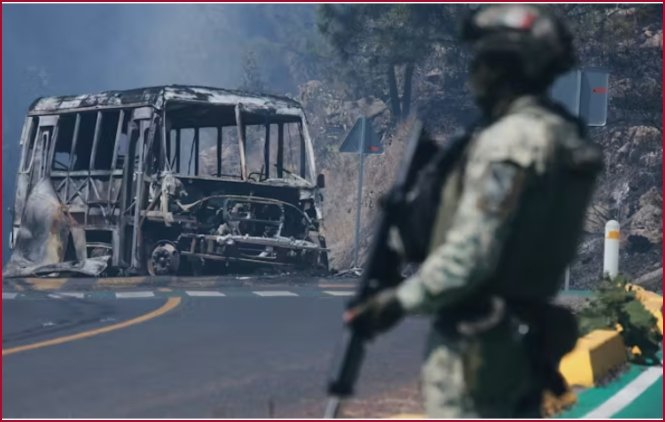
The recent death of Jalisco New Generation Cartel leader Nemesio Oseguera Cervantes, known as “El Mencho,” has triggered severe retaliatory violence in Mexico, resulting in at least 73 deaths. This article analyzes the event as part of a predictable and counterproductive pattern in Mexico’s security strategy. The author, Angélica Durán-Martínez, an expert on Latin American criminal groups, argues that while high-profile hits like this one serve political purposes by demonstrating action, they rarely dismantle criminal networks. Instead, they often lead to immediate violent backlash and longer-term fragmentation as factions fight for control.
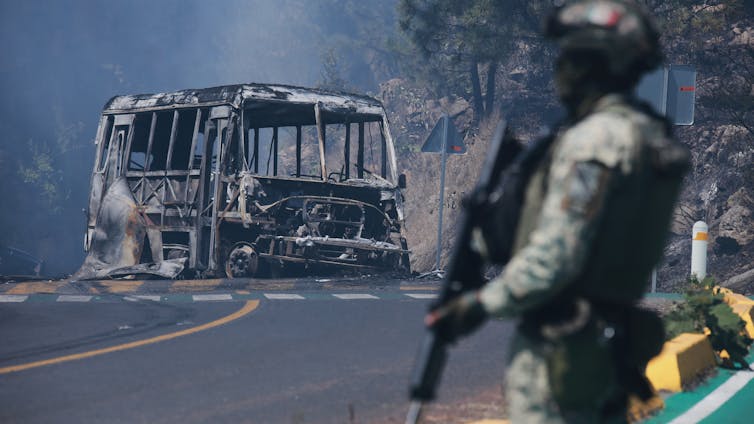
Violent aftermath of Mexico’s ‘El Mencho’ killing follows pattern of other high-profile cartel hits
By Angélica Durán-Martínez, UMass Lowell
The death of a major cartel boss in Mexico has unleashed a violent backlash in which members of the criminal group have paralyzed some cities through blockades and attacks on property and security forces.
At least 73 people have died as a result of the operation to capture Nemesio Oseguera Cervantes, or “El Mencho.” The head of the Jalisco New Generation Cartel was seriously wounded during a firefight with authorities on Feb. 22, 2026. He later died in custody.
As an expert in criminal groups and drug trafficking in Latin America who has been studying Mexico’s cartels for two decades, I see the violent aftermath of the operation as part of a pattern in which Mexican governments have opted for high-profile hits that often lead only to more violence without addressing the broader security problems that plague huge swaths of the country.
Who was ‘El Mencho’?
Like many other figures involved in Mexico’s drug trafficking, Oseguera Cervantes started at the bottom and made his way up the ranks. He spent some time in prison in the U.S., where he may have forged alliances with criminal gangs before being deported back to Mexico in 1997. There, he connected with the Milenio Cartel, an organization that first allied, and then fought with, the powerful Sinaloa Cartel.
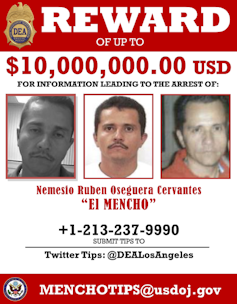
Most of the information available points to the Jalisco New Generation Cartel forming under El Mencho around 2010, following the killing of Ignacio “Nacho” Coronel Villarreal, a Sinaloa Cartel leader and main link with the Milenio Cartel.
Since 2015, Jalisco New Generation Cartel has been known for its blatant attacks against security forces in Mexico – such as gunning down a helicopter in that year. And it has expanded its presence both across Mexico and internationally.
In Mexico, it is said to have a presence in all states. In some, the cartel has a direct presence and very strong local networks. In others, it has cultivated alliances with other trafficking organizations.
Besides drug trafficking, the Jalisco New Generation Cartel is also engaged in oil theft, people smuggling and extortion. As a result, it has become one of the most powerful cartels in Mexico.
What impact will his death have on the cartel?
There are a few potential scenarios, and a lot will depend on what succession plans Jalisco New Generation had in the event of Oseguera Cervantes’ capture or killing.
In general, these types of operations – in which security forces take out a cartel leader – lead to more violence, for a variety of reasons.
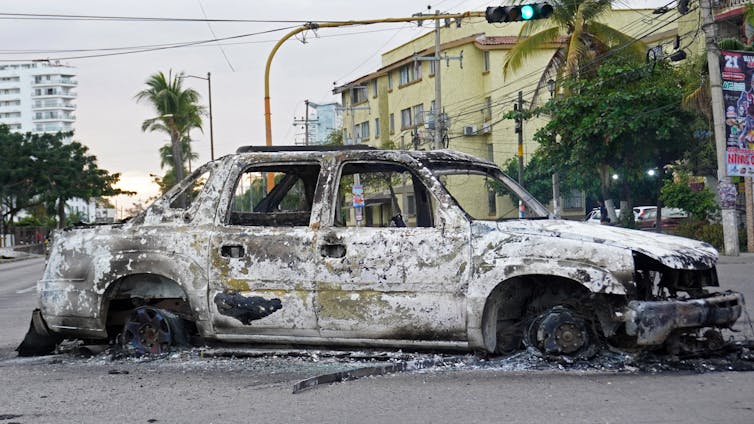
Mexicans have already experienced the immediate aftermath of Oseguera Cervantes’ death: retaliation attacks, blockades and official attempts to prevent civilians from going out. This is similar to what occurred after the capture of drug lord Ovidio Guzmán López in Sinaloa in 2019 and his second capture in 2023.
Violence flares in two ways following such high-profile captures and killings of cartel leaders.
In the short term, there is retaliation. At the moment, members of the Jalisco New Generation Cartel are seeking revenge against Mexico’s security forces and are also trying to assert their regional authority despite El Mencho’s death.
These retaliatory campaigns tend to be violent and flashy. They include blockades as well as attacks against security forces and civilians.
Then there is the longer-term violence associated with any succession. This can take the form of those who are below Oseguera Cervantes in rank fighting for control. But it can also result from rival groups trying to take advantage of any leadership vacuum.
The level and duration of violence depend on a few factors, such as whether there was a succession plan and what kind of alliances are in place with other cartels. But generally, operations in which a cartel boss is removed lead to more violence and fragmentation of criminal groups.
Of course, people like Oseguera Cervantes who have violated laws and engaged in violence need to be captured. But in the long run, that doesn’t do anything to dismantle networks of criminality or reduce the size of their operations.
What is the current state of security in Mexico?
The upsurge in violence after Oseguera Cervantes’ killing occurs as some indicators in Mexico’s security situation seemed to be improving.
For example, homicide rates declined in 2025 – which is an important indicator of security.
But other measures are appalling. Disappearances are still unsettlingly high. The reality that many Mexicans experience on the ground is one where criminal organizations remain powerful and embedded in the local ecosystems that connect state agents, politicians and criminals in complex networks.
Criminal organizations are engaged in what we academics call “criminal governance.” They engage in a wide range of activities and regulate life in communities – sometimes coercively, but sometimes also with some degree of legitimacy from the population.
In some states like Sinaloa, despite the operations to take out cartel’s leaders, the illicit economies are still extensive and profitable. But what’s more important is that levels of violence remain high and the population is still suffering deeply.
The day-to-day reality for people in some of these regions is still one of fear.
And in the greater scheme of things, criminal networks are still very powerful – they are embedded in the country’s economy and politics, and connect to communities in complex ways.
How does the El Mencho operation fit Mexico’s strategy on cartels?
The past two governments vowed to reduce the militarization of security forces. But the power of the military in Mexico has actually expanded.
The government of President Claudia Sheinbaum wanted a big, visible hit at a time when the U.S. is pushing for more militarized policies to counter Mexico’s trafficking organizations.
But this dynamic is not new. Most U.S. and Mexican policy regarding drug trafficking organizations has historically emphasized these high-profile captures – even if it is just for short-term gains.
It’s easier to say “we captured a drug lord” than address broader issues of corruption or impunity. Most of the time when these cartel leaders are captured or killed, there is generally no broader justice. It isn’t accompanied with authorities investigating disappearances, murders, corruption or even necessarily halting the flow of drugs.
Captures and killings of cartel leaders serve a strategic purpose of showing that something is being done, but the effectiveness of such policies in the long run is very limited.
Of course, taking out a drug lord is not a bad thing. But if it does not come with a broader dismantling of criminal networks and an accompanying focus on justice, then the main crimes that these groups commit – homicides, disappearances and extortion – will continue to affect the daily life of people. And the effect on illicit flows is, at best, meager.
Angélica Durán-Martínez, Associate Professor of Political Science, UMass Lowell
This article is republished from The Conversation under a Creative Commons license. Read the original article.

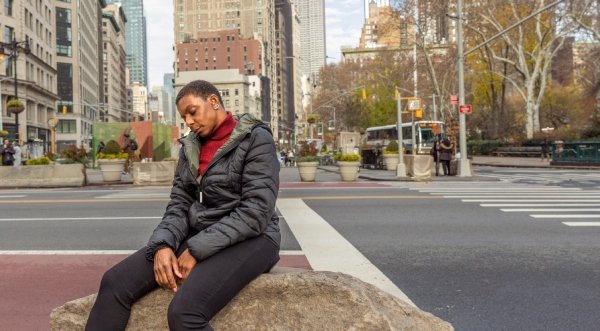
In this revealing commentary, Stephen Armah Quaye dismantles the popular myth that migration to Canada guarantees automatic success and prosperity for Ghanaians. Drawing attention to the stark contrast between social media portrayals and lived reality, Quaye outlines the multifaceted challenges facing Ghanaian immigrants: brutal winter conditions that test physical and mental endurance, professional downgrading where credentials go unrecognized, a punishing housing crisis that forces overcrowded living arrangements, and the relentless pressure of high living costs that necessitates multiple jobs just for survival. Beyond the economic hardships, he explores the emotional toll of family separation, social isolation, and the often-unspoken burden of expectations from relatives back home who assume wealth is instantaneous upon arrival.
Harsh realities facing Ghanaians in Canada
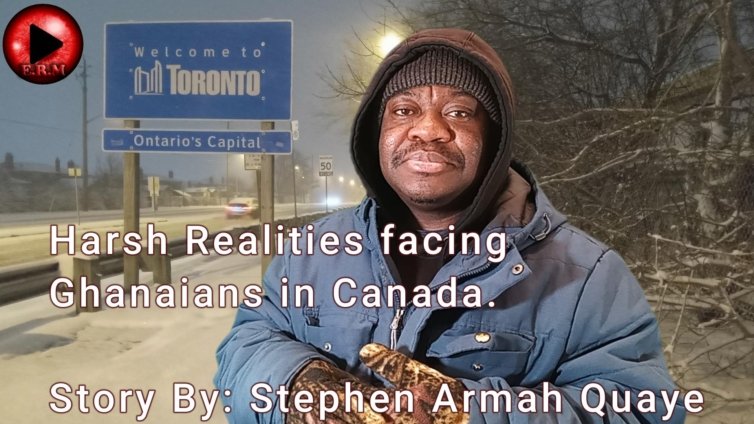
By Stephen Armah Quaye
Everyone wants to travel to Canada or the United States of America.
Everyone believes life there is easy. But what if I told you that for thousands of Ghanaians abroad, survival, not success, is the daily struggle? There is a side of migration nobody posts on social media. No filters. No airport photos. No smiling selfies in winter jackets. Just hard truths.
Before you pack your bags and say goodbye to Ghana, here is what you need to know.
The Other Side of the Dream
For many young Ghanaians, Canada represents opportunity, stability, and prosperity. It is seen as a land where hard work automatically produces success. Families gather at airports with tears of joy, believing their relative is stepping into an instant transformation. But migration is not magic. It is a transition, often a difficult one.
The Weather Shock
One of the first harsh realities facing Ghanaians in Canada is the weather.
Coming from a tropical country where sunshine dominates most of the year, winter in Canada can be physically and emotionally overwhelming. Temperatures drop far below zero. Snow blankets roads and sidewalks. The wind can pierce through layers of clothing. Winter is not just cold; it is exhausting.
Many immigrants wake up as early as 4:00 a.m., stepping into darkness and freezing temperatures to catch buses to work. Public transport delays during snowstorms are common. Walking even short distances becomes physically demanding.
Seasonal depression is real. Long months without adequate sunlight affect mood, energy, and mental health. For someone unprepared, winter alone can become a serious emotional test.
Employment and Credential Barriers
Another harsh reality is employment, specifically underemployment.
Many Ghanaians arrive with degrees and professional experience. Engineers, teachers, accountants, nurses, and other skilled workers often discover that their credentials are not immediately recognised in Canada. Licensing requirements, additional certifications, and “Canadian experience” become barriers.
As a result, many find themselves taking survival jobs such as factory work, warehouse labour, cleaning services, security shifts, or restaurant jobs. There is dignity in all honest work, but it can be emotionally draining when years of education do not translate into professional recognition. Some immigrants send money home and project success, but internally they struggle with frustration and identity loss. The reality is simple: being educated does not guarantee immediate success in Canada.
The Housing Crisis
Housing is another significant challenge. Rent in major Canadian cities is extremely expensive. In some cases, a single room can consume more than half of a person’s monthly income. Apartments require credit checks, proof of employment, and deposits. As a result, many newcomers share accommodation. Two or three people may occupy one bedroom. Some live-in basements with limited ventilation. Others rely on temporary stays with friends until they stabilise financially.
Meanwhile, families back home may assume their relative abroad owns a spacious apartment or house. The truth is different. Many immigrants are simply trying to secure safe and affordable shelter.
High Cost of Living
The cost of living in Canada is significantly higher than many expect.
Groceries are expensive. Transportation costs add up quickly. Winter clothing is costly but necessary. Phone bills, internet services, and insurance payments are ongoing financial commitments.
Healthcare in Canada is publicly funded, but not everything is covered. Dental care, prescription medication, and some specialist services often require private insurance or out-of-pocket payment.
For many immigrants, income disappears quickly once bills are paid. Savings take time. Financial stability does not happen overnight. This financial pressure pushes some individuals to work two or even three jobs, often with little rest. The goal is not luxury. The goal is survival.
Utility Bills and Winter Expenses
Winter brings additional financial strain.
Heating costs rise significantly during cold months. Electricity and gas bills can increase unexpectedly. Missing payments can lead to service disruptions and penalties.
Life can become a cycle: work, pay bills, repeat. The image of comfort and ease often portrayed abroad does not reflect this ongoing pressure.
Social Isolation and Emotional Strain
Beyond economics, there is emotional hardship. Migration separates families. Parents miss milestones in their children’s lives. Spouses endure long-distance marriages. Friendships change.
Loneliness is common, especially during the early years. Community networks help, but the adjustment period can be mentally challenging. Cultural differences, accent barriers, and subtle discrimination can also make integration difficult.
Pressure from Home
Perhaps one of the most overlooked realities is pressure from back home. Families often expect financial support. Some assume that anyone living in Canada is wealthy. When money does not flow as expected, disappointment may arise.
In some cases, funds sent home for projects such as building houses are mismanaged. This adds emotional and financial stress to an already difficult situation. Expectations can weigh heavily on immigrants who are still struggling to establish themselves.
A Call for Informed Migration
This article is not meant to discourage migration. Canada offers opportunities, safety, quality education, and structured systems. Many Ghanaians have succeeded and built fulfilling lives there.
However, success requires preparation so, if you are considering migration, research your profession and licensing requirements, save sufficient funds before travelling, prepare mentally for weather and cultural adjustment, develop adaptable skills, and build realistic expectations.
Migration is not an escape from hardship; it is often a different kind of hardship. The dream is possible, but it is earned through resilience, patience, sacrifice, and strategic planning.
Before you migrate, know the full story, not just the glamorous parts. Because sometimes, survival itself is an achievement.
Commentary
Why has Andrew Mountbatten-Windsor been arrested, and what legal protections do the royal family have?
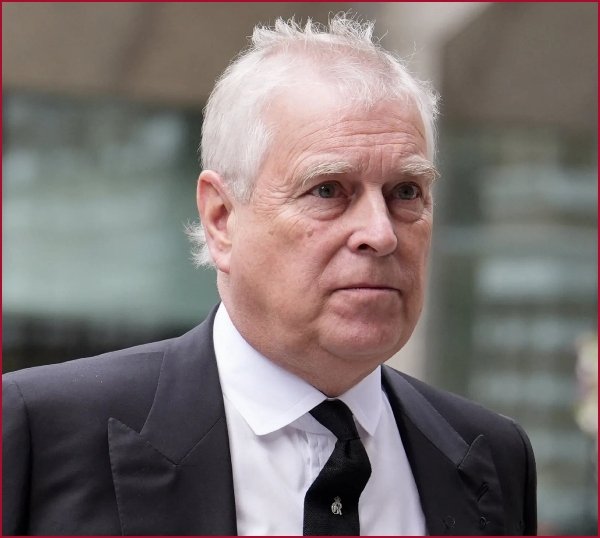
In this article, Francesca Jackson of Lancaster University states that the arrest of Andrew Mountbatten-Windsor, which occurred at the Sandringham estate, marks the first time in modern history that a member of the extended British royal family has been taken into custody, though he was stripped of his official titles in 2025. While the monarch enjoys sovereign immunity from prosecution, this protection does not generally extend to other royals, who can face legal consequences—Princess Anne was prosecuted for a dog bite incident in 2002, and the King has explicitly stated that “the law must take its course.”
Andrew Mountbatten-Windsor has been arrested on suspicion of misconduct in public office. The arrest comes after the US government released files that appeared to indicate he had shared official information with financier and convicted child sex offender Jeffrey Epstein while serving as a trade envoy for the UK. But the police have not given details of exactly what they are investigating.
It is important to be clear that the arrest is not related to accusations of sexual assault or misconduct. In 2022, Mountbatten-Windsor reached a settlement with the late Virginia Giuffre for an undisclosed sum that did not include an admission of liability.
Being named in the Epstein files is not an indication of misconduct. Mountbatten-Windsor has previously denied any wrongdoing in his association with Epstein and and has previously rejected any suggestion he used his time as trade envoy to further his own interests.
What was Mountbatten-Windsor’s official role and why did he lose it?
In 2001, Tony Blair’s government made the then-prince the UK’s special representative for trade and investment. According to the government at the time, his remit was to “promote UK business internationally, market the UK to potential inward investors, and build relationships in support of UK business interests”. He did not receive a salary, but he did go on hundreds of trips to promote British businesses.
Members of the royal family are often deployed by the government on international missions to promote trade. When negotiating with other countries, particularly those which are also monarchies, sending a prominent figure like a royal may help seal the deal. Indeed, the then-government claimed that the former Duke of York’s “unique position gives him unrivalled access to members of royal families, heads of state, government ministers and chief executives of companies”.
It is not unusual for members of the royal family to be deployed by the government for diplomatic missions. Royals often host incoming state visits and lead similar visits abroad, and can be deployed to lead delegations on more specific missions.
However, Mountbatten-Windsor had an official role as trade envoy. He stepped down from this role in 2011 following reports about his friendship with Epstein, who was convicted of sex offences in 2011.
Are royals protected from prosecution?
The monarch is protected by sovereign immunity, a wide-ranging constitutional principle exempting him from all criminal and civil liability. According to the leading 19th century constitutionalist Alfred Dicey, the monarch could not even be prosecuted for “shooting the Prime Minister through the head”. The Prince of Wales also enjoys immunity as Duke of Cornwall, which protects him from punishment for breaking a range of laws.
The State Immunity Act 1978, which confers immunity on the head of state, also extends to “members of the family forming part of the household”. However, this phrase has been interpreted narrowly to apply to a very tight circle of people and does not appear to apply to the monarch’s children in general. For example, in 2002 Princess Anne was prosecuted (though not arrested) for failing to control her dogs in Windsor Great Park after they bit two children.
Nevertheless, there has often been a perception that members of the royal family are held to a different standard when it comes to the law. In 2016 Thames Valley Police were criticised by anti-monarchy groups for not prosecuting the then-prince after newspaper reports alleged he had driven his car through the gates of Windsor Great Park. In 2019 the Crown Prosecution Service declined to prosecute Prince Philip for causing a car crash which injured two people.
The monarch also cannot be compelled to give evidence in court. For example, prosecutors were unable to summon the late queen to give evidence in the trial of Princess Diana’s former butler, who was accused of stealing her jewellery.
In response to Mountbatten-Windsor’s arrest, the king said: “What now follows is the full, fair and proper process by which this issue is investigated in the appropriate manner and by the appropriate authorities. In this, as I have said before, they have our full and wholehearted support and co-operation. Let me state clearly: the law must take its course.”
When was the last time a royal was arrested?
You have to go back quite a long way to find the last time that a member of the British royal family was arrested. This was during the English civil war, when Charles I was taken prisoner for treason before being found guilty and ultimately executed in 1649.
A number of royals, including Princess Anne, have committed driving-related offences, including speeding. But this arrest makes Mountbatten-Windsor the first member of the royal family to be arrested in modern times, though it should be noted that he is no longer a royal – he was stripped of all his official titles in October 2025 as his friendship with Epstein came under even more scrutiny.
What limits do police have on investigating royal estates?
Sovereign immunity also prevents police from entering private royal estates to investigate alleged crimes without permission. This can, theoretically, protect members of the royal family from arrest and prosecution. The Cultural Property (Armed Conflicts) Act 2017 also bans police from searching royal estates for stolen or looted artefacts.
In 2007, two hen harriers were illegally shot at Sandringham estate. However, Norfolk Police first needed to ask Sandringham officials for permission to enter the estate, by which time the dead birds’ bodies had been removed. Police questioned Prince Harry, but did not bring charges.
Other incidents have allegedly led to Sandringham being accused of becoming a wildlife crime hotspot, with at least 18 reported cases of suspected wildlife offences taking place between 2003-23 – yet only one resulting in prosecution.
Another longstanding legal precedent is that no one may be arrested in the presence of the monarch or within the precincts of a royal palace. It was thought that this rule could protect other members of the royal family and royal employees. However, Mountbatten-Windsor’s arrest at Sandringham suggests that this antiquated principle may no longer hold true today.
Francesca Jackson, PhD candidate, Lancaster Law School, Lancaster University
This article is republished from The Conversation under a Creative Commons license. Read the original article.

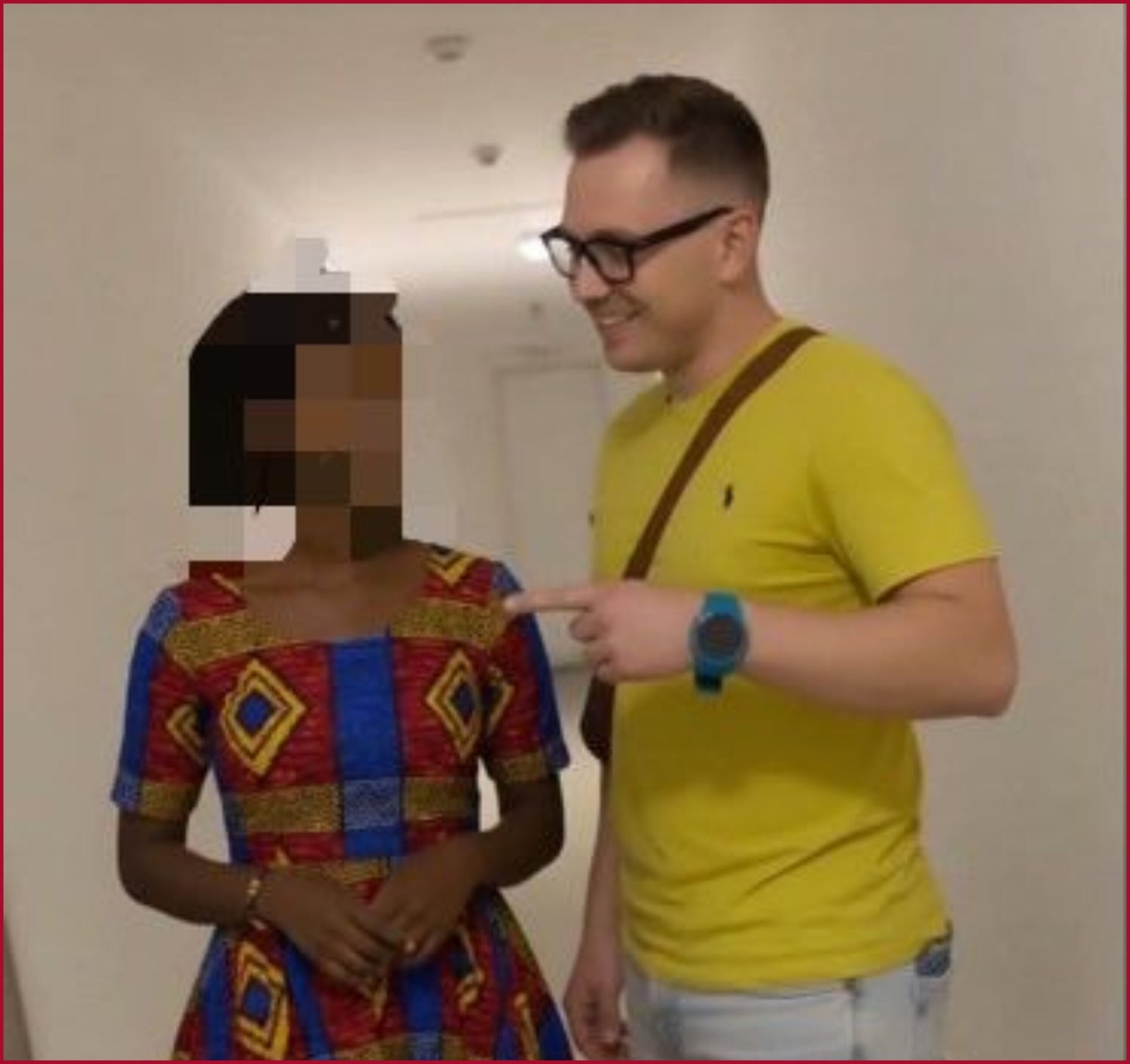
The images are searing: a Russian man, ordinary-looking designer eyewear fittingly fixed on his face, approaching women in Accra’s malls, on its beaches, along its streets.
The women smile, engage, trust. They have no way of knowing that the glasses are recording. They have no way of knowing that the man, Yaytseslav Trahov, is allegedly not seeking connection, but content to sell.
This case, now the subject of an international extradition request and a firestorm of advocacy by organizations like Leading Ladies Africa, exposes two deeply uncomfortable realities that converged to enable the alleged violation of dozens of African women.
The first is a technology that has outpaced the law. The second is a social poison centuries old: the lingering colonial mentality that can grant a foreigner, particularly a white foreigner, an automatic presumption of trust.
The Technology of Deception

At a purely technical level, Trahov’s alleged method reveals a critical regulatory gap. The tool of choice was not a bulky camera or an obvious recording device. It was a pair of smart glasses—fashionable, unremarkable, and equipped with the capacity to record everything with no red lights, no tell-tale clicks, no outward sign of surveillance.
This is not science fiction. It is consumer technology, readily available and deliberately designed for seamless integration into daily life. But as the Trahov case demonstrates, the same features that make smart glasses convenient—discretion, ease of use, high-quality capture—make them devastatingly effective weapons in the hands of a predator.
The technology facilitates mass violation precisely because it is designed for deception. And while the devices have evolved at the speed of innovation, the legal frameworks governing their use, and the prosecution of those who misuse them, lag dangerously behind.
The Camouflage of Colonialism

But the smart glasses alone would not have been enough. For the technology to work, Trahov needed access. He needed women to trust him enough to enter hotel rooms. And it is here that the case confronts African societies with a more uncomfortable truth.
The campaign against Trahov alleges that he deliberately weaponized his identity.
His whiteness, in a continent still grappling with the psychological residue of colonialism, became a credential. It positioned him, in the eyes of some, as more desirable, more worldly, more trustworthy than a local might have been perceived.
This is not to blame the women who were allegedly violated. It is to name the system Trahov is accused of exploiting. Colonial mentalities did not vanish with independence. They persist in subtle hierarchies of desire, in assumptions about who is safe and who is suspect, in the reflexive credibility granted to the foreigner. Trahov, if all the allegations are true, studied this landscape and used it as camouflage. He knew that his passport and his skin colour could function as a master key.
The Deadly Intersection
When these two elements combine—the technological capacity to record without consent and the social capacity to approach without suspicion—the result is a uniquely potent form of predation. The smart glasses provide the means of violation. The colonial mentality provides the access.
This is the “deadly intersection of technology, privilege, and misogyny” that advocates describe. It is not an accident. It is a deliberate convergence of tools and attitudes that Trahov allegedly exploited to turn women’s bodies into products and their trauma into revenue, selling explicit footage on paid Telegram channels to a global audience of strangers.
Ghana Acts, But the Gaps Remain
Ghana has responded with commendable force. Technology Minister Sam George has activated Interpol resources, summoned the Russian ambassador, and made clear that Trahov will be pursued under the Cybersecurity Act 2020, which carries a penalty of up to 25 years for non-consensual sharing of intimate images. The government has stated it will request extradition and, if necessary, try him in absentia.
But prosecution, however vigorous, cannot undo the violation. It cannot scrub the internet of images now circulating forever. It cannot fully address the deeper questions this case raises about how African societies value and protect their women.
The Reckoning Ahead
The Trahov case is therefore not merely a criminal matter. It is a mirror held up to the continent and the world. It asks whether technology companies will design products with consent and safety in mind, or continue to prioritize seamless functionality over the potential for abuse. It asks whether African nations will coordinate their responses, or leave individual countries like Ghana to fight alone. And it asks whether African societies will confront the lingering colonial attitudes that can make a foreign predator less visible, more trusted, and therefore more dangerous.
For the women whose lives are now permanently altered—whose Google results are poisoned, whose intimate moments are currency for strangers—these are not academic questions. They are the daily reality of living with footage they never consented to, circulating forever.
And Trahov? He sits in Russia, beyond reach, protected by a state that rarely extradites its citizens. His technology served him. His privilege served him. The question now is whether justice, finally, will find a way to serve the women he left behind.


UK Black Stars Launched to Honor Influential British-Ghanaians as Ghana Turns 69

Ghanaians and Other Africans in UAE Flood Social Media with Videos as Iranian Missile Strikes Hit Dubai

Ghana Maintains Over 5 Weeks of Fuel Stock Amid Middle East Tensions and Other Trending Topics in Ghana (March 2, 2026)
-

 Ghana News1 day ago
Ghanaian’s Terrifying Experience as Missile Explodes Amid Escalating Middle East Tensions and Other Trending Topics in Ghana (March 1, 2026)
-

 Ghana News1 day ago
Ghana’s Black Queens Stranded in UAE as Government Initiates Partial Evacuation from Tehran Embassy Amid Escalating Israel-Iran Conflict
-
 Ghana News6 hours ago
Ghana Maintains Over 5 Weeks of Fuel Stock Amid Middle East Tensions and Other Trending Topics in Ghana (March 2, 2026)
-
 Ghana News1 day ago
7 Ways the Escalating Middle East Crisis Could Hit Home in Ghana
-
 From the Diaspora5 hours ago
Ghanaians and Other Africans in UAE Flood Social Media with Videos as Iranian Missile Strikes Hit Dubai
-

 Ghana News6 hours ago
Newspaper Headlines Today: Monday, March 2, 2026
-

 Africa Watch22 hours ago
How African Nations Are Evacuating Their Nationals Amid the Escalating Middle East Crisis
-

 From the Diaspora1 day ago
Ghanaian-Heritage Scientist AJ Addae Develops Breakthrough Sunscreen That Protects Darker Skin Without White Cast