
GH Living
‘The Heat, The Hustle, The Growth’: Cameroonian Student Shares Honest Take on Life at KNUST


When Sephy, a young Cameroonian student, posted a video titled “My Experience as an International Student in Ghana (KNUST) — Was It Really Worth It?” in 2021, she didn’t expect it to resonate so widely.
But her candid, humorous, and sometimes bracingly honest account still holds true today and has since struck a chord with African students considering Ghana as a study destination.
Her verdict? “It was worth it—but expensive. Very expensive.”
Speaking to her growing YouTube audience, Sephy offers a rare, unfiltered look into what life actually feels like for a first-time international student navigating Ghana’s heat, bureaucracy, culture, food, and campus life at the Kwame Nkrumah University of Science and Technology (KNUST).
A Hot Welcome — Literally
Arriving with her father, Sephy’s first cultural shock wasn’t language or food—it was the weather.
“The heat, the heat, the heat is not your friend,” she laughs, waving a fan at the camera.
She describes the airport arrival process: paying a USD 150 short-term entry fee, settling into a hotel, then boarding the VIP bus to Kumasi the next morning. For her, the journey was both exciting and disorienting—an early hint of the independence that studying abroad would demand.
Accommodation: Convenient but Costly
KNUST automatically places first-year international students in university-run hostels—Brunei or the Girls’ Hostel. The convenience is clear, but the price tag isn’t small.
What cost her about $700 a year is now well above $1,000 due to currency shifts. Still, she advises new students to stay on campus in their first year for safety, structure and easy orientation.
Accents, Language—and a Bit of Teasing
One unexpected struggle was understanding—and being understood.
“If you say picture, they hear pictcha,” she jokes.
“Sometimes in class, the lecturer switches to Twi. Everyone laughs. You just adjust and move on.”
Over time, Sephy says she picked up some local expressions—so much so that her family back home sometimes calls her “the Ghanaian”.
Food: Cheap, Plentiful and Necessary
For a student juggling pharmacy classes, group work, labs and presentations, cooking every day isn’t always realistic. Thankfully, food on and around campus is both cheap and varied.
Yam and stew, waakye on demand, KFC or pizza on cheat days, and fresh produce from the campus market. For Sephy, learning to eat local wasn’t just cultural immersion—it was survival.
Transport: Amazingly Easy
Unlike many African campuses, KNUST offers free campus shuttles, with Bolt and Uber readily available. Sephy calls movement on campus “one thing I never had a problem with.”
Social Life: “Top-tier—If You Know How to Balance Yourself”
Here, Sephy lights up.
“Entertainment? It’s mad. Top-notch.”
From hall weeks to all-night parties, celebrity-filled shows, games nights, and hostel “spin the bottle” scenes, campus life is active every single week. But she stresses discipline, especially for students juggling demanding majors.
Exposure and Personal Growth
For Sephy, this was where KNUST delivered far beyond academics. She became a student leader, interned with Alliance Française, travelled for international programs, and built friendships across Africa.
“I grew academically, spiritually, intellectually, character-wise.”
The Hardest Truth: “Money Doesn’t Come Together”
Her bluntest point is the most sobering.
Ghana’s rising cost of living, combined with international student fees, makes KNUST one of the most expensive educational paths in Africa.
Pharmacy, she notes, costs about $5,500–$6,000 a year—excluding accommodation, food, transport and upkeep. Scholarships exist, but they’re limited and highly competitive.
“If you don’t have money, please think twice. This country is expensive.”
So, Was It Worth It?
Despite the financial strain, Sephy says yes—emphatically.
Her years in Ghana shaped her confidence, broadened her worldview, and built her career-ready skills. She recommends KNUST wholeheartedly—so long as prospective students prepare financially and emotionally before coming.
Her final message to anyone planning to study in Ghana?
“Welcome. Learn ahead of time—and come ready.”



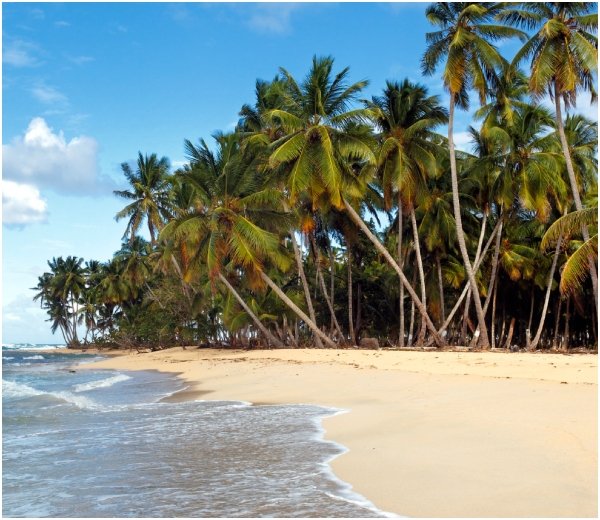
Exploring the emotional shift from permanent return to visitor status (this is a long read, but it’ll be worth your time).
The invitation was historic. When Ghana launched the Year of Return in 2019, it extended a powerful call to the global Black community: come home. Come see where your ancestors walked. Come invest. Come stay.
And thousands came. They packed up apartments in Atlanta, London, and Toronto. They landed at Kotoka International Airport weeping. They bought land. They started businesses. They believed they had found home.
But five years later, a quieter conversation is emerging—one that YouTube creator Dela, of the channel More To Dela, is giving voice to. In a video that has resonated across the diaspora, she asks a provocative question:
Has Ghana changed from being a place that people want to return to and live, into more of a holiday breakaway destination?
Her answer, drawn from countless conversations and her own experience living in Accra, suggests a profound shift is underway.
The Sentiment That Brought Everyone Here
Dela begins by acknowledging the dream that brought so many to Ghana’s shores.
“Ghana was the gateway to seeing what Africa has to offer,” she explains. “It was people’s first initiation point into understanding more of Africa. A lot of people were coming back and saying, ‘I’m going to leave everything behind because Ghana is a dream. I’ve seen it on YouTube. It looks amazing. This is where I can live.'”
The emotion was real. The pull was real. And for a time, the momentum seemed unstoppable.
But now, Dela observes, “there’s some reality that is setting in.”
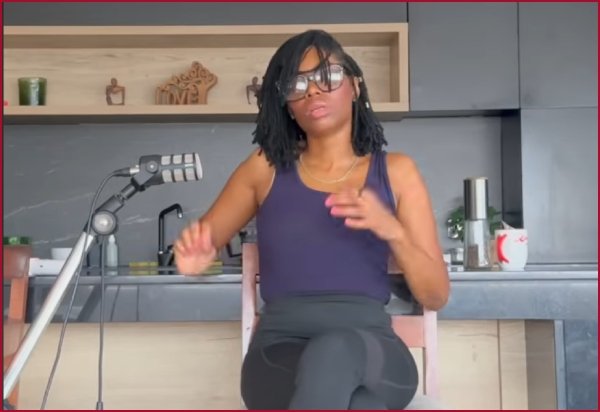
The Price of the Dream
That reality has many faces, but one of the most unforgiving is economics.
“Ghana has outpriced itself for the diaspora being able to move back and make it a place of permanence,” Dela states plainly.
The math is brutal. You arrive with savings—maybe a respectable sum by Western standards. Then you buy a car. You put a deposit on an apartment. You furnish it. You pay for permits, for connections, for the endless small expenses that come with establishing a life.
“The head start that you thought you had? You don’t have it,” Dela says.
And if you’re relying on local income? That’s its own challenge. A well-paying job in Ghana might offer 5,000 or 7,000 cedis monthly. But with the cost of living where it is, and families to support.
“How many of us can live off that?” she asks. “We can’t.”
The result is a quiet economic truth: to live in Ghana sustainably, you likely need foreign income. A remote job. A business that earns in dollars or pounds. Without that, the dream becomes financially unsustainable.
When Business Becomes a Battle
For those who came to build businesses, the challenges run even deeper.
“People who have wanted to bring business here see the challenges,” Dela explains. “Things are not going well for them. They can’t get supplies. Trying to recruit staff, trying to get customers—it’s very, very difficult.”
The operating environment is simply different from what diaspora entrepreneurs expect. Supply chains that should be reliable aren’t. Staffing is unpredictable. Customer acquisition follows different rules. And slowly, the optimism drains away.
“You can’t necessarily run businesses the same way they were run in the West,” Dela says. “If the money’s not coming as you expect, it makes it feel like maybe Ghana’s not for me. Maybe I should try somewhere else.”
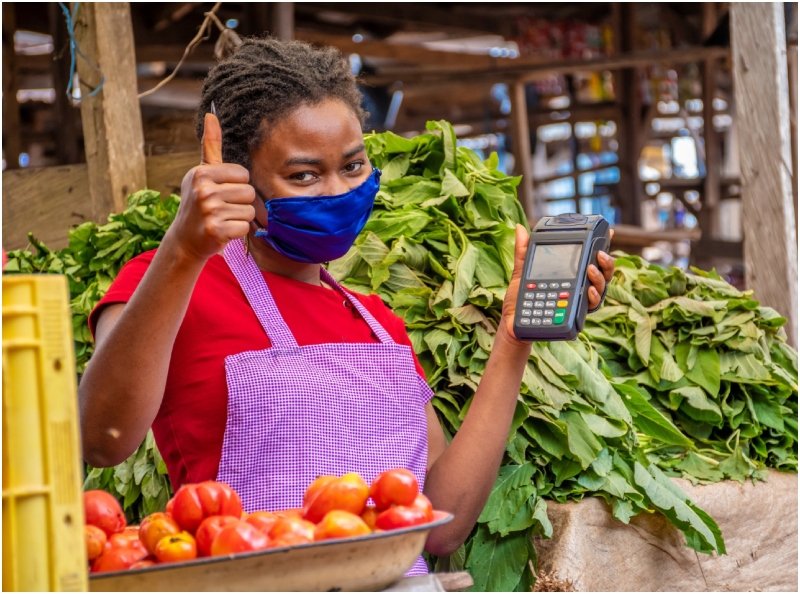
She speaks from experience.
There was a time when Dela worked extensively with people outside her immediate circle—collaborations, partnerships, hires. It became so frustrating that she made a fundamental change.
“I cut back a lot of the people that I was working with,” she admits. “I just said, ‘No, I need to take this back for myself.’ That was easier for me than trying to do it the other way.”
Today, she lives what she calls “a bit of a Ghana bubble.” And she’s honest about it:
“I like it that way. Most of the things I work on, I can pretty much do myself. I don’t need too much outside help.”
It’s a survival strategy—but not one everyone can replicate.
The Floating Feeling
Perhaps the most emotionally complex challenge is psychological.
When you move somewhere intending to stay, you expect to eventually feel settled. You expect to stop feeling like a visitor. But for many in Ghana, that moment never comes.
“It never feels 100% home,” Dela says. “Not for the long term.”
She points to housing as a vivid example. In the West, renting often implies stability. You sign a lease expecting to stay for years. In Ghana, even year-to-year renting feels temporary.
“You don’t rent and think, ‘Okay, I’ll be here for two years and then move somewhere else,'” she explains. “But here? That’s exactly what happens. Prices shoot up. The currency becomes unstable. The area changes. Traffic patterns shift. You’re always floating.”
Even buying a house doesn’t guarantee permanence. You might build in an area that seems promising, only to realize later that there are no shops nearby, no places to hang out, no community. The isolation wears on you. Then you face the nightmare of trying to sell.
“So because of things like that,” Dela says, “it puts people off putting down a permanent stamp in Ghana.”
The Shift: From Living to Visiting
All of these forces are converging into a new pattern.
“Now people are talking about small doses,” Dela observes. “Even those of us that are Ghanaian—we’re coming and we’re like, Ghana is a great holiday destination. I love the food, the people, the culture. But when it comes to living, they don’t necessarily want to do that.”
What’s emerging instead is a different model: Ghana as a base, not a permanent home. People are buying property, even building houses, but they’re not staying full-time. They’re traveling to other African countries. They’re going back to the West to make money. They’re living a holiday lifestyle for a few months, then leaving when the funds run low, then returning again.
“That’s the shift that’s happening,” Dela says. “Doing business here is very, very difficult. And that journey is not for everybody. It’s a special kind of journey given to a special kind of people.”
The Complicated Love
None of this means the love for Ghana has died. Far from it.
“The reason they want Ghana in small doses and can’t cut Ghana off completely,” Dela explains, “is because Ghana brings you something. A sense of peace. That belonging. It brings you those things.”
The food, the culture, the way it feels to walk down a street and see faces that look like yours—these are not small things. They are the reasons people keep coming back, even when the frustrations mount.
But the tension is real. “When you’re in Ghana, you’re faced with reality,” Dela says. “That’s where it gets hard.”
A Call for Something Better
For Dela, the solution isn’t to give up on Ghana. It’s to build something better—together.
“We have to think about how we can make Ghana better,” she urges. “Not just for us in our own tiny spaces. If we can put things into place to make it easier for other people to follow behind us, then we’re doing something good.”
She envisions a network of diaspora businesses supporting each other—a delivery service that entrepreneurs can rely on, a community that collaborates instead of competes. “We have to be links for each other,” she says. “Hold each other strong. When we work together as a team, we build a better Ghana. Eventually, things have to get better for us.”
Because there are people who want to come back permanently. People for whom “small doses” will never be enough.
“They want to come back,” Dela says. “But the reality right now is that they can’t. Financially, it doesn’t make sense for them.”
The Truth-Teller’s Burden
Dela knows that conversations like this can be uncomfortable. She’s heard the criticism.
“I know some of you are going to be like, ‘Dela, you come on here and say so many negative things about Ghana,'” she says, anticipating the response.
Her answer is simple:
“No. I tell you the truth about Ghana. So that you’re not surprised when you come here. Because I want you to have the best experience possible.”
She lives in Ghana. She loves it. She doesn’t see that changing in the foreseeable future. But she also refuses to sugarcoat the reality of diaspora life in 2024.
Ghana is for a certain type of person, she concludes. If you can get over the hurdles, if you can navigate the challenges, it can be beautiful. The food, the culture, the sense of belonging—these are real, and they are powerful.
But the hurdles are also real. And for a growing number of people who love this country, the honest answer is this:
Ghana is home—just not the kind you live in full-time anymore.
For more perspectives on diaspora life in Ghana, stick with Ghana News Global (@ghananewsglobal on all social media platforms).
GH Living
“Living in Ghana Taught Me to Slow Down”: Diaspora Creator Shares How She Found Patience and Purpose in Everyday Life

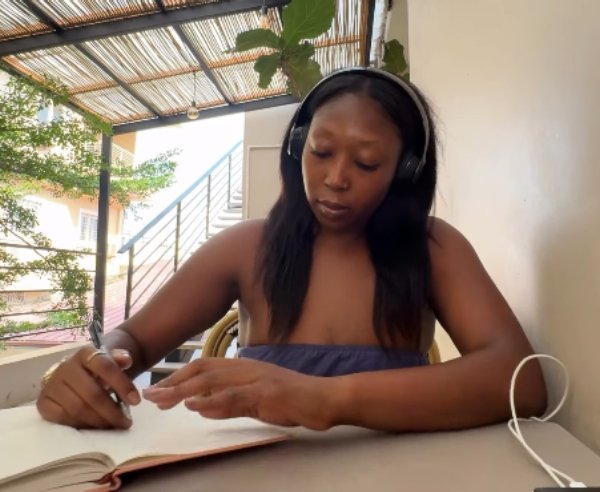
For many in the diaspora, moving to Ghana comes with dreams of reconnection, culture, and community. For lifestyle creator @simplyysong, it also came with an unexpected lesson: patience.
In a warm and widely shared Instagram post, the content creator documented a quiet moment making sobolo, Ghana’s popular hibiscus drink, while reflecting on how daily life in the country has reshaped her relationship with time.
“Living in Ghana requires a lot more patience than I’m used to,” she wrote. “Every day is teaching me how to slow down.”
Culture Shock, One Queue at a Time
In the accompanying video, @simplyysong speaks candidly about the everyday realities that initially tested her nerves — and eventually softened her outlook.
“If you don’t have patience and you want to learn patience in three months, book a ticket to Kotoka International Airport in Accra,” she joked.
From salon visits that stretch far beyond the expected timeframe to quick grocery runs delayed by offline payment systems, she describes a rhythm of life that doesn’t bend to urgency.
“At first, it really irritated me,” she admitted. “I honestly thought that would be one thing that would make me want to move home.”
From Frustration to Reflection
But instead of pushing her away, the slower pace forced deeper reflection.
“Why do I want to move so fast?” she asked in the video. “What is going on that I need to rush through life like this?”
Over time, the inconveniences became lessons — reminders to be present, to breathe, and to reconsider a culture of constant motion many in the West take for granted.
While she doesn’t romanticize the challenges — noting that some things can still be annoying — she frames the experience as transformative rather than burdensome.
“Life is once,” she said. “We have to enjoy it.”
A Familiar Story for the Diaspora
Her reflections are consistent accounts of many other diasporan returnees, particularly those navigating life in Ghana or considering relocation.
The post, tagged #DiasporaLife, #SlowLiving, and #GhanaExperience, taps into a broader conversation about returning home — not just geographically, but emotionally and spiritually.
For @simplyysong, Ghana has become more than a destination. It’s a teacher — one that insists on stillness, resilience, and appreciation for the moment, even when the POS is down and the line isn’t moving.
And sometimes, that lesson comes best with a glass of sobolo in hand.
GH Living
Why Falling Food Inflation Isn’t Bringing Down Everyday Grocery Prices in Ghana – Economist Explains
Ghana’s headline inflation has dropped sharply to 3.8% in January 2026 from 23.5% a year earlier, yet many households still feel the pinch of high food costs.
Economist Dr. Adu Owusu Sarkodie appeared on TV3’s New Day program to clarify why the celebrated decline in inflation isn’t translating into noticeably lower prices at markets and shops across the country.
Dr. Sarkodie stressed a key distinction: a falling inflation rate does not mean prices are dropping overall. Instead, it indicates that the rate at which prices are rising has slowed significantly.
“Between January 2025 and January 2026, general price levels increased by just 3.8%, compared to a 23.5% rise the previous year,” he explained. “Prices are still going up—just much more slowly.”
The disconnect becomes clearer when inflation is examined through disaggregated lenses—regional, district, and item-specific breakdowns—rather than the national average alone.
Regional Variations Hide Uneven Realities
Ghana’s 16 regions show stark differences. Eight regions recorded inflation below the national 3.8% average, while the other eight exceeded it. The Northeast Region tops the list with 11.2% inflation, followed closely by the Volta and Eastern regions. Residents there are likely to report persistent high costs. In contrast, the Savannah Region posted a negative inflation rate of -2.6%, meaning general prices actually fell slightly—offering relief to households in that area. Dr. Sarkodie highlighted the intriguing contrast between neighboring northern regions: Northeast (highest inflation) versus Savannah (lowest), calling for deeper investigation into local dynamics such as supply chains, agriculture, and market access.
Item-Specific Differences Shape Household Experiences
Even within the same region, what people buy most determines how inflation feels. Transport inflation has turned negative due to recent fuel price reductions, benefiting those who rely heavily on commuting or logistics.
Conversely, month-on-month increases remain high in categories like fruits and nuts, vegetables, food and non-alcoholic beverages, oils and fats, and water—items central to daily meals.
On the flip side, some staples saw price relief: fruits and vegetable juices, cereals and cereal products, and fish/seafood recorded negative month-on-month inflation.
“Depending on what you consume most, your personal inflation could be positive on your pocket or negative,” Dr. Sarkodie noted. “Someone spending heavily on transport feels the relief more than someone buying mostly fruits, vegetables, or oils.”
District-Level and Consumption Patterns Add Layers
Beyond regions, district-level data collection from various markets reveals further disparities. Combined with individual consumption patterns, this explains why some Ghanaians question official figures while others sense improvement. The economist urged policymakers and the public to move beyond headline numbers and examine these breakdowns for a more accurate picture of living costs.
As Ghana continues its economic stabilization journey, Dr. Sarkodie’s analysis underscores that while macro-level progress is real, the benefits of lower inflation are unevenly felt—particularly in food, where regional supply issues, seasonal factors, and item-specific pressures keep many household budgets stretched.



-

 Ghana News2 days ago
Ghanaian’s Terrifying Experience as Missile Explodes Amid Escalating Middle East Tensions and Other Trending Topics in Ghana (March 1, 2026)
-

 Ghana News2 days ago
Ghana’s Black Queens Stranded in UAE as Government Initiates Partial Evacuation from Tehran Embassy Amid Escalating Israel-Iran Conflict
-

 Ghana News18 hours ago
Court Slaps Barker-Vormawor with GH₵5m for Defaming Kan Dapaah and Other Trending Topics in Ghana (March 2, 2026)
-

 From the Diaspora18 hours ago
Ghanaians and Other Africans in UAE Flood Social Media with Videos as Iranian Missile Strikes Hit Dubai
-

 Ghana News2 days ago
7 Ways the Escalating Middle East Crisis Could Hit Home in Ghana
-

 Ghana News19 hours ago
Newspaper Headlines Today: Monday, March 2, 2026
-
 Ghana News1 day ago
How African Nations Are Responding to the Iran-Israel Conflict
-

 Africa Watch1 day ago
How African Nations Are Evacuating Their Nationals Amid the Escalating Middle East Crisis