
Lifestyle
‘He Came Home in December to See His Family’: Ghanaian Man Dies in Freak Snow Accident on US Highway


A routine stop to clear snow from his windshield turned fatal for a 35-year-old Ghanaian man in Massachusetts, leaving a family in grief and a community searching for answers.
BOSTON — Patrick Sarpong, a 35-year-old Ghanaian man residing in the United States, tragically lost his life late Monday night after being struck by a tractor-trailer while clearing snow from his car along a major Massachusetts highway.
The fatal incident occurred around 11:15 p.m. on February 23, 2026, along the Massachusetts Turnpike near Hopkinton, as the region was being battered by a powerful blizzard that dumped significant snowfall across the area.
According to authorities, Sarpong had just finished work and was heading home when he pulled his vehicle over—positioned partially in the breakdown lane and partially in the travel lane—to remove accumulated snow from his car. While he was outside attending to the vehicle, a passing tractor-trailer struck him.
Emergency responders arrived quickly at the scene, but Sarpong was pronounced dead shortly after the collision due to the severity of his injuries. His body was transported to a nearby hospital, where medical personnel officially confirmed his death.
A Community in Mourning
Sarpong, originally from Ghana but residing in Vernon, Connecticut, had reportedly visited his homeland just two months ago, spending time with family during the Christmas season before returning to the US to continue working .
A friend of the deceased, speaking in an emotional tribute, described the devastating timing of the loss. “Nobody even thought that Patrick was going to lose his life in this kind of manner,” the friend said. “Just last Tuesday, they went to a park, they met at a friend’s place. They were having fun.”
Social media has been flooded with tributes and expressions of disbelief from Ghanaians both at home and in the diaspora. Many described Sarpong as a hardworking individual who was simply trying to make a living abroad.
“This one is really painful,” wrote X user @_kelvinfcb. “Rest in peace, Patrick Sarpong. My deepest condolences to his family, loved ones, and the Ghanaian community abroad”.
Another user, @Dereal_ZAMI, captured the sentiment of many immigrants: “Left home to feed home. The story of our lives abroad. May God protect us”.
Questions and Investigations
Officials from the Massachusetts State Police confirmed that Hopkinton was not subject to any travel restrictions at the time of the crash, despite the blizzard conditions. Sergeant Gregory Jones stated that the highway remained open to traffic, and motorists were permitted to travel.
However, the Town of Vernon had reportedly imposed a parking ban on all public streets from February 22 to February 24, warning violators they could be ticketed or towed. It remains unclear whether Sarpong was aware of these restrictions.
A thorough investigation has been launched to determine the exact circumstances surrounding the accident, including visibility conditions, driver response, and whether weather-related factors contributed to the fatal collision.
Some social media users questioned why Sarpong stopped on the highway rather than at a safer location. “Clearing snow at the side of a highway?” questioned user @1jahkmoe. Others defended his actions, noting that driving in snowy conditions can cause dangerous buildup on headlights and windshields, sometimes forcing drivers to stop.
A Painful Pattern
Sarpong’s death follows another recent tragedy involving a Ghanaian in the US during winter weather. Just weeks earlier, Felix Owusu, a Ghanaian student and father of two studying at the Illinois Institute of Technology, died in a snowy Chicago road accident while on his way to work.
Owusu’s car lost control on slippery roads and collided with a trailer around 5:54 a.m. on January 30, 2026. The Ghanaian community in the US organized a GoFundMe campaign to support his wife and children, who now face both emotional and immigration challenges following his sudden death.
Warnings for Winter Safety
As investigations continue into Sarpong’s death, authorities are reminding motorists of the dangers of stopping on highways during winter storms. The Vernon community had issued an official statement urging drivers to be especially careful and avoid parking on main roads—a warning that came too late for Sarpong.
For the Ghanaian community in the US, the loss is a painful reminder of the risks immigrants face while pursuing opportunities abroad. Sarpong is remembered as a hardworking man who, like so many others, left home with dreams of building a better life for his family.
Authorities have stated that further updates will be released as the inquiry continues.












Fashion & Style
The “Kente Clause”: How Ghanaian Textiles Rewrote the Rules of Red Carpets and Royalty


For centuries, if you wanted to signal that you had arrived—truly arrived—you slipped into something by a French fashion house. Paris and Milan dictated what royalty wore to galas and what stars wore to award shows. But lately, the most powerful garment on the planet isn’t coming down a runway in Europe. It is coming from a loom in Bonwire or a design house in Accra.
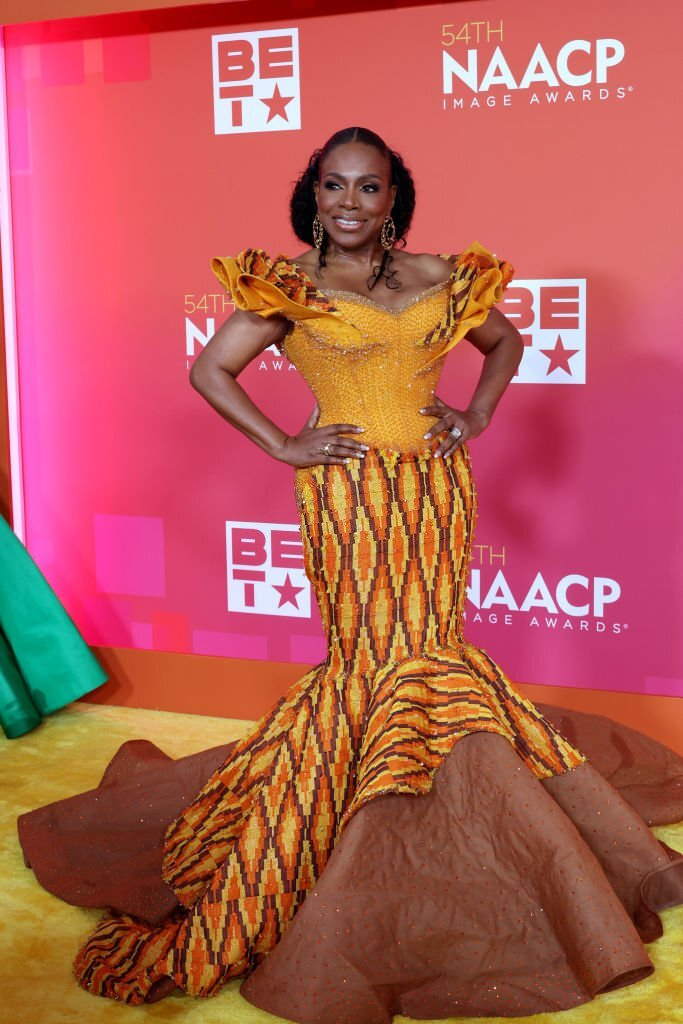
We are living through a quiet revolution in global fashion. You can call it the “Kente Clause”—an unwritten rule that says if you want to make a statement about power, heritage, or identity on a world stage, you are now likely to do it in Ghanaian cloth. Whether it is a Duchess stepping out in a handwoven stole, a musician accepting a Grammy in bold print, or an artist using recycled wood to tell stories of the diaspora, Ghanaian textiles are no longer just “traditional attire.” They have become the new language of luxury and political weight.
The Royal Seal: More Than Just a Pattern
When Meghan Markle walked into the Africa Centre in London in 2022 wearing a custom shirt dress in a vibrant kente print, the internet did what it always does—it debated the politics of it. Was it appreciation? Appropriation? A calculated nod?
But for those who know the fabric, the story went deeper than the headlines. Kente is not a generic “African print.” It is a textile with royal blood. Historically, certain patterns, such as Adweneasa (meaning “my skills are exhausted”), were reserved for the highest officeholders. When Meghan wore it, she wasn’t just acknowledging a continent; she was tapping into a visual history of sovereignty.
This is the shift we are seeing. In the past, African textiles on Western bodies were often anthropological curiosities. Today, when celebrities choose a custom kente gown over a standard Versace slip dress, they are rewriting the dress code of celebrity. They are saying that heritage has more currency than hype.
Weaving a New Economy
This global hunger for authenticity isn’t just about red carpet photos; it is sending ripples back to the weavers’ villages. For a long time, the people who actually made these masterpieces were the invisible hands behind the luxury. That is changing.
Take the recent announcement from Ghana’s Foreign Minister, Samuel Okudzeto Ablakwa. He revealed that ECOWAS foreign ministers have specifically requested fugu (smocks) made in their national colours for upcoming summits. Think about that. Diplomats, whose uniform is usually a stiff suit and tie, are choosing to sit around negotiation tables wrapped in Ghanaian handiwork. This isn’t fashion; this is soft power.
We are also seeing institutional efforts to protect this legacy. The launch of the Royal Kente Gala 2025 in Kumasi, held with the blessing of the Asantehene, is a direct response to the global demand. The mission is twofold: to preserve the sacred traditions by building modern weaving centres in communities like Adanwomase, and to ensure that when the world comes calling for kente, it is the authentic, handwoven product—not a mass-produced imitation—that answers. As Kwame Nyame of ROKWESA put it, “It is our story, pride, and legacy”.
The Diaspora Comes Home
The most interesting part of this story, however, isn’t happening on a runway or at a diplomatic gathering. It is happening in the hands of artists reinterpreting the cloth itself.
Consider the work of Ato Ribeiro, exhibited at the Museum of Contemporary Art of Georgia. Ribeiro doesn’t weave with thread; he weaves with discarded wood scraps collected from carpentry workshops. By translating Kente patterns like ntata (chevron) into wooden sculptures, he comments on the extraction of African resources while simultaneously building a bridge for the diaspora. He uses the grid of Kente—traditionally a fabric for royalty—as a “framework upon which to weave diasporic stories” .
This is the “Kente Clause” in its purest form. It is a clause that grants permission to Black people everywhere to claim a piece of the throne. When a young professional in Atlanta wears a kente stole at their graduation, they are participating in a tradition that was once the exclusive domain of kings, re-purposed for a new generation of leaders .
Appreciation vs. Appropriation
Of course, with great exposure comes great risk. When Virgil Abloh used kente patterns in his Louis Vuitton menswear, it sparked a fierce debate. Abloh, whose grandmother was Ghanaian, defended the collection by saying, “Provenance is reality; ownership is a myth”.
But for the weavers back home, ownership isn’t a myth—it is their livelihood. The Ghanaian market is flooded with cheaper, machine-printed versions made in China, which undercuts the labor-intensive work of master weavers who spend weeks on a single cloth. This is why initiatives like the proposed BataKente concept are so crucial. By pushing for certification and standardization, Ghana is fighting to ensure that when the world buys “Kente,” it is buying the real story, not a cheap copy.
The Fabric of the Future
So, what happens when a textile moves from the palace to the global stage?
The future looks like Aristide Loua’s brand, Kente Gentlemen. An Ivorian designer showing at Lagos Fashion Week, Loua uses hand-crafted fabrics from weaving communities and gives them silhouettes that could walk down any street in Tokyo or New York. It looks like weavers in Agotime are embracing ICT skills to design patterns that appeal to modern weddings and celebrations, proving that tradition isn’t static—it evolves.
Ghanaian textiles are no longer just something you wear to a funeral or a wedding at home. They have become a diplomatic tool, a red-carpet statement, and a canvas for diasporic healing. The “Kente Clause” ensures that in a world hungry for meaning, the cloth woven by our ancestors will continue to dress the future.

We often judge the effectiveness of a workout by how much we sweat or how sore we feel the next day, but the real magic often happens in the quiet, steady work we do to build a strong foundation. When we talk about “core exercises,” it’s easy to picture someone doing hundreds of crunches on a gym mat. However, the benefits of a strong midsection extend far beyond the aesthetic; they are the biological engine for nearly every move you make.
1. The Ultimate Postural Support System
In a world where we spend hours hunched over laptops and smartphones, our posture is under constant assault. Core exercises act as a corrective suit of armor for your spine. By strengthening the deep muscles surrounding your trunk—including the transverse abdominis and obliques—you naturally pull your shoulders back and align your pelvis. This doesn’t just make you look taller and more confident; it prevents the chronic back pain that plagues millions.
2. Supercharging Everyday Life
Have you ever felt a “tweak” in your back just from lifting a grocery bag or bending down to tie your shoes? That is a cry for core strength. When your core is engaged, it stabilizes your entire torso, allowing your arms and legs to work more efficiently. Think of your core as the cable that stabilizes a radio tower; without it, the structure wobbles. With it, you can lift, twist, and reach with power and safety.
3. The Foundation of Athletic Power
Whether you are a weekend warrior on the tennis court or a runner trying to shave seconds off your mile time, power is generated from the center out. A strong core allows for a more efficient transfer of energy between your lower and upper body. Every punch thrown by a boxer and every swing of a golf club relies on a rotational force that starts deep in the hips and torso. If that center is weak, your power leaks out before it ever reaches your limbs.
4. Balance and Stability as You Age
Core work is the secret to aging gracefully. As we get older, balance is one of the first things to decline, leading to a fear of falling. A strong core improves proprioception—your brain’s ability to know where your body is in space. This translates to steady footing on uneven sidewalks and the ability to catch yourself if you trip.
The Hidden Link: Core Strength and Fat Loss
While a strong core is vital for structure, it also plays a fascinating role in changing your body composition. If your goal is to lean out, here is how strengthening this area helps.
1. You Move Better, So You Burn More
When your core is weak, your body inhibits certain movements to protect itself from injury. You might run slower or avoid certain exercises because they feel “awkward.” A strong core removes these physical inhibitors, allowing you to push harder and longer in your cardio and strength sessions, ultimately torching more calories.
2. Increased Muscle Mass = Higher Metabolism
While you can’t spot-reduce fat from your belly, you can build muscle underneath the fat. Core exercises often involve compound movements (like planks or standing presses) that recruit multiple muscle groups. Increasing this lean muscle mass elevates your resting metabolic rate, meaning you burn more calories even when you’re sitting on the couch.
3. The “Tightening” Effect
When you strengthen the rectus abdominis and transverse abdominis, you are essentially creating a natural “corset” for your torso. As you lose body fat through a caloric deficit, the toned muscle underneath reveals a tighter, leaner appearance. You aren’t just getting smaller; you are getting more defined.
4. Better Digestion and De-Stressing
High-intensity core work stimulates blood flow to the digestive organs. Furthermore, the focus required to hold a plank or balance on a stability ball activates the parasympathetic nervous system, reducing cortisol levels. Lower cortisol means less stress-induced fat storage around the midsection.
Conclusion
Core training is the ultimate long-game investment in your health. It is the bridge between the upper and lower body, the guardian of your spine, and the secret weapon in your fitness journey. So, the next time you drop to the mat for a plank, remember: you aren’t just working toward a six-pack; you are building a resilient, powerful, and efficient body for life.
The first time I saw a woman escorted from a funeral grounds for wearing the wrong earrings, I understood something profound: in Ghana, jewelry isn’t just decoration—it’s a language of respect. And right now, as the nation prepares for the final funeral rites of the late Asantehemaa, Nana Konadu Yiadom III, that language matters more than ever.
Let’s talk about the gold-and-silver dilemma haunting dressing tables across Accra this week.
The Great Metal Debate
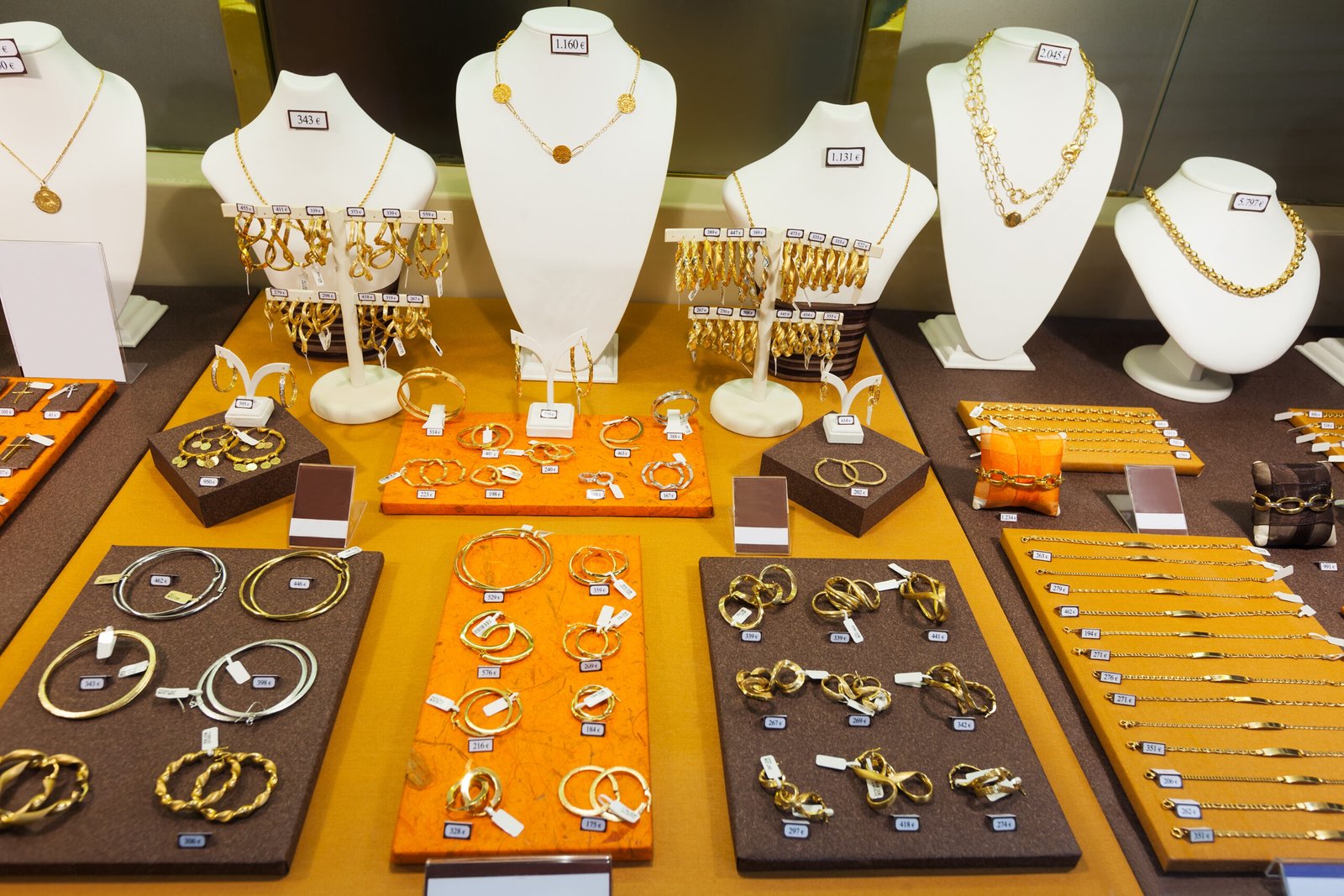
For years, we were told never to mix gold and silver. Fashion magazines insisted you pick a team and stick to it. But style has grown up, and so have we. The trick lies in balance—letting one metal lead while the other whispers. A chunky gold necklace paired with delicate silver studs creates intentional contrast rather than careless clutter. Think of them as conversation partners, not combatants.
But here’s where the funeral factor changes everything.
The Asante Traditional Council just issued firm directives for the upcoming funeral: no big earrings, no anklets, no loud hairstyles cluttered with accessories. This isn’t about stifling style—it’s about honouring grief. When a nation mourns, humility dresses the part.
Red and black speak louder than diamonds.
For close relatives, kobene—the red mourning cloth—signals profound loss . The wider mourning family wears black, with women tying simple cloth and wrapping their heads in modest duku . In these moments, your jewelry should support the story, not compete with it. Dark pearl earrings. A thin gold chain tucked beneath your collar. Nothing that catches light when your eyes should be downcast .
The age of the deceased writes the dress code.
Under seventy? Black rules. Above seventy? Black and white honours a life well-lived. Past eighty? White celebrates a journey completed . Your metals should follow this palette—silver companions black beautifully, while gold warms the whites and browns.
What I’ve learned watching mourners navigate these waters:
When my own uncle passed, I stood before my jewelry box paralyzed. Too bright, my mother warned of my pearl earrings. But my dad nodded approval, and they stayed . That tension—between self-expression and collective mourning—is where Ghanaian funeral fashion lives.
The safest path? Small studs in either metal. A single thin chain. Nothing that jingles when you walk or catches the afternoon sun. If you must mix metals, keep them close to the body and quiet in spirit.
Because here’s the truth funerals teach us:
Your outfit speaks before you do. At weddings, let your jewelry sing. At festivals, let it dance. But at funerals—especially royal ones where tradition guards the gates—let your metals whisper respect. The Asantehemaa’s farewell demands nothing less.
When in doubt, ask a Ghanaian auntie. She’ll tell you straight: some occasions call for gold, others for silver, and some call for setting both aside entirely. Wisdom is knowing the difference.


UK Black Stars Launched to Honor Influential British-Ghanaians as Ghana Turns 69

Ghanaians and Other Africans in UAE Flood Social Media with Videos as Iranian Missile Strikes Hit Dubai

Ghana Maintains Over 5 Weeks of Fuel Stock Amid Middle East Tensions and Other Trending Topics in Ghana (March 2, 2026)
-

 Ghana News1 day ago
Ghanaian’s Terrifying Experience as Missile Explodes Amid Escalating Middle East Tensions and Other Trending Topics in Ghana (March 1, 2026)
-

 Ghana News1 day ago
Ghana’s Black Queens Stranded in UAE as Government Initiates Partial Evacuation from Tehran Embassy Amid Escalating Israel-Iran Conflict
-
 Ghana News6 hours ago
Ghana Maintains Over 5 Weeks of Fuel Stock Amid Middle East Tensions and Other Trending Topics in Ghana (March 2, 2026)
-

 Ghana News1 day ago
7 Ways the Escalating Middle East Crisis Could Hit Home in Ghana
-
 From the Diaspora5 hours ago
Ghanaians and Other Africans in UAE Flood Social Media with Videos as Iranian Missile Strikes Hit Dubai
-

 Ghana News6 hours ago
Newspaper Headlines Today: Monday, March 2, 2026
-

 Africa Watch22 hours ago
How African Nations Are Evacuating Their Nationals Amid the Escalating Middle East Crisis
-

 From the Diaspora1 day ago
Ghanaian-Heritage Scientist AJ Addae Develops Breakthrough Sunscreen That Protects Darker Skin Without White Cast