
Business
These are the 17 Reforms in Ghana’s Cocoa Sector Announced by the Minister Yesterday

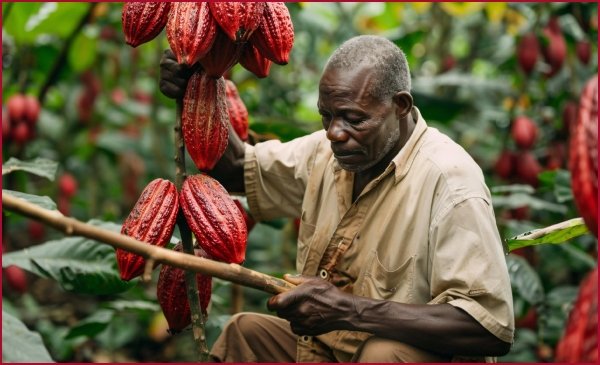
Yesterday, Thursday, February 12, 2026, Finance Minister Dr. Cassiel Ato Forson stood before the nation and did something unprecedented: he named the rot, itemized the failures, and then—piece by piece—laid out a rescue plan for Ghana’s battered cocoa sector.
With thousands of farmers unpaid since November 2025, 50,000 metric tonnes of cocoa stranded at port, and COCOBOD buried under GH¢5.8 billion in legacy debt, the emergency Cabinet meeting on February 11 that preceded his press conference wasn’t a policy retreat. It was a rescue mission.
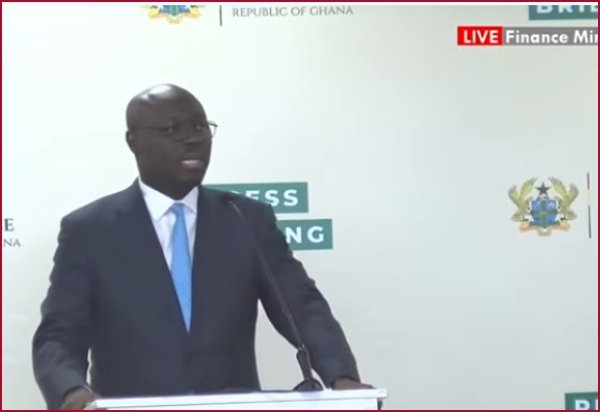
Here are the 17 reforms the Minister announced—and what they actually mean for the farmer, the sector, and the future of Ghanaian cocoa.
1. Immediate Payment to All Affected Cocoa Farmers
“Cabinet has accordingly directed the Ghana Cocoa Board to commence immediate payment of all affected cocoa farmers.”
No committees. No feasibility studies. No “further consultations.” The directive is active. COCOBOD has been ordered to pay—now. Farmers who haven’t seen a cedi since November 2025 are first in line.
2. New COCOBOD Bill to Automate Producer Price Adjustments
The current system allows a CEO to decide what a farmer earns. That ends.
The incoming Cocoa Board Bill will legislate automatic price adjustments tied to three variables: world market price, exchange rate, and other key indicators. No more discretion. No more negotiation. The formula becomes law.
3. 70% Minimum FOB Guarantee—Locked in Legislation
This is the headline. Cabinet has approved a minimum 70% of gross FOB price to be paid to the cocoa farmer.
Not a promise. Not a target. A floor, written into law. When global prices rise, the farmer’s income rises with it—automatically, immediately, and without political intervention.
4. 90% Interim Relief for the Remainder of 2025/2026
Because reforms take time but farmers eat daily, the Producer Price Review Committee met yesterday afternoon ahead of the presser and approved an emergency 90% of achieved gross FOB for the rest of this crop season.
At $4,200 per ton and the prevailing exchange rate, that translates to GH¢41,392 per ton and GH¢2,587 per bag—effective immediately.
5. A New Financing Model: Cocoa Bonds, Not Syndicated Loans
The 32-year-old syndicated loan model is dead. In its place: domestic cocoa bonds.
COCOBOD will issue bonds to raise a revolving fund for cocoa purchases, repayable within each crop year. The goal is independence from buyer financing and the predatory contract terms that came with it.
6. Revival of PBC (Produce Buying Company) as Market Leader
State-owned PBC has been “completely thrown out of business” under the old model. Cabinet has ordered its immediate revival to become the leading Licensed Buying Company in Ghana.
This is not symbolism. This is the state re-entering the buying space to stabilize competition and protect farmers.
7. 50% Minimum Domestic Processing Mandate
Beginning in the 2026/2027 crop season, a minimum of 50% of all cocoa beans must be processed locally.
This will be encoded in the new COCOBOD Bill. No more exporting raw beans while Ghanaian factories sit idle.
8. Immediate Allocation of Remainder Beans to Domestic Processors
For the current crop year, Cabinet has directed that all remaining beans be allocated to local processing companies.
The Minister confirmed that private processors met with him and the Trade Minister yesterday morning and “indicated they have the capacity and willingness to process more than 50% of Ghana’s cocoa beans going forward.”
9. Revival of CPC (Cocoa Processing Company) as Lead Processor
CPC will be revamped as a matter of priority to become Ghana’s flagship cocoa processor.
The Minister did not put a price tag on the revamp, stating operational details will be announced by CPC’s board and management. But the directive is clear: CPC will no longer be an afterthought.
10. GH¢5.8 Billion Legacy Debt Conversion to Ministry of Finance and Bank of Ghana
COCOBOD currently owes:
- GH¢3.7 billion to the Ministry of Finance
- GH¢1.38 billion to the Bank of Ghana
Cabinet has directed that this GH¢5.8 billion be converted onto the books of MoF and BoG to restore COCOBOD’s positive equity and strengthen its balance sheet for the new financing model.
11. GH¢4.35 Billion Road Debt Transferred to Ministries
Between 2014 and 2024, COCOBOD awarded GH¢26.5 billion in road contracts—GH¢21.5 billion between 2018 and 2021 alone.
After a rationalization exercise supervised by the Ministry of Finance and Ministry of Roads, the exposure has been reduced from GH¢21.7 billion to GH¢4.35 billion. Cabinet has directed that this remaining liability be transferred to the Ministry of Roads and Ministry of Finance for payment.
12. COCOBOD Banned from Quasi-Fiscal Expenditures—With Punishments
This is a line-item revolution.
The new Cocoa Board Bill will prohibit COCOBOD from road construction and other non-core expenditures entirely. And here’s the kicker: it will come with punishment if they ever do so.
No more using cocoa money to build roads. No more “special requests.” The board’s job is cocoa. Nothing else.
13. $500 Million World Bank Facility for Cocoa Roads
Announced in the 2026 budget, this facility will take over the construction of cocoa roads entirely.
Roads will still be built. Farmers will still access their farms. But COCOBOD will no longer finance them, and the Ministry of Roads will be accountable for delivery.
14. Concurrent Forensic Audit and Criminal Investigation
Cabinet has directed the Attorney General to commission concurrent forensic audit and criminal investigation into COCOBOD’s activities over the last 8 years.
Not an internal review. Not a “special audit” filed away in a drawer. A criminal investigation, running parallel to financial forensics, with the full weight of the Office of the Attorney General.
15. Immediate Operational Reforms and Cost-Cutting
“Wasteful and uncontrolled expenditure practices are to be curbed immediately.”
Cabinet has directed the Ministry of Finance to initiate immediate reforms at COCOBOD to streamline operations and cut costs. No specific figures were attached, but the directive is unambiguous: the era of unchecked spending ends now.
16. Jute Sacks Mismanagement Referred for Investigation
Responding to a journalist’s question about 18 containers of cocoa jute sacks stranded at port and a fresh $48 million letter of credit opened for unclaimed sacks, the Minister confirmed the matter is part of the Attorney General’s investigation.
“For five years in a row, all the previous administration did was buy jute sacks, not clear them, and order a new set,” Forson said. “It was more or less a procurement agenda, not buying to bag cocoa.”
17. New Producer Price Announced: GH¢41,392/Ton
Effective Thursday, February 12, 2026, the producer price for the remainder of the 2025/2026 crop season is:
- GH¢41,392 per metric ton
- GH¢2,587 per bag of 64kg
This represents 90% of the achieved gross FOB of $4,200 per ton—a deliberate cushion against the global price collapse while maintaining sector sustainability.
“Never Again”: A New Era?
At least four times during the press conference, the Minister returned to the same phrase: “Never again.”
Never again will a CEO have the power to cheat the farmer. Never again will a board chair determine who gets paid and who doesn’t. Never again will cocoa money build roads while farmers cannot afford school fees.
“Unfortunately, in the past, when the world market price moved up, the cocoa farmer did not benefit,” Forson said. “When the exchange rate depreciated, the cocoa farmer did not benefit. Never again should this practice be allowed to persist.”
The reforms announced yesterday are not merely administrative. They are structural. They are legislative. And if implemented, they will fundamentally rewire who cocoa works for in Ghana.









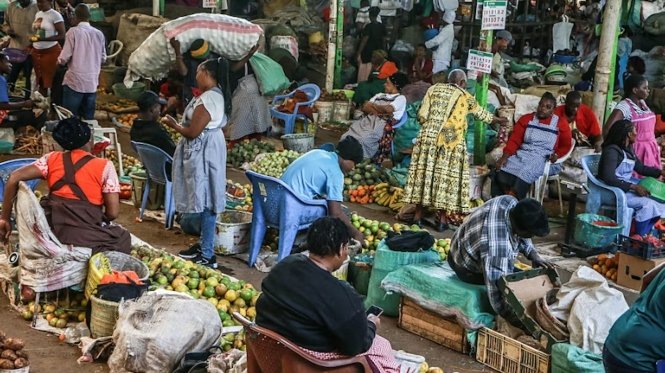
Four leading African and global development institutions have issued a stark joint warning that the escalating Middle East conflict is transmitting economic shocks to Africa faster and more intensely than previous global disruptions, potentially shaving at least 0.2 percentage points off the continent’s GDP growth in 2026 if the crisis lasts beyond six months.
The African Development Bank Group (AfDB), African Union Commission (AUC), United Nations Development Programme (UNDP), and United Nations Economic Commission for Africa (UNECA) released the policy brief on April 2, 2026, on the sidelines of the 58th Session of the Economic Commission for Africa.
The brief highlights surging fuel and food prices, higher shipping and insurance costs, exchange rate pressures, and tightening fiscal space as the main transmission channels.
Oil prices have already risen by 50% since the conflict intensified, while disruptions to the Strait of Hormuz — which handles about 20% of global oil exports — have drastically reduced traffic. The Middle East accounts for 15.8% of Africa’s imports and 10.9% of its exports.
The brief identifies fertilizer supply disruptions as potentially even more damaging than the oil shock for some countries, as reduced Gulf LNG supply affects ammonia and urea production during the critical planting season. Currencies in 29 African countries have already depreciated, raising debt servicing costs and making imports more expensive.
Particularly vulnerable nations include Senegal, Sudan, Cabo Verde, South Sudan, and The Gambia. However, some countries may see limited gains: Nigeria from higher oil prices and refined exports via the Dangote Refinery, Mozambique from LNG opportunities, and ports in South Africa, Namibia, Mauritius, and Kenya from rerouted shipping.
The institutions called for immediate coordinated action, including pooled fuel procurement, emergency food corridors, diversified fertilizer sourcing, and targeted social protection.
In the medium to long term, they urged accelerated renewable energy deployment, deeper AfCFTA integration, and the creation of a Continental Crisis and Resilience Compact focused on energy and food security, financial safety nets, and greater strategic autonomy.
This coordinated alert from Africa’s premier development bodies underscores the urgent need for the continent to move beyond reactive measures toward structural solutions that build long-term resilience against global shocks.
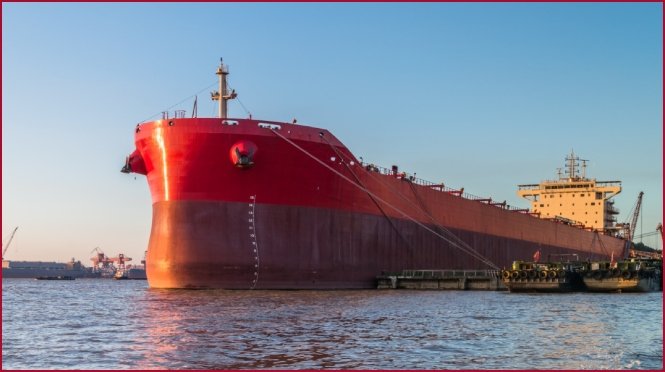
Accra, Ghana – As global fuel markets face severe disruptions from escalating tensions involving Iran and the potential closure of key shipping routes like the Strait of Hormuz, Ghana is emerging as one of the more insulated economies in Africa by diversifying its energy supplies, including through increased imports from Russia.
A tanker carrying approximately 320,000 barrels of refined petroleum products from Russia is currently en route to Ghana’s main oil hub in Tema, per a report by Business Insider Africa. The vessel, Hellas Fighter, loaded at Vysotsk and last tracked passing Mauritania, is expected to arrive on April 6. This shipment reflects Ghana’s pragmatic strategy to widen its supplier base amid uncertainty in traditional supply chains.
President John Dramani Mahama recently stated that Ghana currently has enough petroleum stocks to last about six weeks. Speaking at the World Affairs Council in Philadelphia, he acknowledged that fuel prices affect virtually every sector of the economy but assured that the government is taking steps to cushion the impact and secure additional supplies.
“We are making a real push to ensure that the economy is cushioned,” Mahama said, while expressing hope that “cooler heads will prevail” in the ongoing crisis.
The move toward Russian fuel highlights a broader shift across parts of Africa, where countries are actively diversifying sources to mitigate risks from global shocks, shipping disruptions, and price volatility.
While many sub-Saharan nations remain highly vulnerable due to heavy reliance on imports and foreign exchange constraints, Ghana’s approach demonstrates an effort to maintain stability through strategic sourcing.
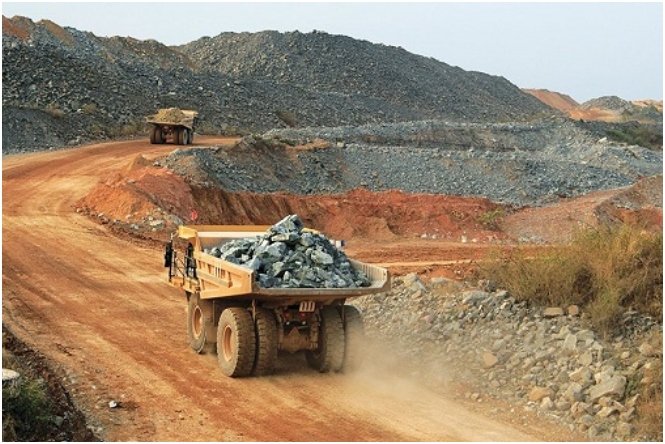
Accra, Ghana – Ghana has limited the tender process for the takeover of Gold Fields Ltd.’s Damang gold mine to companies that are 100% owned by Ghanaian citizens, as the government prepares to assume full control of the asset in April 2026.
The decision, outlined in a notice dated March 24 and signed by Lands and Natural Resources Minister Emmanuel Armah-Kofi Buah, reflects the country’s broader push to increase local ownership and participation in its mining sector. The deadline for submitting offers is Tuesday, March 31, 2026.
Gold Fields, which has operated Damang for nearly 30 years, saw its mining lease expire last year. The government granted a 12-month extension to ensure a smooth transition, during which the company restarted mining activities and submitted a detailed feasibility study to extend the mine’s operational life. Damang produced 88,000 ounces of gold last year.
Under the tender requirements, the successful bidder must have proven experience in open-pit gold mining, the capacity to operate the mine for at least another decade, and access to more than $500 million in funding for project development. The eventual owner will take over the asset on April 18.
This move aligns with a continental trend of African governments seeking greater control and revenue shares from their natural resources. In Ghana, major mines are still largely owned by multinational companies such as AngloGold Ashanti, Newmont, and China’s Zijin Mining. The Damang transition is being watched closely as a test case for increasing indigenous involvement in the sector.
Gold Fields is also negotiating a lease extension for its larger Tarkwa operation. Since 2000, the company has invested approximately $5 billion in its Ghanaian operations and contributed around $2.9 billion to the state through taxes, royalties, and dividends. It currently employs more than 7,000 people in the country, 99% of whom are Ghanaian nationals.


Renowned Global Bodies Warn Middle East War Will Scuttle Africa’s 2026 Growth

Ex-President Akufo-Addo and President Mahama Exchange Pleasantries on Easter

Mahama Calls Christ’s Birthplace an ‘Epicentre of War’, New Airport Concourse Planned and Other Big Stories in Ghana Today
-
 Ghana News1 day ago
Ghana President Convenes Emergency Cabinet Meeting to Cushion Ghanaians from Soaring Fuel Prices
-
 Ghana News1 day ago
Mahama Calls Christ’s Birthplace an ‘Epicentre of War’, New Airport Concourse Planned and Other Big Stories in Ghana Today
-
 Ghana News1 day ago
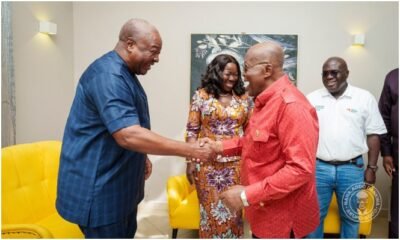
Ex-President Akufo-Addo and President Mahama Exchange Pleasantries on Easter
-
 Business1 day ago
Renowned Global Bodies Warn Middle East War Will Scuttle Africa’s 2026 Growth