
Perspectives
Activists in Ghana are Forcing Extractive Firms to Account for the Harm They Cause

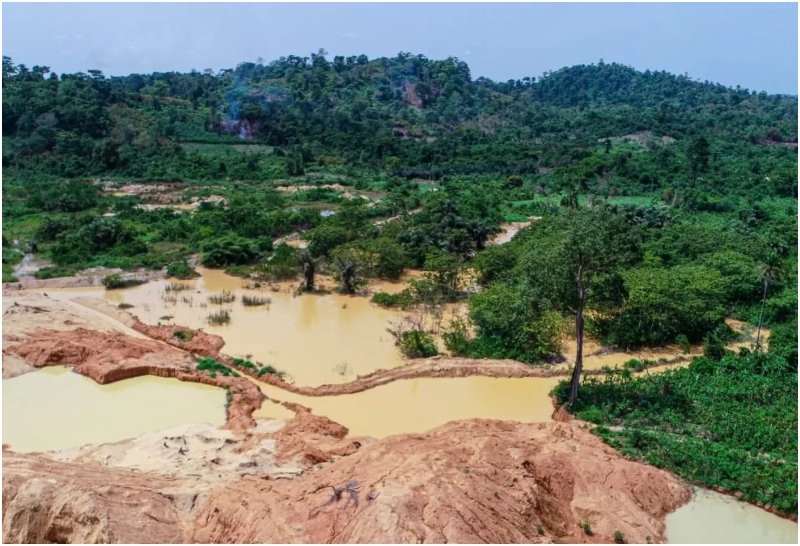
Activists in Ghana are increasingly holding extractive companies accountable for environmental damage, human rights abuses, and community harm through grassroots campaigns, legal challenges, and public pressure. A new study published in The Conversation highlights how these efforts—often led by local communities, NGOs, and affected residents—are compelling mining, oil, and gas firms to address corporate misconduct, pay compensation, remediate polluted sites, and improve practices, despite weak enforcement of existing laws and limited state oversight.
Activists in Ghana are Forcing Extractive Firms to Account for the Harm They Cause – Corporate Abuse Study
Cynthia Kwakyewah, York University, Canada
Ghana has a long history of resource extraction that has caused socioeconomic and ecological harm. The mining of gold, stones, sand and salt has displaced people, polluted the environment and destroyed livelihoods. It’s commonly believed that this continues to happen, with impunity.
But recent developments reveal a more complex reality.
As a global sociologist who specialises in human rights, corporate social responsibility and sustainable development, I mapped out the patterns of corporate abuse in Ghana’s mining, oil and gas sectors. I also looked at the strategies that local actors are using to push the state to act against firms violating their rights.
My findings show that a subtle shift is taking place in Ghana. Civil society organisations, administrative bodies and courts are changing the accountability landscape. Between 2000 and 2020, 27 human rights-related lawsuits and complaints were filed against extractive sector companies in Ghana.
The Ghanaian experience offers insights for other African countries:
- there are remedies even in environments that have weak regulations
- social activism that combines accountability with moral persuasion and legal enforcement can yield results
- African actors are producers of innovative accountability practices.
Ways to address corporate impunity and give victims access to remedies don’t have to come from the global north alone.
Violations
The study involved creating a new database of recorded allegations of corporate abuses, where the victims were in mining, oil and gas communities. The material came from the Business and Human Rights Resource Centre digital archive, a repository of complaints reported by NGOs and government institutions globally, primarily through media coverage. I then added material drawn from reputable local organisations that process complaints, petitions or lawsuits about corporate violations. I also interviewed representatives of civil society organisations and public officials.
I found that 83% of the allegations of corporate abuses were the result of the (in)actions of extractive sector firms. This contradicts the perception that most corporate human rights violations, in terms of numbers and severity, involve multinationals enabling a host government to carry out abuses.
Global reports often emphasise corruption, lack of transparency, intimidation and labour abuse. But the Ghanaian data point to a different corporate abuse pattern. Many allegations (50%) in Ghana’s natural resource sectors pertain to economic, social, cultural and solidarity rights violations. Many involve inadequate compensation to subsistence farmers for the loss of land or crops. These losses tend to mean erosion of livelihoods. Members of mining-affected communities have also reported experiences of forceful displacement.
Physical abuse allegations made up 28% of the cases; environment-related allegations comprised 15%. Health (5%) and labour (3%) related allegations were the smallest share.
Social activism
My analysis showed that Ghanaian civil society organisations have taken on roles almost like regulators. Examples include the Centre for Public Interest Law (Cepil), a human rights and environmental mining advocacy NGO called Wacam, the Centre for Environmental Impact Analysis and Third World Network-Africa.
In the absence of robust state regulations, these organisations have stepped in to fill a governance void. They document corporate misbehaviour, mobilise communities, and pursue redress through administrative and judicial channels.
Through “naming and shaming”, coalition-building, and selective litigation, they push corporations and regulatory institutions to act. For instance, following cyanide spill incidents, Wacam and Cepil combined community mobilisations with legal petitions that prompted sanctions.
Tangible outcomes
The strategic combination of activism and institutional engagement has produced tangible outcomes. Community petitions have led to company-funded remediation and fines for environmental damage. Successful court cases have compelled companies to compensate households for pollution. These outcomes illustrate how local actors are carrying out the state duty to protect and the corporate responsibility to respect human rights in pragmatic, context-driven ways.
Administrative mechanisms
Courts remain crucial in settling disputes. But administrative bodies are becoming more important. The Commission on Human Rights and Administrative Justice, which has the power to investigate human-rights violations and recommend remedies, has emerged as a trusted intermediary between communities and corporations. Its inquiries into mining-related abuses have resulted in negotiated settlements. Companies have also agreed to restore contaminated lands or water sources. These mechanisms provide redress without long legal battles.
The Environmental Protection Agency enforcement role has also expanded. In several cases, it imposed monetary penalties and temporary suspensions on companies that breached environmental permits. Such administrative measures show what can be done without going through the courts.
Judicial recognition of rights
When administrative engagement fails, civil society organisations escalate cases to the judiciary. Ghanaian courts have begun to recognise socioeconomic and environmental rights claims. These are grounded in the constitution and the Environmental Protection Agency Act.
In a notable case, a citizen urged Cepil to take legal action against a state-owned refinery for its oil spillage in a lake called Chemu Lagoon. Because environmental damage affects the public, Cepil had enough legal grounds to file a lawsuit. The ruling was in the organisation’s favour, preventing the company from legally causing further environmental pollution. Cases like this help victims and strengthen the foundations for future claims.
Strategic alliances
Grassroots activism, civil society alliances and state responsiveness can together achieve “accountability from below”. Even less powerful people can create and sustain accountability by engaging with both formal and informal institutions.
In Ghana, alliances across sectors force corporations and regulators to act, even where there isn’t strong top-down enforcement. These alliances demonstrate that local agency, not merely external pressure, can influence corporate behaviour.
Cynthia Kwakyewah, Course Director in Social Science, York University, Canada
This article is republished from The Conversation under a Creative Commons license. Read the original article.

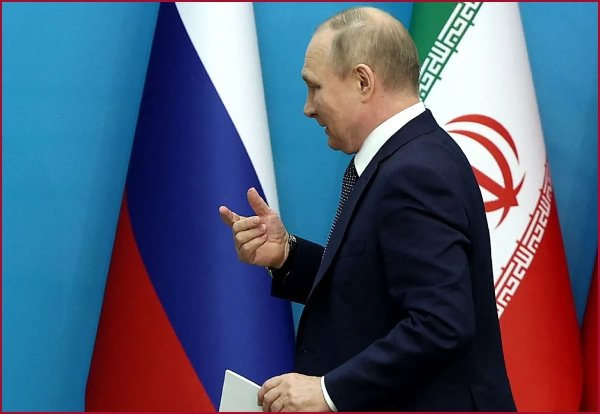
Can Moscow host Africa under drone threat? As Moscow prepares to welcome African leaders to the third Russia-Africa Summit on October 28 to 29, Ukrainian drone strikes have reportedly hit Yandex data centres and targeted the capital region, exposing a delicate contradiction at the heart of the gathering. Russia pitches itself as Africa’s security partner while its own infrastructure proves vulnerable. In this opinion piece, analyst Joseph McCarthy examines the security dilemma facing both Moscow and African governments, arguing that leaders weighing the trip must confront a deeper question: what does it mean to tie your nation’s safety to a partner that is itself under sustained attack? Read the full article below.
Yandex Strikes: Can Moscow Host Africa Under Drone Threat?
Moscow pitches itself as Africa’s security partner while its own infrastructure is exposed
By Joseph McCarthy · Analyst, Sahel governance & security
| 3YANDEX DATA CENTRES REPORTEDLY STRUCK, 8–11 OCT | 650DRONES STRUCK MOSCOW REGION, 6 OCT | 28–29 OctTHIRD RUSSIA-AFRICA SUMMIT, MOSCOW |
Every summit is a performance of strength. The third Russia-Africa Summit, due in Moscow on 28 and 29 October, is meant to show African leaders that Russia remains a confident, well-connected partner despite sanctions, isolation and a costly war. Between 8 and 11 October, Ukrainian drones complicated that script. Three data centres operated by Yandex, the technology giant behind much of Russia’s digital economy, were reportedly struck in the Ryazan, Kaluga and Vladimir regions. For Moscow and for its African guests, the episode poses a security dilemma that no communiqué will resolve.
The first attack, on the night of 7 to 8 October, reportedly set fire to a facility in Sasovo, in Ryazan region, and suspended operations. A second strike hit a site in Kaluga; a third, in Vladimir region, followed on 11 October. Yandex runs payments, email, navigation, ride-hailing, delivery and cloud computing, so the effects spread quickly. Meduza reported disruptions to Yandex Pay, Mail, Disk and Go, while businesses that depend on Yandex Cloud described outages of their own. One user told the outlet: “All my money is on Yandex, so I have no money for food.” The company says customers’ funds are safe, but the episode shows how one point of failure can become hardship for ordinary people within hours.
Recovery may be slow. Reports suggest that replacing specialised equipment could take months, and Russian officials have reportedly acknowledged the difficulty. That matters beyond one company. Moscow has spent years encouraging reliance on domestic platforms as Western technology withdrew. The Yandex strikes show that domestic ownership is not the same as security. Technological sovereignty also means being able to protect, maintain and restore systems under attack.
Moscow will call such strikes aggression against civilian targets. Yet they come after years of Russian missile and drone attacks on Ukrainian cities and energy infrastructure, so the exposure Russia now faces cannot be separated from the war it chose to launch. That context does not make the risk to visitors any smaller; it explains why it is unlikely to disappear before the summit.
Here lies the first half of the dilemma, and it is Moscow’s. Hosting African leaders in the capital is a statement of confidence, but it also puts that confidence on display. Russia must keep airspace open, transport moving and digital systems running while the war reaches ever deeper into its territory. On 20 September, roughly 450 drones were reportedly aimed at the capital; on 6 October, around 650 struck the Moscow region. Every intercept shows that defences work. Every strike that lands, and every airport closure, suggests the opposite. The summit cannot merely proceed; it must avoid becoming a showcase for exposure. Moscow will almost certainly respond with heavy security, restricted airspace and tightly managed movement. That may protect delegates, but it also turns the gathering into a fortress, held in spite of the war rather than in a country at ease with itself.
None of this proves that Russia cannot protect the summit. Vulnerability to long-range drones is not the same as losing the ability to defend territory, and the more widely a country’s civilian and commercial infrastructure is distributed, the harder it is to shield. Delegations may well land, meet and leave without incident. But that is a probability, not a guarantee, and guarantees are precisely what Russia is selling.
That brings us to the second half of the dilemma, which belongs to African governments. The immediate question is personal safety. In early September, Air Tanzania suspended its Dar es Salaam to Moscow route after a risk assessment, then resumed it days later. Further attacks could prompt airspace restrictions, diversions and tighter security that complicate movement between airports, hotels and venues. These are scenarios, not confirmed disruptions, yet every government weighing the trip must price them in, including the level at which it chooses to be represented.
The deeper question is strategic. Security cooperation is the core of Russia’s offer to Africa: Moscow says it has military agreements with more than 40 African states, and Russian security personnel are embedded in countries such as Mali and the Central African Republic. Governments that rely on that protection are tying their own security to a partner that is itself under sustained attack. A security provider at war is also a provider that is stretched, distracted and targeted. The more a government leans on Russia to guarantee its safety, the more it imports the risks of Russia’s war.
“The more a government leans on Russia to guarantee its safety, the more it imports the risks of Russia’s war.”
Call it a dilemma of dependence. The relationship meant to be a source of protection can become a channel for exposure, and the closer the embrace, the harder it is to step back.
What should African governments do? Engage, but with open eyes. They can ask for written security and contingency arrangements for their delegations, diversify their security partnerships so that no single patron’s vulnerability becomes their own, and insist that cooperation strengthens national institutions rather than simply protecting incumbent governments. Strategic autonomy means having choices. It does not mean choosing between Moscow and everyone else, or accepting one patron’s risks as the price of its protection.
The Kremlin wants the summit to show that sanctions have not isolated Russia. The Yandex strikes complicate that message without defeating it. They pose a simple test for any partner who offers security: can it secure itself? The answer will not come from speeches in Moscow. It will come from whether the summit runs smoothly, and from what follows. Until then, African leaders have every reason to listen politely, travel carefully and commit slowly.
■
Joseph McCarthy is an analyst and researcher specialising in governance, security and political transitions in the Sahel. He writes on geopolitics, development and African diplomacy. joecarthy30@gmail.com
Perspectives
Policy Brief: ‘A Test of Agency: Ghana’s BRICS Application and the Future of Strategic Diversification’ | By Col Festus Aboagye (rtd)
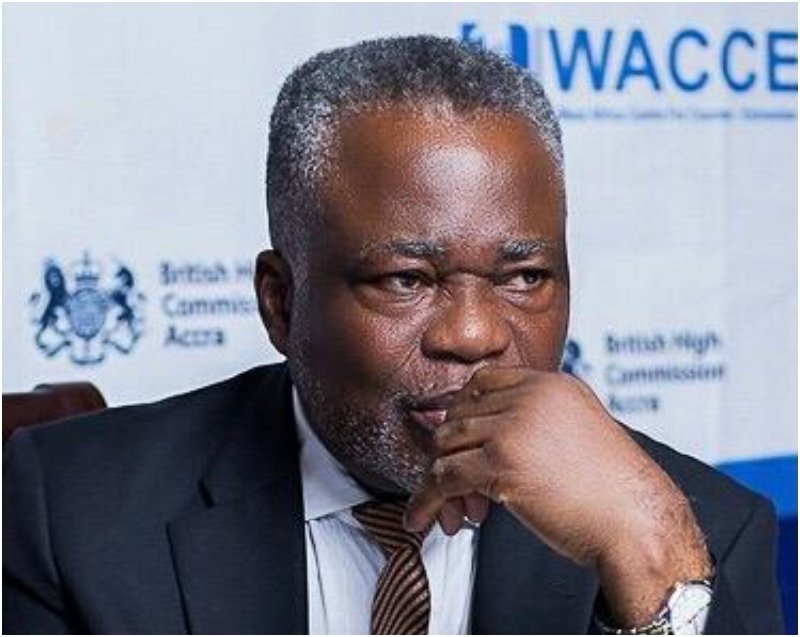
Ghana’s proposed BRICS membership has generated considerable debate. Yet the issue is often presented as a binary choice between traditional Western partnerships and emerging powers.
In ‘A Test of Agency: Ghana’s BRICS Application and the Future of Strategic Diversification’, Colonel Festus Aboagye (Retired) argues that a more useful lens is strategic agency: Ghana’s capacity to choose, manage, and, where necessary, disengage from external partnerships to pursue its national interests.
The brief explores the potential benefits, risks, and policy choices surrounding BRICS engagement. It offers a framework for evaluating future commitments through the lenses of accountability, transparency, sovereignty, and strategic flexibility.
‘A Test of Agency: Ghana’s BRICS Application and the Future of Strategic Diversification’ | By Col. Festus Aboagye (rtd)
Ghana’s decision to seek BRICS membership is a significant foreign-policy initiative. Public discussion has tended to fall into two camps. One sees BRICS as an escape from excessive dependence on Western institutions and markets.
The other sees a step towards alignment with China, Russia and other emerging powers. Both could be oversimplifications. The more important question is whether participation would strengthen Ghana’s strategic agency: its ability to choose, scrutinise, alter and, where necessary, exit external partnerships in pursuit of national interests.
This brief argues that the application is best understood as a test of agency rather than alignment.
- An announcement, not yet an application. On 6 October 2026, Ghana announced a Cabinet decision to apply. On the available evidence, no formal application had been submitted by 10 October 2026.
A forum, not an alliance or a common market. BRICS confers no automatic trade preferences, finance or security guarantees. Most gains would depend on agreements with individual members and institutions.
The benefits lie in diversification, not replacement. Membership could broaden Ghana’s partners, strengthen its bargaining position, and provide a platform to push for global governance reform.
The risks are real but conditional. They include new dependency, fiscal exposure, technology lock-in, diplomatic pressure, and reactions from Western partners, including a United States tariff threat.
Outcomes, not symbolism. Membership should be judged by whether it broadens options, strengthens leverage and preserves accountability.
Click here to read the full article.
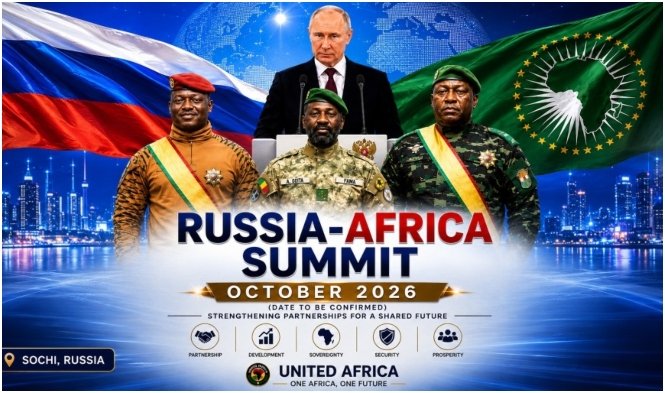
As Moscow prepares to host the third Russia-Africa Summit on 28–29 October 2026, the gathering arrives at a moment of heightened scrutiny. Nearly five years into its war in Ukraine, Russia is seeking to prove that its partnerships with African states have survived Western sanctions and remain strategically valuable. But the deeper question is what Africa gains in return. Drawing on trade figures, security partnerships in the Sahel, and the intersection of military cooperation with resource interests, this analysis by Joseph McCarthy examines whether the relationship is genuinely reciprocal or whether Africa is becoming an increasingly important source of the political influence, strategic resources, and economic resilience that Moscow needs to sustain its own geopolitical ambitions. Read the full article below.
Russia-Africa Summit: The Search for Resources, Influence and War Resilience
As the Ukraine war deepens Russia’s search for strategic resources, political allies and economic resilience, the third Russia-Africa Summit raises a difficult question: what does Africa gain in return?
Russia’s renewed engagement with Africa should be understood against the backdrop of a war in Ukraine that has become a test of Moscow’s economic, military and political endurance. Since the invasion of Ukraine, Russia has faced extensive Western sanctions, restrictions on trade and finance, and increasing pressure on the sources of revenue that sustain its war effort. In this environment, Africa has acquired a significance that extends beyond traditional diplomacy. The continent offers Moscow political partnerships, alternative markets, military cooperation and, critically, access to valuable natural resources and potential revenue streams that can help Russia withstand external pressure.
This helps explain the evolution of the Russia-Africa summits. The first summit, held in Sochi in 2019, was largely presented as an effort to rebuild and institutionalise Russia’s relationship with Africa, with trade, investment, security and political cooperation at the centre of the agenda. By the time of the second summit in St Petersburg in 2023, however, the geopolitical context had changed dramatically. Russia was already deep into its war in Ukraine and under extensive Western sanctions. The summit therefore served not only to deepen economic and political relations but also to demonstrate that Moscow remained capable of maintaining significant partnerships outside the Western bloc.
The third summit schedule on 28-29 October 2026, comes at an even more consequential moment. Russia is seeking to demonstrate that its relationship with Africa has survived the prolonged Ukraine war and remains capable of producing strategic benefits. The question for African governments should increasingly be whether the relationship is producing comparable benefits for them. Moscow’s partnership with Africa cannot be assessed only through diplomatic declarations, military agreements or high-level summits. It should also be judged by what African states receive in return and by what Russia gains from the relationship.
One of the most important areas to examine is natural resources. Russia’s interest in Africa is not simply about obtaining diplomatic support. Access to gold and other strategic commodities can provide alternative sources of revenue at a time when Moscow is seeking to reduce the impact of Western sanctions. Gold is particularly important because it can be traded through opaque networks and converted into revenue outside conventional financial channels. The U.S. Treasury has previously linked Wagner-associated gold operations in Africa to the financing of the group’s activities, including its operations in Ukraine. This does not mean that every Russian engagement with an African resource-producing state is designed to finance the Ukraine war.
It does, however, demonstrate why African resources can have strategic value for a Russia seeking to sustain its power and resilience under sanctions. The same logic extends beyond gold. Russia has increasingly shown interest in energy and critical raw materials, while its security partnerships in countries such as Mali and the Central African Republic have created relationships in which military and political cooperation can intersect with economic and resource interests. The emerging model therefore deserves closer scrutiny, Russia provides security assistance and political backing, while gaining influence, commercial opportunities and potentially privileged access to resources.
Mali provides one of the clearest case studies. Russia’s military presence in the country began with the arrival of Wagner personnel in 2021 and subsequently evolved into the Africa Corps structure. Moscow has presented this relationship as an alternative to Western security partnerships and as evidence of Russia’s willingness to assist African states in defending their sovereignty. Yet the relationship also raises a fundamental question: what does Russia receive in return for its military and political support?
That question becomes particularly important when the wider context of the Ukraine war is considered. If Russia can secure access to gold and other strategic resources, strengthen relationships with resource-rich governments and establish alternative economic channels, those relationships can help Moscow mitigate the effects of sanctions and sustain its broader strategic capacity. The relationship should therefore not be viewed solely through the narrow lens of counterterrorism. It is also part of a wider contest over resources, influence and economic resilience.
The economic figures contained in the summit case study reinforce the need to ask what kind of partnership Moscow is actually building. At the 2019 Sochi summit, Vladimir Putin announced a target of increasing Russia-Africa trade to $40 billion. According to Russian data cited in the document, trade stood at $27.7 billion in 2025, while Russia accounted for less than 1 percent of foreign direct investment in Africa. These figures do not prove that Russia’s Africa strategy has failed, nor do they capture every form of strategic value that Moscow derives from the continent. If Russia’s conventional economic footprint remains relatively modest, why is Moscow investing so heavily in strategic relationships with African states? One answer is that the value of Africa to Russia cannot be measured by trade and investment alone. Political influence, military access, diplomatic support, alternative markets and access to natural resources can all have strategic value. For a country fighting a prolonged war under sanctions, these forms of influence can become as important as conventional economic indicators.
This is why the third Russia-Africa Summit should be examined as more than another diplomatic gathering. Moscow wants to use the summit to demonstrate that its partnership with Africa remains strong despite the Ukraine war. The circumstances surrounding the meeting expose the tension at the heart of that claim. African officials are being asked to travel to Moscow while Ukrainian drone attacks have repeatedly disrupted air traffic around the Russian capital. On September 20 an attack involving more than 450 drones caused fresh disruption in the Moscow region, while Air Tanzania temporarily suspended its Moscow route following a risk assessment. The irony is difficult to ignore. Russia presents itself as a security partner for Africa, yet some African officials must consider their own security when travelling to the Russian capital. More importantly, African governments must now assess whether the strategic benefits of their relationship with Moscow justify the risks and costs associated with it.
For Ghana, this calculation is particularly important. The security consequences of Russia’s growing involvement in the Sahel cannot be separated from Ghana’s own national and regional security interests. A source close to the Ghanaian delegation cited in the summit document questions whether the relationship is genuinely “win-win” and points directly to the deteriorating security situation in the Sahel and its spillover towards Ghana’s northern borders. This should concern African governments is Russia’s engagement with Africa primarily delivering security and development benefits to African states, or is Africa increasingly becoming an important source of the political influence, strategic resources and economic resilience that Moscow needs to sustain its own geopolitical ambitions?
The answer is unlikely to be simple. Russia’s relationship with Africa serves multiple purposes, and resource access is only one component of a broader strategy. But the Ukraine war has changed the calculation. What may once have been presented principally as an effort to expand trade, investment and diplomatic relations now also has to be viewed through the lens of Russia’s need to preserve strategic autonomy, withstand sanctions and maintain the capacity to wage a prolonged war.
The third Russia-Africa Summit therefore represents a test not simply of whether African leaders will continue to engage Moscow, but of whether Russia can convince them that this engagement is genuinely reciprocal. For African states, the critical question is no longer whether Russia wants a deeper relationship with Africa. It clearly does. The more important question is what Moscow needs from Africa, what Africa receives in return, and whether the balance between the two is becoming increasingly unequal.
Joseph McCarthy is an analyst and researcher specialising in governance, security and political transitions in the Sahel. He writes on geopolitics, development and African diplomacy. joecarthy30@gmail.com



-

 Arts and GH Heritage17 hours ago
Beyond the Gallery: Karp Kamina Turns Cultural Memory into Contemporary Art
-
 Sights and Sounds2 days ago
Planning a Family Day Out in Accra? Lakeside Marina Park Offers Fun for All Ages
-
 Homes & Real Estate1 day ago
Building a Home in Ghana: How Smarter Construction Choices Can Cut Costs
-

 Festivals & Events2 days ago
Ahukan Festival: Honouring Chiefs and Celebrating Akyem Heritage in Kibi
-

 Fashion & Style22 hours ago
Malian Businesswoman’s Reported $1.5 Million Gold Jewellery Stuns Wedding Guests
-

 Global Update15 hours ago
Huge Storm Kills Two in the UK as 90,000 Properties Left Without Power
-

 Ghana News16 hours ago
Ghana’s President Congratulates Brazil’s Lula on Historic Fourth Term, Vows to Champion Global South Agenda
-

 Health & Wellness15 hours ago
Four Weight-Loss Mistakes That Could Be Holding Back Your Progress