
Opinion
The Cocoa Conundrum: Why Ghana’s Farmers are Poor Despite Making the World’s Best Chocolate

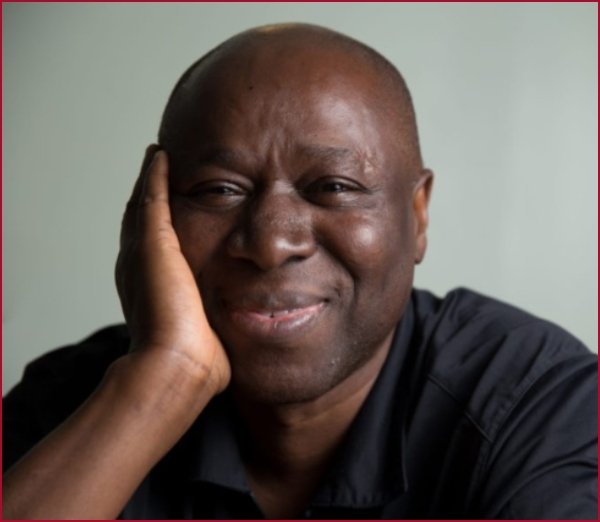
Ghana produces some of the world’s finest cocoa beans, yet the majority of its cocoa farmers remain trapped in poverty due to low farmgate prices, exploitative supply-chain structures, middlemen taking large margins, high input costs, climate change impacts, illegal mining (galamsey) destroying farms, and limited access to credit and modern farming techniques. This article by H. Aku Kwapong argues that while multinational chocolate companies earn billions from Ghanaian cocoa, farmers receive only a tiny fraction of the final retail value, calling for urgent reforms in pricing, local processing, cooperative models, and government intervention to ensure fairer wealth distribution along the cocoa value chain.
The cocoa conundrum: Why Ghana’s farmers are poor despite making the world’s best chocolate
Every so often, you come across an economic situation so perverse, so utterly divorced from basic market logic, that you have to wonder how it has survived for so long.
The case of Ghana’s cocoa sector is a textbook example. Here we have a country that produces some of the world’s finest cocoa—the essential ingredient for a multi-billion dollar global chocolate industry. Yet the smallholder farmers who are the bedrock of this industry remain trapped in extreme poverty, many earning less than a dollar a day. How can this be?
The answer, as is so often the case, lies in a toxic mix of well-intentioned but misguided policy, institutional sclerosis, and a fundamental misunderstanding of how markets actually work. For over seven decades, Ghana has operated a state-run monopoly, the Ghana Cocoa Board (COCOBOD), that controls every aspect of the industry from farm gate to export. The result is a classic case of monopsony power, a single buyer that can dictate prices to sellers. And when a single buyer dictates prices, the sellers inevitably get a raw deal.
When cocoa prices quadrupled on the world market in 2023-2025, reaching nearly $12,000 per metric ton, Ghanaian farmers should have seen a windfall. They didn’t. Because of COCOBOD’s byzantine system of forward contracts and price-fixing, they were locked into prices that bore no resemblance to market reality. The very system designed to protect them from volatility ended up shielding them from prosperity. It’s an economic tragedy, and it’s long past time to end it.

This report is not an academic exercise. It is a call for a pragmatic, clear-eyed revolution in how Ghana manages its most important agricultural sector. It lays out a framework for dismantling a failed state monopoly and building a modern, competitive market in its place.
This isn’t about blind faith in laissez-faire economics—the history of commodity markets is littered with the victims of chaotic, unsupported liberalization. Instead, it’s about getting the institutions right, creating what I call a “meso-model” where a lean, effective government regulates a dynamic private sector. It’s about finally letting the market work for, not against, the people who make it possible.
1.The Economics of a Broken System
Let’s be clear about the diagnosis. Ghana’s cocoa problem isn’t a mystery; it’s a straightforward story of bad economics compounded by institutional inertia.
The current model, where COCOBOD acts as the sole buyer and seller of cocoa, is a relic of a bygone era of state-led development that most of the world has moved beyond. Its defenders will point to the premium quality of Ghanaian cocoa as justification for the system. And yes, the quality is good. But at what cost?
The Monopsony Trap
Here’s the fundamental problem: COCOBOD’s monopoly on purchasing cocoa from farmers means it faces no competition. Basic economics tells us what happens when a buyer has monopsony power – it can, and does, pay a price far below what a competitive market would deliver. Farmers in Ghana typically receive around 55% of the Free on Board (FOB) export price for their beans. Compare that to the 70-75% received by their counterparts in the more liberalized markets of Indonesia and Ecuador.
That 15-20 percentage point difference isn’t just a number on a spreadsheet. For a farming family, it’s the difference between a living income and grinding poverty. It’s the difference between being able to afford fertilizer and watching your trees succumb to disease. It’s the difference between sending your children to school and sending them to work in the fields.
And let’s be honest about what’s happening to that missing 40-45% of the export value. Some of it goes to legitimate costs – quality control, research, extension services. But a large chunk disappears into the maw of an inefficient, bloated bureaucracy that employs thousands of people and operates subsidiaries that would make a Soviet-era ministry proud.
The Illusion of Stability
The great promise of the COCOBOD system was price stability. By selling the crop forward on international markets, it was supposed to shield farmers from the notorious volatility of commodity prices. This sounds good in theory. In practice, it’s been a disaster.
The 2023-2025 price crisis exposed the fundamental flaw in this approach. When world cocoa prices exploded due to supply shortages in West Africa, the forward-selling system didn’t just fail to deliver the upside to farmers – it nearly bankrupted COCOBOD itself, which found itself on the wrong side of its own hedges. The institution recorded massive losses while farmers continued to receive their fixed, below-market prices.
This is the perverse logic of the current system: it privatizes the risks (which farmers bear through chronically low prices) and socializes the losses (which the state, and ultimately the taxpayer, has to cover). It’s heads the middlemen win, tails the farmers lose.
The Stagnation Effect
When you insulate an entire industry from market signals, you get stagnation. There is no incentive for innovation, no drive for efficiency, no pressure to improve. Why should a private company invest in better logistics or processing facilities if it can’t compete on price? Why should a farmer invest in higher quality beans or replant aging trees if they get paid the same as everyone else regardless of quality?
The result is an industry operating far below its potential. Production has collapsed from over 1 million tonnes in 2010/11 to just 654,000 tonnes in 2023 – a 14-year low. The tree stock is aging, with an estimated 40% of cocoa trees past their productive prime. The farming population itself is aging, with an average age over 50, as young people flee for better opportunities, including the destructive illegal gold mining (‘galamsey’) that is eating away at cocoa farmland.
This is what happens when you try to run an agricultural sector like a command economy. You get all the inefficiency of central planning with none of the dynamism of a market.
So the argument that we must choose between the chaos of a fully free market and the stagnation of a state monopoly is a false dichotomy. The real task is to design a system that combines the dynamism of competition with the stability of smart regulation. That’s what I mean by a “meso-model,” and that’s what the rest of this report is about.
2.Learning from Others: The Liberalization Spectrum
Before we dive into the specifics of reform, it’s worth looking at what has happened in other cocoa-producing countries that have experimented with different models. The evidence is actually quite instructive.
The Cautionary Tale of Full Liberalization
Nigeria liberalized its cocoa market in 1986, dismantling its marketing board and letting the market rip. The results were mixed at best. On the positive side, competition increased, more private traders entered the market, and farmers gained more options for selling their cocoa. Production initially increased as farmers responded to better price signals.
But there was a dark side. The abolition of the marketing board led to a collapse in quality control and extension services. Nigerian cocoa, once renowned for its quality, saw its reputation deteriorate as beans of varying quality flooded the market. Farmers lost access to credit and inputs that the marketing board had previously provided. And the market became dominated by a handful of large export firms, which used their oligopsony power to squeeze farmers.
The lesson here is clear: simply smashing the state monopoly and walking away is not a recipe for success. Markets need institutions to function properly.
The Ivorian Alternative
Côte d’Ivoire, the world’s largest cocoa producer, offers a more promising model. After its own chaotic liberalization in the 1990s, the country established a hybrid system built around the Conseil du Café-Cacao (CCC), a regulatory body that works in partnership with the private sector.
Here’s how it works: The CCC sets a guaranteed minimum price for farmers at the beginning of each season, providing a safety net against price crashes. But it also licenses private companies to compete in buying and exporting cocoa. These companies can offer bonuses above the minimum price for higher quality beans or faster payment. The result is a system that provides both stability and competition.
The Ivorian model isn’t perfect – it still involves significant state intervention, and there are concerns about corruption and the fiscal costs of the price guarantee. But it has managed to maintain quality standards while allowing for private sector dynamism. Production has grown steadily, and farmers receive a higher share of the export price than their Ghanaian counterparts.
What Ghana Can Learn
The lesson from this comparative analysis is straightforward: Ghana needs to move away from its current fully regulated model, but it should not leap to full liberalization. The optimal path is a middle ground – a “meso-model” that retains essential state functions (regulation, quality control, research) while introducing competition in commercial activities (buying, processing, exporting).
This is not a radical idea. It’s basically what most successful agricultural sectors around the world do. The government sets the rules and provides public goods; the private sector competes to deliver services and create value. It’s time Ghana joined the 21st century.
3.The Reform Framework: Eight Pillars for a New Dawn
So what does a sensible reform program look like? It rests on eight interconnected pillars, each addressing a specific dysfunction in the current system. Let me walk through them.
Pillar 1: Transforming COCOBOD from Monopolist to Regulator
The first and most critical step is to fundamentally restructure COCOBOD. The institution needs to go on a serious diet, shedding its commercial functions and focusing on the essential public goods that only government can provide.
What COCOBOD Should Keep:
•Quality Control: This is a genuine public good and a crucial national asset. Ghana’s reputation for premium cocoa is worth protecting, and a centralized quality control system is the best way to do it. The Quality Control Company (QCC) should remain under COCOBOD’s umbrella, ensuring that all exported cocoa meets high standards.
•Research and Development: The Cocoa Research Institute of Ghana (CRIG) has done valuable work developing high-yielding, disease-resistant varieties. This is exactly the kind of basic research that the private sector tends to under-invest in. CRIG should continue to receive public funding and should be encouraged to partner with universities and international research institutions.
•Regulation: Someone needs to set the rules for a competitive market – licensing buyers and exporters, monitoring for anti-competitive behavior, ensuring traceability and compliance with international standards. This is a core government function.
What COCOBOD Should Lose:
•Internal Marketing: The business of buying cocoa from farmers should be opened to competition among Licensed Buying Companies (LBCs), farmer cooperatives, and processing companies. Let them compete on price, payment terms, and services. The farmers will benefit.
•Input Supply: The procurement and distribution of fertilizers and pesticides should be handled by private agro-dealers. The current system of heavily subsidized inputs distributed through COCOBOD is costly, inefficient, and subject to political manipulation. A competitive market for inputs, perhaps supported by targeted vouchers for the poorest farmers, would work better.
•Export Marketing: The Cocoa Marketing Company (CMC), which currently has a monopoly on exports, should either be privatized or forced to compete with other licensed exporters. This would allow for more innovative marketing arrangements and better price discovery.
This transformation will not be easy. It will require significant downsizing and restructuring. COCOBOD currently employs thousands of people; a lean regulatory body would need far fewer. A comprehensive staff rationalization plan, including voluntary retirement schemes and retraining programs, will be essential. But the alternative is the slow-motion collapse of the entire institution, which helps no one.
Pillar 2: Creating Space for Private Enterprise
Once COCOBOD gets out of the way, private companies can step in to compete across the value chain. But they won’t do so unless the government creates an enabling environment. This means three things:
Regulatory Certainty: Investors need to know that the rules won’t change overnight. A clear, transparent, and stable regulatory framework is essential. This includes straightforward licensing procedures, well-defined quality standards, and consistent enforcement.
Infrastructure: You can’t build a competitive industry on crumbling roads and unreliable electricity. The government needs to invest in the basics – farm-to-market roads, port facilities, warehousing, and above all, reliable and affordable power. The fact that electricity costs in Ghana are nearly double those in Côte d’Ivoire is a major barrier to developing a domestic processing industry.
Targeted Incentives: To encourage investment in value addition – turning raw beans into cocoa liquor, butter, powder, and finished chocolate – the government should offer tax holidays, reduced import duties on processing equipment, and perhaps subsidized electricity for processing facilities. The goal is to move Ghana up the value chain, capturing more of the value that currently goes to processors in Europe and Asia.
The potential here is enormous. Ghana currently processes only about 23% of its cocoa production domestically, and existing facilities operate at less than 50% capacity. With the right policies, Ghana could become a major exporter of processed cocoa products and even build globally recognized chocolate brands. Companies like Fairafric are already showing what’s possible.
Pillar 3: Fixing the Price Mechanism
The current pricing system is, to put it bluntly, a joke. It’s opaque, it’s rigid, and it systematically underpays farmers. The Producer Price Review Committee (PPRC) sets a fixed price at the beginning of each season based on projections that often turn out to be wildly wrong. Farmers have no idea how the price is calculated, and they have no recourse if they think it’s unfair.
This needs to be replaced with a transparent, market-based system. There are several options:
Auction System: Cocoa could be sold through regular auctions where buyers bid competitively for lots. This ensures transparent price discovery and allows farmers to benefit directly from market prices. Ethiopia’s commodity exchange provides a successful model.
Commodity Exchange: The proposed Africa Commodity Exchange (AfCX) could provide a pan-African platform for trading cocoa, with prices determined by supply and demand.
Direct Contracts: Farmers and cooperatives could negotiate direct contracts with buyers, allowing for differentiated pricing based on quality, volume, and delivery terms.
Hybrid Model: My preferred option is a hybrid approach that combines a guaranteed minimum price (a floor) with market-based pricing above that level. This is similar to Côte d’Ivoire’s model. The floor provides security against price crashes, but farmers can earn more if they produce higher quality beans or if market conditions are favorable.
The key principle is simple: farmers should receive at least 70% of the FOB export price. This isn’t charity; it’s basic market efficiency. Farmers who are paid a fair price will invest in their farms, leading to higher production and better quality. Everyone wins.
Of course, a market-based system means price volatility. But there are sensible ways to manage this risk. A price stabilization fund can smooth out fluctuations by saving money in good years to support prices in bad years. Crop insurance can protect farmers from severe price drops. And over time, as farmers and cooperatives gain experience, they can use financial instruments like futures contracts to hedge their own risk.
Pillar 4: Building a Real Processing Industry
Here’s a shocking fact: Ghana captures only about 6.6% of the total value of its cocoa production. The rest – the vast majority—is captured by processors and manufacturers in
Europe, North America, and Asia. This is economic madness. Ghana is exporting raw materials and importing finished products, exactly the colonial pattern that developing countries are supposed to have moved beyond.
The solution is to dramatically expand domestic processing capacity. Ghana already has several major processing facilities, but they operate at less than 50% capacity because they can’t get enough beans. In the current system, COCOBOD’s forward sales contracts commit most of the crop to international buyers, leaving domestic processors scrambling for supply.
In a liberalized market, processors would be able to source beans directly from farmers. But during the transition, the government should guarantee that a certain percentage of production, say, 30-40%, is reserved for domestic processors at competitive prices. This would ensure that processors can operate at full capacity.
The barriers to processing are well-known: high energy costs, limited access to finance, and a shortage of skilled workers. Each of these can be addressed with targeted policies:
•Energy subsidies for processing facilities to offset Ghana’s high electricity costs.
•Tax incentives, including corporate tax holidays and duty-free imports of processing equipment.
•Dedicated financing facilities, perhaps through a Cocoa Development Bank, to provide long-term, affordable credit.
•Skills development programs in partnership with technical universities and international training institutions.
Beyond semi-processed products, Ghana should aim to build its own chocolate manufacturing industry and develop globally recognized Ghanaian chocolate brands. The market for premium, single-origin, ethically sourced chocolate is growing rapidly. Ghanaian brands can capitalize on the country’s reputation for quality, its sustainability credentials, and its unique cultural heritage. With the right support, “Made in Ghana” chocolate could become a premium product on the world market.
Pillar 5: Empowering Farmers Through Cooperatives and Land Reform
Individual smallholder farmers have essentially no bargaining power when facing large buyers. This is why strong, well-organized farmer cooperatives are essential. Cooperatives can negotiate collectively, secure better prices, access credit, and provide services to their members.
Ghana has a history of farmer cooperatives, including the well-known Kuapa Kokoo, a Fairtrade cooperative with over 100,000 members. But many cooperatives suffer from weak governance, poor financial management, and limited capacity. They need support, training in governance and financial management, access to credit, and a clear legal framework that protects their rights.
In a liberalized market, cooperatives should be able to negotiate directly with buyers and processors on behalf of their members. This collective bargaining power is the best defense against exploitation.
But there’s an even more fundamental issue: land tenure. Many cocoa farmers in Ghana don’t have secure title to the land they farm. Under the traditional Customary Land Tenure System, they have only usufruct rights – the right to use the land but not to own it. This creates a massive disincentive to long-term investment.
Why would you cut down old, unproductive trees and replant if you’re not sure you’ll still have the land in five years when the new trees start producing? Why would you invest in soil improvement or irrigation if you could lose the land at any time? And without formal title, you can’t use your land as collateral for a loan.
This is a politically sensitive issue, involving traditional authorities and complex customary law. But it must be addressed. Options include formalizing long-term leases, providing legal protections for farmers who replant, and gradually introducing formal land titling in cocoa- growing regions. Women farmers, who often have even more insecure land rights than men, need special attention.
Pillar 6: Leveraging Technology
We live in the 21st century, but much of Ghana’s cocoa sector operates as if it’s still the 20th. Technology can change this, and it doesn’t require massive investments in fancy equipment. Simple, accessible technologies can make a huge difference.
Mobile Payments: Ghana already has widespread mobile money platforms like MTN Mobile Money. Extending these to cocoa payments would mean farmers get paid immediately upon delivery, with a digital record that reduces disputes and fraud. It would also give farmers access to savings and credit products linked to their mobile wallets.
Digital Extension Services: Mobile apps and SMS platforms can deliver timely advice on weather, pest control, best practices, and market prices. The Cocoa Link program has already demonstrated the potential of this approach.
Traceability Systems: The EU Deforestation Regulation now requires full traceability of cocoa imports. Digital systems using GPS mapping and mobile data collection can help Ghanaian farmers comply with these requirements and access premium markets. This isn’t optional anymore; it’s a necessity.
And here’s the thing: attracting young people back to cocoa farming requires making it less of a backbreaking, low-tech drudgery and more of a modern, tech-enabled business. Higher incomes are part of the answer, but so is modernization.
Pillar 7: Building the Regulatory Architecture
A liberalized market needs a strong regulatory framework. The current system, where COCOBOD is both player and referee, is fundamentally flawed. Ghana needs an independent Cocoa Regulatory Authority (CRA) that is separate from COCOBOD and reports to Parliament rather than to a government ministry.
The CRA’s job would be to:
•License buyers, processors, and exporters.
•Set and enforce quality standards.
•Monitor the market for anti-competitive behavior.
•Resolve disputes between farmers and buyers.
•Oversee traceability and compliance with international regulations.
Ghana also needs to strengthen its competition law and apply it rigorously to the cocoa sector to prevent price-fixing and market manipulation. And it needs a clear legal framework for contracts, with fast-track arbitration and mediation services for disputes.
The goal is to create a level playing field where companies compete on efficiency and service, not on political connections or market manipulation.
Pillar 8: Financing the Transition
For decades, Ghana’s cocoa sector has been financed through an annual syndicated loan arranged by COCOBOD, typically in the range of $1.5-2 billion. This model is no longer sustainable. The cost of the loan has risen sharply, and COCOBOD has struggled to service its debt.
A liberalized sector needs a diversified financing ecosystem:
•Commercial bank lending to LBCs, processors, and farmer cooperatives.
•Warehouse receipt financing, which allows farmers to use stored cocoa as collateral for loans.
•Supply chain finance, where buyers provide advance payments to farmers in exchange for guaranteed supply.
•Microfinance and impact investing for small farmers and businesses.
•A Cocoa Development Bank to provide long-term, affordable credit for the sector.
The Ghana Stock Exchange could also play a role, with large processors and LBCs listing to raise equity capital, and cocoa-backed bonds to finance infrastructure.
The key is to move away from the current model where the entire sector depends on a single, increasingly expensive loan, and toward a system where financing flows from multiple sources based on commercial viability.
4.The Politics of Reform: Why This Is Hard (But Necessary)
Let me be blunt: the economics of cocoa reform are straightforward. The path to a more prosperous and competitive sector is clear. The real challenge, as always, is politics.
Any serious reform will threaten entrenched interests that benefit from the current system. COCOBOD employs thousands of people, many of whom will resist downsizing. The current system creates opportunities for rent-seeking and corruption that will be harder to maintain in a competitive market. And there’s a genuine, if misguided, ideological attachment to the idea of state control among some policymakers.
There will be resistance. There will be scare stories about how liberalization will lead to chaos and exploitation. There will be warnings that Ghana will lose its quality premium. These arguments need to be confronted head-on with evidence and clear communication.
This is why the transition must be carefully managed, with a clear roadmap, strong governance, and constant engagement with all stakeholders. A “big bang” approach is likely to fail, as Nigeria’s experience shows. A phased, 5-10 year transition, with clear milestones and measurable targets, is the only realistic way forward.
Phase 1 (Years 1-2): Establish the legal framework, launch pilot programs in selected regions, begin COCOBOD restructuring.
Phase 2 (Years 3-5): Roll out liberalized internal marketing nationwide, operationalize the CRA, introduce market-linked pricing, implement processing incentives.
Phase 3 (Years 6-10): Complete export liberalization, finish COCOBOD transformation, achieve 70% farmer share target, reach 40% domestic processing target.
Success will require political courage and long-term vision. It will require resisting the temptation to backslide when things get difficult. And it will require constant monitoring and adjustment, because no reform plan survives first contact with reality unchanged.
But the alternative is to continue presiding over a system that is failing its farmers, failing the nation, and slowly collapsing under the weight of its own contradictions. The choice is stark, but it is also clear.
5.Conclusion: The Case for Optimism
I am, by temperament and training, a skeptic. I’ve seen too many grand reform plans fail, too many well-intentioned policies produce perverse outcomes. But I’m also an economist, and I believe that when you get the incentives right, when you build the right institutions, good things can happen.
Ghana’s cocoa sector is broken, but it’s not beyond repair. The country has enormous advantages: a reputation for quality, a large and experienced farming population, existing
processing infrastructure, and a strategic location. What it lacks is a sensible institutional framework that allows these advantages to be fully realized.
The reform framework laid out in this report is not utopian. It’s pragmatic, evidence-based, and grounded in the real-world experiences of other countries. It doesn’t require Ghana to become something it’s not; it requires Ghana to become a better version of itself.
If implemented with determination and skill, these reforms could transform Ghana’s cocoa sector from a struggling commodity exporter into a globally competitive industrial powerhouse. Farmers could earn a decent living. Young people could see a future in agriculture. Ghana could capture more of the value from its most important export crop.
This is not just about cocoa. It’s about whether Ghana can build the kind of modern, market- based institutions that are essential for sustained economic development. It’s about whether the country can move beyond the legacy of colonialism and state-led development to create a system that works for its people.
The time for a new dawn for Ghana’s cocoa is now. The question is whether Ghana’s leaders are ready to seize it.
By: H. Aku Kwapong Hene Aku Kwapong can be reached on oak@songhai.com. He is a founder of The Songhai Group and NBOSI (National Blue Ocean Strategy Institute). He formerly worked with GE Capital, Deutsche Bank and Royal Bank of Scotland and had been a Senior Vice President at the New York City Economic Development Corporation.

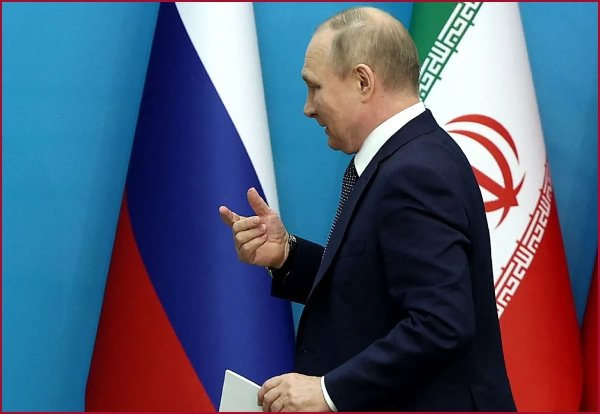
Can Moscow host Africa under drone threat? As Moscow prepares to welcome African leaders to the third Russia-Africa Summit on October 28 to 29, Ukrainian drone strikes have reportedly hit Yandex data centres and targeted the capital region, exposing a delicate contradiction at the heart of the gathering. Russia pitches itself as Africa’s security partner while its own infrastructure proves vulnerable. In this opinion piece, analyst Joseph McCarthy examines the security dilemma facing both Moscow and African governments, arguing that leaders weighing the trip must confront a deeper question: what does it mean to tie your nation’s safety to a partner that is itself under sustained attack? Read the full article below.
Yandex Strikes: Can Moscow Host Africa Under Drone Threat?
Moscow pitches itself as Africa’s security partner while its own infrastructure is exposed
By Joseph McCarthy · Analyst, Sahel governance & security
| 3YANDEX DATA CENTRES REPORTEDLY STRUCK, 8–11 OCT | 650DRONES STRUCK MOSCOW REGION, 6 OCT | 28–29 OctTHIRD RUSSIA-AFRICA SUMMIT, MOSCOW |
Every summit is a performance of strength. The third Russia-Africa Summit, due in Moscow on 28 and 29 October, is meant to show African leaders that Russia remains a confident, well-connected partner despite sanctions, isolation and a costly war. Between 8 and 11 October, Ukrainian drones complicated that script. Three data centres operated by Yandex, the technology giant behind much of Russia’s digital economy, were reportedly struck in the Ryazan, Kaluga and Vladimir regions. For Moscow and for its African guests, the episode poses a security dilemma that no communiqué will resolve.
The first attack, on the night of 7 to 8 October, reportedly set fire to a facility in Sasovo, in Ryazan region, and suspended operations. A second strike hit a site in Kaluga; a third, in Vladimir region, followed on 11 October. Yandex runs payments, email, navigation, ride-hailing, delivery and cloud computing, so the effects spread quickly. Meduza reported disruptions to Yandex Pay, Mail, Disk and Go, while businesses that depend on Yandex Cloud described outages of their own. One user told the outlet: “All my money is on Yandex, so I have no money for food.” The company says customers’ funds are safe, but the episode shows how one point of failure can become hardship for ordinary people within hours.
Recovery may be slow. Reports suggest that replacing specialised equipment could take months, and Russian officials have reportedly acknowledged the difficulty. That matters beyond one company. Moscow has spent years encouraging reliance on domestic platforms as Western technology withdrew. The Yandex strikes show that domestic ownership is not the same as security. Technological sovereignty also means being able to protect, maintain and restore systems under attack.
Moscow will call such strikes aggression against civilian targets. Yet they come after years of Russian missile and drone attacks on Ukrainian cities and energy infrastructure, so the exposure Russia now faces cannot be separated from the war it chose to launch. That context does not make the risk to visitors any smaller; it explains why it is unlikely to disappear before the summit.
Here lies the first half of the dilemma, and it is Moscow’s. Hosting African leaders in the capital is a statement of confidence, but it also puts that confidence on display. Russia must keep airspace open, transport moving and digital systems running while the war reaches ever deeper into its territory. On 20 September, roughly 450 drones were reportedly aimed at the capital; on 6 October, around 650 struck the Moscow region. Every intercept shows that defences work. Every strike that lands, and every airport closure, suggests the opposite. The summit cannot merely proceed; it must avoid becoming a showcase for exposure. Moscow will almost certainly respond with heavy security, restricted airspace and tightly managed movement. That may protect delegates, but it also turns the gathering into a fortress, held in spite of the war rather than in a country at ease with itself.
None of this proves that Russia cannot protect the summit. Vulnerability to long-range drones is not the same as losing the ability to defend territory, and the more widely a country’s civilian and commercial infrastructure is distributed, the harder it is to shield. Delegations may well land, meet and leave without incident. But that is a probability, not a guarantee, and guarantees are precisely what Russia is selling.
That brings us to the second half of the dilemma, which belongs to African governments. The immediate question is personal safety. In early September, Air Tanzania suspended its Dar es Salaam to Moscow route after a risk assessment, then resumed it days later. Further attacks could prompt airspace restrictions, diversions and tighter security that complicate movement between airports, hotels and venues. These are scenarios, not confirmed disruptions, yet every government weighing the trip must price them in, including the level at which it chooses to be represented.
The deeper question is strategic. Security cooperation is the core of Russia’s offer to Africa: Moscow says it has military agreements with more than 40 African states, and Russian security personnel are embedded in countries such as Mali and the Central African Republic. Governments that rely on that protection are tying their own security to a partner that is itself under sustained attack. A security provider at war is also a provider that is stretched, distracted and targeted. The more a government leans on Russia to guarantee its safety, the more it imports the risks of Russia’s war.
“The more a government leans on Russia to guarantee its safety, the more it imports the risks of Russia’s war.”
Call it a dilemma of dependence. The relationship meant to be a source of protection can become a channel for exposure, and the closer the embrace, the harder it is to step back.
What should African governments do? Engage, but with open eyes. They can ask for written security and contingency arrangements for their delegations, diversify their security partnerships so that no single patron’s vulnerability becomes their own, and insist that cooperation strengthens national institutions rather than simply protecting incumbent governments. Strategic autonomy means having choices. It does not mean choosing between Moscow and everyone else, or accepting one patron’s risks as the price of its protection.
The Kremlin wants the summit to show that sanctions have not isolated Russia. The Yandex strikes complicate that message without defeating it. They pose a simple test for any partner who offers security: can it secure itself? The answer will not come from speeches in Moscow. It will come from whether the summit runs smoothly, and from what follows. Until then, African leaders have every reason to listen politely, travel carefully and commit slowly.
■
Joseph McCarthy is an analyst and researcher specialising in governance, security and political transitions in the Sahel. He writes on geopolitics, development and African diplomacy. joecarthy30@gmail.com

In this thought-provoking opinion piece, Associate Professor Theodora Dame Adjin-Tettey examines the alarming deterioration of public discourse in Ghana and beyond, marked by an explosion of hate speech, vitriol, threats, and inciting comments. Drawing on a personal anecdote about a researcher who abandoned a study on media insults in 2010 due to a lack of data, contrasted with today’s overwhelming abundance of such content, she argues that this shift signals a deeply troubling ethical decline in society. Read the full article below.
Hate speech, vitriol, threats, and inciting comments: Can we stop it already?
By Theodora Dame Adjin-Tettey | Associate Professor
A friend of mine recently posted on social media that he had to abandon his 2010 research project on “insults in the media” because he couldn’t find enough data. Every researcher needs data to carry out their study, so when there is a data drought on a subject of empirical investigation, it becomes a huge stumbling block to the researcher, possibly causing them to abandon their study or chart a new parallel path to the original idea. It suffices to say, however, that the lack of data the researcher encountered sixteen years ago on a topic like insults in the media signaled something positive or healthy about the general environment for public discourse at the time. This is despite it posing a serious threat to the attainment of a university degree.
Contrarily, when there is an overabundance of data on a topic like that, 16 years after the initial fruitless attempt, it is indisputable evidence of where society, specifically, public discourse, has shifted to. Significantly, it is also indicative of a deteriorating and possibly ethically deficient society. So, here is my question: must we be concerned about the rather glaringly ethically deficient status quo of our public discourse, or should we write it off as a normal concomitant of a liberal society, aka democracy?
A matter of grave concern
I’m not the first to write about this, and I definitely will not be the last. But I feel I must also make my attempt at a drop in the ocean. Surely, change can be realised when all hands are on deck. Every little effort, every little attempt, every little … helps. It is no wonder the British supermarket chain, Tesco, popularized this phrase. Indeed, small efforts matter and are important in contributing to a bigger goal. The bigger goal, this time, is sanity within our information and media environment.
Over the past weeks, the public sphere has been awash with conversations about how our society’s social fabric is degenerating, and I dare say, at a faster rate than ever, particularly when it comes to decent conversations, be it on politics or on social issues. I say “faster rate” because now the platforms that accelerate public discourse, including who initiates/originates or sets the agenda, and who disseminates it, have been democratized, thanks to advances in digital technologies. With generative technologies being able to imitate human intelligence and our ill tendencies, humans no longer need other humans to perpetrate wrongs against their kind. The technologies have become our faithful and convenient allies, helping us to fabricate wild allegations, perpetrate lies, polish up insults, and execute wicked agendas against our own kind that we sometimes consider “the enemy” or the subject of our dislike and/or hatred. Sad.
When I see, watch, and hear the daily insults, hearsay, hate speech, threats, inciting comments and sharp vitriol accompanying social media posts and commentary, I cannot help but to attempt to contribute to turning the tide; that is, if only the tide has not already washed away our humanity, respect, reverence, and the strength of character and ethical backbone that distinguishes Ghanaians from others without the tiniest crevices to hold on to.
We must fight the temptation at all costs
People always have something to say about someone: their looks, how they talk, what they do, what they do not do, how they wish ill on them, on and on and on. Yes, as right-thinking humans, we may form opinions on issues, but it is not every opinion that must be uttered or shared with the world, even when you are convinced that it is the most persuasive or erudite. There is a reason for the adage that “all truths are not to be told” or “all truth is good, but not all truth is good to say.” Should we all utter what we think of, know of, or how we feel about people or every issue, society would be sent into chaos. Even worse is when made-up falsehoods permeate public discourse. That is why it is important that, in being wise, we must sometimes give our “thoughts no tongue.” as Polonius, the chief counselor to King Claudius, advised his son, Laertes, in William Shakespeare’s Hamlet.
Critical public discourse must be based on factual arguments and not insults and denigration of people’s persona, sometimes to the extent of stripping them of their dignity. As a people who pride ourselves on being civilized, civilization in itself must tame our human nature by redefining our manners, developing our intellect, and, when need be, restraining us. Civilization must advance society and must develop our culture and not erode it. That’s why it becomes a matter of grave concern when we witness some of the vilest insults come from people who are supposed to be an example in society, particularly to the younger generation.
Additionally, our tendency to politicize everything has worsened things. We have become enemies because of political biases. We perceive everything as black or white, forgetting the shades in the spectrum. That is why every other person becomes the enemy, and the only way we seem to know how to deal with the enemy is to “destroy” them so our side of the divide will stand as the better side. Because of politics, we have strangely redefined family, friendship, associate, colleague, etc. Of late, you are likely to see people showing respect only to the people that they share political affiliation with or whom they anticipate obtaining favour from. Once you are of “no use” to them, you are a good candidate for needless castigation and character assassination. It seems to me that the easiest thing to do these days is destroying people’s reputations. I also see that the extent of the harm increases when the act intended to create the destruction is generously bankrolled.
The attention economy as a facilitator of information disorder
The other aspect of the conversation is how social media incentivizes sensationalism and exploits the negativity bias of the human tendency to pay closer attention to content that contains threats, causes anger and outrage. And in the present attention economy built on clicks, shares, comments, and watch time, it is not surprising that those who want to attract the attention that translates into both online and offline monetary returns will do anything to push content that the algorithms are configured to track and promote.
So, next time you react to, comment on, and/or share that vitriol, remember that you are contributing to the ocean of information disorder within the media and information ecology. If you are the one behind that account spewing insults, disrespect, and unnecessary attacks, note that civilization requires that we disagree with one another without losing respect, empathy, and civility for one another. We must also have a sense of responsibility to lift others when they are in their darkest moments rather than verbally battering them to the point of ruin. And rightly so, I find the quote that I recently came across, “to strike an adversary who is down is a betrayal of humanity, not a victory of strength”, incredibly poignant.
The more this goes on, factual information gets buried. And democratic decisions will be taken based on poor judgment. And here is the reason: the algorithms will drown out factual and decent communication when there is a sea of the opposite.
This is not to argue that duty bearers shouldn’t be held accountable. Certainly, we must, but in a decorous manner, while keeping the facts at the centre. Hate speech, threats, and inciting comments do not build a civil society; they quickly tear society apart, leaving us in chaos and dysfunction. So, now my question: must we continue on this tangent, knowing the chaos on social media does not stay just on social media but fast trickles into homes, communities, institutions and society at large?
Until next time, when I meet you and take your responses, this is my drop in the ocean.
The writer is an associate professor of Media and Communication Studies at Durban University of Technology.

Joseph McCarthy, an analyst specializing in Sahel governance and security, examines how a deceptive recruitment pipeline has drawn thousands of African men into Russia’s war in Ukraine. Drawing on investigations by Amnesty International and the INPACT/All Eyes on Wagner collective, which identified 1,417 recruits from 35 countries and 316 confirmed combat deaths, McCarthy argues that unemployment and misleading job offers have turned Africa’s economic vulnerability into a source of foreign military manpower. A war that is not Africa’s, he writes, should not be allowed to consume Africa’s blood.
African Blood for Other People’s War?
By Joseph McCarthy · Analyst, Sahel governance & security
A recruitment pipeline built on unemployment and misleading job offers has quietly drawn thousands of Africans into the front lines of Europe’s bloodiest war since 1945.
| 1,417AFRICAN RECRUITS IDENTIFIED | 35COUNTRIES OF ORIGIN | 316CONFIRMED COMBAT DEATHS |
A job advertisement can look like an escape route. A promised salary, a ticket to Russia and the prospect of a better life can seem like an opportunity to someone struggling with unemployment or economic hardship. For some Africans who travelled to Russia in search of work, the journey reportedly ended not at a construction site, a logistics company or behind a computer, but on the battlefield in Ukraine.
On 10 September, Amnesty International published an investigation documenting how foreign nationals have been recruited into Russia’s armed forces through deceptive, coercive and exploitative practices. The organisation found that people from countries including Sierra Leone, Somalia, South Africa and Egypt were drawn into the Russian military after being promised civilian employment, high salaries or other incentives. In many of the cases it examined, Amnesty concluded that the practices amounted to human trafficking.
The scale of the phenomenon goes far beyond isolated cases. The INPACT/All Eyes on Wagner collective says it has identified 1,417 African nationals from 35 countries who signed contracts with the Russian army between 2023 and 2025, including 316 whose deaths in combat were recorded. The database contains names, nationalities, dates of birth, military registration numbers and contract dates, along with dates of death and military units for those killed. INPACT says the list is not exhaustive, and that further research has identified additional African combat deaths not included in the original database.
Behind these numbers are young men who, in many cases, did not leave Africa intending to become soldiers. Some were promised civilian employment or help obtaining Russian visas and legal status; only once in Russia did they discover that the opportunity was tied to military service. Others were presented with Russian-language contracts they did not understand before being sent into combat.
“The tragedy is not only that Africans are dying in this war. It is that some families do not even know where their relatives went, how they were recruited, or where they died.”
The human cost is stark. Of the recruits in the database, 316 were recorded as killed in action, with an average period of service, for those whose deaths were recorded, of only about six months. Investigations have documented cases in which families spent months searching for missing relatives before discovering their names on lists of foreign soldiers killed in Ukraine. In one case reported by RFI from the INPACT investigation, a young African man who had travelled to Russia after being promised well-paid work was later identified on a list of those killed.
IDENTIFIED RECRUITS AND RECORDED DEATHS BY COUNTRY, INPACT DATABASE, 2023–2025
| COUNTRY | RECRUITS | DEATHS |
| Egypt | 361 | — |
| Cameroon | 335 | 94 |
| Ghana | 234 | 55 |
| The Gambia | 56 | 23 |
| Mali | 51 | — |
These figures turn the story from a handful of recruitment scams into a broader question about how Africa’s economic vulnerabilities are being converted into manpower for a foreign war. A young African searching for employment, education or a route out of hardship can become a target for a recruiter offering an apparently ordinary opportunity abroad. What begins with the promise of a salary or a better future can end with a military contract, a journey to the Ukrainian front and, in the worst cases, a death notice delivered months later to a family thousands of kilometres away.
The figures reveal two interconnected realities: Russia needs soldiers, and many Africans need economic opportunities. The recruitment system appears to operate at the intersection of those two vulnerabilities. INPACT describes this as a deliberate, organised recruitment strategy; Amnesty’s investigation separately documented the deceptive and coercive practices used to draw foreign nationals into Russia’s war effort.
GOVERNMENTS BEGIN TO RESPOND
Some African governments have begun to treat the recruitment of their citizens as more than a series of isolated cases. Kenya has taken the issue directly to Moscow. Following diplomatic discussions in March 2026, Russia agreed to place Kenya on a military recruitment stop list and to facilitate the disengagement of Kenyans already serving who no longer wished to continue. Nairobi has also tightened oversight of private recruitment agencies and pursued the repatriation of affected citizens. By May, Kenya said 291 of its nationals had been recruited, with 53 already repatriated.
Ghana has moved from concern to investigation. In July, its Foreign Affairs Minister said the government was investigating alleged criminal recruitment networks after reports that 272 Ghanaian nationals had been drawn into the war through fraudulent employment schemes. Fifty-five of those cases reportedly involved deaths, and two Ghanaians were being held as prisoners of war. Ghana has also engaged foreign authorities over the welfare of affected citizens and stepped up public education on deceptive overseas job offers.
These responses matter because they shift the issue from individual misfortune to a question of state responsibility. When citizens are recruited through employment advertisements, intermediaries and recruitment agencies, the problem is not simply that individuals made risky decisions. It raises questions about whether governments have adequate systems to regulate overseas recruiters, verify job offers and warn citizens before they leave the country. Kenya’s experience shows that repatriation is only part of the answer; disrupting the recruitment pipeline itself is the harder task.
The responses across the continent remain uneven, however. Recruits have been identified from numerous African countries, but governments differ sharply in their willingness or ability to investigate recruitment networks, negotiate with Moscow and support affected families. The protection an African citizen receives can depend heavily on whether their government is willing and able to intervene, and recruitment networks do not respect borders. The same mix of unemployment, migration pressure and online advertising that has already ensnared thousands could just as easily target young people in countries that have not yet identified a single case.
WHOSE INTERESTS ARE SERVED
There is also a deeper geopolitical dimension. For years, African countries have sought greater agency in their relations with external powers, insisting that partnerships serve African interests rather than reproduce dependency. The recruitment of African nationals into a distant war raises an uncomfortable question about whose interests are truly being served when economic vulnerability becomes a source of foreign military manpower.
The Russia-Ukraine war is fought thousands of kilometres from Africa, but its consequences are not confined to Europe. Behind every statistic is a son, a brother, a husband or a father who left home believing he was pursuing work and a better future. Some have returned alive; others have returned in body bags; and families are still searching for answers about how their loved ones ended up fighting a war they never intended to join. This cannot remain a distant European problem or a collection of unfortunate individual cases. When poverty can be turned into a recruitment weapon and African citizens into expendable soldiers, silence carries a cost. A war that is not Africa’s should not be allowed to consume Africa’s blood.
Joseph McCarthy is an analyst and researcher specialising in governance, security and political transitions in the Sahel. He writes on geopolitics, development and African diplomacy. joecarthy30@gmail.com


Funding Fears Loom For Ghana’s Life-Saving Malaria Vaccine Five Years After Roll Out

‘There was a Coordinated Disclosure Plan’: AI-Discovered Flaw in PHP Triggers Global Internet Chaos as Cybercriminals Race to Exploit It
