
Global Update
CIA Drone Strike Inside Venezuela Raises Tensions Between Washington and Caracas


A recent covert drone strike carried out by the United States inside Venezuela has heightened concerns about escalating tensions between Washington and Caracas.
Sources familiar with the operation told CNN that the Central Intelligence Agency (CIA) conducted a drone strike earlier this month on a remote port facility along Venezuela’s coastline, marking the first publicly known US attack on a target inside Venezuelan territory.
The facility was believed by US authorities to be used by the notorious Venezuelan gang Tren de Aragua to store narcotics and load them onto boats for onward trafficking.
According to the sources, no casualties were recorded, as the site was unoccupied at the time of the strike. The operation reportedly destroyed the dock and several boats allegedly linked to drug smuggling activities.
The strike comes amid an expanded US counter-narcotics campaign in the Caribbean and Latin America under President Donald Trump, who has authorized aggressive measures targeting drug trafficking networks connected to Venezuela. While US forces have previously destroyed dozens of suspected trafficking vessels in international waters, this operation represents a significant shift by targeting infrastructure on Venezuelan soil.
CNN reported that two sources claimed US Special Operations Forces provided intelligence support for the mission. However, that assertion was denied by a spokesperson for US Special Operations Command, who said special operations units were not involved in the operation “to include intel support.”
President Trump appeared to allude to the strike during a December 26 interview, stating that the US had destroyed a “big facility where ships come from.”
When pressed further by reporters days later, he confirmed that the attack targeted “the dock area where they load the boats up with drugs,” but declined to clarify whether the CIA or the US military carried out the operation.
“So we hit all the boats, and now we hit the area,” Trump said. “That is no longer around.”
The CIA has declined to comment publicly, while CNN reported that requests for comment from the White House, the Venezuelan government, and US military officials had not been answered at the time of publication.
Analysts say the strike could further strain relations with Venezuelan President Nicolás Maduro, whose government has long accused the United States of violating Venezuela’s sovereignty. The Trump administration has combined military pressure with economic measures, including a blockade of sanctioned oil tankers entering and leaving Venezuela.
Despite the strike’s apparent success, one source described it as largely symbolic, noting that drug traffickers use numerous port facilities along Venezuela’s vast coastline. The operation also appeared to attract little immediate public attention within Venezuela.
Earlier this year, the Trump administration reportedly expanded the CIA’s authority to conduct operations across Latin America, including inside Venezuela. Senior US officials have framed the campaign as a counter-narcotics effort, with Defence Secretary Pete Hegseth comparing drug trafficking groups to global terrorist organisations.
“These narcoterrorists are the al Qaeda of our hemisphere,” Hegseth said at the Reagan National Defense Forum, signalling that US strategy increasingly mirrors counterterrorism tactics used during the global war on terror.
Analysts have warned that covert strikes and military pressure could deepen regional instability, even as the Maduro government shows no signs of relinquishing power.









Global Update
“Africa Speaks Powerfully, but Empty”: Nigerian Professional Exposes Continent’s Mobility Crisis

As African leaders converged on the Ethiopian capital last week for the African Union summit to discuss unity, integration, and shared destiny, a Nigerian professional who was blocked from attending a parallel peace conference in Mauritania is exposing the stark contradiction between the continent’s rhetoric and its reality.
Habibah Waziri, Managing Director of BGR Consulting, which operates across Nigeria, Rwanda and Ghana, was scheduled to co-launch the Women in Youth Summit at the Africa Conference for Peace in Mauritania.
Her mission was to help shape discussions on designing a peace architecture that is “intelligent, secure, inclusive, culturally grounded, and human.”
Instead, her visa was rejected twice.
Mobility Barriers Highlight Continental Fragmentation
Speaking from her base in Nigeria, Waziri detailed the logistical absurdities that African professionals routinely face when attempting to move across their own continent.
To travel from Nigeria to Mauritania for the conference, her most realistic flight options were Air France and Turkish Airlines—carriers that would require her to leave the continent entirely, transit through Europe or Istanbul, and then fly back into Africa. Her first preference, Royal Air Maroc, proved impractical within the constraints she faced.
“Across the continent, countries are falling out of the ECOWAS block, retreating from regional commitments in favour of herded national postures,” Waziri said. “Mobility, which was once the promise, is becoming collateral damage.”
Visa Rejections and the “Risk” of African Passports
Waziri pointed to the systemic barriers embedded in visa processes across Africa, noting that her Nigerian passport—carried by one of the continent’s most economically active populations—is consistently “read as a risk and not as potential.”
“This perception quietly shapes outcomes of visas, which in turn affects opportunity, access, and free movement,” she explained. “And perception, when left unchallenged, hardens policy.”
The dual barriers of fragmented air connectivity and restrictive visa regimes create what she describes as a fundamental obstacle to the very integration African leaders profess to champion.
Women Bear the Brunt of Closed Borders
Waziri emphasised that the impact of these barriers falls disproportionately on African women, who serve as what she calls “the connective tissue” of the continent’s economy and social fabric.
“Across Africa, women already power economic development through cross-border trade, informal markets, community-level peace building, and emerging digital economies,” she stated.
“When borders close, women’s economic power contracts. When visas fail, women’s leadership disappears from decision-making spaces. Peace processes become narrower, economies become less resilient, and futures become less inclusive.”
Ambition Without Infrastructure
As AU leaders discussed the African Continental Free Trade Area (AfCFTA) and other integration initiatives, Waziri warned that grand declarations amount to little without practical foundations.
“While leaders are in Addis Ababa to chart Africa’s new future, the present is reminding us firmly that this ambition without infrastructure is honestly just symbolism,” she said. “Africa will continue to speak powerfully, but empty.”
She argued that if the continent structurally limits who gets to speak, who gets to move, and who gets to shape outcomes, then the vision of unity remains hollow.
“Peace cannot be built in isolation,” Waziri added. “And the future cannot be negotiated by half of the continent.”
Call for Practical Integration
Waziri’s experience underscores a growing demand among African professionals for tangible progress on freedom of movement, including:
- Streamlined visa processes that treat African passport holders as assets rather than risks
- Strengthened intra-African air connectivity that reduces reliance on non-African carriers
- Recognition that mobility is essential for trade, peace-building, and inclusive development
“Our work is still ahead, and the signal could not be clearer,” she concluded. “Our infrastructure has not yet caught up with our ambition.”
The African Union summit continues through this week, with leaders expected to issue declarations on continental integration.
Whether those declarations will translate into the practical changes that professionals like Waziri require remains an open question.
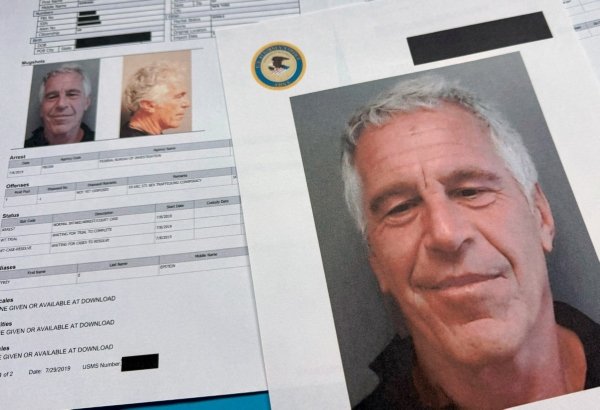
Newly unsealed court documents from the Jeffrey Epstein civil case, made public in early February 2026, contain several references to Ghana.
The mentions, however, do not accuse any Ghanaian citizens or officials of wrongdoing or direct involvement in Epstein’s criminal activities. They appear in depositions, flight logs, and witness statements related to Epstein’s international travel and business dealings in the early 2000s.
According to summaries published by GhanaWeb on February 13, 2026, the references primarily involve:
- Epstein’s brief business and travel connections to West Africa during that period
- A former high-profile associate of Epstein who had commercial interests or meetings linked to Ghana
- Passing mentions of Ghana in the context of broader African financial or investment discussions Epstein pursued
None of the documents implicate current or former Ghanaian government officials, business leaders, or private citizens in any criminal conduct. The references are largely contextual and do not form part of the core allegations against Epstein or his co-conspirators.
Ghanaian authorities have not issued an official comment on the disclosures. Legal and diplomatic experts note that the mentions appear incidental and do not trigger any immediate investigative action under Ghanaian law.
The files are part of the long-running civil defamation lawsuit brought by Virginia Giuffre against Ghislaine Maxwell, with thousands of pages unsealed in stages since 2024.
The Epstein case continues to generate global headlines, with new batches of documents periodically revealing names, travel records, and financial connections. While the Ghana references have sparked online discussion in the country, analysts caution against over-interpretation, as the documents do not suggest any Ghanaian participation in Epstein’s sex-trafficking network.
The latest unsealing adds to the ongoing public fascination and scrutiny surrounding Epstein’s elite network, even years after his 2019 death in custody.
Global Update
King Charles to Host Nigerian President Bola Tinubu for State Visit in March 2026 – First in 37 Years
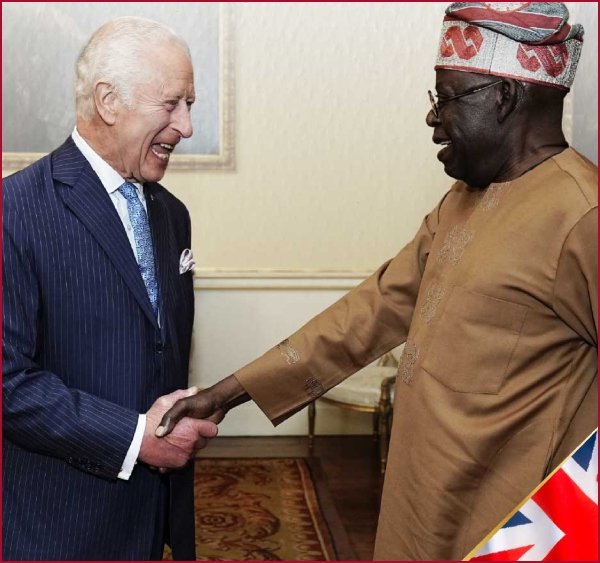
Buckingham Palace has announced that King Charles III and Queen Camilla will welcome President Bola Ahmed Tinubu of Nigeria and First Lady Oluremi Tinubu for a two-day state visit to the United Kingdom from March 18 to March 19, 2026.
The visit, centered at Windsor Castle, marks the first official state visit by a Nigerian president to the UK in 37 years—the last being in 1989 under military leader Gen. Ibrahim Babangida.
The announcement, made on February 7, 2026, follows the high-profile private trip by Prince Harry and Meghan Markle to Nigeria in May 2024, where the couple participated in Invictus Games events, mental health initiatives, and cultural engagements. While Palace officials have not drawn a direct connection, the timing adds symbolic resonance to the strengthening of UK-Nigeria ties amid ongoing Commonwealth cooperation and bilateral diplomacy.
The state visit will include traditional ceremonial elements—such as a formal welcome, bilateral meetings with King Charles, a state banquet, and engagements highlighting shared priorities in trade, security, education, climate action, and cultural exchange. President Tinubu previously met King Charles at Buckingham Palace in September 2024 and during the COP28 summit in Dubai in 2023.
The visit reflects the UK’s renewed emphasis on deepening partnerships with African nations under the Labour government, with Nigeria—Africa’s largest economy and a key Commonwealth member—playing a central role. It also underscores continued diplomatic momentum following recent UK engagements with other African leaders.
No detailed program has been released yet, but officials say the visit will reinforce long-standing historical, economic, and people-to-people links between the two countries.



-

 News9 hours ago
Ghana Gears Up for Vibrant 69th Independence Day Celebrations: Parades, Plays, Poetry, and Heritage in Focus
-

 Tourism7 hours ago
Emirates Resumes Limited Flights from Dubai as Middle East Airspace Slowly Reopens Amid Ongoing Conflict
-

 Ghana News10 hours ago
Newspaper Headlines Today: Tuesday, March 3, 2026
-

 Ghana News1 day ago
Court Slaps Barker-Vormawor with GH₵5m for Defaming Kan Dapaah and Other Trending Topics in Ghana (March 2, 2026)
-
 Ghana News9 hours ago
Ayawaso East By-Election Results Trickle in, ECG Audits Fast-Reading Meters, and Other Trending Topics in Ghana (March 3, 2026)
-

 From the Diaspora1 day ago
Ghanaians and Other Africans in UAE Flood Social Media with Videos as Iranian Missile Strikes Hit Dubai
-
 Commentary6 hours ago
At a glance: US‑Israel attack on Iran
-

 Ghana News1 day ago
Newspaper Headlines Today: Monday, March 2, 2026