
Sights and Sounds
Beyond the Summit: What They Don‘t Tell You About Climbing Ghana’s Mountain Afadjato

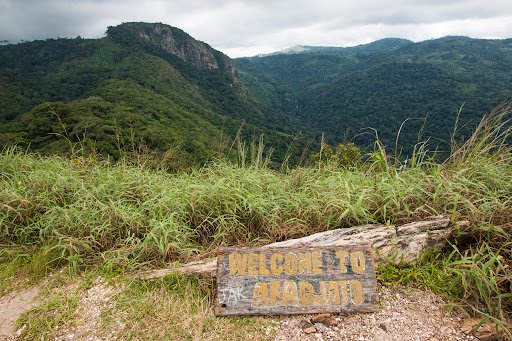
At 885 meters above sea level, Mountain Afadjato isn’t trying to compete with the giants of the world. It doesn’t have snowcaps or death-defying cliffs. But for those who make the pilgrimage to the Volta Region, this lush, green behemoth offers something better than altitude—it offers a story.
Standing on the border of Ghana and Togo, Afadjato (often called Mount Afadja) is officially the highest point in Ghana. But the locals in the surrounding villages of Liati Wote and Gbledi won’t just rattle off statistics; they’ll tell you the meaning behind the name.
Derived from the Ewe word Avadzeto, it translates loosely to “at war with the bush”. According to lore, an irritating plant grew on its slopes that gave early settlers and hunters a tough time. That stubbornness is embedded in the mountain’s DNA.
As you climb, you’ll realize that this peak isn’t just a landmark; it’s a living memory of resilience.
The Climb: A Test of Will
If you arrive expecting a gentle amble through the forest, think again. The path starts innocently enough, winding through farms and thickets, but soon the angle sharpens. The real Ghana—the one you don’t see from the window of a car—reveals itself in the fine details: the bright flash of a butterfly (over 800 species flutter through this region), the call of the colobus monkey hidden in the canopy, and the gradual shift in vegetation as you ascend.
@ishoot.ghana Before: ‘We got this!’ 💪🏾 After: ‘Mount Afadjato got us!’ 😅 What a climb! @escape_accragh @Scanty Explores! #MountAfadjato #GhanaTravel #VisitGhana #HikingGhana #ExploreGhana #GhanaTourism #GhanaAdventures #WestAfricaTravel #HikingWithFriends #TravelVibes #BeforeAndAfter ♬ Real Thing – Kwesi Arthur
Hiking Afadjato takes about 45 minutes to an hour to reach the top if you’re in decent shape, though some energetic souls have sprinted up in under 20 minutes.
The trail is manageable for most, but there’s a moment—usually halfway up—where the humidity hits, and your legs start to burn. It’s here that the mountain lives up to its “warrior” namesake. You dig deep, you push through, and then suddenly, the trees part.
The View That Pays the Debt
At the top, the wind greets you first. Then comes the silence. Looking out over the Volta Region, you see the rolling hills of the Agumatsa range disappear into Togo.
From this vantage, the villages below look like toy models scattered on a green carpet. It’s a view that reminds you that Ghana is so much more than coastlines and castles—it’s a land of high places and wide skies.
But the summit isn’t the only reason to come here. The real magic of Afadjato lies at its base.
Why You Should Visit Now
Visiting this mountain isn’t just a physical challenge; it’s an investment in community-driven tourism. The fees paid at the tourist center in Liati Wote go directly back into local projects and conservation efforts—a model that keeps the trail clean and the villages prosperous.
Plus, the location is a hub for adventure. After descending (on shaky legs, mind you), you’re just a short drive from the Wli Waterfalls, the highest waterfall in West Africa, or the tranquil Tagbo Falls, perfect for cooling off.
You can also visit the Tafi Atome Monkey Sanctuary or drive up to Amedzofe, the highest habitable town in Ghana, where an iron cross planted by German missionaries in 1939 still stands rust-free atop Mount Gemi.
The Final Word
Mountain Afadjato is not about conquering. The mountain isn’t your enemy; it’s an elder. It stands there patiently, watching over the Volta Region, waiting for you to come and listen.
Whether you come for the fitness challenge, the butterflies, or just to say you stood on top of Ghana, you’ll leave with something unexpected—a quiet understanding that the highest points in life aren’t just about the view, but about the climb itself.




In Ghana, we do not just eat. We tell stories with our mouths full.
Walk down any busy street in Accra or Kumasi, and the food calls out to you by name. Not the fancy menu names. Real names. Names that make you laugh, think, and sometimes, feel a little embarrassed. Have you ever stopped mid-bite and wondered—who sat down and decided to call a meal Kofi Broke Man?
Let me introduce you to the logic of the Ghanaian stomach.
The Engineers Who Named Your Lunch
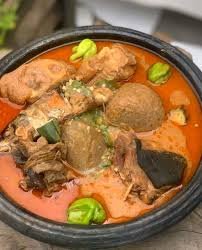
Start with the bowl of beans and fried plantain sitting in front of you. You might call it Red Red. You might call it Gobe. But where did that last one come from?
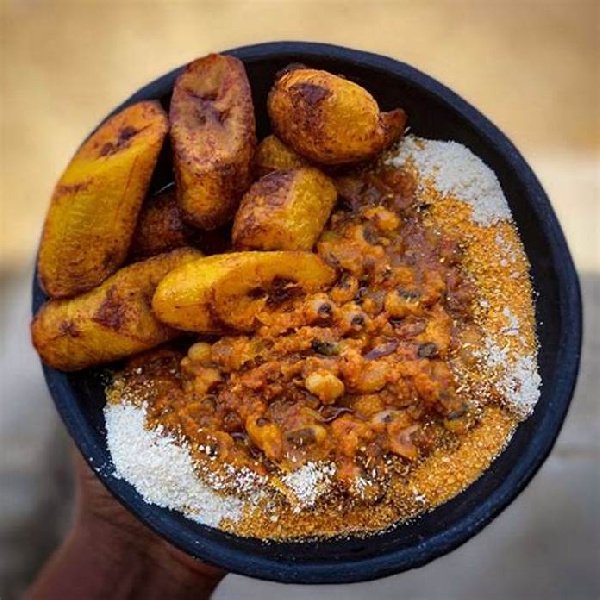
It turns out, we owe this one to the tech boys at Katanga Hall—one of the older, tougher halls of residence at KNUST. These were engineering students, practical minds who saw a bowl of food and thought in acronyms. G. O. B. E. Gari. Oil. Beans. Eggs. Say it fast, and it becomes Gobe. It is street food with a little sprinkle of brain behind it. The name stuck because it made sense. And because Katanga boys do not play about their food.
The Snack That Climbed the Ladder
Now, let us talk about the plantain we love. You see it everywhere now, roasted over charcoal, sold in neat packs with groundnuts and ginger. They call it Kofi Broke Man.
The name is Straight Talk. It means exactly what it sounds like—this is the meal for someone watching their wallet. Long ago, if your pocket ran dry, you turned to roasted plantain. It filled you up without emptying you.
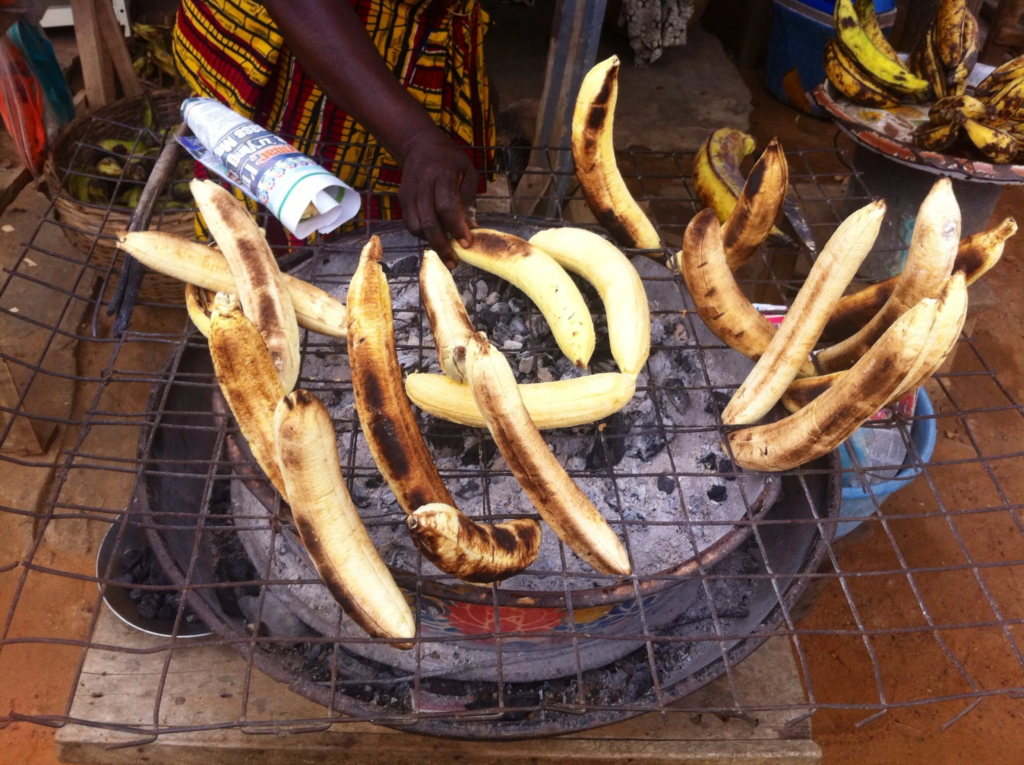
But here is the twist. Somewhere along the way, the broke snack went bougie. Prices went up. Demand exploded. Now, everyone eats it—the student, the banker, the tourist. It climbed the ladder while the rest of us stood in line. Honestly? It should have just stayed broke.
Eating with Your Back to the World
And then there is the one with the saddest name. Kokonte. The dark, sticky dough made from cassava. You might hear someone call it Face The Wall.
The name carries history. During colonial times, the dish drew negative attention for its dark appearance. People felt they had to hide while eating it, turning their faces to the wall so no one would see.
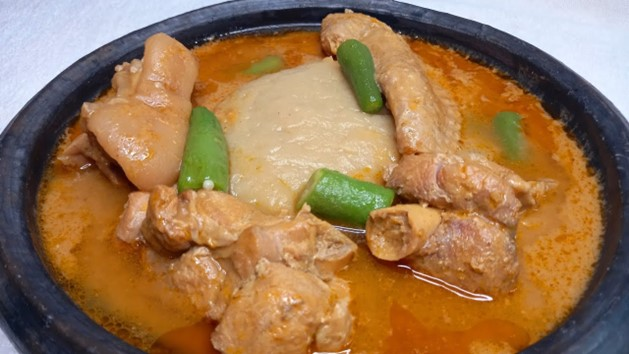
It was a meal of shame, eaten in private. But today? Things have changed. It sits proudly on tables, served with rich groundnut soup. We call it other names now—la pewa, or sometimes playfully Chris Brown after the singer. The food did not change. We just finally decided to face forward.
So next time you buy from a woman balancing a bowl on her head, ask her her name. The answer might just be a history lesson wrapped in wax print.
Sights and Sounds
Kotoka International Airport: The War Runway That Became West Africa’s Gateway
If you’ve ever arrived at Kotoka International Airport, you know the drill. You’re tired, you’re hot, and you just want to get outside and smell the Accra air.
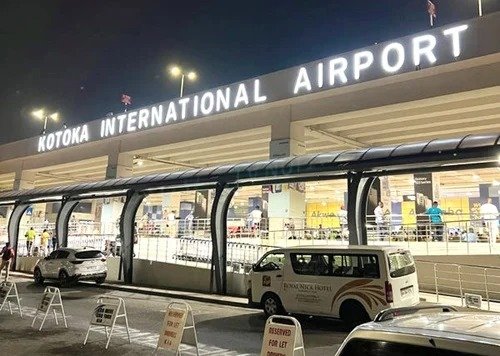
The immigration line is long. Your luggage may or may not have made it. And somewhere behind the glass, someone is stamping passports with a pace that suggests they have all the time in the world. If you’ve ever arrived at Kotoka International Airport, you know the drill. You’re tired, you’re hot, and you just want to get outside and smell the Accra air.
But here’s something to think about while you wait.
The ground beneath your feet wasn’t always polished terminal floors and duty-free shops. Back in the 1940s, this was a military operation. British forces needed a strategic position during World War II, and Accra’s location made perfect sense. So they built an airfield. Not for tourists or business travelers. For warplanes.
Fast forward to the 1950s. The war ends, the world changes, and air travel starts becoming a thing. That military runway slowly transforms. By 1956, just before Ghana gained independence, the airport underwent a serious upgrade and a name change: Accra International Airport. Suddenly, Ghana isn’t just watching the world from afar. It’s connected to it.
Then comes 1969. The airport gets renamed again, this time to honour Lieutenant General Emmanuel Kotoka, a figure from Ghana’s early political years. His story has layers, like most history does, but the name stuck. And so did the airport’s importance.
Today, Kotoka moves millions of people. Families returning for Christmas. Business travelers chasing opportunities. Strangers are coming to see what this country is about. The military runway is long gone, buried under decades of expansion and development. But it’s still there underneath, part of the foundation.
Read Also: Cantonments: Why Accra’s Posh Neighbourhood Still Carries a Soldier’s Name
So next time you’re waiting at baggage claim or sitting in departure lounge traffic, remember this. You’re not just passing through another airport. You’re standing where warplanes once parked. You’re walking through a piece of the story.
Welcome back. Or welcome for the first time. Either way, the ground you’re on has seen things.
Sights and Sounds
Cantonments: Why Accra’s Posh Neighbourhood Still Carries a Soldier’s Name
Cantonments. The name rolls off the tongue like it has always meant luxury, diplomacy, and expensive real estate.
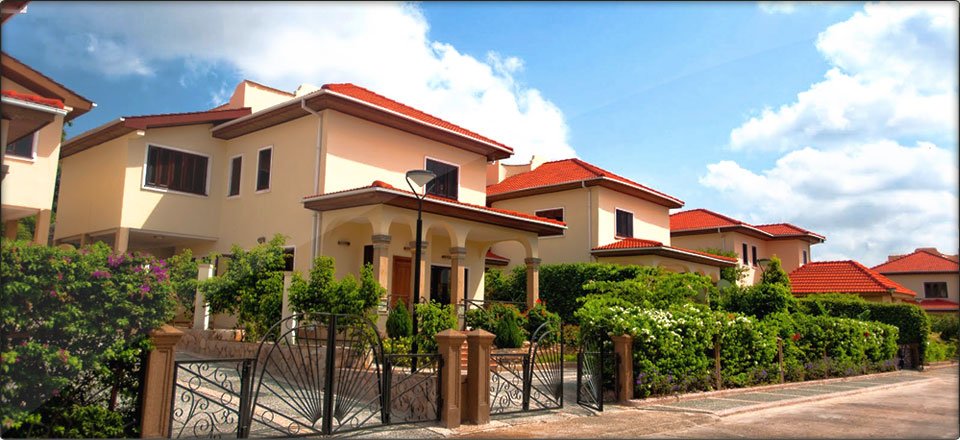
There is a corner of Accra where the streets are quiet, the walls are high, and the cars gliding through are mostly black with tinted windows. Cantonments. The name rolls off the tongue like it has always meant luxury, diplomacy, and expensive real estate.
But here is the part they don’t tell you in the brochures.
Cantonments did not start with ambassadors. It started with soldiers.
The word itself comes from the French cantonner, meaning to quarter troops. And during British colonial rule, that is exactly what this land was used for. A military base. A carefully chosen spot where European officers could live far removed from the noise and texture of local life. It was designed to be exclusive. Controlled. A physical line drawn between the rulers and the ruled.
Read Also: Bigger Than Manhyia: Discover the Grandeur of the Assin Kushea Palace, West Africa’s Largest
The irony is that the separation never really went away. It just changed faces.
Today, the boots are gone. In their place, black SUVs idling outside international schools. The officers have been replaced by diplomats, CEOs, and celebrities. The barracks made way for mansions. But if you walk those tree-lined streets, the original blueprint is still there. Wide roads. Spacious layouts. That unmistakable feeling of being tucked away from the rest of the city.
Cantonments did not accidentally become posh. It was built that way from the start.
The story was recently pieced together by @Sankofatapes on Instagram, reminding us that history does not always live in museums. Sometimes it lives in the places we drive through every day without a second glance.
So next time you find yourself stuck in traffic around Cantonments, look past the walls. Look past the luxury. The neighbourhood is not just expensive. It is historic. A piece of Accra’s past hiding in plain sight, still whispering the strategies of empire through the hum of generators and the click of automatic gates.


Ghana Intensifies Middle East Evacuation Efforts as Gulf States Reel from Iranian Retaliatory Strikes

Ghana Activates Middle East Evacuation, Baba Jamal Wins Ayawaso East and Other Trending Stories in Ghana (March 4, 2026)

Newspaper Headlines Today: Wednesday, March 4, 2026
-

 News1 day ago
Ghana Gears Up for Vibrant 69th Independence Day Celebrations: Parades, Plays, Poetry, and Heritage in Focus
-

 Tourism23 hours ago
Emirates Resumes Limited Flights from Dubai as Middle East Airspace Slowly Reopens Amid Ongoing Conflict
-

 Ghana News1 day ago
Newspaper Headlines Today: Tuesday, March 3, 2026
-

 Ghana News1 day ago
Ayawaso East By-Election Results Trickle in, ECG Audits Fast-Reading Meters, and Other Trending Topics in Ghana (March 3, 2026)
-

 Ghana News16 hours ago
Ghana’s Top Muslim Leader Condemns Khamenei Assassination, Calls for New World Order Based on ‘Right Over Might’
-

 Fashion & Style16 hours ago
The New Wave of “Afro-Minimalism”: Redefining Luxury Beyond the Print
-
 Commentary22 hours ago
At a glance: US‑Israel attack on Iran
-
 Business22 hours ago
Ghana’s Mega Infrastructure Push: 10 Game-Changing Projects Set to Transform the Country in 2026