
Commentary
What values count in Ghana? A look at the mentality of the West African country


According to the United Nations, there are currently 193 countries on our planet. Within these 193 countries there are different groups, tribes and communities, which all have and represent their own values. But what exactly are values?
Values are desirable or morally good characteristics or qualities that are attributed to objects, ideas, practical or moral ideals, facts, patterns of action, character traits or even goods.
But how do values and moral ideas manifest themselves in practice? The values espoused by fairafric include justice, kindness, respect, honesty and togetherness. Many of these values are also of central importance in Ghana.
With the help of the World Value Survey, we would like to introduce you to five important values of the Ghanaian population.
Family
There is probably no society in which the family does not play an essential role. It is therefore not surprising that in Ghana, too, almost 96% of the respondents stated that the family comes first in their lives. This is due in part to the fact that the family is considered the cornerstone of social life in Ghanaian society. The elderly act as role models for the younger generations. At the same time, the family serves to provide financial security for family members in old age.
Friendliness
The Ghanaian population is known beyond the country’s borders for its friendliness and open-mindedness. Children learn this from birth.
Part of the friendliness of Ghanaians is making small talk. A sentence like “Let’s finally get down to business” is unthinkable and considered highly impolite!
In addition to small talk, Ghanaian society is characterized by an indirect communication style – direct criticism is taboo and considered very rude. Instead of giving direct criticism, topics are skirted around, which from time to time leads to problems with serious topics and conversations easily go around in circles.
Respect
This is already visibly demonstrated in the greeting: In the male population handshakes are a must and a sign of recognition. At events and celebrations it is considered respectful to greet each person individually and especially the greeting of the older generations is very important.
Furthermore, people in Ghana do not gesture with their left hand, as this is considered rude. Food is also always eaten with the right hand.
In Ghana, collective culture dominates, which means that a person always acts on behalf of the collective, or in this case, the family. As a result, disrespectful behavior by one family member can spread to the entire family. This is one of the reasons why social behavior plays a decisive role in Ghana and care is taken not to “lose face”.
Faith
Religion is a very important part of the culture in Ghana, because in Ghana there is hardly a person who does not believe in God. One can even go a step further, because for more than 80% of the Ghanaian population, God plays a crucial role in everyday life. It is not uncommon for Ghanaians to pray several times a day. Getting up at three in the morning to practice your faith? No exception in Ghana!
For the population, which consists of almost 70% Christians and 18% Muslims, faith is primarily about dealing with death and creating positive associations with death. Faith also includes striving to do good. This is also reflected in the friendly disposition of Ghanaians.
Cohesion
In order to gain independence, the Ghanaian people had to fight hard, which bonded the people together in a very unique way. Cohesion is not only emphasized within the family – even with casual acquaintances and even strangers, people share and start a conversation without hesitation.
In Ghana, it is not uncommon to invite people passing by for a meal. It does not matter whether the person is a close friend or just a acquaintance. Even strangers are invited, as long as they do not refuse the invitation (which is considered polite in Ghana).
Editor’s note: This article was first published by Fair Afric. Read the original work here.







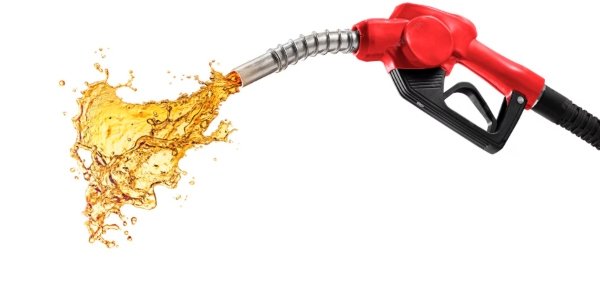
Conventional wisdom dictates that rising prices should lead to falling demand. However, this article challenges that notion by delving into the complex and often counterintuitive relationship between global oil prices and petrol consumption in Ghana. Drawing on recent research analyzing market data from 2016 to 2024, Rafael Adjpong Amankwah reveals that higher crude oil prices do not automatically suppress demand. Instead, factors like consumer hoarding behavior in anticipation of future hikes and the essential nature of petrol for transport and logistics can keep consumption stable or even cause it to spike temporarily.
Rising oil prices could trigger unexpected petrol demand in Ghana
Fuel prices may rise again soon, but what if higher prices don’t actually reduce petrol consumption in Ghana?
Discussions about rising global crude oil prices are once again dominating energy market conversations, raising concerns about higher petrol prices and increased transport costs across Ghana.
Yet the relationship between oil prices and petrol consumption may not be as straightforward as many assume. Conventional economic theory suggests that when fuel prices rise, consumers should reduce consumption. However, recent research analyzing Ghana’s petrol market reveals a more complex pattern of behavior.
The study finds that crude oil prices exhibit a positive relationship with petrol consumption, indicating that higher prices do not necessarily suppress demand as standard models predict.
This pattern reflects several structural characteristics of Ghana’s economy.
First, alleged BDC’s stockpiling increases the potential for increased purchases(demand) vis a vis consumption as consumers often engage in anticipatory or hoarding behavior when price increases are expected.
Second, global crude oil price increases do not necessarily reduce petrol consumption in Ghana in the short run. Petrol is an essential input for transport, logistics, and small business operations, meaning substitution possibilities are limited. As a result, consumption may remain stable or even increase due to inventory adjustments and expectations of further price hikes
These findings also carry an important methodological implication that Traditional symmetric demand models, which assume that price increases and decreases produce equal but opposite responses in consumption, appear to misrepresent the dynamics of Ghana’s petrol market.
When asymmetric price behavior such as the Rock-and-Feathers effect interacts with structural demand constraints, consumption responses become more complex than standard theory predicts.
Using monthly national data from 2016 to 2024 and applying a nonlinear econometric approach, the study examined how crude oil prices, exchange rates, inflation, and domestic fuel taxes affect petrol consumption.
The findings show that petrol consumption in Ghana responds asymmetrically to price changes. In practical terms, this means that price increases and price decreases do not affect consumption in the same way.
The research also highlights the importance of exchange rate movements. Because Ghana imports most of its refined petroleum products, a depreciation of the cedi significantly increases the local cost of fuel and tends to reduce consumption.
Perhaps the most influential factor identified in the study is domestic fuel taxation. Changes in taxes, levies and margins have a stronger effect on petrol consumption than movements in global crude oil prices. In particular, reductions in fuel taxes tend to stimulate consumption much more strongly than tax increases suppress it.
These findings suggest that policymakers seeking to manage fuel demand, inflation, and fiscal stability should pay close attention to domestic fuel pricing structures rather than focusing solely on international oil price movements.
As global oil markets face renewed volatility, understanding how Ghanaian consumers and businesses respond to fuel price changes will become increasingly important for economic planning and energy policy
Understanding the behavioral responses behind fuel consumption is critical for managing energy affordability, fiscal stability, and economic resilience.
The next time fuel prices rise in Ghana, the assumption that “higher prices reduce consumption” may need to be reconsidered.
In reality, the dynamics of petrol demand are shaped by behavioral responses, policy decisions, and exchange rate pressures, not just global crude oil prices. Understanding these asymmetries could be the difference between reacting to fuel price shocks and actually managing them.
Rafael Amankwah is a professional in Ghana’s downstream energy sector with a background in energy economics and investment strategy. He is passionate about advancing sustainable energy solutions and applies research, behavioral insights, and innovation to support smarter energy policies and business models.
Commentary
Ghana Must Choose Diplomacy Over Alignment in the Israel–Iran Crisis: Lessons from Ghana’s Peacekeeping and Non-Aligned Legacy

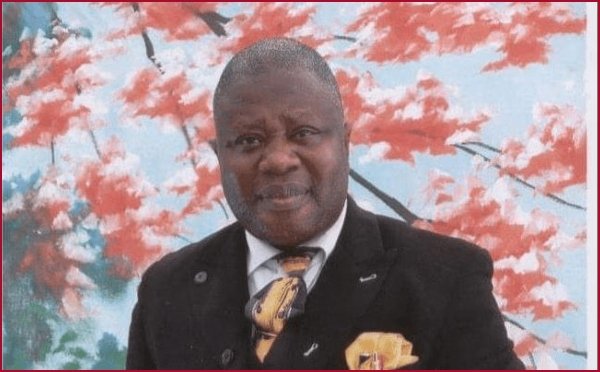
In an open letter to Israel’s ambassador, author Seth K. Awuku argues that Ghana must resist pressure to take sides in the escalating Israel-Iran conflict. Drawing on the recent wounding of Ghanaian peacekeepers in Lebanon and the nation’s non-aligned legacy, he calls for a return to diplomacy, restraint, and the protection of national interest over strategic alignment. Read the full commentary below.
Ghana Must Choose Diplomacy Over Alignment in the Israel–Iran Crisis: Lessons from Ghana’s Peacekeeping and Non-Aligned Legacy
By: Seth K. Awuku
Your Excellency Ambassador Roey Gilad,
I extend sincere diplomatic courtesy and appreciation for your prompt humanitarian response following the missile strike that wounded Ghanaian peacekeepers in southern Lebanon.
In times of shared sorrow, words carry profound weight. Your description of the attack as “tragic” and “catastrophic,” along with your wishes for the swift recovery of the injured soldiers, reflects genuine compassion. Ghana receives such gestures with gratitude, for they affirm our shared humanity amid the smoke of conflict.
Yet only two days earlier, on March 5, during a public briefing in Accra, you urged Ghana to “join its voice” in confronting Iran and to support a strategic change in its leadership to end threats and instability.
That appeal, understandable from Israel’s perspective, now stands in painful contrast to the fresh wounds suffered by Ghanaian soldiers serving under the United Nations. Tragedy, once named, requires more than sympathy—it demands reflection.
The attack of March 6 tore through the Ghanaian battalion headquarters in southern Lebanon, leaving two soldiers critically injured and another traumatized. Ghanaian peacekeepers have served in Lebanon for decades, often under dangerous and unpredictable conditions.
These events revive older concerns about the security of our personnel abroad and the broader risks that accompany escalating regional conflict.
They also follow a troubling incident in December 2025 at Ben Gurion International Airport, where several Ghanaians including members of an official delegation were detained for hours and subjected to questioning and searches that Ghana later described as humiliating and degrading. Such incidents, when repeated, inevitably strain trust.
Reciprocity, transparent investigation, accountability, and credible assurances against recurrence are essential to rebuilding confidence.
Your Excellency, during the Israel–Hamas War in November 2023, I addressed an open letter to your predecessor, Shlomit Sufa, cautioning that if the conflict escalated unchecked, it “may not be like other wars; it may be apocalyptic in scope and possibly destructive of our globe.” That warning was offered not in division, but in concern for the safety and future of all peoples caught in the widening arc of war.
Recent missile exchanges between Israel and Iran demonstrate the growing lethality of modern warfare and the alarming vulnerability of civilian populations – even in countries equipped with advanced defense systems. Ghana, however, does not possess such protections.
Our security priorities focus primarily on internal stability and peacekeeping obligations. We do not have missile interception systems, sophisticated air defenses, or the strategic infrastructure necessary to withstand retaliatory strikes in a wider regional confrontation. Alignment in conflicts of this magnitude, without equivalent protection, exposes vulnerabilities that Ghana cannot afford. Our ports, markets, infrastructure, and communities would all be at risk should tensions expand beyond the Middle East.
Precisely because great powers often allow strategic rivalries to overshadow the urgency of peace, middle powers like Ghana carry a different kind of responsibility. Our diplomatic tradition, shaped by the non-aligned vision of Kwame Nkrumah, strengthened through decades of peacekeeping, and inspired by the global statesmanship of Kofi Annan, places upon us a quiet but meaningful moral authority.
We can call for restraint without appearing weak, advocate dialogue without conceding defeat, and remind the world that wisdom in diplomacy is often measured not by the volume of power, but by the courage to prevent catastrophe.
The Hebrew Scriptures offer a powerful reminder of the difference between victory and legacy. In 1 Chronicles, King David is told he cannot build the temple because he has shed too much blood. Instead, that task falls to his son Solomon, whose name signifies peace and rest. True greatness, the text suggests, lies not only in the victories of war but in the achievements of peace.
History also remembers another figure: Samson, the blinded warrior who in despair pulled down the pillars of the temple, destroying himself and his enemies alike. If modern conflicts are pushed toward such desperation; if nuclear doctrines or catastrophic retaliation ever become reality, the consequences would extend far beyond the borders of any single nation. Ghana therefore pleads for wisdom over pride and restraint over escalation.
In moments such as this, the measure of leadership is not found in the power to escalate conflict, but in the wisdom to pause, reflect, and choose the harder path of peace.
May the calm voice of diplomacy silence the roar of war.
May the wounded recover before new wounds are inflicted.
May the pain of mistrust fade like morning mist across the savanna.
And may history remember not the clash of weapons, but the courage of those who chose dialogue over destruction.
With respect for your office, hope for the recovery of the injured, and a shared aversion to catastrophe,
I remain,
By Seth K. Awuku
Principal, Sovereign Advisory
Former Immigration and Refugee Lawyer (Ottawa, Canada)
Writer on international law, diplomacy, and refugee governance
Commentary
Influencer Shanell R. Oliver Delivers Powerful Message to All Blacks: “We Are One African People Living in Different Places”
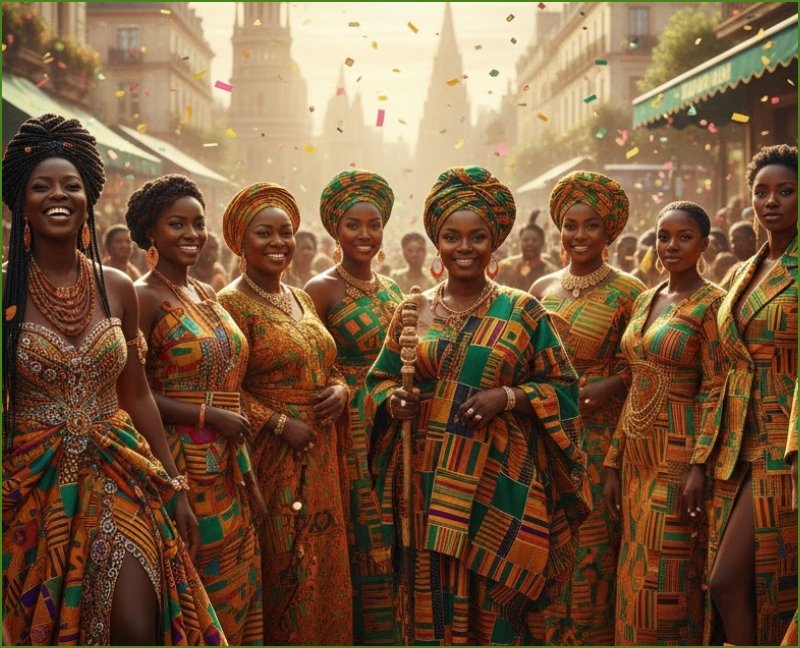
Accra, Ghana – March 6, 2026 – U.S.-based influencer Shanell R. Oliver (@shanellroliver) shared a viral Facebook video reminding the global African diaspora of their shared West and Central African roots, urging unity across borders and continents.
In the emotional post, Oliver reminds Blacks across the world that more than 12.5 million Africans were forcibly trafficked during the transatlantic slave trade, with over 90% originating from the same core regions: the Congo Kingdom, Akan States (including modern Ghana), Yoruba and Dahomey lands (Nigeria and Benin), Igbo heartlands, and Senegambia. This common ancestry links African Americans, Afro-Brazilians, Haitians, Jamaicans, Trinidadians, Cubans, Dominicans, and Afro-descendant communities in Colombia, Venezuela, and beyond.
“Our spiritual systems, drum patterns, foods, dances, languages, and resistance movements all mirror each other because we come from one cultural foundation,” Oliver says in the video. “European invaders scattered us, but they couldn’t scatter our identity.”
She points to DNA evidence showing that 70% of African Americans trace roots to Nigeria, Ghana, Benin, Cameroon, Congo, and Angola—the same zones that shaped Afro-Brazilian and Caribbean cultures.
The message resonates deeply on Independence Day, when Ghanaians and the diaspora celebrate shared heritage and resilience.
Oliver closes with a call to recognition: “We’re not different kinds of Black. We are one African people living in different places. And we are finally remembering that.”
The post has sparked widespread shares and comments across the diaspora, reinforcing the enduring connection between continental Africans and their kin worldwide.


How Global Nations Are Scrambling with Drastic Measures as Trump’s Iran War Triggers Historic Oil Crisis

Top 20 Profitable Business Ideas in Ghana for 2026 – High-Growth Opportunities for Entrepreneurs

Germany Hands Over Four Operational Shelters to Ghana Immigration Service at Aflao Border
-

 Ghana News6 hours ago
Newspaper Headlines Today: Wednesday, March 18, 2026
-
 Ghana News2 days ago
Ghana Announces Emergency One-Way Evacuation for Citizens in Qatar Amid Heightened Security Concerns
-
 Ghana News6 hours ago
UK Engages Ghana on Counterterrorism and Maritime Security
-
 Taste GH19 hours ago
Experience the Rare Texture of Apapransa the Celebratory Roasted Corn Delicacy
-

 Global Update2 days ago
Influential Foreign Policy Group Sends Direct Message to Trump Warning of Global Risks From His Actions in Iran
-
 Africa Watch2 days ago
France Returns Sacred ‘Talking Drum’ Looted During Colonial Rule to Ivory Coast
-

 Ghana News1 day ago
Newspaper Headlines Today: Tuesday, March 17, 2026
-

 Health & Wellness1 day ago
How Walking Melts the Stubborn Fat You’ve Been Trying so Hard to Get Rid Of