
Perspectives
Khaby Lame is the world’s most followed TikToker: the story of a Senegalese‑born star who sold his identity

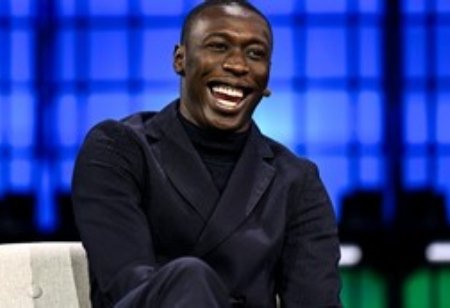
This article traces Khaby Lame’s meteoric rise from a factory worker in Italy to global stardom through his signature silent, deadpan reaction videos that mock overly complicated “life hack” content.
Khaby Lame is the world’s most followed TikToker: the story of a Senegalese‑born star who sold his identity
Fanny Georges, Université Sorbonne Nouvelle, Paris 3
His name is Khabane Lame, but he is known worldwide as Khaby Lame. Born in Dakar, Senegal, he is the most followed content creator on TikTok.
He became famous for video clips in which he reacts to absurd “life hack” videos with a blank, slightly annoyed face, showing the hack wasn’t needed.
At the time of writing he has over 160 million followers: a world record achieved without uttering a single word. In January he sold his brand rights for nearly US$1 billion.
But there’s another dimension to his story that the western media rarely mention: Khaby Lame is a practising Muslim and a hafiz, a Muslim devotee who has memorised the entire Quran. This after being sent to a Quranic school near Dakar at the age of 14.
The tension between the sacred body of the hafiz and the commercialisation of the influencer’s digital life makes his journey a rich case study.
For me, as a researcher of digital identity, his online career also raises questions about turning personal data into digital assets.
From the suburbs of Turin to the top of the global stage
Khaby Lame’s story reads like a modern-day myth. Not because it’s hard to believe, but because it mirrors the core narratives of digital modernity. It starts with hardship, goes through a period of creative isolation and ends with global recognition.
This is what the French thinker Roland Barthes called “mythical speech”, a story that seems natural and simple, but is actually shaped by deeper forces and structures.
In 2020, at the beginning of the COVID-19 pandemic, Khaby Lame lost his job as a factory worker. He was stuck at home and locked down in social housing in the suburbs of Turin, Italy, where his parents had moved when he was a baby.
Out of this hardship he made a simple decision: he started filming short videos. Just 17 months later, he reached more than 100 million followers on TikTok. He was the first content creator based in Europe to reach that milestone.
His story reflects the promise often promoted by TikTok that the platform can lift anyone up. All you need, it suggests, is a mobile phone, and talent will quickly be rewarded with global fame.
This should be celebrated. But the myth of instant success also needs a closer look. Behind every viral rise lie smart decisions, hard work, and the powerful, and often unpredictable, role of the platfom’s algorithm.
Comic tradition
What sets Khaby Lame apart from almost all the creators before him is the semiotic system (of signs and symbols) he invented – or rather reactivated. He brought back an old comic tradition.
Many compare him to British comedy actor Charlie Chaplin. Others see echoes of US comedian Buster Keaton. Both were masters of Hollywood’s silent slapstick comedy. https://www.youtube.com/embed/Z7-QdoofMq8?wmode=transparent&start=0 Charlie Chaplin in “The Kid – Fight Scene.”
Khaby Lame revives the codes of 1930s Hollywood silent comedy cinema: mime, meaningful glances, no dialogue, and burlesque sketches (short theatrical scenes) that convey messages. But the Chaplin connection ends there, as the two men inhabit their bodies in radically different ways.
Chaplin’s films carry emotional weight, driven by social and political themes. His character, the tramp, is a poor wanderer pushing back against an unfair industrial world.
Khaby Lame’s style is closer to Keaton’s. He says nothing. He simply shows how unnecessary and complicated these internet quick fixes are. His absolute impassivity in the face of the absurd is what Keaton perfected with his famous “great stone face”. https://www.youtube.com/embed/UWEjxkkB8Xs?wmode=transparent&start=0 Buster Keaton ‘The Art of the Gag’.
But while the comic structure is similar, their relationship to their bodies is not. Throughout his life, Keaton remained completely indifferent to religion or metaphysics in any form. Khaby Lame is the opposite. He is a hafiz. The separation of his digital identity from his physical person is notable.
Wordless humour allowed him to build a global audience because there are no language barriers, just as silent film stars like Charlie Chaplin became global icons a century ago.
TikTok’s algorithm favours content that anyone can understand instantly. Chaplin needed a movie theatre, Khaby Lame needs only a phone and an algorithm. The mechanics are similar. The way it spreads has completely changed.
Digital identity
In January 2026, Khaby Lame’s carefully crafted expressive persona took on a new status. It became a financial asset. He sold his company, Step Distinctive Limited, for US$975 million to Rich Sparkle, a publicly traded company based in Hong Kong. The agreement includes the transfer of rights to use his image, voice and behavioural models to create an artificial intelligence-powered digital twin.
This digital twin will produce multilingual content, including material for advertising and promotions. Companies will be able to run commercials in several countries without Khaby being physically present. According to Rich Sparkle, this could help generate over US$4 billion in annual sales, especially through livestream e-commerce (a format already dominant in Asia), broadcast simultaneously around the world.
This transaction marks a turning point. Digital identity no longer merely represents a person. It becomes an asset that can be separated from the individual who created it. Now, a creator is no longer a brand ambassador, but a brand in its own right. In theory, Khaby Lame’s digital being is now legally separate from Khaby Lame himself.
The digital twin is, in this sense, the Buster Keaton body that digital platform capitalism has always dreamed of – impassive, reproducible, available across all time zones.
Signature gesture
Khaby Lame’s signature gesture is to place both palms open and turned upward. This seems simple and easy to understand, a light and humorous sign of of disbelief. But the gesture carries deeper meanings.
In Islamic tradition, as in many African cultures, this same gesture is linked to dua, the act of raising one’s hand in supplication to God. What millions of viewers read as a comic signature is also a spiritual practice.
Yet Khaby Lame’s digital double is not simply an image. It can act in his name. It can speak with his voice. It can repeat his familiar gestures. This is no longer simple representation. It is a form of transferring his way of expressing himself onto a digital system.
The same open hands, the same expressive gaze, the same voice that once recited the suras of the Quran in a school in Dakar are now the attributes of a commercial transaction valued at nearly a billion dollars.
There is an ethical question in handing over his active identity to financial markets.
An ethical question
For many young Africans, especially in Senegal, Khaby Lame embodies the possibility that digital spaces are territories where Africans can succeed, where the hierarchies inherited from colonial history can, at least symbolically, be overturned.
But the deal raises a difficult question: what does it mean to sell your digital self in a world where Black and African bodies have been used and profited from for centuries without consent and fair compensation?
Is this a win or a new form of exploitation? Can the financial benefits balance the transfer of his identity?
More African creators are building global audiences every year. That means these questions will become harder to ignore. Who owns a creator’s digital twin once it’s sold? Who set the rules for its use?
Khaby Lame is not just a social media success story. He is a revelation of the future and, perhaps unwittingly, a pioneer.
Fanny Georges, enseignant-chercheur, Université Sorbonne Nouvelle, Paris 3
This article is republished from The Conversation under a Creative Commons license. Read the original article.






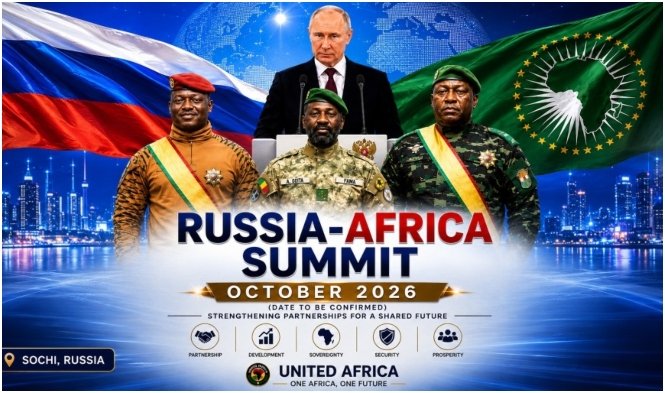
As Moscow prepares to host the third Russia-Africa Summit on 28–29 October 2026, the gathering arrives at a moment of heightened scrutiny. Nearly five years into its war in Ukraine, Russia is seeking to prove that its partnerships with African states have survived Western sanctions and remain strategically valuable. But the deeper question is what Africa gains in return. Drawing on trade figures, security partnerships in the Sahel, and the intersection of military cooperation with resource interests, this analysis by Joseph McCarthy examines whether the relationship is genuinely reciprocal or whether Africa is becoming an increasingly important source of the political influence, strategic resources, and economic resilience that Moscow needs to sustain its own geopolitical ambitions. Read the full article below.
Russia-Africa Summit: The Search for Resources, Influence and War Resilience
As the Ukraine war deepens Russia’s search for strategic resources, political allies and economic resilience, the third Russia-Africa Summit raises a difficult question: what does Africa gain in return?
Russia’s renewed engagement with Africa should be understood against the backdrop of a war in Ukraine that has become a test of Moscow’s economic, military and political endurance. Since the invasion of Ukraine, Russia has faced extensive Western sanctions, restrictions on trade and finance, and increasing pressure on the sources of revenue that sustain its war effort. In this environment, Africa has acquired a significance that extends beyond traditional diplomacy. The continent offers Moscow political partnerships, alternative markets, military cooperation and, critically, access to valuable natural resources and potential revenue streams that can help Russia withstand external pressure.
This helps explain the evolution of the Russia-Africa summits. The first summit, held in Sochi in 2019, was largely presented as an effort to rebuild and institutionalise Russia’s relationship with Africa, with trade, investment, security and political cooperation at the centre of the agenda. By the time of the second summit in St Petersburg in 2023, however, the geopolitical context had changed dramatically. Russia was already deep into its war in Ukraine and under extensive Western sanctions. The summit therefore served not only to deepen economic and political relations but also to demonstrate that Moscow remained capable of maintaining significant partnerships outside the Western bloc.
The third summit schedule on 28-29 October 2026, comes at an even more consequential moment. Russia is seeking to demonstrate that its relationship with Africa has survived the prolonged Ukraine war and remains capable of producing strategic benefits. The question for African governments should increasingly be whether the relationship is producing comparable benefits for them. Moscow’s partnership with Africa cannot be assessed only through diplomatic declarations, military agreements or high-level summits. It should also be judged by what African states receive in return and by what Russia gains from the relationship.
One of the most important areas to examine is natural resources. Russia’s interest in Africa is not simply about obtaining diplomatic support. Access to gold and other strategic commodities can provide alternative sources of revenue at a time when Moscow is seeking to reduce the impact of Western sanctions. Gold is particularly important because it can be traded through opaque networks and converted into revenue outside conventional financial channels. The U.S. Treasury has previously linked Wagner-associated gold operations in Africa to the financing of the group’s activities, including its operations in Ukraine. This does not mean that every Russian engagement with an African resource-producing state is designed to finance the Ukraine war.
It does, however, demonstrate why African resources can have strategic value for a Russia seeking to sustain its power and resilience under sanctions. The same logic extends beyond gold. Russia has increasingly shown interest in energy and critical raw materials, while its security partnerships in countries such as Mali and the Central African Republic have created relationships in which military and political cooperation can intersect with economic and resource interests. The emerging model therefore deserves closer scrutiny, Russia provides security assistance and political backing, while gaining influence, commercial opportunities and potentially privileged access to resources.
Mali provides one of the clearest case studies. Russia’s military presence in the country began with the arrival of Wagner personnel in 2021 and subsequently evolved into the Africa Corps structure. Moscow has presented this relationship as an alternative to Western security partnerships and as evidence of Russia’s willingness to assist African states in defending their sovereignty. Yet the relationship also raises a fundamental question: what does Russia receive in return for its military and political support?
That question becomes particularly important when the wider context of the Ukraine war is considered. If Russia can secure access to gold and other strategic resources, strengthen relationships with resource-rich governments and establish alternative economic channels, those relationships can help Moscow mitigate the effects of sanctions and sustain its broader strategic capacity. The relationship should therefore not be viewed solely through the narrow lens of counterterrorism. It is also part of a wider contest over resources, influence and economic resilience.
The economic figures contained in the summit case study reinforce the need to ask what kind of partnership Moscow is actually building. At the 2019 Sochi summit, Vladimir Putin announced a target of increasing Russia-Africa trade to $40 billion. According to Russian data cited in the document, trade stood at $27.7 billion in 2025, while Russia accounted for less than 1 percent of foreign direct investment in Africa. These figures do not prove that Russia’s Africa strategy has failed, nor do they capture every form of strategic value that Moscow derives from the continent. If Russia’s conventional economic footprint remains relatively modest, why is Moscow investing so heavily in strategic relationships with African states? One answer is that the value of Africa to Russia cannot be measured by trade and investment alone. Political influence, military access, diplomatic support, alternative markets and access to natural resources can all have strategic value. For a country fighting a prolonged war under sanctions, these forms of influence can become as important as conventional economic indicators.
This is why the third Russia-Africa Summit should be examined as more than another diplomatic gathering. Moscow wants to use the summit to demonstrate that its partnership with Africa remains strong despite the Ukraine war. The circumstances surrounding the meeting expose the tension at the heart of that claim. African officials are being asked to travel to Moscow while Ukrainian drone attacks have repeatedly disrupted air traffic around the Russian capital. On September 20 an attack involving more than 450 drones caused fresh disruption in the Moscow region, while Air Tanzania temporarily suspended its Moscow route following a risk assessment. The irony is difficult to ignore. Russia presents itself as a security partner for Africa, yet some African officials must consider their own security when travelling to the Russian capital. More importantly, African governments must now assess whether the strategic benefits of their relationship with Moscow justify the risks and costs associated with it.
For Ghana, this calculation is particularly important. The security consequences of Russia’s growing involvement in the Sahel cannot be separated from Ghana’s own national and regional security interests. A source close to the Ghanaian delegation cited in the summit document questions whether the relationship is genuinely “win-win” and points directly to the deteriorating security situation in the Sahel and its spillover towards Ghana’s northern borders. This should concern African governments is Russia’s engagement with Africa primarily delivering security and development benefits to African states, or is Africa increasingly becoming an important source of the political influence, strategic resources and economic resilience that Moscow needs to sustain its own geopolitical ambitions?
The answer is unlikely to be simple. Russia’s relationship with Africa serves multiple purposes, and resource access is only one component of a broader strategy. But the Ukraine war has changed the calculation. What may once have been presented principally as an effort to expand trade, investment and diplomatic relations now also has to be viewed through the lens of Russia’s need to preserve strategic autonomy, withstand sanctions and maintain the capacity to wage a prolonged war.
The third Russia-Africa Summit therefore represents a test not simply of whether African leaders will continue to engage Moscow, but of whether Russia can convince them that this engagement is genuinely reciprocal. For African states, the critical question is no longer whether Russia wants a deeper relationship with Africa. It clearly does. The more important question is what Moscow needs from Africa, what Africa receives in return, and whether the balance between the two is becoming increasingly unequal.
Joseph McCarthy is an analyst and researcher specialising in governance, security and political transitions in the Sahel. He writes on geopolitics, development and African diplomacy. joecarthy30@gmail.com
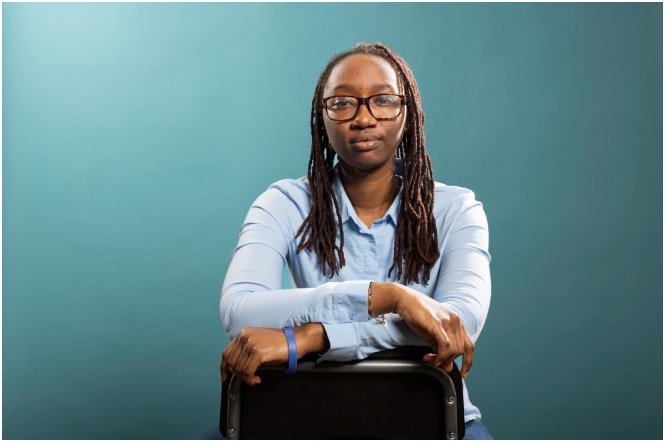
In Ghana, as in much of the world, a woman’s university degree, her salary, and her professional title are often taken as proof that she has made it; that she is empowered. But for many educated and wealthy women, those markers of advancement coexist with something far darker: violence, control, and a silence that their status only deepens. Drawing on Ghanaian data and international research, this analysis by Shallom Abla Lumor examines why resources alone do not guarantee agency, why economic abuse can erode independence, and why the women best positioned to leave are sometimes the ones least seen. It asks a harder question than whether women are advancing: whether they are actually free. Read the full article below.
Educated, Wealthy and Still Trapped: Why Women’s Advancement Falls Short of Empowerment
By Shallom Abla Lumor | Email: princesshallom@gmail.com
She has a university degree, perhaps two. She has a good job, earns her own money and pays a large share of the household bills. She may be a lecturer, a doctor, a banker or a lawyer. From the outside, we call her an empowered woman.
Yet she may be afraid to disagree with her husband. She may earn a good income and have little say over how it is spent. She may stay in a violent marriage because of her children, her church, her family name, fear for her safety, or what people will say.
Her degree and income tell us about her advancement. Whether she has power over her own life is a separate question.
Resources and the freedom to use them
Development scholar Naila Kabeer (1999) describes empowerment as the ability to make strategic life choices where that ability was previously denied. She separates resources, such as education and income, from agency, the ability to set goals and act on them. Resources make agency possible. They do not guarantee it.
So our questions must go further. Can she control the money she earns? Can she disagree with her partner without fear? Can she safely leave a dangerous relationship?
Education protects, up to a point
Ghana’s own data shows that education matters. Analysing the 2022 Ghana Demographic and Health Survey, Kwamena Sekyi Dickson, Castro Ayebeng and Joshua Okyere (2024) found that 36.4 percent of the married or cohabiting women in their sample had experienced some form of intimate partner violence. Women with secondary education or more had about 60 percent lower odds of having experienced it than women with no formal education.
That is a strong reason to keep investing in girls’ education. Lower odds still leave many educated women exposed. Even in the most educated group, about one in five women (19.2 percent) had experienced partner violence, compared with 41.7 percent of women with no formal education. The same study identified a partner’s dominance as an important predictor of violence, and a degree does little to change the man a woman comes home to.
Earning money and controlling it
Researchers including Judy Postmus and colleagues describe economic abuse as a distinct form of intimate partner abuse: controlling a woman’s access to money, monitoring her spending, running up debts in her name, or interfering with her work. A good salary offers limited protection when someone else decides how it is used.
Abuse can also wear away the independence a woman once had. Using police and employment records for the whole of Finland, economists Abi Adams-Prassl, Kristiina Huttunen, Emily Nix and Ning Zhang (2024) found that women whose partners were later reported for physical violence saw their earnings and employment fall sharply as soon as they moved in with these men, compared with similar women. The authors read this as economic suppression: abusive men weakening a woman’s ability to support herself and, later, to leave.
When her success collides with his beliefs
In a US study using a national sample of 4,296 people surveyed in the late 1980s, Maxine Atkinson, Theodore Greenstein and Molly Monahan Lang (2005) found that a wife’s share of household income was associated with a higher likelihood of abuse only among husbands with traditional gender beliefs. In Australia, Yinjunjie Zhang and Robert Breunig (2023) found that women who out earned their partners reported partner violence at a rate about 33 percent above the average, and emotional abuse about 20 percent above it. The authors concluded that the pattern points to norms about male breadwinning.
These studies show associations, from countries far from Ghana, so we should not borrow their numbers. Their question still applies here. If a man has been taught that a husband must always be the head and the main provider, what happens when his wife earns more? The risk lies in a belief system that reads her success as a threat to his authority.
Status can become its own prison
We assume a wealthy, educated woman would find it easier to speak up. The American psychotherapist Susan Weitzman suggests it can be harder. Drawing on interviews with fourteen affluent women, her book Not to People Like Us (2000) describes what she calls “upscale violence,” and argues that police, courts and counsellors often overlook such women because many people believe abuse happens only to other kinds of women.
When she does speak, she hears: “You are a lawyer, how can you allow this?” “You have your own money, why don’t you leave?” Such questions turn his behaviour into a verdict on her intelligence.
Children, church and the cost of leaving
In her master’s research at VID Specialized University (2020), Elorm Ama Stiles-Ocran interviewed ten Anlo Ewe survivors of domestic violence. They named poverty, the effects of divorce on their children, the shame and stigma of violence and divorce, fear of further violence, and church teaching on marriage as reasons they felt there was no way out. In a 2023 article in the African Journal of Gender and Religion, she draws on the stories of thirteen abused Christian women in a mainline church in southern Ghana to examine how theology shapes their agency.
Faith gives many women strength. In these women’s accounts, it could also hold them in place, when submission was taught as silence or when keeping the marriage together counted for more than the safety of the woman inside it.
Church leaders disagree about the church’s part in this. On 12 April 2022, the then Presiding Bishop of the Methodist Church Ghana, Most Rev Dr Paul Kwabena Boafo, said it was unwise to stay in an abusive marriage in the name of religion or society, and spoke about pastors who had persuaded abused members to stay. The next day, Rev Prof Johnson Kwabena Asamoah-Gyadu, now Presiding Bishop of the same church, said no Christian church encourages members to remain in abusive marriages and that the church was not to blame, while urging churches to protect victims and discipline abusers. Survivors deserve to know which of these they will meet in their own congregation.
Leaving also carries danger. A US study led by Jacquelyn Campbell (2003) compared 220 women killed by intimate partners with 343 women living with abuse, and found that separating from a controlling partner after living together was associated with a higher risk of being killed. Ghana’s context differs, yet a woman who has not left may understand the risk better than those judging her.
What we still don’t know
Ghana has the Domestic Violence Act, 2007 (Act 732) and the Domestic Violence and Victim Support Unit (DOVVSU) of the Ghana Police Service. Yet we have very little Ghanaian research on abuse among educated and wealthy women, and most of what we know about “upscale” abuse comes from abroad. The more firmly we picture the abused woman as poor and uneducated, the less likely we are to see her when she is a doctor or a director.
What each of us can do
Families can believe a daughter who reports abuse and stop sending her back to manage the marriage. Pastors can treat abuse as a safety matter first and refer survivors to DOVVSU and trained counsellors. Employers can offer confidential support, knowing senior staff may be living with violence at home. Men can challenge the idea that a wife’s income diminishes her husband. Friends can ask, “What do you need to be safe?”
A woman’s degree, income and title are achievements worth celebrating. Empowerment asks whether she can use them to shape her own life, freely and safely, and whether her home, church and community let her.
Sources
- Kabeer, N. (1999). Resources, agency, achievements: Reflections on the measurement of women’s empowerment. Development and Change, 30(3).
- Dickson, K. S., Ayebeng, C. and Okyere, J. (2024). Unveiling Shadows: Investigating women’s experience of intimate partner violence in Ghana through the lens of the 2022 Demographic and Health Survey. PLOS ONE. https://doi.org/10.1371/journal.pone.0309564
- Postmus, J. L., Plummer, S. B. and Stylianou, A. M. (2016). Measuring economic abuse in the lives of survivors. Violence Against Women, 22(6).
- Adams-Prassl, A., Huttunen, K., Nix, E. and Zhang, N. (2024). The dynamics of abusive relationships. Quarterly Journal of Economics, 139(4). https://doi.org/10.1093/qje/qjae022
- Atkinson, M. P., Greenstein, T. N. and Lang, M. M. (2005). For women, breadwinning can be dangerous: Gendered resource theory and wife abuse. Journal of Marriage and Family, 67(5).
- Zhang, Y. and Breunig, R. (2023). Female breadwinning and domestic abuse: Evidence from Australia. Journal of Population Economics, 36(4). https://link.springer.com/article/10.1007/s00148-023-00975-9
- Weitzman, S. (2000). Not to People Like Us: Hidden Abuse in Upscale Marriages. Basic Books.
- Stiles-Ocran, E. A. (2020). No way out? The dilemma of survivors of domestic violence and the church’s response in Ghana. MA dissertation, VID Specialized University. https://hdl.handle.net/11250/2825498
- Stiles-Ocran, E. A. (2023). Theology and women’s agency in the context of intimate partner violence in Ghana. African Journal of Gender and Religion, 29(1), 74 to 101. https://hdl.handle.net/11250/3082947
- Stiles-Ocran, E. A. [Title and year to confirm]. Religion and Development, 4(2 to 3), from p. 213. https://brill.com/view/journals/rnd/4/2-3/article-p213_5.xml
- Campbell, J. C. et al. (2003). Risk factors for femicide in abusive relationships: Results from a multisite case control study. American Journal of Public Health, 93(7). https://pubmed.ncbi.nlm.nih.gov/12835191/
- Ghana News Agency (12 April 2022). Don’t die in abusive marriage, Bishop Boafo. https://gna.org.gh/2022/04/dont-die-in-abusive-marriagebishop-boafo/
- Ghana News Agency (13 April 2022). No church supports abusive marriage, Clergyman. https://gna.org.gh/2022/04/no-church-supports-abusive-marriageclergyman/
Commentary
As Ghana Advances Move to Join the BRICS, These Are Among The Potential Benefits From the Deal
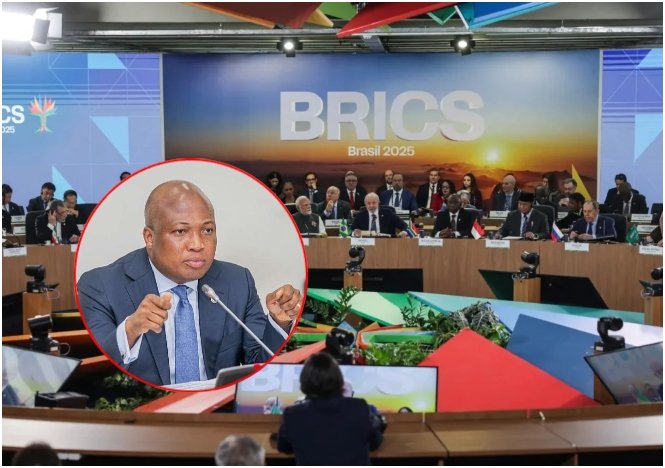
Ghana is preparing to formally apply to join BRICS, opening a new chapter in the country’s effort to diversify its international partnerships and gain greater room to manoeuvre in an increasingly fragmented global economy.
Foreign Affairs Minister Samuel Okudzeto Ablakwa announced on October 6 that President John Dramani Mahama’s Cabinet had approved Ghana’s decision to submit a formal application to the bloc.
“Another major highlight which I am disclosing to the Ghanaian people for the first time is that the Cabinet of President John Dramani Mahama has decided that Ghana should put in a formal application to join BRICS,” Ablakwa said, according to the Ghana News Agency.
The announcement places Ghana inside a much larger geopolitical conversation.
BRICS has evolved considerably from the original grouping of Brazil, Russia, India and China. South Africa joined in 2011, while Egypt, Ethiopia, Iran, Saudi Arabia and the United Arab Emirates were added in the latest major expansion. Indonesia subsequently became a full member.
The group also created a partner-country category, with Nigeria, Uganda and other countries joining that framework. Partner status gives countries opportunities to participate in selected BRICS meetings and discussions, although it does not provide the same participation as full membership.
Ghana is now seeking something more ambitious: membership.
But joining BRICS would not, by itself, transform Ghana’s economy.
The real question is what Ghana intends to negotiate once it gets a seat at the table.
Beyond the BRICS Label
BRICS is not a conventional economic union or free-trade bloc. It has no constitutive treaty, permanent secretariat or common budget, and its members coordinate across areas including politics and security, economics and finance, and people-to-people cooperation. Major decisions are made by consensus.
That distinction matters.
Membership would give Ghana additional diplomatic access and a platform for cooperation with some of the world’s major emerging economies. It would not automatically deliver factories, infrastructure projects, investment, technology transfers or new export markets.
Those outcomes would have to be negotiated.
And that is where Ghana’s BRICS strategy becomes much more important than the application itself.
What Should Ghana Negotiate For?
If Accra is serious about using BRICS as an economic-development instrument, its negotiating agenda could extend well beyond diplomatic visibility.
1. Better market access for Ghanaian exports
Ghana should seek practical pathways into BRICS markets for products capable of generating greater value domestically.
That means going beyond the traditional export of raw commodities.
Cocoa is the obvious example. Rather than viewing BRICS primarily as another destination for Ghanaian cocoa beans, Accra could pursue partnerships that expand processing, chocolate manufacturing, packaging and related industries inside Ghana.
The same logic applies to minerals, agricultural products, pharmaceuticals, processed foods and manufactured goods.
The objective should be simple: more Ghanaian value created before products leave Ghana.
2. Make the AfCFTA connection a strategic advantage
This may be one of Ghana’s most important cards.
The Secretariat of the African Continental Free Trade Area is headquartered in Accra, giving Ghana an unusual position within Africa’s emerging single-market architecture.
The AfCFTA’s central challenge is moving from negotiated rules to implementation and increasing intra-African trade. Its Secretary-General, Wamkele Mene, said in July 2026 that implementation remains the priority and that intra-African trade exceeded $220 billion in 2024.
Ghana should therefore resist treating BRICS membership simply as a bilateral relationship between Accra and the BRICS capitals.
It can position itself as a gateway between BRICS economies and the African Continental Free Trade Area.
That creates a potentially powerful proposition:
Invest in Ghana, manufacture in Ghana, and use the AfCFTA market as part of the commercial opportunity.
The value would not be Ghana’s population alone. It would be Ghana’s location within a continent-wide market framework.
3. Turn investment interest into industrial capacity
Ghana does not simply need foreign capital.
It needs capital tied to productive capacity.
That means negotiating for investments in manufacturing, agro-processing, pharmaceuticals, renewable energy, logistics, digital infrastructure and other sectors capable of creating jobs and increasing exports.
Accra should be particularly interested in agreements that include local-content requirements, skills development, technology transfer and Ghanaian participation in supply chains.
The question should not simply be:
How much money will you invest?
It should be:
What will Ghana be able to produce five or 10 years after you invest?
4. Pursue development financing strategically
BRICS also has an important financial dimension.
The New Development Bank, created by the BRICS countries, is designed to mobilize resources for infrastructure and sustainable-development projects.
For Ghana, the potential attraction is not simply another source of borrowing.
The strategic question is whether alternative financing relationships can give Accra more options when funding infrastructure, energy, transport, water, technology and industrial projects.
But additional financing is not automatically beneficial.
Ghana would still need to assess the cost of borrowing, repayment risks, project viability, procurement arrangements and the effect on public debt.
BRICS should therefore expand Ghana’s financing choices—not replace financial discipline.
5. Build technology partnerships, not just technology imports
India and China, among others, offer Ghana potential areas for cooperation in digital technology, manufacturing, telecommunications, pharmaceuticals, agriculture and technical education.
But Ghana’s objective should be to develop domestic capabilities rather than become permanently dependent on imported technology.
That means negotiating for training, research partnerships, scholarships, technology transfer, local engineering capacity and participation by Ghanaian companies.
A successful BRICS relationship should leave Ghana with more expertise than it had before the relationship began.
6. Agriculture and food security should be central
Food security is increasingly tied to geopolitics.
Ghana has an opportunity to seek partnerships in agricultural technology, irrigation, mechanization, fertilizer production, food processing, storage and logistics.
The goal should be to move from importing finished or semi-processed food products toward strengthening domestic production and processing.
This would also fit into the broader AfCFTA objective of developing regional value chains.
The Western Question
Perhaps the most delicate part of Ghana’s BRICS strategy will be managing its existing relationships with Western partners.
Ghana does not have to choose between BRICS and the West.
That is one of the most important points in understanding what BRICS membership could mean for Accra.
Ghana has long maintained extensive economic, diplomatic and development relationships with countries and institutions outside BRICS. A strategy of expanding ties with Brazil, Russia, India, China and other emerging economies does not inherently require Ghana to abandon relationships with the United States, European Union, United Kingdom or international financial institutions.
In fact, Ghana could seek to use the competition and diversification of partnerships to increase its negotiating options.
The objective would be strategic diversification, not geopolitical substitution.
But there are also complications.
BRICS includes countries with sharply different political systems, strategic interests and relationships with Western powers. The group also includes Russia, while some BRICS members maintain close relationships with the United States and Europe.
Ghana would therefore need to maintain a foreign policy capable of working across competing geopolitical blocs.
That requires diplomatic discipline.
Accra would need to make clear that economic cooperation with BRICS does not automatically translate into alignment with every member’s foreign-policy position.
Ghana’s Potential Leverage
Ghana may have more to offer BRICS than simply another membership application.
Its democratic credentials, diplomatic relationships across different regions, English-speaking business environment and position in West Africa could give it strategic relevance.
Most importantly, Ghana hosts the AfCFTA Secretariat.
That creates the possibility of positioning Ghana as a meeting point between BRICS economic interests and Africa’s continental market.
The opportunity could be especially significant if Ghana can persuade investors from BRICS economies to use the country not merely as an export destination but as a production and distribution base for the wider African market.
That would make Ghana’s BRICS strategy part of its industrialization strategy.
But Accra Must Avoid the Symbolism Trap
There is a danger in treating BRICS membership itself as an economic achievement.
Membership does not automatically create jobs.
It does not automatically attract factories.
It does not automatically increase exports.
It does not automatically reduce Ghana’s financing costs.
And it does not automatically produce technology transfers.
The BRICS framework itself emphasizes cooperation among major Global South economies and greater participation in global governance, while its expanded membership creates opportunities for broader economic and diplomatic partnerships.
But Ghana’s gains will ultimately depend on what it brings to the negotiating table.
The country will need clear national priorities, strong commercial diplomacy and institutions capable of following agreements from announcement to implementation.
That means ministries, investment agencies, trade negotiators and Ghanaian businesses must be working from the same strategy.
A headline announcing a major investment is not the same thing as a functioning factory.
A memorandum of understanding is not the same thing as a completed project.
A diplomatic meeting is not the same thing as market access.
And a BRICS membership card is not an economic-development plan.
The Bigger Opportunity
Ghana’s BRICS application comes at a moment when the international economic system is becoming more multipolar.
The BRICS group itself describes its expansion as strengthening the ability of Global South countries to engage on issues including global governance reform and sustainable development.
That changing environment could give middle-sized countries such as Ghana greater space to pursue diversified partnerships.
But diplomatic diversification only becomes economically meaningful when it produces tangible outcomes.
For Ghana, those outcomes could include new export markets, industrial investment, infrastructure financing, technology partnerships, stronger agricultural value chains and greater integration between Ghanaian businesses and global supply chains.
The AfCFTA could make the proposition even more powerful.
Instead of presenting Ghana simply as a small West African economy seeking investment, Accra can present itself as a country sitting at the intersection of BRICS capital, African markets and continental trade integration.
That is a much stronger negotiating position.
So, What Will Ghana Negotiate For?
Ghana is asking for a seat at the BRICS table.
The harder question begins after the invitation—or after the application process moves forward.
Will Ghana negotiate for factories or simply investment announcements?
Will it negotiate for technology transfer or simply technology imports?
Will it negotiate for value-added exports rather than continued dependence on raw commodities?
Will it negotiate financing that supports productive infrastructure without creating unsustainable debt?
Will it use its position as the home of the AfCFTA Secretariat to connect BRICS investors to the wider African market?
And can it deepen relationships with emerging powers while maintaining constructive relationships with Western partners?
Those questions matter more than the symbolism of joining another international grouping.
If Ghana gets the strategy right, BRICS could become another instrument in a broader foreign-policy and economic-development agenda.
If it does not, membership could amount largely to another diplomatic badge.



-
 Ghana News1 day ago
OBITUARY: Gamal Gorkeh Nkrumah, Son of Ghana’s Founding President, Dies in Cairo
-

 Festivals & Events1 day ago
MaddFest 2027: Welcome the New Year with a Night of Celebration in Accra
-

 Health & Wellness2 days ago
Walking Is More Than Exercise: Small Steps That Can Transform Your Health
-
 Arts and GH Heritage2 days ago
Inside Togo’s Abandoned Colonial Building, African Artists Reclaim Cultural Memory
-
 Global Update1 day ago
Wave of Student Killings at Mexico Universities Raises Safety Concerns
-
 Ghana News1 day ago
Mahama to Churches: The Real Sermon Is Written After the Closing Prayer
-

 Reels & Social Media Highlights1 day ago
Ghana’s Timeline Erupts: Showboy’s Crude Plea, Asantewaa’s Silence, and a Nation Divided
-

 Taste GH14 hours ago
Simple, Nourishing and Rooted in Tradition: Discover Ghana’s Kapala