
Tourism
‘Visa-Free’ Ghana Travel Claims Questioned After Visitors Turned Away at Airports


A growing debate has emerged over Ghana’s much-publicized “visa-free” or visa-on-arrival travel narrative after a U.S.-based travel platform, Expat Life Ghana, reported that one of its guests was denied boarding by an airline despite planning to obtain a visa on arrival in Accra.
In a widely shared YouTube video, the channel’s hosts said the traveller — flying from North Carolina to Ghana for December events — was stopped at the airline check-in counter and ultimately barred from boarding because they lacked a pre-authorisation letter from Ghana Immigration Services (GIS).
According to the account, airline officials insisted that passengers must now present documentary proof of approval for a visa on arrival before departure, warning that carriers face heavy fines if they transport passengers without such authorization.
Tightened rules, unclear messaging
The incident has reignited concerns among members of the African diaspora and international travellers about confusion surrounding Ghana’s entry requirements. While Ghana has in recent years announced visa-free or visa-on-arrival initiatives — particularly during the December “Year of Return” and “Beyond the Return” tourism seasons — Expat Life Ghana says the practical reality has quietly changed.
“The system now requires a physical pre-approval letter issued by Ghana Immigration Services before airlines will allow passengers to fly,” the presenters said, describing the process as closer to a “pre-approved visa pickup” than true visa-on-arrival travel.
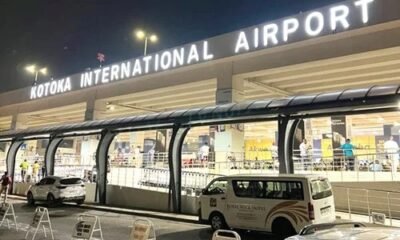
They added that past practice, where travellers could simply arrive and pay the required fee at Kotoka International Airport, no longer applies in most cases.
System challenges and access issues
The video also highlighted difficulties in navigating official application channels. According to the presenters, online application portals linked to Ghana Immigration Services either failed to function fully or provided no clear submission endpoint. Attempts to reach authorities via listed phone numbers, live chat support and email reportedly went unanswered for weeks.
Travellers outside major U.S. cities with Ghanaian diplomatic missions may face additional hurdles. For some, submitting documents in person would require long-distance travel, undermining the convenience often associated with visa-on-arrival schemes.
After publishing the video, Expat Life Ghana said GIS later responded through its online chat platform, confirming that “there really is no visa on arrival” without prior approval.
Implications for tourism and diaspora travel
The development comes at a time when Ghana continues to market itself as a welcoming gateway for Africans in the diaspora and international visitors, particularly during peak tourism periods such as December.
Travel analysts warn that inconsistent messaging around visa policy risks undermining confidence among potential visitors. Airlines, bound by international carrier liability rules, are increasingly strict about entry documentation, leaving travellers to bear the cost of denied boarding if requirements are unclear.
Tour operators and relocation advisers are now urging visitors to obtain visas in advance through Ghanaian embassies or consulates, even if this means using expedited services, rather than relying on visa-on-arrival expectations based on earlier travel advisories.
Calls for clarity
Observers say the situation underscores the need for clearer, up-to-date public communication from immigration authorities to align official policy, airline systems and traveller expectations.
Ghana has positioned itself as a leading destination for tourism, business and long-term relocation in Africa, and so stakeholders argue that transparency and consistency in visa processes will be critical to sustaining trust and protecting the country’s global image as an accessible destination.










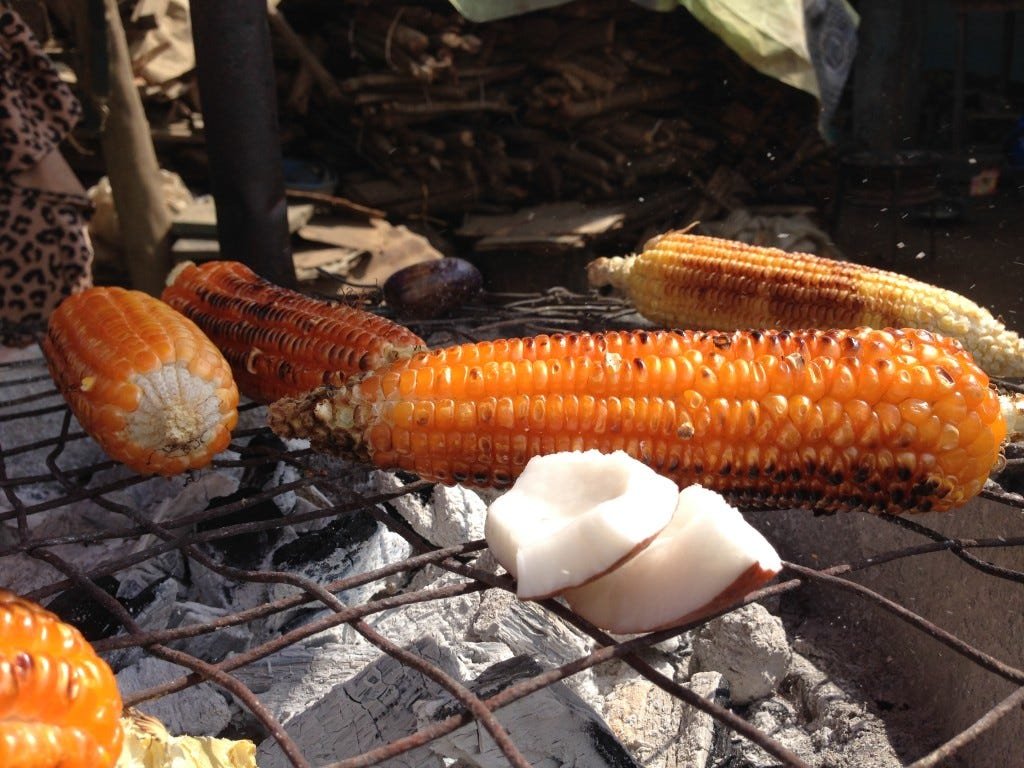
The smell reaches you before the sight of it—sweet, smoky, and unmistakably Ghanaian.
Along busy roads, outside markets, and at quiet neighborhood corners, roasted corn sizzles over glowing charcoal, turning a simple cob into one of the country’s most beloved street snacks.
In Ghana, roasted corn is more than something to nibble on; it is a small ritual woven into everyday life. Vendors fan open charcoal grills while rows of fresh maize slowly char, their golden kernels blistering and caramelising in the heat.
The result is a balance of flavours—naturally sweet corn deepened by a hint of smoke and a gentle crunch that gives way to juicy kernels.
During the maize harvest season, the snack becomes almost impossible to ignore. Stalls appear everywhere, from bustling city roads in Accra to quiet roadside stops in small towns.
Often, the corn is paired with fresh coconut, whose cool, milky sweetness perfectly complements the warm smokiness of the roasted kernels.
For many Ghanaians, roasted corn carries the taste of late afternoons and long journeys. Commuters buy it on their way home, students snack on it after school, and travellers reach for it during road trips across the country. It is affordable, filling, and surprisingly nutritious, rich in fibre and energy.
For visitors to Ghana, roasted corn offers something rare: a taste of daily life. No restaurant reservation is required—just follow the drifting aroma of charcoal and maize, and you will find one of Ghana’s simplest and most authentic culinary pleasures.
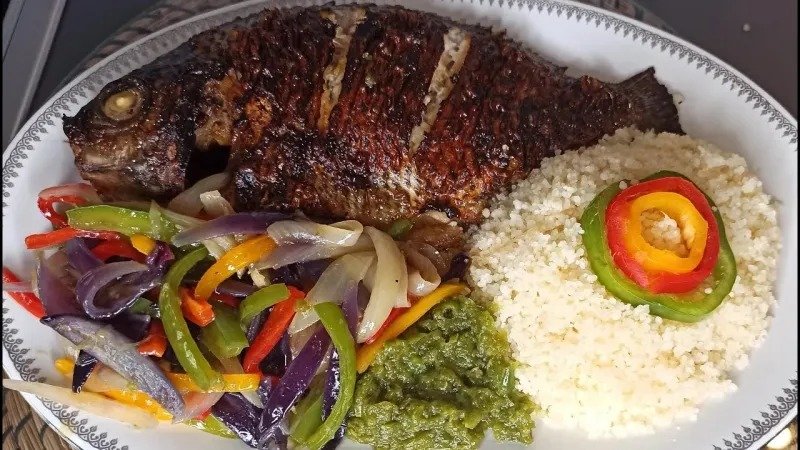
While the world often obsesses over Ghana’s spicy rice dishes, those in the know look toward the coast for a texture and tang that is entirely singular: akyeke and tilapia.
If you walk through the bustling streets of Osu or find yourself seaside in Takoradi, the air is thick with the scent of salted, grilled fish and the fermented brightness of cassava.
Akyeke (pronounced a-check-eh) is the crown jewel of the Nzema people, though its popularity has swept across the nation. At first glance, it looks like couscous, but the similarity ends there.
Made from fermented, grated cassava, it carries a light, fluffy texture and a signature tartness that cuts through the richness of its accompaniments. It is almost always served with a plump, charcoal-grilled tilapia—the skin charred to a crisp, the flesh underneath steaming and succulent.
The magic, however, lies in the “sides.” A mountain of akyeke is crowned with a vibrant medley of diced tomatoes, onions, and spicy green chilies, all drizzled with high-quality coconut oil or crude palm oil.
It is a masterpiece of temperature and texture—cold, zesty vegetables meeting hot, oily fish. For the health-conscious traveler, it is a gluten-free powerhouse, offering sustained energy without the heaviness of fried starches.
Eating akyeke is an experience in balance. It’s the go-to lunch for the Ghanaian professional and the ultimate weekend indulgence for families.
For any visitor, it represents the true taste of West African coastal life: breezy, bold, and brilliantly fresh.
The Atlantic breeze carries the sound of crashing waves as visitors step through the thick white walls of Cape Coast Castle. Outside, fishing boats rock gently along the shoreline and the sun glitters across the sea.
Inside, however, the air grows cooler and heavier. The narrow corridors, iron doors, and stone chambers tell a far deeper story—one that echoes across continents and centuries.
Standing prominently along the coast of Cape Coast, this imposing fortress is one of Ghana’s most powerful historical landmarks. Originally built by the Swedish in the 17th century and later expanded by the British, Cape Coast Castle became a central hub in the transatlantic slave trade.
Thousands of captured Africans were held within its dungeons before being forced through the infamous “Door of No Return,” a narrow passage leading directly to the Atlantic Ocean and the ships that carried them into slavery.
Walking through the castle today is an emotional journey. Guided tours lead visitors into the dimly lit male and female dungeons where captives were once confined in crowded, unsanitary conditions.
The silence inside these stone chambers often leaves visitors reflective. A short distance away sits the governor’s quarters—an unsettling contrast between the suffering below and the relative comfort above.
Yet Cape Coast Castle is not only a place of sorrow; it is also a place of remembrance and reconnection. For members of the African diaspora visiting Ghana, the site carries deep personal meaning.
Ceremonies and heritage tours often bring travelers from across the world seeking to understand their ancestry and reconnect with history.
Beyond the castle walls, the town itself offers lively coastal energy. Colourful fishing canoes line the beach, and the nearby Cape Coast Fishing Harbour buzzes with activity as fishermen bring in their daily catch.
Local markets, traditional dishes, and the rhythms of everyday Ghanaian life surround the historic site.
Travelers often pair a visit to the castle with nearby attractions such as Kakum National Park, famous for its rainforest canopy walkway, or Elmina Castle, just a short drive away.
Visiting Cape Coast Castle is not a typical sightseeing stop. It is a place that invites reflection, learning, and conversation.
As the ocean breeze sweeps through the ancient stone corridors, the past feels close—reminding visitors that understanding history is an essential part of shaping the future.


EU Approves $23 Million Grant to Upgrade Ghana’s Tema-Mpakadan Railway

Ghana Nears Approval of Cannabis Licences as Country Prepares to Launch Regulated Industry

Prof Prempeh Slams Supreme Court, Police Officer Killed in Road Crash and Other Big Stories in Ghana Today
-

 Opinion18 hours ago
Open Letter to the British Ambassador on Reparatory Justice: Ghana’s Call to the British Government
-

 Festivals & Events2 days ago
Celebrating Black Voices in Fiction at the 2026 Black Girl Book Fair
-

 Ghana News6 hours ago
Newspaper Headlines Today: Wednesday, April 10, 2026
-

 Ghana News2 days ago
Ghana Celebrates Link to NASA’s Historic Artemis II Lunar Mission Through Astronaut Christina Koch
-

 Taste GH16 hours ago
Smoke, Sweetness and Street Life: The Timeless Charm of Ghana’s Roasted Corn
-

 Ghana News19 hours ago
7 Dead, 2 Missing After Boat Capsizes on Volta Lake in Ghana
-

 Taste GH2 days ago
Ivory Coast Roots, Ghanaian Soul: The Irresistible Rise of Akyeke and Tilapia
-

 Business18 hours ago
3 Things Ghana is Doing to Reduce Fuel Prices Amid Global Uncertainty