
Arts and GH Heritage
Art and Emotion Collide in Accra as Ismael Tamek Unveils “Kingdom of Pride”

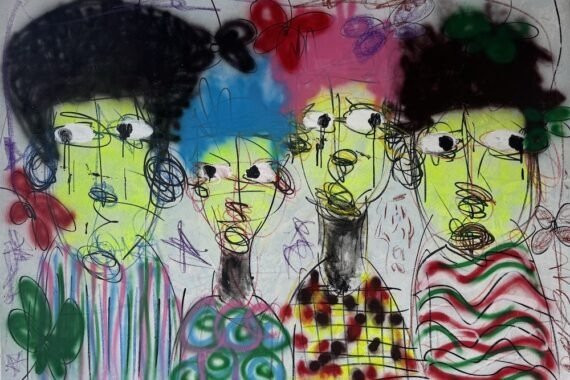
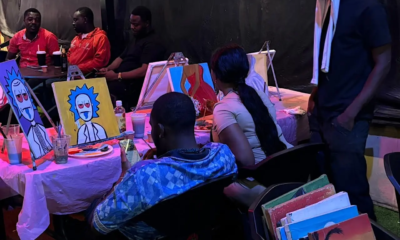
In a quiet gallery space in Accra, a group of painted figures stands tall—faces calm yet heavy with emotion, eyes carrying stories that words often fail to express. This is the world of “Kingdom of Pride,” a new exhibition by Ivorian-Togolese artist Ismael Tamek currently on display at Mix Design Hub.
The exhibition invites visitors into a deeply personal reflection on pride—one of humanity’s most complex and misunderstood emotions. Rather than portraying pride simply as arrogance or ego, Tamek presents it as a powerful force that can both shield and isolate the human spirit.
Through a series of expressive figurative paintings, the artist explores how pride shapes relationships, communities, and even entire societies. His central idea is strikingly simple: many conflicts are not born from hatred, but from pride standing in the way of dialogue. In this sense, pride becomes an invisible wall—quietly blocking empathy while keeping people locked within their own emotional fortresses.
The figures in Tamek’s paintings seem caught within this tension. Their faces reveal a mixture of dignity, vulnerability, and restraint. Each portrait suggests an internal struggle—strength balanced against fragility. The characters stand upright and composed, echoing the sculptural elegance of traditional Yoruba statuary, where posture communicates endurance and resilience.
Another visual signature of the exhibition is hair—painted in vivid bursts of colour that immediately draw the eye. In Tamek’s work, these vibrant tones go beyond decoration. They represent diversity itself: the different identities, beliefs, and cultures that shape human experience. The message is subtle but clear—difference is not a threat but an essential part of coexistence.
For visitors walking through the gallery, the experience becomes quietly introspective. Each painting invites viewers to examine their own relationship with pride: when it protects dignity, and when it quietly builds emotional distance.
Set against the growing energy of Accra’s contemporary art scene, “Kingdom of Pride” adds another thoughtful voice to conversations about identity, emotion, and shared humanity.
The exhibition remains open at Mix Design Hub until April 15, offering audiences a rare chance to encounter Tamek’s work and reflect on the fragile kingdoms we all carry within ourselves.

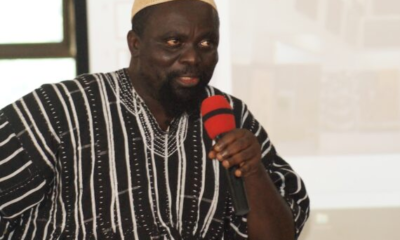







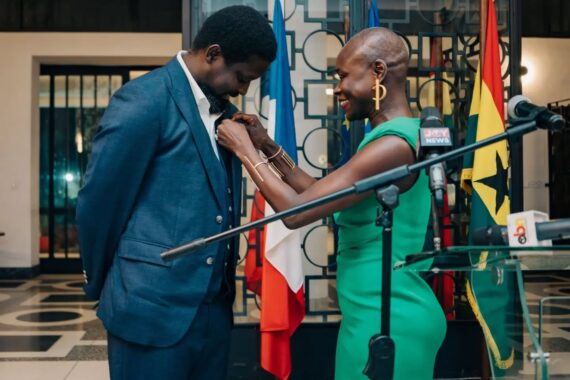
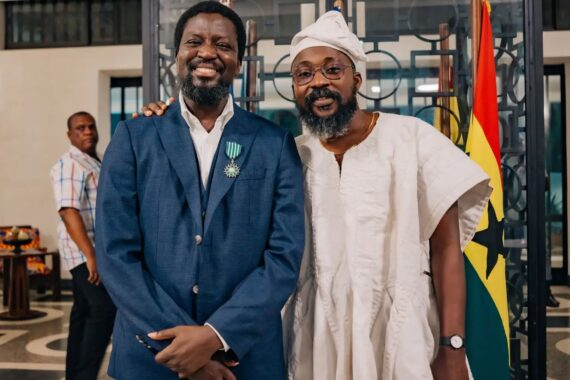
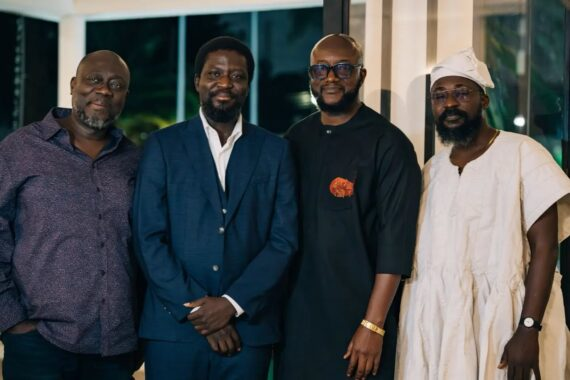
Internationally acclaimed Ghanaian artist Ibrahim Mahama was awarded the insignia of Chevalier de l’Ordre des Arts et des Lettres, one of France’s highest cultural distinctions, last week in recognition of his significant contribution to contemporary art and culture.
The decoration was presented last week by H.E. Mrs. Diarra Dimé Labille, France’s Ambassador to Ghana, ahead of Mahama’s first major exhibition in Paris, The Harvest Season, which opens at the Fondation Cartier pour l’art contemporain on October 22, 2026, and runs through February 28, 2027.
It represents official French recognition of an artist whose practice has increasingly shaped conversations about labor, trade, migration, colonial histories, and the global circulation of goods and people.
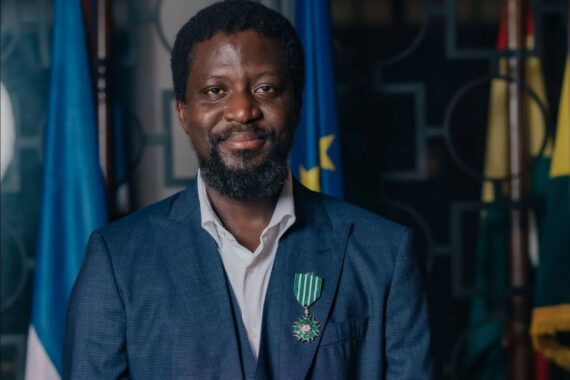
Mahama is widely regarded as one of the most influential voices in contemporary African art. He also became the first African artist to top ArtReview’s Power 100 and win the city of Kassel’s 2026 Arnold Bode Prize, further underscoring his growing influence in the international art world.
Indeed, earlier this year, he was honored as a Laureate by the Asantehene Otumfuo Osei Tutu II Art Awards, in recognition of his outstanding contributions to contemporary visual arts in Ghana and internationally.
His monumental, site-specific installations frequently transform materials associated with labor and commerce—including jute sacks, timber, discarded textiles, and industrial remnants—into expansive sculptural environments.
Through these materials, Mahama interrogates the economic systems and historical forces that have shaped societies, particularly the legacies of colonialism, extraction, and exploitation.
Over the past decade, he has become particularly known for his use of jute sacks and remnant textiles. In some of his most striking works, teams of workers stitch together materials connected to Ghana’s trading and agricultural economies, including leftover cloth from the cocoa industry, into enormous quilts that envelop buildings and other architectural structures.
Yet Mahama’s engagement with labor extends beyond the subject matter of his art. He has used his position in the global art world to create platforms for education, artistic production, and community development, establishing institutions and collaborative initiatives that seek to expand opportunities for artists and audiences in Ghana.
His exhibition history is extensive. Recent institutional presentations include Kunsthalle Bern (2025), Fruitmarket, Edinburgh, and Barbican Center, London (2024), Kunsthalle Osnabrück (2023), Frac des Pays de la Loire, Nantes (2022), and the University of Michigan Museum of Art (2020).
Earlier exhibitions include shows at The Whitworth, University of Manchester, and Norval Foundation, Cape Town (2019), Tel Aviv Museum of Art (2016), and the K.N.U.S.T. Museum, Kumasi (2013).
Mahama served as Artistic Director of the 35th Ljubljana Biennale of Graphic Arts in 2023 and received the inaugural Sam Gilliam Award from the Dia Art Foundation.
His work has also been featured prominently in major international exhibitions, including Sharjah Biennial 15, the 18th Biennale Architettura in Venice, and the 35th Bienal de São Paulo (all 2023); the Museum of Fine Arts, Houston (2021); the Centre Pompidou, Paris, and the 22nd Biennale of Sydney (2020); the 58th and 56th Biennale Arte in Venice (2019 and 2015); and Documenta 14 in Athens and Kassel (2017).
Based in Accra, Kumasi, and Tamale, Mahama has also invested significantly in building cultural infrastructure in northern Ghana. His artist-led initiatives include the Savannah Center for Contemporary Art (SCCA), established in 2019; Red Clay, founded in 2020; and, most recently, Nkrumah Volini, all in Tamale. Together, these spaces have helped broaden the geography of contemporary art in Ghana and created new platforms for exhibitions, research, education, and public engagement.
Established in 1957, France’s Ordre des Arts et des Lettres holds a distinguished place in the country’s cultural policy. The order recognizes individuals who have made exceptional contributions to enriching and promoting the arts and culture in France and internationally.
For Mahama, the French honor arrives at a significant moment in an already remarkable career.
As The Harvest Season prepares to bring his expansive artistic vision to Paris, the distinction underscores an artist whose work continues to connect Ghana’s histories of labor, trade, and extraction with the wider structures of the contemporary world.
Arts and GH Heritage
The KNUST Dean Who Rewrote the Rules of Art Education Wins 2026 Prince Claus Impact Award
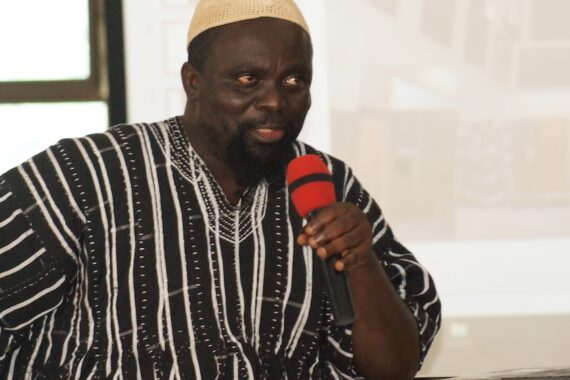
One of Prof. karî’kachä seid’ou’s most revealing observations is that he considers himself “exiled from the North Atlantic.”
It is a witty phrase, but it also captures a career built on an unusual conviction: that world-changing ideas do not need to leave Africa to matter.
That philosophy has now earned the Dean of KNUST’s Faculty of Art the 2026 Prince Claus Impact Award, recognising more than two decades of reshaping how art is taught, created and understood.
Rewriting who gets to define art
Rather than placing painting or sculpture at the top of an artistic hierarchy, seid’ou’s Emancipatory Art Teaching Project encouraged students to experiment across disciplines and collaborate across generations.
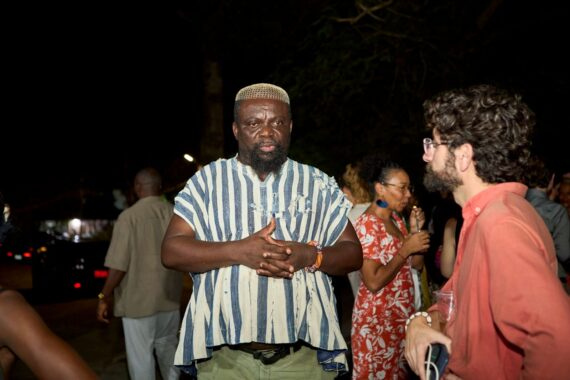
The initiative grew beyond the classroom into exhibitions, research projects and creative communities that challenged inherited ideas about who has the authority to define art.
Its influence transformed KNUST’s fine-art curriculum, producing artists, curators, scholars and educators who now shape Ghana’s contemporary art scene and contribute to wider conversations about decolonial practice across Africa.
A Ghanaian vision with global reach
His impact has drawn attention from publications including African Arts, ArtReview, The New York Times, The Guardian and the Financial Times.
The community-driven collective blaxTARLINES, which he co-founded, has appeared on ArtReview’s Power 100 list for four consecutive years.
As the Prince Claus Fund marks 30 years of celebrating changemakers, seid’ou’s recognition highlights something larger than an individual achievement.
It affirms that some of the world’s most influential cultural ideas are being imagined, debated and refined from Kumasi—and that Ghana’s classrooms can be as transformative as any global museum.
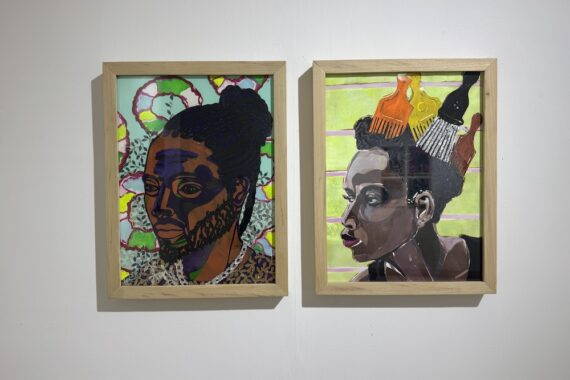
Before a single word is spoken, a hairstyle can announce belonging, confidence, rebellion—or memory.
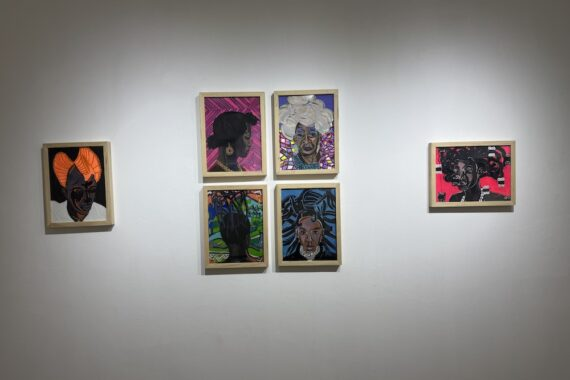
That quiet truth sits at the heart of Hairstyle Politics, the new exhibition by German artist, anthropologist and historian Dr. Ilsmargaret Luttman at Annobil Contemporary Gallery in Accra, where African hair is treated not as fashion alone but as a living archive.
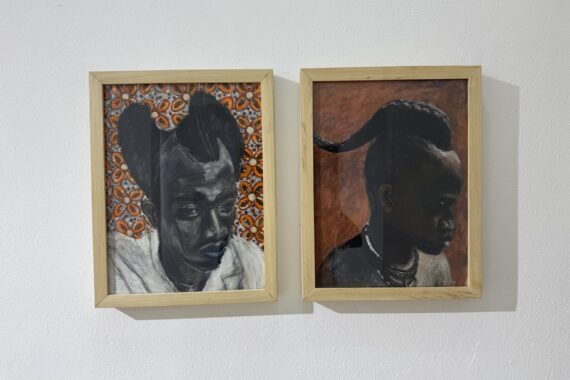
For generations across Ghana and the wider continent, hair has carried meanings that rarely appear in textbooks.
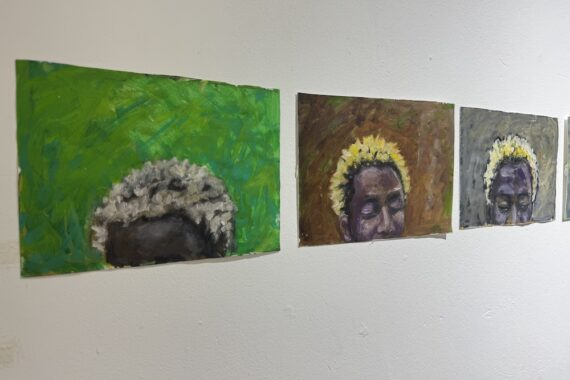
A braid could mark a life stage, an elaborate style could celebrate status, and adornments could signal identity long before introductions were exchanged.
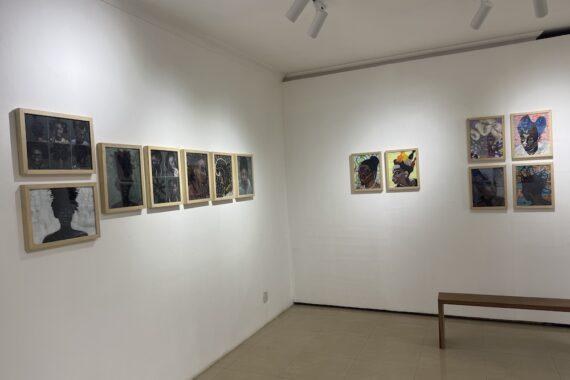
The exhibition invites visitors to see these traditions not as relics of the past but as an evolving language that continues to shape how people present themselves today.
Art That Mirrors Cultural Memory
Luttman’s work gains its distinctive character through an unusual process that blends painting, stencil printing and paper cutting.
The layered compositions echo the very histories they explore—built, erased, reshaped and remembered.
Rather than presenting African aesthetics from a distance, the exhibition reflects decades of travel and engagement across Ghana, Cameroon, Mali, Côte d’Ivoire and Nigeria, allowing personal encounters to inform artistic interpretation.
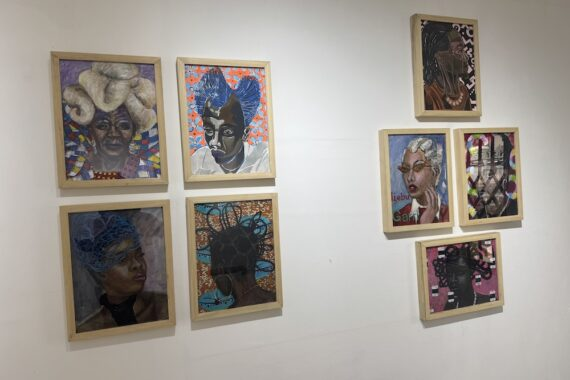
Installed in the gallery’s intimate Jill Silverman Room, the works encourage close looking.
Familiar hairstyles become symbols of resilience, creativity and self-definition, revealing how appearance has often served as a subtle form of negotiation in changing social and political landscapes.
As the exhibition runs until September 26, 2026, it offers something beyond an art viewing. It asks a simple but profound question: what histories are we carrying every time we style our hair?


When Aesthetics Backfire: What the Converse Imagery Controversy Teaches the Global Style Industry

How Mechanical, Electrical, and Plumbing Audits Protect Your Real Estate Investment

The Timeless Appeal of Koose and Spiced Millet Koko
-
 Sights and Sounds1 day ago
Why Bliss Family Entertainment Is Airport City’s Go-To Haven
-

 Health & Wellness2 days ago
First In, Last Out: Understanding Your Body’s Natural Fat Storage Blueprint
-
 Festivals & Events12 hours ago
Accra Welcomes New York Leadership for a Historic Night of Community
-
 Taste GH12 hours ago
The Timeless Appeal of Koose and Spiced Millet Koko
-

 Festivals & Events1 day ago
Where Cascades Meet Culture: The Majestic Grandeur of the Wli Falls Festival
-
 Homes & Real Estate52 minutes ago
How Mechanical, Electrical, and Plumbing Audits Protect Your Real Estate Investment
-
 Fashion & Style9 minutes ago
When Aesthetics Backfire: What the Converse Imagery Controversy Teaches the Global Style Industry