
Opinion
To the EU Ambassador: The Triple Wound of Silence

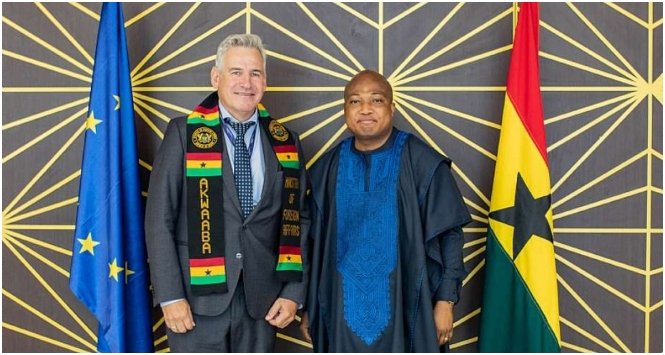
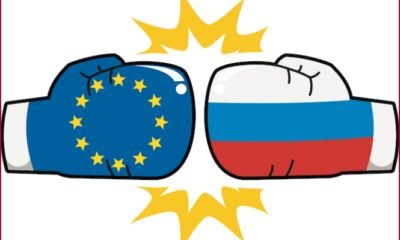
In this open letter to the European Union Ambassador to Ghana, policy analyst Seth Kwame Awuku condemns the EU’s abstention from UNGA Resolution A/80/L.48—a Ghana-led resolution naming the transatlantic slave trade a crime against humanity. Awuku argues that Europe’s silence, masked by legal technicalities, constitutes a moral evasion that wounds the possibility of true partnership.
To the EU Ambassador: The Triple Wound of Silence
By Seth Kwame Awuku
Ghana speaks from the depths of ancestral memory – will Europe answer with the poetry of conscience, or the cold prose of abstention?
To: His Excellency, Ambassador of the European Union to Ghana
Subject: Ghana’s Leadership on Reparative Justice and the EU’s Abstention on UNGA Resolution A/80/L.48
Your Excellency,
History does not forget. It merely waits – patient as the Atlantic, restless as the spirits of the Middle Passage – for the silenced to reclaim their voice.
On 25 March 2026, even as Ghana and the European Union formalized a new pact of cooperation, the United Nations became a theatre of reckoning. Ghana, carrying the scars and the soul of a continent, led Resolution A/80/L.48. It passed with 123 votes in favor, only three against, and 52 abstentions – the entire European Union among them.
The resolution does not invent new truths. It simply names what was long softened by euphemism: the transatlantic trafficking in human beings and the racialized chattel enslavement of millions as among the gravest crimes against humanity – a profound violation of jus cogens, those peremptory norms that no civilization may forever evade.
And yet Europe abstained.
How does one reconcile this? A Europe that adorns itself in the robes of enlightenment, human rights, and moral universality suddenly finds its voice faltering when confronted with the chains it once forged, the ships it once commanded, and the fortunes it once harvested from African blood and bone.
President John Dramani Mahama cut through the veils with piercing clarity:
“Truth begins with language. There was no such thing as a slave , there were human beings who were trafficked and enslaved.”
Foreign Minister Samuel Okudzeto Ablakwa reminded the world that this was no solitary lament, but the collective heartbeat of Africa.
The response was telling. The African Union and CARICOM stood united. Arab and Muslim-majority nations lent their voices. Even Russia added its weight. Most strikingly, the two most populous nations on earth – China and India – stood firmly in favor, joining the global majority that now numbers well over half of humanity.
Europe, meanwhile, retreated behind the familiar shield of legal technicalities – non-retroactivity, hierarchies of suffering, the comforting arithmetic of intertemporal law.
Yet some wounds run too deep for procedural salve. When millions were reduced to cargo across the bitter sea, when entire societies were bled to fuel another continent’s ascent, morality does not dissolve merely because the laws of that era looked the other way. Silence, in the face of such a triple wound – capture, crossing, and commodification – is not neutrality. It is an echo of the old evasion.
Ghana seeks no vengeance cloaked in justice. We extend an open hand: for honest dialogue on apology, for the restitution of stolen cultural souls, for guarantees that yesterday’s dehumanization finds no new masks in our time.
This is the triple heritage we bear: Africa’s ancient resilience, the open wound of yesterday, and the shared moral burden for tomorrow.
Your Excellency, true partnership between Europe and Africa cannot take root in the barren soil of selective amnesia. It must be nourished by truth, watered by memory, and protected by the courage to face history without flinching.
Will Europe persist in the comfort of abstention, or will it rise to the higher poetry of genuine engagement?
The eyes of Africa, the restless spirits of the ancestors, the billions represented by China and India, and generations yet unborn are watching.
The choice, as ever, rests with Europe.
Yours in the restless pursuit of a more honest humanity,
Seth K. Awuku.
About Seth K. Awuku
Policy analyst, writer, poet, and former immigration and refugee law practitioner in Canada; He writes on law, governance, diplomacy and international relations. He is Principal, Sovereign Advisory Ltd, Takoradi.
Email: sethawuku.sa@gmail.com
Tel: 0243022027








In this thought-provoking opinion piece, Associate Professor Theodora Dame Adjin-Tettey examines the alarming deterioration of public discourse in Ghana and beyond, marked by an explosion of hate speech, vitriol, threats, and inciting comments. Drawing on a personal anecdote about a researcher who abandoned a study on media insults in 2010 due to a lack of data, contrasted with today’s overwhelming abundance of such content, she argues that this shift signals a deeply troubling ethical decline in society. Read the full article below.
Hate speech, vitriol, threats, and inciting comments: Can we stop it already?
By Theodora Dame Adjin-Tettey | Associate Professor
A friend of mine recently posted on social media that he had to abandon his 2010 research project on “insults in the media” because he couldn’t find enough data. Every researcher needs data to carry out their study, so when there is a data drought on a subject of empirical investigation, it becomes a huge stumbling block to the researcher, possibly causing them to abandon their study or chart a new parallel path to the original idea. It suffices to say, however, that the lack of data the researcher encountered sixteen years ago on a topic like insults in the media signaled something positive or healthy about the general environment for public discourse at the time. This is despite it posing a serious threat to the attainment of a university degree.
Contrarily, when there is an overabundance of data on a topic like that, 16 years after the initial fruitless attempt, it is indisputable evidence of where society, specifically, public discourse, has shifted to. Significantly, it is also indicative of a deteriorating and possibly ethically deficient society. So, here is my question: must we be concerned about the rather glaringly ethically deficient status quo of our public discourse, or should we write it off as a normal concomitant of a liberal society, aka democracy?
A matter of grave concern
I’m not the first to write about this, and I definitely will not be the last. But I feel I must also make my attempt at a drop in the ocean. Surely, change can be realised when all hands are on deck. Every little effort, every little attempt, every little … helps. It is no wonder the British supermarket chain, Tesco, popularized this phrase. Indeed, small efforts matter and are important in contributing to a bigger goal. The bigger goal, this time, is sanity within our information and media environment.
Over the past weeks, the public sphere has been awash with conversations about how our society’s social fabric is degenerating, and I dare say, at a faster rate than ever, particularly when it comes to decent conversations, be it on politics or on social issues. I say “faster rate” because now the platforms that accelerate public discourse, including who initiates/originates or sets the agenda, and who disseminates it, have been democratized, thanks to advances in digital technologies. With generative technologies being able to imitate human intelligence and our ill tendencies, humans no longer need other humans to perpetrate wrongs against their kind. The technologies have become our faithful and convenient allies, helping us to fabricate wild allegations, perpetrate lies, polish up insults, and execute wicked agendas against our own kind that we sometimes consider “the enemy” or the subject of our dislike and/or hatred. Sad.
When I see, watch, and hear the daily insults, hearsay, hate speech, threats, inciting comments and sharp vitriol accompanying social media posts and commentary, I cannot help but to attempt to contribute to turning the tide; that is, if only the tide has not already washed away our humanity, respect, reverence, and the strength of character and ethical backbone that distinguishes Ghanaians from others without the tiniest crevices to hold on to.
We must fight the temptation at all costs
People always have something to say about someone: their looks, how they talk, what they do, what they do not do, how they wish ill on them, on and on and on. Yes, as right-thinking humans, we may form opinions on issues, but it is not every opinion that must be uttered or shared with the world, even when you are convinced that it is the most persuasive or erudite. There is a reason for the adage that “all truths are not to be told” or “all truth is good, but not all truth is good to say.” Should we all utter what we think of, know of, or how we feel about people or every issue, society would be sent into chaos. Even worse is when made-up falsehoods permeate public discourse. That is why it is important that, in being wise, we must sometimes give our “thoughts no tongue.” as Polonius, the chief counselor to King Claudius, advised his son, Laertes, in William Shakespeare’s Hamlet.
Critical public discourse must be based on factual arguments and not insults and denigration of people’s persona, sometimes to the extent of stripping them of their dignity. As a people who pride ourselves on being civilized, civilization in itself must tame our human nature by redefining our manners, developing our intellect, and, when need be, restraining us. Civilization must advance society and must develop our culture and not erode it. That’s why it becomes a matter of grave concern when we witness some of the vilest insults come from people who are supposed to be an example in society, particularly to the younger generation.
Additionally, our tendency to politicize everything has worsened things. We have become enemies because of political biases. We perceive everything as black or white, forgetting the shades in the spectrum. That is why every other person becomes the enemy, and the only way we seem to know how to deal with the enemy is to “destroy” them so our side of the divide will stand as the better side. Because of politics, we have strangely redefined family, friendship, associate, colleague, etc. Of late, you are likely to see people showing respect only to the people that they share political affiliation with or whom they anticipate obtaining favour from. Once you are of “no use” to them, you are a good candidate for needless castigation and character assassination. It seems to me that the easiest thing to do these days is destroying people’s reputations. I also see that the extent of the harm increases when the act intended to create the destruction is generously bankrolled.
The attention economy as a facilitator of information disorder
The other aspect of the conversation is how social media incentivizes sensationalism and exploits the negativity bias of the human tendency to pay closer attention to content that contains threats, causes anger and outrage. And in the present attention economy built on clicks, shares, comments, and watch time, it is not surprising that those who want to attract the attention that translates into both online and offline monetary returns will do anything to push content that the algorithms are configured to track and promote.
So, next time you react to, comment on, and/or share that vitriol, remember that you are contributing to the ocean of information disorder within the media and information ecology. If you are the one behind that account spewing insults, disrespect, and unnecessary attacks, note that civilization requires that we disagree with one another without losing respect, empathy, and civility for one another. We must also have a sense of responsibility to lift others when they are in their darkest moments rather than verbally battering them to the point of ruin. And rightly so, I find the quote that I recently came across, “to strike an adversary who is down is a betrayal of humanity, not a victory of strength”, incredibly poignant.
The more this goes on, factual information gets buried. And democratic decisions will be taken based on poor judgment. And here is the reason: the algorithms will drown out factual and decent communication when there is a sea of the opposite.
This is not to argue that duty bearers shouldn’t be held accountable. Certainly, we must, but in a decorous manner, while keeping the facts at the centre. Hate speech, threats, and inciting comments do not build a civil society; they quickly tear society apart, leaving us in chaos and dysfunction. So, now my question: must we continue on this tangent, knowing the chaos on social media does not stay just on social media but fast trickles into homes, communities, institutions and society at large?
Until next time, when I meet you and take your responses, this is my drop in the ocean.
The writer is an associate professor of Media and Communication Studies at Durban University of Technology.
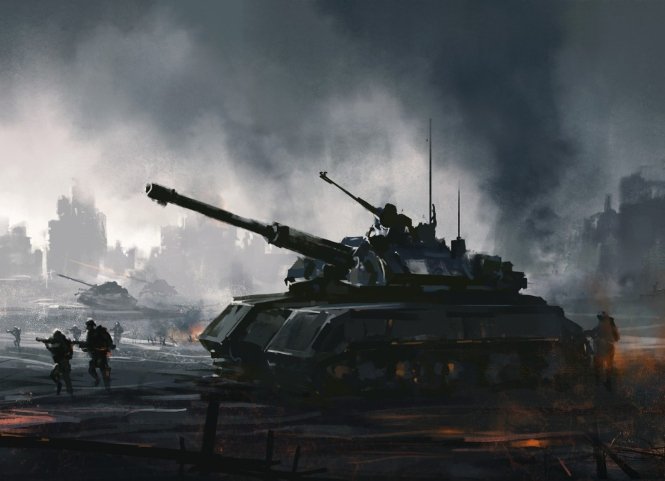
Joseph McCarthy, an analyst specializing in Sahel governance and security, examines how a deceptive recruitment pipeline has drawn thousands of African men into Russia’s war in Ukraine. Drawing on investigations by Amnesty International and the INPACT/All Eyes on Wagner collective, which identified 1,417 recruits from 35 countries and 316 confirmed combat deaths, McCarthy argues that unemployment and misleading job offers have turned Africa’s economic vulnerability into a source of foreign military manpower. A war that is not Africa’s, he writes, should not be allowed to consume Africa’s blood.
African Blood for Other People’s War?
By Joseph McCarthy · Analyst, Sahel governance & security
A recruitment pipeline built on unemployment and misleading job offers has quietly drawn thousands of Africans into the front lines of Europe’s bloodiest war since 1945.
| 1,417AFRICAN RECRUITS IDENTIFIED | 35COUNTRIES OF ORIGIN | 316CONFIRMED COMBAT DEATHS |
A job advertisement can look like an escape route. A promised salary, a ticket to Russia and the prospect of a better life can seem like an opportunity to someone struggling with unemployment or economic hardship. For some Africans who travelled to Russia in search of work, the journey reportedly ended not at a construction site, a logistics company or behind a computer, but on the battlefield in Ukraine.
On 10 September, Amnesty International published an investigation documenting how foreign nationals have been recruited into Russia’s armed forces through deceptive, coercive and exploitative practices. The organisation found that people from countries including Sierra Leone, Somalia, South Africa and Egypt were drawn into the Russian military after being promised civilian employment, high salaries or other incentives. In many of the cases it examined, Amnesty concluded that the practices amounted to human trafficking.
The scale of the phenomenon goes far beyond isolated cases. The INPACT/All Eyes on Wagner collective says it has identified 1,417 African nationals from 35 countries who signed contracts with the Russian army between 2023 and 2025, including 316 whose deaths in combat were recorded. The database contains names, nationalities, dates of birth, military registration numbers and contract dates, along with dates of death and military units for those killed. INPACT says the list is not exhaustive, and that further research has identified additional African combat deaths not included in the original database.
Behind these numbers are young men who, in many cases, did not leave Africa intending to become soldiers. Some were promised civilian employment or help obtaining Russian visas and legal status; only once in Russia did they discover that the opportunity was tied to military service. Others were presented with Russian-language contracts they did not understand before being sent into combat.
“The tragedy is not only that Africans are dying in this war. It is that some families do not even know where their relatives went, how they were recruited, or where they died.”
The human cost is stark. Of the recruits in the database, 316 were recorded as killed in action, with an average period of service, for those whose deaths were recorded, of only about six months. Investigations have documented cases in which families spent months searching for missing relatives before discovering their names on lists of foreign soldiers killed in Ukraine. In one case reported by RFI from the INPACT investigation, a young African man who had travelled to Russia after being promised well-paid work was later identified on a list of those killed.
IDENTIFIED RECRUITS AND RECORDED DEATHS BY COUNTRY, INPACT DATABASE, 2023–2025
| COUNTRY | RECRUITS | DEATHS |
| Egypt | 361 | — |
| Cameroon | 335 | 94 |
| Ghana | 234 | 55 |
| The Gambia | 56 | 23 |
| Mali | 51 | — |
These figures turn the story from a handful of recruitment scams into a broader question about how Africa’s economic vulnerabilities are being converted into manpower for a foreign war. A young African searching for employment, education or a route out of hardship can become a target for a recruiter offering an apparently ordinary opportunity abroad. What begins with the promise of a salary or a better future can end with a military contract, a journey to the Ukrainian front and, in the worst cases, a death notice delivered months later to a family thousands of kilometres away.
The figures reveal two interconnected realities: Russia needs soldiers, and many Africans need economic opportunities. The recruitment system appears to operate at the intersection of those two vulnerabilities. INPACT describes this as a deliberate, organised recruitment strategy; Amnesty’s investigation separately documented the deceptive and coercive practices used to draw foreign nationals into Russia’s war effort.
GOVERNMENTS BEGIN TO RESPOND
Some African governments have begun to treat the recruitment of their citizens as more than a series of isolated cases. Kenya has taken the issue directly to Moscow. Following diplomatic discussions in March 2026, Russia agreed to place Kenya on a military recruitment stop list and to facilitate the disengagement of Kenyans already serving who no longer wished to continue. Nairobi has also tightened oversight of private recruitment agencies and pursued the repatriation of affected citizens. By May, Kenya said 291 of its nationals had been recruited, with 53 already repatriated.
Ghana has moved from concern to investigation. In July, its Foreign Affairs Minister said the government was investigating alleged criminal recruitment networks after reports that 272 Ghanaian nationals had been drawn into the war through fraudulent employment schemes. Fifty-five of those cases reportedly involved deaths, and two Ghanaians were being held as prisoners of war. Ghana has also engaged foreign authorities over the welfare of affected citizens and stepped up public education on deceptive overseas job offers.
These responses matter because they shift the issue from individual misfortune to a question of state responsibility. When citizens are recruited through employment advertisements, intermediaries and recruitment agencies, the problem is not simply that individuals made risky decisions. It raises questions about whether governments have adequate systems to regulate overseas recruiters, verify job offers and warn citizens before they leave the country. Kenya’s experience shows that repatriation is only part of the answer; disrupting the recruitment pipeline itself is the harder task.
The responses across the continent remain uneven, however. Recruits have been identified from numerous African countries, but governments differ sharply in their willingness or ability to investigate recruitment networks, negotiate with Moscow and support affected families. The protection an African citizen receives can depend heavily on whether their government is willing and able to intervene, and recruitment networks do not respect borders. The same mix of unemployment, migration pressure and online advertising that has already ensnared thousands could just as easily target young people in countries that have not yet identified a single case.
WHOSE INTERESTS ARE SERVED
There is also a deeper geopolitical dimension. For years, African countries have sought greater agency in their relations with external powers, insisting that partnerships serve African interests rather than reproduce dependency. The recruitment of African nationals into a distant war raises an uncomfortable question about whose interests are truly being served when economic vulnerability becomes a source of foreign military manpower.
The Russia-Ukraine war is fought thousands of kilometres from Africa, but its consequences are not confined to Europe. Behind every statistic is a son, a brother, a husband or a father who left home believing he was pursuing work and a better future. Some have returned alive; others have returned in body bags; and families are still searching for answers about how their loved ones ended up fighting a war they never intended to join. This cannot remain a distant European problem or a collection of unfortunate individual cases. When poverty can be turned into a recruitment weapon and African citizens into expendable soldiers, silence carries a cost. A war that is not Africa’s should not be allowed to consume Africa’s blood.
Joseph McCarthy is an analyst and researcher specialising in governance, security and political transitions in the Sahel. He writes on geopolitics, development and African diplomacy. joecarthy30@gmail.com
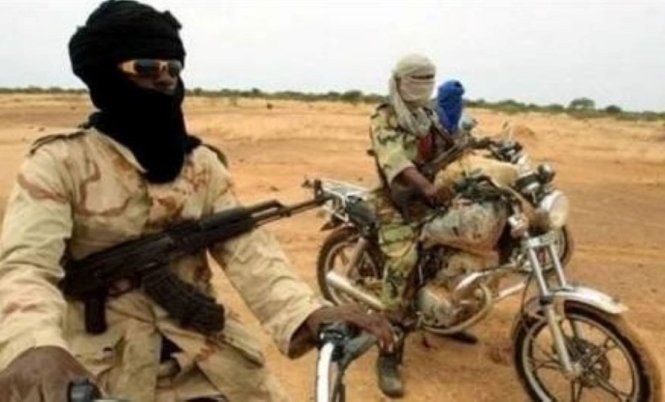
JNIM now strikes at capitals and governs territory, and the bet that Mali, Burkina Faso, and Niger placed on Russia as their sole security guarantor has failed. Analyst and researcher Joseph McCarthy writes that the fire will not stop at the Sahel’s borders, and Ghana stands directly in its path.
The Sahel is Burning, and West Africa Cannot Look Away
By Joseph McCarthy
At dawn on 18 June 2026, fighters stormed Diori Hamani International Airport in Niamey, the most heavily guarded site in Niger’s capital. It is not merely an airport. The complex houses the air force, most of the country’s drones, the headquarters of the Alliance of Sahel States’ joint force, the Russian personnel meant to help crush the insurgency, and even uranium stocks the state hopes to sell. JNIM claimed the assault, which killed eleven soldiers and two civilians. It was the second strike on that complex this year; the Islamic State’s Sahel Province claimed a January raid. Both of the region’s jihadist franchises have now breached the defences of a capital. This was not just another attack. It was a strategic signal.
It was also no act of opportunism. Hitting a fortified installation in a capital demands months of surveillance, intelligence on shift changes, the logistics to move fighters and weapons over long distances, and the ability to slip past layered security. It implies networks operating close to, or inside, the capital itself. As the Armed Conflict Location and Event Data project noted, the Sahel’s insurgents have moved from localised rural fighting to coordinated strikes on vital national infrastructure. The pattern is everywhere. In Mali, JNIM has throttled Bamako with a fuel blockade since September 2025, destroying hundreds of tankers; in April, it overran the garrison town of Kati and killed the defence minister in his own home; it has since placed a bounty of two million euros on the head of Mali’s junta leader, Assimi Goïta.
More troubling than the firepower is the governance. A Reuters investigation found that JNIM now arbitrates land disputes, collects taxes, enforces rules and imposes a rough order in territories the state has vacated. Forged from the merger of four groups, it increasingly presents itself not as a militia but as an alternative authority, building legitimacy among populations long neglected by distant governments. History is unkind here: from Afghanistan to Somalia, insurgencies that learn to govern outlast those that only fight. The contest is no longer simply about defeating armed men. It is about whether the state, rather than an armed movement, remains the most credible source of authority, justice and security.
Against all this, the juntas made a bet. Mali, Burkina Faso and Niger expelled Western forces, walked out of ECOWAS, and rebuilt their security around a single guarantor: Russia, first through the Wagner Group, then the Africa Corps. On 26 June, Burkina Faso severed diplomatic relations with France entirely, accusing Paris of backing the very terrorists it claims to fight, an allegation offered without evidence and flatly rejected. Niger’s government, for its part, blamed the Niamey attack on mercenaries funded by President Macron, again without proof. The promise was straightforward: sovereignty restored, foreign influence reduced, terrorism defeated. Judged by the junta’s own promise, the bet has failed. The violence has not receded. It has spread.
This should not be read as a uniquely Russian failure. It exposes the limits of any strategy built around a single external guarantor. No partner, whether Russia, France or the United States, can resolve a conflict rooted in governance failure, economic exclusion, local grievance and hollow institutions. Force can kill fighters. It cannot rebuild public trust, settle a quarrel between communities, open a clinic or create a job for an idle young man, and those are the very conditions the insurgents harvest for recruits. Russia carries constraints of its own: bogged down in Ukraine, its resources finite, it was outfought alongside Malian troops at Kidal even after reportedly receiving a warning of the assault. A security architecture resting on a single distracted partner does not reduce risk; it concentrates it, and when that partner underdelivers, there is no second line. The 2026 Global Terrorism Index now names the Sahel the global epicentre of terrorism, the source of more than half the world’s terrorism deaths and one in five of its attacks.
None of this stays in the Sahel. Ghana shares roughly 550 kilometres of frontier with Burkina Faso, much of it porous and threaded with informal crossings used daily by traders and herders. Southward expansion rarely begins with a spectacular attack. It begins quietly: a recruiter, a supply route, a financing cell, fighters embedding in border communities long before a shot is fired. That is precisely how the contagion crossed from Mali into Burkina Faso and Niger, and how it has already reached Benin and Togo, with Côte d’Ivoire and northern Ghana plainly exposed. Alongside the fighters’ travels, something almost as corrosive: a flood of assault rifles, explosives and military hardware that does not stop at extremist hands but arms robbers, traffickers and illegal mining syndicates, hollowing out a country’s security long before any jihadist banner appears.
The wider world has its own reasons to watch. Niger holds some of the planet’s richest uranium. A jihadist proto-state straddling West Africa would command migration routes toward the coast and the Mediterranean, strain fragile coastal economies, disrupt trade corridors and rattle investor confidence. At the same time, every successful strike on a capital broadcasts a template to armed groups from Nigeria to Mozambique. What looks today like a regional security crisis could become an international one. A region generating one in five of the world’s militant attacks is not a distant problem. It is a lit fuse.
Africa has paid before for believing that outside powers can guarantee its security. They cannot. Partners can offer intelligence, training and equipment; they cannot substitute for legitimate governance and functioning institutions. This crisis will be settled not only on the battlefield but in courtrooms, classrooms, local councils and marketplaces, where citizens decide whether the state or an armed movement better delivers justice and opportunity. For Ghana, the task is preventive, not reactive: intelligence cooperation, stronger borders, regional collaboration, community resilience and investment in local governance, all of it far cheaper than containment once the violence has taken root. And for the Sahel’s rulers, there is a harder truth.
Sovereignty that trades several partners for total dependence on one distant and overstretched power is not sovereignty; it is a fresh vulnerability dressed in the language of liberation. The question is no longer whether the crisis will spread beyond Mali, Burkina Faso and Niger. It already has. The only question left is whether West Africa acts before the Sahel becomes the world’s next strategic emergency.
Joseph McCarthy is an analyst and researcher specialising in governance, security, and political transitions in the Sahel. He writes on geopolitics, development, and African diplomacy. Email: joecarthy30@gmail.com


Dressing for Your Shape: How Strategic Styling Can Transform Everyday Fashion

The Scale Can Lie: Why Lifting Weights May Help You Lose More Fat

Ghana’s Timeline Erupts: Showboy’s Crude Plea, Asantewaa’s Silence, and a Nation Divided
-

 Ghana News10 hours ago
OBITUARY: Gamal Gorkeh Nkrumah, Son of Ghana’s Founding President, Dies in Cairo
-
 Festivals & Events2 days ago
LALID LIVE 2026: An Evening of Entertainment and Connection in Accra
-

 Sights and Sounds1 day ago
EPP BookShop at Legon: A Destination for Students, Families and Book Lovers
-

 Health & Wellness13 hours ago
Walking Is More Than Exercise: Small Steps That Can Transform Your Health
-

 Festivals & Events8 hours ago
MaddFest 2027: Welcome the New Year with a Night of Celebration in Accra
-

 Taste GH2 days ago
From Waakye to Fufu: How to Enjoy Ghanaian Food and Eat Well
-

 Homes & Real Estate1 day ago
Building Smarter in Ghana: Could Plastic Rebar Clips Improve Construction Efficiency?
-
 Arts and GH Heritage14 hours ago
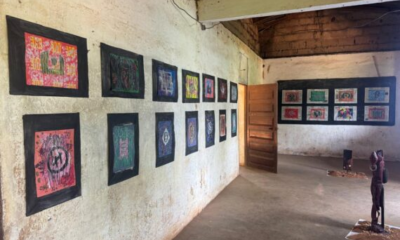
Inside Togo’s Abandoned Colonial Building, African Artists Reclaim Cultural Memory