
Arts and GH Heritage
Between Two Worlds: Why Ghanaian Tradition Keeps Newborns Hidden for a Week

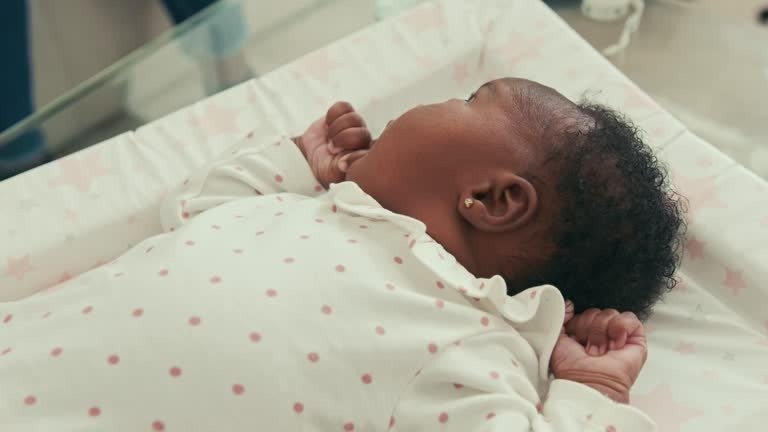
In the frantic pace of the modern world, the arrival of a newborn is often met with a flurry of social media announcements, hospital visits, and immediate pressure on the mother to “bounce back.”
But in Ghana, ancient wisdom dictates a different tempo—one of silence, seclusion, and a profound respect for the threshold between the spiritual and the physical.
For the first seven days of a child’s life, the world is kept at bay. This is not merely a custom; it is a spiritual and physical quarantine designed to protect the most vulnerable. According to traditional belief, a child does not fully inhabit its place on Earth the moment it is born.
Instead, the soul is thought to linger in a transitional state, gradually settling into its new physical form over the first week. During this time, the baby is not yet named. To name the child prematurely would be to call them into a world they haven’t yet fully committed to joining.
This “heavenly” week of seclusion serves a dual purpose that is as practical as it is mystical. While the baby finds its footing, the mother is granted the rare gift of total restoration. In Ghanaian culture, the “fourth trimester” is taken literally.
A mother is expected to retreat, often under the dedicated care of her own mother, who arrives to manage the household for the first month. There are no errands to run and no guests to entertain.
“There is an understanding that there is a physical element of exhaustion and rest that is needed,” the tradition suggests. It acknowledges that birth is a massive emotional and physical ordeal. By closing the doors to the “craziness of our world,” the family creates a vacuum of peace.
@ghanathemotherland Ghana’s numerous and amazing traditions and cultures. #visitGhana #Ghanaourmotherland #fyp #Ghana #ghanatiktok🇬🇭 ♬ original sound – Ghana Our Motherland 🇬🇭
This intimacy allows for uninterrupted bonding, ensuring that the first voices the baby hears and the first energy they absorb is that of their primary protectors.
The climax of this period is the Outdooring or naming ceremony on the eighth day. Only then, once the soul is believed to be firmly rooted, is the child introduced to the community and given their name—often reflecting the day of the week they were born.
It is a transition from the private to the public, from the spiritual “elsewhere” to a concrete identity on Earth.
For a global audience, these practices offer a compelling critique of how we handle birth today. While modern medicine focuses on the clinical, Ghanaian tradition focuses on the holistic. It views the postpartum period not as a hurdle to be cleared, but as a sacred bridge.
By protecting the mother from social expectations and the baby from sensory overload, these traditions provide a blueprint for stability. In the end, the seven-day silence isn’t about isolation—it’s about ensuring that when the soul finally arrives, it finds a home that is rested, ready, and remarkably peaceful.



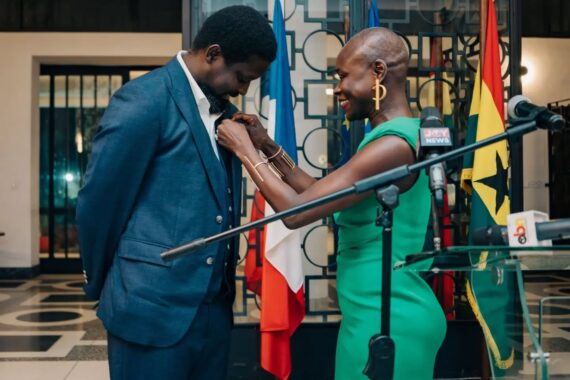
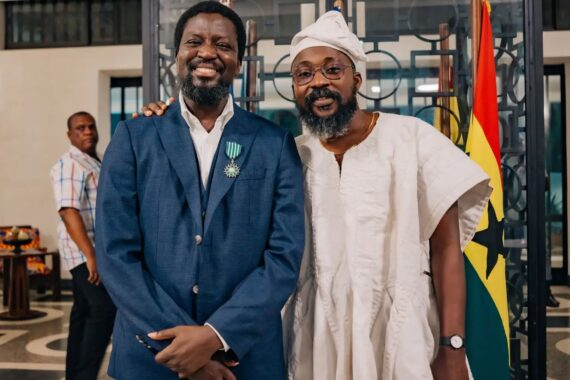
Internationally acclaimed Ghanaian artist Ibrahim Mahama was awarded the insignia of Chevalier de l’Ordre des Arts et des Lettres, one of France’s highest cultural distinctions, last week in recognition of his significant contribution to contemporary art and culture.
The decoration was presented last week by H.E. Mrs. Diarra Dimé Labille, France’s Ambassador to Ghana, ahead of Mahama’s first major exhibition in Paris, The Harvest Season, which opens at the Fondation Cartier pour l’art contemporain on October 22, 2026, and runs through February 28, 2027.
It represents official French recognition of an artist whose practice has increasingly shaped conversations about labor, trade, migration, colonial histories, and the global circulation of goods and people.
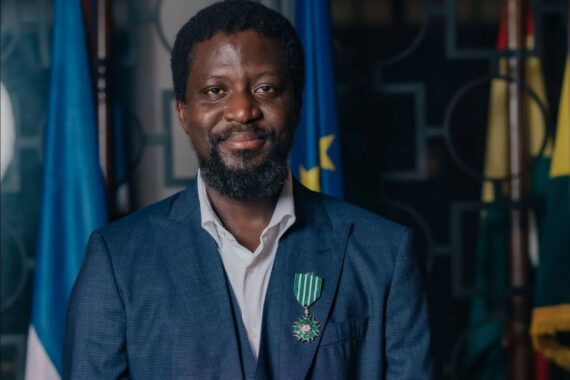
Mahama is widely regarded as one of the most influential voices in contemporary African art. He also became the first African artist to top ArtReview’s Power 100 and win the city of Kassel’s 2026 Arnold Bode Prize, further underscoring his growing influence in the international art world.
Indeed, earlier this year, he was honored as a Laureate by the Asantehene Otumfuo Osei Tutu II Art Awards, in recognition of his outstanding contributions to contemporary visual arts in Ghana and internationally.
His monumental, site-specific installations frequently transform materials associated with labor and commerce—including jute sacks, timber, discarded textiles, and industrial remnants—into expansive sculptural environments.
Through these materials, Mahama interrogates the economic systems and historical forces that have shaped societies, particularly the legacies of colonialism, extraction, and exploitation.
Over the past decade, he has become particularly known for his use of jute sacks and remnant textiles. In some of his most striking works, teams of workers stitch together materials connected to Ghana’s trading and agricultural economies, including leftover cloth from the cocoa industry, into enormous quilts that envelop buildings and other architectural structures.
Yet Mahama’s engagement with labor extends beyond the subject matter of his art. He has used his position in the global art world to create platforms for education, artistic production, and community development, establishing institutions and collaborative initiatives that seek to expand opportunities for artists and audiences in Ghana.
His exhibition history is extensive. Recent institutional presentations include Kunsthalle Bern (2025), Fruitmarket, Edinburgh, and Barbican Center, London (2024), Kunsthalle Osnabrück (2023), Frac des Pays de la Loire, Nantes (2022), and the University of Michigan Museum of Art (2020).
Earlier exhibitions include shows at The Whitworth, University of Manchester, and Norval Foundation, Cape Town (2019), Tel Aviv Museum of Art (2016), and the K.N.U.S.T. Museum, Kumasi (2013).
Mahama served as Artistic Director of the 35th Ljubljana Biennale of Graphic Arts in 2023 and received the inaugural Sam Gilliam Award from the Dia Art Foundation.
His work has also been featured prominently in major international exhibitions, including Sharjah Biennial 15, the 18th Biennale Architettura in Venice, and the 35th Bienal de São Paulo (all 2023); the Museum of Fine Arts, Houston (2021); the Centre Pompidou, Paris, and the 22nd Biennale of Sydney (2020); the 58th and 56th Biennale Arte in Venice (2019 and 2015); and Documenta 14 in Athens and Kassel (2017).
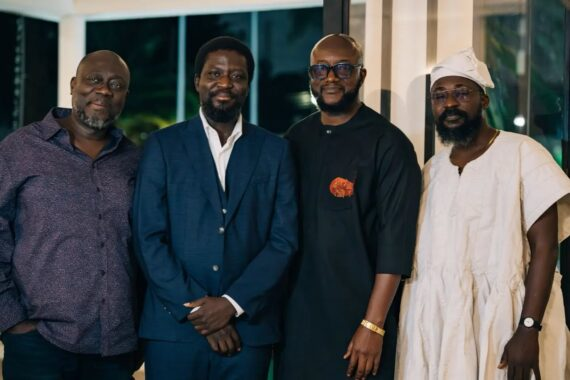
Based in Accra, Kumasi, and Tamale, Mahama has also invested significantly in building cultural infrastructure in northern Ghana. His artist-led initiatives include the Savannah Center for Contemporary Art (SCCA), established in 2019; Red Clay, founded in 2020; and, most recently, Nkrumah Volini, all in Tamale. Together, these spaces have helped broaden the geography of contemporary art in Ghana and created new platforms for exhibitions, research, education, and public engagement.
Established in 1957, France’s Ordre des Arts et des Lettres holds a distinguished place in the country’s cultural policy. The order recognizes individuals who have made exceptional contributions to enriching and promoting the arts and culture in France and internationally.
For Mahama, the French honor arrives at a significant moment in an already remarkable career.
As The Harvest Season prepares to bring his expansive artistic vision to Paris, the distinction underscores an artist whose work continues to connect Ghana’s histories of labor, trade, and extraction with the wider structures of the contemporary world.
Arts and GH Heritage
The KNUST Dean Who Rewrote the Rules of Art Education Wins 2026 Prince Claus Impact Award
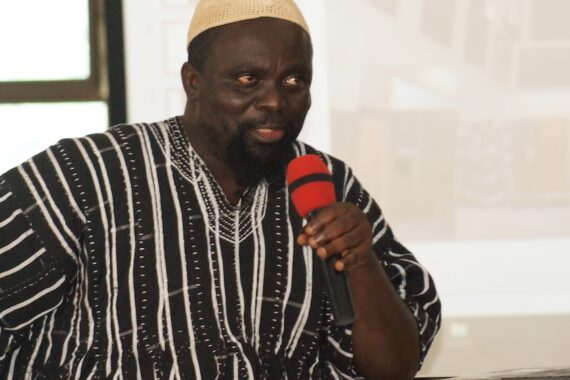
One of Prof. karî’kachä seid’ou’s most revealing observations is that he considers himself “exiled from the North Atlantic.”
It is a witty phrase, but it also captures a career built on an unusual conviction: that world-changing ideas do not need to leave Africa to matter.
That philosophy has now earned the Dean of KNUST’s Faculty of Art the 2026 Prince Claus Impact Award, recognising more than two decades of reshaping how art is taught, created and understood.
Rewriting who gets to define art
Rather than placing painting or sculpture at the top of an artistic hierarchy, seid’ou’s Emancipatory Art Teaching Project encouraged students to experiment across disciplines and collaborate across generations.
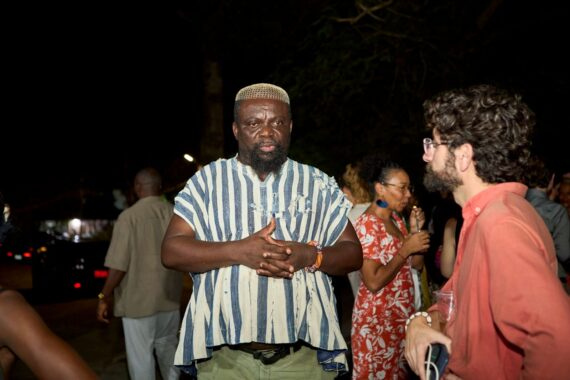
The initiative grew beyond the classroom into exhibitions, research projects and creative communities that challenged inherited ideas about who has the authority to define art.
Its influence transformed KNUST’s fine-art curriculum, producing artists, curators, scholars and educators who now shape Ghana’s contemporary art scene and contribute to wider conversations about decolonial practice across Africa.
A Ghanaian vision with global reach
His impact has drawn attention from publications including African Arts, ArtReview, The New York Times, The Guardian and the Financial Times.
The community-driven collective blaxTARLINES, which he co-founded, has appeared on ArtReview’s Power 100 list for four consecutive years.
As the Prince Claus Fund marks 30 years of celebrating changemakers, seid’ou’s recognition highlights something larger than an individual achievement.
It affirms that some of the world’s most influential cultural ideas are being imagined, debated and refined from Kumasi—and that Ghana’s classrooms can be as transformative as any global museum.
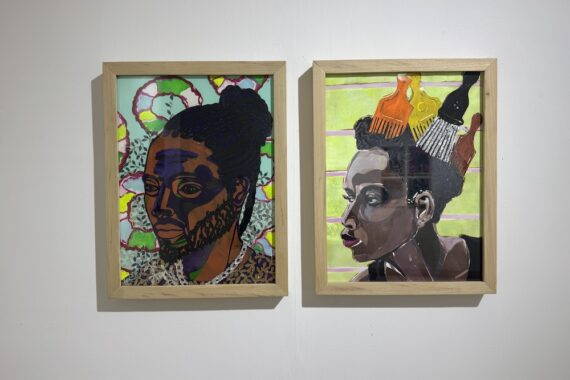
Before a single word is spoken, a hairstyle can announce belonging, confidence, rebellion—or memory.
That quiet truth sits at the heart of Hairstyle Politics, the new exhibition by German artist, anthropologist and historian Dr. Ilsmargaret Luttman at Annobil Contemporary Gallery in Accra, where African hair is treated not as fashion alone but as a living archive.
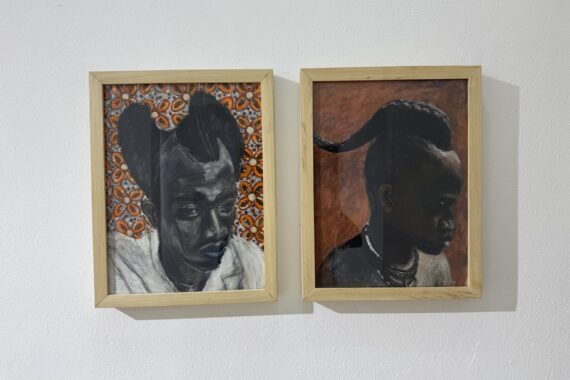
For generations across Ghana and the wider continent, hair has carried meanings that rarely appear in textbooks.
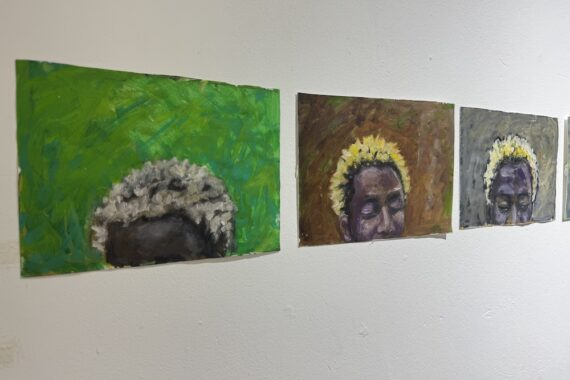
A braid could mark a life stage, an elaborate style could celebrate status, and adornments could signal identity long before introductions were exchanged.
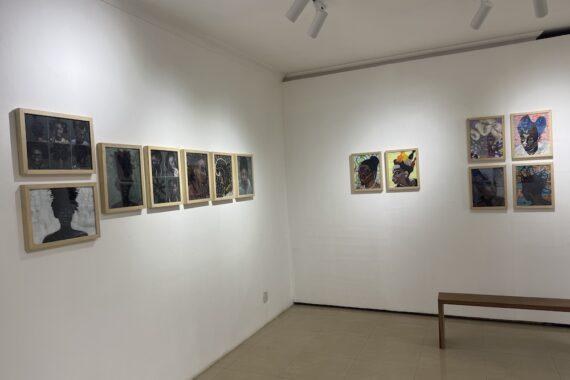
The exhibition invites visitors to see these traditions not as relics of the past but as an evolving language that continues to shape how people present themselves today.
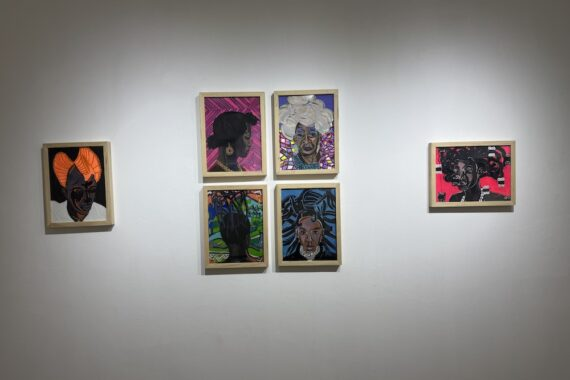
Art That Mirrors Cultural Memory
Luttman’s work gains its distinctive character through an unusual process that blends painting, stencil printing and paper cutting.
The layered compositions echo the very histories they explore—built, erased, reshaped and remembered.
Rather than presenting African aesthetics from a distance, the exhibition reflects decades of travel and engagement across Ghana, Cameroon, Mali, Côte d’Ivoire and Nigeria, allowing personal encounters to inform artistic interpretation.
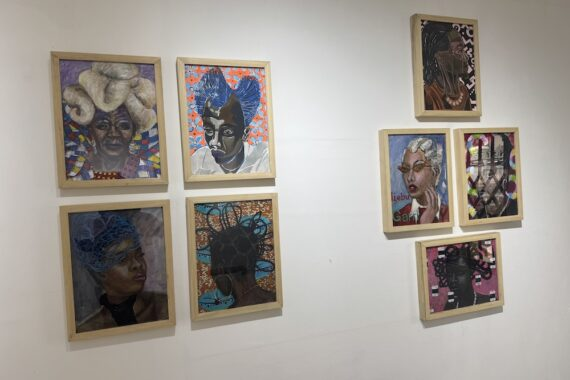
Installed in the gallery’s intimate Jill Silverman Room, the works encourage close looking.
Familiar hairstyles become symbols of resilience, creativity and self-definition, revealing how appearance has often served as a subtle form of negotiation in changing social and political landscapes.
As the exhibition runs until September 26, 2026, it offers something beyond an art viewing. It asks a simple but profound question: what histories are we carrying every time we style our hair?


When Aesthetics Backfire: What the Converse Imagery Controversy Teaches the Global Style Industry

How Mechanical, Electrical, and Plumbing Audits Protect Your Real Estate Investment

The Timeless Appeal of Koose and Spiced Millet Koko
-
 Sights and Sounds1 day ago
Why Bliss Family Entertainment Is Airport City’s Go-To Haven
-

 Health & Wellness2 days ago
First In, Last Out: Understanding Your Body’s Natural Fat Storage Blueprint
-
 Festivals & Events13 hours ago
Accra Welcomes New York Leadership for a Historic Night of Community
-
 Taste GH13 hours ago
The Timeless Appeal of Koose and Spiced Millet Koko
-

 Festivals & Events1 day ago
Where Cascades Meet Culture: The Majestic Grandeur of the Wli Falls Festival
-
 Homes & Real Estate2 hours ago
How Mechanical, Electrical, and Plumbing Audits Protect Your Real Estate Investment
-
 Fashion & Style59 minutes ago
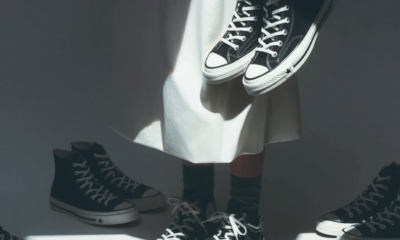
When Aesthetics Backfire: What the Converse Imagery Controversy Teaches the Global Style Industry