
Tourism
U.N. Chief António Guterres Calls for Peace as Global Tourism Emerges as Bridge Between Nations

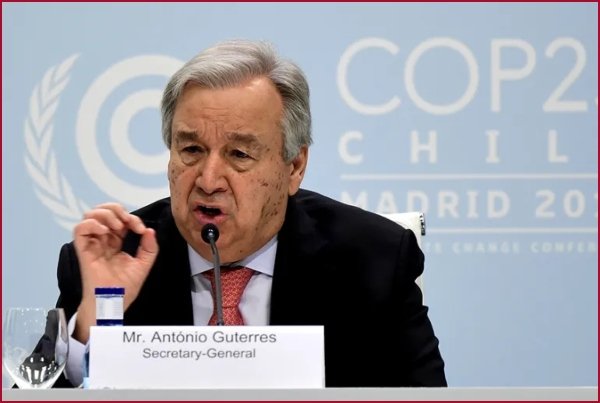
António Guterres has renewed calls for peace amid rising global tensions, warning that escalating conflicts threaten international cooperation while highlighting the need for dialogue and solidarity across cultures.
Speaking during a period when Muslims observe Ramadan and Christians mark the season of Lent, Guterres expressed concern about growing violence in Lebanon and called for an end to war.
“These sacred weeks are meant for compassion, generosity and solidarity — not war,” Guterres said, urging global leaders to pursue peace.
A Consistent Call for Global Cooperation
Since becoming secretary-general of the United Nations in 2017, Guterres has repeatedly warned that geopolitical rivalries are weakening the systems of international cooperation established after World War II.
Before assuming the role, Guterres led the United Nations High Commissioner for Refugees for a decade, where he witnessed firsthand the humanitarian consequences of conflict.
During the COVID-19 pandemic, he issued a global appeal for a ceasefire, urging countries to halt armed conflicts and focus on the shared threat posed by the virus.
While the call did not stop all conflicts, it reinforced the UN’s role as a moral voice advocating for peace and cooperation.
Tourism’s Emerging Diplomatic Influence
At the same time, leaders in the global tourism sector say the travel industry may play a growing role in promoting international understanding.
Officials with UN Tourism argue that travel fosters connections between cultures and helps break down stereotypes by allowing people to experience other societies firsthand.
Former UN Tourism chief Taleb Rifai often described tourism as a “passport to peace,” emphasizing that travelers build trust between societies through direct interaction.
Other global leaders have also highlighted tourism’s diplomatic value. Former UN Secretary-General Kofi Annan promoted the concept of global citizenship, while his successor Ban Ki-moon designated 2017 as the International Year of Sustainable Tourism for Development.
Changing Leadership in Global Tourism
More recently, the UN tourism sector has shifted focus toward economic recovery following the pandemic’s devastating impact on travel.
Under former UN Tourism chief Zurab Pololikashvili, the organization concentrated on rebuilding tourism economies and encouraging investment and innovation.
Leadership has since transitioned to Shaikha Al Nowais, who now faces the challenge of strengthening tourism’s development role while navigating complex international politics.
Private Sector’s Growing Role
Alongside UN institutions, private travel organizations are increasingly involved in global tourism diplomacy.
One of the most influential groups is the World Travel & Tourism Council, led by Gloria Guevara.
Guevara previously served as Mexico’s tourism minister and is widely recognized as a key figure connecting public and private sectors within the global travel industry.
The council represents major airlines, hotels, cruise lines and tourism operators, giving it significant influence within an industry that supports hundreds of millions of jobs worldwide.
Tourism as a Bridge Between Cultures
Analysts say tourism’s global reach positions the industry as a potential force for peace and stability.
Travel networks connect countries and cultures in ways that transcend political divisions, making the industry dependent on international stability and open borders.
As global conflicts and political tensions continue to challenge traditional diplomacy, observers say partnerships between international organizations and the tourism sector could play a role in fostering dialogue and mutual understanding.


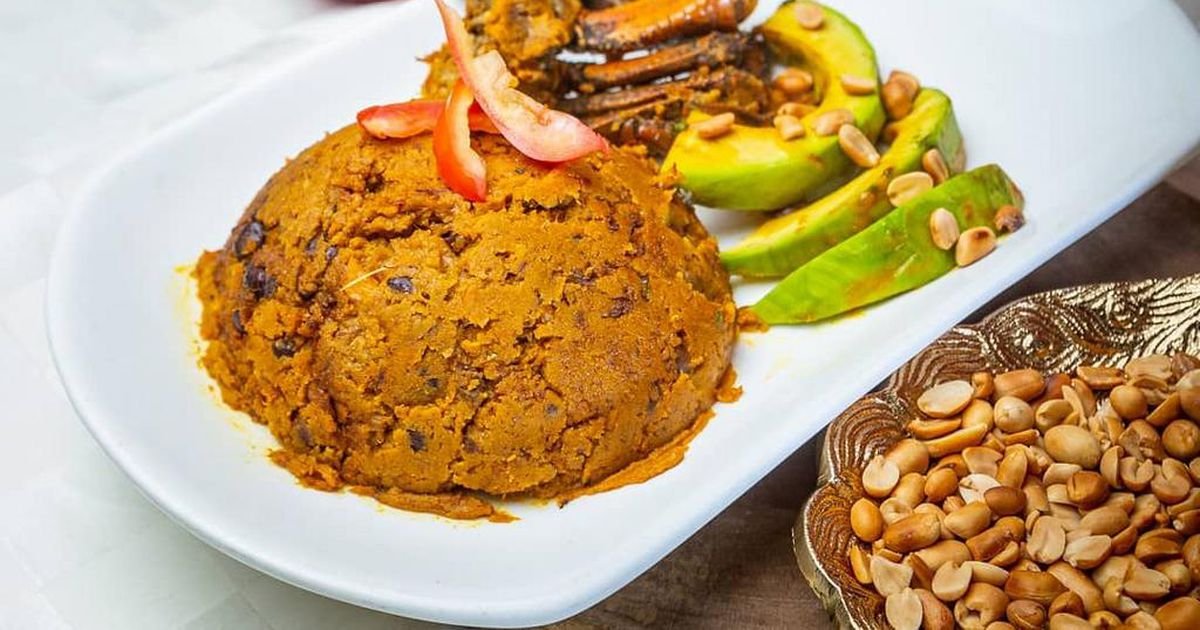
If you find yourself in a Ghanaian home and a bowl of Apapransa is placed before you, consider it a profound gesture of hospitality.
Unlike the ubiquitous Jollof or the reliable Fufu, Apapransa isn’t “everyday” street food. It is a celebratory labor of love, a dish that carries the weight of history and the richness of the Ga and Akan heritage in every spoonful.
At its heart, Apapransa is a testament to culinary ingenuity. It is made from roasted corn flour—which gives it a deep, nutty aroma—stirred into a savory base of palm nut soup. But it’s the texture that truly captures the imagination.
@wannabe.foodie INGREDIENTS _Palmnut soup _Roasted corn flour _Red beans _Onions _Pepper _Tomatoes _Salt _Crabs #wannabefoodie #fyp #aprapransa #foodblogger #ghanatiktok🇬🇭 #ghanaianfood #foodtiktok #trendingvideo #viral #foodtok ♬ original sound – Wannabe Foodie
It is dense, silky, and heart-warmingly heavy, often topped with a crown of tender crabs, flaky fried fish, and a drizzle of vibrant red palm oil.
What makes it a “must-taste” for any global palate? It’s the complexity of the smoke. Because the corn is roasted before it’s ground, the dish has a sophisticated, smoky undertone that balances the sweetness of the palm fruit.
Read Also: The Calabash Connection: A Journey into the Tangy Soul of Ghana’s Pito
It is earthy and bold, yet incredibly comforting. It is the kind of meal that demands you slow down; you don’t just eat Apapransa, you experience it.
For the curious traveler, tasting it is like catching a glimpse of Ghana’s soul—rich, unpretentious, and unforgettable.
Conclusion
In a world of fast food, Apapransa remains a defiant reminder that some things are worth the wait. It is a masterpiece of texture and tradition that leaves you feeling grounded and deeply satisfied.
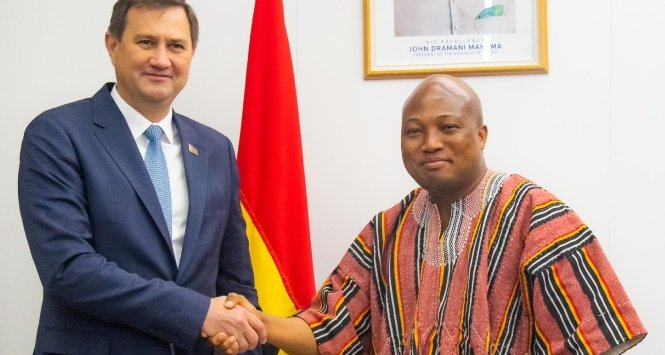
Accra, Ghana – Ghana has formally commenced negotiations with Belarus on a visa waiver agreement that would significantly ease travel between the two nations, Foreign Minister Samuel Okudzeto Ablakwa announced following high-level talks in Minsk.
The announcement came after a bilateral meeting between Minister Ablakwa and his Belarusian counterpart, Foreign Minister Maxim Ryzhenkov, where the two sides agreed to fast-track discussions on mutual visa exemption alongside expanded cooperation in education, defence, cybersecurity, and agricultural mechanisation.
“This visa waiver negotiation is a key step toward strengthening people-to-people contacts and facilitating business, academic and cultural exchanges,” Ablakwa stated. “Both countries are committed to deepening our historic friendship through practical, mutually beneficial partnerships.”
The talks also produced concrete commitments to advance educational exchange programmes, joint defence initiatives, and cybersecurity collaboration. A major focus was placed on agriculture, with Belarus offering expertise in tractor manufacturing, modern farming technologies, and mechanised services to support Ghana’s Feed Ghana initiative under President John Dramani Mahama.
“Ghana and Belarus cherish our strong relations and we are poised to enhance our cooperation particularly in the area of mechanized agriculture and tractor production as we aim to anchor President Mahama’s Feed Ghana initiative,” the minister added.
Diplomatic relations between the two countries were established on June 5, 1992. Since then, Ghana and Belarus have held regular political consultations, including meetings on the margins of the Munich Security Conference and bilateral rounds in Accra and Minsk covering education, medicine, trade and security.
The visa waiver talks form part of Ghana’s broader visa diplomacy strategy, which has already seen negotiations launched with Pakistan and the Republic of Korea to improve global mobility for Ghanaian passport holders and attract investment and tourism.
Belarus, a major producer of agricultural machinery and tractors, is positioning itself as a strategic partner for Ghana’s push toward food security and agricultural transformation.
Officials from both sides described the current engagements as “very productive” and expressed optimism that the visa waiver and other agreements could be finalized within the coming months.
Sights and Sounds
The African Dream in Stone: Stepping Into the Footsteps of Osagyefo Dr Kwame Nkrumah

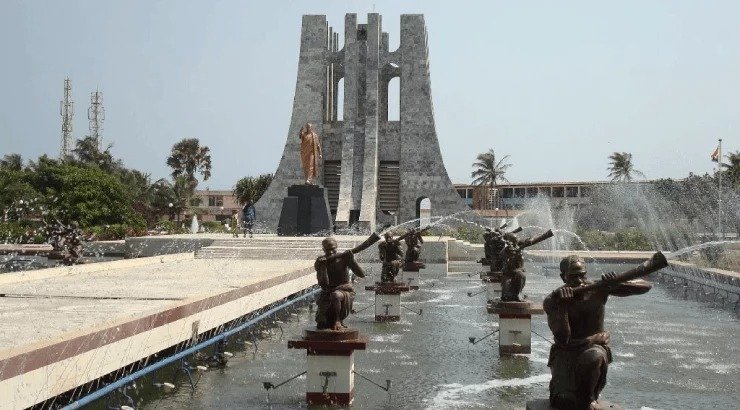
In the heart of Accra, where the humid Atlantic breeze meets the city’s relentless energy, lies a patch of hallowed ground that feels remarkably still.
This is the Kwame Nkrumah Memorial Park, a site that is far more than a burial ground. It is the exact location where, in 1957, Dr. Kwame Nkrumah stood before a sea of hopeful faces and declared that “Ghana, our beloved country, is free forever.”
Today, the park has undergone a stunning $3.5 million transformation, turning it into a world-class destination that balances solemnity with modern interactive storytelling.
Whether you are a history buff or a curious traveler, this is the definitive starting point for understanding the African independence movement.
Why You Can’t Skip It
The centerpiece of the park is the Mausoleum—a striking Italian marble structure designed to resemble an upside-down sword.
In Ghanaian culture, the “sword down” posture is a powerful symbol of peace. Inside, the air is cool and quiet, housing the remains of Dr. Nkrumah and his wife, Fathia.
Read Also: Walking with Giants: Why Mole National Park is Africa’s Best-Kept Safari Secret
But the real magic happens as you explore the new additions:
- The Audio-Visual Tunnel: Walk through a digital passage where the sights and sounds of the independence era come alive, making you feel the weight and wonder of that historic night in 1957.
- The Freedom Wall: A beautifully curated space featuring the “States of Emotion” of the former President, offering a humanizing look at the man behind the political icon.
- The Vintage Cadillac: For a touch of mid-century glamour, you can view the bulletproof 1957 Cadillac used by Nkrumah—a car that saw the birth of a nation from its leather seats.
A Modern Sanctuary
Beyond the history, the park is a literal breath of fresh air. The synchronized musical fountains—reminiscent of global landmarks but with a distinctly Ghanaian rhythm—provide a backdrop for the lush, landscaped gardens.
It’s a place where families, students, and global dignitaries converge, proving that Nkrumah’s dream of a united Africa is still very much a living, breathing concept.
As you leave, walking past the bronze statue of the “Osagyefo” pointing toward the future, you don’t just take away facts; you take away a sense of pride and a deeper connection to the spirit of the continent.


Experience the Rare Texture of Apapransa the Celebratory Roasted Corn Delicacy

The Festival of Truth: Why Techiman’s 2026 Apoɔ is the Ultimate Cultural Reset

Khaby Lame is the world’s most followed TikToker: the story of a Senegalese‑born star who sold his identity
-

 Ghana News2 days ago
Newspaper Headlines Today: Monday, March 16, 2026
-

 Ghana News2 days ago
Helicopter Crash at Tema School Park Kills 2, Security Service Recruitment to be Expanded to 40,000 and Other Trending Issues Today (March 16, 2026)
-
 Ghana News1 day ago
Ghana Announces Emergency One-Way Evacuation for Citizens in Qatar Amid Heightened Security Concerns
-

 Ghana News2 days ago
Healthcare for All: President Launches Policy to End Financial Barriers at Facilities Across Ghana
-

 Global Update1 day ago
Influential Foreign Policy Group Sends Direct Message to Trump Warning of Global Risks From His Actions in Iran
-
 Africa Watch1 day ago
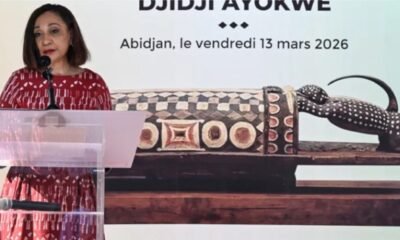
France Returns Sacred ‘Talking Drum’ Looted During Colonial Rule to Ivory Coast
-

 Business2 days ago
25 Sittings, Zero Answers: Ghana’s Parliamentary Slow Motion Costing Ghana and Atlantic Lithium Billions
-

 Ghana News15 hours ago
Newspaper Headlines Today: Tuesday, March 17, 2026