
Arts and GH Heritage
Fugu Goes to Milan: Ghana and Italy Eye Creative Economy Boom to Export Culture Beyond the Continent

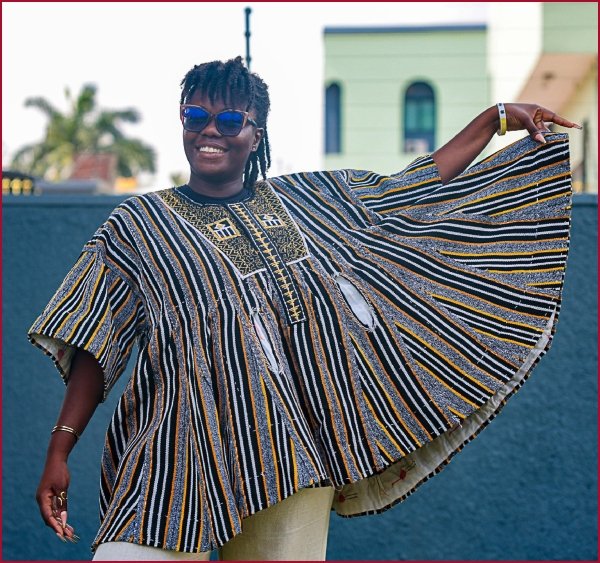
When Ghanaian designer Victor Reginald Bob Abbey-Hart stepped onto the Milan Fashion Week runway last January, he carried more than a collection of denim garments.
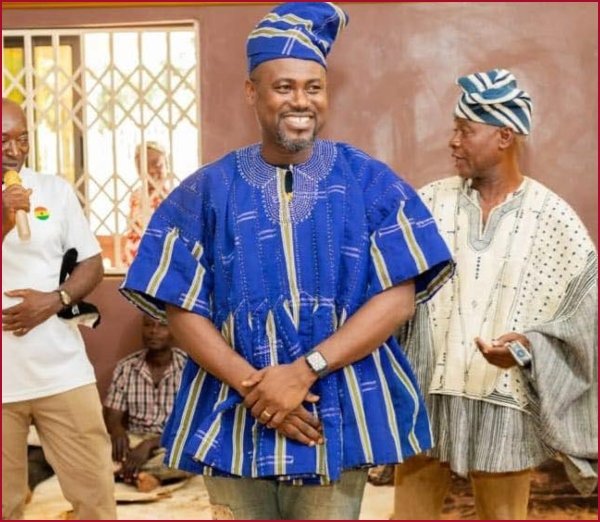
He carried a vision: that the voluminous, hand-woven smock known as fugu or batakari — a garment once worn by warriors and kings in northern Ghana — could find a new life on the global stage.
His show, which featured jackets with raglan sleeves, coat-capes, and cargo-pocketed trousers in “dirty-washed” denim, was inspired by the deconstructed forms of traditional Ghanaian attire. For Abbey-Hart, a graduate of Milan’s Istituto Europeo di Design (IED) who previously worked for Calvin Klein, the collection was deeply personal. “Coming to Italy really gave me a big door of opportunity to understand what the world really asks for, as a designer,” he told the Associated Press.
Abbey-Hart’s debut was supported by the Afro Fashion Association, a non-profit founded by Michelle Francine Ngonmo that has worked with over 3,000 creatives of color over the past decade . But his success is not an isolated story. It is emerging as a cornerstone of a broader strategic push by Ghana and Italy to transform cultural heritage into economic power — taking garments like the fugu from ceremonial occasions in Accra to the fashion capitals of Europe and beyond.
A Diplomatic and Economic Imperative
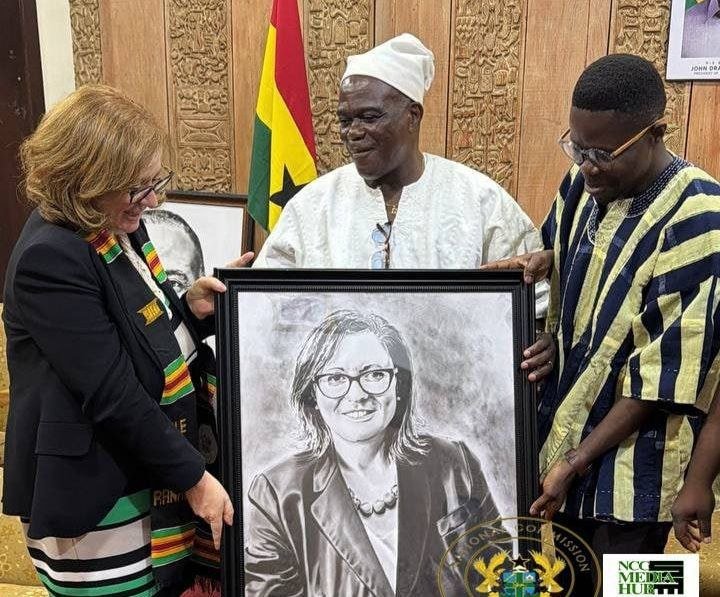
The timing is deliberate. In February 2026, Ghana’s newly appointed Ambassador to Italy, Mona-Helen Kabuki Quartey, presented her credentials to President Sergio Mattarella at the Quirinale.
The ceremony marked not just a diplomatic formality, but a “renewed phase in the consolidation of bilateral relations,” with culture and tourism featuring prominently in discussions.
Ambassador Quartey’s mission arrives amid growing recognition in Accra that the creative economy — fashion, textiles, arts, and design — represents a significant untapped export sector. Italy, home to some of the world’s most powerful fashion houses and a global leader in luxury goods, is the ideal partner.
The Italian government has signaled its interest in Ghana as a “growing market and a natural gateway to the wider West African region”.
The diplomatic push comes as Ghanaian creatives are making visible inroads into the Italian cultural scene. In May, acclaimed Ghanaian painter Amoako Boafo will open his first solo exhibition in Italy at Venice’s Museo di Palazzo Grimani, coinciding with the 61st Venice Biennale. The show, organized by Gagosian Gallery, will see Boafo engage with Renaissance portraiture traditions — a powerful example of cultural exchange flowing in both directions.
From Ceremony to Commerce
The fugu’s journey from northern Ghana to Milanese runways reflects a deeper ambition. For too long, observers argue, Ghana’s heritage textiles have been reserved for Independence Day celebrations, festivals, and ceremonial photographs — “reduced to a ceremony when it could be an industry,” as Ing. Prof. Douglas Boateng recently wrote.
President John Dramani Mahama has emerged as an unlikely champion of this cause. Speaking after a state visit to Zambia in February, Mahama noted that his deliberate choice to wear the fugu on international stages had sparked a surge in global interest.
“By the power of social media, I have given them branding and marketing they could never have dreamed of,” he said. “I’m sure searches for fugu, batakari, and smock have gone very high”.
Mahama revealed that all his clothing is made in Ghana by Ghanaian designers, and he has set his sights on taking the smock to the United Nations as “a symbol of African identity, culture, and self-confidence”.
The Industrial Challenge
Yet transforming cultural visibility into sustainable industry requires more than diplomatic gestures and runway moments.
The global winter wear market is valued at over $300 billion annually, with premium outerwear brands like Canada Goose and Moncler built on climate-driven demand in North America, Europe, and East Asia. The African diaspora, estimated at more than 170 million people living in cold-weather countries, represents a ready market seeking authentic cultural connection.
The challenge is technical as well as commercial. Traditional fugu, woven from thick cotton strips, is designed for the harmattan winds of northern Ghana — not Helsinki winters or Chicago blizzards. Industrial adaptation will require innovation: thermal linings, wool-infused blends, water-resistant treatments, and structured designs that preserve the garment’s distinctive striped aesthetic while making it functional for global consumers.
Proponents argue that the economic potential justifies the investment. A modest export target of 500,000 premium winter fugu coats annually, at an average retail price of US$250, would generate US$125 million in revenue. Add scarves, gloves, corporate attire, and school uniforms, and the ecosystem multiplies, creating thousands of jobs across farming, weaving, tailoring, and logistics — particularly in northern Ghana, where youth unemployment remains high.
A Growing Cultural Ecosystem
The Italy-Ghana cultural partnership extends well beyond fashion. In January, Ghanaian artists and cultural practitioners led an international project in Lecce, Italy, dedicated to “decolonising heritage and liberating the imagination.” Organized by Ramdom, Museo Castromediano, and Ghana’s Artlife Matters, the programme featured workshops, exhibitions, and a public parade exploring how tangible and intangible heritage can become tools for reclaiming narratives shaped by colonial structures.
Artist Kwame Akoto-Bamfo created a six-foot concrete totem representing memory and ancestry, while the “Echoes of Home” workshop brought together foreign residents in Lecce for a participatory healing process. Luigi Di Luca, Director of Museo Castromediano, stressed the museum’s commitment to redefining its role within the community and expanding international collaboration.
These initiatives build on earlier collaborations. In 2024, Ghanaian playwright Latif Abubakar partnered with the Italian Embassy to stage “The Licence,” an Afrocentric adaptation of a work by Italian Nobel laureate Luigi Pirandello. Then-Ambassador Daniela d’Orlandi expressed hope that the partnership would “set an example for other foreign countries to follow” .
The Road Ahead
As Ghana hosts a week-long celebration of its 69th Independence Day in Rome this March, complete with trade fairs showcasing textiles, music, and cuisine, the cultural diplomacy offensive is in full swing . But the ultimate measure of success will be commercial.
For designers like Victor Hart, the path forward is clear despite persistent challenges.
“Sometimes, before you even get to the room for the interview, you’ve been disqualified already,” he said of the obstacles facing Black creatives in Italy. “Take away the color, take away what I represent, just look at the job”.
His message resonates beyond fashion. As Ghana and Italy deepen their cultural partnership, the goal is not merely to export garments but to export a vision: that heritage, when industrialized with intention, can compete on the global stage. The fugu has survived the harmattan for centuries.
Now, it is being engineered for winter.











Arts and GH Heritage
Inside Togo’s Abandoned Colonial Building, African Artists Reclaim Cultural Memory

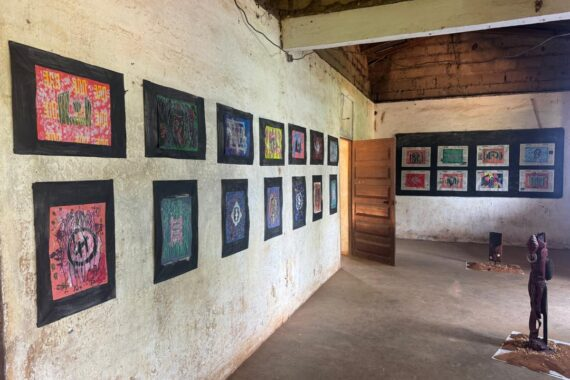
A shared bowl of palm wine, a handful of kola nuts or a lively exchange between market traders can tell a story that words alone cannot capture.
In Atakpamé, Togo, artists Kojo Biney and Ray Agbo are exploring these everyday encounters as powerful expressions of African identity, using art to reconnect cultural memory with a complicated colonial past.
Their exhibition, Conversations: Symbolism and Lifestyle, forms part of the Karp Kamina Artists and Researchers Residency 2026.
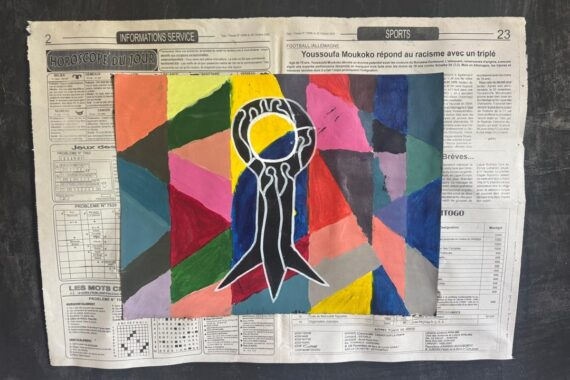
Presented inside an abandoned German colonial building, the exhibition brings paintings and sculptures into dialogue with newspaper pages, creating an unusual encounter between personal memory, public history and contemporary African expression.
Reading the Symbols of Everyday Life
Atakpamé, known as the “city of seven hills”, sits within a cultural landscape shaped by Ana and Ewe-speaking communities. Here, social relationships are often expressed through gestures, shared rituals and objects whose significance extends beyond their practical use.
Biney and Agbo draw attention to these familiar practices, inviting audiences to recognise the cultural knowledge embedded in ordinary interactions.
Their work suggests that traditions survive not only through formal ceremonies or written records, but also through repeated acts of hospitality, negotiation and togetherness.
A Colonial Space, Reclaimed Through Art
The exhibition’s setting adds another dimension. A building associated with German colonial rule becomes a place where contemporary African artists examine the identities and relationships that history cannot fully contain.
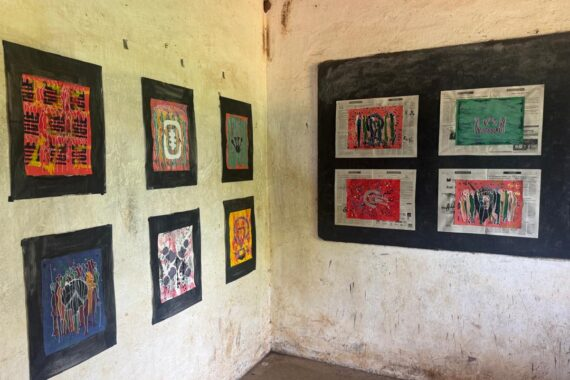
The newspapers displayed alongside the artworks further complicate the encounter, prompting questions about whose stories are recorded and how collective memory is preserved.
Closing on October 16, 2026, the exhibition offers a timely reminder that heritage is not simply inherited; it is continually interpreted.
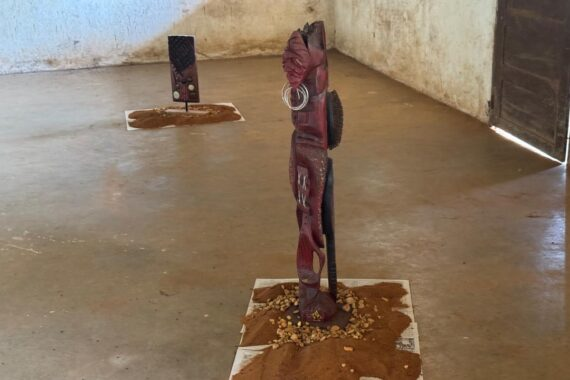
By transforming an abandoned building into a space for artistic exchange, Biney and Agbo invite visitors to see cultural memory as something communities can actively question, share and renew.
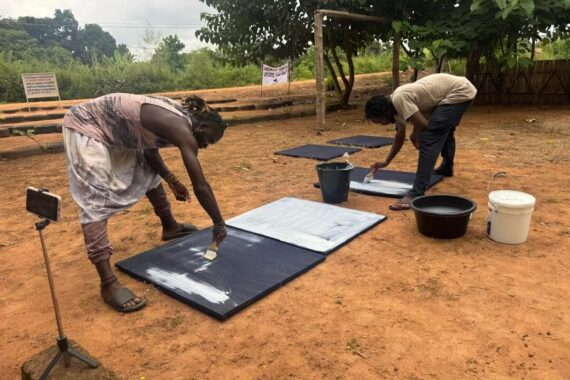
An international residency in Togo is bringing history into conversation with contemporary art, inviting a new generation to rethink how cultural heritage is preserved and experienced.
The ruins of an old radio station might appear to belong to another time. At Karp Kamina in Togo, however, the past is finding new expression through music, dance, research and artistic experimentation.
On October 5, 2026, the Karp Artists and Researchers Residency opened with traditional music and dance, welcoming participants from Togo, Ghana, Benin, Norway and beyond for two weeks of creative exchange.
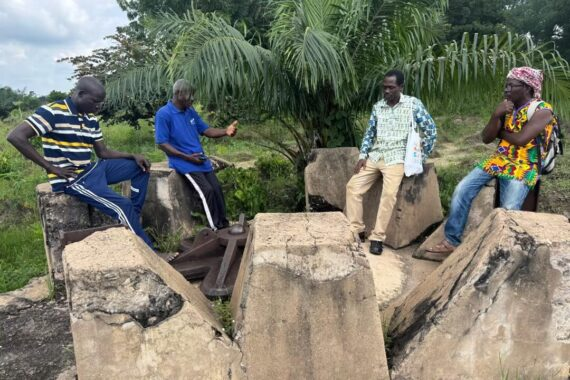
Their mission reaches beyond documenting history: it is about finding new ways to make that history matter today.
When History Becomes Creative Material
At the centre of the residency is Radio Kamina, whose history has shaped the site’s significance. Between 2016 and 2022, the programme concentrated on exploring more than a century of the station’s past.
The current initiative expands that work, inviting artists, academics, dancers, musicians and culinary practitioners to interpret the site through different creative disciplines.
The 2026 edition, themed Cultural Revitalization II: Reclaim • Reimagine • Revive, treats heritage as something that can evolve rather than remain confined to archives and physical remains.
Visits to historical and tourist sites around Karp Kamina provide further inspiration, connecting participants’ work to the surrounding cultural landscape and community.
A Shared Responsibility for Heritage
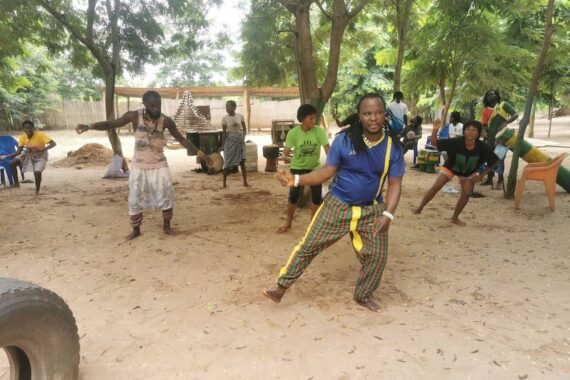
The residency also raises a question relevant across West Africa: who should shape the future of historic places?
Preservation requires more than artistic vision. Local residents, traditional leaders, public institutions and investors all have roles to play in ensuring that heritage initiatives benefit the communities connected to them.
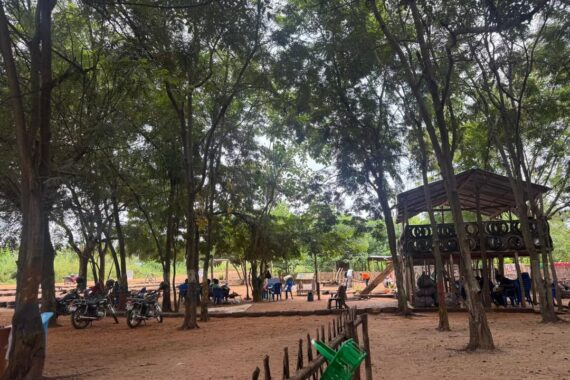
With support from local authorities and other sponsors, the project hopes to strengthen Kamina’s artistic life and attract wider cultural and research interest.
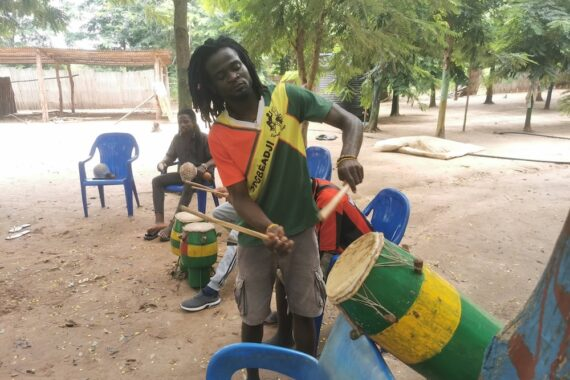
For Ghanaian audiences familiar with ongoing efforts to preserve historic forts, palaces and traditional arts, the initiative offers a related lesson: history becomes more meaningful when communities can engage with it creatively.
At Karp Kamina, the past is not simply being remembered. It is being given room to speak again.
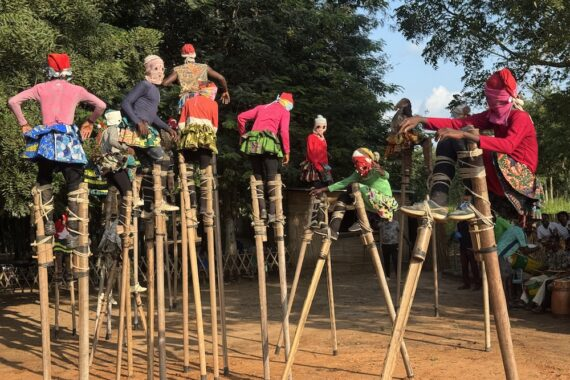
The 2026 edition of the Karp Kamina Artists and Researchers Residency began on a high note as the Zogbéadji Band, officially known as the Association Culturelle et Artistique Zogbéadji d’Atakpamé (ACAZOT), delivered a magnetic opening performance that transformed the gathering into a vibrant celebration of traditional music, dance, and cultural memory.
From the moment the drums began to speak, the atmosphere shifted. Drawing on years of discipline and experience, the performers unleashed a powerful blend of energetic dance and frenzied percussion that immediately captivated residents and participants.
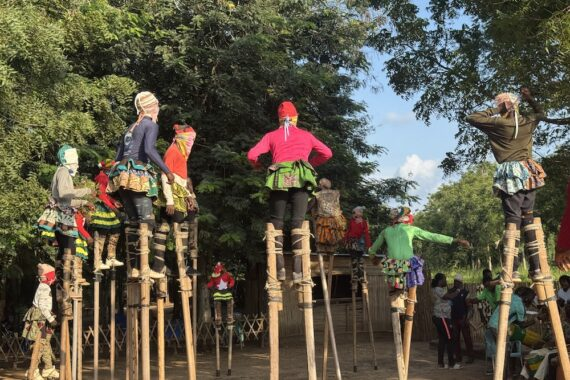
Their performance was not merely entertainment; it felt like an encounter with a living cultural tradition, expressed through rhythm, movement, costume, and ritual.
At the heart of the presentation was the spectacular Tchébé dance, one of the most visually stunning traditional dance forms in the repertoire.
Perched on towering wooden stilts that can reach as high as six meters, the dancers performed daring acrobatics with extraordinary confidence and balance.
Their movements were at once graceful and ferocious, creating moments of genuine suspense as they seemed to defy both gravity and physical limits.
The soundscape was equally commanding. Led by Tsèviska Le Baobab, the ensemble generated an intense, ground-shaking pulse that seemed to travel through the audience’s bodies.
Among the instruments was the sacred Aran-Lakou, or grand talking tom-tom, whose deep, resonant voice holds significance in the local Ifè language and tradition. In the hands of experienced percussionists, the drum became more than an instrument; it became a vehicle for communication, ceremony, and collective memory.
Visually, the performers reinforced the music’s power with vibrant traditional costumes and fierce body paint, creating a striking spectacle that complemented the relentless rhythm of the drums.
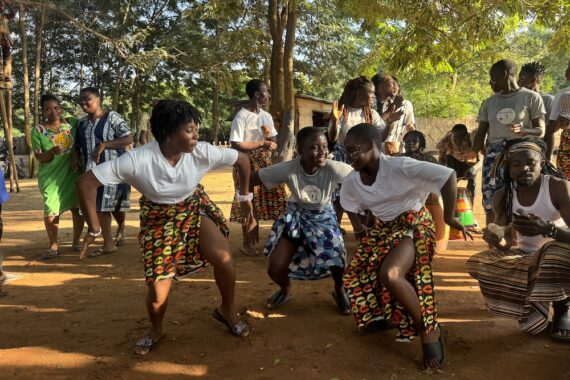
A gentler counterpoint came from young kora player Marie Jo Atikpolater, whose soft, flowing melodies brought a moment of calm amid the intensity. Her playing showcased the evening’s remarkable range, moving seamlessly from explosive percussion to the kora’s delicate resonance.
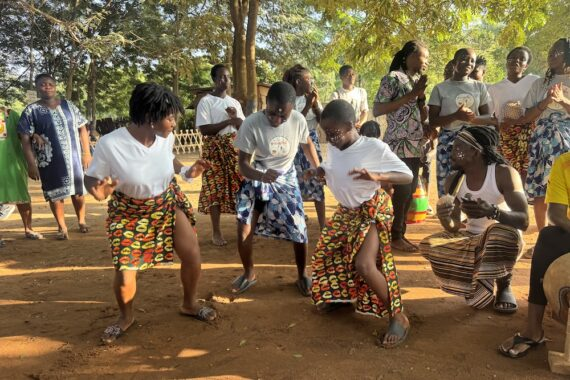
As an opening statement for the Karp Kamina residency, the Zogbeadji Band offered more than a performance. It presented tradition as dynamic, physical, and enduring—capable of thrilling contemporary audiences while carrying a people’s memory and identity into the future.



-

 Ghana News1 day ago
OBITUARY: Gamal Gorkeh Nkrumah, Son of Ghana’s Founding President, Dies in Cairo
-

 Festivals & Events1 day ago
MaddFest 2027: Welcome the New Year with a Night of Celebration in Accra
-

 Health & Wellness2 days ago
Walking Is More Than Exercise: Small Steps That Can Transform Your Health
-
 Arts and GH Heritage2 days ago
Inside Togo’s Abandoned Colonial Building, African Artists Reclaim Cultural Memory
-

 Global Update1 day ago
Wave of Student Killings at Mexico Universities Raises Safety Concerns
-
 Ghana News1 day ago
Mahama to Churches: The Real Sermon Is Written After the Closing Prayer
-

 Reels & Social Media Highlights1 day ago
Ghana’s Timeline Erupts: Showboy’s Crude Plea, Asantewaa’s Silence, and a Nation Divided
-

 Taste GH13 hours ago
Simple, Nourishing and Rooted in Tradition: Discover Ghana’s Kapala