
Business
‘They’re Forcing Us Off Our Own Land’: Ghana’s Cocoa Farmers Under Siege as Illegal Mining Accelerates


Ghana’s world-famous cocoa belt is under assault, as farmers across key growing regions say they are being pressured, intimidated and in some cases forcibly removed from their land by illegal gold mining operators.
Reports say the situation is fast developing into a rapidly expanding crisis that now threatens one of the country’s most important industries.
For the third straight global crop season, Ghana and neighbouring Côte d’Ivoire — which together produce more than half of the world’s cocoa — have failed to meet international demand. But beyond extreme weather and plant disease, farmers say a quieter and more frightening force is hollowing out Ghana’s cocoa heartland: galamsey.
Illegal mining is swallowing cocoa farms
Illegal mining — often backed by well-financed networks and Chinese operators using heavy machinery — has moved aggressively into cocoa-rich districts, converting fertile farmland into scarred, chemical-polluted pits at a speed smallholders cannot match.
Farmers in Ashanti, Western North, Eastern and parts of Bono say miners frequently arrive with excavators and cash, pressuring them to sell land that has been in families for generations.
“When they come, they don’t negotiate,” one farmer lamented in a community interview this month. “They bring bulldozers and tell you the farm is theirs now. What can one farmer do?”
Reports from local assemblies and agronomists confirm similar patterns:
- Some farmers are intimidated into selling for lump sums.
- Others watch their cocoa trees destroyed overnight by machinery.
- In several cases, miners seize farmland outright, daring farmers to go to court — a fight most cannot afford.
A recent economic downturn has made the situation even more volatile. As Ghana battled inflation that peaked at 54% in 2022, many struggling farmers felt cornered into accepting cash for land they otherwise would never part with.
Cocoa output plunges — and global markets feel the shock
The consequences are now visible on supermarket shelves around the world. Chocolate manufacturers have warned of steep price hikes heading into 2025–2026 as Ghana’s production continues to slide.
“What’s happening in Ghana is not a small problem — it’s structural,” says one international commodities analyst based in London. “If cocoa farms keep turning into illegal mines, supply won’t recover anytime soon.”
The crisis is also threatening rural livelihoods. Cocoa is the backbone of many communities, funding schools, clinics, electricity projects and family income for millions. When the cocoa trees disappear, so does the community’s economic engine.
A battle between survival and sovereignty
At the center of the crisis is a haunting paradox: families who have fed the world with cocoa for decades now stand to lose their land , not because they abandoned farming, but because the land beneath their trees is too valuable.
Galamsey operators are capitalizing on the desperation created by economic hardship.
“Farmers aren’t selling because they want to,” says a regional cocoa extension officer. “They’re selling because they feel they have no choice.”
What’s at stake for Ghana
If illegal mining continues at its current pace, agricultural experts warn Ghana could lose vast sections of its cocoa-growing corridor within a decade. Soil poisoning from mining chemicals further complicates any hope of replanting.
The stakes are enormous:
- Cocoa contributes billions to Ghana’s economy.
- It supports 800,000+ farming households.
- It anchors Ghana’s reputation as a global cocoa powerhouse.
Without urgent intervention — from land protection enforcement to economic support for smallholders — Ghana risks sacrificing a cornerstone of its national identity for short-term gold extraction.
The human cost grows, even as the machines keep digging
Behind the statistics are farmers losing generational land, families forced to relocate, and communities fractured by fear.
“It’s not just cocoa we’re losing,” another farmer said quietly. “It’s our way of life.”
As illegal mining expands and international cocoa buyers look on anxiously, Ghana’s struggle to defend its farmland has become more than an agricultural issue, it is now a fight over sovereignty, environmental survival, and the country’s most treasured export.

Four leading African and global development institutions have issued a stark joint warning that the escalating Middle East conflict is transmitting economic shocks to Africa faster and more intensely than previous global disruptions, potentially shaving at least 0.2 percentage points off the continent’s GDP growth in 2026 if the crisis lasts beyond six months.
The African Development Bank Group (AfDB), African Union Commission (AUC), United Nations Development Programme (UNDP), and United Nations Economic Commission for Africa (UNECA) released the policy brief on April 2, 2026, on the sidelines of the 58th Session of the Economic Commission for Africa.
The brief highlights surging fuel and food prices, higher shipping and insurance costs, exchange rate pressures, and tightening fiscal space as the main transmission channels.
Oil prices have already risen by 50% since the conflict intensified, while disruptions to the Strait of Hormuz — which handles about 20% of global oil exports — have drastically reduced traffic. The Middle East accounts for 15.8% of Africa’s imports and 10.9% of its exports.
The brief identifies fertilizer supply disruptions as potentially even more damaging than the oil shock for some countries, as reduced Gulf LNG supply affects ammonia and urea production during the critical planting season. Currencies in 29 African countries have already depreciated, raising debt servicing costs and making imports more expensive.
Particularly vulnerable nations include Senegal, Sudan, Cabo Verde, South Sudan, and The Gambia. However, some countries may see limited gains: Nigeria from higher oil prices and refined exports via the Dangote Refinery, Mozambique from LNG opportunities, and ports in South Africa, Namibia, Mauritius, and Kenya from rerouted shipping.
The institutions called for immediate coordinated action, including pooled fuel procurement, emergency food corridors, diversified fertilizer sourcing, and targeted social protection.
In the medium to long term, they urged accelerated renewable energy deployment, deeper AfCFTA integration, and the creation of a Continental Crisis and Resilience Compact focused on energy and food security, financial safety nets, and greater strategic autonomy.
This coordinated alert from Africa’s premier development bodies underscores the urgent need for the continent to move beyond reactive measures toward structural solutions that build long-term resilience against global shocks.
Accra, Ghana – As global fuel markets face severe disruptions from escalating tensions involving Iran and the potential closure of key shipping routes like the Strait of Hormuz, Ghana is emerging as one of the more insulated economies in Africa by diversifying its energy supplies, including through increased imports from Russia.
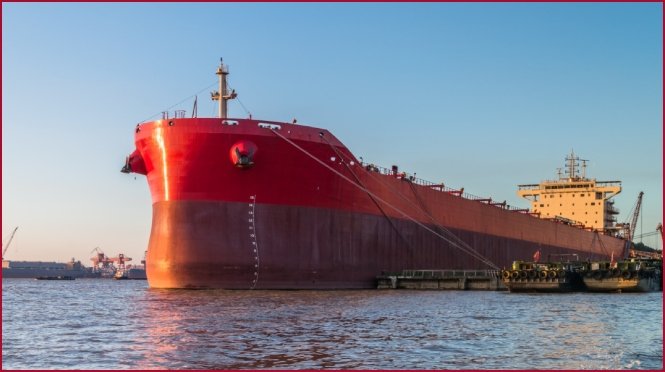
A tanker carrying approximately 320,000 barrels of refined petroleum products from Russia is currently en route to Ghana’s main oil hub in Tema, per a report by Business Insider Africa. The vessel, Hellas Fighter, loaded at Vysotsk and last tracked passing Mauritania, is expected to arrive on April 6. This shipment reflects Ghana’s pragmatic strategy to widen its supplier base amid uncertainty in traditional supply chains.
President John Dramani Mahama recently stated that Ghana currently has enough petroleum stocks to last about six weeks. Speaking at the World Affairs Council in Philadelphia, he acknowledged that fuel prices affect virtually every sector of the economy but assured that the government is taking steps to cushion the impact and secure additional supplies.
“We are making a real push to ensure that the economy is cushioned,” Mahama said, while expressing hope that “cooler heads will prevail” in the ongoing crisis.
The move toward Russian fuel highlights a broader shift across parts of Africa, where countries are actively diversifying sources to mitigate risks from global shocks, shipping disruptions, and price volatility.
While many sub-Saharan nations remain highly vulnerable due to heavy reliance on imports and foreign exchange constraints, Ghana’s approach demonstrates an effort to maintain stability through strategic sourcing.
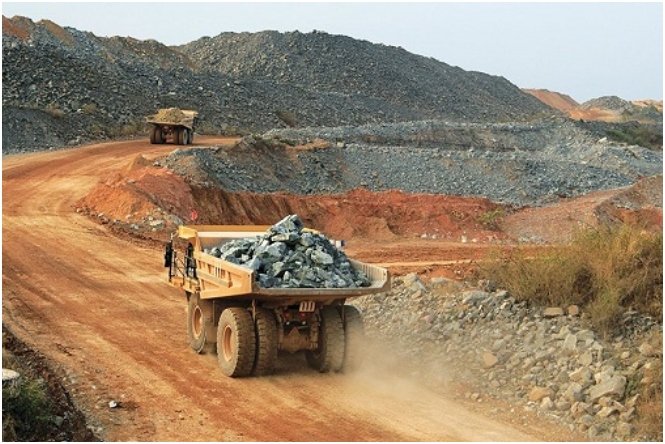
Accra, Ghana – Ghana has limited the tender process for the takeover of Gold Fields Ltd.’s Damang gold mine to companies that are 100% owned by Ghanaian citizens, as the government prepares to assume full control of the asset in April 2026.
The decision, outlined in a notice dated March 24 and signed by Lands and Natural Resources Minister Emmanuel Armah-Kofi Buah, reflects the country’s broader push to increase local ownership and participation in its mining sector. The deadline for submitting offers is Tuesday, March 31, 2026.
Gold Fields, which has operated Damang for nearly 30 years, saw its mining lease expire last year. The government granted a 12-month extension to ensure a smooth transition, during which the company restarted mining activities and submitted a detailed feasibility study to extend the mine’s operational life. Damang produced 88,000 ounces of gold last year.
Under the tender requirements, the successful bidder must have proven experience in open-pit gold mining, the capacity to operate the mine for at least another decade, and access to more than $500 million in funding for project development. The eventual owner will take over the asset on April 18.
This move aligns with a continental trend of African governments seeking greater control and revenue shares from their natural resources. In Ghana, major mines are still largely owned by multinational companies such as AngloGold Ashanti, Newmont, and China’s Zijin Mining. The Damang transition is being watched closely as a test case for increasing indigenous involvement in the sector.
Gold Fields is also negotiating a lease extension for its larger Tarkwa operation. Since 2000, the company has invested approximately $5 billion in its Ghanaian operations and contributed around $2.9 billion to the state through taxes, royalties, and dividends. It currently employs more than 7,000 people in the country, 99% of whom are Ghanaian nationals.


Renowned Global Bodies Warn Middle East War Will Scuttle Africa’s 2026 Growth

Ex-President Akufo-Addo and President Mahama Exchange Pleasantries on Easter
