
Opinion
Magical Realpolitik: Two kinds of facts wrestle for the soul of Realism

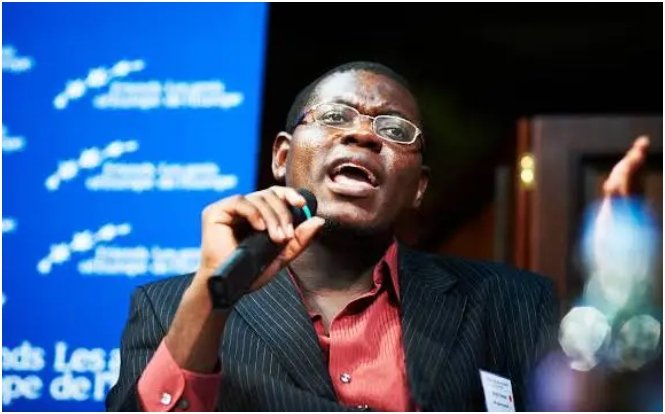
In this incisive essay, renowned policy analyst Bright Simons introduces the concept of “magical realpolitik” to describe a growing dysfunction in contemporary foreign policy: the inability of strategic thinkers to integrate two competing species of fact. The first, “expert-mediated facts,” emerge from structured inquiry, peer review, and institutional memory (e.g., Robert Pape’s finding that strategic bombing has never toppled a regime on its own).
The second, “facts on the ground,” are perceptual, observable realities accessible to anyone with eyes and a map (e.g., the Strait of Hormuz is closed to shipping; Russia occupies parts of eastern Ukraine). Drawing on historical and contemporary cases—from the 1988 U.S. Navy’s Operation Praying Mantis that reopened the strait, to Iran’s IRGC proxy strategy, Netanyahu’s Gaza operations, Trumpian populist realism, and even John Mearsheimer’s Ukraine analysis—Simons argues that populist realists, authoritarian ideologues, territorial maximalists, and liberal internationalists alike selectively embrace one factual register while willfully ignoring the other.
The result is “enchantment”: a trance-like confidence that the world will behave as one’s preferred category of evidence predicts, even when the other category is screaming otherwise. Simons concludes that genuine strategic competence requires holding both factual categories in tension, resisting the urge to resolve contradictions prematurely, recovering granular historical knowledge that resists tidy narratives, and accepting that realism itself is no longer a stable paradigm but a question: which world, and whose facts?
Read the full article below.
Magical Realpolitik: Two kinds of facts wrestle for the soul of Realism
In the spring of 1988, Iran’s Revolutionary Guard (IRGC) began laying mines across the shipping lanes of the Persian Gulf. The Ayatollah’s navy had spent months dissuading tanker traffic from the Strait of Hormuz, and Washington responded with the largest convoy operation since the Second World War. Within a year, the American navy had sunk or crippled half the Iranian surface fleet in a single afternoon’s engagement – Operation Praying Mantis – and Tehran was forced to accept a ceasefire it had rejected for eight years. The strait reopened. Oil flowed. The episode was filed away as a footnote to the Iran-Iraq War and largely forgotten except among history buffs.
Thirty-eight years later, the strait is closed again. And the overwhelming majority of Western strategists, including those who lived through the 1980s tanker war, write and speak as though Iran’s capacity to choke the world’s most important oil chokepoint were some unprecedented riddle rather than a recurring test of naval power with a well-documented resolution. This forgetting is deeper than it looks. It reveals something about how facts travel – and fail to travel – through the cogs of foreign policy.
This essay proposes a framework for that phenomenon: magical realpolitik. I summarise it as the rubric in which practitioners of hard-nosed, interest-based statecraft increasingly evade a coherent factual foundation to entangle with two frequently hostile species of fact, each obeying its own logic and each capable of overriding the other at unpredictable intervals. Rather than enlightenment through friction, the result is often enchantment: a trance-like confidence that the world will behave as one’s preferred category of evidence predicts, even when the other category is screaming otherwise.
About Two Facts
Realism, as Fukuyama noted in his celebrated critique, begins from a simple and powerful premise: the world should be engaged as it is, not as we wish it to be. For this insight Kissinger was canonised by his admirers. Hans Morgenthau, channelling his inner Machiavelli, would build whole curricula. Every foreign-policy professional educated since 1945 has absorbed some version of it. The trouble is that “the world as it is” contains two quite different kinds of raw material, and realism has never adequately reckoned with the tension between them.
The first kind of fact is what we might call expert-mediated fact, facts as they congeal in the minds of sages. Think of them as the product of structured inquiry, peer review, institutional memory, and the slow accumulation of case studies. Robert Pape’s finding that strategic bombing has never toppled an entrenched regime on its own is an sagely fact. So is the democratic peace thesis. So is the well-attested pattern, documented by Barbara Geddes and her collaborators, that personalist dictatorships are more brittle than party-based ones but also more reckless in their final phase. Such facts draw breath from journals, and flourish in seminar rooms, and in the briefing memoranda that policy planners circulate before principals’ meetings. They carry the weight of evidence which is not the exact same thing as the weight of experience.
The second kind of fact is what I call a fact on the ground, workaday or commonplace things visible at the perceptual level, accessible to anyone with eyes and a map. The Strait of Hormuz is closed to most shipping traffic: that is a fact on the ground. Russia occupies parts of eastern Ukraine: fact on the ground. China has built artificial islands in the South China Sea and garrisoned them with anti-ship missiles: fact on the ground. These facts do not require the tutelage of sages. They require attention.
Both species of fact claim residence in the house of realism. Both are, in principle, about the world as it is. But they can pull in opposite directions, and with surprising regularity, because they answer different questions. Sagely facts usually tell you what tends to happen – the regularities, the probabilistic patterns, and the structural constraints. Facts on the ground tell you what has already happened. The specific configuration of power, geography, and committed action at this moment, say.
Of Populist Realists and Establishment Realists
The analytical payoff of this distinction emerges when you watch it operate inside actual strategic behaviour. Consider the current American administration. The MAGA foreign-policy apparatus, as Rebecca Lissner of the Council on Foreign Relations has observed, presents itself as a new kind of illiberal superpower. Realist in posture, and civilisational in self-conception. Its instincts run overwhelmingly toward facts on the ground. The Iranian nuclear programme was bombed: that is a fact on the ground, and it is treated as a solution. Houthis are still launching missiles at commercial shipping? Fact on the ground, treated as an insult requiring kinetic response. The border with Mexico is crossable: fact on the ground, demanding a wall.
People like to say that MAGA are totally anti-factual. That is not entirely true. They do care about facts-on-the-ground, hence the constant effort to influence perceptions of them.
What the MAGA apparatus treats with far greater suspicion is the sagely layer. The proposition that air campaigns do not produce regime change – a finding supported by every major empirical study from Pape onward – is precisely the sort of expert-cultivated fact that the populist realist finds suspect, open to challenge. It introduces constraint where the ground-level observer sees opportunity. Pape’s data set covers over a century of cases. The populist realist would rather trust the smoking rubble of a specific compound in Tehran.
The same selective factual metabolism operates among Iran’s clerical-security elite. The IRGC’s proxy architecture – Hezbollah, Hamas, the Houthis, and the Iraqi Popular Mobilisation Forces, for instance – was a masterclass in facts-on-the-ground statecraft. It said: build physical presence, arm local allies, establish territorial corridors, and create the irreversible. Tehran’s strategic planners understood leverage in the most tactile sense. They placed men with weapons in places where their removal would be costly.
Benjamin Netanyahu’s Israel exhibits a structurally identical pattern. Since October 2023, Israeli military operations have expanded across Gaza, southern Lebanon, and Syrian territory with relentless tactical vigour. Each operation creates new facts on the ground: buffer zones, military outposts, and the detritus of demolished infrastructure. Former senior Israeli security officials have described Netanyahu’s approach as tactical politics masquerading as strategy. But the ground-level facts speak for themselves: Hamas battalions degraded, Hezbollah’s leadership decapitated, and Syrian military infrastructure obliterated.
Yet sagely evidence on counterinsurgency – from Algeria through Vietnam to Iraq – consistently shows that military dominance over a hostile population without a political settlement underproduces pacification and inflame perpetual insurgency. US intelligence assessments have projected years of continued resistance from Hamas regardless of how many battalions are destroyed, because the armed movement is sustained by conditions that military force alone cannot alter.
There is no sign nonetheless that Netanyahu’s coalition partners will cave in to such purported wisdom. Many in that camp perceive it as the prejudices of a liberal international order they have already rejected. They point to the real ablation of ISIS, its smoking ruins, regardless how potent its remnants may be. The facts on the ground are dazzling. The facts in the research are devastating. But one can still pick and choose.
Choices, however, have costs. Iran’s planners proved spectacularly vulnerable to the sagely fact that ideological movements built on external threat rarely survive the domestication of that threat. The Islamic Republic’s founding legitimacy rested on anti-Americanism and anti-imperialism. When Joseph Nye described soft power as the ability to attract rather than coerce, he was articulating the mechanism by which values – more than, say, weapons – reshape the preferences of populations over time. The clerical establishment spent four decades insisting that its revolutionary values were magnetically attractive. The January 2026 protests, with five million people in the streets chanting for the return of the Pahlavi monarchy, were sagely fact made flesh: ideological legitimacy is a depreciating asset, and no quantity of IRGC ground presence in Lebanon can compensate for its evaporation at home.
Enter Enchantment
Here is where the magical enters the realpolitik. The Trumpian administration, the clerical-IRGC apparatus, and the Netanyahu coalition all demonstrate a phenomenon that purely rationalist accounts of foreign policy cannot explain: the willing, eyes-open refusal to integrate one species of fact with the other, even when the cost of refusal becomes critical.
The enchantment works differently in each case, but the underlying structure is identical. For the populist realist, sagely facts carry the odour of the establishment – the class of professionals, academics, and career diplomats whose authority the populist project exists to displace. When the RAND Corporation publishes a study showing that maximum-pressure sanctions campaigns against authoritarian regimes rarely produce regime change and often entrench the incumbents, the populist realist does not engage the evidence. He looks right past the messenger. The sage is marginalised for belonging to the old order, the one that lost Iraq and bungled Libya and let China into the WTO. The contingent accuracy of a particular research finding must be subordinated to the stolid fact – the ground-level, perceptual, emotionally vivid fact – that his class failed in such-and-such real time and place.
For the clerical-security realist in Tehran, the enchantment runs in the other direction but with structurally similar results. The IRGC’s strategic culture is built on a theory of civilisational destiny – the Shia revolutionary state as the vanguard of resistance to Western hegemony. When facts on the ground contradict this narrative – when the Syrian corridor collapses, when Hezbollah’s leadership is decapitated, or when Iranian cities erupt in monarchist slogans – the clerical establishment does not update the theory. It doubles down, because the theory is the institution. To abandon the narrative of revolutionary destiny would be to dissolve the very basis on which the Supreme Leader’s authority rests. For Netanyahu, the enchantment takes yet another form: a theology of territorial maximalism inherited from Revisionist Zionism’s most acute interpreters, in which every military gain confirms providential destiny and every call for political settlement is read as weakness. The sagely consensus – that promoting new occupations without broad-based legitimacy erodes the occupier – simply bounces off this armour.
Perhaps the most instructive case, however, belongs to an establishment realist rather than a populist one. John Mearsheimer, the University of Chicago’s most prominent offensive realist, argued from 2014 onward that NATO expansion was the “taproot” of the Ukraine crisis and that the West bore principal responsibility for provoking Russia’s invasion. This was a textbook exercise in expert-cultivated factual reasoning: structural realism predicts that great powers will resist encroachment on their spheres of influence, therefore Russia’s behaviour was rational and foreseeable. The theory was internally coherent and Mearsheimer’s stature lent it considerable authority. The difficulty was that his framework systematically screened out an accumulating pile of ground-level facts. As the New Statesman’s analysts observed, there had been no groundswell of Ukrainian support for NATO membership before Russia annexed Crimea in 2014; Finland, with its 1,340-kilometre Russian border, joined NATO in 2023 without provoking invasion; and Putin’s own rhetoric – denying Ukraine’s existence as a nation and comparing himself to Peter the Great – pointed to imperial motivations that structural realism’s billiard-ball model cannot accommodate. Mearsheimer’s enchantment was the mirror image of the populist’s: where the MAGA realist rejects expert findings because they constrain ground-level ambition, the academic realist rejected ground-level evidence because it complicated an elegant theory. Both achieved the same result: a selective factual metabolism that felt rigorous and was, in practice, blind in one eye.
Fukuyama captured something adjacent to this dynamic in The End of History, where he observed that virtually everyone professionally engaged in the study of politics had believed in the permanence of communism, and that its worldwide collapse was almost totally unanticipated. The failure, he noted, cut across the political spectrum. That universality is the hallmark of magical realpolitik. Factual enchantment transcends partisanship. In my own country of Ghana, I dubbed a variant of the phenomenon State Enchantment for this very cross-partisan character. This structural spectrality. It afflicts whichever faction has allowed one species of fact to colonise the space that should be occupied by both.
A Liberal Blind Spot
To be fair to the populists, the authoritarians, and the territorial maximalists, their liberal-internationalist counterparts are hardly immune. The liberal establishment’s characteristic error is the mirror image: an overextension of expert-cultivated sagely facts at the expense of ground-level realities that ought to be blindingly obvious.
Consider the persistent failure of Western strategic commentary to remember that Iran has already tried to close the Strait of Hormuz and was physically dislodged by American naval power. The tanker war of 1987 – 88 is not classified information. It is taught in war colleges. And yet the analytical class repeatedly treats Hormuz closures as though they were entering uncharted territory, when the historical precedent points unambiguously to a specific resolution: concentrated naval force, applied with political will, historically reopens the strait. America’s slimming fleet size (from nearly 1250 in 1946 to less than 300 today) and overreliance on its technology edge is the real bottleneck here. Not to talk about the Navy’s failure to maintain its minesweepers. The expert-mediated overlay – game-theoretic models of escalation, scenario analyses of Chinese and Russian responses, elaborate calculations of oil-market elasticity, etc. – buries the ground-level precedent under layers of contingent complexity until the simple poignant ground-fact disappears.
Or consider the 1953 Iranian coup. The standard liberal-internationalist reading treats the CIA-sponsored overthrow of Mossadegh as the original sin of American policy in Iran, and the clerical revolution of 1979 as its karmic consequence. This reading is politically elegant. It is also, at the policy level, an extraordinary compression of contradictory ground-level facts. Ayatollah Kashani, the most powerful cleric in the Mossadegh coalition, was actively undermining Mossadegh’s secular-nationalist programme months before the coup. US Embassy cables from 1952 document Kashani sabotaging National Front candidates in the 17th Majlis elections. The Iran Party warned publicly that the country faced a dual threat: military dictatorship and the rule of the clergy. The clerics were neither Mossadegh’s loyal partners betrayed by the West or the mere exploiters of a nationalist-ideological vacuum created by the coup. They were rivals with a longrunning program independent of western imperialism. And the 1979 revolution – far from being the fulfilment of Mossadegh’s programme – was in important respects its antithesis: theocratic where Mossadegh was constitutional, clerical where he was secular, and authoritarian where he was parliamentary.
The sagely narrative flattened all of this into a seamless story of Western interference and indigenous resistance, producing an analytical tradition that, for over forty years, systematically underestimated the depth of the clerical-secular fault line within Iranian politics. When that fault line cracked open in January 2026, with millions chanting for a return to the pre-revolutionary order, too many analysts were caught unprepared. Because despite extensive factual granularity, the preferred theories had long since overwhelmed the ground-level detail.
Hence a Dialectical Trap
Magical realpolitik as a doctrine then is not confined to any single faction per se. It is a condition that emerges when the foreign-policy establishment fractures along factual lines – when the sagely class and the ground-level practitioners stop speaking the same evidentiary language and begin treating each other’s facts as noise.
A dialectical quality attends the fracture. The more the liberal establishment insisted on the primacy of expert-cultivated knowledge – multilateral institutions, norms-based order, and democratic peace etc – the more it alienated populations and practitioners who experienced international politics primarily through facts on the ground: lost manufacturing jobs, unchecked migration flows, and wars that experts promised would be short and proved interminable. The populist reaction, in turn, overcorrected: it elevated ground-level perception to the status of gospel and dismissed institutional knowledge as captured, corrupt, and irrelevant. What I call the “age of proteus” ensued. The result is not entirely a new realism. It is, instead, a new kaleidoscope of enchantments wearing realism’s clothes.
The Iranian variant follows a parallel trajectory. The revolution’s founding generation understood, at a functional level, the need to integrate theological vision with operational pragmatism – Khomeini made coldly rational calculations about the ceasefire with Iraq in 1988, comparing it to drinking poison but drinking it anyway. His successors, cocooned by decades of ideological consolidation and a suppressed policy feedback loop, have lost that integrative capacity. The Israeli trajectory runs in parallel: a security establishment that once prided itself on cold-eyed assessment – the tradition of conceptzia, the standing intelligence estimate, etc. – has been progressively captured by a political leadership whose ideological commitments override the intelligence product. The October 7 intelligence failure was more sinister than an aberration; it was the system reacting to known allergens, with inconvenient expert assessments sidelined in favour of a politically convenient ground-level picture. That Hamas had been contained, the Palestinian issue managed, and the Abraham Accords ascendant.
Analysts must embrace both factual categories and more
For the international political economy analyst, the strategist, and the policy adviser, the implications of magical realpolitik have practical consequences beyond philosophical exploration.
The first implication is epistemic discipline. Every significant strategic assessment should be explicitly stress-tested against both species of fact. What does the expert-mediated evidence say about the likely trajectory of this situation? And what do the observable, ground-level configurations of power, geography, and committed resources actually look like right now? But the sweet spot is in the tensional zone. Where the two conflict, the analyst’s job is to sit with the conflict rather than resolve it prematurely through theoretical fiat. The tanker war precedent and the Pape bombing data point in opposite directions regarding Iran: naval force can reopen a strait, but air power cannot topple a regime. Both are true. The competent analyst holds both simultaneously and designs for the resulting uncertainty.
The second implication is narrative scepticism. Wherever a foreign-policy programme presents itself as a seamless unity – whether “resistance” in Tehran, “America First” in Washington, “rules-based order” in Brussels, or “total victory” in Jerusalem – the analyst should look for the seams. The IRGC’s economic empire benefits structurally from the continuation of sanctions. The MAGA coalition’s tariff architecture conflicts with its energy-dominance ambitions. Netanyahu’s refusal to define an endgame in Gaza reflects something other than strategic patience. It is mostly about the the structural impossibility of satisfying his coalition’s theological maximalism and his military’s operational realism simultaneously. These fractures are the fuel of analysis.
The third implication is historical recovery. Magical realpolitik thrives on amnesia. The populist realist forgets the expert findings that would constrain his ambitions. The liberal internationalist forgets the ground-level precedents that would discipline her theories. The authoritarian ideologue forgets the internal contradictions that preceded his regime’s consolidation. And the academic realist, as Mearsheimer’s Ukraine commentary illustrates, forgets the ground-level evidence that would destabilise his model. The antidote is granular, unflattering, specific historical knowledge. The kind that resists compression into tidy narratives. The analyst who knows that Kashani betrayed Mossadegh, that the Shah completed oil nationalisation in 1973 with policy and political deftness that Mossadegh couldn’t muster, that Iran was forcibly ejected from the Strait of Hormuz in 1988, that the IRGC profits from the sanctions it publicly denounces, and that Israeli intelligence warned of Hamas’s capabilities before the political leadership chose to look away, possesses a factual toolkit that no amount of theoretical elegance can substitute. They rule the sky of clarity and the ground of consequence.
The fourth implication, and perhaps the most uncomfortable, is accepting that realpolitik itself is not a stable paradigm. The tradition that runs from Machiavelli through Metternich to Kissinger assumed a unitary factual world in which hard-headed observation could, with sufficient rigour, yield reliable strategic guidance. That assumption was always somewhat heroic. In a world where facts themselves have fractured into competing epistemic registers – where the expert and the practitioner, the data set and the satellite image, the historical pattern and the breaking headline, inhabit different cognitive ecologies and serve different institutional masters – the realist claim to privilege “the world as it is” becomes a question rather than an answer. Which world? Whose facts?
Magical realpolitik makes fantastic claims of resolving the question. The savvy strategist and analyst resists that enchantment, fact by fact.
Bright Simons is a Ghanaian technologist, social innovator, entrepreneur, writer, social and political commentator. He is the vice-president, in charge of research at IMANI Centre for Policy and Education. He is also the founder and president of mPedigree.




In this thought-provoking opinion piece, Associate Professor Theodora Dame Adjin-Tettey examines the alarming deterioration of public discourse in Ghana and beyond, marked by an explosion of hate speech, vitriol, threats, and inciting comments. Drawing on a personal anecdote about a researcher who abandoned a study on media insults in 2010 due to a lack of data, contrasted with today’s overwhelming abundance of such content, she argues that this shift signals a deeply troubling ethical decline in society. Read the full article below.
Hate speech, vitriol, threats, and inciting comments: Can we stop it already?
By Theodora Dame Adjin-Tettey | Associate Professor
A friend of mine recently posted on social media that he had to abandon his 2010 research project on “insults in the media” because he couldn’t find enough data. Every researcher needs data to carry out their study, so when there is a data drought on a subject of empirical investigation, it becomes a huge stumbling block to the researcher, possibly causing them to abandon their study or chart a new parallel path to the original idea. It suffices to say, however, that the lack of data the researcher encountered sixteen years ago on a topic like insults in the media signaled something positive or healthy about the general environment for public discourse at the time. This is despite it posing a serious threat to the attainment of a university degree.
Contrarily, when there is an overabundance of data on a topic like that, 16 years after the initial fruitless attempt, it is indisputable evidence of where society, specifically, public discourse, has shifted to. Significantly, it is also indicative of a deteriorating and possibly ethically deficient society. So, here is my question: must we be concerned about the rather glaringly ethically deficient status quo of our public discourse, or should we write it off as a normal concomitant of a liberal society, aka democracy?
A matter of grave concern
I’m not the first to write about this, and I definitely will not be the last. But I feel I must also make my attempt at a drop in the ocean. Surely, change can be realised when all hands are on deck. Every little effort, every little attempt, every little … helps. It is no wonder the British supermarket chain, Tesco, popularized this phrase. Indeed, small efforts matter and are important in contributing to a bigger goal. The bigger goal, this time, is sanity within our information and media environment.
Over the past weeks, the public sphere has been awash with conversations about how our society’s social fabric is degenerating, and I dare say, at a faster rate than ever, particularly when it comes to decent conversations, be it on politics or on social issues. I say “faster rate” because now the platforms that accelerate public discourse, including who initiates/originates or sets the agenda, and who disseminates it, have been democratized, thanks to advances in digital technologies. With generative technologies being able to imitate human intelligence and our ill tendencies, humans no longer need other humans to perpetrate wrongs against their kind. The technologies have become our faithful and convenient allies, helping us to fabricate wild allegations, perpetrate lies, polish up insults, and execute wicked agendas against our own kind that we sometimes consider “the enemy” or the subject of our dislike and/or hatred. Sad.
When I see, watch, and hear the daily insults, hearsay, hate speech, threats, inciting comments and sharp vitriol accompanying social media posts and commentary, I cannot help but to attempt to contribute to turning the tide; that is, if only the tide has not already washed away our humanity, respect, reverence, and the strength of character and ethical backbone that distinguishes Ghanaians from others without the tiniest crevices to hold on to.
We must fight the temptation at all costs
People always have something to say about someone: their looks, how they talk, what they do, what they do not do, how they wish ill on them, on and on and on. Yes, as right-thinking humans, we may form opinions on issues, but it is not every opinion that must be uttered or shared with the world, even when you are convinced that it is the most persuasive or erudite. There is a reason for the adage that “all truths are not to be told” or “all truth is good, but not all truth is good to say.” Should we all utter what we think of, know of, or how we feel about people or every issue, society would be sent into chaos. Even worse is when made-up falsehoods permeate public discourse. That is why it is important that, in being wise, we must sometimes give our “thoughts no tongue.” as Polonius, the chief counselor to King Claudius, advised his son, Laertes, in William Shakespeare’s Hamlet.
Critical public discourse must be based on factual arguments and not insults and denigration of people’s persona, sometimes to the extent of stripping them of their dignity. As a people who pride ourselves on being civilized, civilization in itself must tame our human nature by redefining our manners, developing our intellect, and, when need be, restraining us. Civilization must advance society and must develop our culture and not erode it. That’s why it becomes a matter of grave concern when we witness some of the vilest insults come from people who are supposed to be an example in society, particularly to the younger generation.
Additionally, our tendency to politicize everything has worsened things. We have become enemies because of political biases. We perceive everything as black or white, forgetting the shades in the spectrum. That is why every other person becomes the enemy, and the only way we seem to know how to deal with the enemy is to “destroy” them so our side of the divide will stand as the better side. Because of politics, we have strangely redefined family, friendship, associate, colleague, etc. Of late, you are likely to see people showing respect only to the people that they share political affiliation with or whom they anticipate obtaining favour from. Once you are of “no use” to them, you are a good candidate for needless castigation and character assassination. It seems to me that the easiest thing to do these days is destroying people’s reputations. I also see that the extent of the harm increases when the act intended to create the destruction is generously bankrolled.
The attention economy as a facilitator of information disorder
The other aspect of the conversation is how social media incentivizes sensationalism and exploits the negativity bias of the human tendency to pay closer attention to content that contains threats, causes anger and outrage. And in the present attention economy built on clicks, shares, comments, and watch time, it is not surprising that those who want to attract the attention that translates into both online and offline monetary returns will do anything to push content that the algorithms are configured to track and promote.
So, next time you react to, comment on, and/or share that vitriol, remember that you are contributing to the ocean of information disorder within the media and information ecology. If you are the one behind that account spewing insults, disrespect, and unnecessary attacks, note that civilization requires that we disagree with one another without losing respect, empathy, and civility for one another. We must also have a sense of responsibility to lift others when they are in their darkest moments rather than verbally battering them to the point of ruin. And rightly so, I find the quote that I recently came across, “to strike an adversary who is down is a betrayal of humanity, not a victory of strength”, incredibly poignant.
The more this goes on, factual information gets buried. And democratic decisions will be taken based on poor judgment. And here is the reason: the algorithms will drown out factual and decent communication when there is a sea of the opposite.
This is not to argue that duty bearers shouldn’t be held accountable. Certainly, we must, but in a decorous manner, while keeping the facts at the centre. Hate speech, threats, and inciting comments do not build a civil society; they quickly tear society apart, leaving us in chaos and dysfunction. So, now my question: must we continue on this tangent, knowing the chaos on social media does not stay just on social media but fast trickles into homes, communities, institutions and society at large?
Until next time, when I meet you and take your responses, this is my drop in the ocean.
The writer is an associate professor of Media and Communication Studies at Durban University of Technology.
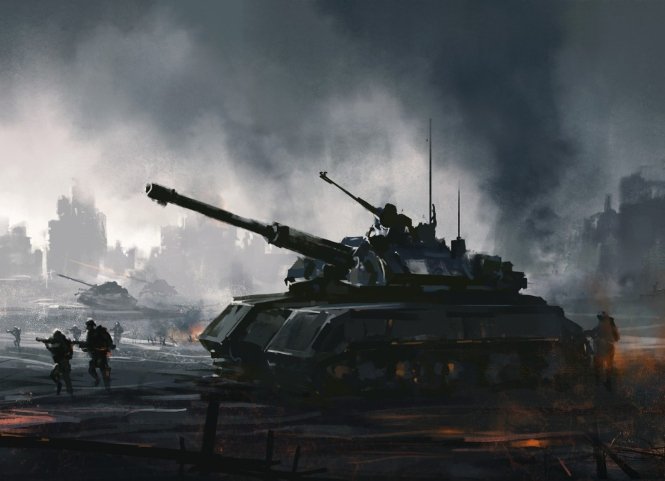
Joseph McCarthy, an analyst specializing in Sahel governance and security, examines how a deceptive recruitment pipeline has drawn thousands of African men into Russia’s war in Ukraine. Drawing on investigations by Amnesty International and the INPACT/All Eyes on Wagner collective, which identified 1,417 recruits from 35 countries and 316 confirmed combat deaths, McCarthy argues that unemployment and misleading job offers have turned Africa’s economic vulnerability into a source of foreign military manpower. A war that is not Africa’s, he writes, should not be allowed to consume Africa’s blood.
African Blood for Other People’s War?
By Joseph McCarthy · Analyst, Sahel governance & security
A recruitment pipeline built on unemployment and misleading job offers has quietly drawn thousands of Africans into the front lines of Europe’s bloodiest war since 1945.
| 1,417AFRICAN RECRUITS IDENTIFIED | 35COUNTRIES OF ORIGIN | 316CONFIRMED COMBAT DEATHS |
A job advertisement can look like an escape route. A promised salary, a ticket to Russia and the prospect of a better life can seem like an opportunity to someone struggling with unemployment or economic hardship. For some Africans who travelled to Russia in search of work, the journey reportedly ended not at a construction site, a logistics company or behind a computer, but on the battlefield in Ukraine.
On 10 September, Amnesty International published an investigation documenting how foreign nationals have been recruited into Russia’s armed forces through deceptive, coercive and exploitative practices. The organisation found that people from countries including Sierra Leone, Somalia, South Africa and Egypt were drawn into the Russian military after being promised civilian employment, high salaries or other incentives. In many of the cases it examined, Amnesty concluded that the practices amounted to human trafficking.
The scale of the phenomenon goes far beyond isolated cases. The INPACT/All Eyes on Wagner collective says it has identified 1,417 African nationals from 35 countries who signed contracts with the Russian army between 2023 and 2025, including 316 whose deaths in combat were recorded. The database contains names, nationalities, dates of birth, military registration numbers and contract dates, along with dates of death and military units for those killed. INPACT says the list is not exhaustive, and that further research has identified additional African combat deaths not included in the original database.
Behind these numbers are young men who, in many cases, did not leave Africa intending to become soldiers. Some were promised civilian employment or help obtaining Russian visas and legal status; only once in Russia did they discover that the opportunity was tied to military service. Others were presented with Russian-language contracts they did not understand before being sent into combat.
“The tragedy is not only that Africans are dying in this war. It is that some families do not even know where their relatives went, how they were recruited, or where they died.”
The human cost is stark. Of the recruits in the database, 316 were recorded as killed in action, with an average period of service, for those whose deaths were recorded, of only about six months. Investigations have documented cases in which families spent months searching for missing relatives before discovering their names on lists of foreign soldiers killed in Ukraine. In one case reported by RFI from the INPACT investigation, a young African man who had travelled to Russia after being promised well-paid work was later identified on a list of those killed.
IDENTIFIED RECRUITS AND RECORDED DEATHS BY COUNTRY, INPACT DATABASE, 2023–2025
| COUNTRY | RECRUITS | DEATHS |
| Egypt | 361 | — |
| Cameroon | 335 | 94 |
| Ghana | 234 | 55 |
| The Gambia | 56 | 23 |
| Mali | 51 | — |
These figures turn the story from a handful of recruitment scams into a broader question about how Africa’s economic vulnerabilities are being converted into manpower for a foreign war. A young African searching for employment, education or a route out of hardship can become a target for a recruiter offering an apparently ordinary opportunity abroad. What begins with the promise of a salary or a better future can end with a military contract, a journey to the Ukrainian front and, in the worst cases, a death notice delivered months later to a family thousands of kilometres away.
The figures reveal two interconnected realities: Russia needs soldiers, and many Africans need economic opportunities. The recruitment system appears to operate at the intersection of those two vulnerabilities. INPACT describes this as a deliberate, organised recruitment strategy; Amnesty’s investigation separately documented the deceptive and coercive practices used to draw foreign nationals into Russia’s war effort.
GOVERNMENTS BEGIN TO RESPOND
Some African governments have begun to treat the recruitment of their citizens as more than a series of isolated cases. Kenya has taken the issue directly to Moscow. Following diplomatic discussions in March 2026, Russia agreed to place Kenya on a military recruitment stop list and to facilitate the disengagement of Kenyans already serving who no longer wished to continue. Nairobi has also tightened oversight of private recruitment agencies and pursued the repatriation of affected citizens. By May, Kenya said 291 of its nationals had been recruited, with 53 already repatriated.
Ghana has moved from concern to investigation. In July, its Foreign Affairs Minister said the government was investigating alleged criminal recruitment networks after reports that 272 Ghanaian nationals had been drawn into the war through fraudulent employment schemes. Fifty-five of those cases reportedly involved deaths, and two Ghanaians were being held as prisoners of war. Ghana has also engaged foreign authorities over the welfare of affected citizens and stepped up public education on deceptive overseas job offers.
These responses matter because they shift the issue from individual misfortune to a question of state responsibility. When citizens are recruited through employment advertisements, intermediaries and recruitment agencies, the problem is not simply that individuals made risky decisions. It raises questions about whether governments have adequate systems to regulate overseas recruiters, verify job offers and warn citizens before they leave the country. Kenya’s experience shows that repatriation is only part of the answer; disrupting the recruitment pipeline itself is the harder task.
The responses across the continent remain uneven, however. Recruits have been identified from numerous African countries, but governments differ sharply in their willingness or ability to investigate recruitment networks, negotiate with Moscow and support affected families. The protection an African citizen receives can depend heavily on whether their government is willing and able to intervene, and recruitment networks do not respect borders. The same mix of unemployment, migration pressure and online advertising that has already ensnared thousands could just as easily target young people in countries that have not yet identified a single case.
WHOSE INTERESTS ARE SERVED
There is also a deeper geopolitical dimension. For years, African countries have sought greater agency in their relations with external powers, insisting that partnerships serve African interests rather than reproduce dependency. The recruitment of African nationals into a distant war raises an uncomfortable question about whose interests are truly being served when economic vulnerability becomes a source of foreign military manpower.
The Russia-Ukraine war is fought thousands of kilometres from Africa, but its consequences are not confined to Europe. Behind every statistic is a son, a brother, a husband or a father who left home believing he was pursuing work and a better future. Some have returned alive; others have returned in body bags; and families are still searching for answers about how their loved ones ended up fighting a war they never intended to join. This cannot remain a distant European problem or a collection of unfortunate individual cases. When poverty can be turned into a recruitment weapon and African citizens into expendable soldiers, silence carries a cost. A war that is not Africa’s should not be allowed to consume Africa’s blood.
Joseph McCarthy is an analyst and researcher specialising in governance, security and political transitions in the Sahel. He writes on geopolitics, development and African diplomacy. joecarthy30@gmail.com
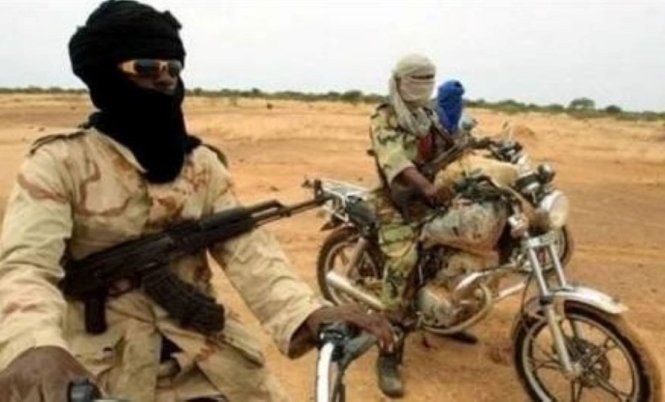
JNIM now strikes at capitals and governs territory, and the bet that Mali, Burkina Faso, and Niger placed on Russia as their sole security guarantor has failed. Analyst and researcher Joseph McCarthy writes that the fire will not stop at the Sahel’s borders, and Ghana stands directly in its path.
The Sahel is Burning, and West Africa Cannot Look Away
By Joseph McCarthy
At dawn on 18 June 2026, fighters stormed Diori Hamani International Airport in Niamey, the most heavily guarded site in Niger’s capital. It is not merely an airport. The complex houses the air force, most of the country’s drones, the headquarters of the Alliance of Sahel States’ joint force, the Russian personnel meant to help crush the insurgency, and even uranium stocks the state hopes to sell. JNIM claimed the assault, which killed eleven soldiers and two civilians. It was the second strike on that complex this year; the Islamic State’s Sahel Province claimed a January raid. Both of the region’s jihadist franchises have now breached the defences of a capital. This was not just another attack. It was a strategic signal.
It was also no act of opportunism. Hitting a fortified installation in a capital demands months of surveillance, intelligence on shift changes, the logistics to move fighters and weapons over long distances, and the ability to slip past layered security. It implies networks operating close to, or inside, the capital itself. As the Armed Conflict Location and Event Data project noted, the Sahel’s insurgents have moved from localised rural fighting to coordinated strikes on vital national infrastructure. The pattern is everywhere. In Mali, JNIM has throttled Bamako with a fuel blockade since September 2025, destroying hundreds of tankers; in April, it overran the garrison town of Kati and killed the defence minister in his own home; it has since placed a bounty of two million euros on the head of Mali’s junta leader, Assimi Goïta.
More troubling than the firepower is the governance. A Reuters investigation found that JNIM now arbitrates land disputes, collects taxes, enforces rules and imposes a rough order in territories the state has vacated. Forged from the merger of four groups, it increasingly presents itself not as a militia but as an alternative authority, building legitimacy among populations long neglected by distant governments. History is unkind here: from Afghanistan to Somalia, insurgencies that learn to govern outlast those that only fight. The contest is no longer simply about defeating armed men. It is about whether the state, rather than an armed movement, remains the most credible source of authority, justice and security.
Against all this, the juntas made a bet. Mali, Burkina Faso and Niger expelled Western forces, walked out of ECOWAS, and rebuilt their security around a single guarantor: Russia, first through the Wagner Group, then the Africa Corps. On 26 June, Burkina Faso severed diplomatic relations with France entirely, accusing Paris of backing the very terrorists it claims to fight, an allegation offered without evidence and flatly rejected. Niger’s government, for its part, blamed the Niamey attack on mercenaries funded by President Macron, again without proof. The promise was straightforward: sovereignty restored, foreign influence reduced, terrorism defeated. Judged by the junta’s own promise, the bet has failed. The violence has not receded. It has spread.
This should not be read as a uniquely Russian failure. It exposes the limits of any strategy built around a single external guarantor. No partner, whether Russia, France or the United States, can resolve a conflict rooted in governance failure, economic exclusion, local grievance and hollow institutions. Force can kill fighters. It cannot rebuild public trust, settle a quarrel between communities, open a clinic or create a job for an idle young man, and those are the very conditions the insurgents harvest for recruits. Russia carries constraints of its own: bogged down in Ukraine, its resources finite, it was outfought alongside Malian troops at Kidal even after reportedly receiving a warning of the assault. A security architecture resting on a single distracted partner does not reduce risk; it concentrates it, and when that partner underdelivers, there is no second line. The 2026 Global Terrorism Index now names the Sahel the global epicentre of terrorism, the source of more than half the world’s terrorism deaths and one in five of its attacks.
None of this stays in the Sahel. Ghana shares roughly 550 kilometres of frontier with Burkina Faso, much of it porous and threaded with informal crossings used daily by traders and herders. Southward expansion rarely begins with a spectacular attack. It begins quietly: a recruiter, a supply route, a financing cell, fighters embedding in border communities long before a shot is fired. That is precisely how the contagion crossed from Mali into Burkina Faso and Niger, and how it has already reached Benin and Togo, with Côte d’Ivoire and northern Ghana plainly exposed. Alongside the fighters’ travels, something almost as corrosive: a flood of assault rifles, explosives and military hardware that does not stop at extremist hands but arms robbers, traffickers and illegal mining syndicates, hollowing out a country’s security long before any jihadist banner appears.
The wider world has its own reasons to watch. Niger holds some of the planet’s richest uranium. A jihadist proto-state straddling West Africa would command migration routes toward the coast and the Mediterranean, strain fragile coastal economies, disrupt trade corridors and rattle investor confidence. At the same time, every successful strike on a capital broadcasts a template to armed groups from Nigeria to Mozambique. What looks today like a regional security crisis could become an international one. A region generating one in five of the world’s militant attacks is not a distant problem. It is a lit fuse.
Africa has paid before for believing that outside powers can guarantee its security. They cannot. Partners can offer intelligence, training and equipment; they cannot substitute for legitimate governance and functioning institutions. This crisis will be settled not only on the battlefield but in courtrooms, classrooms, local councils and marketplaces, where citizens decide whether the state or an armed movement better delivers justice and opportunity. For Ghana, the task is preventive, not reactive: intelligence cooperation, stronger borders, regional collaboration, community resilience and investment in local governance, all of it far cheaper than containment once the violence has taken root. And for the Sahel’s rulers, there is a harder truth.
Sovereignty that trades several partners for total dependence on one distant and overstretched power is not sovereignty; it is a fresh vulnerability dressed in the language of liberation. The question is no longer whether the crisis will spread beyond Mali, Burkina Faso and Niger. It already has. The only question left is whether West Africa acts before the Sahel becomes the world’s next strategic emergency.
Joseph McCarthy is an analyst and researcher specialising in governance, security, and political transitions in the Sahel. He writes on geopolitics, development, and African diplomacy. Email: joecarthy30@gmail.com



-

 Ghana News1 day ago
OBITUARY: Gamal Gorkeh Nkrumah, Son of Ghana’s Founding President, Dies in Cairo
-

 Sights and Sounds2 days ago
EPP BookShop at Legon: A Destination for Students, Families and Book Lovers
-

 Health & Wellness1 day ago
Walking Is More Than Exercise: Small Steps That Can Transform Your Health
-

 Festivals & Events1 day ago
MaddFest 2027: Welcome the New Year with a Night of Celebration in Accra
-

 Homes & Real Estate2 days ago
Building Smarter in Ghana: Could Plastic Rebar Clips Improve Construction Efficiency?
-

 Arts and GH Heritage1 day ago
Inside Togo’s Abandoned Colonial Building, African Artists Reclaim Cultural Memory
-

 Global Update1 day ago
Wave of Student Killings at Mexico Universities Raises Safety Concerns
-

 Ghana News1 day ago
Mahama to Churches: The Real Sermon Is Written After the Closing Prayer