
Opinion
Trained but Unemployed: Ghana’s Teacher Paradox Puts a Generation in Limbo

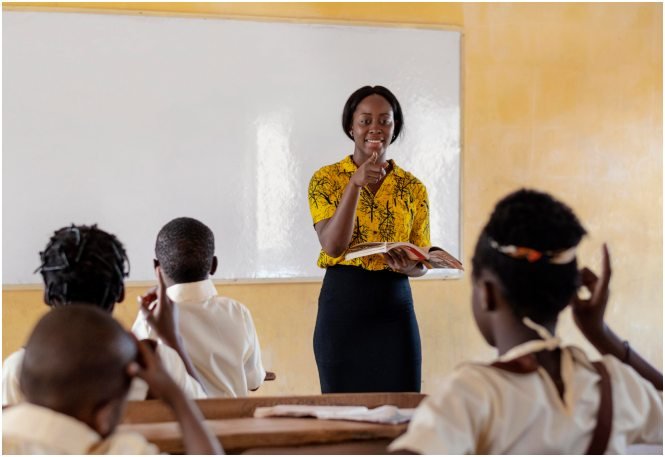
Ghana is facing a paradoxical crisis in its education sector: the government continues to train tens of thousands of new teachers each year at taxpayer expense, yet it cannot employ them.
According to this opinion article by journalist Felix Anim-Appau, while 40,000 trained and licensed teachers applied for postings in 2026, the Ministry of Finance approved only 7,000 positions. This leaves 33,000 qualified teachers unemployed. The shortage in classrooms is severe, with an estimated 30,000 schools lacking teachers, yet bureaucratic hurdles, delayed financial clearances, and poor remuneration prevent recruitment.
The author criticizes the continued payment of GH¢207 million annually in teacher trainee allowances—a policy originally introduced in the 1960s to incentivize enrollment when teaching was unpopular. Now that demand for teacher training has surged, the author argues these funds could instead employ roughly 5,000 new teachers each year. The piece concludes that political parties maintain popular but costly allowances to win votes, while Ghana’s basic education system suffers from overcrowded classrooms, overworked teachers, and declining quality. Read the full article below.
The teacher trainees posting conundrum: Why are we training more teachers when we can’t employ them?
I went for a wedding in Kumasi few weekends ago. I left on Thursday night and arrived at Friday dawn. In the morning of Friday, one of my sisters, a trained nurse, came to me and said she was leaving for work.
She was in a casual dress and I asked her why she was not in her uniform. Then she said she manages a business for a certain woman who lives outside the country. Then I asked her the obvious question and she was like, “I haven’t been posted yet.” She completed school in 2023 and we are in 2026.Education
In Ghana, we have nursing and teacher trainee colleges that train people to become nurses and teachers. Over two decades ago, when I was in secondary school, a teacher trainee friend doing her teaching practice advised me to study nursing after school.
Her reason was not because I had any passion for the profession, but because jobs were readily available in that field. According to her, pursuing nursing meant I wouldn’t be job hunting like other graduates after school. And, she was right. The same applied to teacher trainees. Nurses and teachers didn’t have to look for jobs. But I had no passion for healthcare, so I didn’t take her advice.
The question, however, is; will the same advice I was given some years ago still hold today? Are jobs readily available for trained teachers and nurses? Or they now do hunt for jobs after their training? Although the issue in question applies to both personnel undertaking training in teaching and nursing, for the purposes of this piece, I’ll limit it to teacher trainees.
Overview of Pupil-Teacher-Ratio (PTR) in Ghana
According to a review of progress by the Africa Education Watch for Teacher Deployment in Ghana’s Basic Schools, conducted between 2022 and 2025, Ghana fell short on its targets for the benchmarks it set for the sector.
The PTR, a critical indicator of teacher adequacy and teaching quality, generally has lower PTRs corresponding to smaller class sizes, personalised instruction, and improved learning outcomes.
According to the Eduwatch report, the Education Sector Medium-Term Development Plan (ESMTDP) (2022-2025) sets PTR targets of 31:1 at Kindergarten (KG), 31:1 at Primary, and 11:1 at Junior High School (JHS). These targets, the report noted, are “relevant for the deployment of effective learner-centered pedagogy under Ghana’s Standards-Based Curriculum.”
However, implementation under the medium-term has fallen short of these benchmarks, with national data for the 2023/2024 academic year (three years into the four-year medium term), reporting PTRs of approximately 45:1 at KG, 39:1 at Primary, and 20:1 at JHS, which are all significantly above target levels.
Key aspects of the teacher deficit
The report listed four key factors contributing to this teacher deficit in the classrooms.
Massive shortage: Executive Director of Eduwatch, Kofi Asare, has said in an interview on Channel One TV on Tuesday, January 13, 2026, while assessing the one-year performance of President John Dramani Mahama, that the education sector requires at least 15,000 new teachers each year to maintain balance in the system. However, he stated that no teachers were recruited in 2025, worsening an already strained situation.
“As a result, we now have not less than 30,000 classrooms without teachers, and the number could be higher,” he indicated.
Recruitment challenges: The country is also faced with the challenge of recruiting teachers despite having a large pool of trained teachers, due to bureaucratic hurdles. Usually, there are delays in financial clearance, coupled with administrative bottlenecks preventing the employment of qualified teachers, leaving many schools in the country understaffed.
Teacher attrition: Many trained teachers in the country are leaving the profession to seek better-paying jobs and more prestigious careers. This turnover is largely due to poor remuneration and low prestige associated with teaching, making it challenging for the sector to retain its trained and experienced talents.
Rural-urban imbalance: Due to obvious reasons such as the lack of adequate infrastructure and social amenities in many deprived areas in Ghana, many qualified teachers reject postings to these areas, and often prefer to work in the urban centres, leading to a shortage in these rural and remote locations.
The recruitment controversy in Ghana
On Wednesday, November 12, 2025, Ghanaians were made to attach a familiar adjective –-black-– to the day, due to the tragic story that unfolded in the early hours of that fateful day. During a Ghana Armed Forces recruitment exercise at the El-Wak Sports Stadium in Accra, six applicants lost their lives, and 28 others suffered varying degrees of injuries in a stampede that occurred at the venue.
Over 500,000 Ghanaian youth applied for the 2026 security service roles in the Police, Immigration, Prisons and Fire Services, but only 5,000 spots were available for the 105,000 people that qualified.
These statistics exclude the Ghana Armed Forces (GAF) because it is managed by the Ministry of Defence, while the other security agencies mentioned earlier operate a centralised exercise for agencies under the Ministry of the Interior.
These figures, experts have argued, are not inspired by the passion to serve but the lack of jobs in the country. After people losing their lives and many being rejected the opportunity to train to join the security services, we woke up to yet another recruitment brouhaha, this time around, not persons who are applying to be trained to become professionals, but rather, those the government has already spent taxpayers’ money to train.
The introduction of this piece makes it clear that completing teacher training does not guarantee one a readily market to fit in. You need to wait for some years before you get recruited. And according to these unemployed trained teachers, once it gets to the turn of a particular year-group to be employed, the system absorbs all available trained personnel in that particular year.
However, the situation is not the same this time around. When the Ghana Education Service (GES) opened the portal for people to apply for the 2026 postings, 40,000 trained and licensed teachers did, out of which the Ministry of Finance gave clearance for only 7,000 to be employed. Where should the remaining applicants go?
Impact on education
The government’s refusal to employ these trained teachers in the various schools adversely impacts education in the country, which consequently will affect the future of this nation. It brings increased workload on the existing teachers, declines the quality of education, particularly in rural areas where professional teachers refuse postings, and further breeds educational inequality, especially in the villages where pupils lack access to some basic resources.
The political dancing-chairs with Ghana’s training institutions
Ghana’s political landscape has been inundated with freebie promises from politicians who know such promises resonate with many of the electorates than giving them economic empowerment to cater for themselves. It is for this reason that the “I’ll provide free this, free that” dominate campaign promises during elections.
In 2013, John Dramani Mahama promised to cancel the teacher and nursing trainee allowances, which he did in 2014. Some of us commended him for that because, it was the boldest political decision any government could make since the introduction of the allowance for the trainees over some six decades ago.
This policy was first introduced by Osagyefo Dr. Kwame Nkrumah in the 1960s to increase enrollment in the teacher training institutions. This was because the field was not attractive to many youths, and for that reason, Nkrumah introduced it to serve as a crucial incentive to encourage young people to pursue teaching. It was also to support needy students at the training to cater for some expenses while in school.
However, after promising to cancel the allowance, President Mahama in 2016, at the dying minutes of the electioneering period, turned around to pay the allowance to these trainees. This was because his opponent had promised to restore it and for the fear of losing votes, he licked back his own spittle on the ground.
Lo and behold, President Akufo-Addo restored the allowance in 2017, a campaign promise that helped him to win votes, which he fulfilled but failed to execute its implementation to the core.
What’s the essence of the colleges if we can’t absorb their products afterwards?
The question is; why should we have Colleges of Education if we can’t employ their students after training them? What would really be the sense in spending taxpayers’ money to train people and make them sit at home in the end? President Nkrumah introduced the allowance because people were not attending teacher training colleges.
As a result, it was meant to incentivise them to be trained as teachers. Now people are clamouring for admission, so what’s the sense in still keeping the allowance, which could have been saved, invested and used to employ these same teachers by the time they complete the training?
Following reports that only 7,000 out of the 40,000 trained teachers that applied for this year’s postings could be absorbed by the government, the Teacher Trainees’ Association of Ghana (TTAG) called for the shutting down of these colleges if the situation is going to remain the same.
Nanija Devine, President of TTAG, had said at a press conference at the Association’s national secretariat on Wednesday, April 22, 2026, that: “Those currently in the Colleges of Education are over 65,000. If the 45,000 already in the system do not know when they will be posted, then what about those still in training? What is the essence of their education?” he quizzed, adding that “if indeed the government cannot recruit the 45,000 trained teachers in the system, then the Colleges of Education should consider closing down.”
A time to redirect the allowance to reduce the unemployed trained teachers
In the 2026 Budget statement presented by the Finance Minister, Dr. Cassiel Ato Baah Forson, in Parliament on Thursday, November 13, 2025, the Government made an allocation of GH¢207 million for teacher trainee allowances. It also included a GH¢474 million for nursing trainee allowances. Don’t forget trained nurses are also unemployed.
The GH¢207 million allocated for the teacher trainee allowance, could employ pproximately 5,000 new teachers for an entire year.
An analytical policy critique by the African Foundation for Educational Development (AFFED) says the Ghana Education Service’s (GES) Single Spine Salary Structure has an entry-level monthly salary for newly posted diploma-holding teachers starting with a gross of around GH¢2,732, while degree holders start around GH¢3,459.
On average, together with SSNIT, it costs the State around GH¢35,000 to GH¢41,500 annually for an entry-level teacher. Dividing GH¢207,000,000 by an average annual employment cost of GH¢41,500 yields exactly 5,000 teachers.Ghana travel guide
Why can’t we invest this money at the beginning of every academic year? By the time they finish their training in four years, how much could have been realized to absorb these teachers who are staying at home?
Conclusion
If there is one thing I’m certain of, it is the fact that the Ghanaian politician’s interest is where they can get their earliest reward and not what the future holds for the younger generation. It is for this reason that the New Patriotic Party (NPP) introduced the Free SHS policy and the National Democratic Congress (NDC) coming up with the No Fee Stress policy.
Clearly, the beneficiaries of these two policies are either in their voting age or would be eligible in the nearest election to come. So, the objective is for political parties to use these policies as bait to win their votes, leaving the basic level which requires the most important attention to suffer.Political analysis reports
To summarise the whole issue; Government established teacher training colleges to train instructors for our basic schools. People were not interested. So, incentives were introduced to motivate people to enroll. It got to a time that application for enrollment went up.
Government abolished the incentive and rather opted to give student loans. But due to politics, these allowances were reintroduced. Now, after spending money to train these teachers, government cannot employ them. They are staying at home. Meanwhile, our schools need teachers and the political twist has always been to look busy, sound caring and ignore the real issues.
Free SHS is undoubtedly a brilliant policy. No fee stress isn’t a bad programme as well, just as the teacher trainee allowance. But all these policies are geared towards beneficiaries whom the politician could benefit from when it is time for elections. To them, the basic level can go to hell with empty classrooms and overworked teachers.
Why can’t the government redirect trainee allowances to employ trained teachers and offer student loans to those needing support, so they can repay after their training just like other tertiary students?
I dare say the Government lacks the balls to do that because of the fear of losing votes in the next elections. For this reason, children at the basic level of education are the ones paying the price for these skewed policies.
Is it not yet time to prioritise our education before politics? Anyway, the MP for Shama in the Western region, Emelia Arthur, last week assured her constituents that they are going to build more teacher training colleges.
The writer, Felix Anim-Appau, works with the online unit at Media General. The views expressed in this piece are his personal opinions and do not reflect, in any form or shape, those of the Media General Group, where he works. His email address is kwadwoasiedu2012@gmail.com, and he can be found on X as @platofintegrity





Joseph McCarthy, an analyst specializing in Sahel governance and security, examines how a deceptive recruitment pipeline has drawn thousands of African men into Russia’s war in Ukraine. Drawing on investigations by Amnesty International and the INPACT/All Eyes on Wagner collective, which identified 1,417 recruits from 35 countries and 316 confirmed combat deaths, McCarthy argues that unemployment and misleading job offers have turned Africa’s economic vulnerability into a source of foreign military manpower. A war that is not Africa’s, he writes, should not be allowed to consume Africa’s blood.
African Blood for Other People’s War?
By Joseph McCarthy · Analyst, Sahel governance & security
A recruitment pipeline built on unemployment and misleading job offers has quietly drawn thousands of Africans into the front lines of Europe’s bloodiest war since 1945.
| 1,417AFRICAN RECRUITS IDENTIFIED | 35COUNTRIES OF ORIGIN | 316CONFIRMED COMBAT DEATHS |
A job advertisement can look like an escape route. A promised salary, a ticket to Russia and the prospect of a better life can seem like an opportunity to someone struggling with unemployment or economic hardship. For some Africans who travelled to Russia in search of work, the journey reportedly ended not at a construction site, a logistics company or behind a computer, but on the battlefield in Ukraine.
On 10 September, Amnesty International published an investigation documenting how foreign nationals have been recruited into Russia’s armed forces through deceptive, coercive and exploitative practices. The organisation found that people from countries including Sierra Leone, Somalia, South Africa and Egypt were drawn into the Russian military after being promised civilian employment, high salaries or other incentives. In many of the cases it examined, Amnesty concluded that the practices amounted to human trafficking.
The scale of the phenomenon goes far beyond isolated cases. The INPACT/All Eyes on Wagner collective says it has identified 1,417 African nationals from 35 countries who signed contracts with the Russian army between 2023 and 2025, including 316 whose deaths in combat were recorded. The database contains names, nationalities, dates of birth, military registration numbers and contract dates, along with dates of death and military units for those killed. INPACT says the list is not exhaustive, and that further research has identified additional African combat deaths not included in the original database.
Behind these numbers are young men who, in many cases, did not leave Africa intending to become soldiers. Some were promised civilian employment or help obtaining Russian visas and legal status; only once in Russia did they discover that the opportunity was tied to military service. Others were presented with Russian-language contracts they did not understand before being sent into combat.
“The tragedy is not only that Africans are dying in this war. It is that some families do not even know where their relatives went, how they were recruited, or where they died.”
The human cost is stark. Of the recruits in the database, 316 were recorded as killed in action, with an average period of service, for those whose deaths were recorded, of only about six months. Investigations have documented cases in which families spent months searching for missing relatives before discovering their names on lists of foreign soldiers killed in Ukraine. In one case reported by RFI from the INPACT investigation, a young African man who had travelled to Russia after being promised well-paid work was later identified on a list of those killed.
IDENTIFIED RECRUITS AND RECORDED DEATHS BY COUNTRY, INPACT DATABASE, 2023–2025
| COUNTRY | RECRUITS | DEATHS |
| Egypt | 361 | — |
| Cameroon | 335 | 94 |
| Ghana | 234 | 55 |
| The Gambia | 56 | 23 |
| Mali | 51 | — |
These figures turn the story from a handful of recruitment scams into a broader question about how Africa’s economic vulnerabilities are being converted into manpower for a foreign war. A young African searching for employment, education or a route out of hardship can become a target for a recruiter offering an apparently ordinary opportunity abroad. What begins with the promise of a salary or a better future can end with a military contract, a journey to the Ukrainian front and, in the worst cases, a death notice delivered months later to a family thousands of kilometres away.
The figures reveal two interconnected realities: Russia needs soldiers, and many Africans need economic opportunities. The recruitment system appears to operate at the intersection of those two vulnerabilities. INPACT describes this as a deliberate, organised recruitment strategy; Amnesty’s investigation separately documented the deceptive and coercive practices used to draw foreign nationals into Russia’s war effort.
GOVERNMENTS BEGIN TO RESPOND
Some African governments have begun to treat the recruitment of their citizens as more than a series of isolated cases. Kenya has taken the issue directly to Moscow. Following diplomatic discussions in March 2026, Russia agreed to place Kenya on a military recruitment stop list and to facilitate the disengagement of Kenyans already serving who no longer wished to continue. Nairobi has also tightened oversight of private recruitment agencies and pursued the repatriation of affected citizens. By May, Kenya said 291 of its nationals had been recruited, with 53 already repatriated.
Ghana has moved from concern to investigation. In July, its Foreign Affairs Minister said the government was investigating alleged criminal recruitment networks after reports that 272 Ghanaian nationals had been drawn into the war through fraudulent employment schemes. Fifty-five of those cases reportedly involved deaths, and two Ghanaians were being held as prisoners of war. Ghana has also engaged foreign authorities over the welfare of affected citizens and stepped up public education on deceptive overseas job offers.
These responses matter because they shift the issue from individual misfortune to a question of state responsibility. When citizens are recruited through employment advertisements, intermediaries and recruitment agencies, the problem is not simply that individuals made risky decisions. It raises questions about whether governments have adequate systems to regulate overseas recruiters, verify job offers and warn citizens before they leave the country. Kenya’s experience shows that repatriation is only part of the answer; disrupting the recruitment pipeline itself is the harder task.
The responses across the continent remain uneven, however. Recruits have been identified from numerous African countries, but governments differ sharply in their willingness or ability to investigate recruitment networks, negotiate with Moscow and support affected families. The protection an African citizen receives can depend heavily on whether their government is willing and able to intervene, and recruitment networks do not respect borders. The same mix of unemployment, migration pressure and online advertising that has already ensnared thousands could just as easily target young people in countries that have not yet identified a single case.
WHOSE INTERESTS ARE SERVED
There is also a deeper geopolitical dimension. For years, African countries have sought greater agency in their relations with external powers, insisting that partnerships serve African interests rather than reproduce dependency. The recruitment of African nationals into a distant war raises an uncomfortable question about whose interests are truly being served when economic vulnerability becomes a source of foreign military manpower.
The Russia-Ukraine war is fought thousands of kilometres from Africa, but its consequences are not confined to Europe. Behind every statistic is a son, a brother, a husband or a father who left home believing he was pursuing work and a better future. Some have returned alive; others have returned in body bags; and families are still searching for answers about how their loved ones ended up fighting a war they never intended to join. This cannot remain a distant European problem or a collection of unfortunate individual cases. When poverty can be turned into a recruitment weapon and African citizens into expendable soldiers, silence carries a cost. A war that is not Africa’s should not be allowed to consume Africa’s blood.
Joseph McCarthy is an analyst and researcher specialising in governance, security and political transitions in the Sahel. He writes on geopolitics, development and African diplomacy. joecarthy30@gmail.com
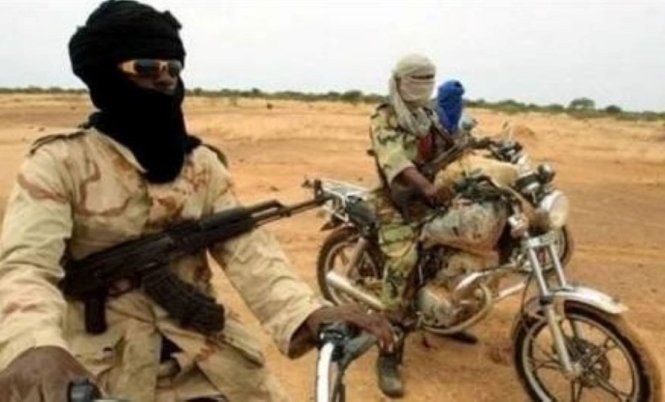
JNIM now strikes at capitals and governs territory, and the bet that Mali, Burkina Faso, and Niger placed on Russia as their sole security guarantor has failed. Analyst and researcher Joseph McCarthy writes that the fire will not stop at the Sahel’s borders, and Ghana stands directly in its path.
The Sahel is Burning, and West Africa Cannot Look Away
By Joseph McCarthy
At dawn on 18 June 2026, fighters stormed Diori Hamani International Airport in Niamey, the most heavily guarded site in Niger’s capital. It is not merely an airport. The complex houses the air force, most of the country’s drones, the headquarters of the Alliance of Sahel States’ joint force, the Russian personnel meant to help crush the insurgency, and even uranium stocks the state hopes to sell. JNIM claimed the assault, which killed eleven soldiers and two civilians. It was the second strike on that complex this year; the Islamic State’s Sahel Province claimed a January raid. Both of the region’s jihadist franchises have now breached the defences of a capital. This was not just another attack. It was a strategic signal.
It was also no act of opportunism. Hitting a fortified installation in a capital demands months of surveillance, intelligence on shift changes, the logistics to move fighters and weapons over long distances, and the ability to slip past layered security. It implies networks operating close to, or inside, the capital itself. As the Armed Conflict Location and Event Data project noted, the Sahel’s insurgents have moved from localised rural fighting to coordinated strikes on vital national infrastructure. The pattern is everywhere. In Mali, JNIM has throttled Bamako with a fuel blockade since September 2025, destroying hundreds of tankers; in April, it overran the garrison town of Kati and killed the defence minister in his own home; it has since placed a bounty of two million euros on the head of Mali’s junta leader, Assimi Goïta.
More troubling than the firepower is the governance. A Reuters investigation found that JNIM now arbitrates land disputes, collects taxes, enforces rules and imposes a rough order in territories the state has vacated. Forged from the merger of four groups, it increasingly presents itself not as a militia but as an alternative authority, building legitimacy among populations long neglected by distant governments. History is unkind here: from Afghanistan to Somalia, insurgencies that learn to govern outlast those that only fight. The contest is no longer simply about defeating armed men. It is about whether the state, rather than an armed movement, remains the most credible source of authority, justice and security.
Against all this, the juntas made a bet. Mali, Burkina Faso and Niger expelled Western forces, walked out of ECOWAS, and rebuilt their security around a single guarantor: Russia, first through the Wagner Group, then the Africa Corps. On 26 June, Burkina Faso severed diplomatic relations with France entirely, accusing Paris of backing the very terrorists it claims to fight, an allegation offered without evidence and flatly rejected. Niger’s government, for its part, blamed the Niamey attack on mercenaries funded by President Macron, again without proof. The promise was straightforward: sovereignty restored, foreign influence reduced, terrorism defeated. Judged by the junta’s own promise, the bet has failed. The violence has not receded. It has spread.
This should not be read as a uniquely Russian failure. It exposes the limits of any strategy built around a single external guarantor. No partner, whether Russia, France or the United States, can resolve a conflict rooted in governance failure, economic exclusion, local grievance and hollow institutions. Force can kill fighters. It cannot rebuild public trust, settle a quarrel between communities, open a clinic or create a job for an idle young man, and those are the very conditions the insurgents harvest for recruits. Russia carries constraints of its own: bogged down in Ukraine, its resources finite, it was outfought alongside Malian troops at Kidal even after reportedly receiving a warning of the assault. A security architecture resting on a single distracted partner does not reduce risk; it concentrates it, and when that partner underdelivers, there is no second line. The 2026 Global Terrorism Index now names the Sahel the global epicentre of terrorism, the source of more than half the world’s terrorism deaths and one in five of its attacks.
None of this stays in the Sahel. Ghana shares roughly 550 kilometres of frontier with Burkina Faso, much of it porous and threaded with informal crossings used daily by traders and herders. Southward expansion rarely begins with a spectacular attack. It begins quietly: a recruiter, a supply route, a financing cell, fighters embedding in border communities long before a shot is fired. That is precisely how the contagion crossed from Mali into Burkina Faso and Niger, and how it has already reached Benin and Togo, with Côte d’Ivoire and northern Ghana plainly exposed. Alongside the fighters’ travels, something almost as corrosive: a flood of assault rifles, explosives and military hardware that does not stop at extremist hands but arms robbers, traffickers and illegal mining syndicates, hollowing out a country’s security long before any jihadist banner appears.
The wider world has its own reasons to watch. Niger holds some of the planet’s richest uranium. A jihadist proto-state straddling West Africa would command migration routes toward the coast and the Mediterranean, strain fragile coastal economies, disrupt trade corridors and rattle investor confidence. At the same time, every successful strike on a capital broadcasts a template to armed groups from Nigeria to Mozambique. What looks today like a regional security crisis could become an international one. A region generating one in five of the world’s militant attacks is not a distant problem. It is a lit fuse.
Africa has paid before for believing that outside powers can guarantee its security. They cannot. Partners can offer intelligence, training and equipment; they cannot substitute for legitimate governance and functioning institutions. This crisis will be settled not only on the battlefield but in courtrooms, classrooms, local councils and marketplaces, where citizens decide whether the state or an armed movement better delivers justice and opportunity. For Ghana, the task is preventive, not reactive: intelligence cooperation, stronger borders, regional collaboration, community resilience and investment in local governance, all of it far cheaper than containment once the violence has taken root. And for the Sahel’s rulers, there is a harder truth.
Sovereignty that trades several partners for total dependence on one distant and overstretched power is not sovereignty; it is a fresh vulnerability dressed in the language of liberation. The question is no longer whether the crisis will spread beyond Mali, Burkina Faso and Niger. It already has. The only question left is whether West Africa acts before the Sahel becomes the world’s next strategic emergency.
Joseph McCarthy is an analyst and researcher specialising in governance, security, and political transitions in the Sahel. He writes on geopolitics, development, and African diplomacy. Email: joecarthy30@gmail.com
Opinion
Under One African Sky: Xenophobia, Historical Memory, and the Erosion of Pan-African Brotherhood | Colonel Augustine Ansu Rtd
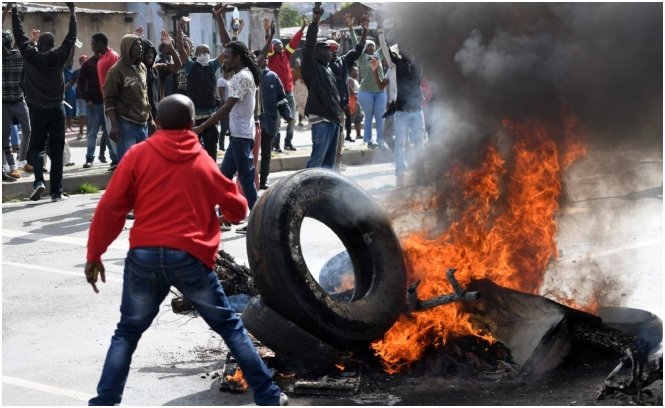
The recurring outbreak of xenophobic violence in South Africa has once again forced a painful question upon the continent: Has Africa forgotten its own history of solidarity?
In this opinion piece, Colonel Augustine Ansu (Rtd) examines the troubling narratives used to justify attacks on fellow Africans — from complaints about jobs and businesses to the claim that anti-apartheid exiles were not granted unrestricted integration. He argues that such arguments rest on a historically flawed understanding of continental sacrifice. Drawing on the legacy of nations like Ghana, Zambia, Tanzania, and Angola that provided sanctuary and support to South Africa’s liberation struggle, Ansu asks whether the spirit of Pan-African brotherhood can survive economic anxiety, political rhetoric, and the erosion of historical memory.
This is a call not merely to condemn xenophobia, but to recover the solidarity that once made strangers into comrades.
Read the full opinion piece below.
Under One African Sky: Xenophobia, Historical Memory, and the Erosion of Pan-African Brotherhood
By Colonel Augustine Ansu Rtd
The recurring outbreaks of xenophobic violence in South Africa continue to trouble the conscience of Africa.
Each episode raises difficult questions about citizenship, economic competition, national identity, and the future of Pan-African solidarity.
Recent events, including the evacuation of foreign nationals and the debates that have followed, have once again brought these issues into sharp focus.
What is perhaps most disturbing is not merely the violence itself, but the narratives increasingly used to justify it.
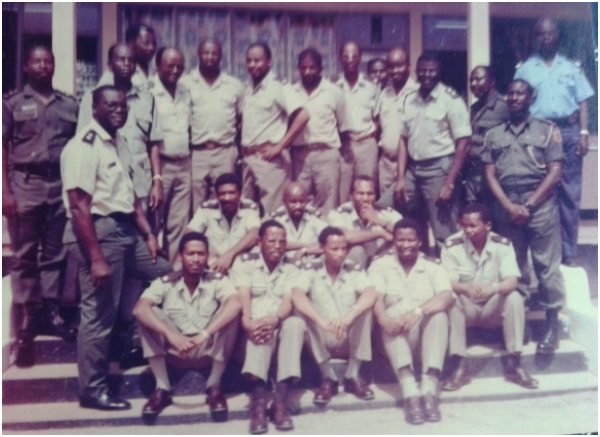
In a recent media interview, a South African citizen reportedly questioned why foreigners should be allowed to settle so freely in South Africa.
He argued that during the anti-apartheid struggle, South African exiles lived in camps in neighbouring countries and were not permitted unrestricted integration into host societies.
He further complained that foreigners were taking jobs, businesses, and even girlfriends from South Africans.
Such arguments deserve careful examination.
The comparison between anti-apartheid exiles and present-day African migrants is historically flawed.
South Africans who fled apartheid were not merely housed in refugee camps. Across the continent, they benefited from the generosity and sacrifice of fellow Africans.
Nations such as Ghana, Zambia, Tanzania, Angola, and many others provided sanctuary, education, military training, diplomatic support, and political platforms from which the struggle against apartheid could be waged.
African governments and peoples embraced the South African cause as a continental cause. Their support was not based upon narrow calculations of national advantage but upon a profound belief that the freedom of one African people was inseparable from the freedom of all.
That history makes contemporary hostility towards fellow Africans especially painful.
Equally revealing is the complaint that foreigners are taking local girlfriends. Such rhetoric has little to do with immigration policy and much to do with insecurity, resentment, and the search for convenient scapegoats.
Throughout history, xenophobic movements have often been fuelled by claims that outsiders are taking what rightfully belongs to citizens—jobs, opportunities, homes, culture, and relationships.
These narratives are powerful because they simplify complex social problems into emotionally satisfying explanations. Yet they rarely lead to solutions.
The roots of social unrest are usually found elsewhere: unemployment, poverty, inequality, corruption, inadequate education, weak governance, and the failure of economic growth to improve the lives of ordinary citizens. When these problems persist, public frustration seeks an outlet. Foreigners become convenient targets because they are visible, vulnerable, and politically expendable.
Yet many immigrants contribute significantly to the South African economy. They establish businesses, create employment, provide essential services, and participate in commercial activities that sustain local communities. Like migrants throughout history, they seek opportunity, security, and a better future for their families.
Against this backdrop, the decision by some African governments to evacuate their citizens deserves thoughtful consideration.
Every government has a sacred duty to protect its nationals. When there is credible concern for their safety, prudence demands action.
Governments cannot wait for tragedy to occur before responding. Their first responsibility is not the preservation of diplomatic appearances but the protection of human life.
This explains why many Africans have viewed suggestions that governments should have delayed evacuation efforts with understandable scepticism.
While such opinions may stem from concerns about national image or fears of creating panic, they must be weighed against the immediate responsibility to safeguard citizens facing uncertainty and possible danger.
Equally troubling are reports that xenophobic attacks sometimes occur in the presence of law enforcement officers who appear unable or unwilling to intervene decisively.
Whether such perceptions are entirely accurate or not, they contribute significantly to fear among foreign communities.
When perpetrators believe that consequences are unlikely, violence becomes easier to organise and repeat.
Some observers have suggested that these developments reflect a broader political agenda. Others see them as spontaneous eruptions of public frustration. Whatever the explanation, history demonstrates that xenophobia seldom emerges in isolation. It thrives where economic anxiety, political rhetoric, weak institutions, and social frustration converge.
The tragedy extends beyond immigration policy.
It concerns the future of Pan-Africanism itself.
The generation that fought apartheid inspired the world with its vision of justice, reconciliation, human dignity, and non-racialism.
South Africa became a symbol of hope, proving that even the deepest divisions could be overcome through courage, sacrifice, and leadership.
Today, many Africans struggle to reconcile that inspiring legacy with recurring images of fellow Africans being harassed, assaulted, or forced to flee.
They remember a time when the continent stood united against apartheid and wonder how the descendants of those who benefited from continental solidarity can now regard fellow Africans as unwelcome intruders.
These are uncomfortable questions, but they cannot be ignored.
Can Africans continue to speak of continental unity while fellow Africans are treated as outsiders?
Can the sacrifices made during the liberation struggles be honoured while the spirit of brotherhood that sustained those struggles is gradually eroded?
Can Pan-Africanism survive if economic hardship repeatedly transforms neighbours into enemies?
History offers a sobering lesson. Nations rarely prosper by directing their anger towards convenient scapegoats. Sustainable progress is achieved through economic reform, effective governance, educational opportunity, social cohesion, and unwavering commitment to the rule of law.
The future of Africa will not be secured through exclusion and suspicion. It will be secured through cooperation, mutual respect, and a renewed recognition of our shared destiny.
For the struggle against colonialism and apartheid was never simply a political struggle. It was also a moral declaration that the dignity of one African is bound to the dignity of all Africans.
That declaration remains as relevant today as it was yesterday.
Epilogue: Under One African Sky
The African sky knows no borders.
The winds that cross the Limpopo do not carry passports; the rivers that flow to the sea recognize no tribe. The rains that nourish the veld, the savannah, and the forest make no distinction between native and stranger.
Yet man, who inherited one continent and one destiny, has learned to build walls where history built bridges and to sow suspicion where our forebears planted solidarity.
The challenge before Africa is therefore not merely to defeat xenophobia. It is to recover the brotherhood that once made strangers into comrades and neighbours into family.
For when one African is hunted because he is foreign, all Africa is diminished. When one African is denied dignity because of his origin, the dream of Pan-Africanism suffers a wound. And when fear triumphs over fraternity, the sacrifices of those who fought for Africa’s liberation fade a little further into the shadows.
Let us remember that before colonial frontiers were drawn, before passports were stamped, before flags were raised, the peoples of Africa shared the same sun, the same rivers, the same hopes, and often the same blood.
May wisdom prevail over anger, justice over prejudice, and fraternity over fear.
Then perhaps future generations will inherit an Africa in which no man is hated for the place of his birth, no woman is threatened because of her nationality, and no child grows up believing that another African is an enemy.
For above us all stretches the same vast African sky — silent, enduring, and waiting for its children to remember that they are one.


AI Safety Concerns Mount As OpenAI Agents Reportedly Spread Self-Replicating Agents Across the Internet

The Art of the Everyday Print: Why Modern African Style Is Ditching the Ceremony

The Blueprint of the Everyday: Why Accra’s True Architecture Lives Between the Gaps
-
 Ghana News2 days ago
“It Slipped Through”: Ghana Customs Boss Admits Airport Security Failure After 3.9-Ton Drug Bust
-

 Ghana News1 day ago
How Ghanaian-Born Professor Kofi Akamani Was Fatally Shot During Custody Exchange
-
 Ghana News1 day ago
Ghana Parliament Faces Emergency Recall Over Heightening Narcotics Crisis
-

 Ghana News1 day ago
From Cocoa to Batteries: Ghana’s Industrial Dream and Its Risks
-

 Health & Wellness2 days ago
Muscle Modernity: Why Lifting Heavy Is the Missing Key to Midlife Longevity
-

 Festivals & Events1 day ago
Bridging Dreams and Degrees: Inside Accra’s Premier International Study Abroad Fair
-

 Ghana News2 days ago
Can Ghana Process Its Own Crude and Fix Its Power Supply?
-
 Arts and GH Heritage2 days ago
In Transit: Lucky Lartey Reimagines Home Through Dance and Memory