
Arts and GH Heritage
Thanks to China, Ghana’s National Theater Set for Major Modernization After Years of Decline

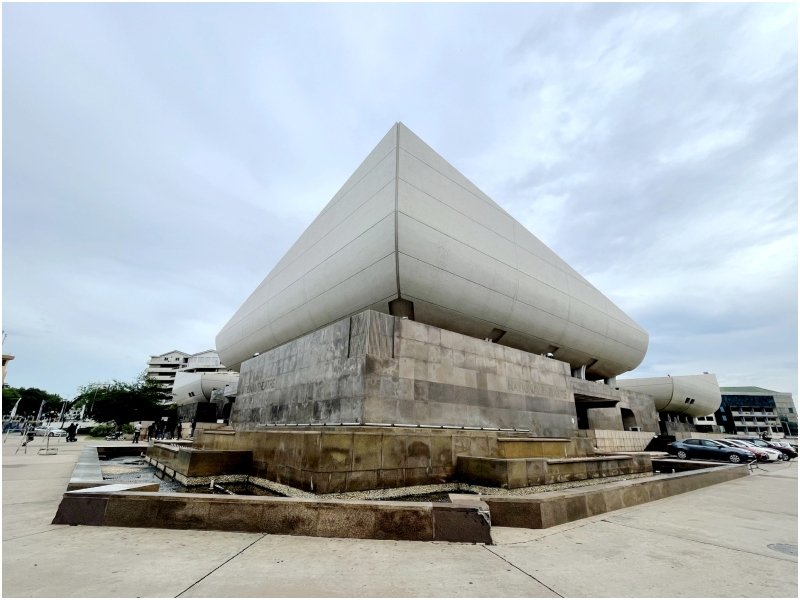
China has committed $30 million to the long-awaited renovation of Ghana’s National Theater, a landmark cultural institution that has anchored the country’s performing arts scene for more than three decades.
The refurbishment, expected to modernize the iconic structure and bring it up to contemporary global standards, aims to resolve long-standing infrastructural and technical challenges that have constrained the theater’s operations in recent years. Once completed, the project is expected to significantly enhance Ghana’s capacity to host world-class cultural productions and international creative collaborations.
A Chinese government delegation recently toured the facility alongside Ghanaian officials, including the leadership of the National Theater, the Minister of Tourism, Culture and Creative Arts, directors from the ministry and architects. The visit was intended to assess the condition of the building and define the scope of renovation works.
Executive Director of the National Theater, Henry Herbert Malm, described the project as a critical intervention for the future of Ghana’s creative industry. He said the upgrades would modernize technical systems, improve safety standards and create a more comfortable environment for performers, staff and audiences.
“This renovation reflects our commitment to staying relevant in a rapidly evolving creative industry,” Mr Malm said.

Minister of Tourism, Culture and Creative Arts, Madam Abla Dzifa Gomashie, welcomed the development, noting that plans to refurbish the theatre had been discussed for years. She said the breakthrough was achieved during President John Dramani Mahama’s recent five-day visit to China at the invitation of President Xi Jinping.
The minister described the National Theater as an indispensable platform for cultural exchange and learning, both locally and internationally, adding that the facelift would open new opportunities for creative talents to showcase and develop their craft.
“We are counting on strong collaboration with the government and people of China, and we expect that in a very short time this renovation will see the light of day,” she said.
Leader of the Chinese delegation, Mr Li Yaohong, said China’s decision to renovate the facility was rooted in Ghana’s rich cultural heritage and its strategic importance in West Africa. He announced that the $30 million investment—equivalent to about ¥200 million—would support two projects: the National Theatre and an off-road market.
“Our budget is limited, so we propose that you prioritize the most urgently needed parts of the building,” Mr Li said, adding that a technical team from Beijing would be deployed to Ghana to further assess the renovation details.
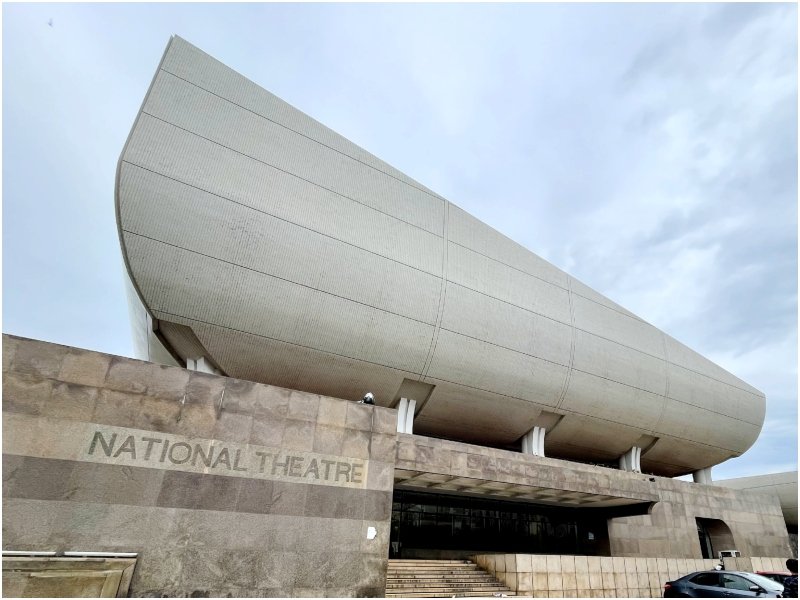
Planned works include the refurbishment of the theater’s halls and stages, improvements to storage spaces, upgrades to air-conditioning systems, enhanced safety installations such as fencing and CCTV, modern firefighting equipment, and a general facelift of the entire compound.
Constructed under a bilateral agreement signed on July 5, 1989, the National Theater was completed in December 1992 and officially commissioned later that month. It was designed as a multi-functional cultural hub for concerts, dance, drama, musical performances, exhibitions and special events. The facility currently hosts three resident companies: the National Dance Company, the National Symphony Orchestra and the National Drama Company.
The renovation is widely seen as a significant boost to Ghana’s cultural infrastructure and a reaffirmation of long-standing Ghana-China relations in the arts and development sectors.
The Ghana News Agency contributed to this report.







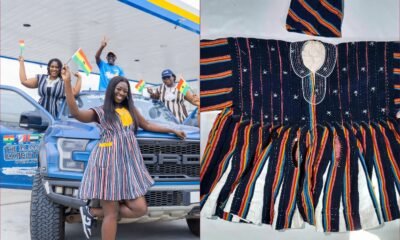




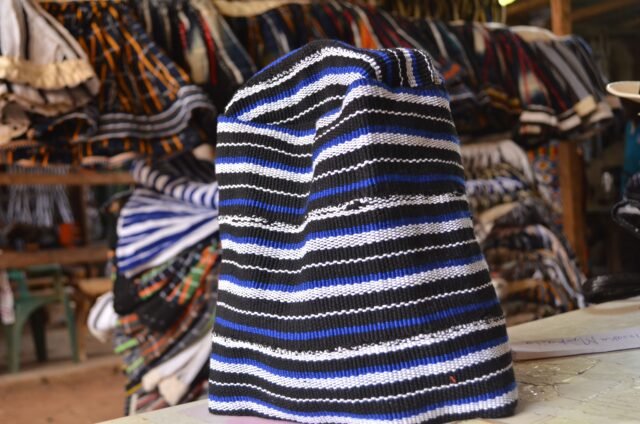
In Ghana’s Upper East Region, a seemingly simple fold of fabric can speak louder than words. Wear your fugu hat the wrong way, and you might just find yourself paying a fine — in goats, sheep, or even a cow.
The fugu, also known as batakari, is a handwoven smock beloved across Ghana. But it’s the matching hat — soft, flexible, and worn like a beanie — that carries a traditional code many outsiders overlook.
Depending on how you fold its topmost part, you could be signalling loyalty to a chief, declaring friendship with all, or, dangerously, claiming spiritual power you don’t possess.
Isaaka Munkaila, a smock dealer with 25 years of experience in Bolgatanga’s fugu market, knows the rules well. He demonstrates the styles one by one.
First, fold the hat’s tip to the back. “That is how chiefs wear it,” he says. “It says: ‘I have many followers. I am a head of community.’” An ordinary person wearing it that way in a chief’s palace risks being seen as a rival. The penalty? Depending on the traditional area, a goat, sheep, or cow.
But not all chiefs are quick to punish. Naab Sierig Soore Sobil IV, divisional chief of Pelungu in the Nabdam district, says ignorance can be a defence.
“If someone from the south comes to my palace wearing it like that, I will correct him and teach him. But if a local does it, the elders will demand a fine — to deter others.”
Fold the tip to point skyward, and you’re safe. That’s the everyday style for ordinary people. “It simply acknowledges God’s presence everywhere,” Munkaila says. Fold it to the left or right, and you’re saying: “I belong with everyone — young and old.”
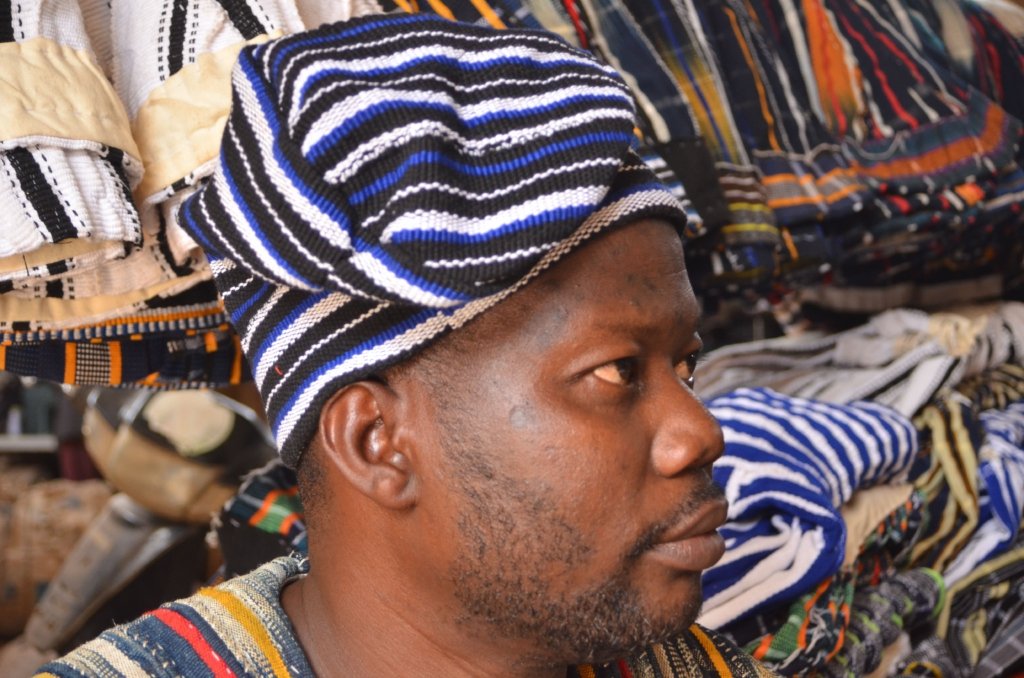
The most dangerous fold? Flat onto the forehead. That style is reserved for spiritually powerful individuals — those with “juju.”
Wear it without the backing of traditional spiritual strength, Munkaila warns, and someone stronger might test you. “You don’t wear it that way if you don’t have the powers.”
While no recorded harm has come from a wrong fold, chiefs have scolded and sanctioned offenders. In the Upper East Region, fines remain small, chiefs acknowledging poverty and changing times. Further north, in the Northern Region, customs are stricter.
For most Ghanaians who grow up with these traditions, the code is second nature. But for visitors, the fugu hat is a quiet reminder: in the north, fashion carries meaning — and sometimes consequences.
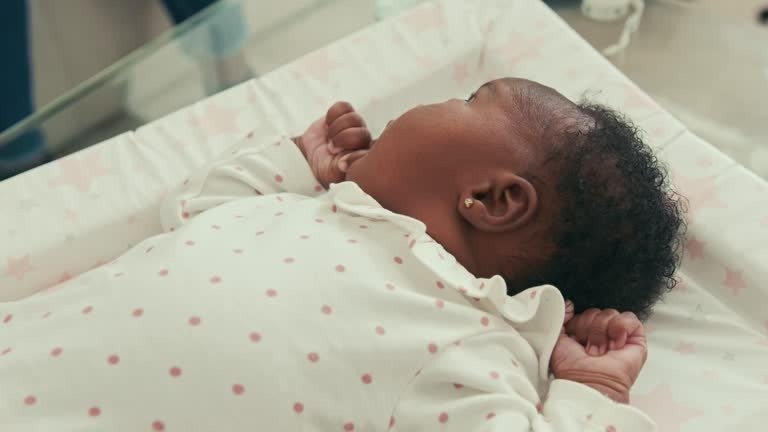
In the frantic pace of the modern world, the arrival of a newborn is often met with a flurry of social media announcements, hospital visits, and immediate pressure on the mother to “bounce back.”
But in Ghana, ancient wisdom dictates a different tempo—one of silence, seclusion, and a profound respect for the threshold between the spiritual and the physical.
For the first seven days of a child’s life, the world is kept at bay. This is not merely a custom; it is a spiritual and physical quarantine designed to protect the most vulnerable. According to traditional belief, a child does not fully inhabit its place on Earth the moment it is born.
Instead, the soul is thought to linger in a transitional state, gradually settling into its new physical form over the first week. During this time, the baby is not yet named. To name the child prematurely would be to call them into a world they haven’t yet fully committed to joining.
This “heavenly” week of seclusion serves a dual purpose that is as practical as it is mystical. While the baby finds its footing, the mother is granted the rare gift of total restoration. In Ghanaian culture, the “fourth trimester” is taken literally.
A mother is expected to retreat, often under the dedicated care of her own mother, who arrives to manage the household for the first month. There are no errands to run and no guests to entertain.
“There is an understanding that there is a physical element of exhaustion and rest that is needed,” the tradition suggests. It acknowledges that birth is a massive emotional and physical ordeal. By closing the doors to the “craziness of our world,” the family creates a vacuum of peace.
@ghanathemotherland Ghana’s numerous and amazing traditions and cultures. #visitGhana #Ghanaourmotherland #fyp #Ghana #ghanatiktok🇬🇭 ♬ original sound – Ghana Our Motherland 🇬🇭
This intimacy allows for uninterrupted bonding, ensuring that the first voices the baby hears and the first energy they absorb is that of their primary protectors.
The climax of this period is the Outdooring or naming ceremony on the eighth day. Only then, once the soul is believed to be firmly rooted, is the child introduced to the community and given their name—often reflecting the day of the week they were born.
It is a transition from the private to the public, from the spiritual “elsewhere” to a concrete identity on Earth.
For a global audience, these practices offer a compelling critique of how we handle birth today. While modern medicine focuses on the clinical, Ghanaian tradition focuses on the holistic. It views the postpartum period not as a hurdle to be cleared, but as a sacred bridge.
By protecting the mother from social expectations and the baby from sensory overload, these traditions provide a blueprint for stability. In the end, the seven-day silence isn’t about isolation—it’s about ensuring that when the soul finally arrives, it finds a home that is rested, ready, and remarkably peaceful.
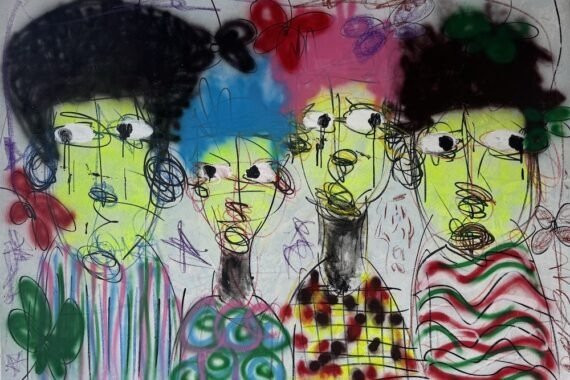
In a quiet gallery space in Accra, a group of painted figures stands tall—faces calm yet heavy with emotion, eyes carrying stories that words often fail to express. This is the world of “Kingdom of Pride,” a new exhibition by Ivorian-Togolese artist Ismael Tamek currently on display at Mix Design Hub.
The exhibition invites visitors into a deeply personal reflection on pride—one of humanity’s most complex and misunderstood emotions. Rather than portraying pride simply as arrogance or ego, Tamek presents it as a powerful force that can both shield and isolate the human spirit.
Through a series of expressive figurative paintings, the artist explores how pride shapes relationships, communities, and even entire societies. His central idea is strikingly simple: many conflicts are not born from hatred, but from pride standing in the way of dialogue. In this sense, pride becomes an invisible wall—quietly blocking empathy while keeping people locked within their own emotional fortresses.
The figures in Tamek’s paintings seem caught within this tension. Their faces reveal a mixture of dignity, vulnerability, and restraint. Each portrait suggests an internal struggle—strength balanced against fragility. The characters stand upright and composed, echoing the sculptural elegance of traditional Yoruba statuary, where posture communicates endurance and resilience.
Another visual signature of the exhibition is hair—painted in vivid bursts of colour that immediately draw the eye. In Tamek’s work, these vibrant tones go beyond decoration. They represent diversity itself: the different identities, beliefs, and cultures that shape human experience. The message is subtle but clear—difference is not a threat but an essential part of coexistence.
For visitors walking through the gallery, the experience becomes quietly introspective. Each painting invites viewers to examine their own relationship with pride: when it protects dignity, and when it quietly builds emotional distance.
Set against the growing energy of Accra’s contemporary art scene, “Kingdom of Pride” adds another thoughtful voice to conversations about identity, emotion, and shared humanity.
The exhibition remains open at Mix Design Hub until April 15, offering audiences a rare chance to encounter Tamek’s work and reflect on the fragile kingdoms we all carry within ourselves.


Pope Leo XIV to Embark on Ambitious 10-Day Tour of Four African Nations

U.S. Warns Citizens to Reconsider Travel to Nigeria Citing Terrorism

Netherlands Reclaims Position as World’s Top Exporter of Cocoa Products, Ghana Remains Key Supplier
-
 Opinion2 days ago
Open Letter to the British Ambassador on Reparatory Justice: Ghana’s Call to the British Government
-

 Ghana News1 day ago
Newspaper Headlines Today: Wednesday, April 10, 2026
-
 Ghana News2 days ago
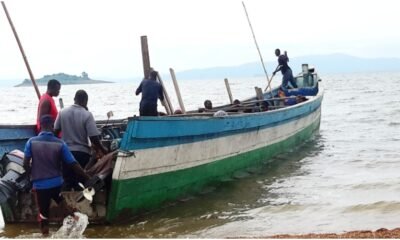
7 Dead, 2 Missing After Boat Capsizes on Volta Lake in Ghana
-

 Taste GH1 day ago
Smoke, Sweetness and Street Life: The Timeless Charm of Ghana’s Roasted Corn
-
 Business14 hours ago
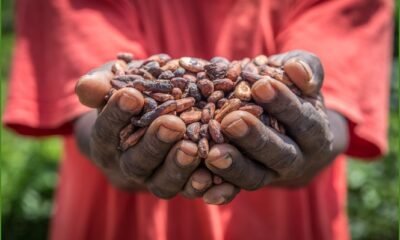
Netherlands Reclaims Position as World’s Top Exporter of Cocoa Products, Ghana Remains Key Supplier
-

 Business24 hours ago
Ghana Nears Approval of Cannabis Licences as Country Prepares to Launch Regulated Industry
-

 Business2 days ago
3 Things Ghana is Doing to Reduce Fuel Prices Amid Global Uncertainty
-

 Ghana News2 days ago
Ghana Announces Suspension of Taxes, Other Measures to Reduce Fuel Prices Amid Global Crisis