
Arts and GH Heritage
Ibrahim Mahama Makes History as First African to Top Global Art Power Ranking


Ghanaian artist Ibrahim Mahama has become the first African to claim the No. 1 spot on ArtReview’s prestigious annual Power 100 list.
The Power 100 list is an annual ranking published by ArtReview magazine that identifies the most influential people and organisations in the global contemporary art world.
Mahama’s achievement marks a landmark moment for Africa’s contemporary art movement and the global creative industry.

ArtReview, regarded as one of the most influential voices in contemporary art, named Mahama the world’s most powerful figure in the field for 2024, an achievement that signals what many experts describe as a significant shift in global cultural influence.
“Quite humbling,” Mahama says of historic milestone
Speaking to The Guardian, Mahama said he first learned about the power list in 2011 while studying at the Kwame Nkrumah University of Science and Technology (KNUST). That year, Chinese artist Ai Weiwei was ranked first.
“For me to be part of this, especially coming from a place like Ghana—where for many years it felt like we were not even part of the discourse—is quite humbling,” he said.
Based in Tamale in northern Ghana, Mahama said he hopes his rise encourages young Ghanaian and African artists to “realise that they are part of the contemporary discourse and not just on the sideline.”
A power shift in the global art world
ArtReview’s editor-in-chief, Mark Rappolt, described Mahama’s selection as emblematic of a broader realignment in the art world—one that mirrors shifts in global finance, culture, and influence.
“I think you could also look at that as saying there’s a realignment of where global finance sits,” Rappolt noted, adding that the art world is deeply intertwined with these global changes.
This year’s ranking places multiple African and Middle Eastern creatives in the top 10, signalling growing visibility and institutional influence for artists from regions previously marginalised in the global arts ecosystem.

African and MENA artists dominate top slots
Following Mahama, Qatar’s Sheikha Al-Mayassa bint Hamad bin Khalifa Al-Thani ranks second, backed by her significant cultural investments and acquisitions. Last year’s No. 1, Sheikha Hoor al-Qasimi of the UAE’s Sharjah Art Foundation, takes the No. 3 spot.
Egyptian artist Wael Shawky appears at No. 4, while the rest of the top 10 includes Singaporean artist Ho Tzu Nyen, American artists Amy Sherald and Kerry James Marshall, writer Saidiya Hartman, UK-based Forensic Architecture, and German photographer Wolfgang Tillmans.
Mahama’s global rise
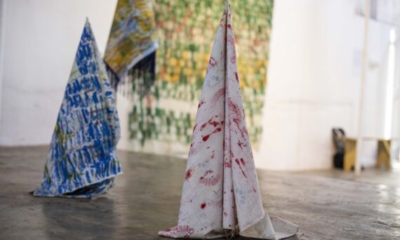
Mahama’s work, known for transforming found materials—such as train carriages, jute sacks, old hospital beds, and industrial remnants—has attracted major global attention.
Some of his standout recent projects include:
- “Songs About Roses” at Edinburgh’s Fruitmarket Gallery, praised as “extraordinary as a great magic-realist novel.”
- His dramatic 2,000-square-metre pink fabric installation at London’s Barbican Centre, produced in Ghana.
- The opening of the Savannah Centre for Contemporary Art (SCCA) in Tamale (2019), a major arts hub featuring galleries, libraries, archives, and studios.
Critics have placed Mahama in the same league as global heavyweights like William Kentridge and Anselm Kiefer for his ability to confront history, memory, and postcolonial narratives through large-scale installations.
Rappolt notes that Mahama’s community-focused approach reflects a new generation of artists redefining what artistic influence means today: not only producing works of genius but investing in their creative ecosystems.
A global panel decides the ranking
Thirty anonymous art experts worldwide contributed to this year’s Power 100, which has been published annually for 24 years.
Mahama’s rise to the top—powered by both creativity and community impact—cements Ghana’s growing reputation as an emerging force in contemporary art.

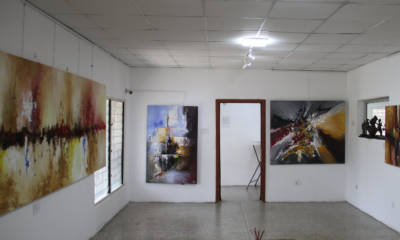








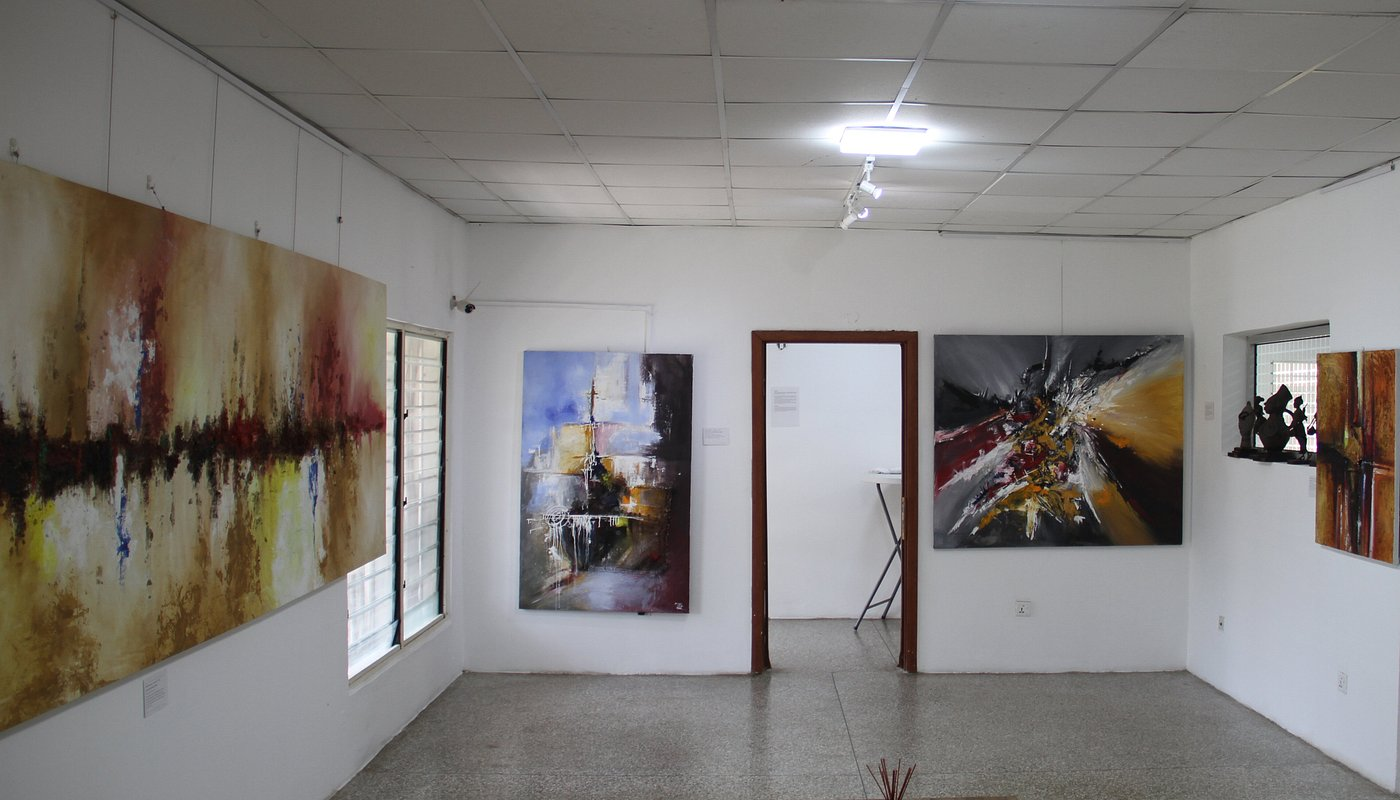
Every memorable art gallery begins with someone who believes a painting deserves more than a wall—it deserves an audience.
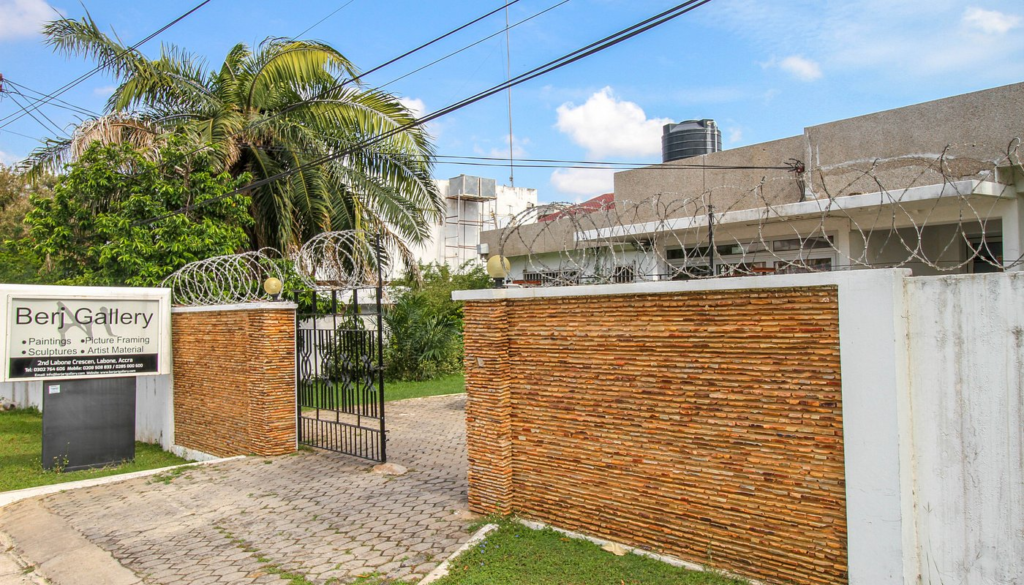
In Accra, that belief has shaped Berj Art Gallery into one of Ghana’s enduring champions of West African art.
Founded in 1996 by collector Joyce Quarshie, Berj emerged at a time when many Ghanaian artists were still searching for spaces that could connect their work with wider audiences.
More than three decades later, Quarshie’s commitment has grown into a gallery that celebrates both established masters and emerging voices under one roof.
A Living Story of West African Art
Walking through Berj feels less like entering a showroom and more like stepping into a conversation across generations.
Bold paintings share space with finely carved wooden sculptures, bronze works catch the light from different angles, and photographs add contemporary perspectives to centuries-old artistic traditions.
The gallery’s strength lies in that balance. Acclaimed painters stand alongside rising talents, creating a rare opportunity for visitors to see Ghana’s artistic evolution unfolding in real time.
It is a reminder that culture is not frozen in history; it continues to grow with every new brushstroke and every fresh creative voice.
More Than a Gallery
For international visitors exploring Accra, Berj offers something deeper than a sightseeing stop. It opens a window into Ghana’s creative identity, where craftsmanship, storytelling and heritage intersect.
As the gallery continues hosting exhibitions that bring together local and international artistic influences, it reinforces a simple but powerful truth: preserving culture is not only about protecting the past.
It is about creating spaces where the next generation of artists can imagine—and exhibit—the future.
A family photograph resting on a shelf may look like decoration. A half-finished piece of woven cloth may seem incomplete. A living room may simply be a place to sit.
At Nubuke Foundation in Accra, however, these familiar things are being asked to tell deeper stories.
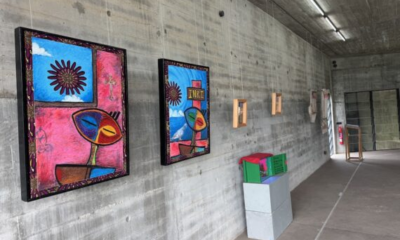
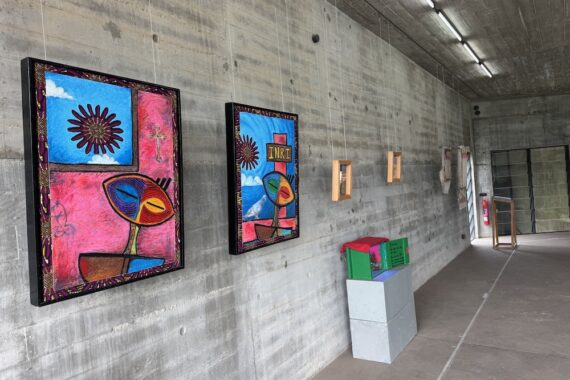
Weight of the Ordinary, a group exhibition featuring Josiah Tsibu Manu, Priscilla Agbeti, Blanche Boni-Mississo, King David Osabutey (Kakalicka) and Sena Burgundy Appau, turns its attention to the overlooked details of daily life—and finds history hiding there.
Manu’s domestic interiors are particularly evocative. Furniture, photographs and household details become unofficial archives, recalling how Ghanaian homes often carry memories that never enter formal histories.
In Agbeti’s unfinished woven works, meanwhile, labour refuses to disappear behind polished craftsmanship.
The incomplete becomes deliberate, leaving viewers to consider the economic and social histories carried by textiles.
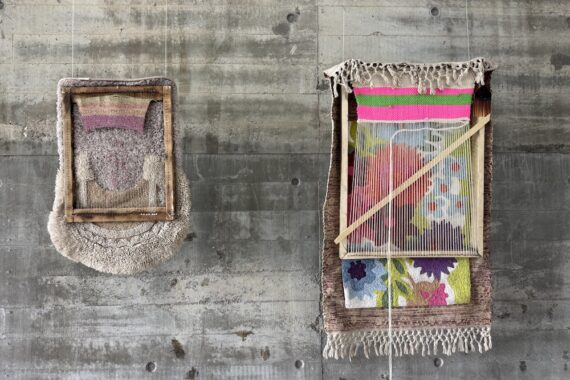
Elsewhere, Boni-Mississo examines how spaces determine who can move freely and who is kept at the margins. Kakalicka draws on Akan cosmology through his Ɔhɔhoɔ, or stranger, connecting questions of displacement and belonging with indigenous ideas.
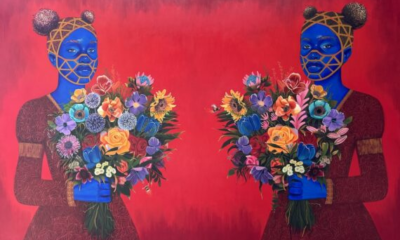
Appau’s monumental blue figures turn inward, contemplating the uncertainty and possibility of becoming.
Together, the artists suggest that the everyday is not neutral. It is where memory is stored, identities are formed and social boundaries are experienced.
For audiences in Ghana and abroad, the exhibition offers an invitation to look again at what familiarity can conceal. Sometimes, the objects closest to us have the most to say.
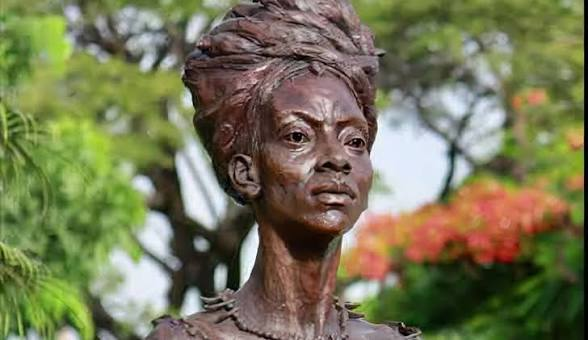
Sometimes history survives not in monuments, but in memory. In Ghana, the beat of the atumpan once carried messages across kingdoms.
In Jamaica’s mist-covered Blue Mountains, that same language of rhythm became a weapon of survival.
Queen Nanny’s story begins in oral tradition, which holds that she was born among the Akan people before being captured during the transatlantic slave trade and forced to Jamaica.
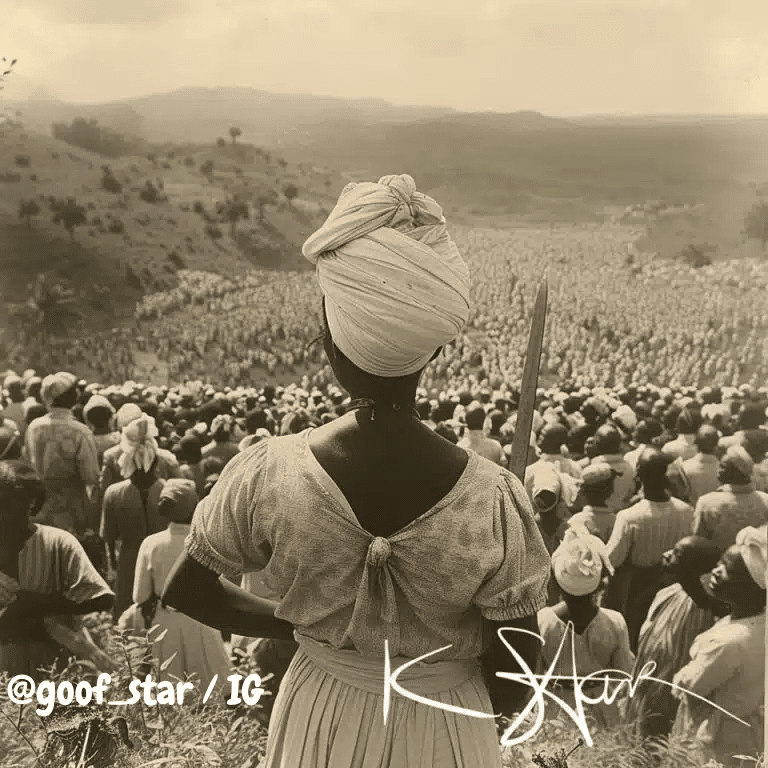
What followed transformed her into one of the Caribbean’s most celebrated freedom fighters.
When the drum became a battlefield language
Leading the Windward Maroons, Nanny turned the rugged mountains into a fortress. British troops struggled against hidden trails, surprise attacks and a commander who understood that knowledge of the landscape could outweigh military strength.
Just as remarkable was her reported use of the atumpan, the Akan talking drum. What colonial forces dismissed as eerie sounds echoing through the hills became a coded communication system that helped coordinate resistance.
Years of failed campaigns eventually forced Britain to negotiate. The 1739 peace agreement with the Maroons remains one of the most striking acknowledgements that enslaved Africans had built a resistance too formidable to erase.
A bridge between Ghana and Jamaica
Today, Queen Nanny is Jamaica’s only female National Hero, and her portrait appears on the Jamaican $500 banknote.
Her legacy also reaches back across the Atlantic, reminding Ghanaians that culture can outlive displacement.
The rhythms that once echoed through Akan communities did not disappear at the coast.
They crossed an ocean, climbed a mountain, and became part of one of history’s most remarkable stories of resistance.


The Guns Turned Inward: Niger’s Mutiny and Russia’s Fragile Bargain in the Sahel | By Joseph McCarthy

Game-Changing Move: Ghana Sets Up New Fiscal Council to Scrutinize Government Spending and Win Back Investors

Ghana’s Persistence Pays Off: AU Formally Commits to Tabling Xenophobia Petition in January 2027
-

 Ghana News2 days ago
Top Headlines From Ghanaian Newspapers: Tuesday, Sept. 8, 2026
-

 Ghana News1 day ago
How Ghana’s Government Pressured MTN, Telecel, and AirtelTigo to Cut Data Prices
-
 Arts and GH Heritage2 days ago
The Stories We Live With: Inside Nubuke Foundation’s Weight of the Ordinary
-

 Ghana News1 day ago
Buckingham Palace Responds to Jamaica’s $10 Billion Reparations Demand, But the UK Government’s Wallet Remains Shut
-
 Ghana News13 hours ago
Ghana’s Persistence Pays Off: AU Formally Commits to Tabling Xenophobia Petition in January 2027
-

 Africa Watch2 days ago
British-Nigerian Influencer Dies After Penis Enlargement Procedure in Thailand
-
 Ghana News14 hours ago
Top Headlines From Ghanaian Newspapers: Wednesday, Sept. 9, 2026
-
 Ghana News13 hours ago
Game-Changing Move: Ghana Sets Up New Fiscal Council to Scrutinize Government Spending and Win Back Investors