
GH Living
10 American Habits That Should Vanish on Your Epic Ghanaian Homecoming


Imagine trading the hum of New York subways for the vibrant pulse of Accra’s markets, where the scent of jollof rice mingles with ocean breezes from Jamestown.
For African Americans drawn by the “Beyond the Return” initiative—now in its sixth year of the Decade of African Renaissance—Ghana isn’t just a destination; it’s a magnetic pull back to roots that whisper of ancestors’ resilience.
In 2024 alone, over 500 diaspora souls like you made the leap, securing citizenship and weaving new lives amid kente-clad celebrations and family reunions that stretch into the night. But here’s the exhilarating truth: this homecoming rewires you from the inside out.
Those everyday American quirks? They melt away, replaced by rhythms that feel like coming alive. Drawing from stories of returnees who’ve traded stars-and-stripes routines for the Gold Coast glow, here are 10 habits that fade—and the Ghanaian magic that takes their place.
- The Casual “Hi” to Elders: Back home, a quick nod suffices, but in Ghana, that shifts to profound bows of respect. Elders beam at your heartfelt “Akkã” or full curtsy, unlocking doors to wisdom passed down like heirlooms—think animated tales of Anansi the Spider under baobab trees, forging bonds that outlast any small talk.
- Letting Dishes Pile Up: No more stacking plates like modern art; Ghanaian kitchens demand immediate harmony. Washing up post-meal becomes a communal ritual, hands splashing in soapy basins while laughter echoes— a simple act that turns chores into cherished family symphonies, leaving your evenings free for sunset tro-tro rides.
- Diving In with “What’s Up?”: Forget the breezy opener; Ghana greets you with sunlit precision: “Good morning!” at dawn or “Good afternoon!” as the heat rises. This ritual sparks genuine connections, transforming awkward hellos into invitations for fufu feasts or beachside highlife jams, where conversations flow like the Volta River.
- Reaching with Your Left Hand: In America, hands are interchangeable, but here, the right reigns supreme for handshakes, meals, and gestures. Mastering this elevates your presence—imagine savoring banku with fingers that tell stories of shared plates, feeling the warmth of community in every respectful touch.
- Clock-Watching Punctuality: “African Time” isn’t a delay; it’s an invitation to savor the journey. Events bloom fashionably late, giving space for spontaneous street-side chats or impromptu azonto dances. Returnees rave about this freedom—arriving when the vibe peaks, hearts full from detours that lead to hidden gem spots like Osu Castle’s secret gardens.
- Shying from “Dash” (Tips or Small Gifts): What starts as surprise at casual exchanges evolves into a beautiful web of reciprocity. Offering a little “dash” for swift service at markets or tro-tros builds instant alliances, turning transactions into tales of generosity that echo Ghana’s communal spirit, far richer than any hurried efficiency.
- Public Modesty on Bodily Needs: The initial shock of open-air relief spots gives way to pragmatic ease amid bustling streets. It’s a raw reminder of life’s unfiltered flow, much like the unpretentious joy of Labadi Beach picnics—embracing it means shedding inhibitions for a grounded, earth-connected existence.
- Clinging to Forks and Knives: Utensils gather dust as you dive into meals with hands that connect you directly to the food’s soul. From waakye stalls to high-table gatherings, this tactile tradition heightens flavors—crisp plantain crunching between fingers—turning every bite into a sensory celebration of heritage.
- Yielding in Traffic: Straight-laced lane discipline bows to bold, intuitive navigation through Accra’s vibrant chaos. Honking horns become a symphony, not stress; weaving like a pro on your first okada ride feels like dancing with the city’s heartbeat, unlocking adventures from Kokrobite’s surf breaks to Kumasi’s royal courts.
- Assuming Words Land Cleanly: Innocent phrases twist into cultural kaleidoscopes, teaching nuance with every chuckle or raised brow. This linguistic tango sharpens your empathy, leading to deeper dialogues—perhaps debating highlife legends over palm wine—where misunderstandings bloom into the most memorable, laughter-filled lessons.
As “Beyond the Return” surges into 2025 with citizenship drives and festivals like AfroFuture drawing thousands, these shifts aren’t losses—they’re liberations. Returnees like those in the program’s 524-strong 2024 cohort share how Ghana doesn’t just welcome you; it remakes you, fiercer and freer.
Dreaming of your own chapter? Book that flight—the ancestors are waiting with open arms and endless stories. Ghana’s call is louder than ever: come home, and let the transformation begin.









GH Living
‘How Are People Managing in Accra?’ Diasporan Questions Rising Cost of Living, Lack of Social Safety Nets in Ghana

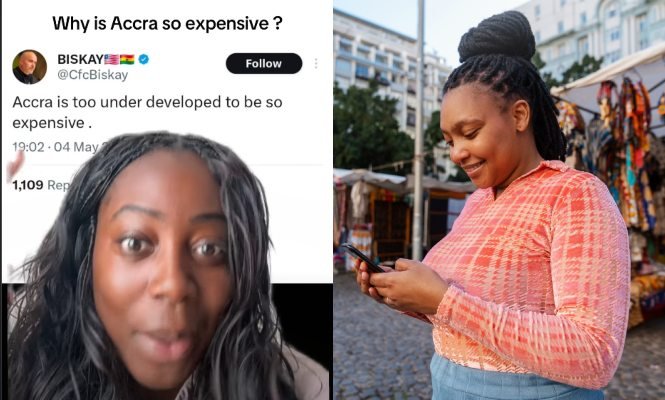
Expats and locals alike feel the pinch as unstable prices outpace wages, sparking online debate
A lifestyle blogger living in Ghana’s capital has posted a candid video on social media questioning the country’s rising cost of living, unstable prices, and the absence of social safety nets for ordinary citizens.
Rosie Mensah, who shares her life in Accra on Instagram under the handle @rosiemensah, posted a message to her followers after seven months of residence in Ghana, posing a stark question: “How are people managing?”
“I’ve been living in Ghana for seven months and it seems like the costs keep going up,” Mensah wrote. “The cost of goods is so unstable. People are not paid living wages. There is no social safety nets available. How are people managing?”
The post, made by a trained dietitian who regularly comments on daily life in the West African nation, is consistent with previous comments by diasporans who have experienced similar economic pressures.
While Mensah did not provide specific data on price increases or wage statistics in her post, her observation echoes broader concerns about Ghana’s economic stability.
A Familiar Lament
Ghana has faced significant economic turbulence in recent years, including a historic debt default, a domestic debt exchange program, and a $3 billion International Monetary Fund bailout programme that ended earlier this year.
While inflation has cooled from a peak of 54.1 percent in December 2022 to 3.4 percent as of April 2026, many Ghanaians continue to report that the cost of everyday goods remains high and unpredictable.
The lack of formal social safety nets, such as universal unemployment benefits or comprehensive state-sponsored health and welfare programs, means that most Ghanaians rely on extended family networks, informal savings arrangements (such as “susu” systems), or religious institutions during times of financial distress.
Mensah, whose professional background is in dietetics, did not indicate whether she is currently working in her field in Ghana or whether her observations are based on her own experience as an expatriate or a returning citizen. Her Instagram profile describes her as a dietitian and a blogger documenting her life in Accra.
Broader Context
Mensah’s question, “How are people managing?” reflects a reality faced by many diasporan returnees and Ghanaian households, where wage growth has not kept pace with the cumulative effect of recent price shocks.
While official data shows economic recovery, the lived experience of many suggests that stability remains elusive.
GH Living
From Zero Dollars to Full-Time Entrepreneur: How One American Mom Made the Leap to Ghana with Nothing in the Bank
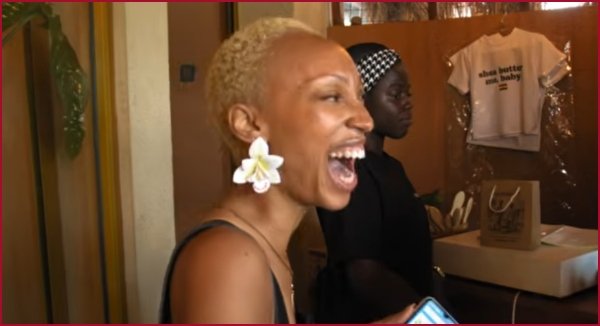
When Jamia Kirk called her family to tell them she was moving to Ghana, she hadn’t saved up for months. She hadn’t lined up a remote job. She hadn’t even budgeted for the move.
“I had zero dollars to my personal name,” Kirk admits in her YouTube video documenting the journey. “I was moving off of money and my partner taking care of me.”
The Virginia native arrived in Accra with nothing in her bank account—a confession that runs counter to every expat handbook ever written. No safety net. No cushion. Just a “calling” she couldn’t ignore and a willingness to figure it out as she went.
It’s the kind of leap most people only dream about. Kirk actually took it.
The Unconventional Path
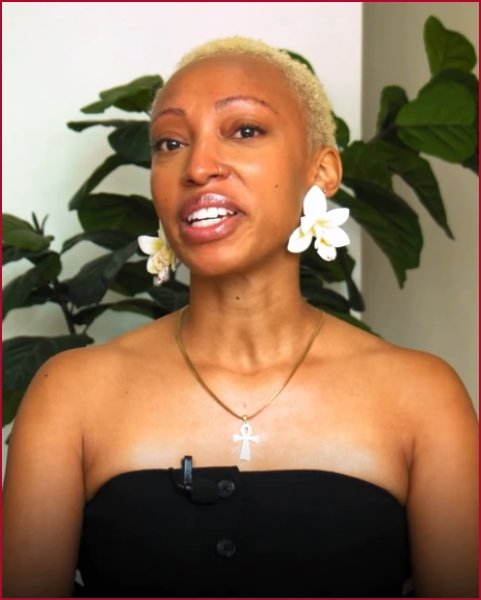
Kirk’s move wasn’t calculated. It wasn’t strategic. It was, in her words, “a subconscious thing”—a pull toward something she couldn’t name until she landed.
“I came here a little different than most people,” she says. “I didn’t have a whole lot of planning. Things were kind of strategically aligned so that it worked out.”
That alignment included a supportive partner, a Liberian mother-in-law who understood the terrain, and—most importantly—a willingness to build from zero.
From Zero to Case Study
Today, Kirk isn’t just surviving in Accra. She’s thriving as an entrepreneur, teaching others how to land remote jobs and use AI tools to generate income. Her pivot from stay-at-home mom to full-time business owner happened after the move, not before it.
“I’m very candid about that even in my content when I talk about what I do for work,” she says. “I am an actual case study. You can go from not having any income and making income remotely and make good income remotely.”
Her programs target Ghanaians specifically—not because she wants their money, but because she understands what access to remote work can mean in a country where the average monthly salary hovers well under $1,000 USD.
“The value that I bring to them and how it can change their lives, change their families’ lives—that’s important to me,” Kirk explains.
The Risk Factor
Would she recommend her approach to others? Not exactly.
Kirk is careful to acknowledge that her path worked—but it could have gone differently. She advises potential expats to visit first, save up, and secure their income before making the jump.
“It’s much easier when you don’t have to worry about things on the back end,” she says. “Make sure you have the means to sustain because it’s unfortunate if you have to go back home or end up having a possibly negative experience because those things aren’t in order.”
Still, her story resonates with a specific kind of dreamer—the one who feels the pull but can’t check every box. The one who knows they’re being “called back” but doesn’t know how they’ll make it work.
To that person, Kirk has a message:
“It’ll all work out.”
Kirk now pays $500/month for a two-bedroom apartment in Accra—a fraction of what she paid in the DC area. She’s built a women’s empowerment group spanning 10 countries. She’s regained time with her daughter. And she did it starting from zero.
Her story doesn’t advocate for recklessness. It advocates for faith—backed by hustle.
“I don’t look at anything as a mistake,” Kirk says. “It’s a part of the story. It’s a part of your experiences and it’s a part of how you grow.”
For more stories on expat life, relocation resources, and building community in Ghana, visit our GH Living section here on GhanaNewsGlobal.Com.
Exploring the emotional shift from permanent return to visitor status (this is a long read, but it’ll be worth your time).
The invitation was historic. When Ghana launched the Year of Return in 2019, it extended a powerful call to the global Black community: come home. Come see where your ancestors walked. Come invest. Come stay.
And thousands came. They packed up apartments in Atlanta, London, and Toronto. They landed at Kotoka International Airport weeping. They bought land. They started businesses. They believed they had found home.
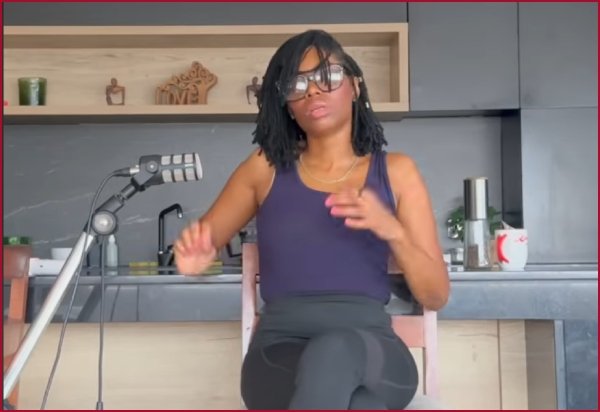
But five years later, a quieter conversation is emerging—one that YouTube creator Dela, of the channel More To Dela, is giving voice to. In a video that has resonated across the diaspora, she asks a provocative question:
Has Ghana changed from being a place that people want to return to and live, into more of a holiday breakaway destination?
Her answer, drawn from countless conversations and her own experience living in Accra, suggests a profound shift is underway.
The Sentiment That Brought Everyone Here
Dela begins by acknowledging the dream that brought so many to Ghana’s shores.
“Ghana was the gateway to seeing what Africa has to offer,” she explains. “It was people’s first initiation point into understanding more of Africa. A lot of people were coming back and saying, ‘I’m going to leave everything behind because Ghana is a dream. I’ve seen it on YouTube. It looks amazing. This is where I can live.'”
The emotion was real. The pull was real. And for a time, the momentum seemed unstoppable.
But now, Dela observes, “there’s some reality that is setting in.”
The Price of the Dream
That reality has many faces, but one of the most unforgiving is economics.
“Ghana has outpriced itself for the diaspora being able to move back and make it a place of permanence,” Dela states plainly.
The math is brutal. You arrive with savings—maybe a respectable sum by Western standards. Then you buy a car. You put a deposit on an apartment. You furnish it. You pay for permits, for connections, for the endless small expenses that come with establishing a life.
“The head start that you thought you had? You don’t have it,” Dela says.
And if you’re relying on local income? That’s its own challenge. A well-paying job in Ghana might offer 5,000 or 7,000 cedis monthly. But with the cost of living where it is, and families to support.
“How many of us can live off that?” she asks. “We can’t.”
The result is a quiet economic truth: to live in Ghana sustainably, you likely need foreign income. A remote job. A business that earns in dollars or pounds. Without that, the dream becomes financially unsustainable.
When Business Becomes a Battle
For those who came to build businesses, the challenges run even deeper.
“People who have wanted to bring business here see the challenges,” Dela explains. “Things are not going well for them. They can’t get supplies. Trying to recruit staff, trying to get customers—it’s very, very difficult.”
The operating environment is simply different from what diaspora entrepreneurs expect. Supply chains that should be reliable aren’t. Staffing is unpredictable. Customer acquisition follows different rules. And slowly, the optimism drains away.
“You can’t necessarily run businesses the same way they were run in the West,” Dela says. “If the money’s not coming as you expect, it makes it feel like maybe Ghana’s not for me. Maybe I should try somewhere else.”
She speaks from experience.
There was a time when Dela worked extensively with people outside her immediate circle—collaborations, partnerships, hires. It became so frustrating that she made a fundamental change.
“I cut back a lot of the people that I was working with,” she admits. “I just said, ‘No, I need to take this back for myself.’ That was easier for me than trying to do it the other way.”
Today, she lives what she calls “a bit of a Ghana bubble.” And she’s honest about it:
“I like it that way. Most of the things I work on, I can pretty much do myself. I don’t need too much outside help.”
It’s a survival strategy—but not one everyone can replicate.
The Floating Feeling
Perhaps the most emotionally complex challenge is psychological.
When you move somewhere intending to stay, you expect to eventually feel settled. You expect to stop feeling like a visitor. But for many in Ghana, that moment never comes.
“It never feels 100% home,” Dela says. “Not for the long term.”
She points to housing as a vivid example. In the West, renting often implies stability. You sign a lease expecting to stay for years. In Ghana, even year-to-year renting feels temporary.
“You don’t rent and think, ‘Okay, I’ll be here for two years and then move somewhere else,'” she explains. “But here? That’s exactly what happens. Prices shoot up. The currency becomes unstable. The area changes. Traffic patterns shift. You’re always floating.”
Even buying a house doesn’t guarantee permanence. You might build in an area that seems promising, only to realize later that there are no shops nearby, no places to hang out, no community. The isolation wears on you. Then you face the nightmare of trying to sell.
“So because of things like that,” Dela says, “it puts people off putting down a permanent stamp in Ghana.”
The Shift: From Living to Visiting
All of these forces are converging into a new pattern.
“Now people are talking about small doses,” Dela observes. “Even those of us that are Ghanaian—we’re coming and we’re like, Ghana is a great holiday destination. I love the food, the people, the culture. But when it comes to living, they don’t necessarily want to do that.”
What’s emerging instead is a different model: Ghana as a base, not a permanent home. People are buying property, even building houses, but they’re not staying full-time. They’re traveling to other African countries. They’re going back to the West to make money. They’re living a holiday lifestyle for a few months, then leaving when the funds run low, then returning again.
“That’s the shift that’s happening,” Dela says. “Doing business here is very, very difficult. And that journey is not for everybody. It’s a special kind of journey given to a special kind of people.”
The Complicated Love
None of this means the love for Ghana has died. Far from it.
“The reason they want Ghana in small doses and can’t cut Ghana off completely,” Dela explains, “is because Ghana brings you something. A sense of peace. That belonging. It brings you those things.”
The food, the culture, the way it feels to walk down a street and see faces that look like yours—these are not small things. They are the reasons people keep coming back, even when the frustrations mount.
But the tension is real. “When you’re in Ghana, you’re faced with reality,” Dela says. “That’s where it gets hard.”
A Call for Something Better
For Dela, the solution isn’t to give up on Ghana. It’s to build something better—together.
“We have to think about how we can make Ghana better,” she urges. “Not just for us in our own tiny spaces. If we can put things into place to make it easier for other people to follow behind us, then we’re doing something good.”
She envisions a network of diaspora businesses supporting each other—a delivery service that entrepreneurs can rely on, a community that collaborates instead of competes. “We have to be links for each other,” she says. “Hold each other strong. When we work together as a team, we build a better Ghana. Eventually, things have to get better for us.”
Because there are people who want to come back permanently. People for whom “small doses” will never be enough.
“They want to come back,” Dela says. “But the reality right now is that they can’t. Financially, it doesn’t make sense for them.”
The Truth-Teller’s Burden
Dela knows that conversations like this can be uncomfortable. She’s heard the criticism.
“I know some of you are going to be like, ‘Dela, you come on here and say so many negative things about Ghana,'” she says, anticipating the response.
Her answer is simple:
“No. I tell you the truth about Ghana. So that you’re not surprised when you come here. Because I want you to have the best experience possible.”
She lives in Ghana. She loves it. She doesn’t see that changing in the foreseeable future. But she also refuses to sugarcoat the reality of diaspora life in 2024.
Ghana is for a certain type of person, she concludes. If you can get over the hurdles, if you can navigate the challenges, it can be beautiful. The food, the culture, the sense of belonging—these are real, and they are powerful.
But the hurdles are also real. And for a growing number of people who love this country, the honest answer is this:
Ghana is home—just not the kind you live in full-time anymore.
For more perspectives on diaspora life in Ghana, stick with Ghana News Global (@ghananewsglobal on all social media platforms).


Funding Fears Loom For Ghana’s Life-Saving Malaria Vaccine Five Years After Roll Out

‘There was a Coordinated Disclosure Plan’: AI-Discovered Flaw in PHP Triggers Global Internet Chaos as Cybercriminals Race to Exploit It
