
Fashion & Style
(PHOTOS) UK-Based Couple Craig Dawson and Linda Darkwah Otchere Go Viral After Beautiful Ghanaian Wedding

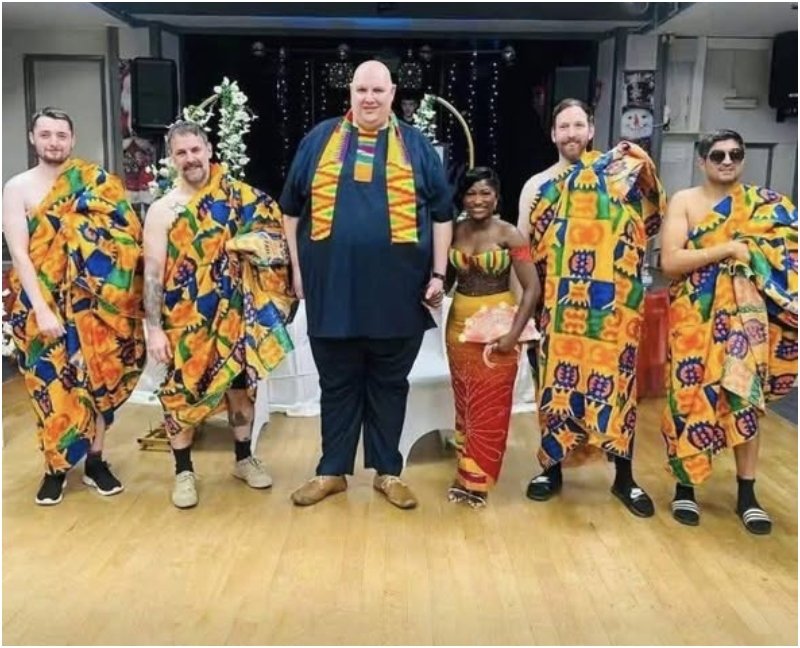
A UK-based couple, Craig Dawson and Linda Darkwah Otchere, has become the internet’s latest sensation after celebrating their marriage in Ghana with both a traditional ceremony and a church wedding.

The pair, now affectionately referred to online as “The Dawsons,” are drawing widespread attention—not only for their striking photos but for the visible height difference that many Ghanaians have been playfully talking about.

The couple exchanged vows in Ghana recently, choosing to honour Linda’s heritage with a colorful traditional ceremony featuring rich Kente cloth, gold accents, and family blessings.
The celebration was followed by a classic white wedding attended by relatives, friends, and well-wishers.
But it was the photos that made the biggest splash online.
Craig, who stands well above seven feet, towers lovingly over Linda, who is estimated at around five feet tall. Their joyful poses, beaming smiles, and strong chemistry have drawn admiration across social media platforms.

While marriages with such noticeable height differences are less common in Ghana, many users have celebrated the couple for embracing love beyond physical appearances. Others have praised the images for showing cultural beauty, unity, and the global reach of Ghana’s wedding traditions.

The couple’s wedding hashtag #TheDawsons has since taken off, with thousands sharing the photos across Facebook, TikTok, Instagram, and X. Many commenters described the union as “beautiful,” “heartwarming,” and “proof that love simply chooses its own path.”
For Craig and Linda—whose UK life reportedly brought them together—the spotlight seems secondary to the meaning of the day.
Their Ghanaian wedding has become both a celebration of love and a reminder of how global, diverse, and visually vibrant modern relationships can be.



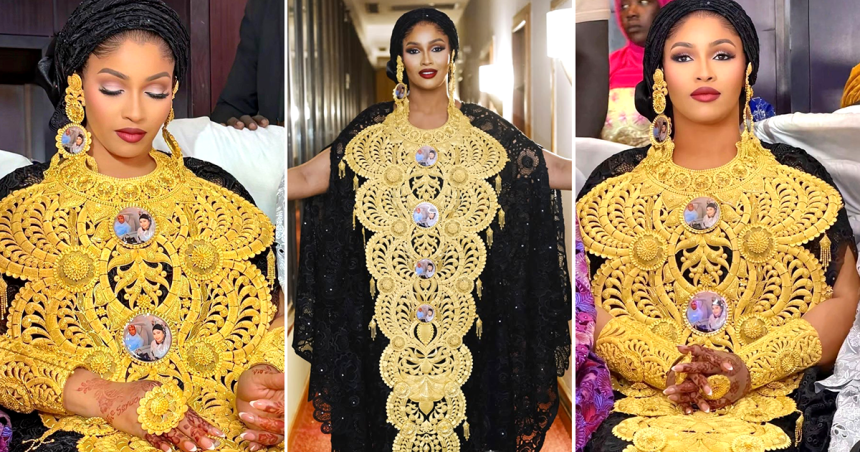
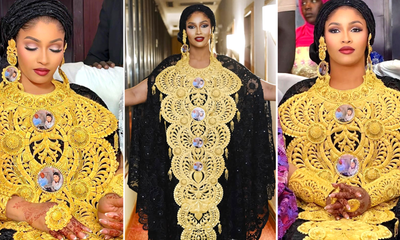
A wedding appearance in Gabon has become an online sensation after Malian businesswoman Oumou Sininta reportedly arrived wearing gold jewellery weighing an astonishing 10 kilograms and valued at approximately $1.5 million.
The dramatic display has sparked conversations about luxury, African wedding fashion and the power of personal style to command public attention.
Sininta, described as a wealthy Malian businesswoman based in Gabon, has attracted widespread interest as images and reports of her extraordinary jewellery circulated on social media. The reported valuation, equivalent to nearly ₦2 billion, has left viewers amazed by the scale of the display and the sheer weight of the gold.
Her appearance highlights a familiar feature of high-profile celebrations: fashion can become a statement of identity, status and influence.
At weddings, where guests often use clothing and accessories to express individuality, an exceptional piece of jewellery can transform an outfit into a spectacle of its own.
Across many African communities, gold jewellery has long carried associations with wealth, prestige, craftsmanship and celebration. Its significance varies across cultures, but elaborate gold ornaments can serve as powerful visual expressions of achievement and personal taste. Sininta’s reported appearance brings that tradition into the social media age, where a single fashion moment can travel far beyond the event itself.
Yet the figures surrounding her jewellery remain estimates. Its reported weight and value have not been independently confirmed, making it important to distinguish online claims from verified details.
Still, the fascination surrounding Sininta’s look reveals something about contemporary fashion: luxury is not always designed to blend into the background. Sometimes, it is intended to make an entrance, invite conversation and leave a lasting impression.
In this case, gold has become more than an accessory. It is the centrepiece of a fashion moment capturing attention across borders.
Fashion & Style
The Cost of Fashion Week Dreams: Why African Designers Risk Losing Money Chasing Western Runways

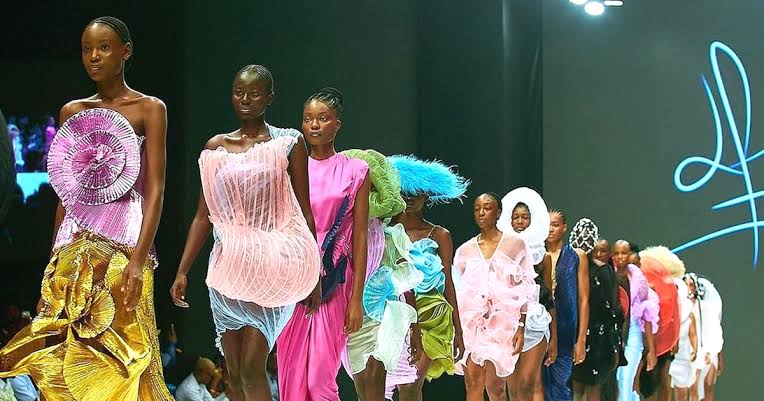
For African fashion designers, showcasing in Paris, London, Milan or New York can feel like a passport to global recognition.
But behind the glamour of international runways lies a costly reality: a fashion show during fashion week does not automatically mean a place within its recognised industry network.
The biggest risk, according to the argument raised in this fashion industry commentary, is confusing proximity to a major fashion event with genuine commercial opportunity.
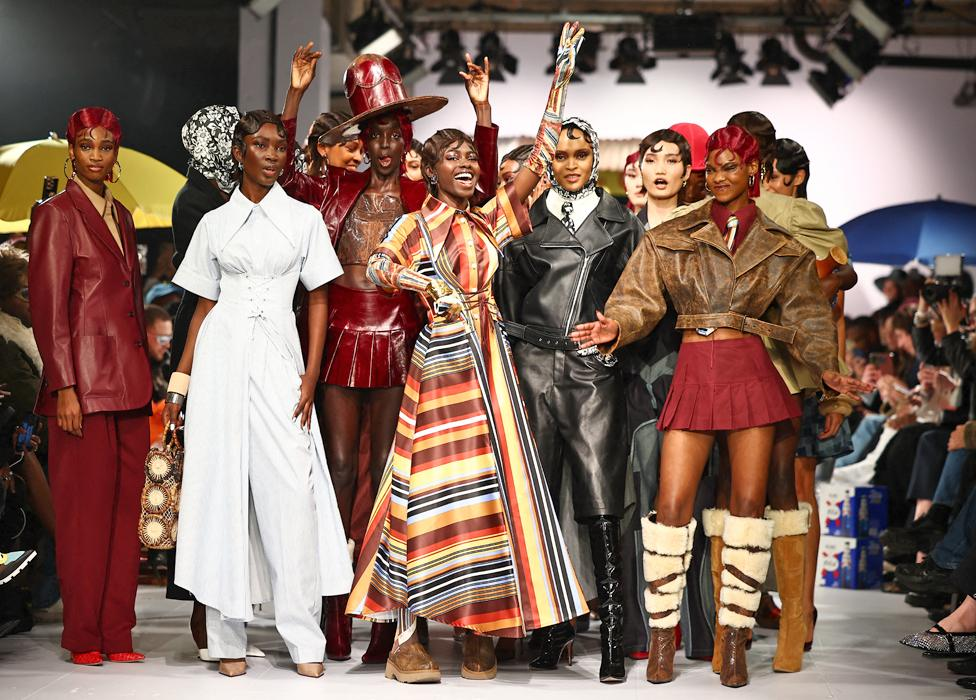
Established fashion capitals operate within extensive ecosystems connecting designers with buyers, manufacturers, fabric suppliers, media, celebrities and production networks. Yet the organisations coordinating fashion-week schedules do not necessarily produce every designer’s show or guarantee sales, press coverage and industry connections.
This distinction can leave emerging African designers vulnerable to expensive promises.
Some independent platforms use names that resemble recognised fashion weeks, inviting designers to pay participation fees, travel abroad, and present collections without necessarily securing official listings or meaningful industry access.
After spending heavily on flights, accommodation and showcase costs, designers may discover that their international appearance has generated little beyond photographs and a brief moment of visibility.
The consequences extend beyond finances. Without established press relationships, local marketing or plans to reach customers after the event, an overseas showcase can become an isolated achievement rather than a foundation for international growth.
For Ghanaian and other African designers, the alternative may be to invest strategically at home.
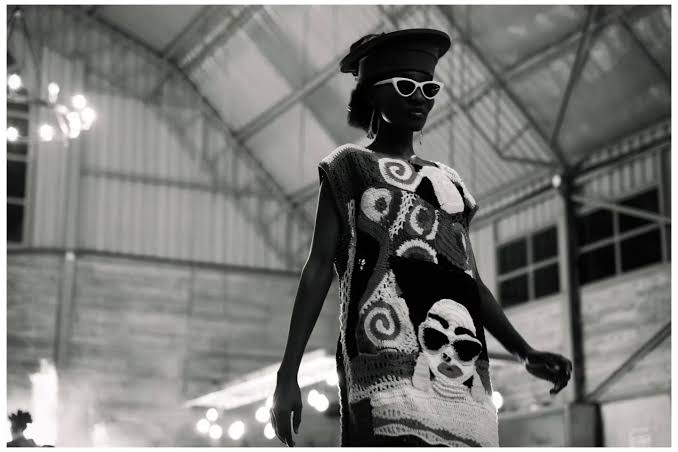
Local shows can offer direct customer access, opportunities to build relationships, and more resources for production, digital marketing, influencer partnerships, and sustained brand development.
International showcases can still be valuable, but preparation matters. Designers need clear objectives, verified affiliations, realistic budgets, and a strategy for converting exposure into business.
The runway may create the moment, but it cannot build a fashion brand alone.
Global recognition comes from the work surrounding the show—and sometimes, the smartest investment is strengthening a brand at home before taking it abroad.
Fashion & Style
“Nigerians Work Together Better Than We Do”: Makeba’s Call for Unity in Ghana’s Fashion Industry
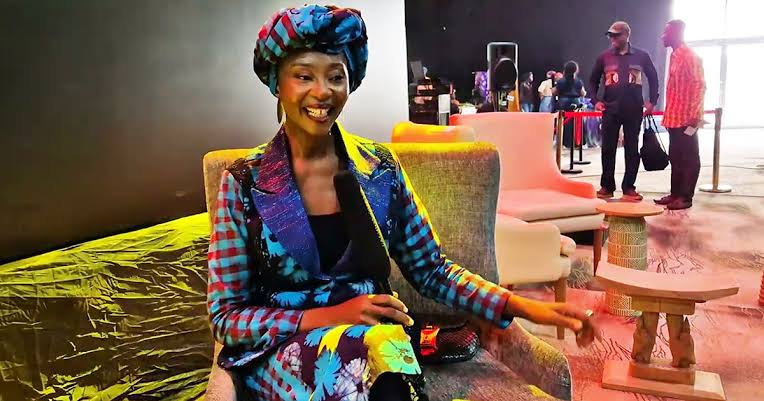
Ghana’s fashion industry has no shortage of creative talent, but according to visionary creative Makeba L. Boateng, its biggest challenge may be the difficulty of working together.
Her message, delivered during the Alternative Fashion Fabric Fair (ALT.FFF) on September 19, was direct: Ghanaian creatives could learn valuable lessons from Nigeria’s stronger culture of collaboration.
During a 10-minute interview at the sustainable fashion event, Makeba reflected on the relationships shaping Ghana’s fashion ecosystem.
She pointed to Nigeria as a neighbouring creative powerhouse whose industry, in her view, does a better job of bringing people together.
“When you look at Nigeria, I think they work a bit better together than we do, and they are like our big brother,” she said.
For Makeba, the issue extends beyond designers supporting one another. Building a competitive fashion industry requires an interconnected supply chain, linking designers, fabric producers, manufacturers and other specialists who contribute to bringing garments from concept to market.
When these players operate independently, opportunities for shared resources, knowledge and growth can be lost. A stronger value chain, she believes, would allow creatives to focus on their strengths while benefiting from the expertise of others.
That ambition sits at the heart of ALT.FFF, which aims to provide a meeting ground for exchanging ideas, building relationships and developing practical strategies for sustainable fashion.
“We are not coming together to try and create that supply chain, that value chain, and I’m hoping ALT.FFF shows the scene that we can work together, that it’s possible,” Makeba explained.
Her vision challenges the idea that success must come through individual competition. Instead, she sees collaboration as a route to a more connected, resilient fashion sector.
For Ghanaian fashion to expand its influence internationally, talent alone may not be enough. The next breakthrough could depend on how effectively its creatives combine their skills, resources and ambitions.


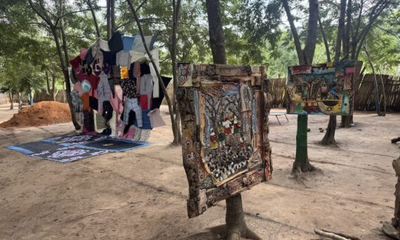
Beyond the Gallery: Karp Kamina Turns Cultural Memory into Contemporary Art

Malian Businesswoman’s Reported $1.5 Million Gold Jewellery Stuns Wedding Guests

Planning a Family Day Out in Accra? Lakeside Marina Park Offers Fun for All Ages
-
 Sights and Sounds1 day ago
Planning a Family Day Out in Accra? Lakeside Marina Park Offers Fun for All Ages
-
 Fashion & Style6 hours ago
Malian Businesswoman’s Reported $1.5 Million Gold Jewellery Stuns Wedding Guests
-
 Arts and GH Heritage28 minutes ago
Beyond the Gallery: Karp Kamina Turns Cultural Memory into Contemporary Art