
Perspectives
Apongo was a rebel leader in Jamaica – a diary entry sheds light on his west African origins

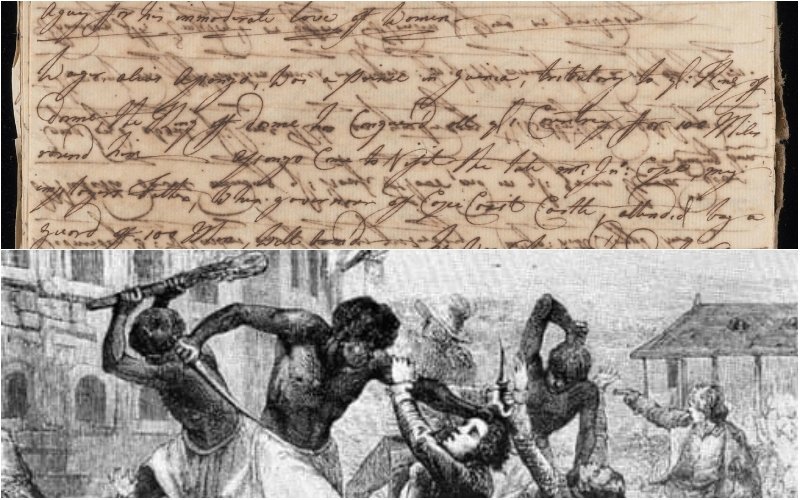
In this article, Devin Leigh of University of California, Berkeley sheds light on a newly highlighted diary entry from the 18th century that offers rare insight into the life and origins of Apongo, a key rebel leader in one of the Caribbean’s most significant insurrections against British colonial rule.
———–
For over three centuries, between 1526 and 1866, at least 10.5 million Africans were forcibly trafficked to the Americas in the transatlantic slave trade. Over half of them (with known places of departure) left from a 3,000km stretch of the west African coast between what are today Senegal and Gabon.
Scholars trying to uncover the lives of these diasporic Africans are forced to work with historical records produced by their European and American enslavers. These writers mostly ignored Africans’ individual identities. They gave them western names and wrote about them as products belonging to a set of supposedly distinct “ethnic” brands.
Now, however, the curious biography of an 18th-century Jamaican rebel confounds this inherited language. The rebel in question is Apongo, also known as Wager. His biography is a 134-word handwritten passage in the diary of an 18th-century enslaver named Thomas Thistlewood.
As a historian of the Atlantic World in the 1700s, I use the life stories and archives of British enslavers to better understand these times.
My recent study uses Thistlewood’s biography of Apongo as a window into the origins of enslaved west Africans, particularly those from what are today the nations of Ghana and Benin.
Apongo’s story offers an opportunity to better understand the complexities of west African identity and to put a more human face on those enslaved.
Who was Apongo, aka Wager?
Like many enslaved Africans, Apongo had two names. Unfortunately, neither of them completely unlocks his backstory. “Apongo” is probably the rendering of his African name into English script according to how it sounded to his enslavers’ ears. “Wager” is a name Apongo was given by his white “master”. It had nothing to do with his African origins. In fact, it was the name of his enslaver’s ship.
Thistlewood was an English migrant to Jamaica who thought of himself as a gentleman scholar. According to one of his diary entries, Apongo led an extraordinary life defined by twists of fate. He was the prince of a west African state that paid tribute to a larger kingdom called “Dorme”. After subjugating the peoples around him, the king of Dorme seems to have sent Apongo on a diplomatic mission to Cape Coast Castle in what is today Ghana. At the time it was the headquarters of Great Britain’s trading operations on the African coast.
While there, Apongo was apparently surprised, enslaved, and trafficked to Jamaica. At the time, Jamaica was the British Empire’s most profitable colony. This was due to its sugar plantation complex based on racial slavery.
Once in Jamaica, Apongo reunited with the governor he had visited at Cape Coast. He tried to obtain his freedom but, after failing for a number of years, led and died in an uprising called Tacky’s Revolt.
Unfolding over 18 months from 1760 and named after another one of its leaders, Tacky’s Revolt left 60 Whites and over 500 Blacks dead. Another 500 Blacks were deported from the island. It was arguably the largest slave insurrection in the British Empire before the 19th century.
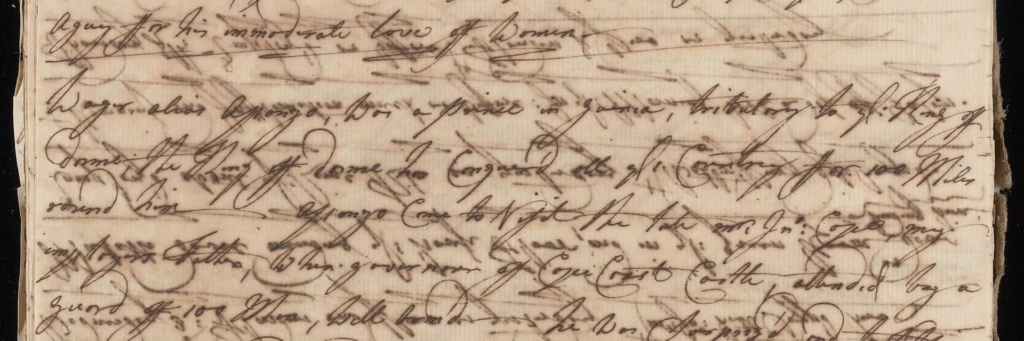
The mystery in the diary
To appreciate why Thistlewood’s diary entry is so valuable, we must know something about the lack of biographical information on enslaved Africans. Almost all came from societies with oral rather than literary traditions. They were then almost universally prohibited from learning to read and write by their European and American “masters”.
Enslavers almost never recorded enslaved people’s birth names. Instead, they gave them numbers for the transatlantic passage and westernised names after they arrived. Rather than recording the specific places they came from, they lumped them together into groups based on broad zones of provenance. For example, the British tended to call Africans who came from today’s Ghana “Coromatees”. Those from today’s Republic of Benin were known as “Popo”. So, despite being just one paragraph long, Thistlewood’s diary entry on Apongo is among the most detailed biographical sketches historians have of a diasporic African in the 1700s.
But it also contains a mystery. The word Thistlewood used to describe Apongo’s origins, “Dorme” or perhaps “Dome”, is unfamiliar. Since 1989, when historian Douglas Hall first wrote about Apongo, scholars have assumed it was a reference to Dahomey. This was a militarised west African kingdom in the southern part of today’s Benin.
Yet scholars never defended that assumption. Recently, it was called into question by historian Vincent Brown in Tacky’s Revolt, the first book-length study of the slave uprising Apongo helped lead. Enslaved people from what is today Ghana have a well-documented history of leading slave revolts in the Americas, particularly in British Jamaica. Brown suggested that it made more sense if “Dorme” referred to an unidentified state in that region.
Now, in my study, I have built on this work to make two related arguments. Uncovering three contemporary texts that use variant spellings of the word “Dorme” to refer to Dahomey, I argue that Thistlewood’s term was, indeed, a contemporary word for “Dahomey” in 18th-century Jamaica and that Dahomey was almost certainly the kingdom he had in mind. Moreover, I demonstrate that it was both possible and reasonable for a diplomatic mission to have taken place between Dahomey and Cape Coast in Apongo’s time. In fact, such a mission actually did take place in 1779, when King Kpengla of Dahomey sent one of his linguists to Cape Coast as an emissary.
But none of this resolves the central question. The evidence of “Coromantee” involvement in Tacky’s Revolt and other Jamaican slave rebellions – including the presence of Ghanaian names among rebels and the statements of historians at the time – is overwhelming. Additionally, although Africans from Dahomey made the trip to Cape Coast Castle during the 18th century, visitors from states in today’s Ghana were certainly much more common.
Ultimately, to argue that Apongo had origins in Dahomey, one must explain how a subject of that kingdom came to be a general in a rebellion largely characterised by Ghanaian leadership.
A question of origins
What are we to make of Apongo’s origins? One answer is that Thistlewood was wrong. Apongo was “Coromantee” and we should think of him as Ghanaian. Thistlewood merely associated him with Dahomey because that was the militarised African kingdom best known to Europeans at the time.
Another possibility is that Thistlewood was correct. Apongo was “Popo” and so we should write about him as Beninese. Thistlewood simply relayed a fact of Apongo’s life and was unconcerned with questions that now preoccupy us, such as how Apongo came to lead a rebellion that appears characterised by “Coromantee” leadership.
A third answer is that Apongo’s identity was more complex than this inherited “ethnic” language allows. Perhaps he was someone who traversed and was fluent in the cultural and political worlds of both Ghana and Benin. If that’s the case, then perhaps his story reminds us that at least these two adjacent regions were not as distinct as early-modern writers claimed and later colonial and national borders supposed.
The search for Apongo is just a small part of historians’ larger, ongoing, and collaborative work to recreate the lives of Africans taken in the transatlantic slave trade.
While asking these questions requires us to work with sources written by enslavers, we do so in the hope that we can ultimately see beyond them. Our reward is better understanding how Africans’ forgotten perspectives shaped the history of our world.
Devin Leigh, Lecturer, Global Studies, University of California, Berkeley
This article is republished from The Conversation under a Creative Commons license. Read the original article.


In this article, researcher Joseph McCarthy analyzes the security dilemma created by the withdrawal of Mali, Burkina Faso, and Niger from ECOWAS to form the Alliance of Sahel States (AES). As the jihadist insurgency led by groups like JNIM becomes increasingly transnational and expands toward coastal nations like Ghana, Benin, and Togo, the regional mechanisms for combating it are fracturing. The author argues that the AES’s shift toward Russian security guarantees (via the Africa Corps) fails to address the core challenge of cross-border intelligence sharing and pursuit, substituting firepower for regional trust. This growing divide makes the borderlands more porous for militants and brings the threat directly to the doorsteps of West African coastal states.
A Borderless Insurgency, a Divided Response: The ECOWAS–AES Security Dilemma
By Joseph McCarthy
Mali, Burkina Faso and Niger’s withdrawal from ECOWAS, and their construction of a rival security framework under the Alliance of Sahel States (AES), has produced a troubling paradox just as the insurgency’s geography expands toward the coast. The three juntas have compounded that paradox by turning to Russia and its mercenary formations, first Wagner and now the state-run Africa Corps, as their principal security guarantor, trading regional partnership for a patron with no border in West Africa, no seat at ECOWAS and no proven record of containing the threat. For Jama’at Nusrat al-Islam wal-Muslimin (JNIM) and allied groups, there is no AES border and no ECOWAS border.
There is only territory to penetrate and communities to influence. As the threat becomes more regional, the mechanisms for confronting it are becoming more divided, and Moscow’s growing footprint is deepening rather than resolving that divide, a fact that should concern Accra as much as Abuja or Niamey.
Jihadists move through a cross-border environment rather than within a single state. ACLED research shows JNIM expanding into northern Benin, particularly around the W-Arly-Pendjari complex spanning Benin, Burkina Faso and Niger. The terrain and thin state presence make the area hard to hold. A border difficult for a military to cross is often easier for an insurgent network to slip through, because a state must respect sovereignty and a militant need not. Burkina Faso’s forces may pursue militants to their own frontier, but cannot follow them into Benin without authorisation.
The Burkina Faso–Benin–Togo borderlands also contain trading and kinship networks predating the modern state. A herder crossing to trade livestock attracts no attention, but a militant moving through the same channels can exploit that familiarity. The border becomes a social network as much as a physical one, a gap that widens when relations between neighbouring capitals sour.
This is no longer a purely Sahelian story. JNIM’s push has already reached Benin and Togo, and Ghanaian security officials have repeatedly flagged militant reconnaissance and recruitment activity along the northern frontier with Burkina Faso. The Africa Center for Strategic Studies records militant Islamist-linked fatalities in north-western Nigeria rising from zero in 2024 to 136 in 2025 and 506 in 2026, a 268 per cent jump in a single year, as JNIM and Islamic State Sahel Province appear to collaborate with Boko Haram’s Sadiku faction, Ansaru, Lakurawa and assorted criminal groups. That is the transition from a Sahelian insurgency to a West African one, and coastal states from Ghana to Togo sit directly in its path. It is a spread that Russian-backed forces, thinly deployed and focused on holding capitals rather than contesting rural borderlands, are poorly positioned to check.
The deeper issue is coordination across political, military and intelligence systems, and ECOWAS has acknowledged as much. Its July 2026 communiqué described the regional security situation as deteriorating and directed leadership to engage AES states on a “pragmatic security cooperation mechanism.” Containing terrorism depends on knowing where militants are, who commands them and where attacks are being planned, information that must move quickly across borders.
But the AES breakaway complicates that. Niger and Nigeria share a long, vital border yet sit in different blocs; intelligence sharing now leans more on bilateral goodwill than on a common regional mechanism. A 2026 Institute for Security Studies analysis argues the ECOWAS–AES fragmentation weakens collective security and recommends restoring direct contact between the two blocs’ general staffs. Russia is no substitute for that channel. Moscow sits outside every regional early-warning system ECOWAS has built, including the frameworks Ghana, Togo and Benin actually rely on, so intelligence gathered by AES-aligned forces has no automatic route into them.
Early warning depends on information moving fast: a tip from northern Burkina Faso could prevent an attack in Benin, just as intelligence from Niger could help Nigeria anticipate militant movement. But when JNIM fighters flee a Burkinabè operation toward Benin, pursuit cannot simply continue across the line. The militants gain a tactical advantage at the border itself, an advantage that hot-pursuit and cross-border agreements could close, but that a Moscow-oriented security architecture, answerable to Russia rather than any regional body, has no mandate to broker.
Beyond the military mechanics lies a diplomatic obstacle. The AES accuses ECOWAS of interfering in domestic affairs and using sanctions as pressure; ECOWAS defends constitutional governance as non-negotiable. Terrorism is indifferent to which narrative prevails, and the mistrust that pushed the AES from ECOWAS also makes cooperation against militancy harder.
This is where dependence on Russia turns autonomy into isolation. Since Wagner’s dissolution after Prigozhin’s 2023 death, Russian deployments in Mali, Burkina Faso and Niger have been absorbed into the Ministry of Defence’s Africa Corps, a leaner but by most independent accounts no more effective force. West Point’s Combating Terrorism Center and other analysts find little evidence the transition improved outcomes, and JNIM inflicted some of the juntas’ heaviest losses around the handover. Africa Corps garrisons in Niger and Burkina Faso number only in the low hundreds, a fraction of what securing that territory demands, while allegations of atrocities against civilians, including proceedings before the African Court on Human and Peoples’ Rights, continue to mount. A security partnership built on a discredited mercenary outfit’s state-run successor does not project regional legitimacy; it substitutes firepower for trust, at the exact moment trust is what a transnational campaign most requires.
The AES’s search for autonomy has grown more costly as the threat it faces has grown more transnational, and dependence on Moscow does not offset that isolation so much as formalise it. Militants are becoming more regionally integrated precisely as the states fighting them, and the external patrons they have chosen, grow more divided. For Ghana and its coastal neighbours, that divide is no longer a distant Sahelian concern. It is arriving at their own borders.
Joseph McCarthy is an analyst and researcher specialising in governance, security and political transitions in the Sahel. He writes on geopolitics, development and African diplomacy. joecarthy30@gmail.com
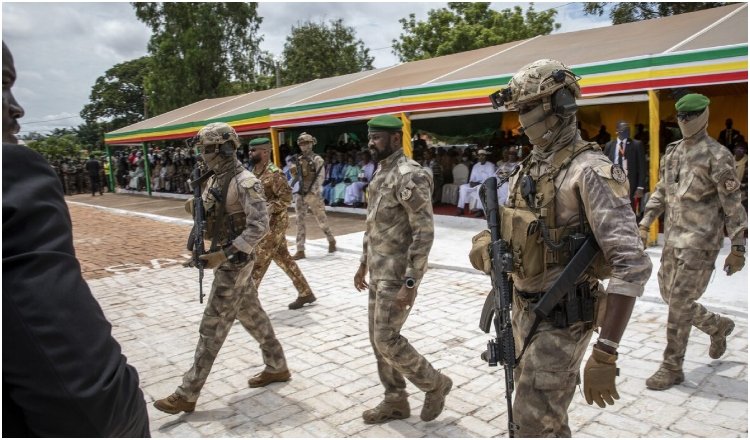
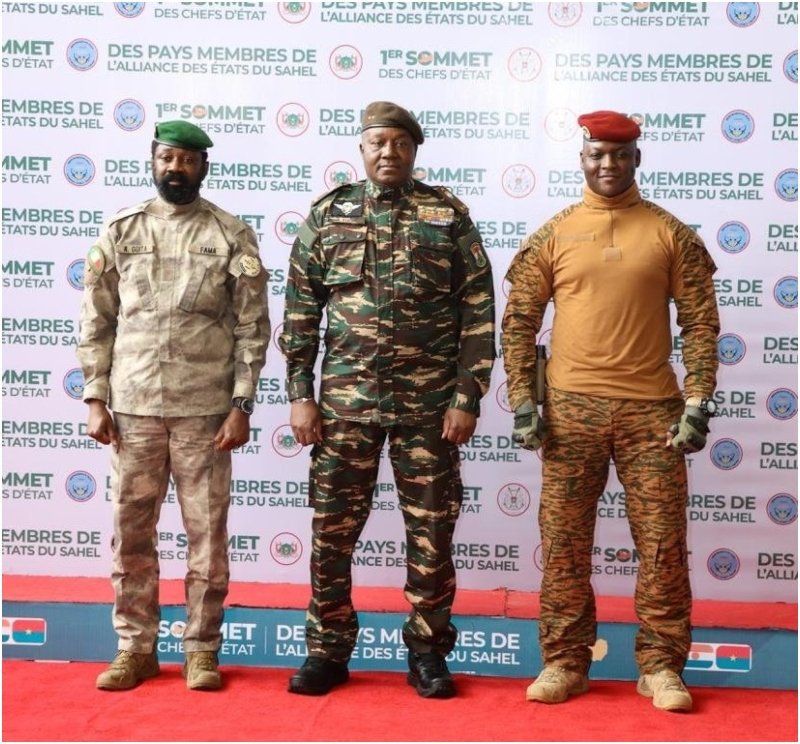
Between 2020 and 2023, military juntas seized power across Mali, Burkina Faso and Niger, promising to defeat jihadist insurgencies that civilian governments had failed to contain. Years later, the security situation has deteriorated rather than improved, with insurgents breaching heavily fortified installations and expanding territorial control. Meanwhile, elections have been indefinitely postponed under the pretext of insecurity, and military rulers have deepened their alignment with Russia to escape external pressure for democratic transitions. This analysis examines the legitimacy crisis facing the Sahel’s juntas, arguing that governments which justify their rule solely through security outcomes cannot survive when those outcomes fail to materialize. This article explores the fragility of military authority in the absence of electoral mandate, the geopolitical calculations driving alignment with Moscow, and the consequences for millions of citizens living with displacement, closed schools and expanding insurgent control.
The Sahel Juntas and the Crisis of Legitimacy
By Joseph McCarthy
When soldiers seized power across the Sahel between 2020 and 2023, they offered strikingly similar justifications. Civilian governments, they argued, had failed to protect their citizens from the advancing threat of Jama’at Nusrat al-Islam wal-Muslimin (JNIM) and the Islamic State Sahel Province (ISSP), despite years of support from France, the United Nations, the European Union and the United States. Military rule, the argument went, would succeed where democratic politics had not: it would restore state authority, defeat the insurgents and, only then, return power to civilians. Years later, the region’s security landscape raises an uncomfortable question. Has military rule delivered on that promise, and what happens to a government’s legitimacy when it has not?
The pattern of coups was remarkably consistent. In Mali, Assimi Goïta removed President Ibrahim Boubacar Keïta in August 2020, citing the army’s inability to control large parts of the north and centre. In Burkina Faso, Paul-Henri Sandaogo Damiba overthrew President Roch Marc Christian Kaboré in January 2022 on similar grounds, only to be removed himself eight months later by Ibrahim Traoré, who argued that Damiba’s own counterterrorism record was too slow. In Niger, Abdourahamane Tiani deposed President Mohamed Bazoum in July 2023, insisting that a new approach to security was needed despite Bazoum having achieved relative gains against jihadist groups. In each case, the message was the same: only military leadership could act with the speed and decisiveness that civilian rule could not.
The record since then complicates that claim. In June 2026, JNIM fighters breached Diori Hamani International Airport in Niamey. This is one of Niger’s most heavily fortified installations, housing the air force, military drones, the headquarters of the Alliance of Sahel States’ joint force, and Russian personnel. In April, coordinated attacks across Mali, including in Kati, revealed an insurgency that has grown more sophisticated rather than less, even as military governments have intensified their campaigns. Large swathes of northern and central Mali, eastern Burkina Faso and western Niger remain outside effective state control. Millions of people are displaced, schools and clinics have shut down across rural areas, and food insecurity continues to rise. Perhaps most tellingly, JNIM has moved beyond pure military operations in parts of the territory it contests, reportedly collecting taxes, mediating local disputes and enforcing its own rules, functions that amount to governance. For juntas that justified their rule by promising to restore the state’s authority, this is a difficult reality to reconcile.
None of this has produced elections. Goïta has repeatedly extended Mali’s transition, arguing that voting while the country remains insecure would undermine its credibility. Traoré has pushed Burkina Faso’s elections back to 2029. Tiani has likewise announced a prolonged transition in Niger, citing the need for stability before any return to civilian rule. In each case, insecurity, the very problem the juntas promised to solve, has become the justification for indefinitely postponing the democratic process that was meant to follow.
This is where the deepening alignment with Moscow matters. Russian foreign policy in the region, delivered first through the Wagner Group and now the Africa Corps, has emphasised sovereignty, executive authority and non-interference rather than electoral timetables. Unlike France and other Western partners, who after the 2020 and 2021 coups pushed for sanctions and rapid transitions back to constitutional rule through ECOWAS, Russia has attached no such conditions to its military assistance. That gives the juntas diplomatic cover and security backing without the external pressure that once accompanied Western partnerships, making prolonged military rule more sustainable in the short term.
But sustainability is not the same as legitimacy. Governments that seize power through force cannot draw on the ballot box or constitutional continuity to justify their authority. Instead, they rely on a narrower and more fragile bargain: deliver security, and the question of legitimacy can wait. That bargain depends entirely on results. It is not clear that the juntas are delivering them.
This is the vulnerability now facing Goïta, Traoré and Tiani. The argument that brought each of them to power, that civilian rule had failed to stop the violence and military leadership would not, is the same argument that can be turned against them if the violence continues to escalate under their watch. A partnership with Russia may insulate these governments from external pressure to hold elections. Still, it cannot insulate them from the judgement of their own citizens, who continue to live with displacement, closed schools and expanding insurgent control. If security remains the sole justification for indefinitely concentrating political power, then the failure to secure it becomes the sole justification for questioning that power. The Sahel’s juntas are not simply fighting insurgents. They are running out of time to prove that their original argument for seizing power still holds.
Joseph McCarthy is an analyst and researcher specialising in governance, security and political transitions in the Sahel. He writes on geopolitics, development and African diplomacy. joecarthy30@gmail.com
Ayodeji Ogunnaike, McGill University
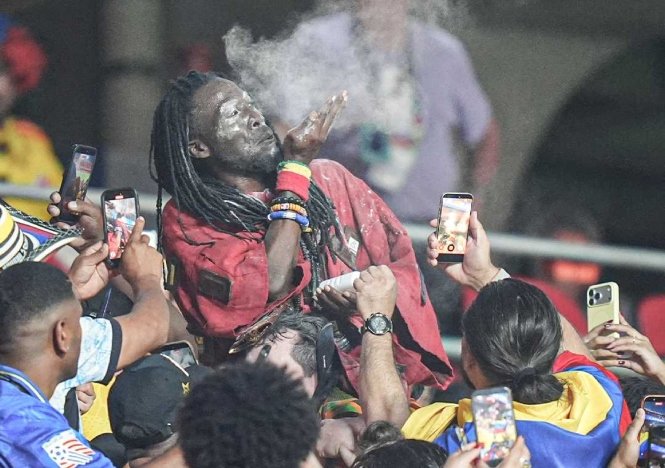
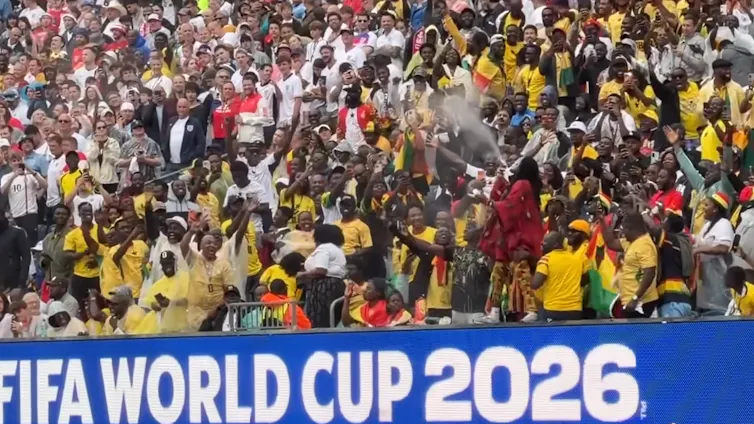
One of the most notable figures of the 2026 FIFA World Cup emerged during Ghana’s first match of the tournament: the “juju man,” Kailani Ibrahim Kpa, who was famously seen blowing white powder into the air during the game.
Another Ghanaian, Nana Kwaku Bonsam, went viral just before the match for claiming to have placed a curse on England’s captain, Harry Kane. Bonsam is a particularly media-savvy Twi traditional priest and one of the most recognizable faces of what is commonly called “witchcraft” or “juju” in African soccer.
Juju quickly became a topic of conversation and fascination for millions of soccer fans around the world, particularly after Kane failed to score and the match ended in a draw.
Although it may seem strange to westerners, soccer and esoteric rituals go hand in hand in Africa. One infamous video from Rwanda that regularly circulates on African group chats shows a striker failing to score, snatching a “charm” from inside the goal and subsequently scoring.
Ghanaians in particular have a long history of leveraging the spiritual side of sports. Former captain André Ayew scattered a ritual powder on the pitch in 2012, and Bonsam himself announced he cursed Portugal’s Cristiano Ronaldo ahead of the 2014 World Cup.
This blending of spirituality and sport can be easy for westerners to misinterpret or dismiss as simple superstition. This is particularly true when spiritual fraudsters try to make money by promising to help teams win and their predictions do not come true.
However, Africans are not backwards or simple-minded. Foreign academics and even colonial officials with first-hand experience with African spiritual arts have been surprised by how effective they are at achieving their intended results.
Fortunately, we also now have excellent written accounts from Africans about the power and logic behind Indigenous knowledge and ritual systems.
African knowledge systems
Western society has developed in a context that often seeks to define and establish separate religious and secular aspects of life. However, African knowledge systems generally treat what we might call science, religion, medicine and art as parts of a unified whole.
What westerners may call “religion” is often integrated into every aspect of African life, and it is more helpful to reconceptualize its relationship to sport as the reasonable engagement with the physical and metaphysical world toward a desired end.
When I studied with a priest and diviner in Nigeria, I helped him prepare many òògùn (a Yoruba term meaning simultaneously medicine, charm and technology) to heal and prevent injuries and harm.
Because all facets of their lives have a spiritual dimension, many Black and African players and teams regularly pray together before and after matches. Germany’s Jonathan Tah and Felix Nmecha made news by joining Curaçao’s team in prayer after their match.
From this perspective, a priest offering services to a team is just as legitimate as a sports psychologist, nutritionist or physiotherapist. Each draws on a long-standing tradition of experimentation, training and the application of different technologies to support favourable results.
For example, the Senegalese wrestling sport Laamb integrates marabouts (Muslim clerics) and amulets into competitions. The marabouts function much like boxing coaches, just also with power over immaterial forces.
Unlike in Laamb, spiritual intervention in soccer was not initially conceptualized as integral to the game, but it has, sometimes covertly, been integrated into the sport in Africa. https://www.youtube.com/embed/XvNIR0AIrPs?wmode=transparent&start=0 A clip about marabouts and Senegalese Laamb wrestling (Vice Media)
Accessing a nonphysical reality
A fundamental principle of Indigenous African spiritual systems is that all materials also have a nonphysical reality, and they can be used to effect change on that nonphysical level.
Powders, like those scattered by Ayew or Kpa seemed to blow, frequently contain dried, ground or burned natural substances with some characteristic related to the desired outcome.
These substances can be placed on or in a body, or important places such as a door frame or goal, to prevent things from entering. This is why the striker in the Rwandan example I mentioned removed the charm from his opponents’ goal while his opponents desperately tried to get it back.
Other common approaches include reciting incantations or soaking the body in ritual baths. Some also involve using flames to burn away or scatter dark and malevolent forces, like those I saw in a pot on the head of a Ghana fan at the 2010 World Cup.
Mischaracterization and prejudice
Europeans have often mischaracterized African ritual and knowledge systems as “black magic,” “witchcraft,” or “superstition” to justify a sense of religious, cultural and racial superiority over Black people. African religious practices and experts are also still frequently and pejoratively called “fetishism” and “witch doctors.”
The prejudice toward and dismissal of these practices and practitioners has driven many underground, but they are still ubiquitous in African society. Such pejorative attitudes were evident during Bonsam’s recent interviews in western media.
While I worked with the Nigerian diviner, people who might be considered “modern” and operating in secular spheres from a western perspective — such as university students, prominent business people and even politicians — regularly came for spiritual and professional help, which they understood as one and the same.
Athletes are particularly aware that talent and hard work are not always enough to ensure victory. Africans and non-Africans alike generally recognize that there are forces beyond their control at play, even if some might generically conceptualize those forces as “luck.” And even spiritual services are no guarantee of victory if the other side has access to them too.
It is unclear if Kpa’s powder was actually ritual material or simply a demonstration of cultural heritage, like Norway’s Viking row. However, after the goalless Ghana match, Kane did go on to score against Panama once Bonsam said he had “released” the Englishman.
Kpa and Bonsam unsurprisingly captivated African and non-African soccer fans, even if their actions may have been less legible to some. Beyond the World Cup, what may be more interesting is how both men represent an ancestral knowledge tradition that is thousands of years old, and they are merely a visible part of the invisible spiritual dimension of sport in Africa.
Ayodeji Ogunnaike, Assistant Professor of African Religions; Canada Research Chair (Tier 2) in the Globalization of African Religions and Yoruba Mythology, McGill University
This article is republished from The Conversation under a Creative Commons license. Read the original article.



-

 Ghana News1 day ago
Top Headlines From Ghanaian Newspapers: Monday, Sept. 7, 2026
-
 Festivals & Events1 day ago
Dzawuwu: The Volta Festival That Celebrates Agave Bravery
-

 Ghana News6 hours ago
How Ghana’s Government Pressured MTN, Telecel, and AirtelTigo to Cut Data Prices
-

 Sights and Sounds1 day ago
Trade Accra’s Traffic for Treetops at Legon Botanical Gardens
-
 Arts and GH Heritage12 hours ago
The Stories We Live With: Inside Nubuke Foundation’s Weight of the Ordinary
-

 Ghana News8 hours ago
Top Headlines From Ghanaian Newspapers: Tuesday, Sept. 8, 2026
-
 Ghana News7 hours ago
Buckingham Palace Responds to Jamaica’s $10 Billion Reparations Demand, But the UK Government’s Wallet Remains Shut
-

 Health & Wellness1 day ago
Why 500 Sit-Ups a Day Won’t Reveal Your Abs