
Tourism
US Warns Citizens Against Traveling to Côte d’Ivoire: “Do Not Travel to The Northern Border Region’


The United States Department of State has reissued its travel advisory for Côte d’Ivoire on February 18, 2026, maintaining the country at Level 2: Exercise Increased Caution while issuing a refreshed assessment of ongoing security concerns.
The update, which includes no change to the overall advisory level, emphasizes heightened vigilance due to risks of crime, terrorism, civil unrest, health issues, and piracy in nearby Gulf of Guinea waters.
In the advisory, U.S. officials explicitly advise: “Do not travel to the northern border region of Côte d’Ivoire for any reason.”
This restricted zone is highlighted for elevated threats from crime and terrorism, particularly activities linked to Jama’at Nusrat al-Islam wal-Muslimin (JNIM), an al-Qa’ida-affiliated extremist group operating in the Sahel region. The group has previously crossed borders from neighboring Burkina Faso and Mali to conduct attacks in northern districts, including areas near Comoé National Park. While most incidents have targeted security forces, civilians have occasionally been affected.
The broader advisory urges travelers nationwide to prepare contingency plans, share detailed itineraries with trusted contacts, enroll in the Smart Traveler Enrollment Program (STEP), and avoid overt displays of wealth such as expensive jewelry, watches, or large amounts of cash. U.S. government employees face specific travel restrictions in certain areas, underscoring the seriousness of the risks.
Despite these cautions, Côte d’Ivoire continues to position itself as an emerging tourism and business destination in West Africa. Coastal attractions like the UNESCO World Heritage site of Grand-Bassam, with its colonial-era architecture and beaches, remain popular, as do landmarks such as the Basilica of Our Lady of Peace in Yamoussoukro—the world’s largest church—and the country’s growing beach tourism sector. Abidjan, the economic hub, draws international visitors and investors for its vibrant culture, markets, and infrastructure.
The advisory reflects a refreshed evaluation of persistent challenges rather than a new escalation, with the Level 2 designation in place since 2024. U.S. authorities stress that travel to most parts of the country is possible with appropriate precautions, but travelers are encouraged to monitor local media, follow official updates, and consult the full advisory for the latest details.
For the complete U.S. Department of State travel advisory, visit the official page.

Sights and Sounds
Beyond the Summit: What They Don‘t Tell You About Climbing Ghana’s Mountain Afadjato

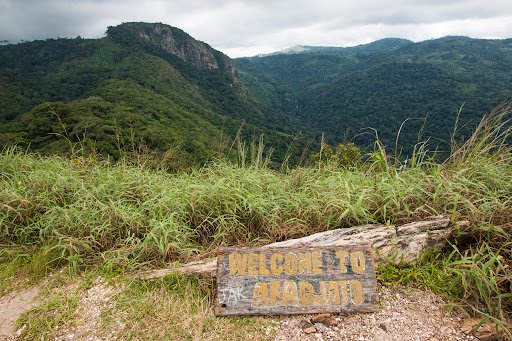
At 885 meters above sea level, Mountain Afadjato isn’t trying to compete with the giants of the world. It doesn’t have snowcaps or death-defying cliffs. But for those who make the pilgrimage to the Volta Region, this lush, green behemoth offers something better than altitude—it offers a story.
Standing on the border of Ghana and Togo, Afadjato (often called Mount Afadja) is officially the highest point in Ghana. But the locals in the surrounding villages of Liati Wote and Gbledi won’t just rattle off statistics; they’ll tell you the meaning behind the name.
Derived from the Ewe word Avadzeto, it translates loosely to “at war with the bush”. According to lore, an irritating plant grew on its slopes that gave early settlers and hunters a tough time. That stubbornness is embedded in the mountain’s DNA.
As you climb, you’ll realize that this peak isn’t just a landmark; it’s a living memory of resilience.
The Climb: A Test of Will
If you arrive expecting a gentle amble through the forest, think again. The path starts innocently enough, winding through farms and thickets, but soon the angle sharpens. The real Ghana—the one you don’t see from the window of a car—reveals itself in the fine details: the bright flash of a butterfly (over 800 species flutter through this region), the call of the colobus monkey hidden in the canopy, and the gradual shift in vegetation as you ascend.
@ishoot.ghana Before: ‘We got this!’ 💪🏾 After: ‘Mount Afadjato got us!’ 😅 What a climb! @escape_accragh @Scanty Explores! #MountAfadjato #GhanaTravel #VisitGhana #HikingGhana #ExploreGhana #GhanaTourism #GhanaAdventures #WestAfricaTravel #HikingWithFriends #TravelVibes #BeforeAndAfter ♬ Real Thing – Kwesi Arthur
Hiking Afadjato takes about 45 minutes to an hour to reach the top if you’re in decent shape, though some energetic souls have sprinted up in under 20 minutes.
The trail is manageable for most, but there’s a moment—usually halfway up—where the humidity hits, and your legs start to burn. It’s here that the mountain lives up to its “warrior” namesake. You dig deep, you push through, and then suddenly, the trees part.
The View That Pays the Debt
At the top, the wind greets you first. Then comes the silence. Looking out over the Volta Region, you see the rolling hills of the Agumatsa range disappear into Togo.
From this vantage, the villages below look like toy models scattered on a green carpet. It’s a view that reminds you that Ghana is so much more than coastlines and castles—it’s a land of high places and wide skies.
But the summit isn’t the only reason to come here. The real magic of Afadjato lies at its base.
Why You Should Visit Now
Visiting this mountain isn’t just a physical challenge; it’s an investment in community-driven tourism. The fees paid at the tourist center in Liati Wote go directly back into local projects and conservation efforts—a model that keeps the trail clean and the villages prosperous.
Plus, the location is a hub for adventure. After descending (on shaky legs, mind you), you’re just a short drive from the Wli Waterfalls, the highest waterfall in West Africa, or the tranquil Tagbo Falls, perfect for cooling off.
You can also visit the Tafi Atome Monkey Sanctuary or drive up to Amedzofe, the highest habitable town in Ghana, where an iron cross planted by German missionaries in 1939 still stands rust-free atop Mount Gemi.
The Final Word
Mountain Afadjato is not about conquering. The mountain isn’t your enemy; it’s an elder. It stands there patiently, watching over the Volta Region, waiting for you to come and listen.
Whether you come for the fitness challenge, the butterflies, or just to say you stood on top of Ghana, you’ll leave with something unexpected—a quiet understanding that the highest points in life aren’t just about the view, but about the climb itself.
Tourism
Emirates Resumes Limited Flights from Dubai as Middle East Airspace Slowly Reopens Amid Ongoing Conflict

Dubai / Accra – March 3, 2026 – Emirates has begun operating a “limited number” of flights out of Dubai starting Monday evening (March 2, 2026), becoming one of the first major carriers to partially resume services after widespread airspace closures triggered by the escalating US-Israel-Iran conflict.
The Dubai-based airline posted an update on its website prioritizing customers with earlier bookings and warning passengers:
“Please do not go to the airport unless you have been notified.”
All other flights remain suspended until further notice, with Emirates continuing to monitor the situation and promising updates via its website and social media channels.
Etihad Airways has similarly started limited repatriation, cargo, and repositioning flights from Abu Dhabi, though scheduled commercial services are suspended at least until 2 p.m. UAE time on Wednesday (March 4). Qatar Airways gave no firm resumption timeline for Doha operations due to ongoing Qatari airspace closure. Gulf Air reported multiple cancellations and suspensions to/from Bahrain, stressing safety as its top priority.
Virgin Atlantic and British Airways have kept services to Dubai, Riyadh, Tel Aviv, Amman, and other Middle East destinations suspended or rerouted. BA advised passengers due to fly to affected cities up to March 15 to rebook free of charge by March 29, while urging non-urgent callers to avoid contact centres amid high volumes.
Dubai Airports confirmed a small number of flights were permitted from Dubai International (DXB) and Al Maktoum International (DWC) on Monday, with operations still heavily restricted. Heathrow Airport reported cancellations and delays due to regional airspace closures.
Aviation analytics firm Cirium reported that 40.3% of the 32,003 scheduled Middle East flights since Saturday (March 1) have been cancelled, underscoring the scale of disruption caused by Iranian missile and drone attacks, US-Israeli strikes, and precautionary airspace shutdowns across the Gulf.
For Ghanaian travelers, diaspora communities, and businesses reliant on Gulf routes, the partial resumption offers cautious hope, though full normalcy remains distant. Ghana’s Ministry of Foreign Affairs continues to advise nationals in the region to shelter in place, register with missions, and avoid non-essential travel.
The conflict—sparked by US-Israeli operations that killed Iran’s Supreme Leader Ayatollah Ali Khamenei and followed by Iranian retaliation—has grounded thousands, stranded sports teams (including Ghana’s Black Queens), disrupted remittances, and raised fears of prolonged energy and trade shocks for Africa.

There is a moment, just before the first bite of okro stew meets a pinch of banku, when the wise eater pauses.
You brace yourself for the slide. That slick, almost stubborn glossiness that coats each piece of okro—it’s not a texture to fear, but one to surrender to. And for the uninitiated, that surrender is the first step into something real.
In Ghana, we don’t shy away from the slimy comments. We lean in. Because okro stew, particularly when it catches that light sheen of palm oil, isn’t trying to be polite. It’s deep, savory, and unapologetically rich.
The oil isn’t grease for grease’s sake—it carries the smoked fish, the scotch bonnet heat, the crushed tomatoes down into every corner of the stew. It’s the vehicle for flavor, the thing that makes you reach for another hunk of banku before you’ve even swallowed.
@sweetohemaa1st Oil less Okro soup Banku with Okro soup, Natural food
♬ original sound – SWEET OHEMAA
And then there’s the banku itself. Fermented just enough to get that gentle sourness, smooth and cool against the warmth of the stew.
You pinch it, roll it, drag it through the oil. This isn’t dainty food, and thank goodness for that. It’s the kind of meal that demands your hands, your focus, your full presence at the table.
For the global reader scrolling from a world of convenience meals, let this be the dish that wakes you up.
Okro and banku aren’t just sustenance—it’s a conversation between texture and taste, a lesson in trusting the cook who knew exactly when to stop stirring. If you ever find yourself on this side of the Atlantic, skip the fork. Let the oil run down your wrist a little. That’s the memory you came for.


Ghana Intensifies Middle East Evacuation Efforts as Gulf States Reel from Iranian Retaliatory Strikes

Ghana Activates Middle East Evacuation, Baba Jamal Wins Ayawaso East and Other Trending Stories in Ghana (March 4, 2026)

Newspaper Headlines Today: Wednesday, March 4, 2026
-

 News24 hours ago
Ghana Gears Up for Vibrant 69th Independence Day Celebrations: Parades, Plays, Poetry, and Heritage in Focus
-

 Tourism22 hours ago
Emirates Resumes Limited Flights from Dubai as Middle East Airspace Slowly Reopens Amid Ongoing Conflict
-

 Ghana News1 day ago
Newspaper Headlines Today: Tuesday, March 3, 2026
-

 Ghana News1 day ago
Ayawaso East By-Election Results Trickle in, ECG Audits Fast-Reading Meters, and Other Trending Topics in Ghana (March 3, 2026)
-

 Ghana News15 hours ago
Ghana’s Top Muslim Leader Condemns Khamenei Assassination, Calls for New World Order Based on ‘Right Over Might’
-

 Fashion & Style15 hours ago
The New Wave of “Afro-Minimalism”: Redefining Luxury Beyond the Print
-
 Commentary21 hours ago
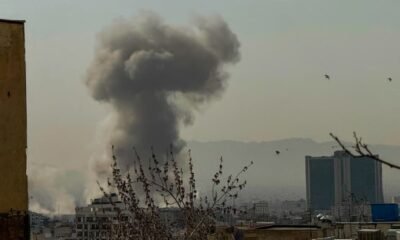
At a glance: US‑Israel attack on Iran
-

 Business21 hours ago
Ghana’s Mega Infrastructure Push: 10 Game-Changing Projects Set to Transform the Country in 2026