
Sights and Sounds
The African Dream in Stone: Stepping Into the Footsteps of Osagyefo Dr Kwame Nkrumah

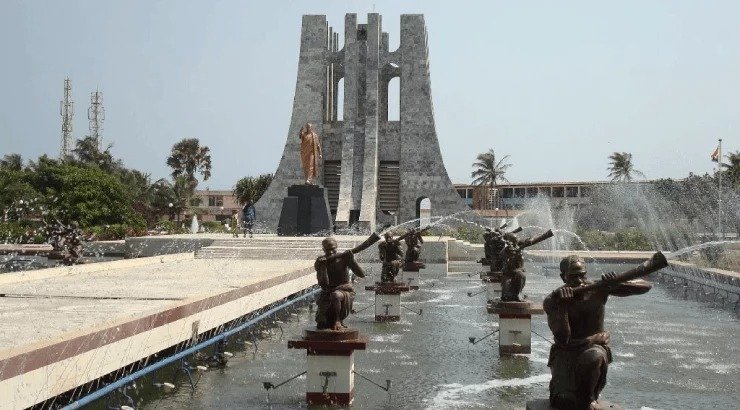
In the heart of Accra, where the humid Atlantic breeze meets the city’s relentless energy, lies a patch of hallowed ground that feels remarkably still.
This is the Kwame Nkrumah Memorial Park, a site that is far more than a burial ground. It is the exact location where, in 1957, Dr. Kwame Nkrumah stood before a sea of hopeful faces and declared that “Ghana, our beloved country, is free forever.”
Today, the park has undergone a stunning $3.5 million transformation, turning it into a world-class destination that balances solemnity with modern interactive storytelling.
Whether you are a history buff or a curious traveler, this is the definitive starting point for understanding the African independence movement.
Why You Can’t Skip It
The centerpiece of the park is the Mausoleum—a striking Italian marble structure designed to resemble an upside-down sword.
In Ghanaian culture, the “sword down” posture is a powerful symbol of peace. Inside, the air is cool and quiet, housing the remains of Dr. Nkrumah and his wife, Fathia.
Read Also: Walking with Giants: Why Mole National Park is Africa’s Best-Kept Safari Secret
But the real magic happens as you explore the new additions:
- The Audio-Visual Tunnel: Walk through a digital passage where the sights and sounds of the independence era come alive, making you feel the weight and wonder of that historic night in 1957.
- The Freedom Wall: A beautifully curated space featuring the “States of Emotion” of the former President, offering a humanizing look at the man behind the political icon.
- The Vintage Cadillac: For a touch of mid-century glamour, you can view the bulletproof 1957 Cadillac used by Nkrumah—a car that saw the birth of a nation from its leather seats.
A Modern Sanctuary
Beyond the history, the park is a literal breath of fresh air. The synchronized musical fountains—reminiscent of global landmarks but with a distinctly Ghanaian rhythm—provide a backdrop for the lush, landscaped gardens.
It’s a place where families, students, and global dignitaries converge, proving that Nkrumah’s dream of a united Africa is still very much a living, breathing concept.
As you leave, walking past the bronze statue of the “Osagyefo” pointing toward the future, you don’t just take away facts; you take away a sense of pride and a deeper connection to the spirit of the continent.










When Ghana marked its 69th Independence Day on March 6, celebrations echoed across the country and among the diaspora. In Paris, one Ghanaian student chose a different way to honour the moment—by giving the national anthem a new linguistic expression.
Deborah Ntiriwaah Diamond, popularly known as Deborah Diamond GH, released a French rendition of God Bless Our Homeland Ghana, offering a version that bridges Ghanaian identity with the language spoken across much of the world.
The performance, shared to commemorate Ghana’s independence anniversary, reflects both personal pride and cultural diplomacy.
“March 6, Ghana chose freedom, and this freedom shall be spoken in a new language to the world,” Deborah said while introducing the project.
Celebrating Ghana far from home
Living and studying in France, Deborah says the idea was born from a desire to celebrate Ghana in a way that resonates with her current environment. Paris, a city where cultures intersect, felt like the perfect place to reinterpret the anthem.
“As a Ghanaian student in France, I did this rendition to celebrate Ghana in Paris,” she explained.
Rather than replace the original, Deborah sees the French version as a translation of spirit rather than just words.
“Ghana’s story can travel across languages without losing its meaning. The anthem carries Ghana’s soul; the language carries the bridge,” she said.
A symbol beyond borders
Composed by Philip Gbeho, Ghana’s national anthem has been a powerful symbol of the nation since independence in 1957. For many Ghanaians abroad, hearing it in a foreign land can evoke strong feelings of belonging and nostalgia.
Deborah’s rendition taps into that emotion while also introducing the anthem to audiences who may not understand English.
By performing it in French—one of the world’s most widely spoken languages and the official language of several West African countries—the singer subtly highlights Ghana’s connection to the broader region and the global community.
Ghana’s story told differently
For Deborah, the performance is not just about music. It is about identity, connection, and the idea that patriotism can take different forms depending on where one stands in the world.
Standing in Paris, singing about a homeland thousands of kilometres away, she reminds us that Ghana’s narrative is not confined to its borders.
“God bless our homeland, Ghana,” she concluded.
As Ghana continues to strengthen ties with its diaspora and expand its cultural footprint abroad, creative gestures like Deborah Diamond’s French rendition show how national pride can travel, carried not only in passports, but also in song.
Fashion & Style
The Spider’s Geometry: Why the World is Falling in Love with Ghana’s Kente Fabric
If your Kente doesn’t announce your arrival from across the street, go home, change, and try again—because in Ghana, you don’t just wear this cloth; you brandish it like a crown.
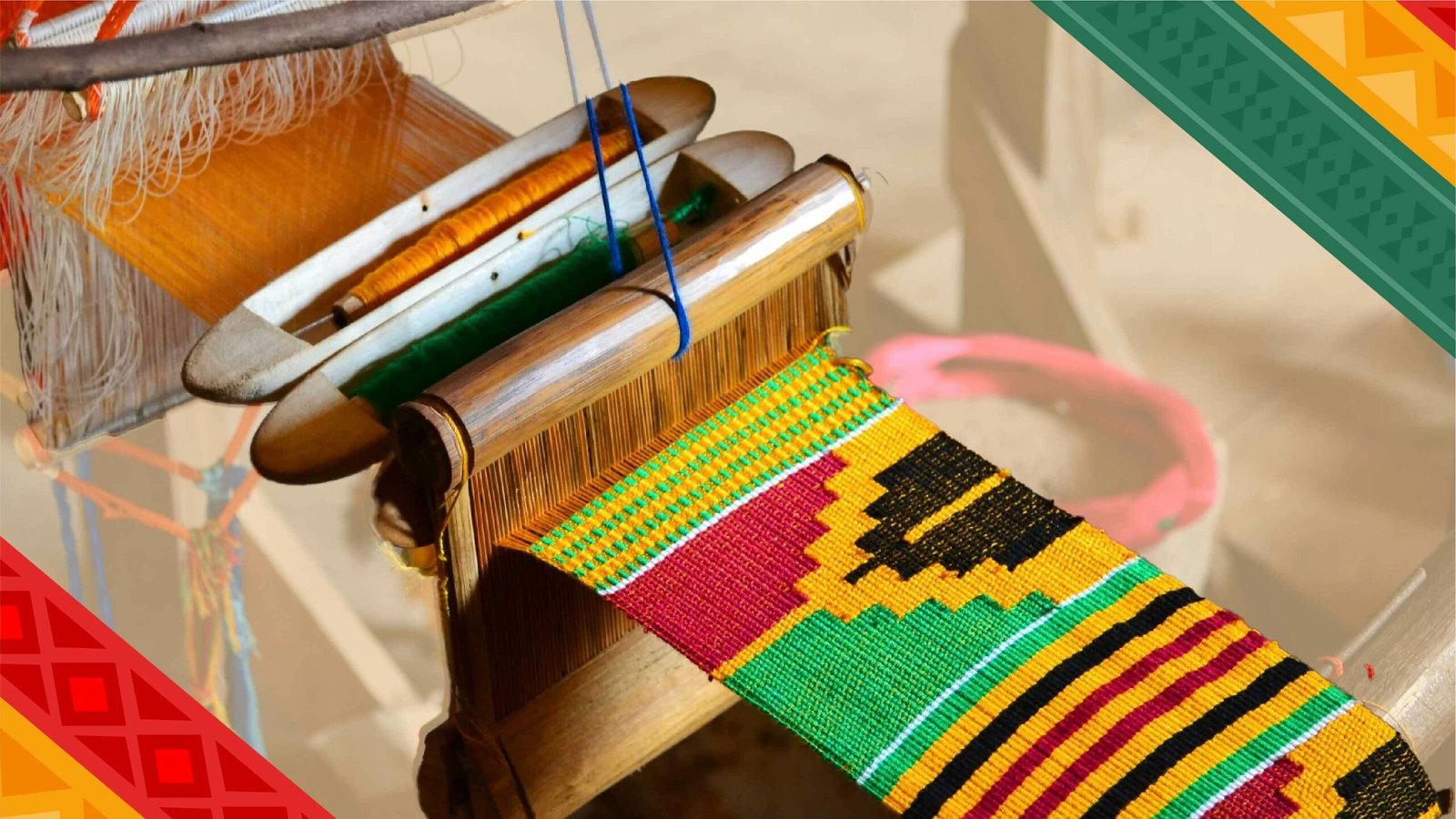
In the high-stakes world of global fashion, where trends expire faster than a social media story, there is a handwoven defiance emerging from West Africa that refuses to fade. It is called Kente.
But to the people of Ghana, calling Kente “fabric” is like calling a Ferrari “just a car.” It is prestige stitched into color, a mathematical marvel of silk and cotton that has moved from the sacred stools of Ashanti kings to the red carpets of Hollywood and the halls of the United States Congress.
The Divine Blueprint
The origin story feels like a fever dream of nature and art. Legend tells of two hunters in the deep forests of the Ashanti Kingdom who stopped to watch a spider spinning its web.
They didn’t see a pest; they saw a master architect. They studied the delicate, dangerous, and divine symmetry of the silk and returned home to mimic those movements on a wooden loom.
That was the birth of a legacy. Every strip of Kente is a sentence; every color is a vow.
When you see a pattern like Adweneasa—which literally translates to “my ideas are exhausted”—you are looking at a master weaver who has thrown every skill in their arsenal into a single piece of cloth. It is a design so complex that it was historically reserved for royalty.
The Language of Power
Kente doesn’t just sit on the shoulders; it speaks. At the most recent presidential inauguration in Accra, the air was thick with political rhetoric, but the real speeches were being made by the looms.
Ministers and dignitaries arrived “dripping” in gold, emerald, and fire-red weaves, each pattern carefully chosen to signal authority, wisdom, or new beginnings.
We see this same energy when stars like Jackie Appiah or Sarkodie break the internet with custom shoots.
They aren’t just wearing “African print”; they are draped in the Fatiah Fata Nkrumah (dedicated to the marriage of Ghana’s first president) or the Emada (meaning “it has not happened before”).
It is a visual language that says, “I have arrived, and I know exactly who I am.”
The Price of a Legacy
For the global traveler or the diaspora looking to reconnect, the sticker shock of a genuine, hand-woven ceremonial masterpiece can be startling.
While a simple machine-print might cost a few hundred cedis, an elite, hand-loomed silk Kente can easily command 10,000 GH₵ or more.
But you aren’t paying for a garment. You are paying for weeks of rhythmic, manual labor. You are paying for a craft that hasn’t changed its soul in centuries.
You are paying for the “threadwork of royalty.” In a world of fast fashion and disposable aesthetics, Kente is the ultimate “slow” luxury—a piece of history that you can wrap around your body.
Why It Dominates
From weddings to high school anniversaries, if there is no Kente, did the party even happen? It has become the universal uniform of Ghanaian excellence.
It is the ink of tradition and the language of pride.
So, whether you’re walking down an aisle in Kumasi or a gala in New York, remember the golden rule of the Gold Coast: if your Kente isn’t starting conversations from across the street, it’s time to go back to the loom.
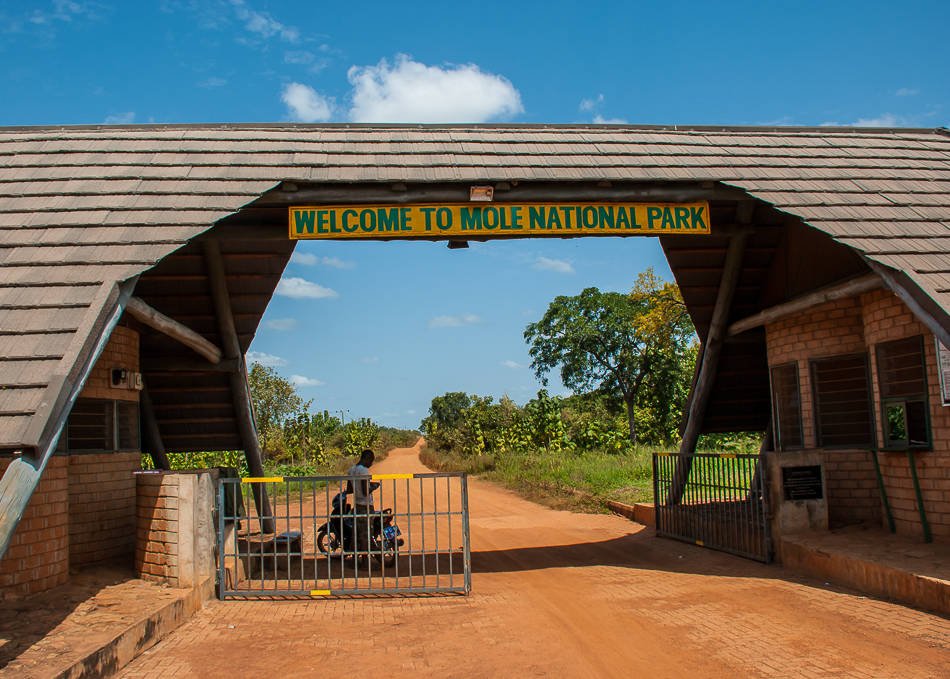
While the world flocks to the crowded plains of the Serengeti, a quieter, more intimate magic is unfolding in the Savannah Region of northern Ghana.
Mole National Park (pronounced ‘Moh-lay’) isn’t just Ghana’s largest wildlife refuge; it is a sanctuary where the barrier between human and nature feels remarkably thin.
If you’ve ever dreamed of seeing an elephant from the comfort of your breakfast table—or better yet, on your own two feet—this is your destination.
The Safari Where You Can Walk
The crowning jewel of Mole is the walking safari. In many African parks, you are confined to the metal shell of a 4×4, but here, accompanied by expert armed rangers, you can step into the wild.
@_amirah.x_ If you ever want to visit the mole national park then this video is for you ☺️. #fypシ゚ #travelvlog #savannahregion #molenationalpark #ghana ♬ original sound – ᴀᴍɪʀᴀ👑❤️ | ᴅɪɢɪᴛᴀʟ ᴄʀᴇᴀᴛᴏʀ
There is a primal thrill in feeling the dry savannah grass beneath your boots as you track a herd of elephants heading toward a watering hole.
Because these elephants are famously “gentle” and accustomed to human presence, you can often observe them from a safe, yet breathtakingly close distance.
A Biodiversity Hotspot
Beyond the “big stars,” the park is a bustling metropolis of biodiversity. Over 90 mammal species call this home, from the elegant roan antelope and the olive baboon to the cheeky patas monkey.
For birdwatchers, the park is a paradise, boasting over 300 species, including the majestic martial eagle and the vibrant red-throated bee-eater.
Whether you are peering through binoculars from the infinity pool at the luxury Zaina Lodge or taking a sunset drive to the Konkori escarpment, the landscape is constantly moving.
Culture on the Fringes
The experience doesn’t end at the park’s boundaries. A visit to Mole is often paired with a stop at Larabanga, home to Ghana’s oldest mosque—a stunning example of Sudanese mud-brick architecture.
You can also visit Mognori Eco-village to learn the traditional art of shea butter making, grounding your wildlife adventure in the rich cultural fabric of the North.
Your Call to Adventure
Mole National Park offers something rare in the modern world: silence, space, and a genuine connection to the earth.
It is affordable, accessible via a short flight from Accra to Tamale, and utterly unforgettable.
Whether you are a solo backpacker or a luxury seeker, the park invites you to slow down and witness the heartbeat of the African bush.
Pack your neutral colors, bring your curiosity, and come see why the elephants of Mole are waiting to meet you.


Experience the Rare Texture of Apapransa the Celebratory Roasted Corn Delicacy

The Festival of Truth: Why Techiman’s 2026 Apoɔ is the Ultimate Cultural Reset

Khaby Lame is the world’s most followed TikToker: the story of a Senegalese‑born star who sold his identity
-

 Ghana News2 days ago
Newspaper Headlines Today: Monday, March 16, 2026
-
 Ghana News2 days ago
Helicopter Crash at Tema School Park Kills 2, Security Service Recruitment to be Expanded to 40,000 and Other Trending Issues Today (March 16, 2026)
-

 Ghana News1 day ago
Ghana Announces Emergency One-Way Evacuation for Citizens in Qatar Amid Heightened Security Concerns
-

 Ghana News2 days ago
Healthcare for All: President Launches Policy to End Financial Barriers at Facilities Across Ghana
-

 Global Update1 day ago
Influential Foreign Policy Group Sends Direct Message to Trump Warning of Global Risks From His Actions in Iran
-
 Africa Watch1 day ago
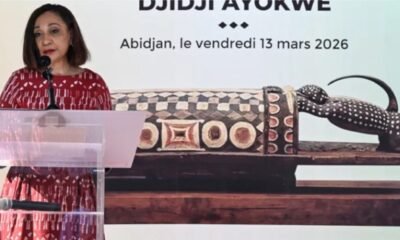
France Returns Sacred ‘Talking Drum’ Looted During Colonial Rule to Ivory Coast
-

 Business2 days ago
25 Sittings, Zero Answers: Ghana’s Parliamentary Slow Motion Costing Ghana and Atlantic Lithium Billions
-

 Ghana News15 hours ago
Newspaper Headlines Today: Tuesday, March 17, 2026