
Fashion & Style
Styling vs Wearing: The Quiet Difference That Changes Everything

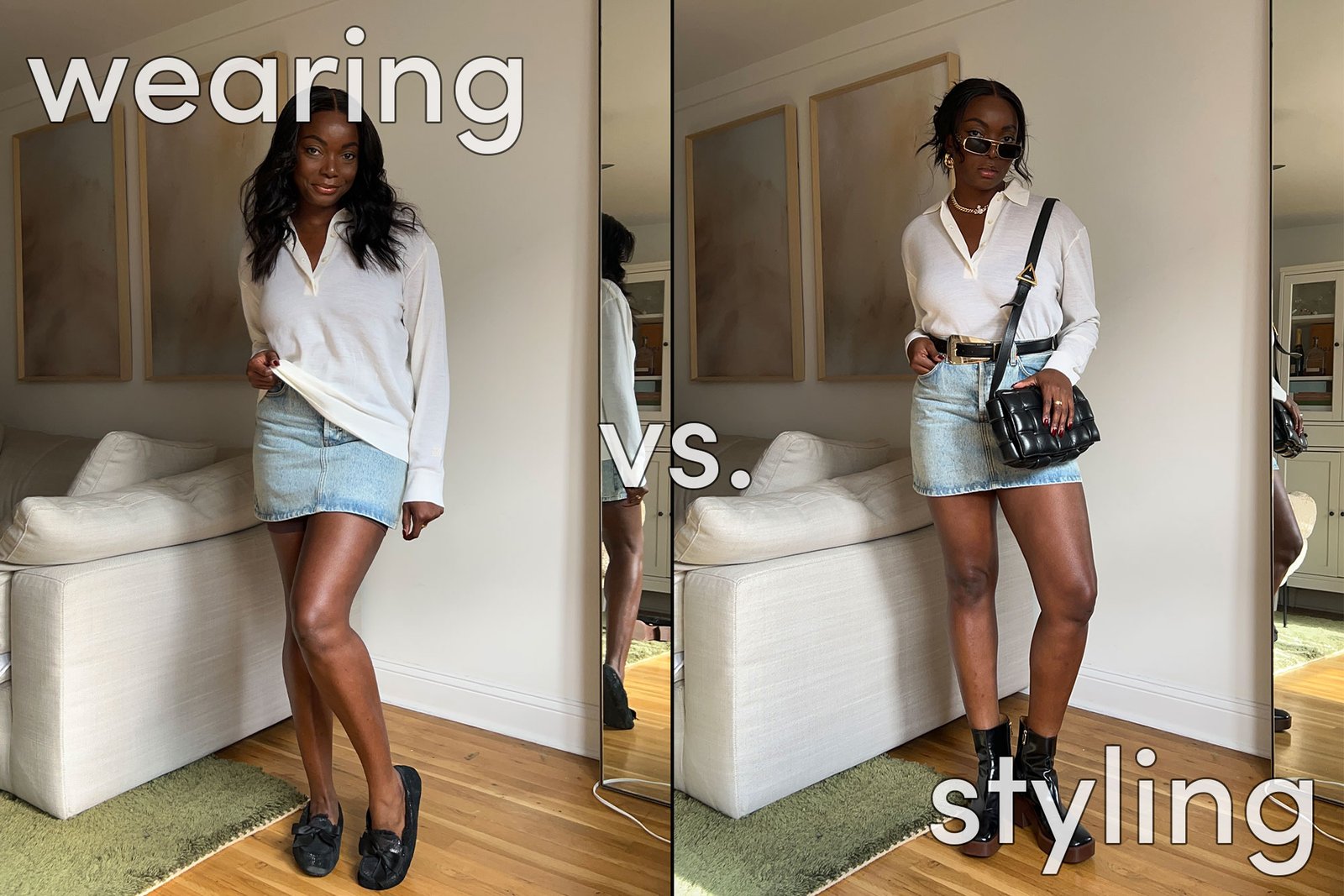
Clothes are everywhere. In markets from Makola to Milan, racks overflow with colour, fabric, and possibility. Yet not everyone who wears clothes truly styles them. The difference may seem subtle, but it is often the line between simply getting dressed and making a statement.
Wearing clothes is straightforward. It is the daily routine most people follow without much thought — picking a shirt, pulling on trousers, slipping into a dress before heading out the door. The focus is mostly practical: comfort, occasion, maybe the weather. You wear what fits, what is clean, and what feels acceptable for the day.
Styling, however, is a different conversation entirely.
Styling is deliberate. It is when clothing becomes a language. A white shirt, for instance, can be worn plainly with jeans and sneakers. But styled thoughtfully, that same shirt could be tucked into high-waisted trousers, sleeves rolled just enough, paired with bold earrings and a belt that pulls the entire look together. Suddenly, the outfit has character.
In Ghana’s fashion scene, this distinction appears everywhere. A kente cloth worn traditionally at a ceremony carries cultural weight. Yet when a designer cuts that same kente into a structured jacket or a modern two-piece set, styling transforms heritage into contemporary expression. The fabric has not changed — the interpretation has.
@iseesolange S T Y L E D B Y M E • Wearing Vs Styling I am obsessed with Ties! lol definitely in my tie era. What do we think of this look? Outfit detail Corset and Shirt @SHEIN Pants @Fashion Nova Heels and clutch @Amazon . . . . . . . . . . . . . #wearingvsstyling #modestfashion #dallascontentcreator #fallfashion #tieoutfit ♬ original sound – D4G
Stylists often pay attention to the details that many people overlook. The length of a sleeve. The way colours interact. The balance between texture and shape. Accessories are rarely random; they are chosen like punctuation marks that complete a sentence.
Interestingly, style does not require a wardrobe full of expensive labels. Some of the most memorable looks are built from simple pieces arranged with imagination. A vintage scarf tied differently, a blazer thrown over a casual dress, or sandals paired unexpectedly with a formal outfit can shift the entire mood of what someone is wearing.
Perhaps that is the real secret: styling turns clothing into storytelling.
Anyone can wear clothes. But when someone understands how to style them, even the most ordinary outfit begins to carry presence.
And that presence is what people remember long after the clothes themselves fade from view.







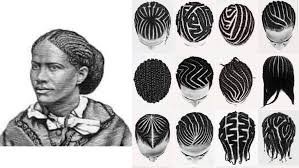
On the surface, they looked like nothing more than a neat way to keep hair tidy during long days in the fields. But for enslaved Africans in the Americas, cornrows carried secrets that meant the difference between bondage and freedom.
The practice dates back to the late 1500s in Colombia, where a man named Benkos Bioho transformed hair into a weapon of resistance.
Bioho, a king kidnapped from his native Guinea-Bissau by Portuguese slavers, escaped bondage and built San Basilio de Palenque—one of the Americas’ first free African settlements. His strategy was brilliant: have women weave escape maps directly into their cornrows.
The logic was simple. Slave owners saw African hairstyles as primitive. They never imagined those curved braids hugging women’s scalps were actually road maps—paths through the forest, routes to meeting points, directions to freedom.
Read Also: The Global Runway Awaits: Inside the British Council’s 16-Week Blueprint for Ghana’s Creative Future
Different styles carried different meanings. “Departes,” thick, tight braids tied into buns, signaled a desire to escape. Curved braids traced the actual escape routes.
But the maps were only part of the story.
Hidden within those braids, women concealed gold fragments and tiny seeds. The gold bought passage. The seeds planted hope—nourishment for survival after escape, crops for new lives in liberated territory.
Scholar Judith Carney documented this practice in Suriname, where maroon communities still tell of female ancestors smuggling rice grains in their hair from slave ships.
Was this widespread across the American South? Historians debate the evidence. No slave narratives describe it directly.
But folklorist Patricia Turner offers perspective: stories like these matter because they center Black resourcefulness rather than white saviors. In Colombia and South America, oral tradition affirms it happened.
What we know for certain is this: enslaved Africans used every tool available to resist. Their hair, which colonizers tried to strip away, became a repository of culture, communication, and coded intelligence.
When you see cornrows today, you’re witnessing a tradition that once carried gold, seeds, and the geography of liberty across enemy territory.
Sometimes the most powerful maps don’t look like maps at all. They just look like hair.
Fashion & Style
The Global Runway Awaits: Inside the British Council’s 16-Week Blueprint for Ghana’s Creative Future
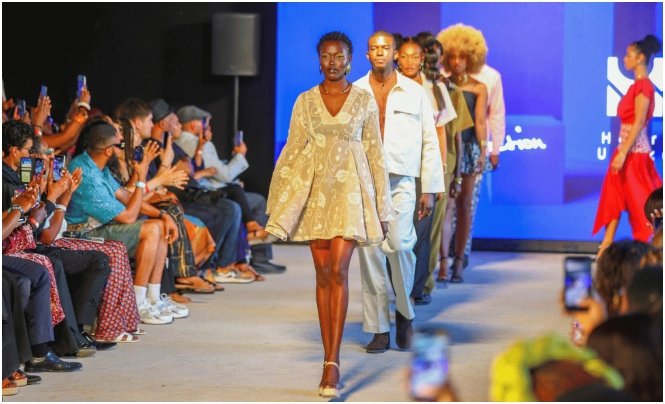
In the heart of Accra’s buzzing fashion districts—from the tailors of Osu to the high-end ateliers in East Legon—there has never been a shortage of “vibes.”
Ghanaian designers possess a unique, innate ability to weave heritage into every seam. Yet, for many early-stage brands, the path from a stunning runway collection to a sustainable, bankable business remains a complex puzzle.
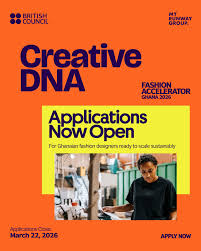
Enter Creative DNA, a 16-week accelerator program that is finally bridging the gap between raw creative talent and commercial dominance.
A collaboration between the British Council Ghana and MyRunwayGroup, this initiative is the first of its kind in the country, specifically engineered to turn “one-man-show” fashion brands into globally competitive enterprises.
More Than Just a Runway
While the fashion world often fixates on the final walk, Creative DNA focuses on the “DNA” of the business itself. The program isn’t looking for perfection; it’s looking for potential. For 16 intensive weeks, selected participants will transform through:
- Business Mastery: Moving away from unstructured operations toward scalable growth strategies.
- Direct Mentorship: Gaining a seat at the table with industry titans who have already navigated the global market.
- Market Pipelines: Opening doors to international audiences, effectively shattering the “saturated market” myth by connecting local brands to the UK and beyond.
The £15,000 Catalyst
One of the most significant barriers for Ghanaian designers has always been capital. Creative DNA addresses this head-on with a £15,000 grant pot.
This isn’t just a handout; it is a strategic injection of funds designed to help designers refine their production, improve quality control, and prepare for the rigors of international trade.
It is the fuel intended to take a brand from a local workshop to a global digital storefront.
Don’t Wait for the Next Season
The fashion industry moves at lightning speed, and opportunities like this are the “limited edition” drops of the business world. Whether you are an emerging designer or a brand looking to scale, the structure and visibility offered here are the missing threads in your success story.
The clock is ticking. Applications are currently open but will close on March 22, 2026. If you’re ready to trade the struggle for strategy, visit www.myrunwaygroup.com or head over to the Instagram pages of My Runway Group and British Council Ghana to secure your spot.
There is a silent war happening on the wrists and necks of women across this country, and it is time we talked about it.
You have seen her. Perhaps you have been her. She walks into an event wearing a beautiful kente print blouse, gold earrings the size of small saucers, and then—bam—a silver watch catches the light. The outfit is confused. The metals are fighting. And nobody is telling her the truth.
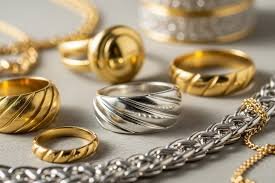
The truth is this: Gold and silver are not enemies, but they are also not twins. They are cousins who love each other from a distance. Knowing how to place them is the difference between looking like you threw on jewelry and looking like you curated an identity.
The Gold Standard
Gold in Ghana is not just a metal. It is heritage. It is the thing your mother handed down, the thing you wear to outdoorings and weddings. But gold is a diva. It demands warmth.
If you are wearing yellow gold—the real Ghanaian stuff—it wants to sit on colors that remind it of the earth it came from. Think deep browns, burnt oranges, olive greens, and rich burgundies. These colors hold hands with gold and walk together.
They whisper, “We are royalty, but we are grounded.”
Do not put yellow gold against neon or icy pastels. The coldness of those shades will make the gold look cheap, even if it is 24 karats. The only exception is the color black. Black and gold is the power couple that never breaks up. It says funeral, but it also says “I am the richest person here.”
The Silver Lining
Now, silver—or white gold, or platinum—has a different personality. Silver is the cool aunt. It is modern, sharp, and a little distant.
Silver loves cold colors. It wakes up when you put it next to navy blue, charcoal grey, mint green, and every shade of purple. Have you ever worn a purple dress with silver earrings and felt like you glowed? That is because purple and silver are siblings. They understand each other.
Silver also does something magical against white. Not cream, not off-white—pure, stark white. Against white, silver looks expensive. It looks editorial. It looks like you are about to step into a meeting and fire somebody.
The Mixing Rule
If you must mix metals—and sometimes the outfit demands it—do it deliberately. Do not wear one gold bangle and one silver bangle. Wear them in stacks. Create a pattern. Let it look intentional, not accidental. And always, always use a neutral color like grey or beige to mediate between them. Let the neutral be the referee so the metals can play.
At the end of the day, jewelry is not just decoration. It is punctuation. It tells people where to look and what to feel about you. So before you walk out that door, look at your wrist. Look at your neck. Ask yourself: Are these metals saying the same sentence? Or are they arguing?
Choose your side. And wear it like you mean it.


Experience the Rare Texture of Apapransa the Celebratory Roasted Corn Delicacy

The Festival of Truth: Why Techiman’s 2026 Apoɔ is the Ultimate Cultural Reset

Khaby Lame is the world’s most followed TikToker: the story of a Senegalese‑born star who sold his identity
-

 Ghana News2 days ago
Helicopter Crash at Tema School Park Kills 2, Security Service Recruitment to be Expanded to 40,000 and Other Trending Issues Today (March 16, 2026)
-

 Ghana News2 days ago
Newspaper Headlines Today: Monday, March 16, 2026
-

 Ghana News1 day ago
Ghana Announces Emergency One-Way Evacuation for Citizens in Qatar Amid Heightened Security Concerns
-

 Ghana News2 days ago
Healthcare for All: President Launches Policy to End Financial Barriers at Facilities Across Ghana
-

 Global Update1 day ago
Influential Foreign Policy Group Sends Direct Message to Trump Warning of Global Risks From His Actions in Iran
-
 Africa Watch1 day ago
France Returns Sacred ‘Talking Drum’ Looted During Colonial Rule to Ivory Coast
-

 Business2 days ago
25 Sittings, Zero Answers: Ghana’s Parliamentary Slow Motion Costing Ghana and Atlantic Lithium Billions
-

 Ghana News16 hours ago
Newspaper Headlines Today: Tuesday, March 17, 2026