
Tech
Nigeria Poised for First AI Data Centre by 2026 as Digital Infrastructure Accelerates


Nigeria appears increasingly likely to commission its first true artificial intelligence (AI)–focused data center by 2026.
This marks a significant milestone in West Africa’s digital transformation and strengthening the region’s position in the global technology economy.
According to an in-depth analysis by global crypto exchange and digital infrastructure watcher MEXC, Nigeria’s expanding data center pipeline, combined with rising AI workloads and sustained investor interest, suggests the country is closer than ever to hosting facilities capable of supporting AI at scale—though key challenges remain.
Rapid Growth in Data Infrastructure
Nigeria currently hosts 17 operational data centers, with at least nine additional facilities under construction or in advanced planning stages. Among the most anticipated projects is Equinix’s LG3 carrier-neutral data center on Victoria Island in Lagos, a 1-megawatt facility scheduled for commissioning in the first quarter of 2026.
Installed data center capacity in Nigeria is estimated at 65 to 86 megawatts, but industry projections cited by MEXC indicate this could exceed 400 megawatts within the next three to five years, driven by demand from cloud service providers, fintech firms, telecom operators, and AI-driven enterprises.
A Verraki report published in December 2025 values Nigeria’s data center market at approximately $1.4 billion, with projections pointing to $2.7 billion by 2035, reflecting a compound annual growth rate of about 7%. Analysts note that Nigeria’s scale and strategic location position it as a digital gateway not only for its domestic market but also for the wider West African sub-region, including Ghana.
Why AI Changes the Stakes
MEXC’s analysis highlights that AI workloads fundamentally alter data center requirements. Traditional enterprise facilities typically operate at 10–15 kilowatts per rack, while AI-focused deployments—especially those supporting large language models and GPU clusters—can demand 60–100 kilowatts per rack, often requiring liquid cooling and highly resilient power infrastructure.
“An AI data center is fundamentally about high rack density,” said Krish Ranganath, Regional Executive for West Africa at Africa Data Centers, a Cassava Technologies subsidiary. He noted that while entry-level AI workloads can run on lower densities, truly AI-native facilities require long-term power certainty and scalable design.
Construction timelines remain a constraint, with most high-capacity data centers taking 16 to 20 months to complete, excluding power connections and commissioning.
Economic and Employment Impact
Beyond technology, the economic case for AI data centers is compelling. MEXC cites Verraki modelling showing that a $10 million, 1-megawatt Tier III data center can generate $17 million in economic output during construction, rising to over $39 million over ten years when operational spending is included.
Employment benefits are also substantial. A single 1-megawatt facility can support around 700 construction jobs and 20–30 operational roles annually, contributing to more than 1,600 cumulative jobs over a decade—a key consideration for governments seeking skilled technical employment growth.
Major Investments Signal Confidence
Global and regional operators are already committing significant capital. Open Access Data Centers has established facilities in Lagos following a $500 million Africa-wide investment, while Equinix announced a $390 million commitment to the continent over five years.
Telecom giants are also entering the space. MTN Nigeria is developing a 1,500-rack Tier IV facility, and Airtel Africa’s Nxtra project—a $120 million investment designed specifically for AI compute—is expected to go live in Nigeria by early 2026, with high-performance GPUs already delivered in late 2025.
Kasi Cloud Emerges as a Strong Contender
The clearest signal that Nigeria could host its first AI-native data center by 2026 is Kasi Cloud’s LOS1 hyperscale campus in Lekki, Lagos. Backed by a $250 million investment and supported by the Nigeria Sovereign Investment Authority, the facility is designed to handle extreme AI power and cooling demands.
Spanning 4.2 hectares with up to 172,000 square feet of white space, the campus can host 3,000–4,000 racks at full build-out. Its dedicated substation offers up to 100 megawatts of power capacity, with rack densities scaling from 8 kilowatts to 100 kilowatts per rack—levels typically associated with liquid-cooled AI systems.
According to Alex Tsado, co-founder of Ahura AI and a founding member of the Alliance for Africa’s Intelligence (Alliance4AI), the facility has already opened its doors and is optimized for AI GPUs. Kasi Cloud is partnering with UduTech, a GPU cloud platform, to provide affordable AI compute services tailored to African startups and researchers.
Remaining Constraints
Despite the momentum, MEXC cautions that challenges persist. Most specialized equipment—including GPUs and advanced cooling systems—is imported, exposing projects to currency volatility and supply chain risks. Reliable, high-quality power remains the most critical constraint, alongside dense, low-latency network connectivity.
Still, transitional “AI-ready” facilities, such as Rack Centre’s 12-megawatt LGS2 site launched in 2025, and pan-African GPU initiatives involving NVIDIA and Cassava Technologies, are helping bridge the compute gap for African innovators.
Outlook for 2026
While Nigeria may not instantly become a global AI hyperscale hub, MEXC concludes that at least one AI-focused data center is likely to be fully operational by late 2026, with projects such as Kasi Cloud and Airtel Nxtra leading the way. For Ghana and the wider region, Nigeria’s progress underscores a broader West African shift toward high-value digital infrastructure—one that could reshape economic competitiveness across the continent.
Attribution: This report is based on analysis and data published by MEXC, with additional industry commentary cited within the original MEXC story.



Business
Israeli Researchers Achieve World-First: Blood Cancer Therapy Shows Promise Against Alzheimer’s in Mice

In a potential breakthrough with far-reaching implications, Israeli scientists have become the first in the world to successfully apply a blood cancer treatment to reverse Alzheimer’s disease symptoms in mice, according to a study published recently in the journal Science Translational Medicine.
The research team, led by Prof. Eitan Okun and Dr. Adi Barzel at Tel Aviv University and Sheba Medical Center, used CAR-T cell therapy — a technique originally developed to treat certain leukemias and lymphomas — to target and eliminate harmful brain cells associated with Alzheimer’s progression.

In the study, the team engineered T-cells to express chimeric antigen receptors (CARs) that specifically recognize CD38, a protein highly expressed on senescent (aging) microglia and astrocytes — the brain’s immune and support cells that become dysfunctional and inflammatory in Alzheimer’s.
When infused into genetically modified mice with Alzheimer’s-like pathology, the CAR-T cells selectively cleared these harmful cells, leading to:
- Significant reduction in amyloid-beta plaques and tau tangles
- Decreased neuroinflammation
- Improved cognitive performance in memory and learning tests
- Restoration of synaptic function and neuronal health
Mice treated with the therapy showed no signs of severe side effects such as cytokine release syndrome, which is sometimes observed in human cancer patients receiving CAR-T.
“This is the first time CAR-T has been used to treat a neurodegenerative disease,” Prof. Okun stated. “Our findings suggest that targeting senescent cells in the brain could open a completely new avenue for Alzheimer’s treatment.”
While the results are promising, the researchers stressed that the work is still in the preclinical stage.
Human trials will require extensive safety testing, dose optimization, and adaptation of the therapy to avoid potential neurotoxicity. The team is now collaborating with biotech partners to prepare for clinical development.
Alzheimer’s disease affects over 55 million people worldwide, with no cure and only limited symptomatic treatments available. If successfully translated to humans, CAR-T or similar cell therapies could represent a disease-modifying approach rather than merely symptom management.
Business
Ghana’s Strong Business Climate, Digital Growth Propels MTN Ghana to Emerge MTN Group’s Top Performing Operating Company

MTN Ghana’s recent distinction as the top-performing operating company (OpCo) across the entire MTN Group reflects not only the company’s operational excellence but also signals a conducive business environment for digital and fintech growth in Ghana.
The accolade was announced at the MTN Global Leadership Gathering (GLG) 2026, where the telecommunications giant was awarded the 2025 Million Dollar Challenge prize — the highest honour within the multinational group.
MTN Ghana secured six major awards, including top marks in Connectivity for both enterprise and consumer segments and a standout Fintech award for its Mobile Money division, MoMo Ghana.
For many analysts, the win at the annual challenge reflects sustained momentum in Ghana’s digital economy — a trend driven by expanding mobile data use, financial inclusion services, and enterprise solutions that are increasingly critical to the country’s broader economic growth.
“Our teams have delivered across strategic platforms such as fintech, enterprise and consumer,” said MTN Ghana CEO Stephen Blewett, noting that the recognition “is a powerful endorsement of the relentless commitment, creativity and execution excellence” in the company’s operations.
Digital Growth Amid Broader Economic Progress
MTN Ghana’s strong performance mirrors the broader expansion of digital services in Ghana. The company has experienced notable financial and usage growth in recent years, positioning itself as a cornerstone of the country’s digital infrastructure:
- In the first quarter of 2025, MTN Ghana posted service revenue growth of nearly 40% year-on-year, illustrating robust demand for mobile and digital solutions despite macroeconomic pressures.
- Profitability metrics for MTN Ghana outpaced larger markets like Nigeria in the first half of 2025, with the Ghanaian unit generating more profit after tax than MTN Nigeria, even though the Nigerian operation serves a much larger subscriber base.
These achievements reflect not just corporate strength but also Ghana’s growing digital economy, where the interplay of mobile telecommunications and fintech helps drive business activities, consumer engagement, and financial access.
Mobile Money as a Growth Engine
A key factor in MTN Ghana’s success is its Mobile Money (MoMo) platform. Across MTN’s wider footprint, mobile money services have facilitated financial inclusion by giving millions access to digital payments and financial transactions that might otherwise be inaccessible through traditional banking systems.
MoMo’s impact extends beyond convenience — it is central to e-commerce, everyday remittances, and business payments, all of which are vital to small and medium-sized enterprises thriving in Ghana’s increasingly digital economy.
Implications for Ghana’s Business Environment
MTN Ghana’s triumphant showing at the MTN Group’s Million Dollar Challenge marks an important vote of confidence in the Ghanaian business climate. It suggests that:
- Enterprise and fintech innovation ecosystems are advancing rapidly, creating platforms that support local and international business growth.
- Regulatory frameworks and market conditions enable stable expansion of digital services that can compete at continental levels.
- Investor interest in Ghana’s digital and telecommunications sectors remains strong, reflecting confidence in long-term sustainable growth.
While MTN Ghana continues to navigate infrastructure and logistical challenges, its leadership at the group level signals that Ghana’s market can foster globally competitive businesses driven by technology and innovation.
MTN Ghana’s recognition now sets a benchmark for other operators and highlights the country’s potential to anchor digital transformation across West Africa and the broader continent, reinforcing Ghana’s overall economic narrative in the telecommunications and fintech sectors.

In a significant move to democratize artificial intelligence (AI) and digital education, the Government of Ghana has entered a strategic partnership with tech giant Google to launch AI education tools featuring advanced speech recognition for Ghanaian languages.
The initiative, announced by Education Minister Haruna Iddrisu via a Facebook post on January 22, will see Google collaborate with the University of Ghana and the Global Disability Innovation (GDI) Hub. The core focus is developing tools with improved speech recognition capabilities in local languages, starting with Twi, Ewe, and Dagbani, to boost accessibility in education and digital services.
Minister Iddrisu revealed he successfully advocated for the inclusion of Hausa, a major lingua franca across West Africa.
“Integrating Hausa will deepen regional inclusion and further strengthen Ghana’s leadership as an AI innovation hub on the continent,” he stated.
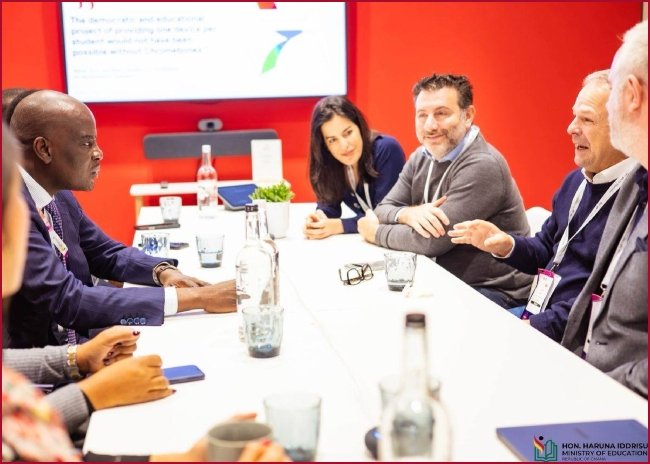
According to reports, the AI tools are being designed to accurately detect local accents and linguistic variations, ensuring they work in real-world contexts beyond standardized speech. This focus on local language AI aims to bridge the digital divide and create more inclusive technology.
A critical component of the partnership is the development of learning materials aligned with Ghana’s national curriculum. This will include instruction on the responsible use of AI in teaching and learning. Crucially, Minister Iddrisu announced that Google has committed to deploying these tools on a zero-rated basis in Ghana.
“I received firm assurance… that Google’s education tools will be deployed in Ghana on a zero-rated basis… ensuring access for all learners regardless of location or income,” Iddrisu said. “Ghana is not just participating in the AI revolution, we are helping to shape it for Africa.”
This collaboration aligns with Google’s broader $1 billion commitment to invest in Africa’s digital transformation over five years. In 2025, the company dedicated $37 million specifically to support African students and researchers in fields like AI, climate resilience, and healthcare.
The partnership signals a major step toward leveraging homegrown linguistic diversity to position Ghana at the forefront of inclusive, ethical AI development in Africa.


Experience the Rare Texture of Apapransa the Celebratory Roasted Corn Delicacy

The Festival of Truth: Why Techiman’s 2026 Apoɔ is the Ultimate Cultural Reset

Khaby Lame is the world’s most followed TikToker: the story of a Senegalese‑born star who sold his identity
-

 Ghana News2 days ago
Helicopter Crash at Tema School Park Kills 2, Security Service Recruitment to be Expanded to 40,000 and Other Trending Issues Today (March 16, 2026)
-

 Ghana News2 days ago
Newspaper Headlines Today: Monday, March 16, 2026
-

 Ghana News1 day ago
Ghana Announces Emergency One-Way Evacuation for Citizens in Qatar Amid Heightened Security Concerns
-

 Ghana News2 days ago
Healthcare for All: President Launches Policy to End Financial Barriers at Facilities Across Ghana
-

 Global Update1 day ago
Influential Foreign Policy Group Sends Direct Message to Trump Warning of Global Risks From His Actions in Iran
-

 Africa Watch1 day ago
France Returns Sacred ‘Talking Drum’ Looted During Colonial Rule to Ivory Coast
-

 Business2 days ago
25 Sittings, Zero Answers: Ghana’s Parliamentary Slow Motion Costing Ghana and Atlantic Lithium Billions
-

 Ghana News20 hours ago
Newspaper Headlines Today: Tuesday, March 17, 2026