
Arts and GH Heritage
Jenga’s Ghanaian Roots and the Raging Debate Over Cultural Ownership Amid its Global Success


Jenga, one of the world’s most recognizable tabletop games, is once again at the centre of debate as renewed attention focuses on its Ghanaian origins, questions of cultural appropriation, and who truly benefits from its global commercial success.
The popular block-stacking game was developed in the late 1970s by British game designer Leslie Scott, who adapted a traditional wooden block game she played with her family while growing up in Ghana.
Using simple, handcrafted wooden blocks, the original game was a household pastime long before it was commercialized and introduced to the international market.

Scott later named the game “Jenga,” derived from the Swahili word kujenga, meaning “to build.” Although the name is East African rather than Ghanaian (West Africa), Scott has said she believed it would grow into its own meaning as the game gained popularity. Jenga went on to become a global phenomenon, selling tens of millions of sets worldwide and becoming a staple of family gatherings, social events, and competitive play.
However, critics have long argued that while Jenga’s success is rooted in a Ghanaian cultural experience, Ghana itself has seen little to no proportional financial or institutional benefit from the game’s worldwide popularity.
This has fueled broader conversations about cultural ownership, intellectual property, and the extraction of cultural ideas from Africa without meaningful returns to their places of origin. The sentiment is often summarized by critics as “everyone cashed out but Ghana.”
Beyond its origins, Jenga has also attracted controversy over gameplay rules and interpretation. One of the most debated issues is the so-called “brace” move, a technique used by some players to test the looseness of blocks. In certain informal or experimental versions, this has even involved minimal use of glue or stabilising techniques, prompting arguments over whether such moves represent strategic skill or outright cheating.
There is also ongoing debate over whether Jenga is fundamentally a game of skill or luck. While some players see it as largely dependent on chance and the physical state of the blocks, others argue it demands careful observation, steady hands, and strategic thinking. Some enthusiasts and commentators have gone further, likening the game to metaphors for life, risk-taking, or even warfare, where small decisions can destabilise an entire system.
Attempts to digitise Jenga in video game form have highlighted another layer of discussion. Early digital versions struggled to replicate the complex physics and tactile satisfaction of the physical blocks, reinforcing the view that Jenga’s enduring appeal lies in its physicality rather than its rules alone.
As conversations about cultural appropriation and fair benefit-sharing gain momentum globally, Jenga’s story continues to resonate, particularly in Ghana, where the game’s origins are increasingly being reclaimed in public discourse.
For many observers, the Jenga debate is not just about a game, but about recognition, equity, and the value of cultural contributions from the Global South in the global marketplace.

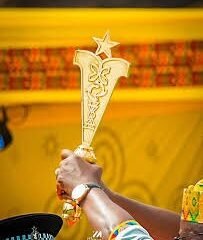

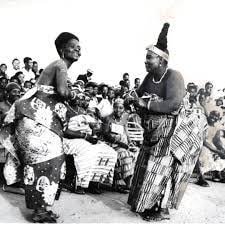

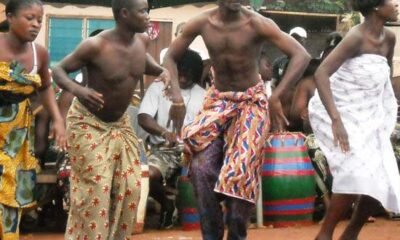



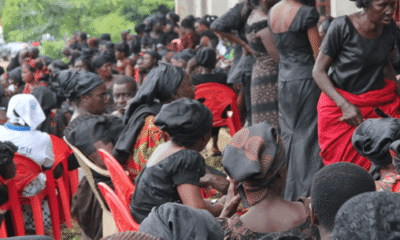



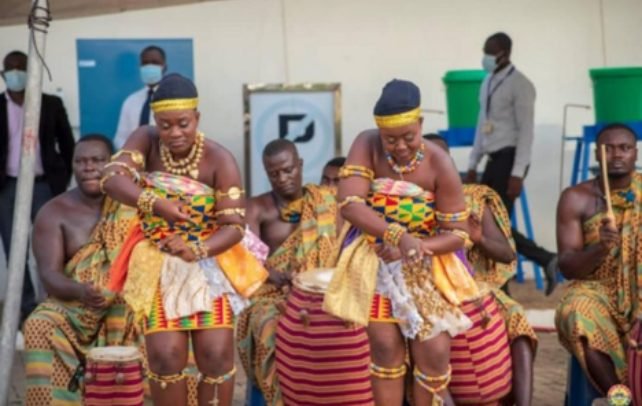
Imagine a dying queen mother, a desperate kingdom, and a frantic search for a miracle. This is where the story of Ghana’s most beloved dance begins. It wasn’t in a rehearsal hall, but in the quiet depths of an Ashanti forest.
The year is lost to memory, but the tale remains. The Ashanti Kingdom’s Queen Mother, Abrewa Tutuwa, lay gravely ill.
Her healers had failed. In their desperation, the elders turned to the gods. The message was clear: find a live antelope, a creature of the wild, to be part of a sacred healing ritual.
The kingdom’s bravest warriors, the Asafo companies, were dispatched into the thick forest . For days, they searched with no luck.
Defeated and tired, they decided to turn back home. But on their return journey, something strange happened.
Read Also: The Whispering Rocks of Tengzug: Invoking the Rain at the 2026 Gologo Festival
They saw it—an antelope, moving through the undergrowth with a grace they had never witnessed.
It wasn’t just walking; it was performing. It dipped and swayed, its feet tracing patterns on the earth, its head turning with a quiet dignity.
The warriors froze. They watched, mesmerized, and began to quietly mimic the animal’s movements, committing them to memory.
When they finally arrived back in the village without the antelope, they didn’t come empty-handed. They brought something far more lasting: a dance.
In front of the anxious household, they re-enacted the antelope’s mesmerizing performance, a gift of movement to lift the queen mother’s spirit.
The elderly women of the village watched the warriors’ imitation and saw its beauty.
They took these raw, masculine movements, softened them, and gave them rhythm and expression. They perfected the steps, shaping them into the dance we now call Adowa—the Twi name for that very same royal antelope.
Today, Adowa has travelled far beyond that forest encounter. It has become the voice of the Akan people, speaking at funerals, festivals, and the durbar of chiefs.
But if you watch closely, you can still see its origins. When a dancer bends low, you see the antelope bowing its head. The subtle, fluttering gestures of a white handkerchief?
Perhaps an echo of an animal twitching an ear in the quiet bush. The flick of a foot, the proud arch of a neck—it is all there.
A living, breathing memory of a moment when nature taught us how to move, and a dying queen mother was gifted a dance that would outlive us all.
There is a moment during Ghana’s presidential inauguration that has nothing to do with ballot sheets, constitutional affidavits, or the usual political chatter.
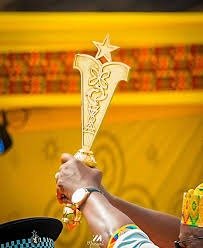
It happens when the newly sworn-in commander-in-chief grasps the Sword of State. Time slows. The crowd falls silent. For a few seconds, a piece of metal speaks louder than any campaign promise.
On January 7, 2025, when John Dramani Mahama took his oath for the second time, that moment resonated with particular power.
This marked his third time holding the revered sword, a continuity that connects him not just to his previous tenure but to a lineage stretching back to independence.
But why all the fuss over a sword? In a modern republic, surrounded by iPhones and fighter jets, why does this ancient object still matter?
The answer lies in what the sword carries that no constitution can print.
The Weight That Words Cannot Carry
Ghana’s Sword of State is not a weapon. Crafted from solid gold and etched with symbols as old as the Asante Kingdom, it belongs to a family of ceremonial swords known as Akrafena—a name that implies soul, purity, and responsibility.
When a president holds it, they are not preparing for battle. They are submitting to something far more demanding.
The double-bladed design, rooted in the Afena-nta symbol, speaks of balance: war and peace, justice and mercy, strength and restraint.
These are not qualities you can legislate. They are qualities you must embody.
First held by Osagyefo Dr. Kwame Nkrumah in 1960, the sword has witnessed every chapter of Ghana’s Fourth Republic—the triumphs, the transitions, the peaceful handovers that much of the continent envies.
It has rested in the hands of Rawlings, Kufuor, Mills, Mahama, and Akufo-Addo. Each grip tells a story.
The Commander-in-Chief Paradox
Here is the twist most people miss: Most presidents are civilians. They have never commanded an army, never worn a uniform.
Yet the moment they take office, they become the commander-in-chief of the armed forces. The sword bridges that gap.
It transforms a politician into a protector. It signals to every soldier, sailor, and airperson that the person holding that blade now holds their loyalty—and their lives—in trust.
Read Also: When a Woman’s Dance Stopped a Giant: The True Story of the Fante’s Apatampa
When the president inspects the guard, it is the sword that confirms his authority to do so.
This is why the handing-over ceremony is so charged. In Kenya, where a similar tradition exists, the sword has only changed hands a handful of times since independence.
When Mwai Kibaki handed it to Uhuru Kenyatta in 2013, it was not just a transfer of office—it was a father’s legacy passing to a son through the gleam of polished steel.
A Global Language of Steel
Ghana is not alone in this dance between democracy and tradition. Across the Commonwealth, the ceremonial sword signals that power has shifted.
In the United States, George Washington himself wore a sword at his inauguration, following the fashion of European courts.
Thomas Jefferson later refused to wear one—too royal, he thought—but the symbolism persisted.
Even in diplomacy, swords speak. When the British raided the White House in 1814, stealing James Madison’s ceremonial sword was considered a devastating psychological blow.
When a foreign dignitary presents a sword as a gift—as Ghana’s ambassador did to President Gerald Ford in 1975—it is an offering of respect, courage, and brotherhood.
The Silent Guardian
So the next time you watch an inauguration and see that golden blade rise, do not dismiss it as theatre. That word is watching the president as much as the president is holding it.
It asks a silent question every single day: Will you be worthy of the weight?
For a moment, under the African sun, with millions watching and history holding its breath, the answer is still being written.
And that is why the sword must always be there—to remind the person holding it that some things are heavier than gold.
Arts and GH Heritage
Fugu Goes to Milan: Ghana and Italy Eye Creative Economy Boom to Export Culture Beyond the Continent

When Ghanaian designer Victor Reginald Bob Abbey-Hart stepped onto the Milan Fashion Week runway last January, he carried more than a collection of denim garments.
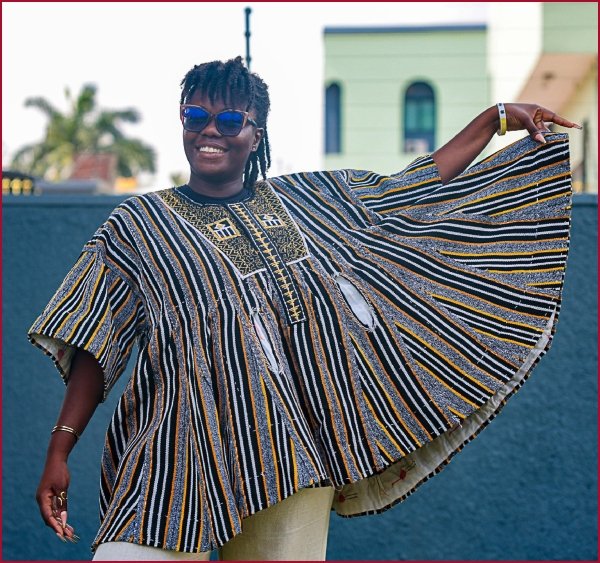
He carried a vision: that the voluminous, hand-woven smock known as fugu or batakari — a garment once worn by warriors and kings in northern Ghana — could find a new life on the global stage.
His show, which featured jackets with raglan sleeves, coat-capes, and cargo-pocketed trousers in “dirty-washed” denim, was inspired by the deconstructed forms of traditional Ghanaian attire. For Abbey-Hart, a graduate of Milan’s Istituto Europeo di Design (IED) who previously worked for Calvin Klein, the collection was deeply personal. “Coming to Italy really gave me a big door of opportunity to understand what the world really asks for, as a designer,” he told the Associated Press.
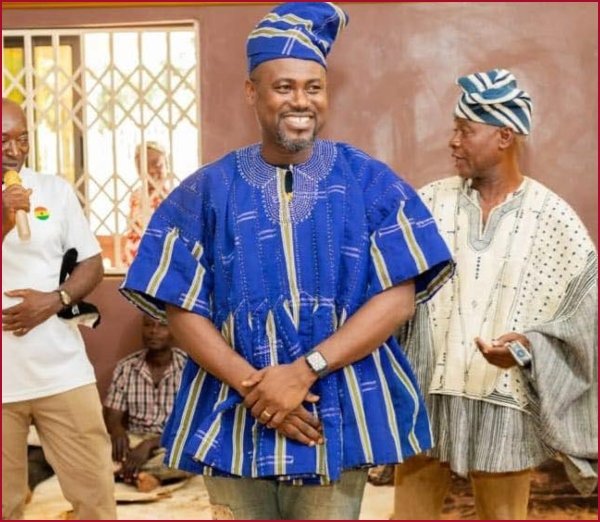
Abbey-Hart’s debut was supported by the Afro Fashion Association, a non-profit founded by Michelle Francine Ngonmo that has worked with over 3,000 creatives of color over the past decade . But his success is not an isolated story. It is emerging as a cornerstone of a broader strategic push by Ghana and Italy to transform cultural heritage into economic power — taking garments like the fugu from ceremonial occasions in Accra to the fashion capitals of Europe and beyond.
A Diplomatic and Economic Imperative
The timing is deliberate. In February 2026, Ghana’s newly appointed Ambassador to Italy, Mona-Helen Kabuki Quartey, presented her credentials to President Sergio Mattarella at the Quirinale.
The ceremony marked not just a diplomatic formality, but a “renewed phase in the consolidation of bilateral relations,” with culture and tourism featuring prominently in discussions.
Ambassador Quartey’s mission arrives amid growing recognition in Accra that the creative economy — fashion, textiles, arts, and design — represents a significant untapped export sector. Italy, home to some of the world’s most powerful fashion houses and a global leader in luxury goods, is the ideal partner.
The Italian government has signaled its interest in Ghana as a “growing market and a natural gateway to the wider West African region”.
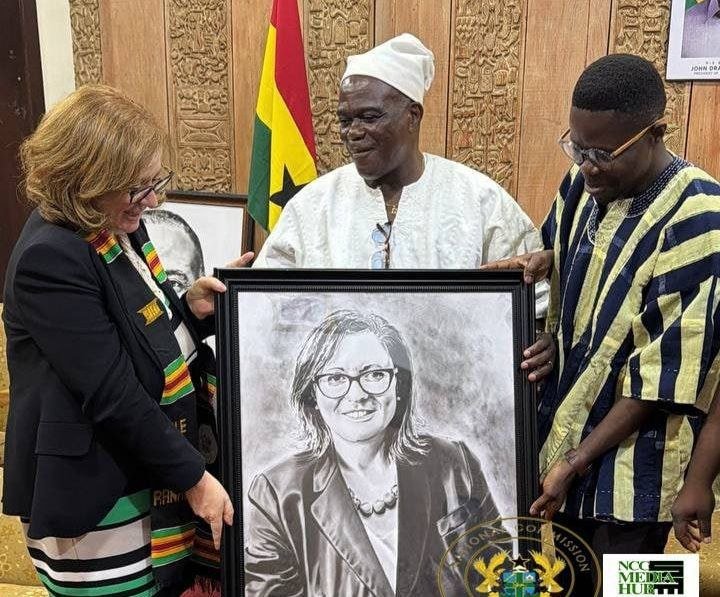
The diplomatic push comes as Ghanaian creatives are making visible inroads into the Italian cultural scene. In May, acclaimed Ghanaian painter Amoako Boafo will open his first solo exhibition in Italy at Venice’s Museo di Palazzo Grimani, coinciding with the 61st Venice Biennale. The show, organized by Gagosian Gallery, will see Boafo engage with Renaissance portraiture traditions — a powerful example of cultural exchange flowing in both directions.
From Ceremony to Commerce
The fugu’s journey from northern Ghana to Milanese runways reflects a deeper ambition. For too long, observers argue, Ghana’s heritage textiles have been reserved for Independence Day celebrations, festivals, and ceremonial photographs — “reduced to a ceremony when it could be an industry,” as Ing. Prof. Douglas Boateng recently wrote.
President John Dramani Mahama has emerged as an unlikely champion of this cause. Speaking after a state visit to Zambia in February, Mahama noted that his deliberate choice to wear the fugu on international stages had sparked a surge in global interest.
“By the power of social media, I have given them branding and marketing they could never have dreamed of,” he said. “I’m sure searches for fugu, batakari, and smock have gone very high”.
Mahama revealed that all his clothing is made in Ghana by Ghanaian designers, and he has set his sights on taking the smock to the United Nations as “a symbol of African identity, culture, and self-confidence”.
The Industrial Challenge
Yet transforming cultural visibility into sustainable industry requires more than diplomatic gestures and runway moments.
The global winter wear market is valued at over $300 billion annually, with premium outerwear brands like Canada Goose and Moncler built on climate-driven demand in North America, Europe, and East Asia. The African diaspora, estimated at more than 170 million people living in cold-weather countries, represents a ready market seeking authentic cultural connection.
The challenge is technical as well as commercial. Traditional fugu, woven from thick cotton strips, is designed for the harmattan winds of northern Ghana — not Helsinki winters or Chicago blizzards. Industrial adaptation will require innovation: thermal linings, wool-infused blends, water-resistant treatments, and structured designs that preserve the garment’s distinctive striped aesthetic while making it functional for global consumers.
Proponents argue that the economic potential justifies the investment. A modest export target of 500,000 premium winter fugu coats annually, at an average retail price of US$250, would generate US$125 million in revenue. Add scarves, gloves, corporate attire, and school uniforms, and the ecosystem multiplies, creating thousands of jobs across farming, weaving, tailoring, and logistics — particularly in northern Ghana, where youth unemployment remains high.
A Growing Cultural Ecosystem
The Italy-Ghana cultural partnership extends well beyond fashion. In January, Ghanaian artists and cultural practitioners led an international project in Lecce, Italy, dedicated to “decolonising heritage and liberating the imagination.” Organized by Ramdom, Museo Castromediano, and Ghana’s Artlife Matters, the programme featured workshops, exhibitions, and a public parade exploring how tangible and intangible heritage can become tools for reclaiming narratives shaped by colonial structures.
Artist Kwame Akoto-Bamfo created a six-foot concrete totem representing memory and ancestry, while the “Echoes of Home” workshop brought together foreign residents in Lecce for a participatory healing process. Luigi Di Luca, Director of Museo Castromediano, stressed the museum’s commitment to redefining its role within the community and expanding international collaboration.
These initiatives build on earlier collaborations. In 2024, Ghanaian playwright Latif Abubakar partnered with the Italian Embassy to stage “The Licence,” an Afrocentric adaptation of a work by Italian Nobel laureate Luigi Pirandello. Then-Ambassador Daniela d’Orlandi expressed hope that the partnership would “set an example for other foreign countries to follow” .
The Road Ahead
As Ghana hosts a week-long celebration of its 69th Independence Day in Rome this March, complete with trade fairs showcasing textiles, music, and cuisine, the cultural diplomacy offensive is in full swing . But the ultimate measure of success will be commercial.
For designers like Victor Hart, the path forward is clear despite persistent challenges.
“Sometimes, before you even get to the room for the interview, you’ve been disqualified already,” he said of the obstacles facing Black creatives in Italy. “Take away the color, take away what I represent, just look at the job”.
His message resonates beyond fashion. As Ghana and Italy deepen their cultural partnership, the goal is not merely to export garments but to export a vision: that heritage, when industrialized with intention, can compete on the global stage. The fugu has survived the harmattan for centuries.
Now, it is being engineered for winter.


The Taste of the Sidewalk: Chasing Ghana’s Perfect Bite of Ghana’s Kofi Broke Man

The Night They Banned the Song: How a Highlife Guitar Felled a General and Renamed an Airport

5 Realistic Guide to Weight Loss on Ghanaian Foods
-

 Ghana News2 days ago
Newspaper Headlines Today: Wednesday, March 18, 2026
-

 Ghana News2 days ago
UK Engages Ghana on Counterterrorism and Maritime Security
-
Ghana News23 hours ago
Newspaper Headlines Today: Thursday, March 19, 2026
-

 Ghana News2 days ago
Two Scrap Dealers Lynched, Video of Mahama’s Reaction After Atta Mills’ Death Resurfaces and Other Trending Issues Today (March 18, 2026)
-

 Ghana News23 hours ago
New Video Captures Victims Piloting Microlight Before Fatal Crash, Dormaahene Breaks Down in Tears and Other Trending Issues Today (March 19, 2026)
-

 Ghana News2 days ago
Germany Hands Over Four Operational Shelters to Ghana Immigration Service at Aflao Border
-

 Ghana News22 hours ago
Ghana to Table Landmark UN Resolution on Slave Trade in September
-

 Ghana News22 hours ago
54 Ghanaian Soldiers Return Home After Successful Hurricane Relief Mission in Jamaica