
Arts and GH Heritage
Jenga’s Ghanaian Roots and the Raging Debate Over Cultural Ownership Amid its Global Success


Jenga, one of the world’s most recognizable tabletop games, is once again at the centre of debate as renewed attention focuses on its Ghanaian origins, questions of cultural appropriation, and who truly benefits from its global commercial success.
The popular block-stacking game was developed in the late 1970s by British game designer Leslie Scott, who adapted a traditional wooden block game she played with her family while growing up in Ghana.
Using simple, handcrafted wooden blocks, the original game was a household pastime long before it was commercialized and introduced to the international market.

Scott later named the game “Jenga,” derived from the Swahili word kujenga, meaning “to build.” Although the name is East African rather than Ghanaian (West Africa), Scott has said she believed it would grow into its own meaning as the game gained popularity. Jenga went on to become a global phenomenon, selling tens of millions of sets worldwide and becoming a staple of family gatherings, social events, and competitive play.
However, critics have long argued that while Jenga’s success is rooted in a Ghanaian cultural experience, Ghana itself has seen little to no proportional financial or institutional benefit from the game’s worldwide popularity.
This has fueled broader conversations about cultural ownership, intellectual property, and the extraction of cultural ideas from Africa without meaningful returns to their places of origin. The sentiment is often summarized by critics as “everyone cashed out but Ghana.”
Beyond its origins, Jenga has also attracted controversy over gameplay rules and interpretation. One of the most debated issues is the so-called “brace” move, a technique used by some players to test the looseness of blocks. In certain informal or experimental versions, this has even involved minimal use of glue or stabilising techniques, prompting arguments over whether such moves represent strategic skill or outright cheating.
There is also ongoing debate over whether Jenga is fundamentally a game of skill or luck. While some players see it as largely dependent on chance and the physical state of the blocks, others argue it demands careful observation, steady hands, and strategic thinking. Some enthusiasts and commentators have gone further, likening the game to metaphors for life, risk-taking, or even warfare, where small decisions can destabilise an entire system.
Attempts to digitise Jenga in video game form have highlighted another layer of discussion. Early digital versions struggled to replicate the complex physics and tactile satisfaction of the physical blocks, reinforcing the view that Jenga’s enduring appeal lies in its physicality rather than its rules alone.
As conversations about cultural appropriation and fair benefit-sharing gain momentum globally, Jenga’s story continues to resonate, particularly in Ghana, where the game’s origins are increasingly being reclaimed in public discourse.
For many observers, the Jenga debate is not just about a game, but about recognition, equity, and the value of cultural contributions from the Global South in the global marketplace.




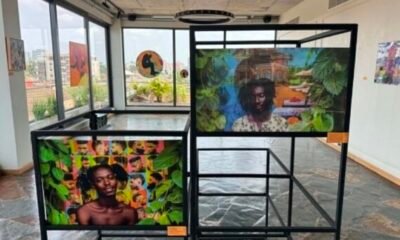







There is a quiet revolution in taking a word once used as an insult and turning it into a badge of imagination.
That transformation lies at the heart of KUBOLOR: In Search of Greener Pastures, where artist Kwabena Ofe Gideon Amponsah invites audiences to see wandering not as failure, but as a form of curiosity that shapes cities, identities, and creative expression.
In Ghana, “kubolor” has long described someone perceived as drifting without direction. Amponsah challenges that stereotype by presenting movement as an act of discovery.
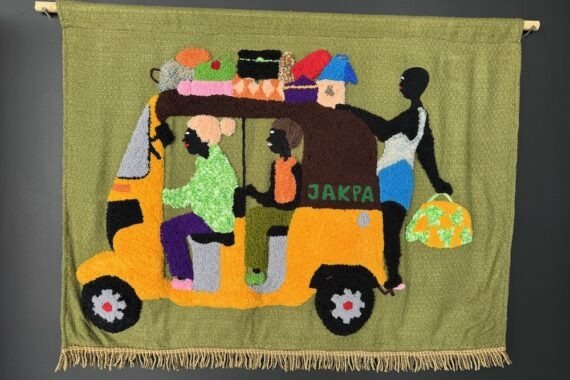
His richly textured tufted works—created using a technique he taught himself after encountering it online—carry the marks of experimentation.
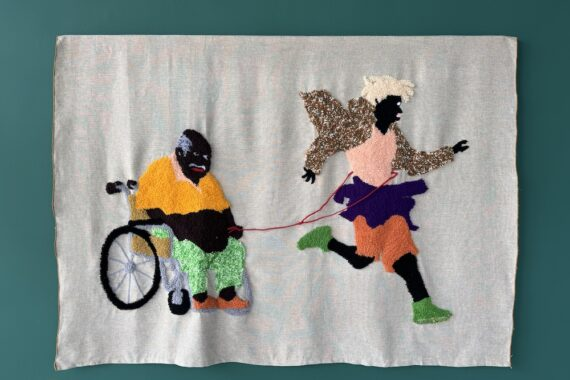
Thick layers of yarn, bold silhouettes, and tactile surfaces encourage viewers to slow down and consider the value of process as much as the finished artwork.
The exhibition draws much of its emotional power from Accra’s Kantamanto Market, one of the world’s largest second-hand clothing hubs.
Rather than treating discarded garments as waste, Amponsah transforms them into sculptures, wearable art, and immersive installations. Each fabric fragment carries traces of another life, suggesting that materials, like people, can find new purpose through reinvention.
That conversation extends into fashion through a collaboration with Ghanaian label DARKOS. The garments are not presented as merchandise but as living artworks, blurring the boundaries between clothing, sculpture, and performance.
Their contemporary forms encourage reflection on gender, identity, and the ways the body communicates personal history.
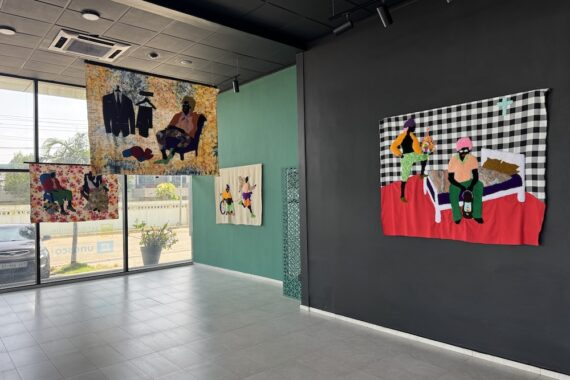
The exhibition’s installation mirrors the visual rhythm of Kantamanto itself. Hanging textiles, layered displays, and improvised arrangements recall the ingenuity of market traders, turning everyday merchandising techniques into a carefully orchestrated artistic language.
Visitors move through a space that feels at once familiar and theatrical, where commerce and creativity exist side by side.
Running until Monday, July 27, 2026, KUBOLOR: In Search of Greener Pastures leaves a lasting impression because it reframes a familiar Ghanaian expression with generosity and imagination.
It argues that the search for greener pastures is rarely about escape. More often, it is about resilience, reinvention, and the courage to keep moving until overlooked stories—and overlooked materials—find their place in the spotlight.
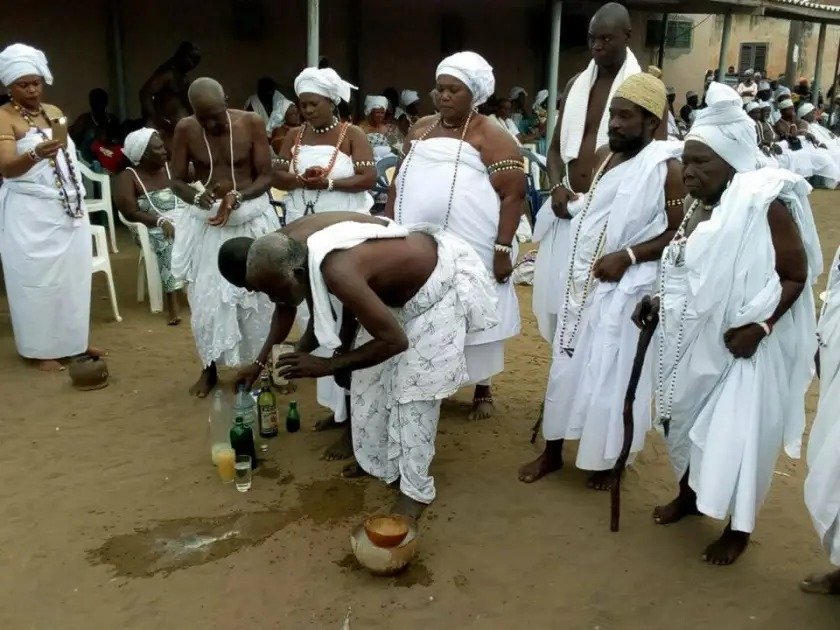
From Ghanaian courtyards to city streets abroad, libation remains a bridge between the living and the departed
Before the speeches begin and before the drums find their rhythm, a quiet ritual often unfolds. A bottle is uncorked.
A small amount of drink touches the earth. Names are spoken. Heads bow. For a moment, those who are absent become present.
In Ghana, libation is far more than a ceremony. It is an act of remembrance rooted in the belief that death does not sever a person’s connection to family and community.
Across many ethnic groups, ancestors are regarded as active members of society—guardians who continue to influence the fortunes, health, and wellbeing of the living.
The details vary from one community to another. In some homes, schnapps is preferred. Elsewhere, palm wine or water may be used.
The words spoken differ between Akan, Ewe, Ga, Dagbani, and other languages. Yet the purpose remains remarkably consistent: to acknowledge those who came before and invite their blessings.
What makes libation particularly fascinating is how its spirit has travelled far beyond its traditional setting. Across the African diaspora, echoes of the practice can be found in unexpected places.
In parts of the Caribbean and the United States, people still pour a drink onto the ground in memory of a loved one. The gesture may not always be described as libation, but the message is strikingly familiar: the departed have not been forgotten.
As migration, urbanisation, and modern lifestyles reshape cultural practices, libation continues to endure. It survives because it fulfils a deeply human need—the desire to remain connected to those who shaped our lives.
A few drops on the ground may seem insignificant. Yet within that simple act lies a profound idea: that memory is a form of presence, and that conversations with our ancestors never truly end.
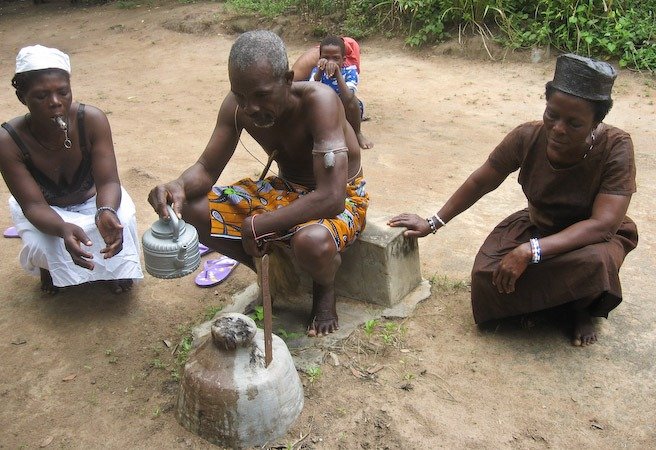
A centuries-old ritual continues to spark debate over culture, justice, and human rights
Imagine a child leaving home, not because she chose to, but because someone else in her family committed an offence.
She has stolen nothing, broken no law, and harmed no one. Yet her future is handed over in the name of spiritual justice.
For generations, this was the reality of trokosi, a traditional practice historically associated with some Ewe communities in southeastern Ghana and parts of neighbouring Togo and Benin. The word is commonly interpreted as “wife of a deity” or “servant of a god.”
Under the custom, a young virgin girl could be dedicated to a shrine to atone for the wrongdoing of a male relative or another member of her family.
To those who upheld the tradition, the ritual restored harmony between families, ancestors, and the spiritual world. In societies where divine justice was woven into everyday life, such acts were believed to prevent misfortune and heal fractured relationships.
The shrine was not simply a religious institution; it was regarded as a guardian of moral order.
Yet another story unfolded behind those beliefs. Critics argued that innocent girls paid an unbearable price. Many were denied formal education, separated from their families for years, and stripped of the freedom to determine their own futures.
The debate was never merely about religion. It became a national conversation about whose rights mattered most when culture and individual liberty collided.
That conversation reached a turning point in 1998 when Ghana amended its Criminal Code through Act 554, outlawing ritual and customary servitude.
The legislation marked a significant shift, affirming that cultural practices could not override fundamental human rights.
Since then, thousands of women and girls have been released from shrine servitude through the efforts of government agencies, traditional authorities, faith leaders, and human rights organisations.
The legacy of trokosi continues to provoke reflection. It reminds Ghanaians that culture is neither frozen nor untouchable. Traditions evolve, especially when societies confront practices that no longer reflect their values.
Today, the story is remembered not only as a painful chapter in Ghana’s cultural history but also as an example of how nations can honour heritage while embracing justice, dignity, and the protection of the vulnerable.


From Kantamanto to the Gallery: Reclaiming Identity Through Textile Art

Why Coordinated Dressing Is Becoming the Ultimate Style Statement

#GhanaTrending: Memes, Money, and a Nation’s Digital Mood on Tuesday
-

 Business20 hours ago
Ghana Loses $16.5 Billion As Crude Oil Production Collapses by 48% – IES Report
-

 Business2 days ago
Ghana Sets 4-Month Target to End Tomato Imports
-

 Ghana News2 days ago
‘Don’t Blame Migrants’: UN Warns South Africa as ‘Cruel’ Deportations Surpass 53,000
-

 Ghana News2 days ago
Top 10 Front-Page Headlines from Ghanaian Newspapers: Monday, July 13, 2026
-

 Business2 days ago
World Bank Downgrades Ghana’s Energy Recovery Program to ‘Unsatisfactory’
-

 Ghana News2 days ago
Yaa Naa Mahama Abukari II: Influential Traditional Ruler Who Restored Peace to Dagbon After 16-Year Dispute Dies
-
Ghana News22 hours ago
Top 10 Front-Page Headlines From Ghanaian Newspapers: Tuesday, July 14, 2026
-

 Health & Wellness23 hours ago
The Weight-Loss Trap: Seven Everyday Habits That Could Be Holding You Back