
From the Diaspora
Inside Pakistan’s Forgotten African Community: The Sheedi Fighting for Identity After 1,400 Years

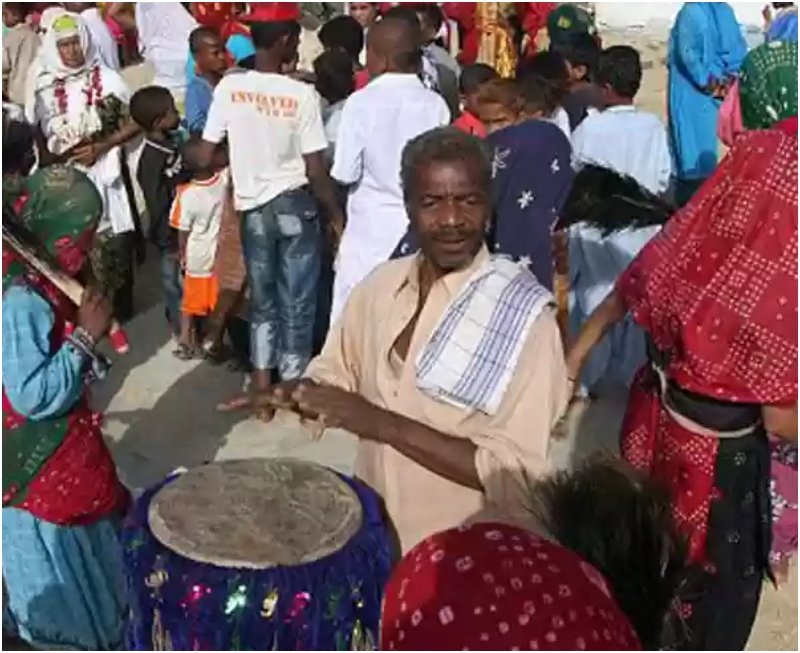
Asia’s largest African-descended community does not live in Dubai, Mumbai, or Kuala Lumpur.
It lives in Pakistan — largely unknown, often unseen, and still struggling to belong after more than a millennium.
The Sheedi, a population of more than 250,000 people of African descent, have lived in what is now Pakistan for nearly 1,400 years. Yet most Pakistanis have never heard of them. And those who have, often know them only through stereotypes.
Their story, rich yet painfully overlooked, stretches from East Africa’s coastline to the deserts of Sindh — a history shaped by forced migration, military skill, cultural endurance, and a long battle against racial exclusion.
A Community with Ancient Roots
The Sheedi trace their origins to the 7th century, when Arab traders transported enslaved Africans from East Africa to South Asia. Over time, others arrived as sailors, soldiers, and skilled workers — roles that earned them prestige in various kingdoms.
Some Sheedis even reached the heights of political and military leadership.
In the 19th century, General Hoshu Sheedi led Sindh’s forces against British colonial troops and died defending Hyderabad in 1843. His legacy survives, but the community he came from remains largely invisible.
Centuries Later — Still Treated as Outsiders
Despite their deep roots in Pakistan, the Sheedi remain on society’s margins.
Daily discrimination has become normalized, from schoolyards to workplaces.
“Name-calling, bullying, and subconscious prejudice have only gotten worse,”
— Zia Rehman, Karachi-based researcher
Many Sheedi families live in impoverished neighbourhoods such as Lyari, a Karachi district long plagued by gang violence, limited resources, and state neglect. Economic mobility is nearly impossible for many, resulting in entrenched poverty and low literacy rates.
At public transport stations, Sheedis say passengers often avoid sitting near them.
In job interviews, their darker skin becomes a barrier.
And in classrooms, Sheedi children grow up carrying the weight of slurs that should have died centuries ago.
“We Are Battling Hard to Establish Our Identity”
Yaqoob Qambrani, President of the Pakistan Sheedi Ittehad, says the community is fighting for dignity in a society where fairness of skin is still equated with status.
“We face discrimination at every level,” he says. “The doors of success are shut on us because people don’t see us as Pakistani enough.”
Even a recent Sheedi nomination for a regional assembly seat triggered public outrage.
“People said, ‘Should we now take our problems to a Sheedi?’ It exposes the depth of the racism,” Qambrani recalls.
Some Sheedis accept the historical record that links them to African ancestors brought through the Indian Ocean slave trade. Others argue they descended from Arab migrants — a reflection of the stigma attached to being identified as African in Pakistan’s racial hierarchy.
Cultural Survival Against the Odds
Despite the challenges, Sheedi culture remains vibrant.
Their traditional Lewa dance, performed at festivals and communal gatherings, blends African rhythms with South Asian influences. Yet even this heritage becomes a source of mockery for some onlookers — a reminder of how normalized racism remains.
The community’s biggest cultural event is the Pir Mangho Urs, honoring a Sufi saint considered the Sheedis’ patron. After years of security restrictions, authorities have once again allowed the festival, restoring an important tradition of music, dance, and spiritual celebration.
A Minority Left Behind
Researchers note that the Sheedis receive almost no state support. Their access to education, political representation, and social protection remains far below national averages.
“Nothing serious has ever been done to support their integration,”
— Zia Rehman
In a country where racial conversations rarely move beyond colorism in advertisements or celebrity culture, the Sheedis’ lived reality sits in silence.
A History That Deserves Visibility
The Sheedis are not a relic of the past — they are a living African-Asian community fighting for recognition in the 21st century.
Their presence challenges South Asia’s long-untouched racial narratives.
Their survival speaks to centuries of resilience.
And their invisibility raises a simple question with global significance:
How can a community that helped build a nation remain unseen for more than a thousand years?

From the Diaspora
Ghanaian National Pleads Guilty in U.S. to Stealing Over $10 Million Through Romance Scams

New York / Accra – March 5, 2026 – A 40-year-old Ghanaian man, Derrick Van Yeboah (also known as “Van”), has pleaded guilty in federal court in Manhattan to his role in an international criminal enterprise that defrauded victims across the United States of more than $100 million through romance scams and business email compromise schemes.
U.S. Attorney for the Southern District of New York Jay Clayton announced the plea on March 5, 2026, before U.S. District Judge Arun Subramanian.
Yeboah admitted to conspiring to commit wire fraud, personally responsible for stealing over $10 million by impersonating romantic partners online and convincing vulnerable victims—many elderly men and women—to send money or assist in laundering funds.
According to court documents, Yeboah was part of a Ghana-based criminal network that created fake online personas to build trust with victims, often on dating websites. Once trust was established, victims were deceived into wiring money or helping transfer proceeds from other frauds. The stolen funds were laundered back to West Africa, with Yeboah’s share exceeding $10 million.
“This defendant cruelly exploited the vulnerabilities of people searching for companionship online,” Clayton said. “Many New Yorkers and Americans look for love online, and no one deserves to have that met with fraud and theft. Today’s plea is a reminder: if it seems too good to be true, it probably is.”
Yeboah faces a maximum sentence of 20 years in federal prison. He has agreed to pay restitution and forfeit $10,149,429.17.
Sentencing is scheduled for June 3, 2026.
The case was investigated by the Federal Bureau of Investigation, with assistance from Ghanaian authorities and the U.S. Department of Justice’s Office of International Affairs. Prosecutors from the Complex Frauds and Cybercrime Unit—Assistant U.S. Attorneys Kevin Mead and Mitzi Steiner—are handling the matter.
Romance scams and business email compromise remain major threats globally, with the FBI reporting billions lost annually to similar schemes. U.S. officials continue to urge the public to verify identities online, avoid sending money to strangers, and report suspicious activity immediately.
From the Diaspora
Ghanaians and Other Africans in UAE Flood Social Media with Videos as Iranian Missile Strikes Hit Dubai

Dubai / Accra – March 2, 2026 – Ghanaians and fellow Africans living in the United Arab Emirates have taken to social media in large numbers, posting raw, real-time videos and emotional accounts capturing the chaos and fear after an Iranian missile strike reportedly struck parts of Dubai on Saturday night, March 1, 2026.
The attack, widely seen as direct retaliation for earlier US–Israeli airstrikes on Iranian targets that killed Supreme Leader Ayatollah Ali Khamenei, has caused shattered windows, scattered debris, and widespread panic in residential and commercial areas.
Trending clips shared by Ghanaian residents show women wailing as glass from apartment windows rains down, children crying, and streets filled with people fleeing or sheltering in place. One widely circulated video features a Nigerian man in Bahrain reflecting on the irony of his journey:
“In my country in Nigeria, the wars were fought with AK47, but I ran away from that just to come and face war with heavier weapons—bombs and missiles.”
Similar footage from other African nationals in Dubai and nearby emirates shows sirens blaring, explosions echoing in the distance, and residents documenting damage to homes and hotels—including the iconic Burj Al Arab, hit by debris from an intercepted drone.
Many videos are accompanied by captions expressing disbelief, fear, and calls for safety: “We are Ghanaians in Dubai—please pray for us,” one user wrote alongside footage of a cracked building facade.
The Ghana Embassy in Abu Dhabi and the Ministry of Foreign Affairs have urged nationals in the UAE, Qatar, Bahrain, Kuwait, and other affected countries to remain indoors, avoid unnecessary movement, steer clear of military sites and crowded areas, keep travel documents ready, and register with diplomatic missions. Emergency lines remain active: +233 240 913 284 / +233 240 793 072.
The crisis has severely disrupted daily life and commercial activity. UAE airspace remains closed, Dubai International Airport and Al Maktoum International are suspended, and major airlines including Emirates, Etihad, and Qatar Airways have cancelled or diverted flights. Cruise operations in the region have also been halted.
For Ghana’s large diaspora in the Gulf—many working in construction, hospitality, retail, and domestic services—the situation has created intense anxiety over personal safety, job security, and the ability to send remittances home.
The surge in user-generated videos from Africans on the ground has provided real-time insight into the human impact of the conflict, amplifying calls for urgent de-escalation and safe evacuation options.
From the Diaspora
Ghanaian-Heritage Scientist AJ Addae Develops Breakthrough Sunscreen That Protects Darker Skin Without White Cast

LOS ANGELES — A scientist of Ghanaian heritage at University of California, Los Angeles (UCLA) has developed a groundbreaking zinc-oxide sunscreen formula designed to protect darker skin tones without leaving the chalky white residue that has long discouraged use.
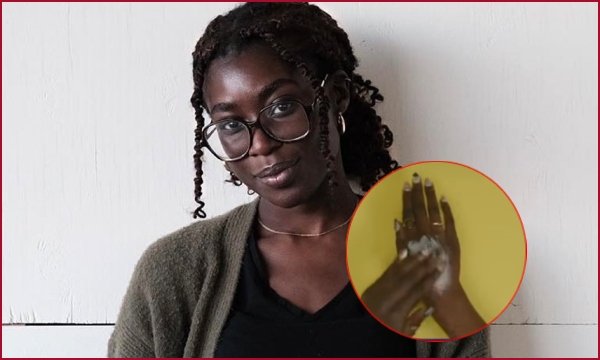
AJ Addae, a chemical biology researcher and cosmetic entrepreneur, says her innovation addresses both a scientific and public-health gap — improving sun protection accessibility while helping reduce skin cancer risks among people with deeper complexions.
Solving a Long-Standing Problem
Zinc oxide sunscreens are widely considered effective and safe, but their visible white cast has historically made them unpopular among people with darker skin tones.
“They leave this white cast on my skin, and it deters me from wanting to use sunscreens,” Addae said, explaining what first motivated her research.
Public health experts explain that this cosmetic drawback has had real consequences. When people avoid sunscreen due to appearance concerns, they face greater exposure to harmful ultraviolet radiation and increased skin cancer risk.
“The best sunscreen is one that you’ll actually wear,” Addae said. “That’s really where my motivation came from.”
A Scientific Breakthrough
Working alongside UCLA researchers and international collaborators, Addae investigated why traditional zinc oxide formulas appear white.
Scientists determined that conventional sunscreens contain round zinc oxide particles that clump together, scattering visible light and creating the chalky effect.
The team instead developed a novel “tetrapod” shape — zinc oxide particles with tiny leg-like extensions that prevent clumping and allow smoother, more even dispersion on skin.
Research published through the American Chemical Society confirmed the new formula offers UV absorption comparable to existing zinc oxide sunscreens.
A Greener and Inclusive Innovation
In addition to eliminating the white cast, the new sunscreen technology offers environmental benefits. The tetrapod zinc oxide does not require solvents, making production more sustainable.
Because zinc oxide is already an FDA-approved UV filter, experts say regulatory hurdles for bringing the product to market may be less complex than introducing entirely new chemical filters — none of which have been approved in the United States since 1999.
Addae is now working with UCLA to commercialize the technology.
Expanding Protection for All
The breakthrough carries broader implications for health equity, particularly among communities historically underserved by cosmetic and dermatological industries.
By making sunscreen more wearable for people of color, researchers say innovations like this could improve prevention of sun damage and skin cancer worldwide.
Addae hopes the technology will encourage wider adoption of daily sun protection.
“I think it’s a good step in the right direction for getting everyone to wear sunscreen and prevent skin cancer,” she said.


Renowned Global Bodies Warn Middle East War Will Scuttle Africa’s 2026 Growth

Ex-President Akufo-Addo and President Mahama Exchange Pleasantries on Easter

Mahama Calls Christ’s Birthplace an ‘Epicentre of War’, New Airport Concourse Planned and Other Big Stories in Ghana Today
-

 Business2 days ago
Ghana Turns to Russian Fuel to Cushion Impact of Global Energy Crisis
-

 Tourism2 days ago
5 Things You Need to Know About Ghana’s Visa-Free Entry for All Africans
-

 Ghana News17 hours ago
Ghana President Convenes Emergency Cabinet Meeting to Cushion Ghanaians from Soaring Fuel Prices
-
 Ghana News16 hours ago
Mahama Calls Christ’s Birthplace an ‘Epicentre of War’, New Airport Concourse Planned and Other Big Stories in Ghana Today
-
 Ghana News16 hours ago
Ex-President Akufo-Addo and President Mahama Exchange Pleasantries on Easter
-

 Ghana News2 days ago
Ghanaian Stowaways Bound for Europe End Up in Nigeria After Five Days at Sea
-

 Ghana News2 days ago
Here Are the 10 Key Agreements Signed Between Ghana and Zimbabwe During Mnangagwa’s State Visit
-
 Business16 hours ago
Renowned Global Bodies Warn Middle East War Will Scuttle Africa’s 2026 Growth