
Africa Watch
Belated Crackdown: South Africa’s Ramaphosa Unveils Special Courts and Biometric IDs After Deadly Xenophobic Wave

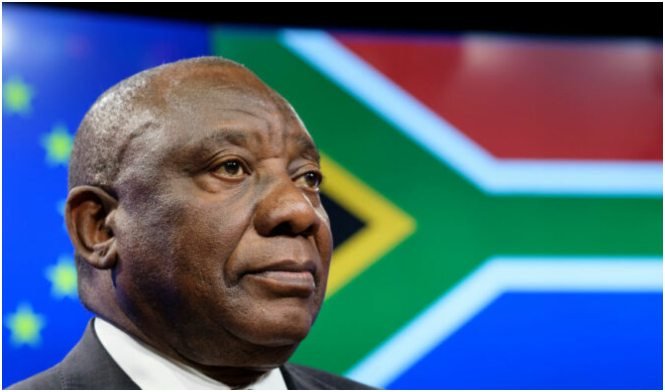
President Cyril Ramaphosa has announced a series of long-delayed immigration reforms, including dedicated courts and biometric digital ID cards, as South Africa moves to contain a fresh wave of xenophobic violence that has forced multiple African nations to repatriate their citizens and left at least five Mozambicans dead.
The measures, unveiled during a televised address on Sunday, June 7, 2026, come after years of recurring attacks on foreign nationals, with critics questioning why such reforms were not implemented earlier. Ramaphosa acknowledged that the government was now acting against “forces who are exploiting the concerns of our people about illegal immigration to further their own political, personal and criminal agendas.”
“We will and must not allow groups to use the legitimate concerns of South Africans to destabilize our country through inciting lawlessness and violence,” he said, without specifying which groups would be targeted or what immediate enforcement actions would follow.
Special Courts and Secure IDs
The President outlined several policy initiatives aimed at overhauling South Africa’s overwhelmed immigration enforcement system. Among them is the establishment of dedicated courts to handle immigration cases speedily, a recognition that the regular court system has been unable to process the backlog of matters involving undocumented migrants and asylum seekers.
Additionally, Ramaphosa announced the upgrading of the paper-based “green book” identity documents currently carried by South African citizens and legal migrants. These are being replaced with more secure, biometric digital ID cards, which officials hope will reduce document fraud and make it easier to distinguish between legal residents and undocumented individuals.
Both measures, while presented as forward-looking solutions, have been discussed by policymakers for years without concrete action. The latest wave of anti-immigrant protests – some of which turned violent – has finally pushed the government to announce a timeline for implementation.
A Belated Response
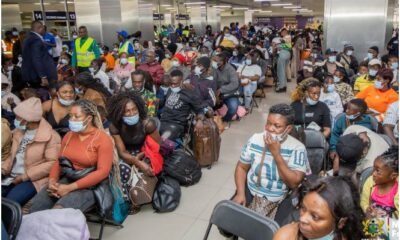
The timing of the announcement has drawn scrutiny. Ghana, Nigeria, Malawi, and Mozambique have all begun repatriating citizens caught up in the violence. Mozambique confirmed that five of its nationals were killed.
Ghana’s Foreign Minister Samuel Okudzeto Ablakwa has already begun assembling documentation to pursue compensation for Ghanaian evacuees who lost properties and businesses.
South Africa has a long and painful history of xenophobic attacks, with major outbreaks recorded in 2008, 2015, 2019, and now 2025. In each instance, foreign nationals – many of whom have lived and worked in the country for decades – have seen their shops looted, homes burned, and livelihoods destroyed. Immigrants are frequently blamed for high unemployment and crime, though economists and migration experts say such scapegoating ignores structural economic problems.
Ramaphosa himself acknowledged this dynamic in his address.
“Migrants are being blamed for problems that have arisen because of poverty and high unemployment,” he said.
He also cautioned citizens against taking the law into their own hands, warning them against stopping people on the streets to demand their identities.
“Enforcement of immigration laws is a responsibility solely for the state,” he said.
Root Causes and Regional Cooperation
Beyond the domestic legal reforms, Ramaphosa said the government would work with other countries to address the root causes of illegal immigration – a nod to the push factors in neighboring nations that drive migration to South Africa, Africa’s most industrialized economy.
But for the families of those killed, and for the thousands of foreign nationals now contemplating whether to remain in South Africa, the President’s words may arrive too late.
Analysts note that previous government pledges following outbreaks of xenophobic violence have often failed to produce lasting change. Whether the promised special courts and biometric IDs materialize, and whether they actually deter future attacks, remains to be seen.
For now, South Africa’s reputation as a regional leader has been tarnished once again, with neighboring governments forced to evacuate their citizens from a country that many once viewed as a land of opportunity.









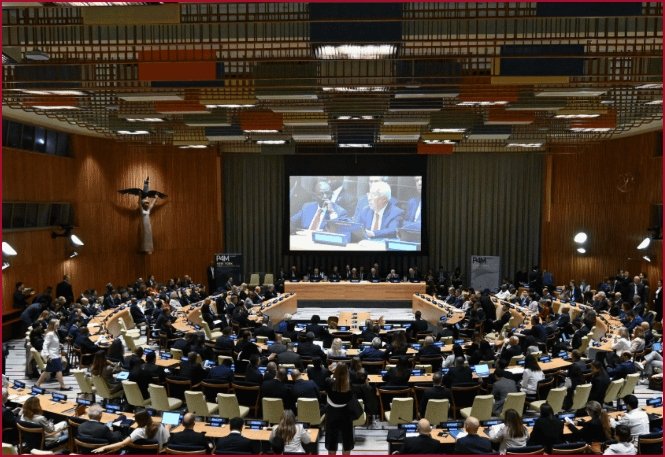
Africa has made its boldest demand yet for reform of the United Nations Security Council: at least two permanent seats with veto powers, and five non-permanent seats for the continent.
Vice-President Kashim Shettima of Nigeria delivered the demand while presenting President Bola Tinubu’s national statement at the 81st UN General Assembly in New York, positioning Africa’s case as both a moral imperative and a necessary correction to a global governance structure built for a bygone era.
“The world of 2026 cannot remain captive to the distribution of power in 1945,” Shettima declared, drawing a sharp contrast between the Security Council’s post-World War II origins and today’s geopolitical realities.
A Longstanding Demand
Nigeria’s position is consistent with the Ezulwini Consensus and Sirte Declaration, adopted as the Common African Position. Under this framework, Africa seeks at least two permanent seats with all existing privileges, including veto power for as long as the privilege exists, alongside five non-permanent seats on the Council.
The African Union reaffirmed the demand in May, stating that Africa’s exclusion from permanent representation constituted a historical imbalance requiring correction.
Shettima argued that institutions claiming authority to act for humanity must adequately reflect the people on whose behalf decisions are taken. Africa, he noted, is home to 1.5 billion people and constitutes the largest regional voting bloc in the General Assembly—yet remains without a single permanent seat.
The 1945 Problem
The Security Council has five permanent members: China, France, Russia, the United Kingdom, and the United States, each possessing veto power. This configuration has remained unchanged since the UN’s founding in 1945, apart from a single expansion of non-permanent membership from six to ten in 1965.
Africa currently has no permanent representative on the Council.
Shettima said Africa could no longer remain outside permanent membership while issues concerning the continent continued to occupy substantial attention of the Council. He linked Security Council reform to efforts to restore confidence in multilateralism amid widening geopolitical divisions.
“Differences among nations must not obscure their common humanity or responsibility to preserve peace for future generations,” he said.
Nigeria’s Peacekeeping Record
Shettima recalled Nigeria’s contributions to international and regional peace operations in Liberia, Sierra Leone, Darfur, Mali, and The Gambia. He said Nigeria also continues to work through ECOWAS, the African Union, and Gulf of Guinea mechanisms, covering mediation, counter-terrorism, democratic governance, and maritime security.
According to him, these efforts demonstrate Nigeria’s commitment to international peace and security—and its readiness to assume greater responsibility on the global stage.
A Warning Against Propaganda
The Vice-President also warned against a global environment where propaganda blurred distinctions between victims and aggressors and complicated accountability. He maintained that an inclusive and effective UN remained indispensable to global peace and sustainable development.
Shettima reaffirmed Nigeria’s commitment to the UN Charter and international cooperation, saying Nigeria supported an international system where diplomacy takes precedence over coercion and international law guides relations among states.
He identified the conflict in Sudan and other theatres as requiring urgent diplomacy because of their humanitarian, economic, and geopolitical consequences.
The Road Ahead
Nigeria’s demand comes amid renewed calls by African leaders for reforms to an institution whose permanent membership remains unchanged since its creation. The African Union’s preferred reform model provides for at least two permanent African seats, including veto privileges while existing members retain them, and five non-permanent seats.
Whether the five permanent members, particularly China, Russia, and the United States, will support a reform that dilutes their power remains uncertain. Previous reform efforts have stalled for decades.
But Shettima made clear that Africa’s patience is wearing thin. The continent, he said, remains committed to a multilateral order capable of responding more credibly to 21st-century realities.
“The world of 2026 cannot remain captive to the distribution of power in 1945,” he repeated, leaving little doubt that Africa intends to keep pressing until its voice is heard, and its seat secured.

The fictional kingdom of Wakanda may be thousands of miles away from Lagos, Accra, and Johannesburg, but its soundscape remains deeply tied to the rhythms of the African continent.
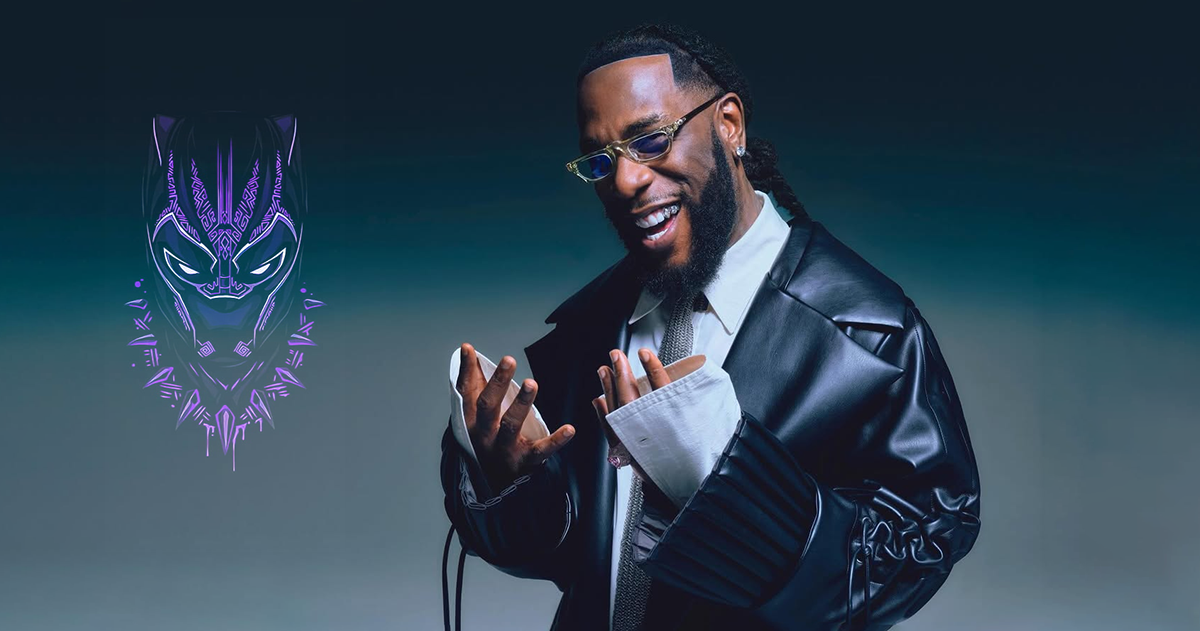
Reports circulating across social media and film databases suggest that Nigerian megastar Burna Boy could be making a high-profile return to the Black Panther franchise.
According to credit listings briefly spotted on IMDb, the Grammy-winning “African Giant” is featured among the music contributors for Marvel Studios’ anticipated next chapter in the Wakandan saga.
The listed lineup also features Nigerian singer CKay, South African pop phenom Tyla, and American hip-hop icon Kendrick Lamar, who curated the record-breaking original Black Panther album in 2018.
For fans across the continent, the news has sparked immediate celebration. The Black Panther franchise has consistently served as a global megaphone for modern African culture.
When Wakanda Forever debuted, Burna Boy’s haunting track “Alone” stood out as one of the emotional pillars of the film’s soundtrack.
Rejoining the lineup alongside hitmakers like CKay and Tyla signals a continued commitment by film directors and music supervisors to keep contemporary African sounds at the heart of Hollywood’s biggest blockbuster universe.
However, music enthusiasts and industry insiders know that online database entries carry a major caveat.
IMDb listings are frequently crowdsourced or updated ahead of formal production stages, meaning unconfirmed cast and crew additions can circulate long before studio executives step in. Marvel Studios has maintained its trademark secrecy, offering no official tracklist or artist confirmations.
Whether the current roster proves accurate or undergoes shifts before release, the mere prospect highlights Afrobeats’ firmly established footprint in global pop culture.
Until Marvel officially drops the needle, fans will be keeping a close watch—and hoping the African Giant lands back in Wakanda.

A British-Nigerian businessman and social media influencer died from a pulmonary embolism after undergoing a penis enlargement procedure in Thailand, a UK coroner’s inquest has heard.
Igho “Tiny” Ubiribo, also known as “Ego”, was 43 when he died in Bangkok following complications from the cosmetic procedure during a trip to Thailand with his wife.
Evidence presented at the inquest said Ubiribo had 40ml of hyaluronic acid and lidocaine injected into his penis at an unnamed clinic in March.
Shortly after the procedure, he developed chest pain and collapsed twice at his hotel.
He was taken to Sukhumvit Hospital, where doctors suspected a pulmonary embolism — a potentially fatal blockage of a blood vessel supplying the lungs.
His condition deteriorated despite emergency treatment, with medical staff reportedly performing CPR for more than 100 minutes.
Ubiribo died in the early hours of March 6.
His body was subsequently repatriated to the UK for further examination. A post-mortem reportedly detected cellular filler material in his lungs consistent with hyaluronic acid, the substance used during the cosmetic procedure.
Evidence presented to the inquest indicated that the material found in his lungs matched the filler administered during the treatment.
The coroner concluded that the cosmetic procedure had caused the fatal pulmonary embolism.
The case highlights the potentially serious complications associated with injectable cosmetic procedures, particularly when performed outside a patient’s home country. Pulmonary embolisms can occur when material enters the bloodstream and travels to the lungs, where it can obstruct blood flow and become life-threatening.
Ubiribo’s death has also drawn attention to the risks surrounding cosmetic procedures undertaken abroad, where patients may face unfamiliar medical standards, follow-up arrangements and emergency care systems.
The circumstances of his death were examined during the UK inquest as authorities sought to establish how the procedure ultimately led to the fatal complication.


Funding Fears Loom For Ghana’s Life-Saving Malaria Vaccine Five Years After Roll Out

‘There was a Coordinated Disclosure Plan’: AI-Discovered Flaw in PHP Triggers Global Internet Chaos as Cybercriminals Race to Exploit It

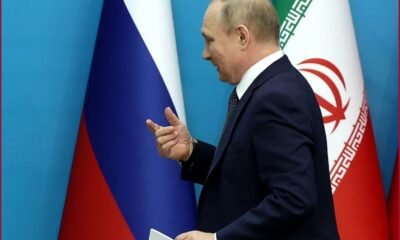
Yandex Strikes: Can Moscow Host Africa Under Drone Threat?
-

 Festivals & Events2 days ago
Compozers Fest Ghana Edition: Welcoming 2027 with Music in Accra
-

 Ghana News2 days ago
Major Sexual Abuse Scandal Rocks Ghana High School: Obuasi School Headmaster Sues Journalist for GH¢2 Million as Investigation Into Alleged Misconduct Widens
-
 Taste GH2 days ago
Airport Residential Area: Where Accra’s Dining Scene Meets Global Flavours
-

 Health & Wellness2 days ago
Why Keeping Weight Off Can Be Harder Than Losing It
-
 Opinion2 days ago
Yandex Strikes: Can Moscow Host Africa Under Drone Threat?
-
 Global Update2 days ago
‘There was a Coordinated Disclosure Plan’: AI-Discovered Flaw in PHP Triggers Global Internet Chaos as Cybercriminals Race to Exploit It
-
 Ghana News2 days ago
Funding Fears Loom For Ghana’s Life-Saving Malaria Vaccine Five Years After Roll Out