
Perspectives
Russia-Africa Summit: The Search for Resources, Influence and War Resilience

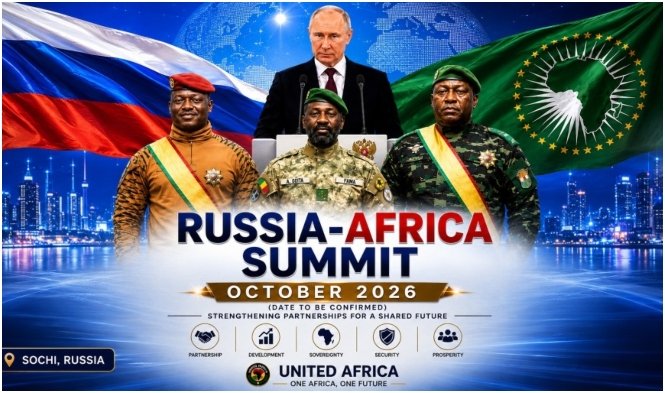
As Moscow prepares to host the third Russia-Africa Summit on 28–29 October 2026, the gathering arrives at a moment of heightened scrutiny. Nearly five years into its war in Ukraine, Russia is seeking to prove that its partnerships with African states have survived Western sanctions and remain strategically valuable. But the deeper question is what Africa gains in return. Drawing on trade figures, security partnerships in the Sahel, and the intersection of military cooperation with resource interests, this analysis by Joseph McCarthy examines whether the relationship is genuinely reciprocal or whether Africa is becoming an increasingly important source of the political influence, strategic resources, and economic resilience that Moscow needs to sustain its own geopolitical ambitions. Read the full article below.
Russia-Africa Summit: The Search for Resources, Influence and War Resilience
As the Ukraine war deepens Russia’s search for strategic resources, political allies and economic resilience, the third Russia-Africa Summit raises a difficult question: what does Africa gain in return?
Russia’s renewed engagement with Africa should be understood against the backdrop of a war in Ukraine that has become a test of Moscow’s economic, military and political endurance. Since the invasion of Ukraine, Russia has faced extensive Western sanctions, restrictions on trade and finance, and increasing pressure on the sources of revenue that sustain its war effort. In this environment, Africa has acquired a significance that extends beyond traditional diplomacy. The continent offers Moscow political partnerships, alternative markets, military cooperation and, critically, access to valuable natural resources and potential revenue streams that can help Russia withstand external pressure.
This helps explain the evolution of the Russia-Africa summits. The first summit, held in Sochi in 2019, was largely presented as an effort to rebuild and institutionalise Russia’s relationship with Africa, with trade, investment, security and political cooperation at the centre of the agenda. By the time of the second summit in St Petersburg in 2023, however, the geopolitical context had changed dramatically. Russia was already deep into its war in Ukraine and under extensive Western sanctions. The summit therefore served not only to deepen economic and political relations but also to demonstrate that Moscow remained capable of maintaining significant partnerships outside the Western bloc.
The third summit schedule on 28-29 October 2026, comes at an even more consequential moment. Russia is seeking to demonstrate that its relationship with Africa has survived the prolonged Ukraine war and remains capable of producing strategic benefits. The question for African governments should increasingly be whether the relationship is producing comparable benefits for them. Moscow’s partnership with Africa cannot be assessed only through diplomatic declarations, military agreements or high-level summits. It should also be judged by what African states receive in return and by what Russia gains from the relationship.
One of the most important areas to examine is natural resources. Russia’s interest in Africa is not simply about obtaining diplomatic support. Access to gold and other strategic commodities can provide alternative sources of revenue at a time when Moscow is seeking to reduce the impact of Western sanctions. Gold is particularly important because it can be traded through opaque networks and converted into revenue outside conventional financial channels. The U.S. Treasury has previously linked Wagner-associated gold operations in Africa to the financing of the group’s activities, including its operations in Ukraine. This does not mean that every Russian engagement with an African resource-producing state is designed to finance the Ukraine war.
It does, however, demonstrate why African resources can have strategic value for a Russia seeking to sustain its power and resilience under sanctions. The same logic extends beyond gold. Russia has increasingly shown interest in energy and critical raw materials, while its security partnerships in countries such as Mali and the Central African Republic have created relationships in which military and political cooperation can intersect with economic and resource interests. The emerging model therefore deserves closer scrutiny, Russia provides security assistance and political backing, while gaining influence, commercial opportunities and potentially privileged access to resources.
Mali provides one of the clearest case studies. Russia’s military presence in the country began with the arrival of Wagner personnel in 2021 and subsequently evolved into the Africa Corps structure. Moscow has presented this relationship as an alternative to Western security partnerships and as evidence of Russia’s willingness to assist African states in defending their sovereignty. Yet the relationship also raises a fundamental question: what does Russia receive in return for its military and political support?
That question becomes particularly important when the wider context of the Ukraine war is considered. If Russia can secure access to gold and other strategic resources, strengthen relationships with resource-rich governments and establish alternative economic channels, those relationships can help Moscow mitigate the effects of sanctions and sustain its broader strategic capacity. The relationship should therefore not be viewed solely through the narrow lens of counterterrorism. It is also part of a wider contest over resources, influence and economic resilience.
The economic figures contained in the summit case study reinforce the need to ask what kind of partnership Moscow is actually building. At the 2019 Sochi summit, Vladimir Putin announced a target of increasing Russia-Africa trade to $40 billion. According to Russian data cited in the document, trade stood at $27.7 billion in 2025, while Russia accounted for less than 1 percent of foreign direct investment in Africa. These figures do not prove that Russia’s Africa strategy has failed, nor do they capture every form of strategic value that Moscow derives from the continent. If Russia’s conventional economic footprint remains relatively modest, why is Moscow investing so heavily in strategic relationships with African states? One answer is that the value of Africa to Russia cannot be measured by trade and investment alone. Political influence, military access, diplomatic support, alternative markets and access to natural resources can all have strategic value. For a country fighting a prolonged war under sanctions, these forms of influence can become as important as conventional economic indicators.
This is why the third Russia-Africa Summit should be examined as more than another diplomatic gathering. Moscow wants to use the summit to demonstrate that its partnership with Africa remains strong despite the Ukraine war. The circumstances surrounding the meeting expose the tension at the heart of that claim. African officials are being asked to travel to Moscow while Ukrainian drone attacks have repeatedly disrupted air traffic around the Russian capital. On September 20 an attack involving more than 450 drones caused fresh disruption in the Moscow region, while Air Tanzania temporarily suspended its Moscow route following a risk assessment. The irony is difficult to ignore. Russia presents itself as a security partner for Africa, yet some African officials must consider their own security when travelling to the Russian capital. More importantly, African governments must now assess whether the strategic benefits of their relationship with Moscow justify the risks and costs associated with it.
For Ghana, this calculation is particularly important. The security consequences of Russia’s growing involvement in the Sahel cannot be separated from Ghana’s own national and regional security interests. A source close to the Ghanaian delegation cited in the summit document questions whether the relationship is genuinely “win-win” and points directly to the deteriorating security situation in the Sahel and its spillover towards Ghana’s northern borders. This should concern African governments is Russia’s engagement with Africa primarily delivering security and development benefits to African states, or is Africa increasingly becoming an important source of the political influence, strategic resources and economic resilience that Moscow needs to sustain its own geopolitical ambitions?
The answer is unlikely to be simple. Russia’s relationship with Africa serves multiple purposes, and resource access is only one component of a broader strategy. But the Ukraine war has changed the calculation. What may once have been presented principally as an effort to expand trade, investment and diplomatic relations now also has to be viewed through the lens of Russia’s need to preserve strategic autonomy, withstand sanctions and maintain the capacity to wage a prolonged war.
The third Russia-Africa Summit therefore represents a test not simply of whether African leaders will continue to engage Moscow, but of whether Russia can convince them that this engagement is genuinely reciprocal. For African states, the critical question is no longer whether Russia wants a deeper relationship with Africa. It clearly does. The more important question is what Moscow needs from Africa, what Africa receives in return, and whether the balance between the two is becoming increasingly unequal.
Joseph McCarthy is an analyst and researcher specialising in governance, security and political transitions in the Sahel. He writes on geopolitics, development and African diplomacy. joecarthy30@gmail.com









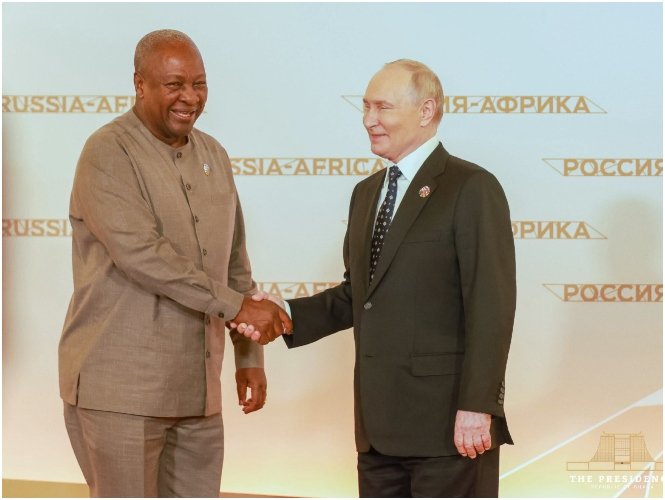
As Ghana deepens its media ties with Moscow, questions are mounting over where legitimate frustration with Western media dominance ends and where borrowed narratives begin. In this analysis, Sahel governance and security expert Joseph McCarthy examines the fine line between reclaiming Africa’s story and merely swapping one foreign script for another, and asks what Kwame Nkrumah’s non-alignment truly demands of Ghana today. Read the full article below.
Ghana’s Moscow Moment: Sovereign Voices or a Borrowed Script?
By Joseph McCarthy · Analyst, Sahel governance & security
| 28 OctRT PUBLISHES THE WODE MAYA INTERVIEW | 200+PARTICIPANTS, 46 AFRICAN COUNTRIES | 12AFRICAN COUNTRIES IN RT COOPERATION DEALS |
A warm welcome in Moscow is not proof that media reports have misrepresented Russia. Neither is justified frustration with Western media dominance a reason to adopt Russian state narratives. Yet the line between the two is blurring, and Ghana sits closer to that line than most.
The Russia-Africa Media Forum, held alongside the third Russia-Africa Summit in Moscow, drew more than 200 participants from 46 African countries. RT organised it with Sputnik and TASS, promoting media sovereignty, professional cooperation, and greater African control over the continent’s image. These are legitimate aspirations. The question is whether Africa is reclaiming its narrative or merely changing the foreign power that shapes it.
Ghana supplied the forum’s most visible test case. In an interview RT published on 28 October, the Ghanaian YouTuber Wode Maya said he had been apprehensive about travelling to Russia, only to find a country different from the one he had imagined. RT’s headline gave his remark a sharper edge: “You won’t believe that I fell for the propaganda.”
There is nothing wrong with a visitor finding that a country differs from its portrayal. Personal experience can puncture stereotypes. But hospitality is not investigation. A pleasant trip cannot tell us whether the invasion of Ukraine squares with Moscow’s professed respect for sovereignty, whether Russian military operations in Africa have made civilians safer, or whether Russian state media cover either question fairly.
Fairness also matters here. Nothing in the material I have seen shows that Maya was paid to promote Russia or misrepresented what he felt, and suggesting otherwise would be wrong. The concern is what happens to a sincere impression once a state-backed broadcaster selects, edits, headlines and distributes it. A travel experience becomes a testimonial, a testimonial becomes a geopolitical narrative, and an influencer’s credibility with African audiences becomes an instrument of international communication.
He was not the only Ghanaian voice. President John Mahama, in his own RT interview, said members of his delegation had expected a sanctions-hit economy in ruins and found instead “a cultural shock”. He also said he hoped the war would end quickly, and he pressed the case for Russian investment in agro-processing, fertiliser and pharmaceuticals, which is the substance Ghanaians should care about. Samia Nkrumah, daughter of Ghana’s first president, appeared on an RT panel about the founders of African independence. Each contribution was individually defensible. Together, curated by one broadcaster, they became a Ghanaian chorus.
That history deserves a Ghanaian reading. Kwame Nkrumah’s non-alignment was never an instruction to love one bloc. It was a refusal to be owned by any. A Ghana that honours his legacy engages Moscow, Washington, Beijing and Paris on its own terms and asks hard questions of all four.
“Nkrumah’s non-alignment was never an instruction to love one bloc. It was a refusal to be owned by any.”
Content creators have transformed African storytelling, reaching audiences that traditional newsrooms struggle to attract, and that deserves recognition. But influence is not journalism. Reporting involves verification, context, editorial accountability and a willingness to confront uncomfortable facts. The sensible response is not to discredit creators but to ask for transparency: who sponsored the visit, who paid for travel and accommodation, whether any content was commissioned, and whether the creator retained full editorial control. These are not accusations. They are basic safeguards whenever governments or corporations cultivate influential voices, and they apply to every capital.
The stakes rise when institutional agreements accompany personal testimonials. RT says it has signed cooperation agreements with media organisations in a dozen African countries, including Ghana, Tanzania and Zimbabwe, covering content exchange, training and broadcasting. Ghana Broadcasting Corporation’s agreement with Rossiya Segodnya provides for reciprocal access to English-language news, help for journalists and joint events. GBC’s Director-General, Professor Amin Alhassan, has said it would bring balance to the corporation’s coverage of Russia.
Balance is the right goal, and international news cooperation can widen access and build skills. But a public broadcaster owes viewers clear labelling of foreign state material, independent fact-checking, and the freedom to investigate Russian policy, including the war in Ukraine and Africa Corps operations in the Sahel. The agreement does not by itself establish Russian editorial control. It does demand visible safeguards.
Those safeguards matter more to Ghana than to most other countries. Russia’s media push accompanies its security role in Mali, Burkina Faso, and Niger, and Burkina Faso borders Ghana’s northern neighbour. Jihadist violence in the Sahel has already pressed towards coastal states. Ghanaian audiences need reporting on whether Russian-backed security operations are protecting civilians, and that reporting cannot be outsourced to the partners being assessed.
None of this excuses the other side. France’s colonial-era relationships deserve scrutiny, and so do Western interventions and the stereotypes in international coverage. Nor is Russia alone in courting African audiences: the BBC, France 24, Deutsche Welle and China’s CGTN all run training and content partnerships, and they deserve the same transparency. When allegations against Russian personnel are dismissed as Western propaganda by reflex, journalism gives way to loyalty. When criticism of Moscow is read as service to NATO, the same failure runs in reverse.
A May 2026 report by the Centre for a New American Security says Russia pays journalists and outlets for stories, and that networks of local influencers and journalists amplify Kremlin narratives. CNAS is a Washington think tank; its findings need independent corroboration, and it says nothing about Maya. They do explain why disclosure is not an insult.
The remedy is consistent standards. Broadcasters should disclose content-sharing deals and label supplied material. Journalists and creators should declare sponsored travel and commissioned work. Press associations should sharpen their ethical codes, and governments should protect independent reporting rather than invoking sovereignty to silence it. Above all, Ghana’s newsrooms need investment in investigative capacity and distribution so that no foreign partner becomes necessary.
A warm welcome is not evidence. A foreign partnership is not liberation. Changing the nationality of those who shape Africa’s narrative is not the same as reclaiming it. Media sovereignty is not about choosing whose script to believe. It is about keeping the freedom to question everyone.
Joseph McCarthy is an analyst and researcher specialising in governance, security and political transitions in the Sahel. He writes on geopolitics, development and African diplomacy. joecarthy30@gmail.com
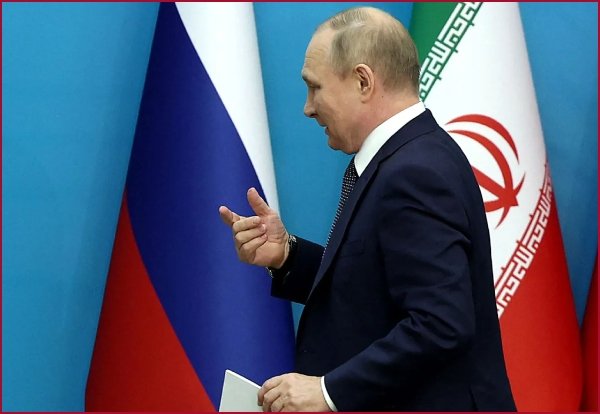
Can Moscow host Africa under drone threat? As Moscow prepares to welcome African leaders to the third Russia-Africa Summit on October 28 to 29, Ukrainian drone strikes have reportedly hit Yandex data centres and targeted the capital region, exposing a delicate contradiction at the heart of the gathering. Russia pitches itself as Africa’s security partner while its own infrastructure proves vulnerable. In this opinion piece, analyst Joseph McCarthy examines the security dilemma facing both Moscow and African governments, arguing that leaders weighing the trip must confront a deeper question: what does it mean to tie your nation’s safety to a partner that is itself under sustained attack? Read the full article below.
Yandex Strikes: Can Moscow Host Africa Under Drone Threat?
Moscow pitches itself as Africa’s security partner while its own infrastructure is exposed
By Joseph McCarthy · Analyst, Sahel governance & security
| 3YANDEX DATA CENTRES REPORTEDLY STRUCK, 8–11 OCT | 650DRONES STRUCK MOSCOW REGION, 6 OCT | 28–29 OctTHIRD RUSSIA-AFRICA SUMMIT, MOSCOW |
Every summit is a performance of strength. The third Russia-Africa Summit, due in Moscow on 28 and 29 October, is meant to show African leaders that Russia remains a confident, well-connected partner despite sanctions, isolation and a costly war. Between 8 and 11 October, Ukrainian drones complicated that script. Three data centres operated by Yandex, the technology giant behind much of Russia’s digital economy, were reportedly struck in the Ryazan, Kaluga and Vladimir regions. For Moscow and for its African guests, the episode poses a security dilemma that no communiqué will resolve.
The first attack, on the night of 7 to 8 October, reportedly set fire to a facility in Sasovo, in Ryazan region, and suspended operations. A second strike hit a site in Kaluga; a third, in Vladimir region, followed on 11 October. Yandex runs payments, email, navigation, ride-hailing, delivery and cloud computing, so the effects spread quickly. Meduza reported disruptions to Yandex Pay, Mail, Disk and Go, while businesses that depend on Yandex Cloud described outages of their own. One user told the outlet: “All my money is on Yandex, so I have no money for food.” The company says customers’ funds are safe, but the episode shows how one point of failure can become hardship for ordinary people within hours.
Recovery may be slow. Reports suggest that replacing specialised equipment could take months, and Russian officials have reportedly acknowledged the difficulty. That matters beyond one company. Moscow has spent years encouraging reliance on domestic platforms as Western technology withdrew. The Yandex strikes show that domestic ownership is not the same as security. Technological sovereignty also means being able to protect, maintain and restore systems under attack.
Moscow will call such strikes aggression against civilian targets. Yet they come after years of Russian missile and drone attacks on Ukrainian cities and energy infrastructure, so the exposure Russia now faces cannot be separated from the war it chose to launch. That context does not make the risk to visitors any smaller; it explains why it is unlikely to disappear before the summit.
Here lies the first half of the dilemma, and it is Moscow’s. Hosting African leaders in the capital is a statement of confidence, but it also puts that confidence on display. Russia must keep airspace open, transport moving and digital systems running while the war reaches ever deeper into its territory. On 20 September, roughly 450 drones were reportedly aimed at the capital; on 6 October, around 650 struck the Moscow region. Every intercept shows that defences work. Every strike that lands, and every airport closure, suggests the opposite. The summit cannot merely proceed; it must avoid becoming a showcase for exposure. Moscow will almost certainly respond with heavy security, restricted airspace and tightly managed movement. That may protect delegates, but it also turns the gathering into a fortress, held in spite of the war rather than in a country at ease with itself.
None of this proves that Russia cannot protect the summit. Vulnerability to long-range drones is not the same as losing the ability to defend territory, and the more widely a country’s civilian and commercial infrastructure is distributed, the harder it is to shield. Delegations may well land, meet and leave without incident. But that is a probability, not a guarantee, and guarantees are precisely what Russia is selling.
That brings us to the second half of the dilemma, which belongs to African governments. The immediate question is personal safety. In early September, Air Tanzania suspended its Dar es Salaam to Moscow route after a risk assessment, then resumed it days later. Further attacks could prompt airspace restrictions, diversions and tighter security that complicate movement between airports, hotels and venues. These are scenarios, not confirmed disruptions, yet every government weighing the trip must price them in, including the level at which it chooses to be represented.
The deeper question is strategic. Security cooperation is the core of Russia’s offer to Africa: Moscow says it has military agreements with more than 40 African states, and Russian security personnel are embedded in countries such as Mali and the Central African Republic. Governments that rely on that protection are tying their own security to a partner that is itself under sustained attack. A security provider at war is also a provider that is stretched, distracted and targeted. The more a government leans on Russia to guarantee its safety, the more it imports the risks of Russia’s war.
“The more a government leans on Russia to guarantee its safety, the more it imports the risks of Russia’s war.”
Call it a dilemma of dependence. The relationship meant to be a source of protection can become a channel for exposure, and the closer the embrace, the harder it is to step back.
What should African governments do? Engage, but with open eyes. They can ask for written security and contingency arrangements for their delegations, diversify their security partnerships so that no single patron’s vulnerability becomes their own, and insist that cooperation strengthens national institutions rather than simply protecting incumbent governments. Strategic autonomy means having choices. It does not mean choosing between Moscow and everyone else, or accepting one patron’s risks as the price of its protection.
The Kremlin wants the summit to show that sanctions have not isolated Russia. The Yandex strikes complicate that message without defeating it. They pose a simple test for any partner who offers security: can it secure itself? The answer will not come from speeches in Moscow. It will come from whether the summit runs smoothly, and from what follows. Until then, African leaders have every reason to listen politely, travel carefully and commit slowly.
■
Joseph McCarthy is an analyst and researcher specialising in governance, security and political transitions in the Sahel. He writes on geopolitics, development and African diplomacy. joecarthy30@gmail.com
Perspectives
Policy Brief: ‘A Test of Agency: Ghana’s BRICS Application and the Future of Strategic Diversification’ | By Col Festus Aboagye (rtd)
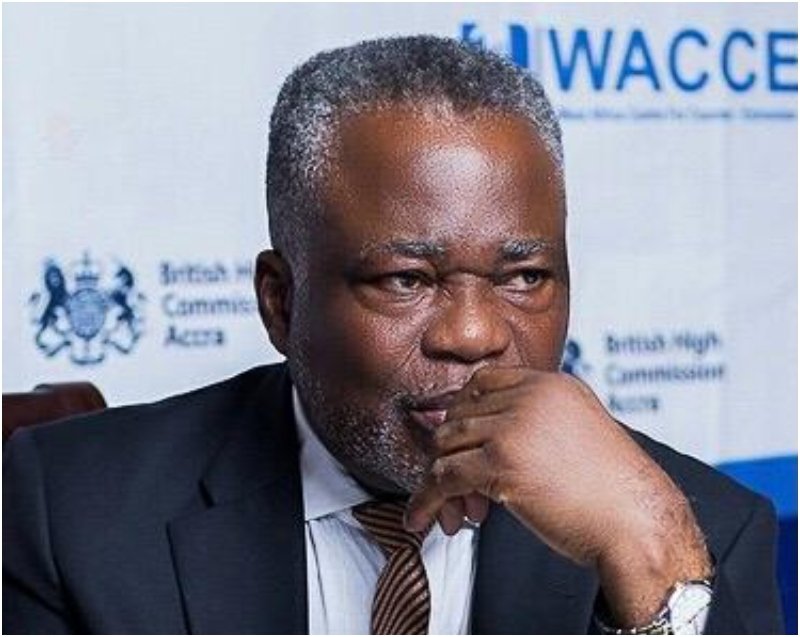
Ghana’s proposed BRICS membership has generated considerable debate. Yet the issue is often presented as a binary choice between traditional Western partnerships and emerging powers.
In ‘A Test of Agency: Ghana’s BRICS Application and the Future of Strategic Diversification’, Colonel Festus Aboagye (Retired) argues that a more useful lens is strategic agency: Ghana’s capacity to choose, manage, and, where necessary, disengage from external partnerships to pursue its national interests.
The brief explores the potential benefits, risks, and policy choices surrounding BRICS engagement. It offers a framework for evaluating future commitments through the lenses of accountability, transparency, sovereignty, and strategic flexibility.
‘A Test of Agency: Ghana’s BRICS Application and the Future of Strategic Diversification’ | By Col. Festus Aboagye (rtd)
Ghana’s decision to seek BRICS membership is a significant foreign-policy initiative. Public discussion has tended to fall into two camps. One sees BRICS as an escape from excessive dependence on Western institutions and markets.
The other sees a step towards alignment with China, Russia and other emerging powers. Both could be oversimplifications. The more important question is whether participation would strengthen Ghana’s strategic agency: its ability to choose, scrutinise, alter and, where necessary, exit external partnerships in pursuit of national interests.
This brief argues that the application is best understood as a test of agency rather than alignment.
- An announcement, not yet an application. On 6 October 2026, Ghana announced a Cabinet decision to apply. On the available evidence, no formal application had been submitted by 10 October 2026.
A forum, not an alliance or a common market. BRICS confers no automatic trade preferences, finance or security guarantees. Most gains would depend on agreements with individual members and institutions.
The benefits lie in diversification, not replacement. Membership could broaden Ghana’s partners, strengthen its bargaining position, and provide a platform to push for global governance reform.
The risks are real but conditional. They include new dependency, fiscal exposure, technology lock-in, diplomatic pressure, and reactions from Western partners, including a United States tariff threat.
Outcomes, not symbolism. Membership should be judged by whether it broadens options, strengthens leverage and preserves accountability.
Click here to read the full article.


Managing Diabetes Starts with Self-Compassion, Not Self-Criticism

Sunshine and Vitamin D: Why Your Body Needs More Than Just a Little Daylight

Europe Faces Wave of Hoax Bomb Threats Amid Growing Fears of Hybrid Warfare
-

 Health & Wellness2 days ago
Building Stronger Glutes After 35: Why Strength Training Matters More Than Cardio
-

 Global Update1 day ago
A New COVID-19 Variant is Raising Interest as Cases Increase in Parts of the World
-
 Ghana News1 day ago
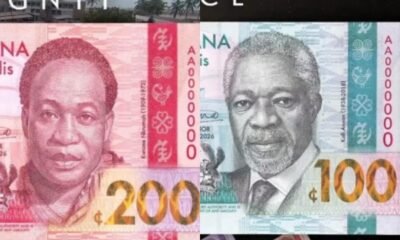
Ghana Unveils New Cedi Notes Featuring Nkrumah, Kofi Annan and Trailblazing Women
-

 Fashion & Style2 days ago
Beyond Fashion: How African Skincare Brands Are Redefining Beauty for Melanin-Rich Skin
-
 Ghana News1 day ago
Ghanaian Regulators Test Local Innovator’s Plastic-Derived Fuel, Finds Petrol and Diesel Fall Short of Required Standards
-

 Health & Wellness1 day ago
Flu Prevention Starts at Home: Five Everyday Habits That Protect Your Family
-

 Ghana News10 hours ago
Ghana Targets Industrialization in 2027 as $10 Billion Economic Transformation Plan Unveiled in 2027 Budget
-
 Ghana News1 day ago
Ghana Coconut Shipment Used to Conceal 2.6 Tons of Cocaine Bound for Europe