
Ghana News
Major Sexual Abuse Scandal Rocks Ghana High School: Obuasi School Headmaster Sues Journalist for GH¢2 Million as Investigation Into Alleged Misconduct Widens

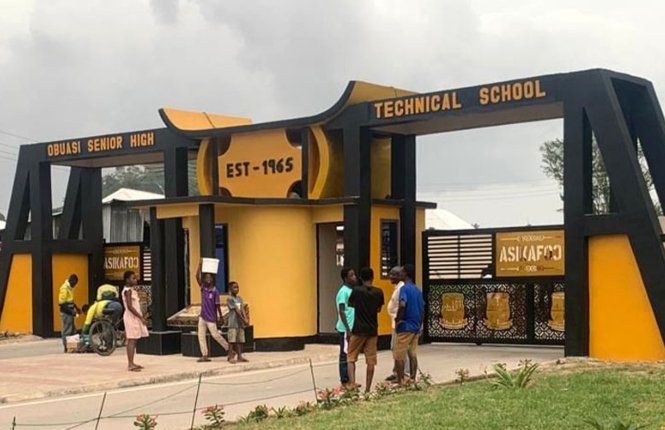
A sexual abuse scandal at a secondary school in Ghana’s Ashanti Region has escalated into a legal battle, with the interdicted headmaster filing a multi-million-Ghana cedi defamation suit against the investigative journalist who exposed the allegations, even as a prominent civil society organization demands swift, independent probes and stronger protections for survivors.
The Allegations
The case centers on Obuasi Senior High Technical School (SHTS) and its headmaster, Zakaria Abdulai, who has been accused of sexual misconduct and abuse by multiple female students.
The allegations were brought to national attention through an investigative documentary by journalist Manasseh Azure Awuni, published by the Multimedia Group. The exposé, titled Inside the Dreaded Headmaster’s Bungalow, detailed claims that the headmaster engaged in sexual misconduct involving students at the school.
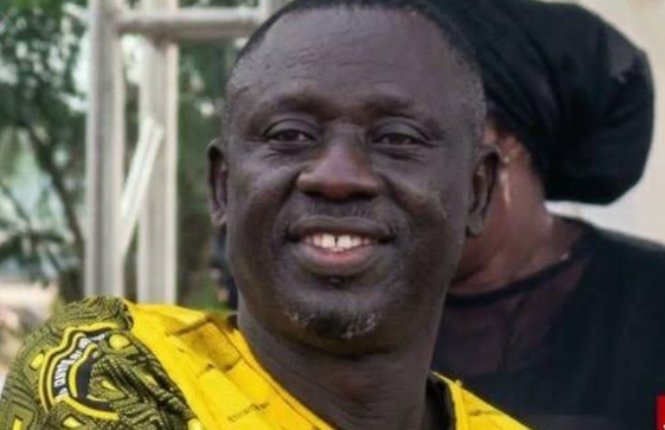
Abdulai has denied all allegations against him.
Official Response and Interdiction
Following the documentary’s broadcast and the ensuing public outcry, Ghana’s Ministry of Education and the Ghana Education Service (GES) intervened. The headmaster was interdicted on October 14, 2026 pending a full investigation, a move that removes him from his post while authorities examine the claims.
The Minister for Education referred the criminal aspects of the matter to the Criminal Investigations Department (CID) and directed the headmaster’s suspension. The Domestic Violence and Victim Support Unit (DOVVSU) in Bekwai has forwarded a docket on one complaint to the Attorney-General’s Department for legal advice. The school was temporarily closed following unrest among students.
Investigation Hurdles
Educational authorities and parliamentary stakeholders have faced mounting pressure to ensure a swift and transparent probe.
However, committees established to investigate the matter have encountered obstacles, including low student turnout attributed to parental hesitation and concerns about alleged external interference.
Defamation Lawsuit
In a dramatic legal twist, the interdicted headmaster has filed a GH¢2 million defamation lawsuit against Manasseh Azure Awuni and the Multimedia Group. Abdulai claims the reports severely damaged his reputation, his marriage, and his professional standing.
The lawsuit raises complex questions about press freedom, the rights of the accused to due process, and the ability of survivors and journalists to report abuse without fear of legal retaliation.
CSJ Demands Accountability
The Centre for Social Justice (CSJ) , a prominent Ghanaian social justice organization, issued a strongly worded press statement on October 23, 2026, expressing deep concern over the allegations and outlining a series of demands.
While acknowledging that the allegations “have not been proven in court” and that the headmaster “is entitled to the presumption of innocence and to a fair process,” CSJ warned that “the presumption of innocence must never become a reason for delay, or for silencing those who have come forward.”
The organization highlighted particularly troubling reports that complaints were raised with school management as early as February 2026, with the Municipal Education Directorate in March, and further incidents allegedly reported in June and July. According to CSJ, if accurate, these reports “point to a failure of safeguarding systems, and not only to the alleged conduct of one individual.”
Key Demands from CSJ
- Independent and time-bound investigations — The Police and Attorney-General’s Department should conclude the criminal process without delay, and the administrative inquiry should be led independently of officials whose handling of complaints may come under scrutiny, with findings made public.
- Accountability for institutional failure — Any official found to have ignored, suppressed, or mishandled complaints, or discouraged students from reporting, should face disciplinary action with due process.
- Protection and support for survivors and witnesses — Affected students should receive confidential medical, psychosocial, legal, and educational support, and protection from intimidation, retaliation, and victim-blaming. CSJ stressed that “no student should lose her education because she spoke out,” and that the Children’s Act, the UN Convention on the Rights of the Child, and the African Charter on the Rights and Welfare of the Child must be fully upheld where affected students are under 18.
- A safe reopening — Before Obuasi SHTS reopens, GES should ensure independent safeguarding arrangements, counselling for students, and clear, confidential channels for reporting abuse.
- System-wide reform — The Ministry of Education should commission an independent national audit of sexual misconduct and safeguarding systems in secondary schools, enforce the GES Code of Conduct, introduce mandatory reporting with confidential channels, and publish regular public reports on cases and outcomes.
CSJ also called on the media and public to protect survivors’ identities and follow the principle of “do no harm” while keeping everyone accountable, stressing that “no office, position, or political affiliation should shield anyone from accountability.”
Broader Implications
The Obuasi SHTS case has ignited intense national discussions about student safety, institutional accountability, and the handling of abuse reports in Ghanaian second-cycle institutions. It raises pressing questions about whether schools have adequate safeguarding mechanisms, whether complaints are taken seriously when first raised, and whether survivors can come forward without fear of stigma or retaliation.
The case also highlights tensions between the rights of the accused to due process and the need to protect vulnerable students, a balancing act that CSJ addressed directly in its statement.
What’s Next
The criminal investigation and administrative inquiry are ongoing. The defamation lawsuit against Manasseh Azure Awuni and the Multimedia Group is expected to proceed, with potential implications for investigative journalism in Ghana.
Meanwhile, CSJ has expressed readiness to work with the Ministry of Education, GES, DOVVSU, the Department of Social Welfare, and fellow civil society organizations “to ensure that justice is done for the students of Obuasi SHTS and that no school in Ghana becomes a place of fear for its students.”
As the nation watches, the outcome of this case may set a precedent for how Ghana handles sexual abuse allegations in educational institutions, and whether accountability extends beyond individuals to the systems meant to protect students.







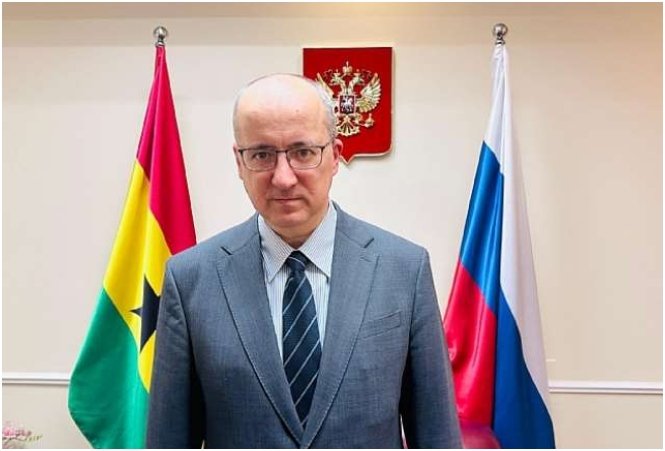
Russia has thrown its weight behind Ghana’s quest to join BRICS, but Moscow’s endorsement comes with a pointed caveat: enthusiasm alone will not secure a seat at the table.
In written responses to questions on Ghana’s BRICS ambition, Russian Ambassador to Ghana Andrei Ordash said Moscow “welcomes Ghana’s growing interest” in the grouping and regards it as evidence of Accra’s readiness to deepen cooperation with states playing an increasingly prominent role in the global economy and international politics.
But the Ambassador was equally clear that political signalling must be matched by economic delivery.
“It is important that such work is underpinned by concrete measures, the development of trade, investment, industrial cooperation, scientific and technical ties, and other areas that serve the long-term interests of the Ghanaian people,” Ordash said.
The formulation amounts to a diplomatic reality check for Accra: Russia’s backing is supportive, but not unconditional, and not sufficient on its own.
Consensus, Not a Single Backer
Ordash stressed that decisions on BRICS expansion are taken “by all BRICS members by consensus and in accordance with established procedures,” a reminder that Moscow’s goodwill cannot single-handedly deliver membership for Ghana.
Russia, he said, is ready to “engage in constructive dialogue with its Ghanaian partners on matters relating to cooperation with BRICS, to share its experience and to facilitate the development of ties with this organization.”
The Ambassador framed BRICS as an association built on “sovereign equality, mutual respect, consideration of national interests and consensus,” insisting it is “not directed against any countries” and does not require members to cease cooperation with other international partners.
The Economic Case and Its Limits
Ordash laid out the scale of the bloc: BRICS member states account for 47 per cent of the world’s population, over 30 per cent of global agricultural land, 40 per cent of global GDP at purchasing power parity and 23 per cent of total global trade.
But he was candid about what BRICS is not.
“It is also important to understand that BRICS is not a single trade market with a common customs territory, nor does it have a universal financial fund that automatically provides funds to all participants,” he said. “Tangible economic results will depend on the substance of the agreements concluded, the competitiveness of enterprises, the quality of investment projects and the willingness of the partners themselves to participate in their implementation.”
Russia, he added, sees opportunities to expand collaboration with Ghana in energy, industry, agriculture, education, science and technology, including joint projects involving partners from other BRICS countries.
No ‘Either-Or’ With the West
Addressing concerns that closer alignment with BRICS could complicate Ghana’s relations with Western partners, Ordash said a potential partnership “should not be viewed as a choice between one set of partners and another.”
“Ghana is entitled to determine for itself how to balance its cooperation with BRICS states, Western countries, African partners and international financial institutions,” he said, adding that Russia does not make cooperation with Moscow “contingent upon such decisions.”
He conceded that expanding partnerships “does not rule out commercial and financial risks,” but argued these should be assessed on specific circumstances rather than on “the mere fact of participation in the group.”
The Takeaway
For Accra, the message from Moscow is supportive but sober: Russia will champion Ghana’s BRICS interest and share its experience, but the onus is on Ghana to build the trade, investment and industrial case an,d to win over every BRICS member, not just the Kremlin.
As Ordash put it, Ghana’s interest “deserves serious and substantive consideration.” The caveat, unmistakably, is that substance, not just signals, will decide how far that interest travels.
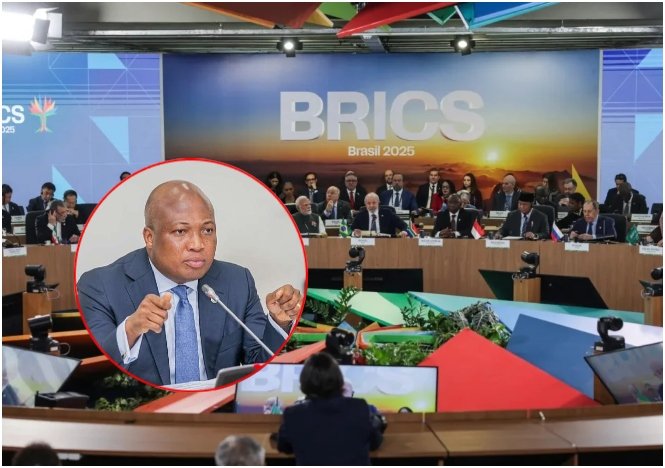
As Ghana’s government pursues membership of the BRICS bloc partly to unlock alternative development finance, a new policy brief by Col. Festus Aboagye (rtd) has highlighted a transparency gap at the heart of the country’s external borrowing: the government does not publish a breakdown of its bilateral debt by creditor country.
According to Ghana’s Ministry of Finance Public Debt Statistical Bulletin for the second quarter of 2026, the country’s external public debt stood at $28.9 billion at the end of June 2026, equivalent to 45.6 per cent of total public debt.
Multilateral creditors held 41.9 per cent of that external debt, international capital markets 29.0 per cent, bilateral creditors 20.0 per cent and commercial lenders 9.2 per cent.
But the bulletin does not break bilateral debt down by creditor country — a gap the policy brief, published by Ulinzi Africa Resources (UAR), describes as “itself a gap in transparency.”
A Financing Push Meets an Accountability Question
The disclosure comes as President John Dramani Mahama’s Cabinet has approved a decision to formally apply for BRICS membership, announced by Foreign Affairs Minister Samuel Okudzeto Ablakwa on 6 October 2026.
The government has presented the move as a way to diversify international partnerships, expand economic options and deepen South-South cooperation without abandoning traditional partners.
The UAR brief, authored by Colonel Festus Aboagye (Retired), argues that any additional financing from BRICS-linked institutions — most notably the New Development Bank — creates opportunities but also fiscal risks that demand the same scrutiny regardless of the lender.
“Additional financing creates opportunities, but poorly understood arrangements create fiscal risks,” Col Aboagye (rtd)’s brief states. “Transparency, repayment obligations, collateral, and public accountability deserve the same scrutiny, regardless of who the lender is. A financing arrangement should be judged by its terms, not by whether it originates in Washington, Beijing, New Delhi or elsewhere.”
The New Development Bank Question
The brief notes that BRICS is associated with alternative development-finance mechanisms, most notably the New Development Bank, but that membership of the bank is not automatic and requires a separate accession process.
Ghana could eventually gain an additional source of project financing beyond existing multilateral institutions, but the brief warns that the benefits are conditional and must be measured against a published baseline.
It recommends that the government publish baselines covering trade, debt and investment exposure, and report periodically against measurable indicators including export diversification, productive investment, domestic employment, technology transfer, financing costs and project implementation.
Calls for Parliamentary Scrutiny
The brief urges Parliament to request a ministerial statement on the BRICS application and to require regular reporting on significant commitments that arise from it.
It also calls on legislators to scrutinise long-term costs and exit implications alongside immediate benefits, and to require that any confidentiality around agreements be “legally justified, time-limited and reviewable.”
For the media, the brief recommends focusing on agreements rather than announcements, tracking projects from signature through implementation, and investigating financing terms, ownership structures and long-term obligations.
A Question of Terms, Not Origins
The brief’s central argument is that Ghana’s BRICS application should be judged by whether it strengthens the country’s “strategic agency” — its ability to choose, scrutinise, alter and, where necessary, exit external partnerships.
“The decisive issue is not whether Ghana joins, but whether participation strengthens its capacity to act independently, diversify intelligently and retain strategic flexibility,” the brief concludes.
For now, the immediate question is narrower: as Accra courts new financiers, will Ghanaians be told who the country already owes, and on what terms?
Ghana News
Former Nigerian Spy Chief Claims Dictator Sani Abacha Died During Intimate Encounter With a Woman
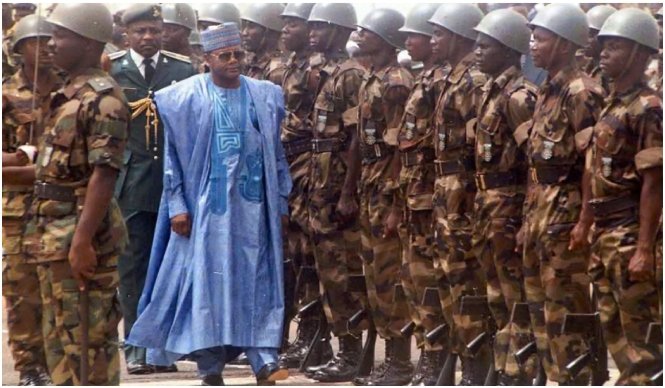
A former senior official of Nigeria’s Department of State Services (DSS) has offered a new account of the death of former military ruler General Sani Abacha, claiming the late head of state died during an intimate encounter with a woman at the presidential villa in Abuja.
Dennis Amachree, a former assistant director of the DSS, recounts the events surrounding Abacha’s death in his book, DSS at 40: My Journey Behind the Shield, challenging previously circulated accounts of how the military leader died.
According to the account discussed on Nigeria’s Arise News, Abacha died of cardiac arrest at about 4:05 am on June 8, 1998, at a guest house within the Aso Rock Presidential Villa.
Spy Chief Personally Interrogated the Woman
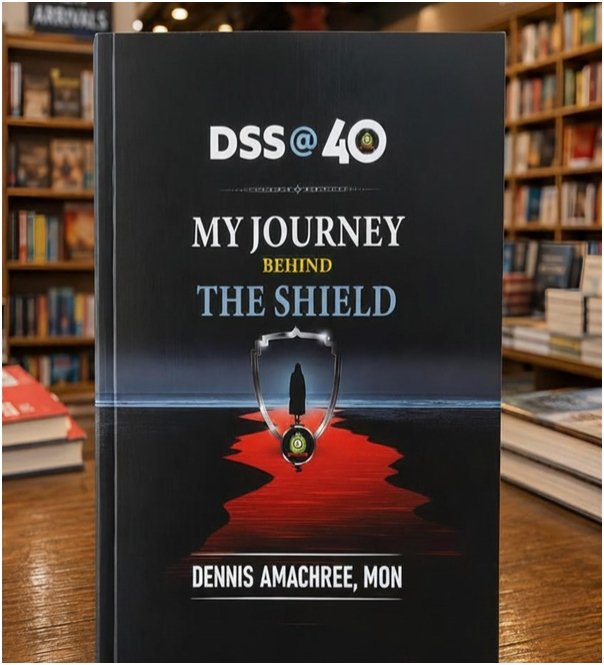
Amachree said he personally interrogated the woman, described as a pharmacist, after she fled the presidential complex following the incident.
He recalled that when questioned about the circumstances surrounding Abacha’s death, the woman insisted she was not responsible.
“I did not kill him. He died on top of me. He died on top of me,” she reportedly told him.
The account has reignited discussions about the circumstances surrounding the death of Abacha, who ruled Nigeria from November 1993 until his death in June 1998.
How the Pharmacist Escaped Aso Rock
According to Amachree’s account, the pharmacist panicked after discovering that Abacha was unresponsive and had no pulse.
She quickly dressed and left the guest house, telling the soldier on guard duty that the Head of State had asked for a car to take her back to her hotel. The soldier, unaware of what had happened inside, reportedly arranged transportation for her.
The woman returned to the Nicon Noga Hilton Hotel, where her elder sister, who was reportedly Abacha’s girlfriend, was staying. She informed her sister about the incident, after which they arranged for her to be driven to the Abuja airport.
She subsequently boarded a 7 am Okada Airline flight to Lagos, leaving before security officials established who had last been with the military ruler.
Traced to Lagos
Amachree said the security services initially went to the hotel to arrest the girlfriend but discovered that the pharmacist they wanted to question had already left for Lagos. He said he later received instructions from the DSS national headquarters to locate the woman.
At about 8 am on June 9, 1998, Amachree said his team traced the pharmacist to an address in Ogudu, Lagos, and brought her to his office for questioning. He recalled that her first words were:
“I did not kill him; he died on top of me.”
After obtaining her account, Amachree said he contacted his superiors in Abuja, following which the woman was flown back to the capital for further questioning.
A Controversial Legacy
Abacha’s death has long been the subject of speculation and conspiracy theories in Nigeria, with official accounts citing cardiac arrest while other theories have pointed to poisoning or foul play. The new book adds a fresh dimension to a debate that has persisted for nearly three decades.
The disclosure has been widely discussed on Nigerian television and social media, with clips of the Arise News report circulating online.


Yandex Strikes: Can Moscow Host Africa Under Drone Threat?

Major Sexual Abuse Scandal Rocks Ghana High School: Obuasi School Headmaster Sues Journalist for GH¢2 Million as Investigation Into Alleged Misconduct Widens

Why Keeping Weight Off Can Be Harder Than Losing It
-
 Sights and Sounds2 days ago
Mind Craft Camps Accra Turns School Holidays into Adventures in Creativity and Discovery
-

 Fashion & Style1 day ago
Wyclef Jean Gives Ghanaian Kaftan a Global Spotlight After ‘Chineke’ Fashion Inspiration
-

 Health & Wellness1 day ago
Beyond Bigger Muscles: Why Strength Training Matters for Healthy Ageing
-

 Health & Wellness18 hours ago
Four Everyday Lifestyle Habits That Can Make Weight Loss Easier
-

 Reels & Social Media Highlights18 hours ago
Ghana’s Digital Heartbeat: Outrage, Satire, and the Fight for Accountability
-
 Festivals & Events2 days ago
Amu Brown Rice Festival: Celebrating Harvest, History and Identity in Vane
-

 Festivals & Events6 hours ago
Compozers Fest Ghana Edition: Welcoming 2027 with Music in Accra
-
 Taste GH5 hours ago
Airport Residential Area: Where Accra’s Dining Scene Meets Global Flavours