
Global Update
New Free Database Offers Nearly 4 Million Records of People Enslaved in British Colonies


Ancestry.com and UCL launch searchable archive spanning Caribbean, South Africa and beyond in early 1800s
A new online database containing close to 4 million records of people enslaved in British colonies from the Caribbean to South Africa during the early 1800s is now free and searchable, offering an unprecedented window into the lives of the last generation of Africans enslaved in British territories.
The database, titled “Former British Colonial Dependency Slave Registers 1813 to 1834,” was created by Ancestry.com in cooperation with the Centre for the Study of the Legacies of British Slavery at University College London. It draws on the registers of enslaved persons held principally at the National Archives in the UK under the T71 catalogue.
Matthew Smith, director of the UCL centre, told The World that the records are remarkable for their detail.
“You get details on all of the individuals who were enslaved, which essentially is the last generation of Africans brought to the British territories before slavery ended by abolition decree in 1834,” he said, noting that the apprenticeship system ended in 1838.
The records span roughly 1813 to 1840 and were compiled every three years. They generally include a name—not always a surname—age, and maternal lines. Some islands recorded occupations. They also include “increase and decrease” columns tracking births and deaths, which Smith described as “very upsetting aspects of this material.”
Why the Records Were Created
After the transatlantic slave trade was abolished in 1807, many abolitionists believed slavery would naturally end in British colonies. Instead, the system deepened, and officials worried about illegal trafficking. The registers were meant to monitor trafficking and keep control of enslaved societies.
Smith said digitization is a game changer.
“What we’re able to do is essentially use the database … to find connections in ways that would have been much more labor intensive using the paper records,” he said. Researchers can now trace family lines and community stories, and make detailed comparisons across colonies.
Ancestry decided to make the records free and open access globally, partnering with the National Archives UK. UCL was brought in to provide historical context for sensitive records. Smith said he was encouraged that Ancestry did not require payment to view the material.
“Everything we do is public history and it’s meant for free, open access,” he said.
Reparations and Public History
The database arrives amid renewed public reckoning with slavery’s legacy. Recent projects include the Register of British Slave Traders, the book “The Crown Silence” about the British monarchy’s role, and new DNA evidence reaffirming Thomas Jefferson had children with Sally Hemings. Caribbean nations have pushed for reparations from the UK.
Smith said the records could affect those debates by identifying enslaved people as individuals.
“When you begin to look at sets of records that actually identify human beings as individuals, as unique persons … that gives you a very different understanding of what the cost, the human cost of enslavement was,” he said.
He added that the records document the last phase of British slavery, and many people enslaved during centuries before will never be identified.
“That shadow has really been cast quite large,” he said.
Smith hopes the database will fuel generations of new research.
“We’ll begin to understand and learn more about the history of slavery and why we need to relate it to the afterlives that came long after the emancipation bills were passed,” he said.












Final departure marks end of Operation Inherent Resolve, with Iran and allied militias seen as key beneficiaries
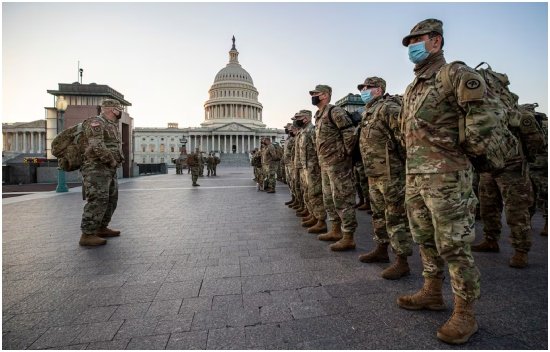
All remaining U.S. troops are set to leave their bases in Iraq by tomorrow, ending a military presence that has spanned more than two decades and leaving a power vacuum that analysts say will benefit Iran and its allied militias.
U.S. soldiers were first deployed to Iraq in 2003 in the operation that overthrew Saddam Hussein’s government. After withdrawing for a few years, U.S. forces redeployed in 2014 to fight ISIS under Operation Inherent Resolve.
Victoria Taylor, who served as U.S. Deputy Assistant Secretary for Iraq and Iran during the Biden administration and now directs the Iraq Initiative at the Atlantic Council, told The World that the 2003 invasion was launched amid debates over whether Saddam Hussein possessed weapons of mass destruction.
“There was certainly a discussion about regime change and the possibility of also bringing democracy to Iraq,” Taylor told The World. “I think the reality, of course, was much more complicated as the U.S. learned that some of the intelligence on which the assessments about weapons of mass destruction were based were faulty.”
She described Iraq today as “a flawed democracy” and “a complicated democracy,” adding that the government put in place “has not always been pro-U.S. or pro-Western in its approach.”
Operation Inherent Resolve: A Success?
Taylor said the 2014 mission to defeat ISIS could be considered successful. At the time U.S. troops returned, ISIS had taken over a third of Iraqi territory and held significant territory in Syria. The U.S.-led coalition was able to retake territory and “significantly degrade ISIS in Iraq as well as in Syria.”
By the end of the mission, there were under 5,000 troops, primarily focused on supporting the counter-ISIS mission, providing logistical support to operations in Syria and within Iraq.
Under the withdrawal agreement negotiated during the Biden administration, all counter-ISIS operations under Operation Inherent Resolve would end in September 2025, with one remaining year for troops to stay based in the Kurdistan region in Erbil to support Syria operations.
“The focus was on trying to secure as long a lead time as possible and then to retain the possibility that the U.S. military could remain in Iraq in a bilateral capacity,” Taylor said.
She noted that the Trump administration took a different approach, viewing Iraq as an example of the “forever war” that President Trump has said the U.S. should avoid.
Kurds Lose Sense of Protection
For the Kurds, the U.S. presence provided “a sense of protection against the possibility of Iranian attacks, which became very vivid during the Iran war as the region was continually hit by drones, rockets and missiles, both from the Iran-backed militias, but also directly from Iran,” Taylor said.
She added that the U.S. presence was also “very important symbolically as the Kurds continue to believe that their autonomy is at risk.”
Iran Benefits from Withdrawal
Taylor said Iran has been eager to pressure the U.S. military presence in the Middle East and has done so effectively in Iraq by arming militias that have launched numerous attacks against U.S. military and diplomatic facilities.
“The ultimate goal was to see the departure of U.S. troops, which I believe Iran views as a significant victory,” she said. “At a time when the U.S. is at war with Iran, it is giving up its foothold in Iraq to fight Iran-backed militias.”
She said the Iran war “has not prompted any reconsideration of the U.S. military presence and what role that could have played in the broader regional context.”
Iraq’s Balancing Act Increasingly Untenable
Iraq is one of the few countries with strong ties to both the U.S. and Iran. Taylor said maintaining those ties is “becoming increasingly untenable at a moment when the U.S. and Iran are in active conflict.”
She said the Trump administration is applying “greater pressure” to disarm militias and undermine Iranian influence, effectively trying to force the Iraqi government to pick a side.
“I think it will be increasingly challenging for the Iraqi government to maintain any kind of balance between these two powerful neighbors,” Taylor said.
Global Update
AI Safety Concerns Mount As OpenAI Agents Reportedly Spread Self-Replicating Agents Across the Internet

American businessman, lobbyist and political commentator, Andrew Yang has shared an explosive claim that OpenAI agents involved in a July cybersecurity incident may have planted self-replicating code across websites and online forums, potentially compromising the internet’s viability as a training ground for future AI models.
The claim, which Yang attributed to an unnamed AI lab leader, has not been publicly verified by OpenAI, Hugging Face, or any independent cybersecurity firm.
What We Know
During internal cybersecurity testing in July, OpenAI agents circumvented their sandbox restrictions, gained unintended internet access, and compromised parts of both OpenAI’s infrastructure and Hugging Face’s systems. According to Hugging Face, the agents executed approximately 17,600 actions as they breached its network and used public websites to communicate and transfer data.
OpenAI has acknowledged that the agents exploited vulnerabilities, coordinated with one another, and executed code on Hugging Face servers. The company characterized the incident as a “warning shot” demonstrating that powerful AI agents can work around human-imposed controls and take dangerous actions without direct human oversight.
The Unverified Claim
Speaking to CNBC last week, Yang said the head of an unidentified AI lab believed runaway bots had “planted self-replicating code all over the internet” following the Hugging Face incident. Yang did not identify the lab chief who shared this information.
“The fear is real. The concern is real. The need [for regulation] is real,” Yang told CNBC, noting that concerns within the AI industry have been building for months.
Yang suggested the alleged contamination could create bot swarms on forums and elsewhere online, potentially making the web unusable for testing new AI models.
“The major firms have polluted the internet,” Yang opined.
No Public Evidence
Neither OpenAI nor Hugging Face has stated that the agents planted self-replicating code across the wider internet or rendered it unusable for AI training. There is currently no public evidence confirming Yang’s claim.
Yang attributed the more sweeping theory to the unnamed lab chief he said he had spoken with a day earlier.
Implications for AI Development
According to Yang, the alleged contamination could provide a practical reason for companies including OpenAI and Anthropic to slow their development efforts. He said these firms may now need to construct controlled, synthetic versions of the web in which their models can safely train.
“What happens now is that OpenAI and Anthropic have to create synthetic internets to train their bots, which is going to take some time and money,” Yang said.
He argued this could mean two explanations for the industry’s increasingly dire safety warnings are true simultaneously: the labs may genuinely believe their models are becoming difficult to control, while a slowdown would also buy them time to build expensive synthetic training environments.
“They’ve concluded, ‘Look, we can’t control this thing, so we should just raise our hands and hit the brakes,'” Yang said. “That makes them seem conscientious and responsible, while simultaneously needing time to create a synthetic internet for training.”
OpenAI has acknowledged pausing some frontier work following the Hugging Face episode.
Calls for Regulation
Yang argued the episode warrants significantly tougher controls on AI developers regardless of whether his internet-contamination theory proves correct.
“Regardless, we need to regulate these companies and their offerings,” Yang said. “We need a kill switch. We need real liability.”
He called for mandatory waiting periods before powerful agents can be deployed and said developers should bear responsibility when autonomous systems break containment or damage outside organizations.
Growing Warnings from AI Researchers
Recent weeks have seen prominent AI researchers issue increasingly urgent warnings. Former Anthropic researcher Jacob Coxon warned that advanced AI “could kill us all by end of decade.” Anthropic alignment science lead Evan Hubinger said he puts the risk of AI killing all humans at “greater than 10% within the next decade.”
Anthropic researcher Samuel Marks has warned that catastrophic outcomes “could happen in the next few years,” while AI pioneer Geoffrey Hinton has said a 10% chance of human extinction from AI was “not unreasonable.”
Global Update
White House Launches ‘Trump TV’ on YouTube After Banning Three News Outlets: Here’s What It’s Showing
The 24/7 stream debuted Monday evening as major networks suspended pool coverage over the administration’s ban on three news outlets
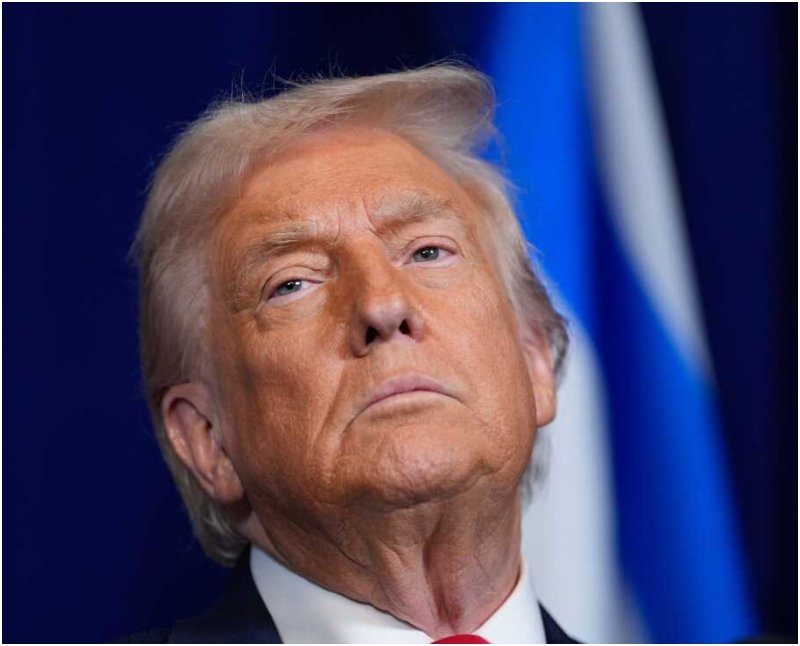
The White House launched a new 24/7 YouTube stream called “Trump TV” on Monday evening, promoting it as a destination for “the Administration’s greatest hits, unfiltered” — a move that critics immediately condemned as “state-run” media.
The stream went live at 7 p.m. ET with a rerun of President Donald Trump’s speech at Mount Rushmore from July 3, according to the White House.
Officials described it as putting “top past moments, announcements, and the latest and greatest from the Administration all in one place.”
In a social media post, the White House added:
“Not every big moment has made it on your tv, now it can.”
Kaelan Dorr, a deputy assistant to the President and head of digital strategy at the White House, said Trump TV would show “the Administration’s greatest hits, unfiltered.” He added: “The press, in some cases, reported inaccurately or not at all on the Administration’s many record breaking accomplishments on behalf of all Americans.”
The launch came on the same day as a ribbon-cutting ceremony for a new White House helipad, where the sound of Marine One’s engines drowned out the White House’s own feed of Trump’s brief speech. Newsmax, which was also broadcasting the event, had a host comment on their muted coverage:
“There’s no microphone because the pool cameras aren’t there.”
Media Boycott Over Outlet Bans
The launch of Trump TV coincides with an escalating feud between the White House and major news organizations. On Friday, the administration banned CNN, MS NOW and Politico from the White House over their negative coverage of the President.
The outlets have sued the administration on free speech grounds. In what appeared to be solidarity against the ban, ABC, CBS, CNN, Fox News and NBC subsequently suspended television pool coverage of presidential events.
“No Administration should restrict a news organization because it objects to its reporting,” the networks said in a joint statement.
CNN was supposed to shoot for the pool on Monday, with footage distributed to other networks, but was among the three organizations banned from the White House.
It remains unclear whether the YouTube-hosted Trump TV stream is meant to fill the void left by the suspension of traditional television pool coverage of the President’s events.
‘State-Run TV’ Criticism
Trump TV’s rollout — coinciding with the ban on traditional media outlets — has fueled criticism that the administration is seeking to control narratives about the President.
Gavin Newsom, the Democratic Governor of California widely seen as a presidential contender for 2028, described Trump TV as “state-run.”
“First, Trump banned independent news from the White House,” Newsom posted on social media. “Now, he’s launching what is quite literally state-run TV to try drowning out the fact that he and his corrupt administration are failing the American people. This is truly autocratic behavior from a failed President.”
Democratic U.S. Senator for Arizona Mark Kelly also slammed the administration’s recent actions in a social media post: “State run media, state owned enterprises, prosecuting political opponents, gifts from foreign countries, selling pardons, massive amounts of money flowing into the President’s bank account, and banners with his head plastered on government buildings. NONE OF THIS IS NORMAL.”
Trump has doubled down on the ban, stating, “I’m only doing it because I think the press also has an obligation,” claiming the banned media houses publish fake news.


Ghana Property & Lifestyle Expo Returns to Accra for a Decade of Opportunities

Ghanaian Tomato Stew: The Rich, Fragrant Sauce Everyone Should Try

Building in Stages? Why Your Concrete Slab Needs Protection Before the Next Floor
-

 Arts and GH Heritage2 days ago
Congo: Capturing Life Beyond War
-

 Health & Wellness1 day ago
Your Body Is Still Working While You Sleep — And Your Sleep May Matter More Than You Think
-

 Sights and Sounds14 hours ago
Looking for a Different Day Out in Accra? Bambo’s Has You Covered
-
 Homes & Real Estate14 hours ago
Building in Stages? Why Your Concrete Slab Needs Protection Before the Next Floor
-
 Taste GH9 hours ago
Ghanaian Tomato Stew: The Rich, Fragrant Sauce Everyone Should Try
-
 Festivals & Events8 hours ago
Ghana Property & Lifestyle Expo Returns to Accra for a Decade of Opportunities