
Global Update
Melinda French Gates Responds to Epstein Revelations, Says Questions Surrounding Bill Gates Are Not Hers to Answer


Melinda French Gates has spoken publicly about the renewed attention surrounding the Jeffrey Epstein files.
She says the repeated mentions of her former husband, Microsoft co-founder Bill Gates, leave her with a deep sense of sadness for the alleged victims and raise unresolved questions she believes others must answer.
In a wide-ranging interview featured on Wild Card With Rachel Martin, Melinda French Gates reflected on what she described as a broader societal reckoning prompted by the ongoing release and scrutiny of documents connected to Epstein, the disgraced financier who died in jail in 2019 while facing federal sex trafficking charges.
“I think we’re having a reckoning as a society,” she said, stressing that no young girl should ever be subjected to the situations associated with Epstein and those within his circle. “No girl should ever be put in the situation that they were put in by Epstein and whatever was going on with all of the various people around him. It’s beyond heartbreaking.”
French Gates said the issue resonates deeply on a personal level, recalling both her own adolescence and the years when her daughters were the same age as some of Epstein’s alleged victims. She explained that reading or hearing new details is emotionally difficult, not only because of the suffering described, but also because it revives memories of what she called “very, very painful times” during her marriage.
While she did not elaborate on specific events, she acknowledged that the resurfacing of Epstein-related news inevitably brings discomfort. “It brings back memories of some very painful times in my marriage,” she said, adding that she has made a conscious effort to move forward with her life.
French Gates, who divorced Bill Gates in 2021 after 27 years of marriage, emphasised that she no longer feels responsible for addressing questions tied to Epstein or to her former husband’s past associations.
“Whatever questions remain there of what I don’t, can’t even begin to know all of it, those questions are for those people and for even my ex-husband,” she said. “They need to answer to those things, not me.”
Her comments come amid renewed public debate following the release and analysis of Epstein-related court documents, often referred to as the “Epstein files,” which list numerous high-profile figures mentioned in testimonies and records. Being named in such documents does not in itself imply wrongdoing, but the disclosures have reignited scrutiny of Epstein’s network and the systems that allowed his abuse to continue for years.
Throughout the interview, French Gates repeatedly returned to the human impact of the revelations, describing her dominant emotional response as “unbelievable sadness.” She said that while she has been able to move on and find happiness in what she described as an “unexpected, beautiful place” in her life, she remains deeply affected by the stories of the women who say they were abused as girls.
“For me, it’s just sadness,” she said. “Sadness for those young girls… how did that happen to those girls?”
French Gates also reflected on the personal cost of distancing herself from what she described as “the muck,” noting that she felt compelled not only to leave her marriage but eventually to step away from the Bill & Melinda Gates Foundation, one of the world’s most influential philanthropic organisations.
Despite the pain, she expressed hope that justice will be achieved for Epstein’s victims, many of whom are now adults speaking publicly about their experiences. Referencing women who have testified or addressed the media in Washington, DC, she said their courage underscores the gravity of what they endured. “What they went through is just unimaginable,” she said.
Her remarks add a rare, personal perspective to the ongoing global conversation about accountability, power, and the long-term consequences of abuse, as survivors continue to seek recognition and justice.





Global Update
‘There was a Coordinated Disclosure Plan’: AI-Discovered Flaw in PHP Triggers Global Internet Chaos as Cybercriminals Race to Exploit It

A critical vulnerability in PHP, a programming language that powers much of the internet, was discovered by artificial intelligence, setting off a global scramble that took down websites worldwide and sparked a race between cybercriminals and IT teams to exploit and patch the flaw.
The discovery, made by cybersecurity researchers at Calif and Wiz through OpenAI’s “Patch the Planet” program, was described by Wiz as the “most severe vulnerabilities ever discovered” by AI. The flaws had gone undetected for more than a decade before advanced AI tools found them in a matter of weeks.
What Happened
The vulnerability was found in PHP, the programming language behind roughly 70% of the internet, according to Wiz’s estimate. PHP quietly powers WordPress, Drupal, Joomla, Magento, shared hosting platforms, control panels, and countless software products that don’t even advertise their use of it.
The PHP Foundation intended to release the discovery later this month alongside a complete patch. But details of the flaw were leaked on social media on Tuesday—forcing the Foundation to rush out its announcement and triggering a cascade of emergency responses.
Global Fallout
Governments and organizations worldwide took drastic action:
- Finland temporarily shut down the government’s public web services.
- The Netherlands’ cybersecurity agency took its own website offline, and the Dutch parliament’s lower house website became inaccessible.
- The BBC took several programme pages offline, including those for Doctor Who and The Traitors.
- Edinburgh Council’s website became inaccessible.
- The Wikimedia Foundation took down a number of systems as a precaution, temporarily affecting access to parts of Wikipedia.
- DeviantArt went “temporarily down for maintenance.”
The US National Security Agency issued advice on X for organizations unable to update in time to take their systems offline, warning that “these vulnerabilities often provide a direct path to the server’s file system or database.” The UK’s National Cyber Security Centre, along with counterparts in the EU and Australia, issued similar warnings. Japan’s Prime Minister Sanae Takaichi urged people to check if their publicly available websites ran on PHP.
The White House said federal agencies were working with leading AI labs to speed up a fix.
The AI Factor
Speaking to The World, Matthew Green, a professor of computer science at Johns Hopkins University, explained why AI has fundamentally changed the cybersecurity landscape.
“Human beings are just kind of bad at writing code. The result of that is that we have all of these systems like websites that are full of bugs,” he said. “And the good news is that human beings are bad at finding bugs, or at least that used to be the good news. And unfortunately, AI is very good at finding bugs.”
Green likened traditional vulnerability hunting to finding a weak padlock among a thousand. “That’s incredibly time-consuming. And that’s the kind of thing that AI is great at. It can do millions of padlocks in a day.”
The discovery process itself was ironic: researchers essentially asked an AI model to “find me some great bugs in PHP and try really hard.”
The Leak and the Race
Traditionally, vulnerabilities are disclosed through a coordinated process—notifying organizations quietly so they can patch their systems before details become public. But that process broke down.
“What seems to have happened is there was a coordinated disclosure plan… and one party said, ‘You know what? This is not going fast enough. We’re just going to tell the whole world what the patches are and publish everything,'” Green said. “Once they did that, that kind of opened the floodgates wide for attackers too.”
By the end of Wednesday, even before patching was close to complete, there were thousands of attempts to break into websites, Green said. Cloudflare CTO Dane Knecht said he was “seeing early attacks emerging and are updating mitigations as new vectors show up.”
The Asymmetry Problem
Green highlighted a troubling imbalance: attacking is now AI-automated, while patching remains stubbornly human.
“Fixing things can break parts of the website you don’t expect to be broken. So unfortunately, this patching process is still very human oriented, whereas the attacking process is now AI automated and it’s bad asymmetry,” he said.
He cautioned against simply deploying AI to fix systems autonomously. “Imagine somebody finds a bug in an important piece of software or hardware that’s running inside a water treatment plant. Yes, you could go in there with a good AI model… But I don’t know that you want to do that. Because what if the AI model screws something up?”
China’s Open-Weight Models
Green also pointed to the role of Chinese AI models in the chaos. China has been leading the way in developing open-weight models—models that can be downloaded to local hardware and modified, including removing safety guardrails.
“Those models have just very recently gotten very good at hacking things,” Green said. “So now all of the safety guardrails that we’re kind of keeping the big hackers away are going away. And we’re just starting to see, I think, the first generation of attacks that are powered by those.”
Asked whether the situation scared him, Green was candid: “It’s not great. And I’m not sleeping perfectly well right now.”
He noted that Anthropic published a report identifying a particular Chinese model with safety rails removed that is “really good at hacking”—which he described as “a warning shot” to the Chinese government. “There have been a few hints from China that they’re considering this… But I wouldn’t say we’ve seen a definite shift in strategy yet.”
What’s Next
The PHP Foundation has issued updates only for the latest versions, urging users of PHP 8.1 or older to upgrade. CERT-EU warned the vulnerability could affect all versions dating back to PHP 5, launched in 2004.
Green described the situation as an accelerating game of whack-a-mole.
“It’s always been people finding bugs, people fixing bugs. What’s changing is the velocity of the bugs,” he said. “We saw three or four major bugs just pop up yesterday alone.”
“I think eventually we’ll hit a steady state where we fix everything or most of everything and it’ll be OK,” he added. “I just don’t know what’s going to happen in the time between now and then.”

Two female students at the Autonomous University of Morelos disappeared within days of each other in March. Both were later found dead. Since April of last year, at least seven students from the same university have been murdered, five young women and two teenage boys.
Among them was an exchange student from Spain, killed last month just weeks after arriving in Mexico.
“When we hear that another student has disappeared or been killed, we all see ourselves in her. We think, that could have been me,” said Yugi Milan, a student activist in Morelos, speaking to The World’s Tibisay Cea and colleague Axel Hernandez.
The killings have exposed a deepening crisis of gender-based violence at Mexican universities, and a system that activists say is failing to protect students, investigate complaints, or deliver justice.
A University Under Pressure
The Autonomous University of Morelos responded to the high-profile murders with calls for investigation and promises of tighter security: more guards, cameras, and panic buttons.
But activists say those measures do not address the root of the problem, sexual harassment on campus.
“They can’t even respond to complaints of gender violence against professors and fellow students on campus,” Milan said, speaking in Spanish.
The problem extends far beyond Morelos. A recent study found that nearly one in five female university students in Mexico has experienced sexual harassment — but only about 10 percent file a formal complaint.
Fear of Retaliation
Ana Buquet, a gender studies researcher at Mexico’s largest public university, UNAM, says fear keeps victims silent.
“I think basically they are afraid,” Buquet said. “First, many times they feel alone.”
Victims fear retaliation from professors, including lower grades or obstacles to graduating, she said.
Ameyali Ramirez, a UNAM student, remembers a teaching assistant who had been accused of harassing female students — yet continued working with them. Ramirez says she had to take exams alone with him, behind a closed door. Nothing happened to her, but she questions why the exams were conducted that way.
While Ramirez acknowledges universities have made progress, including better reporting procedures and courses on gender violence, Buquet says many reforms focus on responding to harassment rather than preventing it. Universities need more education on gender equality and better training for professors and staff, she said.
Danger Beyond Campus Gates
For many students, the threat follows them home.
Lorena Ruiz Rojas, a 19-year-old anthropology student at UNAM, says she worries about disappearing during her commute. She regularly shares her live location with her family on WhatsApp.
Mexico has a widespread disappearance crisis, with more than 130,000 people officially listed as missing. Security analyst Eduardo Guerrero says organized crime is behind many disappearances involving young women and girls.
“Many times it is young women who disappear, and it has to do with human trafficking markets, sexual trafficking,” Guerrero said.
Some criminal groups abduct young women for sexual exploitation, he said.
Harassment Is Everywhere
Even in everyday life, women in Mexico face harassment in public spaces.
In Mexico City, the subway reserves some cars for women and young children only. Carmen Cuevas, waiting for the next train with her five-year-old son, says the measure exists for safety reasons, she says men have touched her when traveling in mixed-gender cars.
Another passenger, 64-year-old Patricia Ponce de León, says harassment does not stop as women grow older. She has seen men masturbating in front of her on the train.
Justice Denied
For women who report abuse, getting justice can be another ordeal.
Becky Bios is a survivor of domestic violence. Her former husband beat her to the point of deforming her face and causing internal injuries — just because she wanted to leave the relationship. She was hospitalized in critical condition for several days and was afraid to report him.
When she finally filed a formal complaint nine years ago, she says the case never led to prosecution. Her aggressor remains free.
Mexico has one of the highest rates of femicides in the world. According to the National Statistics Agency, more than 93 percent of crimes are either never reported or never investigated.
A Regional Reckoning
The report comes amid renewed global attention to campus sexual violence, following recent gang rape allegations at Cornell University in the United States. In Mexico, students have spent years demanding better protection from sexual harassment and gender-based violence, and say the urgency has never been greater.
For students in Morelos and across Mexico, the fear is personal and constant.
“When we hear that another student has disappeared or been killed, we all see ourselves in her,” Milan said. “We think, that could have been me.”
Global Update
Space Wars: New NOVA Documentary Warns Militarization of Orbit Could Spark Next Global Conflict

Astrophysicist Jonathan McDowell says the world’s 12,000 satellites are now indispensable, and increasingly vulnerable, as anti-satellite weapons, space jammers and a rising tide of orbital debris threaten the systems that run modern life
A new PBS documentary is sounding the alarm about the growing militarization of space, warning that the satellites underpinning everything from cell phone connections and GPS to ATMs and battlefield communications have become both indispensable assets and prime targets in a new era of potential conflict.
The NOVA film Space Wars, featuring astrophysicist Jonathan McDowell, explores how the roughly 12,000 satellites now in orbit have become central to modern military operations — and why a war in space could have consequences lasting decades to centuries.
“Without them, commanders are blind,” the documentary notes, describing how satellites are essential for battlefield communication, surveillance, intelligence and targeting. “The more sophisticated these space-based systems, the greater edge they provide. And the more valuable targets they become.”
McDowell, who retired from the Smithsonian Observatory earlier this year, told The World that militaries are now as dependent on satellites as civilian society.
“As much of the world is, the satellites network us. They feed us information. They connect us,” he said. “For the military, a lot of communications across the world goes across satellites. Surveillance, of course. Intelligence, what are your opponents up to? And navigation. GPS was developed originally for weapons guidance. All of those things are absolutely integral to the way that a modern military operates.”
Anti-Satellite Weapons and the Debris Threat
Russia’s full-scale invasion of Ukraine saw Moscow jam satellites over the country, but McDowell warned that countries possess far more destructive capabilities — including kinetic anti-satellite weapons designed to physically strike orbiting spacecraft.
“It doesn’t need any explosive on board because the satellite’s traveling at 17,000 miles an hour,” he said. “If you can just get in the way of it, it’s going to completely smash. And that would generate enormous amounts of space debris and space junk that would be very bad for everyone using space.”
Space debris is already a mounting hazard. McDowell said more than 30,000 pieces a few inches across or larger are being tracked, while centimeter-sized debris could number as much as a million pieces in orbit.
“We’ve been seeing a concerning increase in the number of small incidents,” he said, citing a recent strike on China’s space station that hit an evacuation module, though no lives were lost. “The worry is that that’s a rising level that indicates that the bigger pieces of space debris are not far behind and that we could start losing satellites soon. I think it’s a real problem and a real risk.”
The documentary features Paul Graziani, CEO of the aerospace company Comsbox, who describes how space junk ranges from spent rocket stages and defunct satellites to lost astronaut gloves and errant screws.
Space Jammers: The Next Front
Rather than destroying satellites outright, which would create debris harmful to all space users, McDowell said major powers are increasingly turning to “space jammers” that can drown out satellite signals with competing radio frequencies.
“You can put a satellite next to the GPS satellite and broadcast really loud so as to disable it for all users, or maybe even to take out the satellite if you can drown out its control frequencies,” he said. “These space jammer weapons, I think, are likely to be the focus in the years to come.” He noted rumors that the United States has already deployed such systems.
A Militarized History, and a Fragile Peace
The idea of militarizing space is not new, McDowell said, it predates the first satellite launch.
“In the 1940s, before we even launched the first satellite, space has been militarized, I’m afraid, since the very earliest days.” Within a couple of years of Sputnik, the CIA was launching spy satellites, and the first space weapons test came in 1959.
“We’ve managed to stay just on the right side of peace in space, but there’s been a strong military thread throughout the history of space exploration,” he said.
Asked whether the world is in an arms race in space, McDowell said the dynamic is broader:
“Not just an arms race, but also a military support race, a spy satellite race, a navigation satellite race, a communication satellite race, to support the militaries operating on Earth by more and more sophisticated space assets, giving them an edge over their opponents. Along with that, there has been the development of actual space weapons, but not their deployment, not their use.”
He attributed the restraint to political incentives and the severity of escalation:
“It would be such an act of war to destroy someone else’s satellite. It would be seen as a real escalation. No one actually wants to start a war in space. But if a war does break out, then it will spread to space. That’s what’s different now.”
Treaties and the Case for a New Agreement
The 1967 Outer Space Treaty prohibits nuclear weapons in space, but no comparable agreements bar conventional warfare in orbit. McDowell argued a new accord is necessary because 21st-century society depends so heavily on space technology.
“If you have a war that spreads to space, then you start losing all of that high-tech capability,” he said. “And if you really have a real war in space with debris generation and so on, then you lose the use of space for decades to centuries because of all the debris whizzing around.”
Despite the risks, McDowell said it is not too late to change course, and that the United States and China, the main players in space, hold the key.
“I worry about it because I feel like there’s still time to change direction here,” he said. “A decision to switch the rhetoric around and actually more seriously work towards: how do we trust each other? How do we verify that we’re not about to attack each other? — rather than all of the ranting going on right now about how we need to be able to kick the other guy’s butt in space. Then I think you could still stave this off.”
Space Wars is available to stream now on YouTube, produced by NOVA.


Funding Fears Loom For Ghana’s Life-Saving Malaria Vaccine Five Years After Roll Out

‘There was a Coordinated Disclosure Plan’: AI-Discovered Flaw in PHP Triggers Global Internet Chaos as Cybercriminals Race to Exploit It

Yandex Strikes: Can Moscow Host Africa Under Drone Threat?
-

 Ghana News1 day ago
Major Sexual Abuse Scandal Rocks Ghana High School: Obuasi School Headmaster Sues Journalist for GH¢2 Million as Investigation Into Alleged Misconduct Widens
-

 Reels & Social Media Highlights2 days ago
Ghana’s Digital Heartbeat: Outrage, Satire, and the Fight for Accountability
-

 Festivals & Events1 day ago
Compozers Fest Ghana Edition: Welcoming 2027 with Music in Accra
-

 Taste GH1 day ago
Airport Residential Area: Where Accra’s Dining Scene Meets Global Flavours
-

 Health & Wellness2 days ago
Four Everyday Lifestyle Habits That Can Make Weight Loss Easier
-

 Health & Wellness1 day ago
Why Keeping Weight Off Can Be Harder Than Losing It
-
 Arts and GH Heritage2 days ago
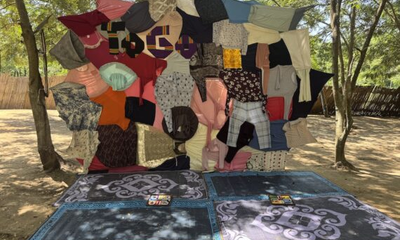
When Second-Hand Clothes Become a Playground for Community
-
 Opinion1 day ago
Yandex Strikes: Can Moscow Host Africa Under Drone Threat?