
Culture
Ghanaian-Norwegian Star Akuvi Features Stonebwoy in Uplifting Anthem “Dream Big”


Ghanaian-Norwegian rising star Akuvi is making waves once again with her latest single, “Dream Big,” a soulful, purpose-driven anthem featuring dancehall heavyweight Stonebwoy.
Produced by Peewezelcue, “Dream Big” blends an infectious, uplifting groove with a powerful message of self-belief, resilience, and forward momentum.
Akuvi’s warm, emotive vocals anchor the track, delivering sincerity and hope, while Stonebwoy’s calm, authoritative verse adds depth and lived experience, reinforcing the song’s core theme without overshadowing its organic feel.

The music video, directed by Kwame Kodah and shot in Ghana’s scenic Volta Region, perfectly captures the song’s spirit — vibrant yet grounded visuals that celebrate ambition, movement, and purpose. The collaboration marks a significant milestone in Akuvi’s rapidly ascending career, bridging Afrobeat, highlife, and global sounds while strengthening her position as a voice to watch in both African and diaspora music circles.
Fresh from a standout performance at the BHIM Festival, Akuvi’s new release resonates deeply with listeners seeking inspiration and cultural connection. The track is already generating strong buzz across streaming platforms and social media, with fans praising its authenticity, positive energy, and seamless fusion of Ghanaian and international influences.
As Ghana continues to lead the global Afrobeats and Afro-fusion wave, “Dream Big” serves as a reminder of the country’s growing influence on the world stage — a project that unites homegrown talent with diaspora roots and delivers a universal message of dreaming boldly and moving forward together.






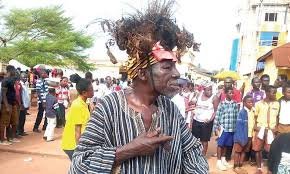
If you think a festival is just about the drumming and the dancing, you’ve clearly never been to Techiman during Apoɔ.
Imagine a place where, for a few weeks, the social hierarchy dissolves, and you are legally and spiritually permitted to tell your boss, your neighbor, or even the highest King exactly what you think of them—without fear of retribution.
This isn’t a modern social media “call-out” culture; it is a sacred, ancient Bono tradition of psychological and spiritual purging that has kept this community vibrant for centuries.
From March 7 to April 5, 2026, the Techiman Traditional Council invites the world to witness this extraordinary spectacle under the theme: “Showcasing our heritage and uniting for ancestral blessings.”
The Art of “Rejecting” Evil
The word Apoɔ comes from the Bono root “po,” which literally means to reject. Historically, the festival emerged as a response to the authoritarian rule of past leaders. The people needed a vent for their frustrations, so they consulted the gods, who sanctioned a period where grievances could be aired through proverbs, songs, and lampoons.
Today, this “rejection” isn’t just about politics; it’s a massive spiritual cleanup. Before the main events, you’ll see priests performing Hyiretuo (spiritual cleansing) and women gathering white clay from the Aponkosu River to decorate shrines. It is a time when the “dirty” air of grudges and social evils is cleared to make room for fresh ancestral blessings.
Why You Must Be in Techiman This Year
For the global traveler, Apoɔ is a masterclass in indigenous democracy. Watching the Akokobonee (early morning songs) or the flamboyant processions where participants smear themselves in charcoal and clay is a sensory overload in the best way possible. It is one of the few places on earth where you can see ancient African conflict resolution in its rawest, most artistic form.
For the native Ghanaian, especially those in the diaspora, this is a homecoming with a purpose. After the disruptions of the past few years, the 2026 festival is a pivotal moment for “uniting for ancestral blessings.” It is about settling family feuds, reconnecting with the Bono-Manso roots, and standing in the presence of the Omanhene as he pours libation to the ancestors who founded one of the earliest Akan states.
What to Expect
As the festival climaxes toward the final 5:00 pm curtain call on April 5, expect the town of Techiman to be a kaleidoscope of color. You will witness:
- The Apoɔ Procession: A rhythmic, satirical parade where “insults” are turned into high art.
- Ancestral Rites: Solemn visits to the royal cemetery to bridge the gap between the living and the dead.
- The Great Friday: The peak of the celebrations, where the unity of the Bono people is most palpable.
Recommendation
If you are planning to attend, book your accommodation in the Bono East Region early. Beyond the festival grounds, take a day trip to the nearby Boabeng-Fiema Monkey Sanctuary or the Fuller Falls.
To truly “humanize” your experience, don’t just watch from the sidelines—learn a few Bono proverbs and join the singing. There is no better way to feel the pulse of Ghana than by participating in the “rejection” of the old to welcome the new.
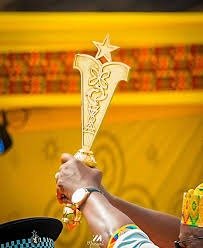
There is a moment during Ghana’s presidential inauguration that has nothing to do with ballot sheets, constitutional affidavits, or the usual political chatter.
It happens when the newly sworn-in commander-in-chief grasps the Sword of State. Time slows. The crowd falls silent. For a few seconds, a piece of metal speaks louder than any campaign promise.
On January 7, 2025, when John Dramani Mahama took his oath for the second time, that moment resonated with particular power.
This marked his third time holding the revered sword, a continuity that connects him not just to his previous tenure but to a lineage stretching back to independence.
But why all the fuss over a sword? In a modern republic, surrounded by iPhones and fighter jets, why does this ancient object still matter?
The answer lies in what the sword carries that no constitution can print.
The Weight That Words Cannot Carry
Ghana’s Sword of State is not a weapon. Crafted from solid gold and etched with symbols as old as the Asante Kingdom, it belongs to a family of ceremonial swords known as Akrafena—a name that implies soul, purity, and responsibility.
When a president holds it, they are not preparing for battle. They are submitting to something far more demanding.
The double-bladed design, rooted in the Afena-nta symbol, speaks of balance: war and peace, justice and mercy, strength and restraint.
These are not qualities you can legislate. They are qualities you must embody.
First held by Osagyefo Dr. Kwame Nkrumah in 1960, the sword has witnessed every chapter of Ghana’s Fourth Republic—the triumphs, the transitions, the peaceful handovers that much of the continent envies.
It has rested in the hands of Rawlings, Kufuor, Mills, Mahama, and Akufo-Addo. Each grip tells a story.
The Commander-in-Chief Paradox
Here is the twist most people miss: Most presidents are civilians. They have never commanded an army, never worn a uniform.
Yet the moment they take office, they become the commander-in-chief of the armed forces. The sword bridges that gap.
It transforms a politician into a protector. It signals to every soldier, sailor, and airperson that the person holding that blade now holds their loyalty—and their lives—in trust.
Read Also: When a Woman’s Dance Stopped a Giant: The True Story of the Fante’s Apatampa
When the president inspects the guard, it is the sword that confirms his authority to do so.
This is why the handing-over ceremony is so charged. In Kenya, where a similar tradition exists, the sword has only changed hands a handful of times since independence.
When Mwai Kibaki handed it to Uhuru Kenyatta in 2013, it was not just a transfer of office—it was a father’s legacy passing to a son through the gleam of polished steel.
A Global Language of Steel
Ghana is not alone in this dance between democracy and tradition. Across the Commonwealth, the ceremonial sword signals that power has shifted.
In the United States, George Washington himself wore a sword at his inauguration, following the fashion of European courts.
Thomas Jefferson later refused to wear one—too royal, he thought—but the symbolism persisted.
Even in diplomacy, swords speak. When the British raided the White House in 1814, stealing James Madison’s ceremonial sword was considered a devastating psychological blow.
When a foreign dignitary presents a sword as a gift—as Ghana’s ambassador did to President Gerald Ford in 1975—it is an offering of respect, courage, and brotherhood.
The Silent Guardian
So the next time you watch an inauguration and see that golden blade rise, do not dismiss it as theatre. That word is watching the president as much as the president is holding it.
It asks a silent question every single day: Will you be worthy of the weight?
For a moment, under the African sun, with millions watching and history holding its breath, the answer is still being written.
And that is why the sword must always be there—to remind the person holding it that some things are heavier than gold.
Reels & Social Media Highlights
Ghana’s Social Media Pulse: From Viral Dances to Political Firestorms


The past 48 hours on Ghanaian social media have served a rich stew of culture, controversy, and conversation. Here’s what’s been trending on Facebook and X from March 15 to 16, 2026.
The King Who Danced Into Our Hearts
A video of Asantehene Otumfuo Osei Tutu II showing off his dance moves at the Akwasidae Festival in South Africa has warmed hearts across platforms.
The clip, shared widely on TikTok and X, captures the King smiling broadly as he moves to live band tunes in Johannesburg. Social media users flooded comments with praise, with one observer noting, “The humble king, me wura ne Asantehene”.
@thepalaceview Culture, rhythm and royalty — Otumfuo Osei Tutu II lights up the dance floor during Akwasidae in Johannesburg. 👑🎶 #thepalaceview #ghanatiktok🇬🇭 #manhyiapalace🥰😍 #fyp #akwasidaefestival ♬ original sound – The Palace View
The moment matters because it shows a revered traditional leader in a relaxed, human light—connecting with Ghanaians abroad while showcasing Asante culture on foreign soil.
Kakalika Conquers the World
Ghana’s “Kakalika” dance has officially gone global. Arsenal Women’s stars Chloe Kelly and Olivia Smith celebrated a goal by breaking into the DopeNation-inspired routine, and social media lost it.
Fans flooded X with reactions like “Kakalika to the world” and “Ndwom no aduru akyiri” to wit, the song has reached far. The moment highlights how Ghanaian pop culture now travels through football stadiums in Europe, carried by athletes who find our rhythms irresistible.
Bills Micro-Credit Backlash
A darker trend emerged when a viral video showed field officers of Bills Micro-Credit Limited in an altercation with a woman carrying a baby. Public outrage was swift and fierce.
By Saturday, management announced the suspension of five officers and handed them over to police for investigation. The board has also reached out to the customer involved.
The incident sparked wider conversations about debt collection practices and the treatment of vulnerable Ghanaians by financial institutions.
FDA Warns Against ‘Sukudai’
Health concerns trended after the Food and Drugs Authority warned the public against “Sukudai,” an unregistered substance marketed as a heart-cleansing remedy in Kumasi. Laboratory analysis confirmed the presence of chloroform—a toxic chemical linked to cancer, liver damage, and even death.
The warning followed a viral video claiming the substance could corrode Styrofoam. Social media users have been sharing the FDA’s alert widely, though some wonder how long the product circulated before authorities acted.
Political Misinformation Debate
Data journalist Maxwell Mensah sparked reflection with his call to end rising political misinformation online . He specifically called out a page called GhanaToday for publishing unverified claims targeting the ruling party, while noting that ruling party supporters have adopted counter-strategies using branded quote cards to circulate allegations about the opposition NPP.
Mr. Mensah’s “This nonsense must STOP” resonated with users worried about how fake news poisons democratic discourse .
Sanitary Pads vs Petroleum Hub
Parliamentary debates spilled onto social media after NPP MP George Kwame Aboagye criticized government’s GH¢300 million allocation for sanitary pads, arguing the money could instead compensate land for the Petroleum Hub project.
The comparison—between menstrual hygiene and industrial development—sparked heated exchanges about government priorities and which deserves funding more urgently.


Experience the Rare Texture of Apapransa the Celebratory Roasted Corn Delicacy

The Festival of Truth: Why Techiman’s 2026 Apoɔ is the Ultimate Cultural Reset

Khaby Lame is the world’s most followed TikToker: the story of a Senegalese‑born star who sold his identity
-

 Ghana News2 days ago
Helicopter Crash at Tema School Park Kills 2, Security Service Recruitment to be Expanded to 40,000 and Other Trending Issues Today (March 16, 2026)
-

 Ghana News2 days ago
Newspaper Headlines Today: Monday, March 16, 2026
-

 Ghana News1 day ago
Ghana Announces Emergency One-Way Evacuation for Citizens in Qatar Amid Heightened Security Concerns
-

 Ghana News2 days ago
Healthcare for All: President Launches Policy to End Financial Barriers at Facilities Across Ghana
-

 Global Update1 day ago
Influential Foreign Policy Group Sends Direct Message to Trump Warning of Global Risks From His Actions in Iran
-
 Africa Watch1 day ago
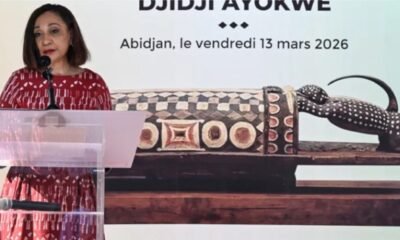
France Returns Sacred ‘Talking Drum’ Looted During Colonial Rule to Ivory Coast
-

 Business2 days ago
25 Sittings, Zero Answers: Ghana’s Parliamentary Slow Motion Costing Ghana and Atlantic Lithium Billions
-

 Ghana News17 hours ago
Newspaper Headlines Today: Tuesday, March 17, 2026